Icelandic etiquette — social norms, tipping, and what not to do
What are the key etiquette rules in Iceland?
Tipping is not expected but appreciated. Remove shoes before entering Icelandic homes (and the changing rooms of hot pools require pre-shower before entering). Do not disturb farms, livestock, or geological features. Icelanders tend to be reserved with strangers but open once introduced.
| Tipping | Not expected; 10% or ISK 1,500–3,000/person for guides is a nice gesture, not obligatory |
| Biggest rule to get right | Naked pre-shower before any swimming pool, no exceptions |
| Shoes | Off at the door in homes and most guesthouses |
| Drinking age | 20, alcohol only via Vínbúðin or licensed bars/restaurants |
| When in doubt | Direct and understated beats loud and effusive |
What Icelanders think about tourists
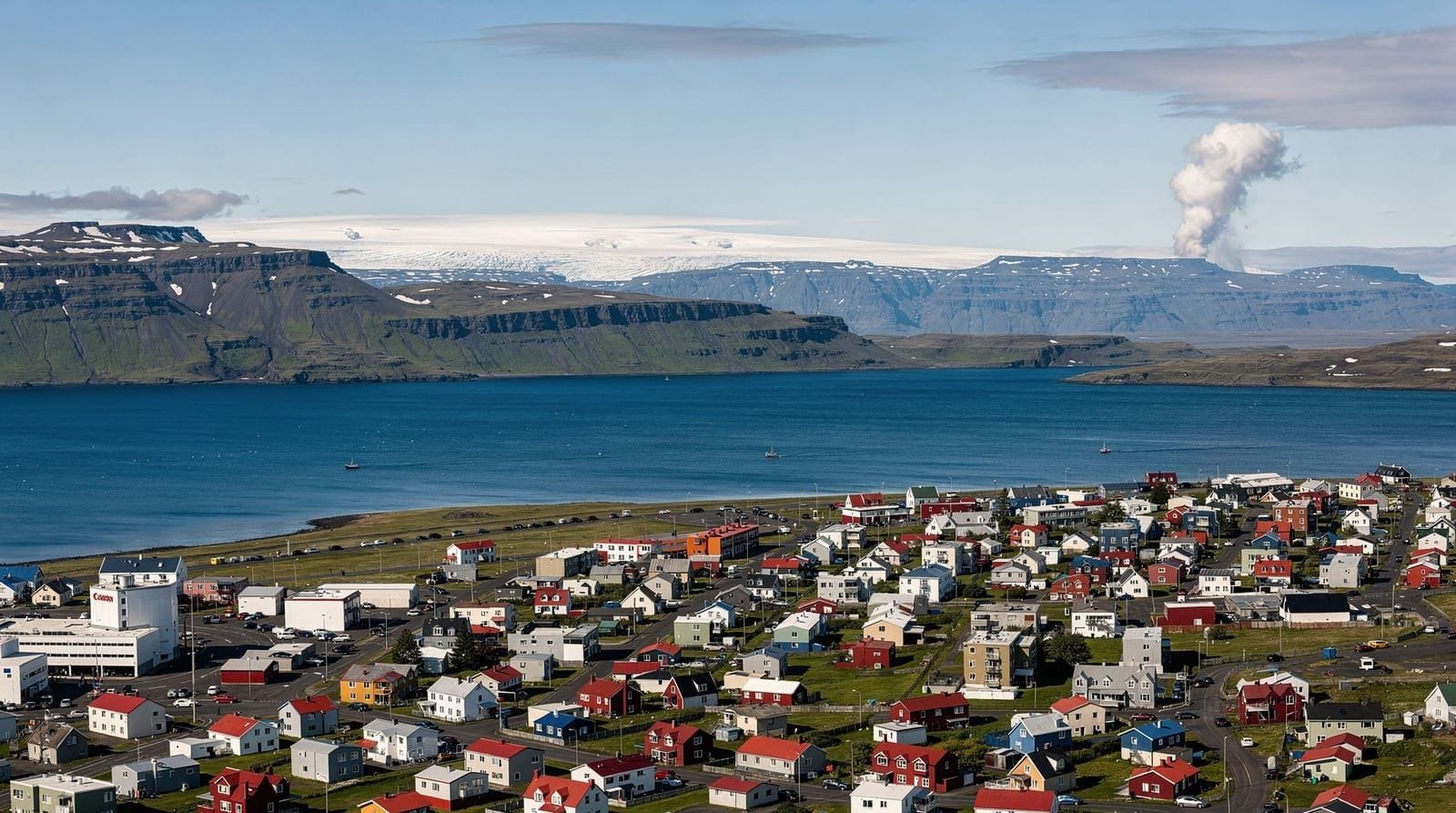
Iceland’s relationship with tourism is complicated. The country went from roughly 500,000 visitors per year in 2010 to over 2 million by 2018 — a 4x increase in 8 years against a population of 380,000. This created significant social strain in specific areas:
Reykjavík house prices: Tourism-driven short-term rental (Airbnb) removed housing stock from the residential market at a time when housing demand was already high. Reykjavík’s housing affordability declined significantly in the same period that tourism grew. Some Icelanders connect these facts directly.
Overtourism at specific sites: Reynisfjara black beach, Geysir, and Seljalandsfoss were regularly discussed in Icelandic media as sites where visitor numbers caused environmental damage and created social friction.
The “friendly but not warm” dynamic: Icelanders are generally hospitable but the scale of tourism has created a service-industry relationship at main tourist touchpoints that is professional rather than personal. Visitors who have been told “Icelanders are so friendly!” sometimes find the reality of the service interaction more businesslike.
The honest picture: most Icelanders who work in tourism are genuinely hospitable and interested in visitors. The frustration that exists is with specific behaviours (off-trail walking, stopping in the middle of roads for photographs, littering) rather than with visitors as such.
Treating Iceland as a community of people who live and work here, rather than as a set of landscapes with convenient services, is the posture that tends to produce the best interactions.
Icelandic social character
Iceland’s social culture is Scandinavian in its general character — reserved in initial encounters, direct when communication happens, egalitarian in professional and social structure, and not given to excessive formality. The country is small enough that most Icelanders in the same field or town know each other; social networks are tight and introductions matter.
Visitors who treat Iceland like a theme park with Icelandic-costumed employees are missing the point. The people you encounter — at guesthouses, petrol stations, campsites — are running real businesses in their communities. Basic courtesy and genuine interest are the right approach.
Tipping customs
Iceland does not have a tipping culture. Service industry wages are substantially higher than in countries where tipping is expected (the United States, for example), and prices already reflect service costs. Staff do not depend on tips and do not expect them.
That said: a tip is always appreciated and never refused. If a restaurant service was good, leaving 10% is appropriate without being obligatory. For guides on tours, tipping 1,500–3,000 ISK ($11–22 USD) per person for a good day is a recognised appreciation gesture that most guides receive occasionally but do not expect.
Do not feel awkward about not tipping — it is culturally neutral, unlike in North America where not tipping is a social statement.
Hot pool etiquette — the most specific rules
Iceland’s geothermal pools are central to the culture and have specific etiquette that applies at public pools (sundlaugar) and most of the hot springs facilities:
Mandatory pre-shower: You must shower naked before entering the pool area. This rule is taken seriously and is enforced by pool staff. The purpose is water hygiene — the pools use minimal chemical treatment because of the pre-shower requirement. Changing room showers have specific instructions (sometimes in Icelandic, with diagrams): wash thoroughly without swimsuit.
Showering in swimwear defeats the purpose: At most Icelandic public pools, showering in a swimsuit is not allowed. Foreign visitors who are uncomfortable with communal nudity sometimes try to shower in their swimsuit — this is generally noted and corrected by staff.
Quiet zones exist: Most pools have specific areas designated as quiet. The general pool area is social, but quiet areas are for relaxation. Follow signage.
Children: Children under a certain age (usually 6–8, check the specific pool) may not use the adult hot pots. Each pool has different age rules.
Photography: Photography in changing rooms is absolutely prohibited. Photographing other pool users without consent is socially unacceptable even in the pool area.
The Blue Lagoon and Sky Lagoon are tourist-oriented facilities that make accommodations for international visitors’ comfort, including private changing options. The public municipal pools (Laugardalslaug in Reykjavík, for example) are the more authentic version and the pre-shower rule applies without accommodation.
How the etiquette differs by venue:
| Municipal pool (sundlaug) | Blue Lagoon / Sky Lagoon | |
|---|---|---|
| Pre-shower | Mandatory, communal, monitored by staff | Mandatory but private cubicles available |
| Crowd | Mostly locals, very few tourists | Almost entirely tourists |
| Atmosphere | Functional, unpretentious, genuinely local | Polished, resort-style |
| Cost | ISK 900–1,200 | ISK 10,000+ |
| What first-timers get wrong | Trying to shower in a swimsuit | Assuming it’s less strict because it’s tourist-oriented — it isn’t |
If you only have time for one, the municipal pool is the more culturally revealing experience; the Blue Lagoon or Sky Lagoon is the more comfortable one for a first-timer nervous about communal nudity norms.
Shoes and private spaces
Remove shoes before entering Icelandic homes — this is a consistent cultural norm, not a visitor-specific request. You will often see a line of shoes at the entrance of a guesthouse or private home. Follow the pattern.
Most guesthouses that are run from the owner’s family home will have a shoe area at the entrance. Hotels are different; formal hotel lobbies operate on different norms.
Outdoor behaviour
Respect farms and fences: Iceland has a strong tradition of access to the countryside (almost equivalent to the Scandinavian allemannsrätten or right of access). However, this does not extend to walking through active farmland without care. Gates should be left as found (open or closed). Livestock should not be disturbed — especially lambs in spring, which are not as tame as they appear. Chasing or approaching animals for photographs stresses them.
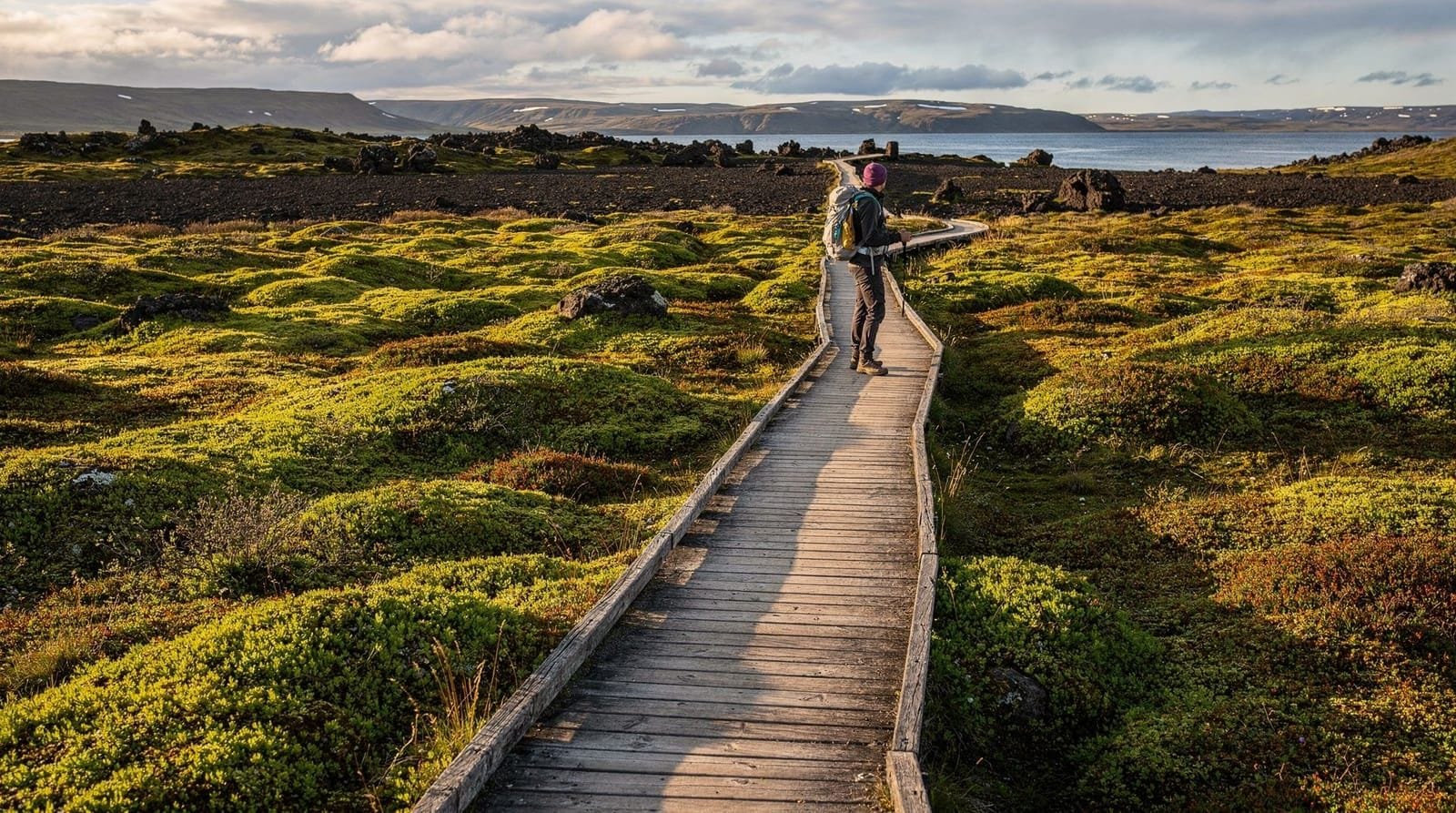
Stay on trails: Covered in detail in the sustainable travel guide, but worth repeating: walking off-trail on Icelandic moss and vegetation causes damage that takes decades to recover. It is also visually obvious and socially frowned upon by Icelanders who encounter it.
Campfire rules: Open campfires are prohibited in most of Iceland except in designated fire areas at official campsites. Iceland has had significant wildfires in dry summer conditions — campfire rules are taken seriously.
Noise: Iceland’s empty landscapes are not a cue for loud behaviour. Many visitors are in the same landscape simultaneously — voices carry in open terrain. Night noise at campsites is specifically regulated at most official sites.
Photography and permission
Photographing individual Icelanders without consent — particularly for commercial use — follows the same norms as in any European country. In casual tourist settings (street photography, festivals), it is generally unproblematic. For close-up portraits or any commercial photography, ask.
Photographing private property or people’s homes without consent is inappropriate regardless of how photogenic they are. Iceland’s small communities mean that the farmhouse you photograph from the road is someone’s actual home, not a set.
Driving manners
Iceland’s roads are used by both tourists and people going about their daily lives. Specific points:
- Do not stop in the middle of the road for photographs — pull off completely before stopping
- Slow down when meeting oncoming traffic on single-lane roads (this is legally required)
- Do not blast your horn in irritation — it is not culturally standard here and will be noticed
- Yield to sheep — they have right of way by informal national consensus
The driving in Iceland guide covers road rules in detail.
Language and communication
Icelandic is one of the world’s oldest and most conservatively maintained languages. Attempting a few basic Icelandic words is genuinely appreciated, though all Icelanders involved in tourism (and most under 50) speak excellent English.
Basic terms worth knowing:
- Já (YOW): Yes
- Nei (NAY): No
- Takk (tahk): Thanks
- Takk fyrir (tahk FI-rir): Thank you
- Fyrirgefðu (FIRE-ir-GEF-thu): Excuse me / I’m sorry
- Góðan daginn (GOH-than DAG-in): Good day (formal greeting)
Full language guide at Icelandic language basics.
Names and the patronymic system
Iceland uses a patronymic (or matronymic) naming system rather than family surnames. A child takes their father’s (or mother’s) first name plus -son or -dóttir. So Jón Gunnarsson’s son Eiríkur would be Eiríkur Jónsson, not Eiríkur Gunnarsson.
This means:
- The phone book is alphabetically organised by first name, not “surname”
- Icelanders typically address each other by first name, including in professional contexts
- “Mr/Mrs + surname” addressing conventions do not apply in the same way
- Iceland maintains a national genealogy database (Íslendingabók) covering most of the population back to the settlement — a remarkable historical record
Queuing and social space
Icelanders queue in a somewhat Scandinavian pattern — orderly and patient. Jumping a queue at a petrol station, tourist site, or shop is noticed and considered rude. At geothermal pools and some tourist sites, queue systems are formalised.
Physical personal space norms are slightly larger than in southern European contexts. Extended eye contact with strangers is not common. Initial social interaction tends to be brief and functional; longer conversations develop naturally.
Alcohol and public behaviour
Iceland has a legal drinking age of 20. Alcohol is sold only in state-run Vínbúðin stores (wine shops) and licensed restaurants and bars — supermarkets do not sell alcohol. The state monopoly means prices are uniform and high.
Public drunkenness in the street in Reykjavík is not unusual on weekend nights — the city centre on a Friday night is more boisterous than its daytime character suggests. However, drunk and disorderly behaviour in any other context is poorly received. Outside Reykjavík, alcohol and visible intoxication is much less culturally visible.
Interacting with the rescue service and emergency systems
The Icelandic Association for Search and Rescue (ICE-SAR) is run entirely by volunteers who respond to vehicle and outdoor emergencies. Registering your travel plans at safetravel.is before hiking or remote drives is genuinely important — it tells the rescue teams where to look if you do not return.
The 112 Iceland app has a built-in alarm that transmits GPS location. Downloading it before any outdoor activity is a specific practical step. See Safetravel emergency info for the full protocol.
Calling for rescue when unnecessary (getting stuck on a road you should have checked before driving, for example) is a significant drain on volunteer resources. The cultural norm is: prepare properly, be self-sufficient, and call for help only when genuinely needed.
At the geothermal pool — step by step
The municipal geothermal pool experience has specific stages that confuse first-time visitors:
Entrance: Purchase your ticket at the reception desk. If you have the Reykjavík City Card, use it here. Lockers are typically numbered; keep your locker key on your wrist.
Changing room: Segregated by gender. Fully remove clothing and shower completely before proceeding to the pool area. This is not optional. The showers at most pools have pictographic instructions showing exactly which body parts require washing — the Icelandic approach to this is direct and without embarrassment.
Towel: Bring your own or rent at the reception (typically 500–700 ISK / $4–5 USD for a rental).
Pool area: Outdoor pools in Iceland are typically at 28°C (82°F). The hot pots (heitir pottar) are separate pools at 38°C, 40°C, 42°C, and 44°C — temperature is usually marked on the side. Children under a certain age may not use the adult hot pots.
Post-pool shower: A second shower before dressing. Again, this is the norm.
Etiquette in the hot pot: Speaking in moderate tones is normal — the hot pot is a social space. Very loud conversation disrupts others. Phones are discouraged in the hot pot area, and photography of other pool users is absolutely not acceptable.
Gift-giving and visiting Icelandic homes
If you are invited to an Icelandic home (uncommon on a short tourist trip but possible if you have personal connections):
- Bring a small gift: wine, flowers, or chocolates are appropriate
- Shoes off at the door without being asked
- Arrive on time or slightly late — punctuality is respected but rigid
- Comment on the food — Icelanders cook well and appreciate appreciation
- Expect strong coffee and likely a dessert of skyr with cream or a layer cake
Icelandic homes are typically neat and designed with attention to interior quality. Iceland has a strong design culture for domestic spaces, and commenting on furniture or art is natural conversation.
Business and professional etiquette
If visiting Iceland for business:
- First names are used universally in professional contexts — there are no family surname conventions to navigate
- Punctuality is expected at meetings
- Formal attire is not standard in most industries; “smart casual” covers most business situations except legal or financial
- Directness is valued — Icelanders tend to communicate plainly rather than using elaborate diplomatic hedging
- Decisions can be made quickly, but consensus is valued; don’t expect a one-meeting close on significant business
- Social conversation before meetings is brief; Icelanders tend to get to the point
Interaction with farm animals
Iceland’s sheep, horses, and other livestock are farm animals, not wildlife attractions. The Icelandic horse (a distinct breed developed in isolation since the settlement period) is temperamental and valuable. Approaching or attempting to touch Icelandic horses without the farmer’s explicit permission is inappropriate.
The horses by the roadside on farms are not there for tourists to interact with — they are working animals on private property. The paddocks and fields are private land even when the fence line runs close to the road.
The Icelandic horse riding guide covers legitimate horseback riding experiences with proper operators if equestrian activity is part of your trip.
Weather-related courtesy
Iceland’s weather affects social and professional life in specific ways:
Being late because of weather: Genuinely accepted as a reason, not an excuse. If a storm has closed your road or a sandstorm has reduced visibility to near-zero, nobody expects you to have pushed through.
Cancellation policies: Many Iceland tour operators have weather-dependent cancellation policies because genuine safety cancellations are routine. If a tour is cancelled due to weather, the standard policy is a full refund or rebooking. Arguing about weather cancellations is culturally tone-deaf — the guides have more experience with local conditions than you do.
Weather complaints: Commenting on bad weather is fine as conversation. Extended complaining about weather to Icelanders is gently bewildering — they live here by choice and the weather is part of the deal.
Frequently asked questions about Icelandic etiquette
Do you tip in Iceland?
No — it is not expected. A small voluntary tip in restaurants or for guides is appreciated but not obligatory. Staff are well-paid and do not depend on tips.
Is it rude to not speak Icelandic?
Not at all — all Icelanders working in tourism and most under 50 speak English fluently. Attempting a few words of Icelandic (takk = thanks, já = yes) is appreciated as a gesture of respect, but there is no pressure.
Can you take photos of people in Iceland?
Casual street photography is generally fine. Close-up portraits or photos of people at private properties require consent. Photography in pool changing rooms is prohibited. The same GDPR-based norms that apply in the rest of Europe apply in Iceland.
What is the dress code for restaurants in Iceland?
Casual in most places. Fine dining in Reykjavík expects smart casual. There are no formal dress code requirements at most restaurants. Outdoor gear (hiking trousers, technical layers) is fine everywhere outside the top-end restaurants.
Do Icelanders take environmental rules seriously?
Yes — broadly. Littering, off-road driving, and trail damage are genuinely disapproved of in Icelandic culture. The combination of cultural pride in the landscape and the small-population context (everyone knows someone who knows someone) makes environmental transgressions fairly visible.
Is it okay to haggle or negotiate prices in Iceland?
No. Prices are fixed everywhere from supermarkets to tour operators to craft markets. Haggling is not part of Icelandic commercial culture and will read as odd rather than savvy. If you want a better price, look for off-season timing or package deals instead.
How direct is too direct in Icelandic conversation?
Icelanders value directness and plain speaking over elaborate politeness formulas, but this isn’t the same as bluntness for its own sake — it means getting to the point efficiently rather than padding a request with excessive hedging. Visitors from more indirect communication cultures sometimes read Icelandic directness as coldness; it usually isn’t intended that way.
Etiquette on organised tours
Guided tours — Golden Circle coaches, glacier hikes, whale watching boats — have their own informal etiquette worth knowing. Being ready at the pickup point 5 minutes early (not exactly on time) is the norm, since a late arrival holds up an entire group. Guides appreciate genuine questions but not requests to deviate from the planned safety route, particularly on glacier or ice cave tours where the route reflects a current safety assessment, not a suggestion. Tipping a guide (see above) is appreciated at the end of a good tour but should be handled discreetly, not as a group announcement.
For driving in Iceland specifically, the same courtesy extends to other road users: slower vehicles pulling over to let faster traffic pass on single-lane sections is expected practice, not an imposition.
A note on Icelandic humour and self-deprecation
Icelandic humour tends toward dry, understated, and self-deprecating rather than broad or performative. Jokes about the weather, the country’s small size, or its historical poverty (Iceland was one of Europe’s poorest countries well into the 20th century before the fishing and later financial and tourism economies transformed it) are common and generally safe territory if a local raises them first. Visitors making the same jokes unprompted can land differently — let Icelanders set the tone on self-deprecating humour about their own country rather than leading with it yourself.
Top experiences
Best-rated activities across GetYourGuide and Viator.

Airport Transfer: Keflavik Airport to Reykjavik Center in Iceland
- Viator

From Reykjavik: Snaefellsness Peninsula small group day tour
- Viator

Ice Cave and Glacier Walk into Blue Glacier Canyon
- Viator

Small-Group South Coast & Glacier Hike Tour from Reykjavik
- Viator

Sólheimajökull Ice Climbing and Glacier Walk
- Viator

From Reykjavik: Katla Ice Cave and South Coast Day Tour
- Viator