Reykjavík culture guide — museums, music, food, and local life
Reykjavik: City walking tour
What is Reykjavík's cultural scene like?
Reykjavík punches far above its size — a capital of 130,000 people with a serious museum circuit, a live music scene that includes internationally known acts, a food culture that has evolved from lamb soup and fermented shark to destination dining, and street art across most of the old town.
Reykjavík beyond the tourist surface
Most visitors to Reykjavík spend 1–2 days in the city as bookends to a Ring Road trip or a quick northern lights chase. The city gets checked off: Hallgrímskirkja from outside, a selfie at the Sun Voyager sculpture, a bowl of lamb soup, done. That version of Reykjavík exists and is accessible, but it misses the parts that actually make the place interesting.
| Where | Central Reykjavík (101 postcode), walkable in about 15 minutes coast-to-coast |
| Cost | Museums 2,000–4,000 ISK each; combined tickets save money |
| Time needed | 2 full days minimum for the main museums, harbour, and a food tour |
| Getting around | Walking covers most of it; buses or a short taxi for Laugardalur |
| Best paired with | A half-day trip to Þingvellir or Viðey Island for historical context |
Reykjavík is, per capita, one of the world’s most literature-dense cities — Iceland has the highest per-capita book publication rate of any country. It has produced an outsized number of internationally successful musicians (Björk, Sigur Rós, Of Monsters and Men, Kaleo). The food scene has been building quietly for 15 years and now includes restaurants that are genuinely difficult to get into without forward planning. The museum circuit is compact but deep.
This guide covers the cultural substance rather than the checklist.
The Settlement Exhibition — Landnámssýningin
Aðalstræti 16, Reykjavík. Open daily 9am–6pm. Admission around 2,200 ISK ($16 USD) per adult.
The Settlement Exhibition is the best single museum in Reykjavík and one of the more compelling archaeology museums in northern Europe. The centrepiece is an actual 10th-century Viking longhouse — excavated in place under the city, lit and presented so you walk among the foundations of a farmhouse that was occupied around 930 CE.
The exhibit contextualises Iceland’s settlement history with clear interpretation in English and Icelandic. The building is designed around the archaeology rather than the other way around, which is unusual and effective.
Worth 90 minutes. Not particularly child-friendly under age 8. No gift shop pressure.
Hallgrímskirkja
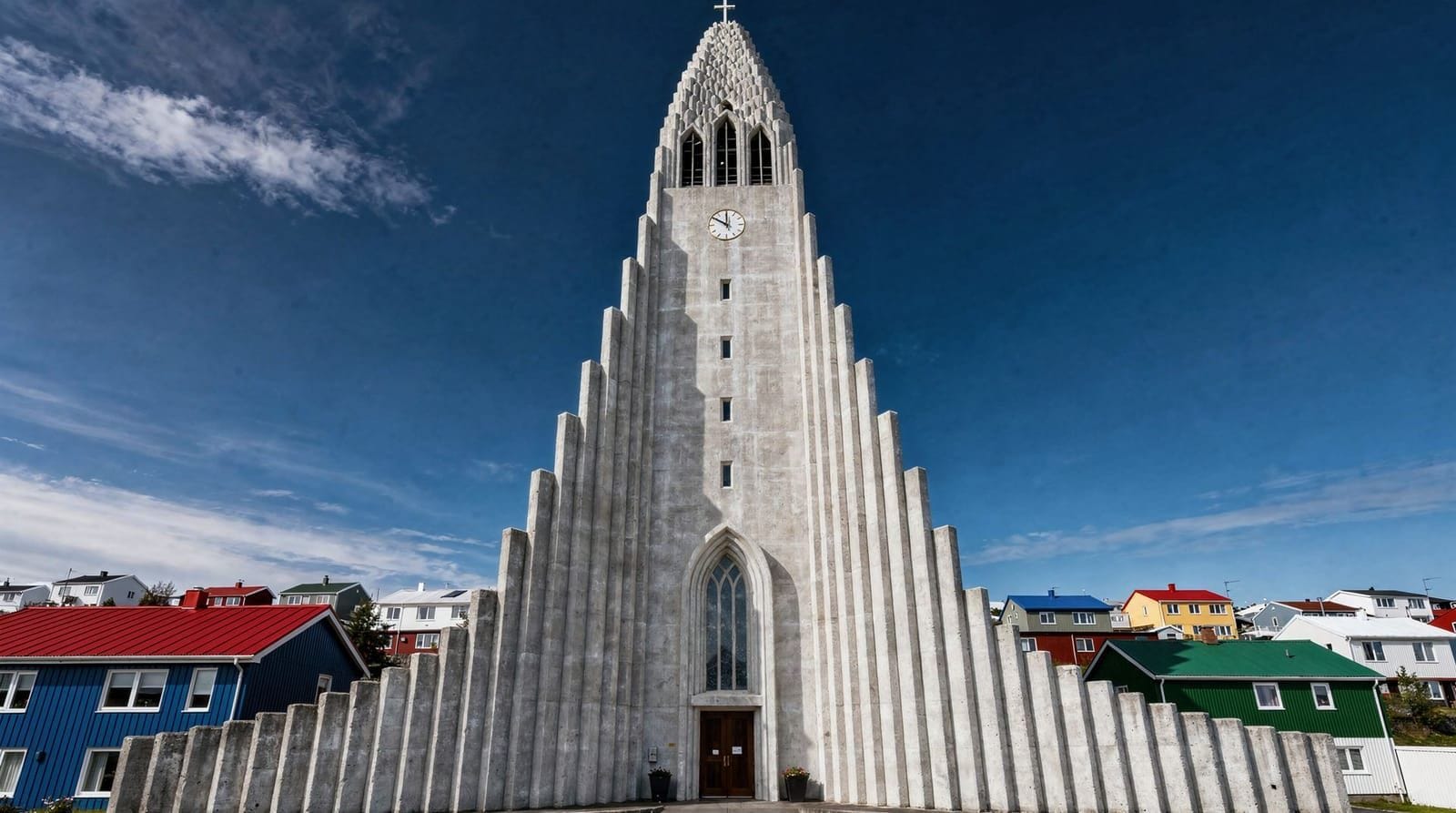
The Lutheran church on the hill is Reykjavík’s most recognisable building — visible from most of the city, designed to echo the basalt columns of Svartifoss waterfall and the Reynisfjara cliffs. The tower elevator costs around 1,400 ISK ($10 USD) and gives the best 360-degree views of the city and the mountains behind it.
The church interior is functional and not ornate by European cathedral standards — it is a working Lutheran church, not a tourist attraction that happens to have services. Organ concerts run on specific dates. The statue out front is Leifr Eiríksson (Leif Eriksson), given to Iceland by the United States on the 1,000th anniversary of the Alþing (the world’s oldest parliament), which convened at Þingvellir.
Full guide at Hallgrímskirkja and Reykjavík landmarks.
Perlan — Wonders of Iceland
Öskjuhlíð hill, Reykjavík. Open daily 9am–9pm. Admission from approximately 3,900 ISK ($28 USD) for standard entry, more for the full exhibition.
Perlan sits on top of six geothermal hot water tanks that supply most of Reykjavík’s heating. The building itself is designed around them, with the domed glass roof housing a museum and the tanks still operational below.
The museum inside — Wonders of Iceland — covers Iceland’s volcanic geology, the northern lights (with a planetarium-style aurora show), and glaciers (with a real artificially created ice cave that you walk through). For anyone who cannot access natural ice caves or the aurora, Perlan’s versions are reasonable surrogates, though obviously not the real thing.
The rooftop observation deck gives clear views on sunny days. The restaurant is expensive relative to quality — eating elsewhere is recommended.
A Reykjavík city walking tour from the harbour or main square hits the cultural highlights efficiently — settlements, street art, Hallgrímskirkja, the harbour area — and a local guide provides context that self-guided visits lack.
National Museum of Iceland — Þjóðminjasafn Íslands
Suðurgata 41. Open Tuesday–Sunday 10am–5pm, closed Mondays. Admission 2,800 ISK ($20 USD).
The National Museum covers Icelandic history from settlement through the 20th century with substantial permanent collections. The Viking-age artefacts, saga manuscripts, and medieval church carvings are the highlights. The ground floor has strong contextual interpretation. The upper floors cover more recent history with less visual drama.
Allow 2 hours. Combined tickets with the Settlement Exhibition save money if visiting both.
Reykjavík Art Museum — Listasafn Reykjavíkur
Three buildings: Hafnarhús (harbour area), Kjarvalsstaðir, and Ásmundarsafn. Individual admission approximately 2,200 ISK ($16 USD); combined ticket approximately 3,300 ISK ($24 USD).
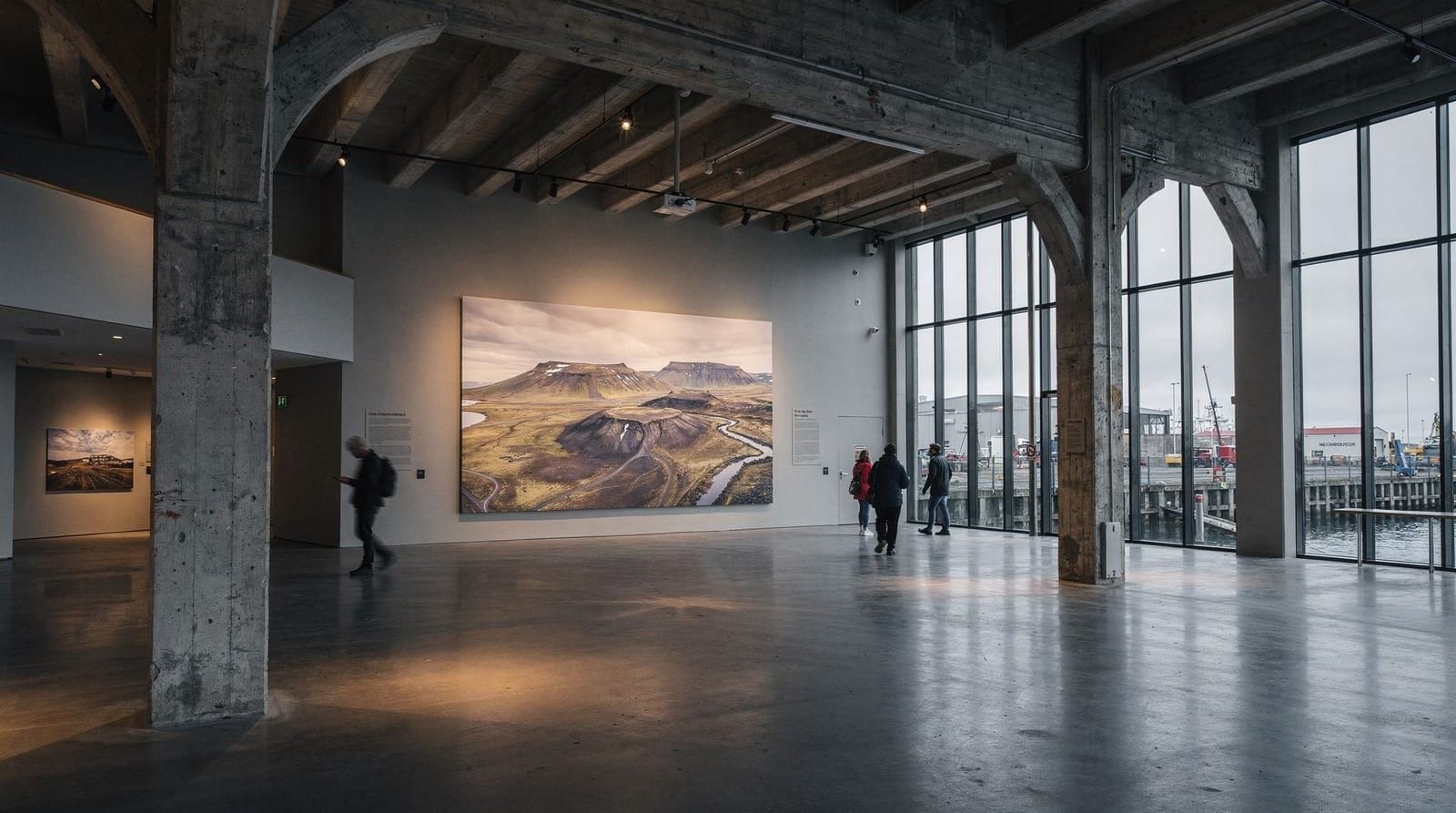
Hafnarhús is the most central and has rotating contemporary exhibitions. Kjarvalsstaðir focuses on Icelandic 20th-century painting, particularly Jóhannes Sveinsson Kjarval’s landscape-myth fusion work. Ásmundarsafn in Laugardalur shows sculptural work by Ásmundur Sveinsson in his former studio.
For contemporary art, Hafnarhús is the relevant venue. The puffin satirical paintings by Erró (Guðmundur Guðmundsson) displayed here are genuinely interesting works, not tourist curiosities.
Live music
Reykjavík’s live music scene operates primarily through a cluster of venues in the old town near Austurstræti and Laugavegur. Key venues:
- Harpa Concert Hall (Austurbakki 2): The big-ticket venue for classical concerts, Iceland Airwaves headliners, and international touring acts. Worth visiting architecturally even without a show — the geometric glass facade changes character through the day.
- Gaukurinn: Dive bar with live music most nights, ranging from metal to folk. No cover or cheap door charge.
- Húrra: Intimate venue on Tryggvagata with regular local and touring acts.
The Iceland Airwaves festival (typically November) runs across multiple venues simultaneously — dozens of shows in 4 days. Many shows are free “off-venue” in bars and record shops. It is, genuinely, one of the better small music festivals in Europe and specifically showcases Icelandic acts alongside international ones.
The food scene
Reykjavík’s food reputation has shifted substantially from the “expensive and functional” assessment of the early 2000s. Current highlights:
Dill (Hverfisgata 12): Iceland’s only Michelin-starred restaurant, serving New Nordic-influenced Icelandic cuisine. The tasting menu runs around 30,000 ISK ($215 USD) per person before wine. Reservations should be made weeks ahead.
Fiskmarkurinn (Aðalstræti 12): Fish and lobster; mid-range to expensive but consistently good. The langoustine soup is the dish to order.
Bæjarins Beztu Pylsur (harbour area): The classic Reykjavík hot dog stand. A hot dog here costs around 700 ISK ($5 USD) — pylsa with the works (ketchup, mustard, remoulade, raw onion, crispy fried onion) is a legitimate cultural experience without the tourist-trap pricing of most city-centre street food.
Brauð & Co (Frakkastígur): Consistently cited as the best bakery in the city. Croissants, sourdough, and Icelandic pastries. Queues on weekend mornings.
Skál (Grandagarður 2, in the harbour area): Natural wine bar with small plates and one of the better cocktail menus in the city. Suitable for pre-dinner drinks rather than full meals.
A food walking tour covers multiple Reykjavík food stops in 3 hours — a useful orientation to the food scene if you are visiting for 1–2 days and want to eat efficiently across different styles.
Street art and the Laugardalur valley
Reykjavík’s street art is concentrated along Hverfisgata, around the BSÍ bus terminal, and scattered through the east side of the old town. Hallgrímur Helgason’s murals and internationally commissioned pieces mix with local artists. The Reykjavík Street Art Map website documents current and past installations.
Laugardalur park, a 20-minute walk from the old town, contains the Reykjavík Botanical Garden (free entry, open in summer), a zoo, and the Laugardalur geothermal outdoor swimming pool — one of the better examples of Iceland’s hot pool culture. The outdoor pool with its hot pots (temperatures 38–44°C) is a legitimate local experience and costs around 1,100 ISK ($8 USD) entry.
The harbour area and Grandi
The old harbour (Gamla Höfn) has been significantly redeveloped in the past decade. The Grandi area — formerly industrial docks west of the main harbour — now has:
- Whales of Iceland exhibition: Life-size whale models. Pricey (approximately 4,300 ISK / $31 USD) but impressive for kids.
- Marshall House: Art gallery and studios in a converted fish factory.
- Bruggsmiðjan Craft Beer Bar and Mikkeller Reykjavík: Both strong choices for Icelandic and Scandinavian craft beer.
- Coocoo’s Nest: Brunch spot that does the best eggs in the city by most accounts.
The harbour area is also the departure point for whale watching tours — multiple operators depart from the old harbour.
Reykjavík’s neighbourhood character
The old town (Miðborg) is compact and walkable — roughly 15 minutes coast-to-coast on foot. Laugavegur is the main commercial street, running from the harbour area up toward Hlemmur square. Beyond the tourist shops selling woolly jumpers and Viking helmets, there are genuine independent bookshops (Mál og Menning on Laugavegur has English-language sections), record stores (Smekkleysa, which runs the Bad Taste label founded by Björk’s former bandmates), and small galleries.
A private folklore and food walking tour of Reykjavík covers the city’s mythology and hidden stories alongside its food culture — particularly useful for understanding the elf and hidden people traditions that are genuinely embedded in how Icelanders relate to the landscape.
Reykjavík’s literary culture
Iceland has the world’s highest per-capita rate of book publication. A phrase Icelanders use — “we are a nation of poets” — is not empty boasting. The medieval saga tradition continues to influence how Icelanders think about storytelling and language, and the modern literary scene is proportionally active.
Ráðhúsið (City Hall) bookshop: Small but with a strong Icelandic history and literature section in English.
Mál og Menning (Laugavegur): The main bookshop with the best English-language section — Icelandic authors in translation, saga editions, nature writing.
Forlagið (publisher): One of the major Icelandic publishers, whose catalogue in English translation includes Sjón, Andri Snær Magnason, and others.
The Reykjavík International Literary Festival (Bókmenntahátíð) runs biennially in September and is specifically worth planning around if you are interested in Icelandic or Nordic writing.
Music made in Iceland
The volume of internationally recognised music from Iceland’s small population is remarkable. The specific cultural conditions that produced it are debatable — the country’s isolation, its strong state arts funding, the tradition of children learning instruments, the late-night winter culture — but the output is real.
Björk: The most internationally known Icelandic artist. Her visual and sonic work is deeply connected to Icelandic landscape and mythology.
Sigur Rós: Post-rock group from Reykjavík. Their music has been used so widely in film and television soundtracks that it has become almost shorthand for “Iceland.” Their real recordings remain better than their appropriation suggests.
Of Monsters and Men: Indie folk-pop band that broke internationally in 2012. A different register entirely from Sigur Rós but similarly internationally successful.
Kaleo: Blues-rock band that won a Grammy. Less known abroad than the others but significant in Iceland.
Júniusi Meyvant: Icelandic folk-soul singer whose work has a specific Westfjords-influenced character.
Iceland Airwaves (November) is the best time to hear current Icelandic music across genres — the festival specifically programmes Icelandic acts across all stages.
Design and fashion
Reykjavík has a recognisable design sensibility influenced by Nordic minimalism, local craft traditions, and the specific visual language of Icelandic landscape. Key areas:
Skólavörðustígur (the hill street up to Hallgrímskirkja): The highest concentration of independent design, craft, and fashion shops. Kiosk design store, handmade jewellery, Icelandic woollen goods beyond tourist-grade.
Laugavegur (upper section): Independent fashion, including several Icelandic designers. The Icelandic wool jumper (lopapeysa) is genuine — the real version is handmade with Icelandic wool; the mass-produced version is made elsewhere with inferior wool. Genuine lopapeysa cost significantly more than the tourist kiosk version and are worth it if you actually want to wear one.
66° North: Icelandic outdoor clothing brand founded in 1926 for Icelandic fishermen. The flagship store is on Bankastræti. Practical and well-made; prices reflect quality rather than fashion margin.
Reykjavík hot pools — cultural and practical
The outdoor geothermal swimming pool is where Icelanders socialise in ways that take place in coffee shops or bars in other cultures. The hot pots (hittar) of a municipal pool are the informal meeting space of the neighbourhood.
Laugardalslaug: The main Reykjavík outdoor pool in Laugardalur. Large, with multiple pools at different temperatures, a water slide, and 44°C hot pots. Entry ~1,100 ISK ($8 USD). Open year-round including in winter weather. Take a bus or cycle from the city centre.
Sundhöll Reykjavíkur: The oldest pool in Reykjavík (1937), renovated recently. Indoor and outdoor sections. City centre location on Barónsstígur.
Vesturbæjarlaug: Neighbourhood pool in the west of the city. Quieter than Laugardalslaug, genuinely local.
The Sky Lagoon and Blue Lagoon are tourist-oriented; the municipal pools are local life. Both have value; they are different experiences.
Reykjavík’s geothermal infrastructure as cultural experience
The hot water that runs from every tap in Reykjavík comes from geothermal sources in the Reykjanes Peninsula. The city’s heating, hot water, and a significant portion of its electricity are geothermally produced. This is not an abstract fact — it is physically present in the city in ways that shape daily life:
The Perlan building on Öskjuhlíð hill sits on top of six active hot water storage tanks. The structure was built around the tanks. Walking on the lower levels of Perlan, you are walking above tanks of geothermally heated water that are actively supplying homes and offices below.
The faint sulphurous smell from some taps in central Reykjavík is from hydrogen sulphide in geothermal water. It is harmless, present only in hot water supply, and concentrated enough to notice in older plumbing systems.
Iceland’s energy system is genuinely unusual globally — approximately 85% of energy (heat and electricity combined) comes from domestic renewable sources. The scale of this is visible in how the country thinks about energy differently from most nations: electricity is cheap, heating is nearly free by European standards, and the infrastructure to support this is physically embedded in the landscape in the form of pipes, turbine buildings, and storage tanks.
The Hellisheiðarvirkjun geothermal plant (visible from the Reykjanes Peninsula road toward the Blue Lagoon) offers public tours and an exhibition explaining how geothermal energy works. It is an unusual hybrid of industrial site and nature experience: steam vents, turbine halls, and a lava field setting.
Day trips from Reykjavík for cultural depth
Reykjavík’s cultural offer gains depth when combined with accessible day trip sites:
Þingvellir National Park: 45 minutes from Reykjavík. The site of the world’s oldest parliament, in a UNESCO World Heritage tectonic rift. Walking the site after visiting the Settlement Exhibition or reading Njáls saga provides direct historical continuity.
Hveragerdi: 40 minutes south. The geothermal greenhouse town where much of Iceland’s fresh produce is grown. The hot spring river hike (Reykjadalur) is a 90-minute return walk from town to natural hot spring bathing — one of the most accessible free geothermal experiences.
Viðey Island: 10-minute ferry from Reykjavík harbour. John Lennon’s Imagine Peace Tower and Richard Serra’s Áfangar sculpture in a historically significant island landscape.
Snæfellsnes Peninsula: A full-day drive from Reykjavík. The peninsula combines Icelandic literary mythology (Jules Verne’s Journey to the Centre of the Earth uses Snæfellsjökull as an entry point), dramatic volcanic landscape, and genuine wilderness character within 2 hours of the capital.
For the full catalogue of day trips, see best day trips from Reykjavík.
Reykjavík’s cultural calendar through the year
Beyond Iceland Airwaves in November, Reykjavík runs a fuller cultural calendar than most visitors realise. Reykjavík Culture Night (Menningarnótt), typically in late August, turns the entire city centre into an open-air festival with free concerts, gallery openings, and a fireworks display over the harbour — one of the few times the city feels genuinely crowded with both locals and visitors. Winter Lights Festival (Vetrarhátíð), held in early February, uses the long dark evenings to illuminate buildings and museums with free late-night openings, timed deliberately to bring life to the darkest stretch of the calendar. The Reykjavík International Film Festival (RIFF) runs in late September/early October and screens a strong programme of international and Icelandic cinema across several downtown venues.
Timing a trip around one of these events adds a dimension that a standard 2-day museum-and-food itinerary misses — Culture Night in particular gives a real sense of how Reykjavík’s compact scale supports a genuinely city-wide celebration that would be logistically impossible in a larger capital.
Frequently asked questions about Reykjavík culture
How many days do you need in Reykjavík?
Two full days is the minimum to cover the main museums, the harbour, Hallgrímskirkja, and a food tour. Three days allows you to add Perlan, the Laugardalur area, and a half-day trip to Viðey island by ferry.
Is Reykjavík expensive?
Yes. Reykjavík is one of Europe’s more expensive cities. Expect $25–45/person for a mid-range lunch, $40–70/person for dinner without alcohol. The hot dog at Bæjarins Beztu is the main exception to the pricing logic.
What museums are free in Reykjavík?
Most major museums charge entry. The Reykjavík City Library (Borgarbókasafnið) has free exhibitions and events. Some galleries and the outdoor sculpture garden at Ásmundarsafn have free entry. The National Museum is free on the first Thursday of each month.
Is Reykjavík good for music lovers?
Strongly yes. The Iceland Airwaves festival (November) is a highlight. Year-round, Harpa, Gaukurinn, and Húrra have active schedules. The local music scene — indie, electronic, post-rock, folk, metal — is disproportionately active for a city of 130,000.
What is the best neighbourhood to stay in Reykjavík?
The old town (Miðborg) is the most walkable. Laugardalur is quieter and has the geothermal pool. The 101 postcode (central Reykjavík) has the highest accommodation concentration, though it is also the most expensive.
Is Reykjavík safe for tourists?
Iceland has one of the lowest violent crime rates in the world. Reykjavík is safe to walk at any hour. The main concern is overpriced tourist traps and tour operators that market to first-timers aggressively — a different kind of risk.
What’s the best way to see Reykjavík’s cultural highlights if I only have one day?
Prioritise the Settlement Exhibition, Hallgrímskirkja’s tower, and a walk through the old town toward the harbour, finishing with a food stop. A guided city walking tour condenses this into a single efficient morning or afternoon with local context you would otherwise miss on your own.
Reykjavík guided city walking tour — old town, harbour, and local historyCombining culture with Reykjavík’s food scene in one evening
For visitors short on time, an evening built around one strong restaurant plus a short walk covers a surprising amount of ground. Start at Skál or another harbour-area wine bar for a pre-dinner drink, walk up through Grandi past the Marshall House galleries, then finish with dinner at Fiskmarkurinn or a similar mid-range spot — the whole sequence takes under three hours and touches food, design, and the harbour’s redevelopment story without needing a full day set aside.
Top experiences
Bookable activities with verified prices and instant confirmation on GetYourGuide.
Top experiences
Best-rated activities across GetYourGuide and Viator.

Airport Transfer: Keflavik Airport to Reykjavik Center in Iceland
- Viator

From Reykjavik: Snaefellsness Peninsula small group day tour
- Viator

Ice Cave and Glacier Walk into Blue Glacier Canyon
- Viator

Small-Group South Coast & Glacier Hike Tour from Reykjavik
- Viator

Sólheimajökull Ice Climbing and Glacier Walk
- Viator

From Reykjavik: Katla Ice Cave and South Coast Day Tour
- Viator