Icelandic elves and folklore — the hidden people explained
Reykjavik: Folklore mythology monster walk
Do Icelanders really believe in elves?
Survey data shows around 54% of Icelanders say it is possible or likely that elves and hidden people exist. This is not naive superstition — it reflects a particular cultural relationship with landscape that has practical consequences, including road rerouting and building project modifications to avoid disturbing supposed elf habitats.
| Where to explore it | Hafnarfjörður “elf capital”, Reykjanes Peninsula, Reykjavík folklore tours |
| Cost | Free (self-guided elf houses) to guided walks with a local storyteller |
| Best format | A guided folklore or mythology walk, not the elf-house tourist trail alone |
| Related tradition | The Yule Lads (Jólasveinar), December 12–24 |
| Good to combine with | Reykjavík city walking, Reykjanes Peninsula day trip |
The honest framing
Let us be clear about what the Iceland elf tradition is and is not before getting into the specifics. It is not a tourist industry invention — it predates tourism in Iceland by centuries and is documented in folklore records from the 18th and 19th centuries. It is not a uniform national belief where every Icelander literally believes in small winged creatures from children’s books. It is a genuine cultural phenomenon where a significant portion of the population maintains some form of belief or respect for a category of beings they call the hidden people, and where this belief has had documented effects on infrastructure decisions.
It is also, now, partly a tourist industry. The distinction matters when navigating what is authentic cultural practice and what is commercial folklore performance designed for visitors.
Huldufólk — who the hidden people are
The Icelandic word huldufólk translates literally as “hidden people” — not elves in the Tolkien sense or the small decorative sense. In Icelandic tradition, they are human-sized or slightly smaller beings who resemble humans closely, live in rocks and hills, and have their own society parallel to the human one. They are not generally malicious, but they object to having their homes disturbed.
They are distinct from the álfar (elves), who are associated with a slightly different category in the older mythology — connected to the Norse concept of land spirits. In contemporary Icelandic usage, huldufólk and álfar are often used interchangeably, though strictly they are different categories in the older tradition.
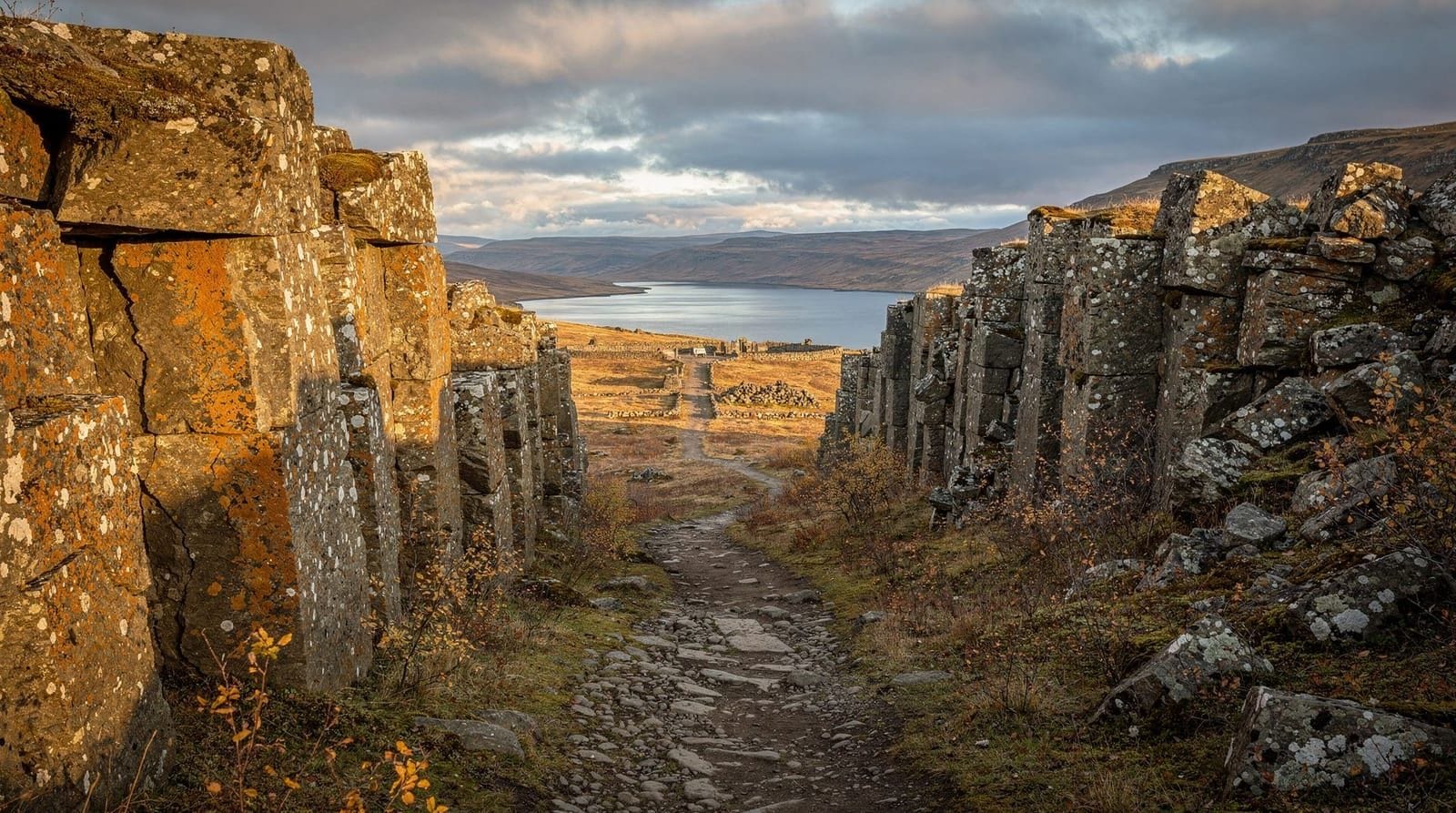
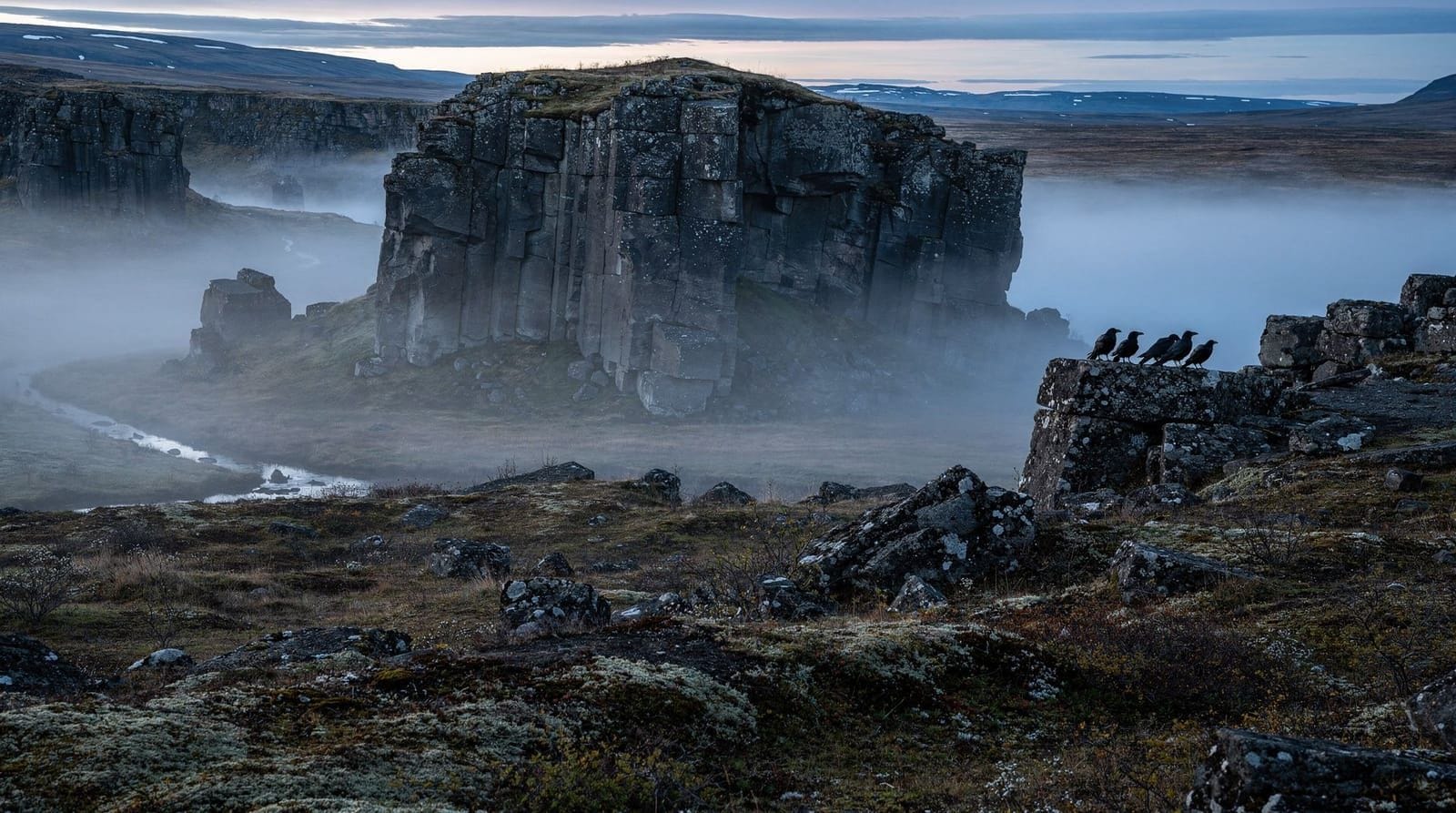
The hidden people live in specific rocks — elfstones or hidden people rocks — which are often visually unremarkable boulders in lava fields or hillsides. The significance of a particular rock is typically transmitted within communities and families rather than marked officially.
Survey data and the belief spectrum
The most-cited survey, conducted by the University of Iceland, found that approximately:
- 54% of Icelanders consider it possible or likely that elves and hidden people exist
- 8–10% consider their existence certain
- Around a third are sceptical or dismissive
This does not mean the majority literally believes in elves in the way a child believes in Santa Claus. The range of positions includes:
- Genuine belief that these beings exist in a literal sense
- A precautionary position (“I don’t know, so it seems wise not to dismiss it”)
- Cultural respect for a tradition without personal supernatural belief
- Treating it as metaphorical language for the aliveness and unpredictability of landscape
The spectrum is wide and the positions are held simultaneously within families and communities.
Road rerouting and construction modifications
The most compelling evidence that folklore belief has practical cultural weight is the documented history of infrastructure decisions made with elf habitats in mind.
In the 1970s, a road in Hafnarfjörður was rerouted to avoid disturbing a rock formation believed to be inhabited. In 2013, a road construction project near Garðabær was halted after protests from a group claiming an elfstone would be damaged — the road was eventually modified. The Álftanes peninsula ring road has sections adjusted around specific rocks.
These are not ancient events — they are recent decisions in a modern country with a population that is educated, technically competent, and in many cases professionally working in engineering and planning. The decisions reflect a cultural context in which dismissing traditional beliefs about place is considered socially risky in a way that it would not be in most European countries.
There is also a practical element: moving a culturally significant rock against community objections creates political friction that may exceed the engineering cost of routing around it.
Origins of the belief system
The scholarly understanding links the belief in hidden people to several converging sources:
Norse land spirit tradition: The pre-Christian Norse belief in landvættir (land spirits) — entities associated with specific landscape features — survives in modified form in the huldufólk tradition. Iceland’s conversion to Christianity in 1000 CE (a decision made at the Alþing at Þingvellir) officially ended pagan practice, but folk beliefs about landscape spirits persisted in rural areas.
Isolation and environment: Iceland’s landscape is geologically active and visually unusual in ways that encourage anthropomorphisation. Lava fields with their human-scale boulders, volcanic steam, and sudden weather changes create an environment where the sense of non-human agency in the landscape is more plausible than it would be in a stable, well-mapped terrain.
Oral tradition: Prior to widespread literacy, the hidden people tradition was transmitted orally through local stories. Collections made by Jón Árnason in the 19th century (similar to the Grimm brothers’ work in Germany) documented hundreds of elf and hidden people stories from across Iceland.
The Álfhól elf house — Hafnarfjörður
Hafnarfjörður, south of Reykjavík, markets itself as Iceland’s elf capital. The Álfhól (“elf houses”) are a series of small decorative structures placed around the town — part tourist attraction, part genuine local tradition maintenance.
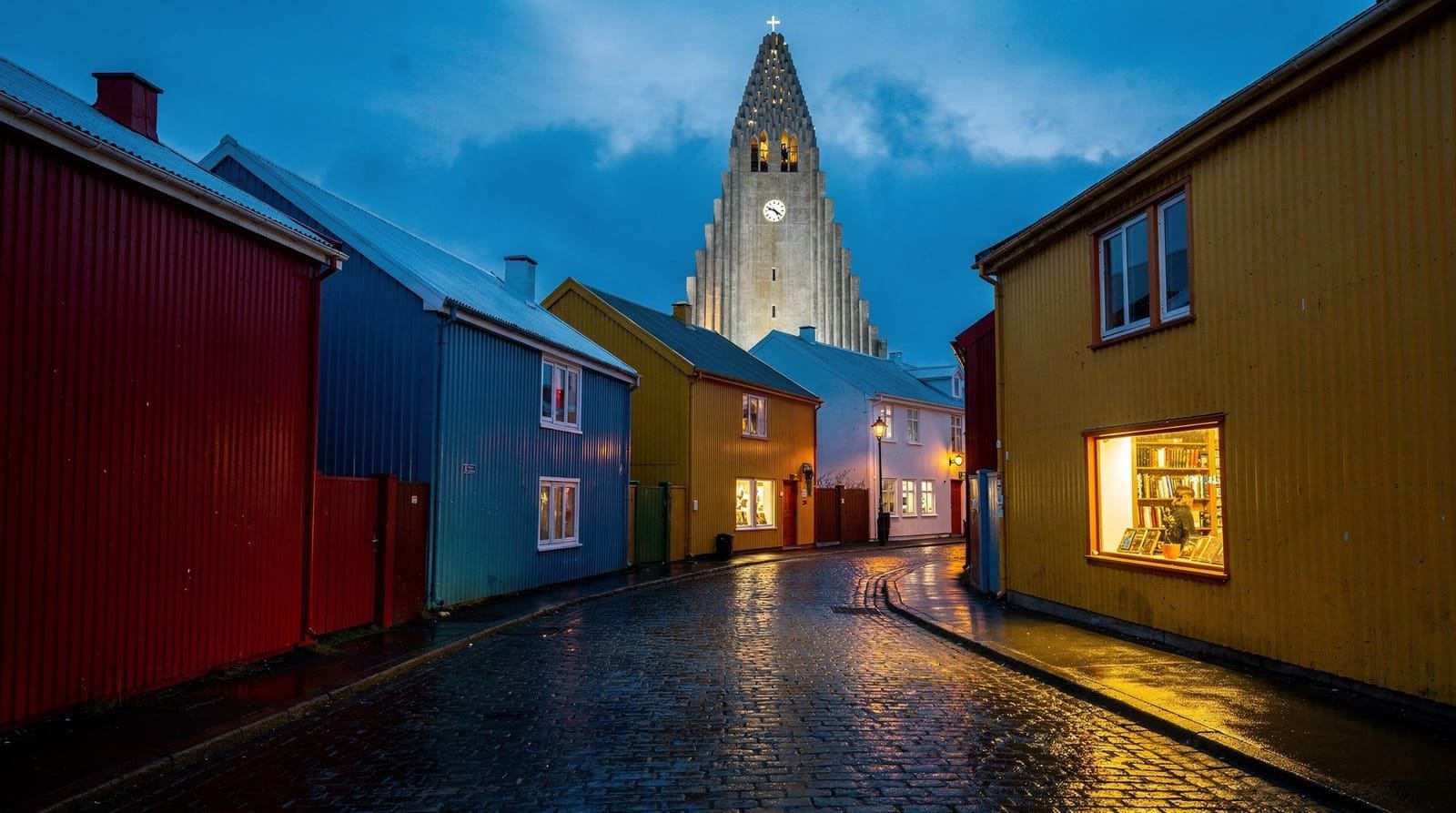
A folklore and mythology walk in Reykjavík covers the elf tradition alongside Icelandic mythology and the monster traditions (the Yule Lads, the Yule Cat, and older beings) in historical and cultural context — considerably more substantive than the tourist elf-house version.
The Yule Lads — Jólasveinar
Related to but distinct from the hidden people tradition: the Jólasveinar, or Yule Lads. These 13 mischievous trolls arrive one by one on the 13 nights before Christmas (December 12–24), leaving sweets or rotten potatoes in children’s shoes depending on behaviour. They are the children of Grýla — a giantess who eats naughty children — and their lazy husband Leppalúði.
Their names describe their particular mischief: Skyr Gobbler eats skyr (Icelandic yoghurt), Candle Beggar steals candles, Sausage Swiper takes sausages from the smokehouse. These are not Santa Claus variants — they are a specific Icelandic tradition preserved in modern commercial form but originally part of a genuinely frightening winter mythology designed to enforce good behaviour.
The Jólakötturinn (Yule Cat) is the family’s equally threatening pet: a large cat said to eat anyone who did not receive new clothing before Christmas. The practical meaning was economic incentive to ensure everyone had completed their wool processing before winter — a real agricultural concern.
The Huldufolk in Icelandic media and art
The hidden people tradition has generated a significant body of Icelandic creative work:
Hallgrímur Helgason’s work and other contemporary Icelandic writers engage with the tradition as a lens for examining the relationship between Icelanders and their landscape — the way the terrain seems animated, resistant to human reduction.
Vigdís Grímsdóttir’s novels engage the tradition as part of Icelandic women’s literary culture.
The 2010 film Vonarstræti and other Icelandic films occasionally reference the hidden people as background cultural texture rather than plot device.
The most productive artistic engagements with the tradition are those that treat it as a psychological or ecological truth about landscape — that specific places have characters, that development involves negotiation, that the non-human world has claims — rather than literal fantasy world-building.
Internationally: The Icelandic tradition has been referenced in travel journalism to the point of cliché, often reduced to a single statistic about “Icelanders believe in elves.” This reduction loses the actual cultural complexity: the range of belief positions, the specific historical roots, the ecological metaphor content.
The tradition in tourist context
The commercial tourist industry has both preserved and distorted the elf tradition. Elf tours, elf museums, and elf houses provide accessible entry points for visitors, but they typically present the most simplified version of the tradition — small decorative figures in Scandinavian-style fairy tale framing — rather than the more complex huldufólk tradition.
What tourist versions typically miss:
- The distinction between huldufólk (hidden people, human-sized) and the smaller decorative elf figure
- The precautionary/epistemic aspect of the belief (I don’t know, so I respect it)
- The specific ecological reading of the tradition as a way of encoding the dangers of careless landscape use
- The Yule Lad tradition as genuinely frightening rather than charming
The better visitor experiences with the tradition are not at elf museums but with guides who can discuss the cultural complexity honestly.
A private folklore walking tour of Reykjavík can cover the genuine cultural tradition — elf belief, Yule Lad mythology, hidden people, and the Skálholt church tradition — with the nuance and local knowledge that distinguishes authentic cultural learning from tourist-positioned entertainment.
Contemporary practice
The contemporary relationship with the hidden people tradition ranges across communities:
Building consultations: Some Icelanders consult álfa-sérkennileg (elf-sensitive individuals) before construction projects begin on new land. This is not universal but is documented.
Specific rocks and locations: Communities maintain knowledge of which specific features in their area are considered significant. This is transmitted informally — a neighbour tells you which rock not to disturb.
Festival observance: The 13 nights of Yule Lads and the various winter troll traditions are actively maintained in Icelandic homes with children.
Tourism reframing: The elf tradition has been commercially developed in the tourist sector in ways that reduce its cultural specificity. Elf houses, elf shops, and elf-themed tours may or may not reflect actual community belief practices. Visiting Hafnarfjörður and treating the small elf houses as the sum total of the tradition misses the real cultural substance.
A Reykjavík walking tour with a Viking-themed local guide covers the mythology, folklore, and hidden people traditions in an accessible format — a good entry point before seeking more depth from the dedicated folklore resources.
Where to learn more
The Icelandic Folklore Museum (Þjóðminjasafnið) in Reykjavík holds Jón Árnason’s folklore collection and has material on the hidden people tradition. The Elf School (Álfaskólinn) in Reykjavík — whatever you may think of the name — runs tours that provide genuine cultural context, not just commercial elf-house visits.
See Iceland museums guide for current museum opening times and Reykjavík culture guide for the broader cultural scene.
The Reykjanes Peninsula and elf territory
The Reykjanes Peninsula southwest of Reykjavík has specific cultural significance in the elf tradition. The volcanic landscape — jagged lava fields with moss covering, geothermal steam, and abrupt terrain changes — is considered particularly active in terms of hidden people presence.
The area around Grindavík and the Reykjanes ridge has folklore associated with specific lava formations. The recent volcanic eruptions at Fagradalsfjall (2021 onwards) have added new geological features to the landscape that already carries these associations.
The Blue Lagoon area sits within this landscape — the juxtaposition of a major tourist facility and the geothermal volcanic lava field it occupies illustrates the tension between economic development and the traditional landscape associations that the elf belief encodes.
Grýla and the winter mythology
The Yule Lads’ mother Grýla is the most threatening figure in Icelandic winter mythology. She is a giantess who lives in a cave in the highlands with her lazy husband Leppalúði and their 13 Yule Lad sons. Grýla travels down from the mountains at Christmas to capture and eat naughty children.
This mythology was considered genuinely frightening to children for centuries. A Danish royal decree in 1746 attempted to ban the use of Grýla and similar threatening figures to frighten children — the decree apparently had limited effect.
Grýla appears in the Sturlaugs saga starsama (a Fornaldarsaga) as a cave-dwelling giantess, predating her association with Christmas by centuries. The Yule connection appears to have solidified in the 17th century through oral tradition.
The Jólakötturinn (Yule Cat) is Grýla’s family pet — described as enormous, lurking in the winter darkness, eating anyone who did not receive new clothes before Christmas. The practical meaning: the clothing-making season before winter (processing wool, weaving, knitting) had to be completed. New clothing was the proof that a household had worked. The cat enforced economic incentives through fear.
The Skálholt tradition
Skálholt, in south Iceland near the Golden Circle route, was the seat of Iceland’s Catholic and then Lutheran bishop from 1056 until the early 19th century. It was Iceland’s most important cultural and educational centre for 700 years.
The Skálholt tradition is relevant to folklore because the church’s relationship with pre-Christian beliefs was complex. Rather than simply suppressing elf belief, the medieval church in Iceland adapted it — the hidden people were sometimes described as fallen angels who had hidden from God, making them theologically adjacent to human-adjacent supernatural beings rather than opposed to Christian cosmology.
This accommodation between Christian and pre-Christian traditions helps explain why elf belief persisted more strongly in Iceland than in most of Scandinavia — it was never as thoroughly suppressed.
Mapping the hidden people
If you want to engage seriously with the elf tradition beyond the commercial version, several resources are useful:
Jón Árnason’s collection (translated selections available): The 19th-century collection of Icelandic folklore contains hundreds of elf and hidden people stories gathered from across Iceland. It is the primary source.
Sigmundur Ernir Rúnarsson (elf specialist, based in Reykjavík): One of the more academically credible Icelanders who discusses the contemporary tradition — his presentations distinguish between historical folklore and current practice.
The Folklore Archive (Þjóðfræðisafn) at the University of Iceland: The institutional repository for oral history and folklore documentation.
Local tourist offices in the Westfjords and east Iceland: Less commercially developed regions sometimes have better access to actual community folklore than the Reykjavik tourist industry provides.
Trolls, ghosts, and the wider Icelandic supernatural landscape
Elves and hidden people are only one branch of a much larger Icelandic supernatural tradition. Trolls (tröll) are a separate category — large, often malevolent beings said to turn to stone if caught outdoors at sunrise. Many of Iceland’s distinctive rock formations, including sea stacks like the Reynisdrangar columns near Vík, are explained in folklore as trolls petrified by dawn light while trying to drag a ship ashore.
Draugar (ghosts, often physically substantial rather than ethereal in the older sagas) are a third category, prominent in Icelandic saga literature — see the Icelandic sagas explained guide for how these ghost traditions connect to the medieval written record.
Sea monsters and lake creatures round out the picture: the Lagarfljótsormurinn, said to inhabit the lake near Egilsstaðir in East Iceland, functions in the popular imagination the way the Loch Ness Monster does in Scotland — a specific, named, geographically anchored creature rather than generic folklore.
What distinguishes the huldufólk tradition from trolls, ghosts, and lake monsters is its ongoing, present-tense quality. Trolls belong to deep myth-time; the hidden people are described as living alongside modern Icelanders right now, in specific named rocks, which is why they alone have influenced 21st-century infrastructure decisions.
How to experience the tradition respectfully as a visitor
The temptation for visitors is to treat elf belief as a quirky photo opportunity — a selfie at a Hafnarfjörður elf house, a joke about Iceland’s “elf lobby.” A more respectful approach costs nothing extra and gives a richer trip:
- Ask, don’t assume. If a local mentions a specific rock or hill has significance, take the comment seriously rather than laughing it off — you don’t need to share the belief to respect it.
- Choose substance over souvenirs. Elf-themed shops sell plush toys and postcards; a proper folklore walk or the Icelandic history overview gives the cultural context that makes the tradition interesting rather than kitsch.
- Don’t disturb marked or informally known sites. If you are told a specific boulder is considered a hidden-people home, there is no benefit to testing the belief by climbing on it — it reads as disrespectful regardless of what you personally think about elves.
- Read a little before you go. Even a short primer on huldufólk versus tröll versus draugar transforms a Reykjavík folklore walk from novelty into genuine cultural literacy.
Frequently asked questions about Icelandic elves and folklore
Is the belief in elves unique to Iceland?
Not entirely — Norse and Celtic cultures across Scandinavia and the British Isles had related beliefs in land spirits and hidden beings. Iceland’s version is notably persistent, documented, and culturally active in ways that most mainland Scandinavian equivalents are not.
Are the Yule Lads the same as elves?
No. The Yule Lads (Jólasveinar) are trolls — children of Grýla — with specific mischievous characters. The hidden people (huldufólk) are a different category: human-sized, invisible to most people, associated with specific landscape features. They share a general Norse tradition of non-human beings but are distinct traditions.
Can you visit an actual elf home?
Specific rocks in various communities are considered to be elf homes, but they are not officially marked or promoted. Guided folklore tours can take you to locations that have traditional associations, particularly in Hafnarfjörður and parts of the Reykjanes peninsula. See Reykjanes Peninsula for the broader landscape context.
Is the elf tradition taken seriously by Icelanders?
Seriously is a complex word. It is not dismissed as primitive superstition even by sceptics. It is treated as a culturally significant tradition that commands some respect regardless of personal belief. Within that, individual Icelanders range from genuine belief to complete scepticism.
Are there festivals related to Icelandic folklore?
The Christmas period (December 12 – January 6, the 13 nights of Jólasveinar plus the 13 days until Þrettándinn, the Icelandic Twelfth Night) is the main folklore-related festival period. Þrettándinn (January 6) involves bonfires and, traditionally, elves and hidden people dancing around them on their last night of winter visibility.
Is it disrespectful to joke about elves with Icelanders?
Light-hearted curiosity is generally welcomed; outright mockery or insisting it’s all nonsense tends to land poorly, even with sceptical Icelanders, because it flattens a genuine cultural tradition into a punchline. A good rule: ask questions rather than making pronouncements, and take any specific local knowledge about a rock or site at face value rather than challenging it.
Where is the best single place to learn about the tradition properly?
A guided folklore or mythology walk in Reykjavík — covering huldufólk, trolls, and the Yule Lads together — gives more genuine context in two hours than a self-guided visit to the Hafnarfjörður elf houses. See the Reykjavík culture guide for how to fit one into a city stay.
Top experiences
Bookable activities with verified prices and instant confirmation on GetYourGuide.
Top experiences
Best-rated activities across GetYourGuide and Viator.

Airport Transfer: Keflavik Airport to Reykjavik Center in Iceland
- Viator

From Reykjavik: Snaefellsness Peninsula small group day tour
- Viator

Ice Cave and Glacier Walk into Blue Glacier Canyon
- Viator

Small-Group South Coast & Glacier Hike Tour from Reykjavik
- Viator

Sólheimajökull Ice Climbing and Glacier Walk
- Viator

From Reykjavik: Katla Ice Cave and South Coast Day Tour
- Viator