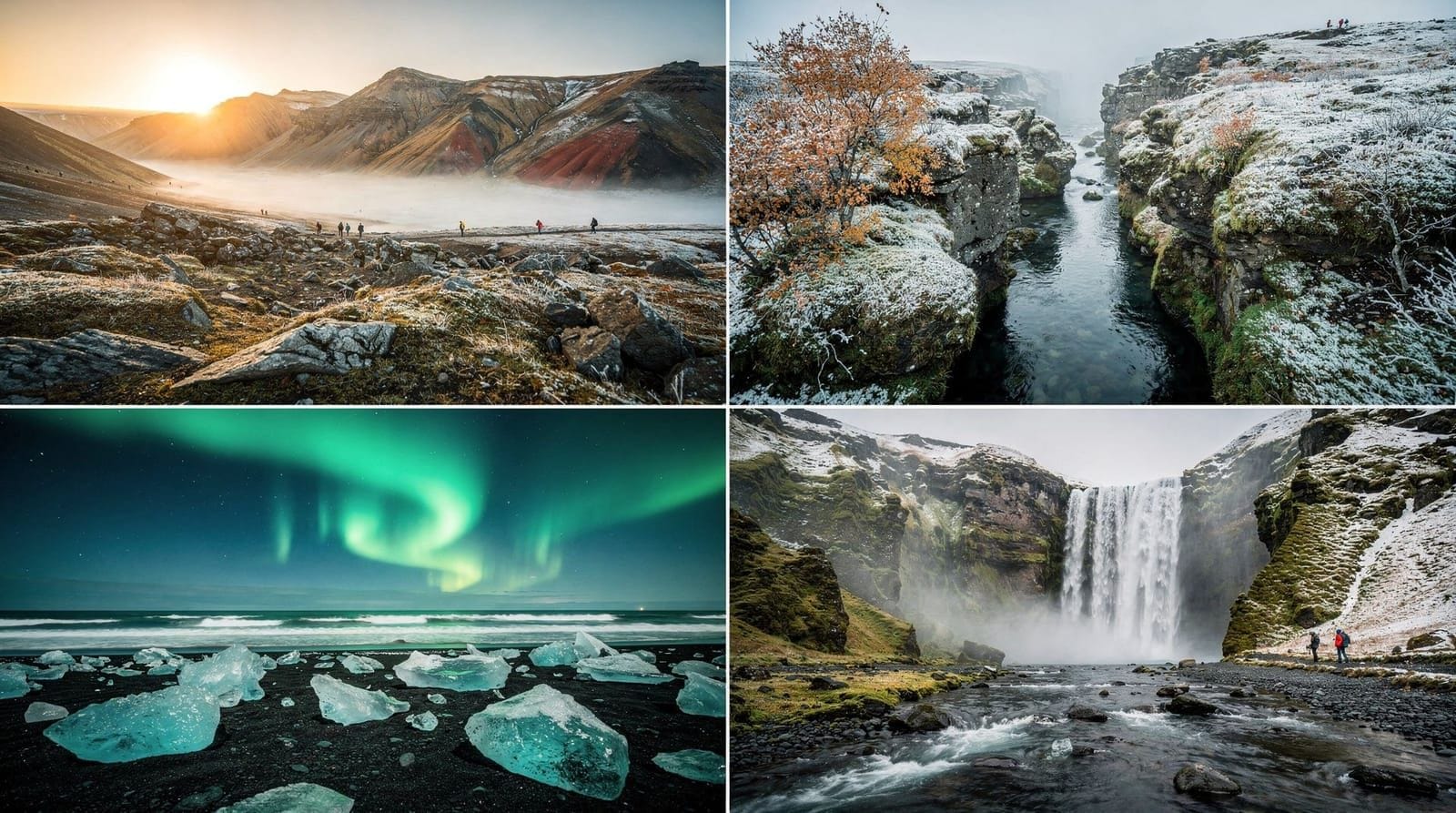
Iceland month by month — what to expect every month of the year
Reykjavik: Northern Lights lifetime guarantee
Which month is best to visit Iceland?
September is the best all-round month for most travellers — F-roads still open, northern lights returning, lower prices, and fewer crowds. July has the best weather and full midnight sun. February is the cheapest month with the strongest northern lights window.
How to use this guide
Each month below summarises the key factors for that window: temperature, daylight hours, what is open, what wildlife is active, and who the month suits best. Cross-references point to deeper guides for each season.
| Best all-round month | September |
| Cheapest months | January, February, November |
| Best weather odds | July |
| Best aurora + F-roads combo | Late August–September |
| Avoid on a budget | Late June–early August, Christmas–New Year week |
January
Temperature (Reykjavík): -1°C to 3°C (30–37°F) Daylight: 4–5 hours Aurora: Excellent (long dark nights) Crowds: Very low Prices: At annual lows (excluding New Year week) F-roads: Closed
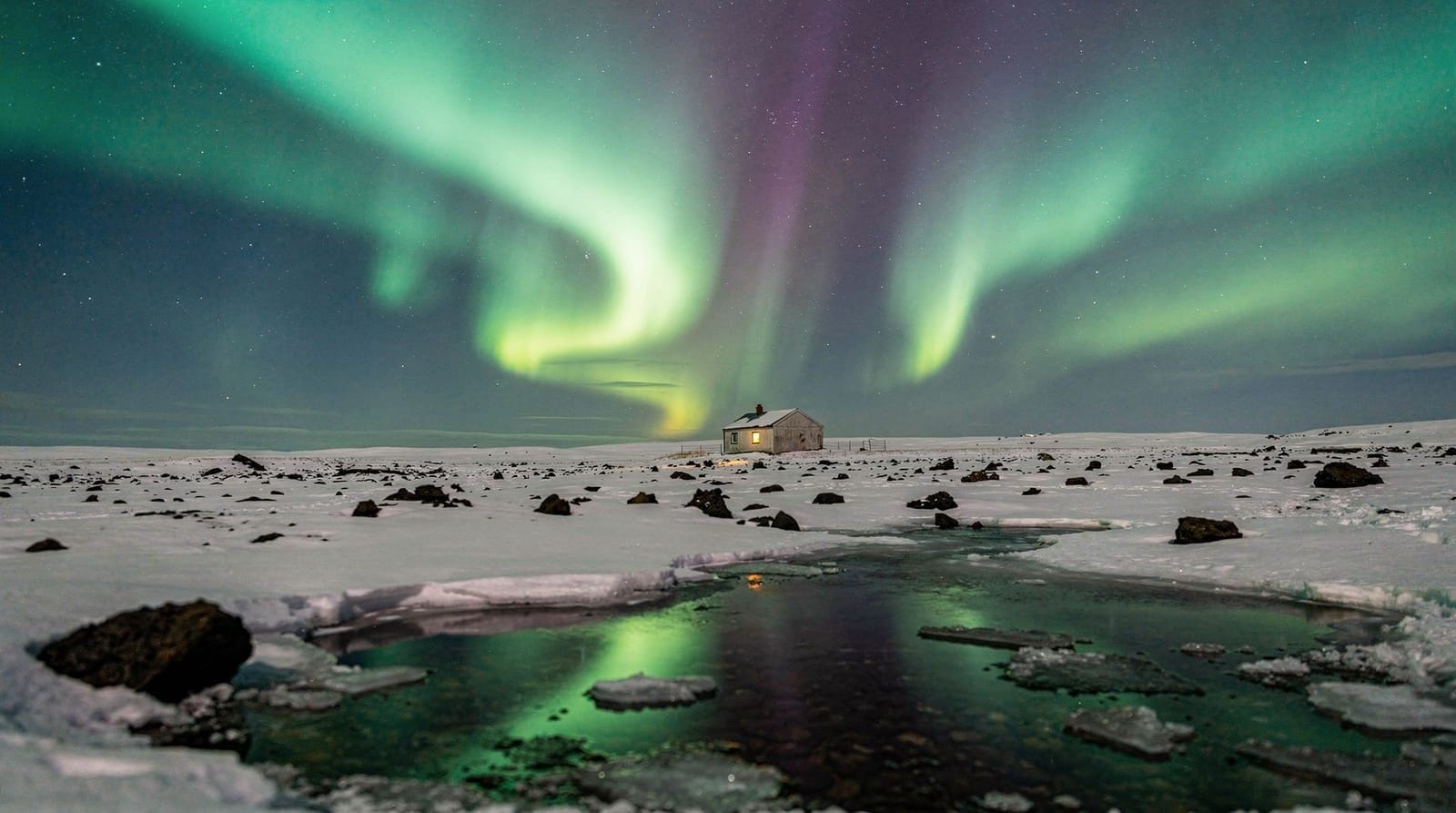
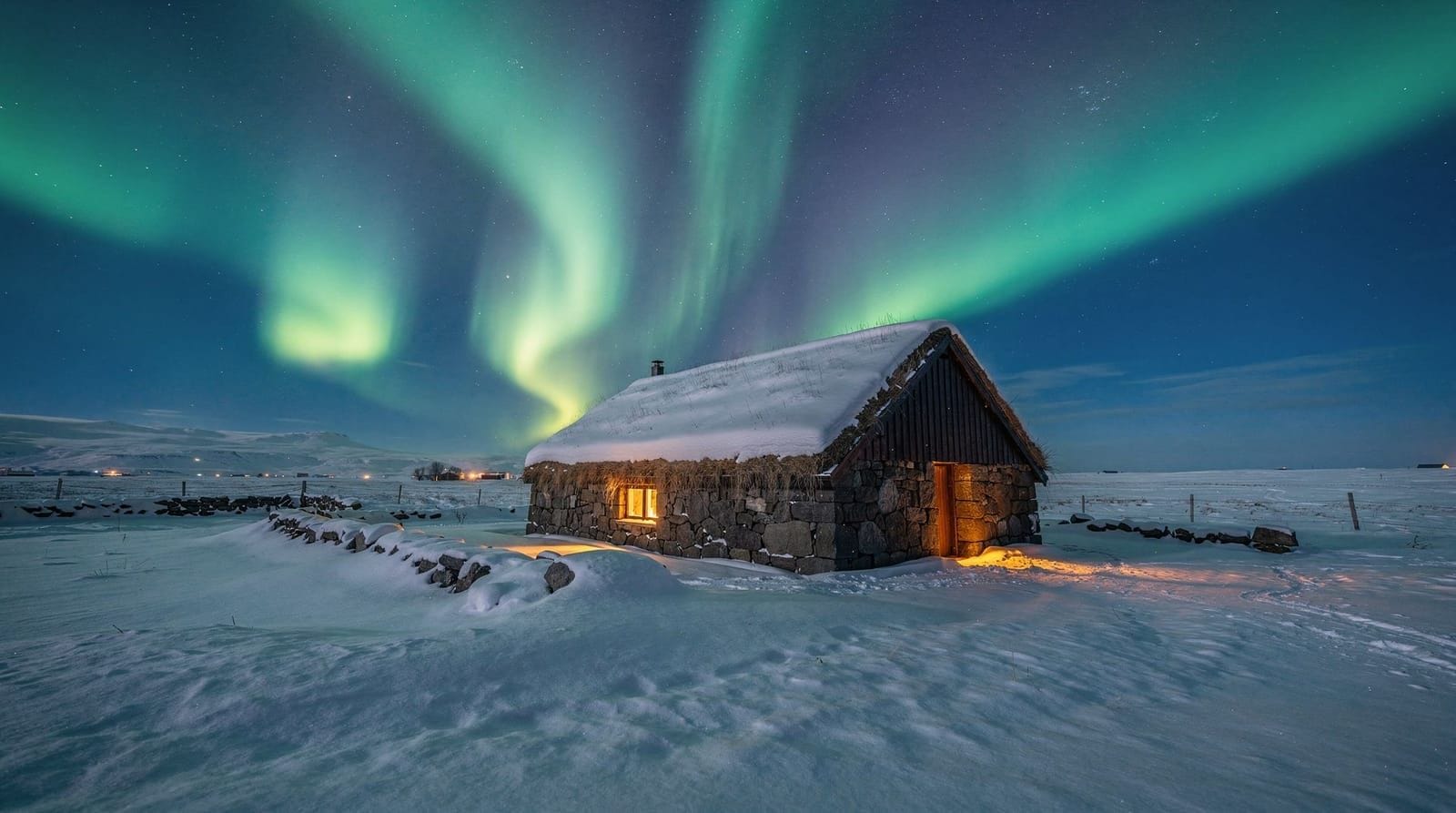
January is Iceland’s darkest and coldest month — and for some travellers, that is exactly the appeal. Northern lights viewing is excellent when skies clear, prices are the lowest of the year, and you will have popular sites like Þingvellir and Jökulsárlón to yourself. Our Iceland in winter guide covers the practicalities of driving and dressing for this window in detail.
The downsides are real. Just 4–5 hours of usable daylight means you need to be precise with scheduling. Road closures in the north and east are common during January storms. A 4WD vehicle is essential outside Reykjavík.
Best for: Aurora chasers, photographers, budget travellers, couples who do not mind darkness.
February
Temperature: -1°C to 4°C (30–39°F) Daylight: 7–8 hours Aurora: Excellent Crowds: Very low Prices: Annual low F-roads: Closed
February is arguably the best month for budget travellers chasing the northern lights. Daylight is noticeably longer than January (recovering around 5 minutes per day), prices remain low, and aurora odds are still strong. The Þorrablót mid-winter festival in February sees local restaurants serving traditional Icelandic food including hákarl (fermented shark) and svið (singed sheep’s head) — a cultural experience with strong opinions.
February northern lights tours offer the best odds of the year combined with the lowest trip costs. The lifetime guarantee option is particularly sensible in February when clear nights alternate with cloud.
Best for: Northern lights, budget, genuine off-season Iceland.
March
Temperature: 0–5°C (32–41°F) Daylight: ~12 hours (equinox) Aurora: Still very good Crowds: Low to moderate Prices: Starting to rise F-roads: Closed
March is the last good month for the combination of aurora + ice caves. The equinox brings 12 hours of daylight by month’s end — enough for proper day trips. The equinox effect statistically increases geomagnetic activity, making late March good for aurora.
Ice caves in Vatnajökull close around March 15 as melt begins. Book early if March ice caves are a priority.
Best for: Last month for ice caves, aurora still good, longer days arriving.
April
Temperature: 4–8°C (39–46°F) Daylight: 14–16 hours Aurora: Fading (sky too bright by late April) Crowds: Low Prices: Moderate F-roads: Still closed
April sits in an awkward transition. Northern lights become increasingly difficult to see as nights shorten — by mid-April, the sky does not get fully dark. Ice cave season has ended. Puffins start arriving on cliffs in late April, which is genuinely exciting.
The advantage: long days, decent prices, and virtually no crowds. The Golden Circle and south coast are uncrowded and fully accessible.
Best for: Budget travel, crowdless Iceland, early puffins. See avoiding crowds in Iceland for how shoulder months like April stretch further.
May
Temperature: 6–10°C (43–50°F) Daylight: 18–19 hours Aurora: Not viable Crowds: Low to moderate Prices: Moderate, rising toward month’s end F-roads: Closed until June
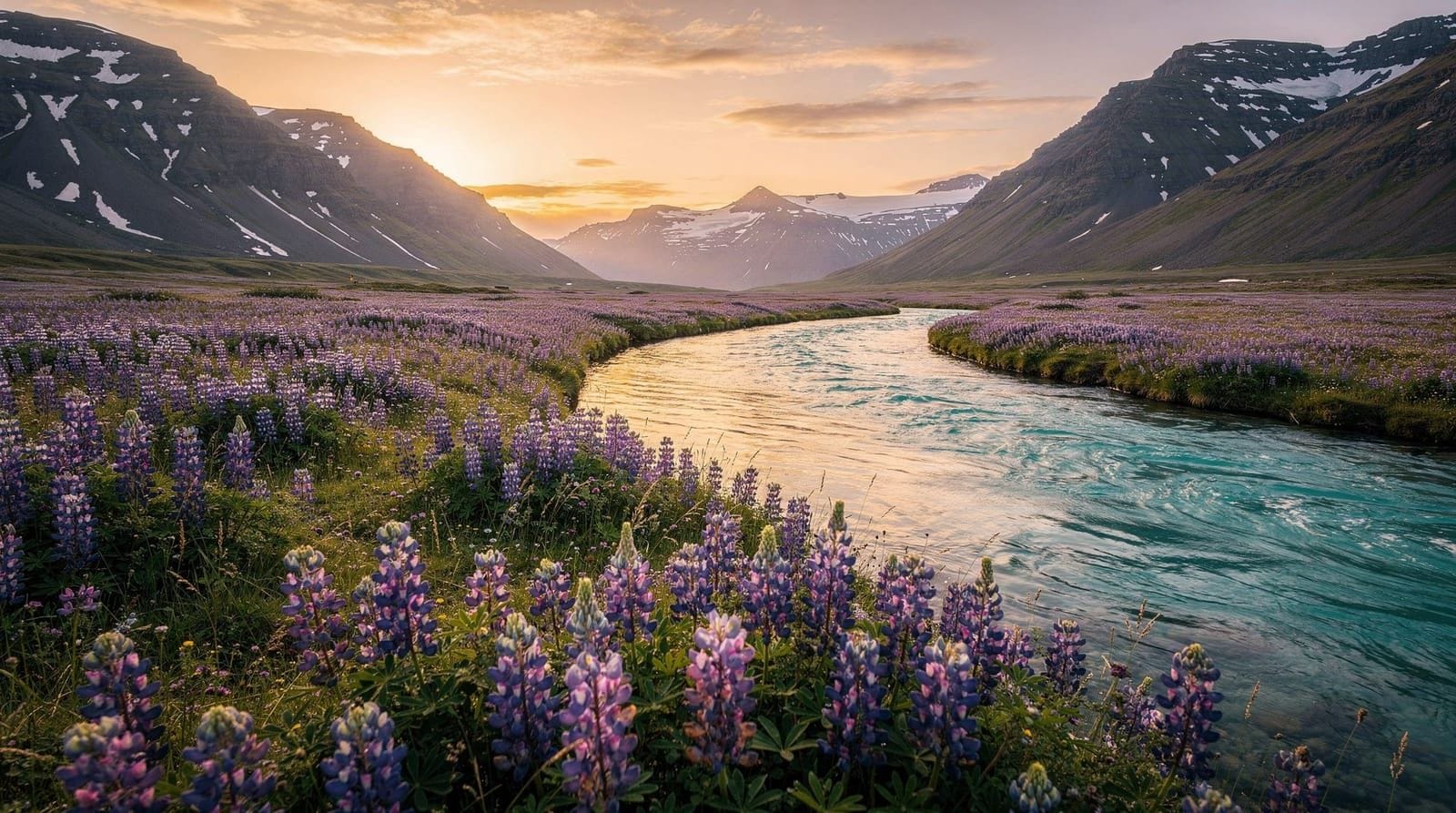
May is when Iceland starts feeling alive. Lupine wildflowers begin appearing in late May. Puffins are established on their cliffs. Whale watching picks up. Days are long enough to comfortably cover significant ground.
The main limitation: F-roads are still closed, so the highlands remain inaccessible. Aurora is invisible — nights barely darken.
Best for: Wildlife (early puffins, whales arriving), wildflowers, long days, reasonable costs.
June
Temperature: 9–13°C (48–55°F) Daylight: 21–22 hours (midnight sun) Aurora: Not visible Crowds: High (rising through month) Prices: High F-roads: Opening mid-June
June is the start of Iceland’s high season. The midnight sun peaks around June 21. F-roads typically open between June 10–20. The Secret Solstice music festival draws visitors to Reykjavík.
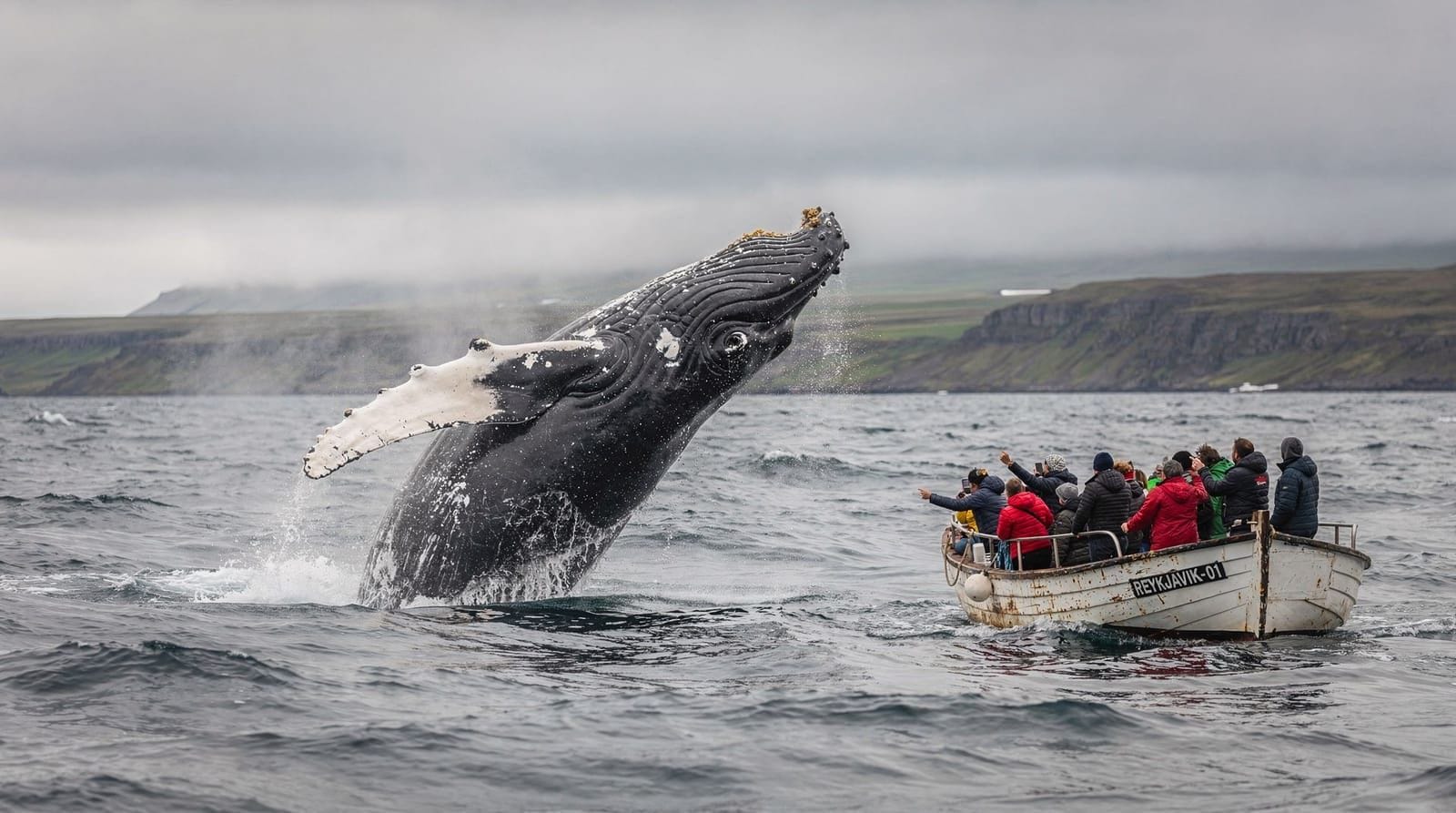
Puffins are at their most active, whale watching is excellent, and the highland routes to Landmannalaugar and Askja become accessible. Accommodation and car rentals are significantly more expensive than winter — book months ahead for July, and at least 6 weeks ahead for June.
Best for: Midnight sun experience, highland hiking, wildlife, long-distance hiking (Laugavegur opens June 15–20).
July
Temperature: 11–14°C (52–57°F) Daylight: 20–21 hours Aurora: Not visible Crowds: At annual peak Prices: At annual peak F-roads: Open
July is Iceland’s warmest and most popular month. Main attractions are at their busiest — Geysir, Seljalandsfoss, the Blue Lagoon, and Jökulsárlón can all feel crowded mid-day. Early morning visits (before 8am) remain the best strategy; the Iceland in summer guide has a fuller crowd-avoidance playbook for this exact window.
The Þjóðhátíð festival on Vestmannaeyjar (first weekend of August) is the landmark event — many Icelanders camp there the last weekend of July.
Best for: Optimal weather, warmest swimming in natural hot springs, full highland access.
August
Temperature: 10–13°C (50–55°F) Daylight: 17–18 hours, darkness returns late month Aurora: Possible from mid-August onward Crowds: High early, dropping sharply after first weekend Prices: High early, dropping after Verslunarmannahelgi F-roads: Open (closing from late August)
August is a transitional month. The first weekend (Verslunarmannahelgi, the national long weekend) sees many Icelanders camping — then crowds thin sharply after that. The aurora becomes faintly visible in late August when darkness returns.
Puffins leave for the open ocean by mid-August. F-roads start closing in the second half of the month. The season is winding down, but prices remain high through August.
Best for: Early August for maximum summer (summer price), late August for shoulder prices + early aurora.
August is the last month for whale and puffin combined tours before puffins depart. Tours in early August still guarantee puffin sightings; late August is less reliable.
September
Temperature: 7–11°C (45–52°F) Daylight: 13–14 hours early, 12 hours at equinox Aurora: Returning, good conditions Crowds: Low Prices: Moderate and falling F-roads: Open early September, closing from September 10–20
September is the month most knowledgeable travellers cite as the sweet spot. The combination of still-open F-roads, returning darkness for aurora, reduced crowds, and lower prices is difficult to match in any other month.
The equinox effect (September 22–23) produces statistically stronger geomagnetic activity. Clear nights in early September see good aurora, and the dark window extends earlier each evening.
Best for: The best all-round month. Balanced combination of aurora, F-roads, fewer crowds.
October
Temperature: 4–8°C (39–46°F) Daylight: 9–11 hours Aurora: Good Crowds: Very low Prices: Low F-roads: Closed Ice caves: Opening from November 1
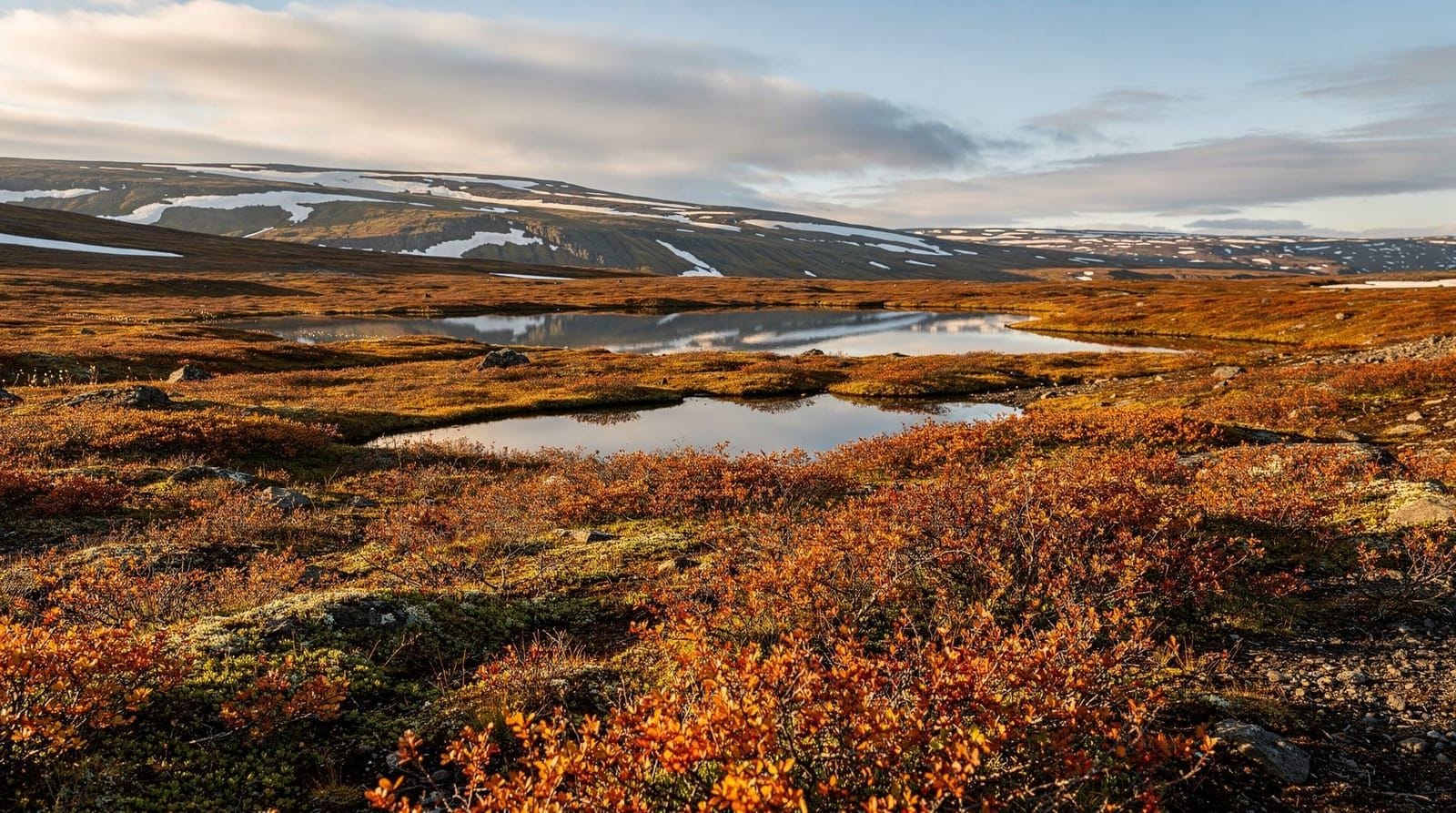
October is proper shoulder season — F-roads are closed, puffins have gone, and days are shortening fast. What remains: excellent aurora viewing, very quiet roads and attractions, and notably low prices. The first autumn storms arrive in October, and north Iceland road conditions can deteriorate.
The Reykjavík International Film Festival (Riff) typically runs in late September/early October — a cultural draw with no specific season requirement.
Best for: Aurora hunting on a budget, very quiet Iceland, transition into winter.
November
Temperature: 1–5°C (34–41°F) Daylight: 6–7 hours Aurora: Good Crowds: Very low Prices: Very low F-roads: Closed Ice caves: Opening from November 1
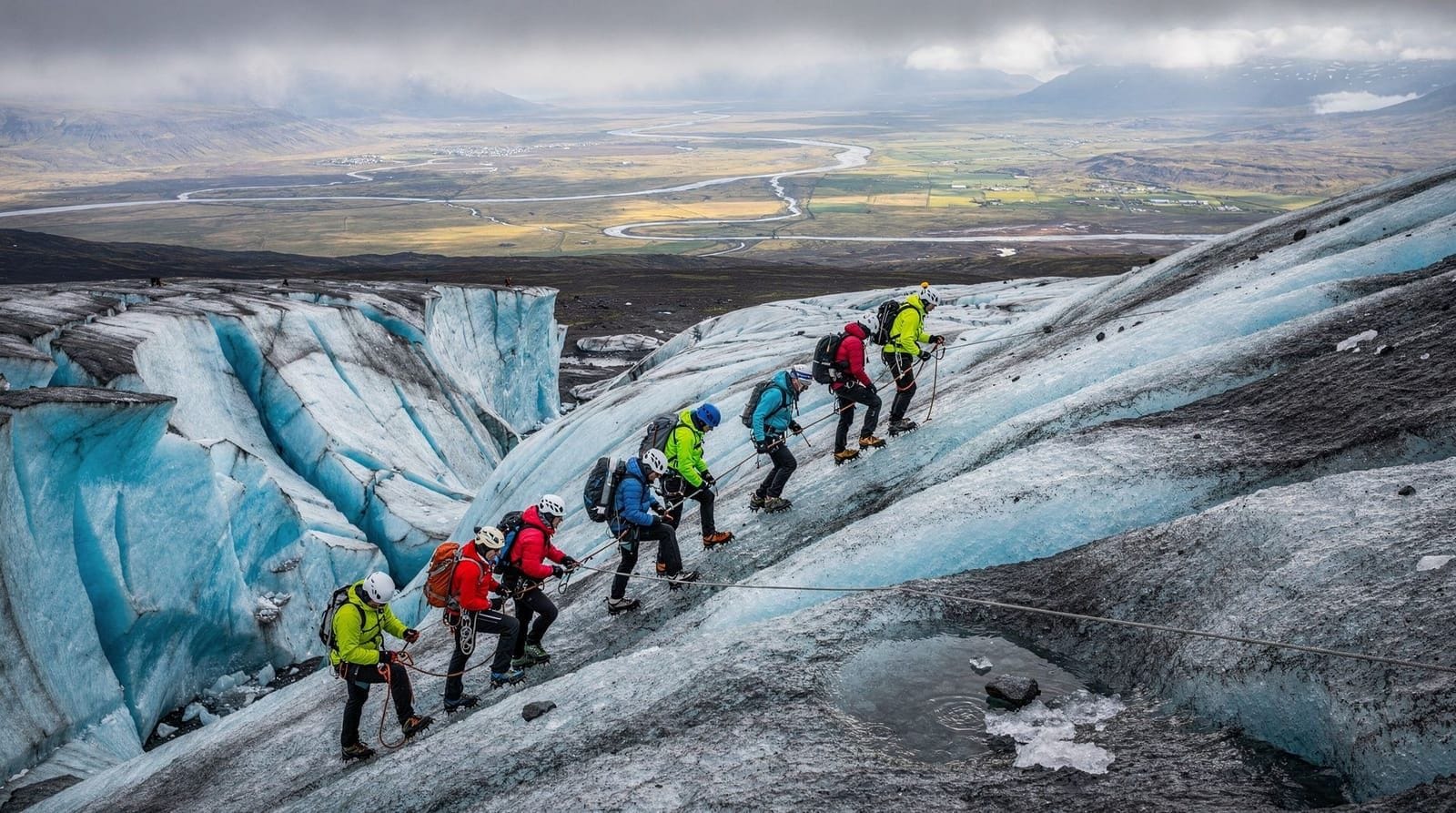
November is Iceland’s quietest tourist month. Ice caves in Vatnajökull open November 1, and the first cave tours of the season book quickly. Dark comes early, aurora opportunities are plentiful, and some rural guesthouses and campsites close for the season.
Ice cave tours open in November. Early November gives first-of-season access when caves are fresh — book ahead as tours sell out even in the quieter winter months.
Best for: Ice cave season opening, budget travel, very quiet Iceland.
December
Temperature: -1°C to 3°C (30–37°F) Daylight: 4–5 hours Aurora: Good Crowds: Low except Christmas-New Year week Prices: Low, spiking Christmas-New Year Ice caves: Open
December has an unusual character split. Early December is quiet and cheap — genuine off-season Iceland. The Christmas and New Year period (roughly December 22–January 3) sees prices spike as Scandinavian and European visitors fill Reykjavík for the city’s famous New Year celebrations, including community bonfires and fireworks.
For the Christmas window specifically, see Christmas and New Year in Iceland.
Best for: Christmas atmosphere in Reykjavík, ice caves, aurora. Avoid peak Christmas week if on a budget.
Summary table
| Month | Daylight | Aurora | F-roads | Crowds | Price Index |
|---|---|---|---|---|---|
| January | 4–5h | Excellent | No | Very low | Very low |
| February | 7–8h | Excellent | No | Very low | Very low |
| March | ~12h | Very good | No | Low | Low |
| April | 14–16h | Fading | No | Low | Moderate |
| May | 18–19h | No | No | Low | Moderate |
| June | 21–22h | No | From mid-June | High | High |
| July | 20–21h | No | Yes | Peak | Peak |
| August | 17–18h | Late month | Until late Aug | High | High |
| September | 12–14h | Returning | Early Sept | Low | Moderate |
| October | 9–11h | Good | No | Very low | Low |
| November | 6–7h | Good | No | Very low | Very low |
| December | 4–5h | Good | No | Low–high | Low–high |
Wildlife calendar
Understanding when to see specific wildlife helps plan month selection independently of weather and daylight logic.
| Wildlife | Best months | Location |
|---|---|---|
| Atlantic puffin | May–Aug | Látrabjarg, Dyrhólaey, Vestmannaeyjar |
| Humpback whale | Jun–Sep | Húsavík, Reykjavík, Akureyri |
| Minke whale | May–Oct | All major whale watching ports |
| Orca (killer whale) | May–Aug | Snæfellsnes, Westfjords |
| Arctic tern | May–Aug | Þingvellir, coastal areas |
| Whooper swan | Apr–Oct (breeding) | Lowland lakes nationwide |
| Arctic fox | Year-round | Westfjords, highlands |
| White-tailed eagle | Year-round (most visible in winter) | Westfjords, west Iceland |
| Reindeer | Year-round | East Iceland highlands |
| Seal (harbour and grey) | Year-round | Vatnsnes Peninsula, Jökulsárlón |
The wildlife guide and birdwatching guide cover specific viewing logistics.
Geothermal and volcanic activity — year-round
Iceland’s volcanic and geothermal activity is not seasonal, but access to volcanic events is:
- Geysers: Operate year-round. Strokkur at Geysir erupts every 5–10 minutes regardless of season.
- Fagradalsfjall eruptions: The ongoing volcanic activity on the Reykjanes Peninsula has been intermittent since 2021. When active, the lava field is accessible with appropriate safety protocols. Status changes rapidly — check vedur.is before planning a visit.
- Lava tubes: The Raufarholshellir lava tunnel near Hveragerdi is accessible year-round with a guided tour.
- Geothermal hiking: Reykjadalur hot spring river near Hveragerdi is open year-round but icy in winter. Summer and early autumn are the most comfortable.
Planning tools for specific months
Road condition monitoring: road.is (Vegagerðin) updates road status throughout Iceland. Essential for any drive in September–May.
Aurora forecast: vedur.is (Icelandic Met Office) publishes the aurora forecast 3 days ahead, including cloud cover predictions. The most reliable Iceland-specific tool for northern lights planning.
Campsite availability: campingcard.is lists member campsites. Booking is recommended for July and August on the main camping circuit (Landmannalaugar, Þórsmörk, popular Ring Road sites).
F-road status: Updated on road.is in the highlands section — no F-road should be driven without checking its current open/closed status.
Month-by-month accommodation strategy
January–March: Book 1–2 weeks ahead for most destinations. Christmas week requires 2–3 months lead time. Good cancellation policies are easy to find.
April: 2–3 weeks ahead is comfortable. Some choice properties in Reykjavík begin to fill.
May: Book 3–4 weeks ahead. Things are getting busier.
June: Book at least 6 weeks ahead for Reykjavík and popular guesthouses on the south coast. Many travellers are booking summer trips from January–February.
July: Book 2–4 months ahead for best choices. July Reykjavík accommodation in good locations sells out entirely. Car rental inventory depletes in May for July dates.
August: Early August (before Verslunarmannahelgi) is nearly as busy as July. Late August more flexible. Book the start of August at the same lead time as July.
September–October: 3–4 weeks ahead for most dates. The week of the Reykjavík International Film Festival (late September/early October) fills faster.
November–December: 1–2 weeks ahead outside Christmas week. December 28–January 2 requires 2–3 months advance booking.
The Iceland Airwaves effect — November planning
November is Iceland’s lowest-demand tourist month with one exception: Iceland Airwaves, the four-day music festival held in Reykjavík, typically in the second week of November. During Airwaves weekend, central Reykjavík accommodation fills completely and prices spike.
The festival itself is worth considering specifically — it showcases Icelandic and international acts across 20+ venues, with many “off-venue” free shows in bars and shops. November Iceland with Airwaves as the anchor is a specific trip type: music festival plus northern lights hunting, ice caves beginning to open, very quiet roads outside Reykjavík. Unusual and worthwhile for the right traveller.
Booking lead times by month
A practical guide to when to book for each travel window:
| Travel Month | Book flights | Book car rental | Book accommodation |
|---|---|---|---|
| January–February | 4–8 weeks | 2–4 weeks | 1–2 weeks (except New Year) |
| March | 6–10 weeks | 3–5 weeks | 2–4 weeks |
| April | 8–12 weeks | 4–6 weeks | 3–5 weeks |
| May | 10–14 weeks | 6–8 weeks | 4–6 weeks |
| June | 12–20 weeks | 8–12 weeks | 6–10 weeks |
| July | 16–24 weeks | 12–16 weeks | 10–16 weeks |
| August | 14–20 weeks | 10–14 weeks | 8–12 weeks |
| September | 10–14 weeks | 6–8 weeks | 4–6 weeks |
| October | 6–10 weeks | 3–5 weeks | 2–3 weeks |
| November | 4–8 weeks | 2–4 weeks | 1–2 weeks (except Airwaves) |
| December | 4–8 weeks | 2–4 weeks | 1–2 weeks (except Christmas week) |
Note: Christmas week (December 22–January 2) requires the same lead time as July — book 3–4 months ahead for the best central Reykjavík options.
The self-drive calendar
If self-driving Iceland is the goal, the month matters significantly for which roads are accessible:
- 2WD Ring Road: Year-round
- Snow chains recommended: November–March in north Iceland
- 4WD essential: For any winter travel outside the south coast and capital area
- F-roads open: Approximately June 15–September 15 (varies year to year)
- F-road highland circuits: August (driest and most reliable for challenging F-roads)
- Kjölur route (F35, more accessible F-road): Opens earlier than most, approximately June 1
The Iceland self-drive guide covers month-by-month road access in more detail, including the specific F-road conditions calendar.
Icelandic public holidays and school breaks to plan around
A handful of domestic dates move prices and crowds independently of weather, and are easy to miss if you are booking from abroad.
- Sumardagurinn fyrsti (First Day of Summer), third Thursday of April: a public holiday with shorter opening hours in some towns, but no major impact on visitors.
- Verslunarmannahelgi, the long weekend around the first Monday of August: the single busiest domestic travel weekend of the year, driving campsite and rural accommodation shortages, especially in the south and the Westman Islands.
- Icelandic autumn half-term (mid-October): a minor domestic bump in Reykjavík hotel demand.
- Christmas–New Year week (December 22–January 3): the busiest and most expensive week of the low season, driven by Icelandic family travel plus international visitors drawn to Reykjavík’s New Year fireworks.
None of these compare to the summer peak, but they are worth checking against your dates if you are trying to stretch a shoulder-season budget as far as possible.
Two close calls: choosing between similar months
Several month pairs get compared constantly by travellers narrowing down dates:
September vs. October — September keeps F-roads open a little longer and has noticeably milder weather; October is quieter still and cheaper, but the highlands are already closed and days are shortening fast. Choose September if the Ring Road highlands matter to your plans, October if budget and solitude matter more.
May vs. June — May is cheaper and quieter with early wildlife; June adds the midnight sun and full highland access but at meaningfully higher prices and bigger crowds. If a specific F-road route is the goal, June wins outright; for a calmer trip on the Ring Road proper, May holds up well.
February vs. March — Both offer strong aurora odds. February is cheaper and darker (more viewing hours); March adds the equinox boost to geomagnetic activity and the last window for ice caves before spring melt closes them. Choose March if ice caves are on the list, February if budget is the priority.
North vs. south: the same month, different experience
Because Iceland is small but climatically varied, the same calendar month can feel different depending on which region you’re in. This matters most for shoulder-season trips.
| Region | Spring (Apr–May) | Autumn (Sep–Oct) |
|---|---|---|
| South coast & capital | Usually mild, roads clear, first tour buses returning | Still comfortable, storms arrive later than the north |
| North (Akureyri, Mývatn) | Snow lingers into May, some side roads slow to clear | Winter arrives noticeably earlier, often by mid-October |
| Westfjords | Last region to fully open; some roads stay closed into June | First region to see snow again, sometimes late September |
| East fjords | Milder microclimate than the north; fog is the main autumn hazard | Comparable to the south, slightly earlier darkness |
The practical takeaway: if your trip leans heavily on the Westfjords or the far north, shift your shoulder-season dates a few weeks later in spring and earlier in autumn than you would for a south-coast-only itinerary.
Frequently asked questions about Iceland month by month
What is the cheapest month to visit Iceland?
January and February are generally the cheapest months for accommodation, car rental, and flights. The exception is Christmas-New Year week in December, when Reykjavík prices rival July.
What month has the best weather in Iceland?
July is the warmest and calmest month on average. However, Icelandic weather is variable year-round — a warm week in September or a cold, stormy week in July are both entirely possible.
Can you visit Iceland year-round?
Yes. Iceland’s main Ring Road attractions are accessible year-round. Highland F-roads and some remote routes are seasonal (June–September). Each month has a distinct character and set of advantages.
When are flights cheapest to Iceland?
Generally January, February, October, and November. Flights spike in July, August, and during Christmas-New Year. Booking 3–4 months ahead for summer, 6–8 weeks for winter is typical optimal timing.
Is there a month with no downsides at all?
No — every month trades something off. September comes closest for most travellers (F-roads, aurora, moderate prices, manageable crowds all overlap), but it lacks July’s warmth and June’s midnight sun. Decide which factor matters most to your trip, then pick from the months that deliver it.
How far in advance should I decide which month to visit?
For July and August, start planning 4–6 months ahead given how quickly car rentals and central Reykjavík accommodation sell out. For shoulder months (April–May, September–October) 6–10 weeks is comfortable. For deep winter (November–February), even 2–4 weeks ahead usually works outside the Christmas and Airwaves windows.
Top experiences
Bookable activities with verified prices and instant confirmation on GetYourGuide.