Iceland in shoulder season — the case for April, May, September, October
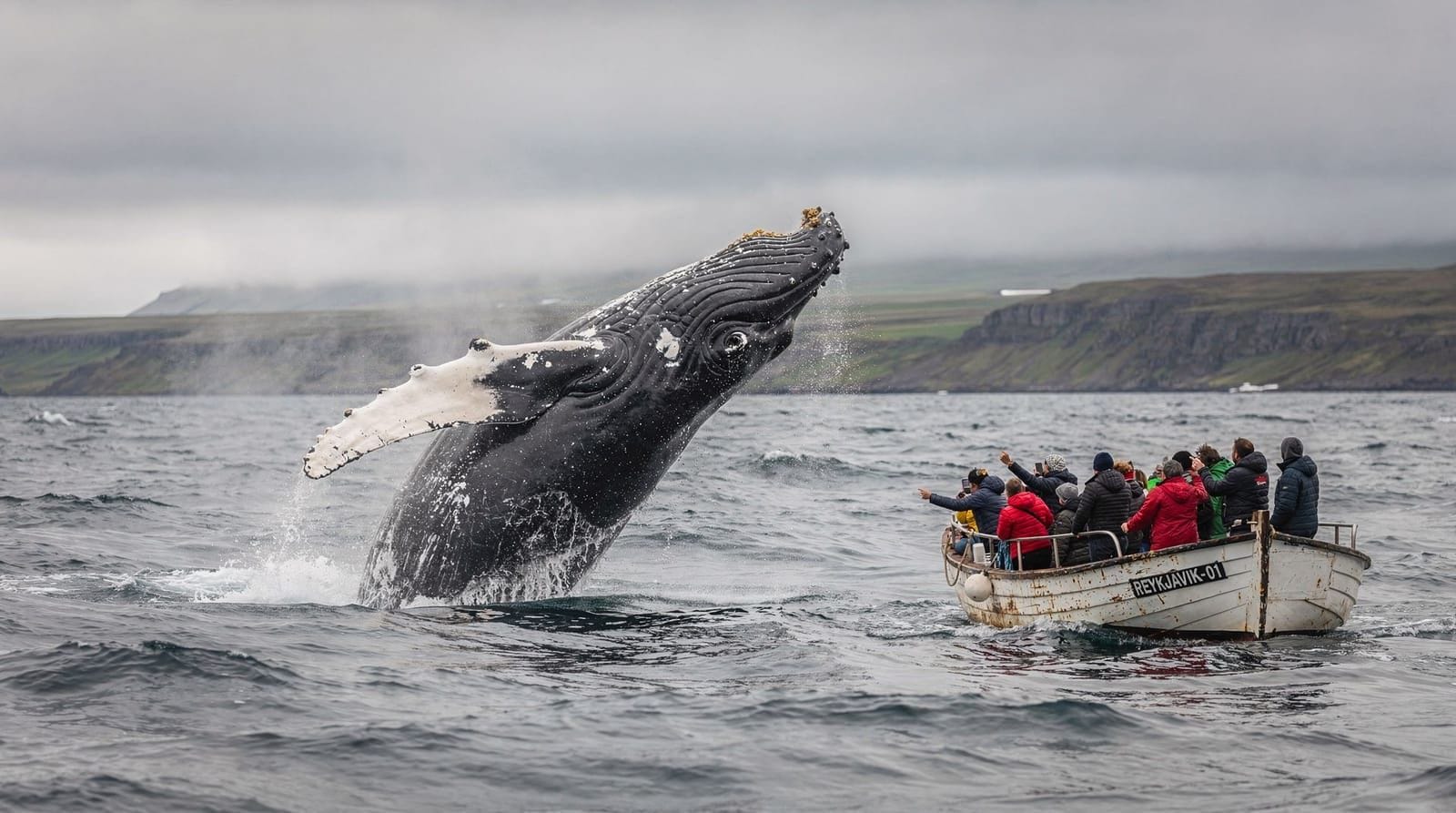
Húsavík: Whale watching cruise and puffins
Duration: 3-3.5 hours, from $134
What are Iceland's shoulder seasons and are they worth considering?
Iceland's shoulder seasons are April–May (spring) and September–October (autumn). Both offer 20–30% lower prices than peak summer, smaller crowds, and distinctive experiences — puffins and wildflowers in spring, northern lights and open F-roads in September. Most travellers find them a better value than July.
| When | April–May (spring) or September–October (autumn) |
| Cost | around 20–30% below peak July prices |
| Time needed | 7–10 days for a full Ring Road circuit |
| Getting there | self-drive easiest; guided tours run year-round |
| Best pick | September for F-roads + aurora; May for wildlife |
The honest case against peak summer
Iceland in July has a specific tourism problem that is worth understanding before deciding on timing. The country attracts over 2 million visitors per year to a population of 380,000, and the visitor flow is heavily concentrated in July and August. The infrastructure — roads, parking, guesthouses, rental car availability — was not designed for peak July capacity.
Specific problems that peak summer creates:
- Parking at Geysir fills before 10am and cars park illegally along the highway shoulders in high season
- Reynisfjara black beach sees dangerous overcrowding near the wave zone, contributing to accidents
- The most popular guesthouses on the south coast Ring Road circuit are fully booked months ahead
- Rental car inventory runs out; travellers who book late find only the most expensive options remaining
- Popular hiking trails are crowded enough that the wilderness experience is significantly degraded
None of this makes July impossible — Iceland in peak season is still a genuine and worthwhile experience. But the shoulder season offers a specifically better version of the same landscapes and experiences at lower prices and with more space.
The seasonal argument for shoulder season is not that shoulder season is hidden or undiscovered — September is increasingly popular as the word has spread. It is simply that the quality-to-cost ratio is better, and the experience of specific iconic sites is more rewarding without summer crowds.
The honest case against peak summer
Iceland’s tourism has become significantly more seasonal than it was 15 years ago. July now sees Geysir parking lots overflowing before noon and central Reykjavík guesthouses charging two or three times what the same room costs in February. The shoulder seasons — roughly April to mid-June and mid-August to October — exist in a more rational pricing environment while offering access to the full Ring Road, the south coast, and major attractions.
The tradeoffs are honest and seasonal-specific. Spring shoulder season (April–May) means no highland F-road access and fading aurora. Autumn shoulder season (September–October) means F-roads closing and puffins departing. Neither period replicates summer exactly — but for many travellers, they are a better choice than peak July for a combination of value, experience quality, and practicality.
Spring shoulder season: April and May
What you gain in April–May
Fewer crowds: Seljalandsfoss in early May has almost no queue. Þingvellir on a May weekday feels spacious. The south coast in April is road-trip-quiet.
Lower prices: Car rentals in April are typically 25–35% lower than July. Accommodation is meaningfully cheaper, and more properties have availability for short-notice bookings.
Puffins arriving: Atlantic puffins return to Icelandic cliffs from late April. The colonies on Látrabjarg (Westfjords) and near Dyrhólaey (south coast) are newly active in May — birds freshly returned and active around nesting sites.
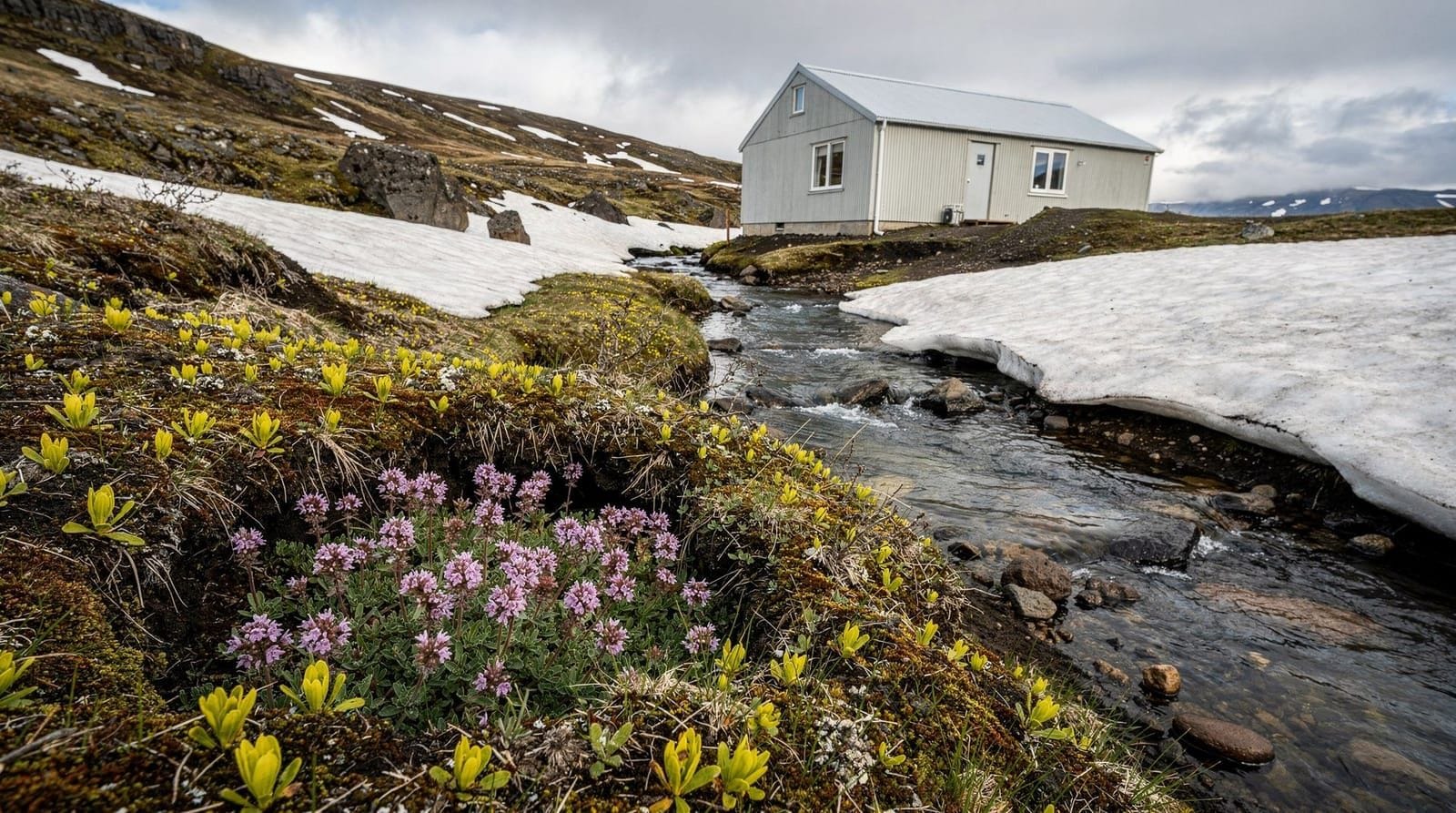
Lupine wildflowers: Late May sees the first lupine blooms appearing across the lava fields, peaking in early June. The visual transformation from brown dormant winter landscape to purple-carpeted fields happens quickly.
Growing daylight: April has 14–16 hours of daylight; May reaches 18–19 hours. Enough for full day trips without the midnight-sun sleep disruption of June and July.
What you lose in April–May
Highland F-roads: Completely closed until mid-June. No Landmannalaugar, no Askja, no Kerlingarfjöll. The interior highlands remain inaccessible.
Aurora: April still has some aurora potential early in the month. By mid-April, nights are too bright for reliable viewing. By May, aurora is essentially impossible.
Warmest weather: April and May are cold by European standards — 3–10°C (37–50°F). Waterproof layers are still mandatory.
Húsavík whale and puffin tours run from May — humpback whales arrive from the south in May and puffin colonies are newly active. Early season tours are less crowded than the July peak.
Autumn shoulder season: September and October
What you gain in September–October
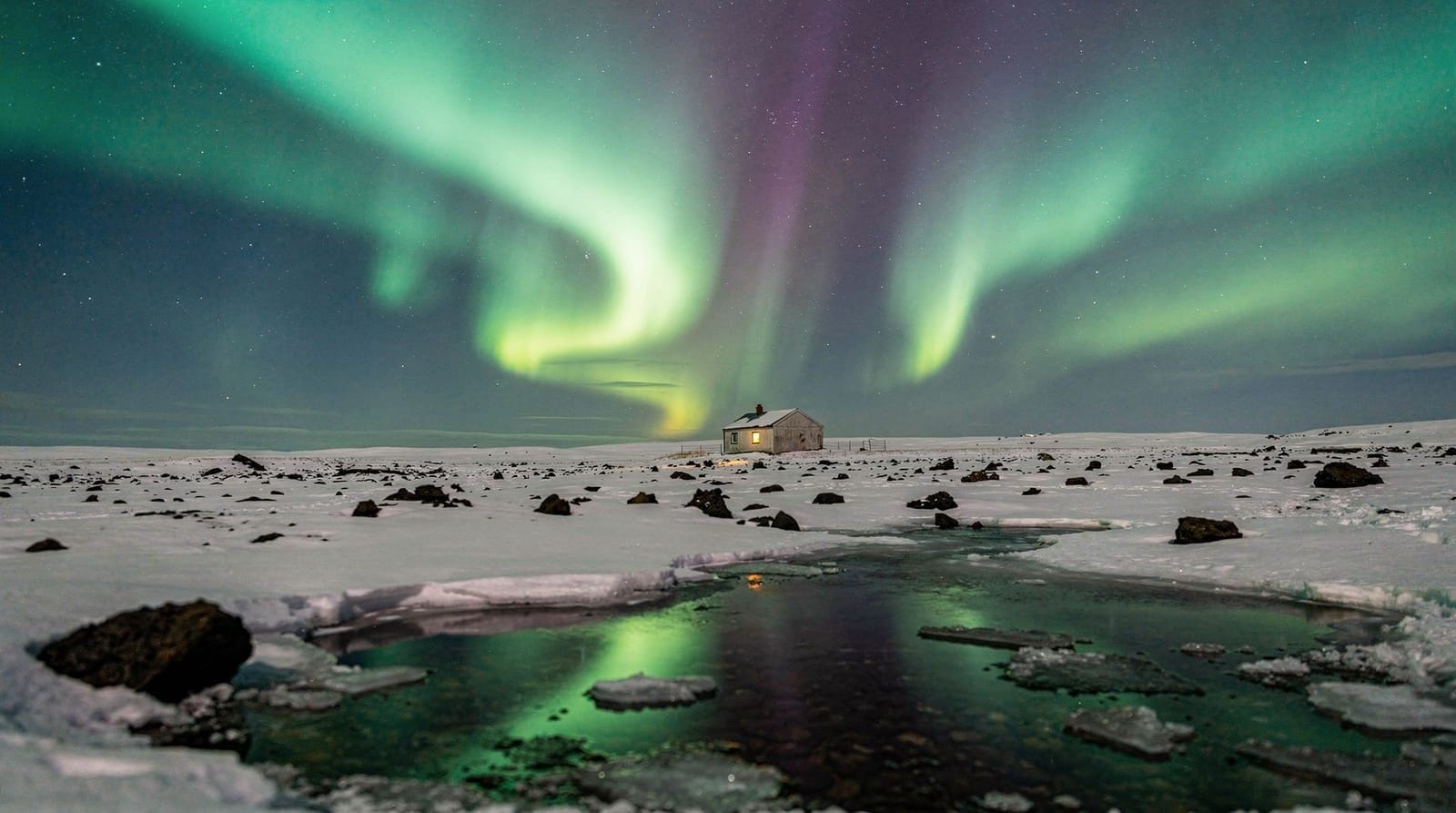
Northern lights returning: Darkness comes back in late August and builds through September. September and March are statistically strong aurora months due to the equinox effect on geomagnetic activity.
F-roads still open in September: This is September’s decisive advantage over spring shoulder season. You can hike in the highlands and see northern lights in the same week — a combination impossible in any other month.
Lower crowds: Tourist numbers drop sharply after Verslunarmannahelgi (first weekend of August). By mid-September, parking at Geysir and Seljalandsfoss is easy on most days.
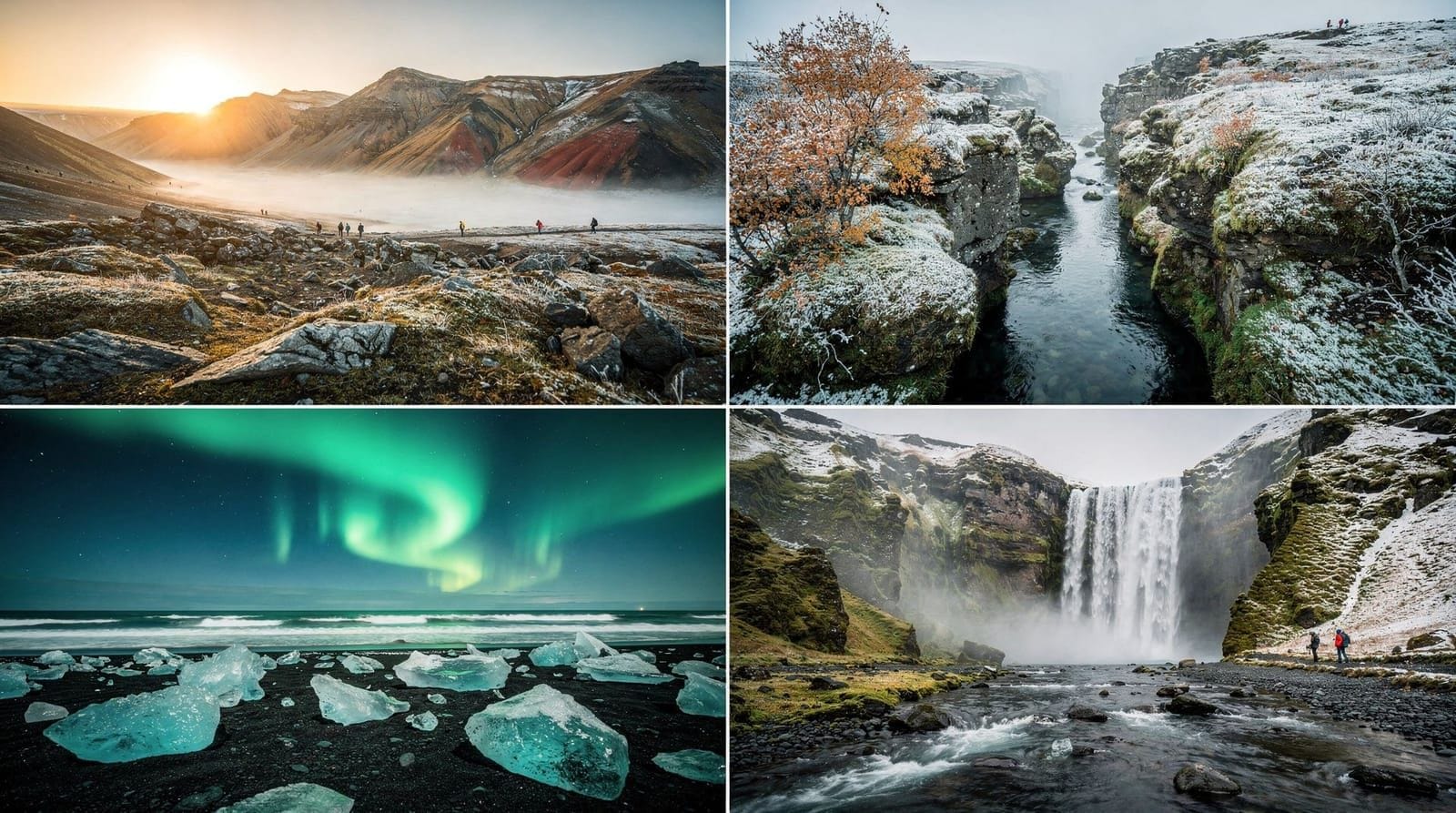
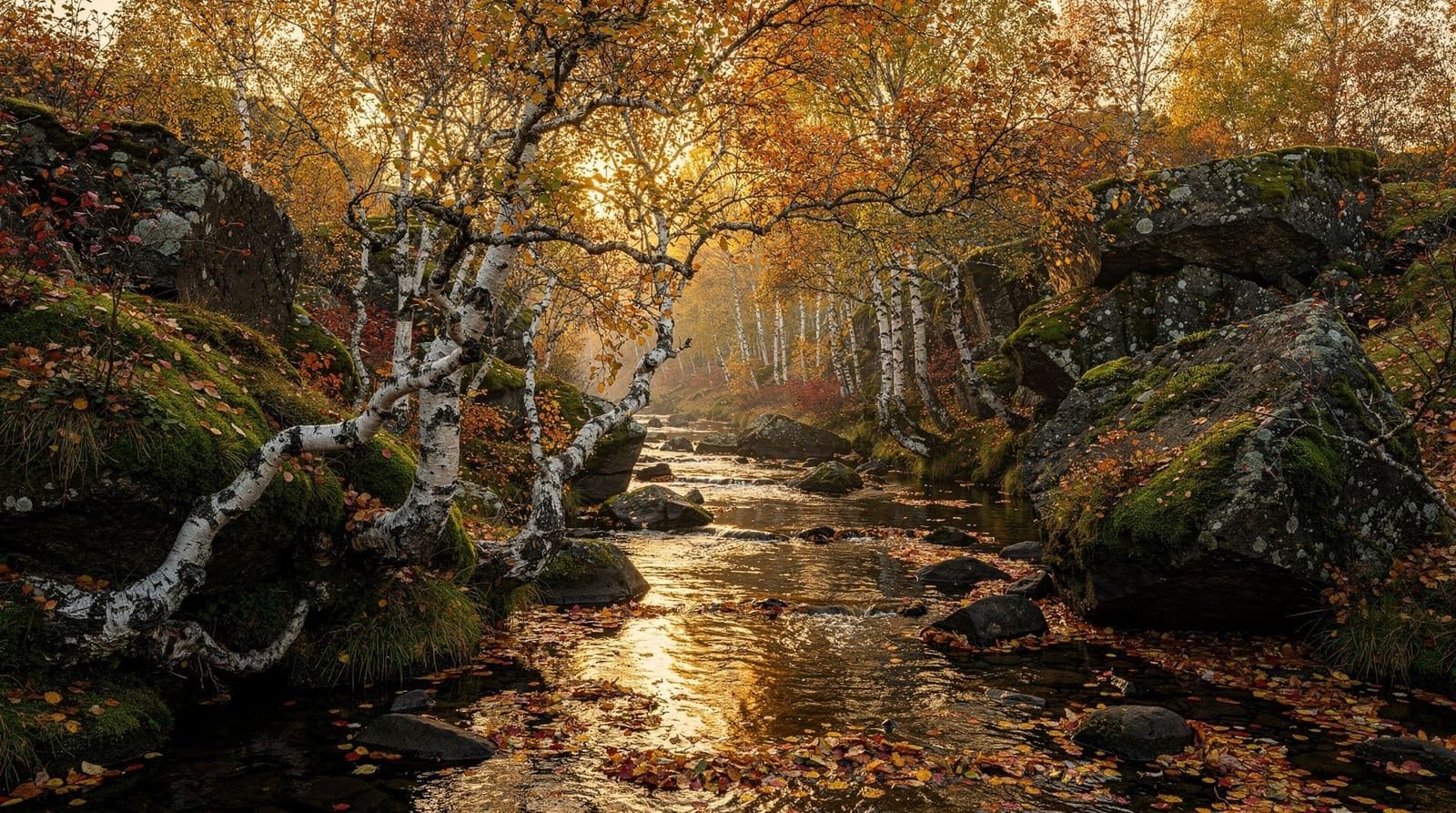
Autumn light: Lower sun angles in September and October produce dramatic photography light on the south coast and north Iceland landscapes.
Lower prices: Accommodation and car rental costs fall 20–30% from July levels. Availability is easier.
What you lose in September–October
Puffins have left: Puffins depart for the open ocean by mid-August. No puffin watching is possible in September or October.
F-roads closing: September F-roads start closing progressively from September 10–20. October has no highland access.
Worsening weather: Iceland’s autumn weather becomes more volatile through October. The first serious Atlantic storms arrive in October, and north Iceland road conditions can become challenging.
September and October northern lights tours run as darkness returns. The lifetime guarantee is useful in shoulder season when weather can be unpredictable — if cloud blocks your viewing, you can return on a future trip.
Glacier activities in shoulder season
Glacier activities run year-round and have specific shoulder season advantages:
Glacier hiking at Sólheimajökull in April–May and September–October:
- Spring: glacier surface active from meltwater, crevasses more accessible
- Autumn: excellent light conditions for photography, no summer heat
- Both seasons: smaller tour groups than July
Ice caves in November: The natural Vatnajökull ice caves open November 1 — the very start of shoulder-to-winter transition. November tours are less crowded than January peak and the caves are “fresh” at the start of the season.
Snorkelling at Silfra (Þingvellir): Open year-round in 2–4°C water. Spring and autumn tours have smaller groups and easier visibility for the brilliant colours of the fissure.
Super-jeep Highland tours: September is the last viable month for highland super-jeep tours before F-roads close. A highland tour in late September — Askja or Kerlingarfjöll — combines summer’s open access with autumn light. These tours are nearly as busy as summer, so book ahead.
Tour availability in shoulder season
A practical concern: some tours reduce frequency or availability in shoulder season. What to expect:
Still operating at high frequency in shoulder season:
- Northern lights tours (from September onwards)
- Glacier hikes
- Golden Circle tours
- South coast tours
- Whale watching (through September from Húsavík)
Reduced frequency in shoulder season:
- Highland super-jeep tours (fewer departures, but still available)
- Some Westfjords tours (reduce after August)
- Puffin boat tours (end in August)
Closed in shoulder season:
- Laugavegur trek huts (typically close September 15)
- Some highland F-road destinations (F-roads close from September 10–20)
- Some remote Westfjords guesthouses (close October–April)
Check specific operator websites before assuming availability. Most Reykjavík-based tours operate year-round with full schedules.
Direct comparison: spring vs autumn shoulder season
| Factor | April–May | September–October |
|---|---|---|
| Northern lights | Ending | Returning (excellent Sept) |
| F-road access | Closed | Open in September |
| Puffins | Arriving late April | Departed by September |
| Wildflowers | Late May lupine | Autumn heathland colours |
| Whale watching | From May | Through September |
| Weather | Cold, stabilising | Cooling, increasingly stormy |
| Daylight | 14–19 hours | 9–14 hours |
| Prices | Moderate | Moderate |
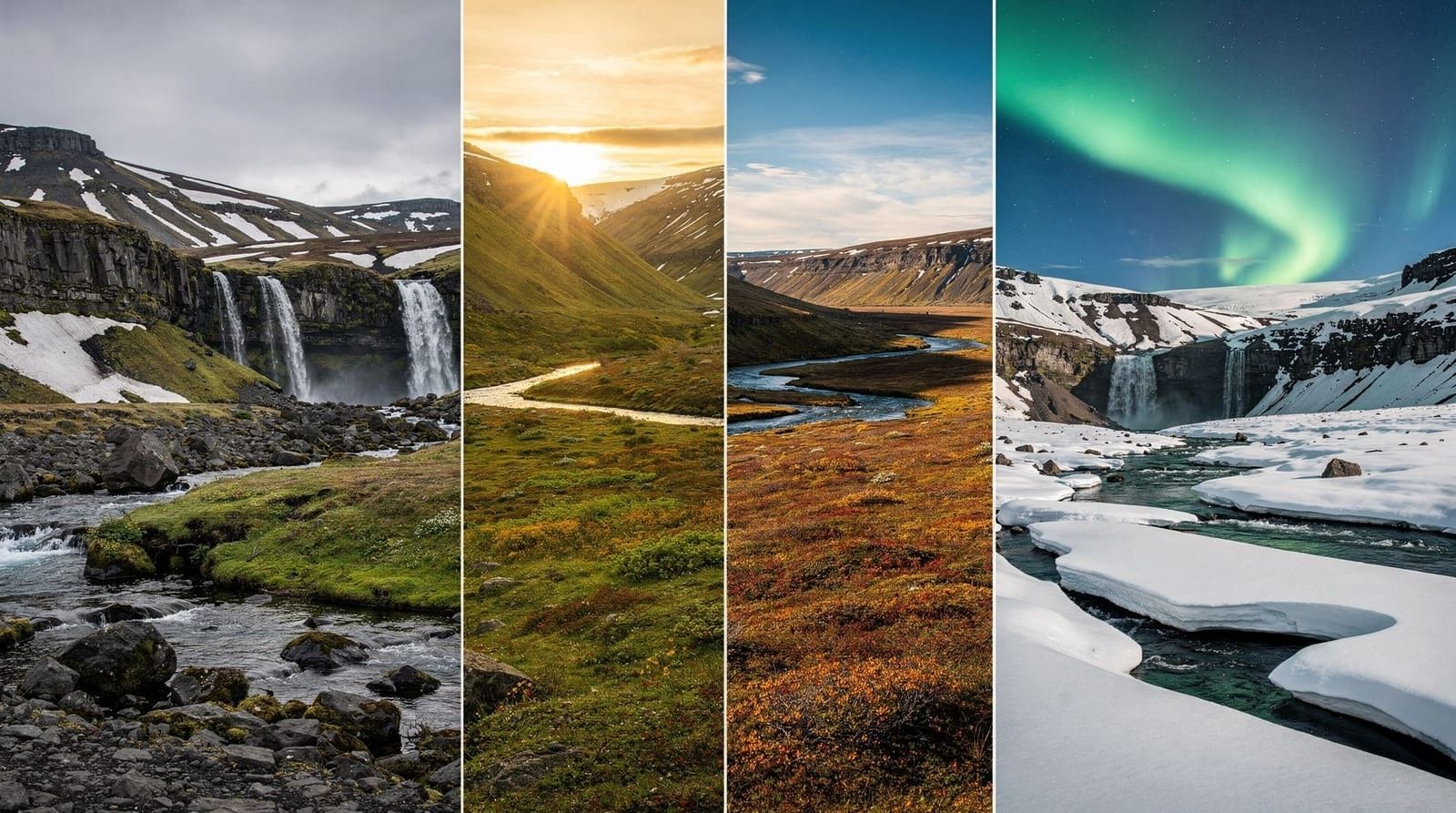
The honest summary: September wins on the combination of F-road access and returning aurora. May wins on wildlife (puffins, whales arriving) and wildflowers. Both are better value than July for most itineraries.
Which shoulder period suits which traveller
Choose spring (April–May) if:
- You want puffins as a specific goal
- Wildflowers and green landscapes appeal
- You prefer not to deal with icy or dark conditions
- Budget travel is the priority and you are flexible on dates
Choose autumn (September) if:
- Northern lights is a key goal
- Highland F-road hiking is important
- You want the full Ring Road accessible
- You want the best all-round single month in Iceland
Choose October if:
- Very low prices and very quiet Iceland is the goal
- Ice cave season opening (from November 1, October is the final pre-cave-season month)
- Budget travel matters more than F-road access
Golden Circle in shoulder season
The Golden Circle is accessible and pleasant in both shoulder windows. Geysir without summer crowds allows you to actually watch the geyser erupt without 50 people blocking your view. Þingvellir with space to walk is a different experience.
Golden Circle tours in April–May and September–October run smaller groups and allow more time at each stop — a noticeably better experience than the packed summer version.
Accommodation and logistics in shoulder season
Most Iceland guesthouses and hotels operate year-round. Some smaller rural properties close between October 15 and May 1 — check before booking if you are travelling to remote areas. Campsites are generally open June 1 to September 15.
Car rental availability is much better in shoulder seasons. Booking 3–4 weeks ahead is usually sufficient for April–May or October dates. For September, which has become increasingly popular, 6–8 weeks ahead is safer.
Westfjords in shoulder season
The Westfjords are among Iceland’s most undervisited regions in any season, but the shoulder seasons offer a specifically good combination: the main Westfjords roads are accessible from May, the Látrabjarg cliffs puffin colony is active from May through August, and the dramatic fjord scenery is best in lower-angle light.
In July, the Westfjords see maybe 20–30% of the visitor numbers of the south coast. In May or September, that drops further. The road to Dynjandi waterfall — one of Iceland’s most spectacular waterfalls — is open from approximately May 1 (conditions-dependent) and fully quiet in May.
The Westfjords require a specific time investment — the roads from Reykjavík take 3–4 hours minimum — but the combination of empty landscapes, dramatic fjords, bird cliffs, and genuine off-the-beaten-path character makes them specifically valuable in shoulder season when the south coast is busy.
Early spring (April) is a tougher call for the Westfjords than May: some mountain passes may retain snow later into the season than lowland routes, and a handful of guesthouses and services haven’t yet reopened for the year. Checking road.is and specific accommodation opening dates before committing to an April Westfjords add-on avoids arriving to find a planned stop still closed. By September, the reverse applies — most Westfjords tourism infrastructure is winding down for the year, with some guesthouses closing as early as late September, making May the more reliable of the two shoulder windows for this particular region.
Shoulder season photography
The shoulder seasons offer specific photographic advantages over peak summer:
Low sun angles: In April–May and September–October, the sun is lower in the sky throughout the day — not just at sunset. This means dramatic sidelight on landscape features all day, not just for a brief golden hour window.
Weather drama: Shoulder season weather is more volatile, which makes for more dramatic cloud formations and mixed light conditions. The photogenic “moody” Iceland shots — dark clouds, shaft of light on a waterfall, storm sky over black beach — are more common in shoulder than in summer’s often hazy, flat-lit midday conditions.
No midnight sun complexity: Without the midnight sun confusion, you get reliable golden hours at actual sunrise and sunset — more predictable for planning photography positions.
Fewer people in the frame: Even at popular sites like Kirkjufell and Jökulsárlón, shoulder season gives you a genuine chance of frames without other visitors in them.
Budget breakdown for shoulder season
A rough two-person mid-range budget for shoulder season compared to peak:
| Expense | Peak July | Shoulder (May/Sept) |
|---|---|---|
| Mid-range guesthouse | $200–300/night | $140–200/night |
| 4WD rental | $140–200/day | $100–160/day |
| Meals (per person) | $60–80/day | $50–70/day |
| Activities | $100–150/person/day | $80–130/person/day |
Total saving for a 7-day trip for two people in shoulder vs peak: roughly $500–1,000, depending on accommodation choices. This is meaningful and, when combined with the reduced crowds, makes the case for shoulder season compelling.
For detailed cost analysis see Iceland on a budget and how much does Iceland cost.
North Iceland in shoulder season
The north — Akureyri, Lake Mývatn, Húsavík, Godafoss — receives a fraction of the south coast visitor numbers in any season. In shoulder season, north Iceland is genuinely quiet.
September specifically for north Iceland:
- Northern lights over Lake Mývatn (geothermal steam plus aurora is a specific photographic combination)
- Mývatn Nature Baths with comfortable temperatures and no queues
- Whale watching in Húsavík through September — humpbacks still present early in the month
- Diamond Circle route in autumn light
May for north Iceland:
- Long days reaching 19+ hours by late May
- Whale watching from Húsavík starting in May as first whales arrive
- Very few other visitors on the roads
The domestic flight from Reykjavík to Akureyri (45 minutes, Air Iceland Connect) takes the long drive out of north Iceland access and makes a 4-day north Iceland add-on practical without consuming a full day each way.
Food and dining in shoulder season
Iceland’s food scene in shoulder season has a specific advantage: restaurants are not stretched to capacity. In July, waiting an hour for a table at popular Reykjavík restaurants is common. In May or September, the same restaurant has room, and the kitchen staff can take more care.
Seasonal Icelandic ingredients in shoulder season:
- Spring (April–May): First spring lamb (available from May), spring seaweed, freshly caught halibut and cod
- Autumn (September–October): Langoustine season in full swing, Arctic char from highland lakes, autumn mushrooms (particularly off the main tourist circuit in rural areas)
The best restaurants in Reykjavík guide covers specific options; in shoulder season, walk-in availability is better than the guide’s booking advice suggests for July.
Outside Reykjavík, shoulder season is when smaller rural restaurants are also less pressured. The fish and chips at the Vík harbour restaurant in May has a different character than the July queue. The Akureyri food scene in September is at its most accessible.
Sample 8-day May itinerary
For travellers choosing spring shoulder season specifically for wildlife and wildflowers, this route sequences the season’s specific highlights:
| Day | Route | Focus |
|---|---|---|
| 1–2 | Reykjavík → Golden Circle → South Coast | Þingvellir, Geysir, Gullfoss, Seljalandsfoss, Skógafoss |
| 3 | South Coast → Vík | Reynisfjara, first coastal puffin activity nearby |
| 4 | Vík → Jökulsárlón | Glacier lagoon, Diamond Beach |
| 5 | Return west, detour to Snæfellsnes | Kirkjufell, quiet peninsula roads |
| 6 | Westfjords approach | Dynjandi waterfall, early-season fjord roads |
| 7 | Látrabjarg cliffs | Newly active puffin colonies |
| 8 | Return to Reykjavík | Buffer day, Reykjavík restaurants without July queues |
This route deliberately front-loads the well-known south coast (least weather-dependent) and saves the Westfjords, which depend on roads being clear, for later in the trip when spring conditions have had more time to settle.
Practical checklist for shoulder season travel
Things to do before a shoulder season Iceland trip:
- Check F-road status on road.is (for September trips)
- Verify accommodation is open — some rural guesthouses close October–April
- Book rental car at least 3–6 weeks ahead (not critical but prices rise)
- Download the 112 Iceland app and register travel plans at safetravel.is
- Check aurora forecast tools (vedur.is, Space Weather Prediction Center) for September onwards
- Pack waterproofs — shoulder season weather is not mild by international standards
- Book northern lights tours if that is the goal (some tours book out even in shoulder season)
- Confirm Blue Lagoon or Sky Lagoon booking if planned — year-round advance booking needed
The Iceland travel guide covers these pre-trip logistics in full detail.
Frequently asked questions about Iceland shoulder season
Is shoulder season in Iceland worth it?
For most travellers who are not specifically chasing peak summer experiences (midnight sun, highland hiking), yes — the shoulder seasons offer better value and in some cases better experience quality at main attractions.
What is the best shoulder season month in Iceland?
September, objectively, for the combination of open F-roads, returning aurora, reduced crowds, and lower prices. May is second-best for a different set of reasons (wildlife, wildflowers, longer days).
Is it cold in Iceland in shoulder season?
April and October are genuinely cold — 3–8°C (37–46°F). May and September are milder but still require waterproof and warm layers. The weather is unpredictable in all four months.
Are all attractions open in shoulder season?
Main attractions — Golden Circle, south coast waterfalls, Jökulsárlón, the Blue Lagoon, Sky Lagoon — are all open year-round. Some smaller guesthouses and remote-area facilities close in late October and early April.
Do tour companies operate in shoulder season?
Yes. All major tour operators run year-round schedules. Some specific summer-only tours (highland super-jeep tours, for example) reduce frequency in shoulder season but continue to operate. Northern lights tours run September through March.
Is shoulder season a good time for a first-time visitor to Iceland?
Yes, arguably better than peak summer for a first trip. First-time visitors typically want to see the headline sights — Golden Circle, south coast, Jökulsárlón — without the logistics stress of full-capacity July, and September in particular delivers those sights plus a real shot at the northern lights, which is usually high on a first-timer’s list. The main trade-off is accepting that highland/F-road detours and puffin colonies (spring only) won’t both be available in a single trip.
Should I choose early or late in each shoulder window?
Early in each window tends to be the safer choice. Early May has more reliable weather than late April; early September has more F-road access and warmer temperatures than late September or October. Late in each window (late April, late October) rewards travellers prioritising low prices and quiet over comfort and access, but carries more risk of disrupted plans from weather or closures.
Combining both shoulder windows in one year
Some repeat visitors deliberately plan two separate Iceland trips — one in May, one in September — rather than trying to force a single visit to deliver both wildflowers-and-puffins and aurora-and-F-roads. This isn’t necessary for a first trip, but it’s worth knowing that the two shoulder windows are different enough in character that a “second Iceland trip” focused on the season you missed the first time is a genuinely common and well-reviewed pattern among frequent Iceland travellers, rather than simple repetition of the same experience.
Top experiences
Bookable activities with verified prices and instant confirmation on GetYourGuide.