How much does Iceland cost? Real 2026 travel budget breakdown
Reykjavik: Golden Circle classic with optional Blue Lagoon
How much does a trip to Iceland cost?
Budget: 15,000–22,000 ISK per person per day (camping and self-catering). Mid-range: 28,000–50,000 ISK per person per day (guesthouse, occasional restaurant). Comfortable: 50,000–90,000 ISK per person per day (hotels, restaurant meals, guided tours). A 10-day Ring Road trip for two mid-range travellers typically costs 700,000–1,100,000 ISK total (roughly 4,600–7,300 EUR).
What Iceland actually costs in 2026
Iceland has a reputation for being expensive — and it is, structurally. The country imports most food and goods, wage levels are high, and the short tourist season concentrates demand. But “expensive” doesn’t mean unplannable. Once you understand what each category actually costs, you can build a realistic budget.
All prices in this guide are in Icelandic króna (ISK). As a rough reference: 1 EUR ≈ 150 ISK, 1 USD ≈ 140 ISK in mid-2026. Exchange rates fluctuate — check a live converter before your trip.
| Budget tier | around ISK 15,000–22,000 per person/day |
| Mid-range tier | around ISK 28,000–50,000 per person/day |
| Comfortable tier | around ISK 50,000–90,000 per person/day |
| Biggest lever | car rental split between more people |
| Cheapest season | Jan–Mar and Oct–Nov |
Flights to Iceland
Flights are not included in daily-cost estimates below (they vary too much by origin), but:
- From UK/Europe: 15,000–60,000 ISK per person return, depending on booking timing and airline. Budget carriers PLAY and Wizz Air offer lowest fares from select European cities.
- From USA/Canada: 70,000–200,000 ISK per person return, depending on origin and season. Icelandair and PLAY serve transatlantic routes.
- Best booking window: 6–10 weeks ahead for European routes; 2–4 months ahead for transatlantic.
Accommodation costs
Camping (per person per night)
- Campsite with facilities: 1,500–2,500 ISK
- Camping Card (2 people, 28 nights): 22,900 ISK — about 800 ISK per person per night if fully used
- No campsite available: freedom camping is restricted to designated areas only, with fines for violations
Hostels (per person per night)
- Dorm bed in Reykjavik: 5,500–8,500 ISK
- Dorm bed outside Reykjavik: 4,500–7,500 ISK
- Private double room (hostel): 18,000–28,000 ISK total (9,000–14,000 ISK per person)
Guesthouses and farm stays
- Double room, basic: 18,000–30,000 ISK total per room
- Double room, mid-range: 25,000–45,000 ISK per room
- Breakfast included: often 2,000–3,500 ISK per person if added
Hotels
- City/budget hotel Reykjavik: 30,000–50,000 ISK per room
- Mid-range hotel: 45,000–80,000 ISK per room
- Boutique/luxury: 80,000–200,000+ ISK per room
Real average for two people on a Ring Road trip: 25,000–40,000 ISK per night for accommodation. See budget accommodation Iceland for options by location.
Food and drink costs
Supermarket shopping (per person per day)
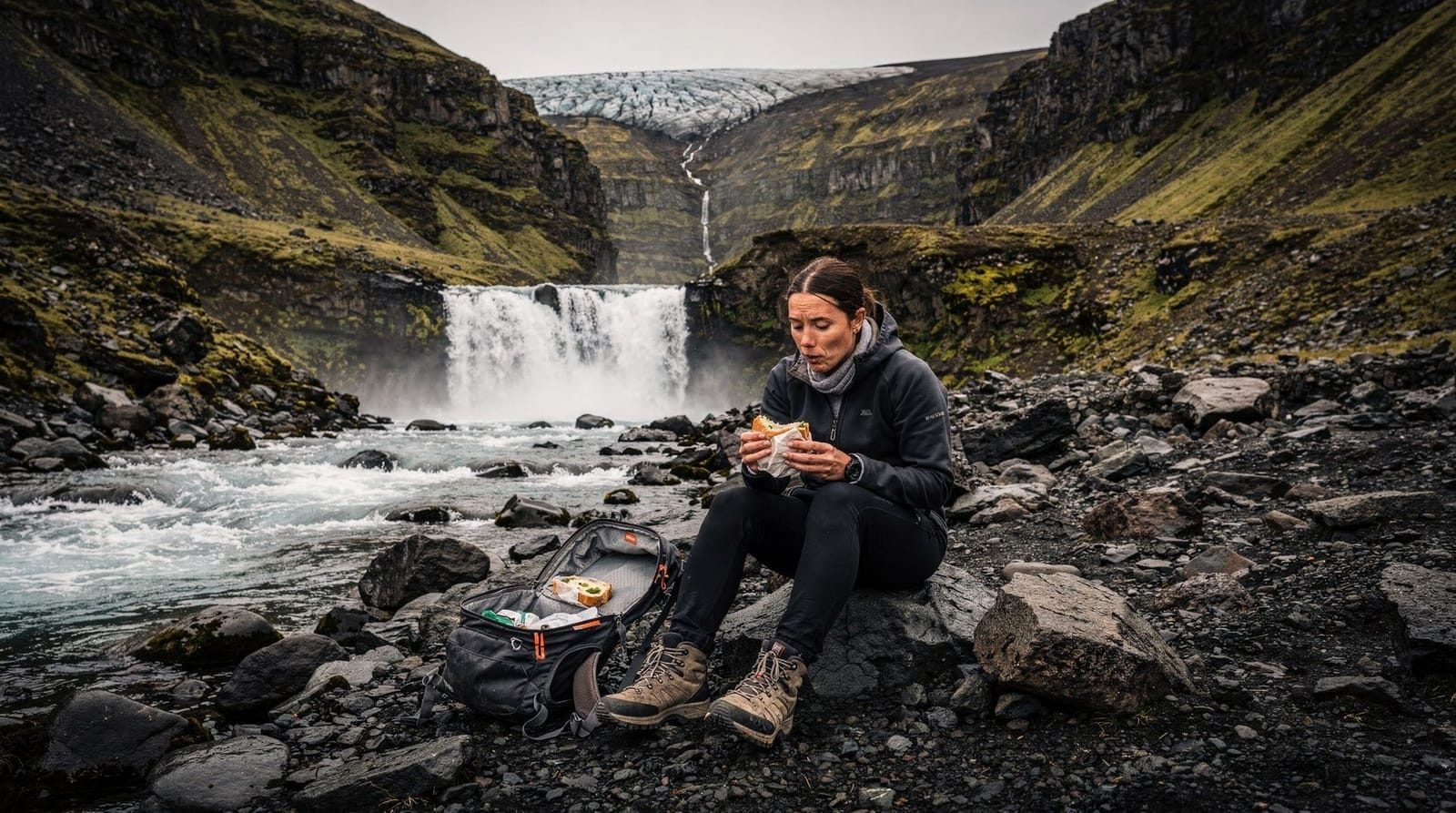
- Self-catered all meals: 1,800–3,500 ISK per person
- Key budget supermarkets: Bónus (pig logo), Krónan, Nettó
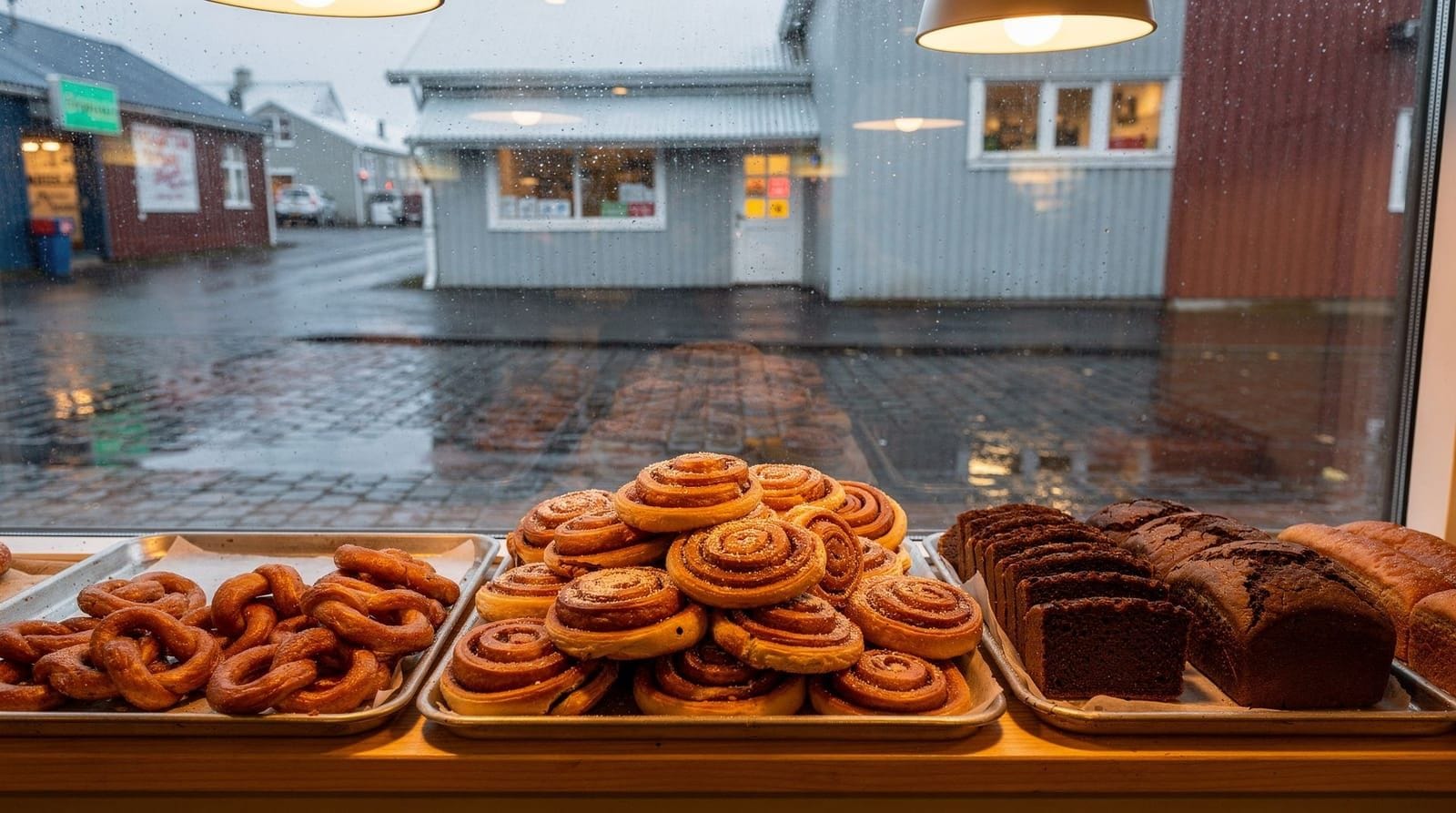
- What to buy: rye bread (rúgbrauð), skyr, tinned fish, eggs, cheese, pasta, oats, Harðfiskur (dried fish — high protein)
Restaurant meals
- N1 / petrol station hot dog (pylsur): 500 ISK
- Soup of the day (guesthouse or casual café): 1,800–2,500 ISK
- Lunch main course (dagsréttur daily special): 2,200–2,800 ISK
- Dinner main course (mid-range restaurant): 3,500–5,500 ISK
- Fish and chips or burger at casual restaurant: 2,800–4,200 ISK
- Coffee (Americano/latte): 700–1,000 ISK
Alcohol
- 500 ml beer (bar): 1,200–1,800 ISK
- Glass of wine (bar): 1,500–2,200 ISK
- Beer at Vínbúðin (state off-licence): 350–600 ISK per can
- Spirits at Vínbúðin: 2,000–5,000 ISK per 700 ml
More detail: cheap eats in Iceland.
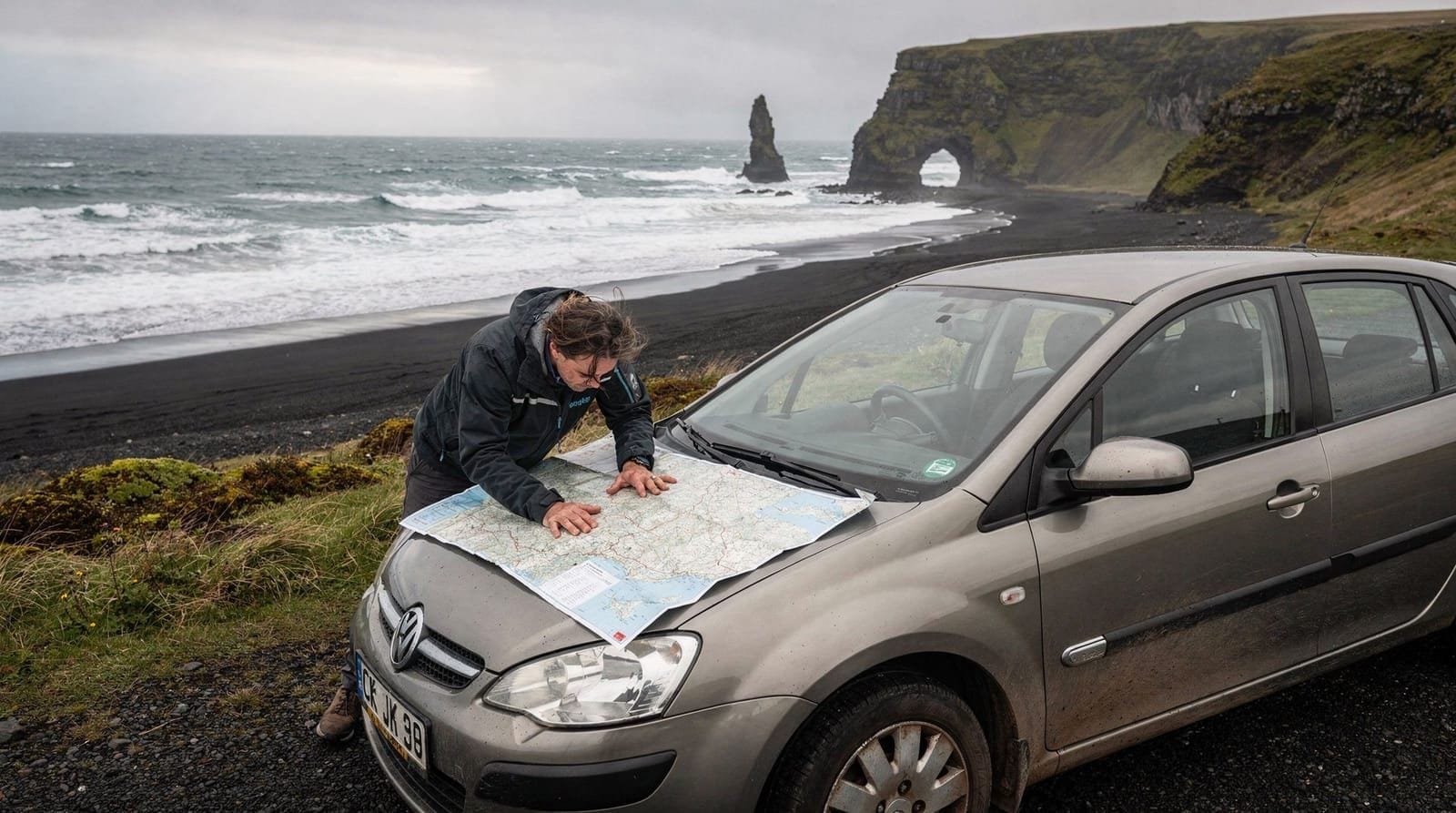
Car rental costs
2WD compact car (summer, advance booking)
- Per day: 8,000–16,000 ISK
- Per 10-day trip: 80,000–160,000 ISK
Compact 4WD/SUV
- Per day: 18,000–35,000 ISK
- Per 10-day trip: 180,000–350,000 ISK
Insurance (on top of base price)
- SCDW (zero excess): 1,000–3,000 ISK/day
- SAAP (gravel protection): 700–2,500 ISK/day
- Both together: add 1,700–5,500 ISK/day
Per-person cost when splitting: A 2WD at 12,000 ISK/day split between 2 people = 6,000 ISK each. Split between 4 people = 3,000 ISK each. Group travel is the most effective car cost reducer.
Full detail: saving money on car rental and renting a car in Iceland.
Fuel costs
- Petrol (95 RON): 265–295 ISK/litre
- Diesel: 245–275 ISK/litre
- Ring Road full loop (~1,332 km) in compact car (7L/100km): ~93 litres total, ~25,000–27,000 ISK
- Per 10-day trip assuming Ring Road plus some extra driving: budget 30,000–40,000 ISK for fuel in a compact car
More: fuel and gas stations.
Activities and entry fees
Free
- Seljalandsfoss (free to view; car parking 800 ISK at lot)
- Skógafoss, Goðafoss, Dettifoss: free
- Þingvellir National Park: free entry
- Vatnajökull, Snæfellsjökull national parks: free entry
- Reynisfjara beach, Jökulsárlón lagoon viewing: free
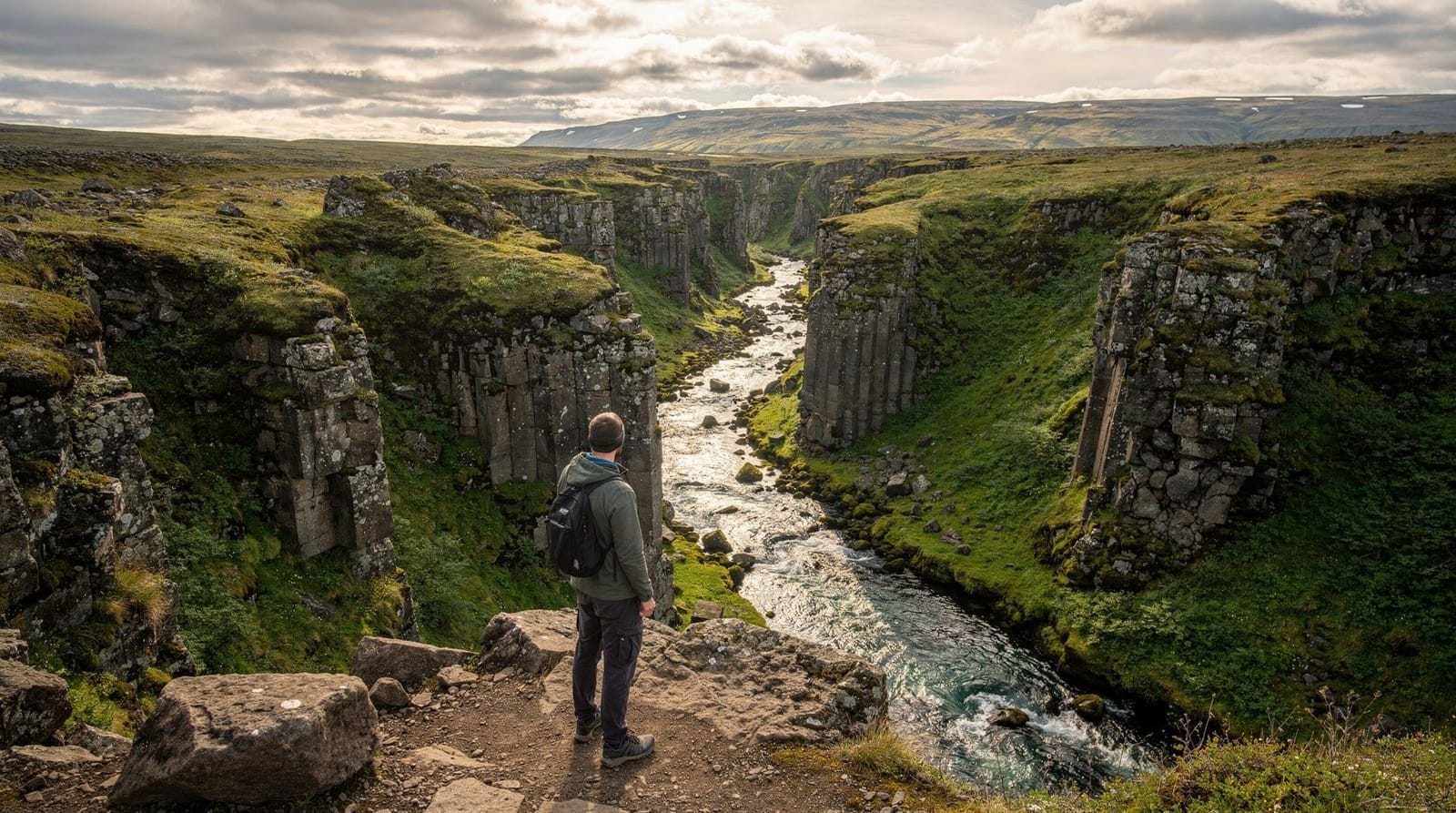
- All hiking (Fimmvörðuháls, Reykjadalur, Glymur, etc.): free trails
- Reykjavik walking: free
Paid attractions (per person unless noted)
- Blue Lagoon (Comfort, advance): from 7,900 ISK
- Sky Lagoon: from 5,490 ISK
- Secret Lagoon, Flúðir: 3,000 ISK
- Northern lights bus tour: 6,000–12,000 ISK
- Golden Circle guided day tour: 9,000–18,000 ISK
- Glacier hike (Sólheimajökull): 10,000–15,000 ISK
- Whale watching Reykjavik: 12,000–16,000 ISK
- Whale watching Húsavík: 12,000–17,000 ISK
- Snorkelling at Silfra: 18,000–22,000 ISK
- Ice cave tour (Vatnajökull): 14,000–20,000 ISK
Sample 10-day trip budgets for two people
Budget (camping, self-catering, 2WD split 2 ways)
| Category | ISK |
|---|---|
| Accommodation (camping 8 nights, hostel 2 nights) | 55,000 |
| Food (self-catered + 3 restaurant meals) | 45,000 |
| Car hire (2WD + basic insurance) | 115,000 |
| Fuel | 30,000 |
| Activities (Blue Lagoon skip, free waterfalls + 1 northern lights tour) | 20,000 |
| Misc (parking, SIM, toiletries) | 10,000 |
| Total for two people | 275,000 ISK (~1,830 EUR) |
Mid-range (guesthouses, mixed eating, 2WD split 2 ways)
| Category | ISK |
|---|---|
| Accommodation (guesthouse, 2 nights Reykjavik) | 270,000 |
| Food (mixed supermarket and restaurant) | 90,000 |
| Car hire (2WD + SCDW + SAAP) | 170,000 |
| Fuel | 32,000 |
| Activities (Blue Lagoon, 1 glacier hike, 1 whale watch) | 85,000 |
| Misc | 20,000 |
| Total for two people | 667,000 ISK (~4,450 EUR) |
Comfortable (hotels, restaurants, guided tours)
Approximately 1,200,000–1,800,000 ISK for two people over 10 days (8,000–12,000 EUR).
Tipping
Tipping in Iceland is not customary — service charges are included in prices. Leaving a tip is welcomed but never expected. See tipping in Iceland for detail.
Currency and payment
Iceland is a card-first society. Contactless card payment is accepted almost everywhere, including tiny remote cafés and campsites. ATMs dispense ISK. Avoid airport exchange counters — ATM rates are significantly better. See Iceland currency and money.
Frequently asked questions about Iceland costs
How much spending money should I budget per day in Iceland?
For a mid-range day (guesthouse, mixed eating, car share): 20,000–30,000 ISK per person. For budget camping and self-catering: 10,000–15,000 ISK per person. For comfortable hotel and restaurants: 40,000–70,000 ISK per person.
Is Iceland more expensive than Norway?
Both countries are in the most expensive tier globally. Iceland is broadly comparable to Norway and slightly more expensive than Sweden or Denmark for accommodation and food. Fuel is cheaper in Norway.
How much cash should I bring to Iceland?
Very little — Iceland is highly card-based. Some remote campsites use automated pay terminals that require a PIN-enabled card rather than cash. Have 5,000–10,000 ISK cash for emergencies, purchased from an ATM at KEF or in Reykjavik.
Is Iceland expensive for food?
Restaurant meals are expensive by European standards (3,500–5,500 ISK for a main). Supermarket prices for staples (bread, eggs, dairy, tinned goods) are reasonable and broadly similar to Northern European supermarkets. Self-catering significantly reduces food costs.
When is Iceland cheapest to visit?
January–March and October–November are low season for pricing. Flights are cheapest in these periods and accommodation prices drop. The trade-off: January has only 5–6 hours of daylight, limited F-road access, and harsher conditions. March and October offer more light, lower prices, and good aurora potential. See Iceland in shoulder season for the fuller trade-off.
Does group size actually change the total cost much?
Yes, more than almost any other factor. Car hire and often accommodation are priced per room or per vehicle, not per person, so a group of four splits the two biggest cost categories in quarters rather than halves. A mid-range 10-day trip that costs around 667,000 ISK for two people can cost closer to 900,000–1,000,000 ISK for four — a large saving per person compared with two separate two-person trips.
How much extra does travelling with kids add?
Modestly, if you self-cater and use guesthouses with family rooms. Most attractions (waterfalls, national parks) are free regardless of age. Paid experiences typically discount children: Blue Lagoon admits under-14s free with a paying adult, and many tours offer 50% child rates. The main added cost is a larger vehicle or a family room supplement, typically 5,000–10,000 ISK extra per night. See Iceland with kids for the fuller family-budget picture.
Cost comparison: touring independently vs guided tours
A persistent question for first-time visitors is whether to self-drive or join guided tours. From a cost perspective:
Self-drive Ring Road (mid-range, 2 people, 10 days): Total around 500,000–750,000 ISK for two people. You choose your own pace, stop where you want, cover more ground.
Organised small-group Ring Road tour (10 days, full board): Well-reviewed operators charge 180,000–280,000 ISK per person, covering accommodation, transport, and usually some meals. For two people: 360,000–560,000 ISK. Often cheaper or comparable to independent travel, with the logistics handled for you.
Day tours from Reykjavik base: South Coast day tour: 12,000–18,000 ISK per person. Golden Circle: 8,000–16,000 ISK. If you do 5–6 day tours over 7 days from Reykjavik without a car, the total activity cost approaches 80,000–100,000 ISK per person. Combined with Reykjavik accommodation (22,000–35,000 ISK per room per night), 7 days can total 300,000–400,000 ISK for two people.
Self-driving wins on flexibility and often on total cost for larger groups. Organised tours win on convenience, often on price for couples or solo travellers who don’t want the logistics burden.
Entry fees: what’s free and what’s not
Iceland is unusual in that most of its major natural attractions carry no entry fee. This significantly reduces the paid-activity budget for travellers who focus on the landscape over wellness and adventure tourism.
Free (just drive to them): Seljalandsfoss, Skógafoss, Goðafoss, Dettifoss, Reynisfjara, Diamond Beach, all national park areas, Þingvellir assembly site, Geysir/Strokkur (parking fee only), Jökulsárlón lakeside viewing.
Paid: Blue Lagoon entry from 7,900 ISK, Sky Lagoon from 5,490 ISK, guided glacier hikes 10,000–18,000 ISK, whale watching 12,000–17,000 ISK, northern lights tours 6,000–12,000 ISK, snorkelling/diving at Silfra 18,000–22,000 ISK.
For budget travellers focusing on Iceland’s geology and landscape rather than wellness and guided adventures, the activity portion of the budget can be kept extremely low — just petrol and parking.
Parking fees
A note for Ring Road drivers: many of Iceland’s most popular sites have introduced or increased parking fees in recent years as visitor numbers have grown. Typical charges:
- Seljalandsfoss: 800 ISK per car
- Skógafoss: free (large parking area)
- Þingvellir National Park: 750–800 ISK per car
- Þjóðvegur Scenic Route car parks: variable
The National Park card (Þjóðgarðar kort) covers unlimited parking at participating national park car parks for a season. At around 1,500 ISK for a single vehicle, it pays for itself if you visit more than two national park sites.
Exchange rates and when to buy ISK
The Icelandic króna (ISK) fluctuates with global currency markets and Iceland’s export performance. As of mid-2026: approximately 150 ISK to 1 EUR, 140 ISK to 1 USD.
Best places to get ISK:
- ATMs at KEF airport arrivals (Arion Bank, Íslandsbanki) — standard interbank rate
- ATMs in Reykjavik city centre
- Your own bank’s ATM withdrawal in Iceland (if your card has low foreign transaction fees)
Avoid: Airport currency exchange desks (Icelandic Forex/similar) — commissions of 5–8% above mid-market rate. Travel money services online in your home country for ISK are limited and often not cost-effective for a small currency.
Most purchases in Iceland are by card — you’ll rarely need cash. ATM withdrawal of 20,000–30,000 ISK covers emergencies and sites requiring cash (rare automated park kiosks).
See Iceland currency and money for full payment guidance.
The real cost of popular experiences
Let’s work through the exact costs of Iceland’s most common tourist experiences:
Golden Circle (self-drive, one day)
- Car hire (1/10 of 10-day rental, 2WD): 1,000–1,600 ISK per person (split 2)
- Fuel: 2,500 ISK for the loop (~180 km from Reykjavik and back)
- Parking at Þingvellir: 800 ISK per car
- Geysir area: 800 ISK parking (free to view geysers)
- Gullfoss: free entry, free parking
- Kerid crater: 400 ISK entry
- Lunch at dagsréttur: 2,200–2,800 ISK per person
- Total per person for two people: approximately 5,000–7,000 ISK
South Coast (self-drive, one day)
Similar car cost + fuel (~200 km from Reykjavik):
- Seljalandsfoss parking: 800 ISK per car
- Skógafoss: free
- Reynisfjara: 800 ISK parking per car
- Lunch: 2,200–2,800 ISK per person
- Total per person for two people: approximately 5,500–8,000 ISK
Golden Circle by guided day tour
- Bus tour from Reykjavik (Golden Circle): 8,500–16,000 ISK per person
- Lunch included on some tours, paid separately on others
- You see the same sites but without flexibility to linger
Blue Lagoon (one visit)
- Comfort entry (cheapest bookable tier, advance only): 7,900 ISK per person
- Comfort entry includes towel, silica mud mask, and one drink
- Transfer from Reykjavik or KEF: 3,000–4,500 ISK additional
- Total per person including transfer: 11,000–13,000 ISK
Whale watching (Reykjavik)
- Standard whale watching tour from Old Harbour: 12,000–16,000 ISK per person
- Duration: 3–4 hours
- Guarantee of seeing whales: most operators offer free repeat if none spotted (common in winter)
Glacier hike (Sólheimajökull)
- 3-hour guided glacier walk: 9,500–14,000 ISK per person
- Safety equipment (crampons, helmet, harness) included
- Transport from Vík or Reykjavik: additional cost if using a tour bus
- Self-drive to the car park and join a local guide: cheapest option
Northern lights tour (Reykjavik)
- Standard coach tour: 6,000–12,000 ISK per person
- Smaller minibus premium tours: 10,000–18,000 ISK per person
- Self-drive alternative: fuel cost only (drive 20 km out of town to dark sky area)
Understanding tourist price inflation at popular sites
Iceland’s most-visited sites have seen price increases track with demand growth. The Blue Lagoon in particular has raised its minimum entry price from around 3,500 ISK (2016) to 7,900 ISK (2026) for the basic Comfort tier — a 126% increase in a decade. The midrange Retreat spa tiers cost 35,000–90,000+ ISK per person.
Sky Lagoon, which opened in 2021, started at lower prices and has maintained more accessible pricing than the Blue Lagoon, even as its design is comparable.
The honest assessment: many Iceland paid experiences have become significantly more expensive as the destination’s popularity has grown. Budget travellers visiting in 2016–2018 report dramatically different cost experiences than those visiting now. Build your budget with 2026 prices, not older blog reports.
Budget travel vs value travel
There’s a distinction worth making between budget travel (minimising cost) and value travel (maximising what you get per ISK spent).
Best value experiences in Iceland (high quality, low price):
- Reykjadalur hot river hike: 0 ISK, genuinely beautiful
- N1 pylsur: 500 ISK, authentically Icelandic, filling
- Campsite in the East Fjords: 1,800 ISK, stunning fjord view
- Laugardalur outdoor pool: 950 ISK, local experience, multiple hot tubs
Poor value experiences (high price, can be replicated more cheaply):
- Guided tours to waterfalls accessible by car: 8,000–14,000 ISK per person for a sight you can drive to for 500 ISK in fuel
- Hotel breakfasts at 2,500–3,500 ISK per person: supermarket alternative for 300–500 ISK
- Airport taxis: 16,000–22,000 ISK for a journey that costs 3,500 ISK on the Flybus
Value travel maximises meaningful experiences within your budget, rather than cutting costs uniformly across all categories. Spend on the glacier hike if that’s your trip highlight; skip the guided Golden Circle tour and drive it yourself.
If you’d rather not drive at all, a guided Golden Circle day (with the option to add the Blue Lagoon) removes the car-rental and navigation cost entirely and bundles transport, guiding, and often skip-the-hassle Blue Lagoon transfers into one fixed price:
Golden Circle classic tour with optional Blue Lagoon add-onHow trip length changes the per-day cost
Longer trips are cheaper per day, not more expensive, because fixed costs (flights, one-off gear, the first and last accommodation nights in Reykjavik, which run higher than rural guesthouses) get spread over more days. A 5-day trip concentrated in the Golden Circle and South Coast will show a higher per-day average than a 10-day Ring Road loop, because the 5-day trip carries proportionally more Reykjavik-priced nights and less of the cheaper rural driving-day pattern (petrol station lunches, small-town guesthouses). Practically: if your budget is tight, a longer, slower trip with more self-catering days often costs less per day than a short, dense one — see the ring road guide for how a 7, 10, or 14-day loop compares logistically.
Currency fluctuation and booking timing
Because so many trip costs (car hire, accommodation, tours) are typically quoted and charged in ISK or EUR well ahead of travel, exchange-rate movement between booking and travel dates can shift your final cost. Booking accommodation and car hire early locks in the ISK price; if your home currency strengthens against the ISK before your trip, you effectively pay less once converted, and vice versa. This is a minor factor compared with tier choice and group size, but worth knowing if you’re booking many months ahead — avoid converting a large lump sum of cash speculatively; pay with a low-fee card closer to the time instead.