Cheap eats in Iceland — where and how to eat well without overspending
Reykjavik: Food walking tour 6 tastings
Duration: 3 hours
How do you eat cheaply in Iceland?
Buy staples at Bónus or Krónan (bread, skyr, eggs, tinned fish) and self-cater most meals. The N1 petrol station hot dog (pylsur) at 500 ISK is Iceland's most iconic cheap meal. For restaurant eating, order the dagsréttur (daily lunch special) at 2,000–2,800 ISK instead of the dinner menu at 3,500–5,500 ISK.
Iceland’s restaurant prices scare people into either overspending out of confusion or skipping local food entirely — neither is necessary. A simple lunch-out, self-cater-the-rest routine gets you through a trip on a sane budget without missing what’s actually good.
| Cheapest hot meal | N1 hot dog, around 500 ISK |
| Best value hot meal | Dagsréttur lunch special, 2,000–2,800 ISK |
| Self-catered day | around 1,800–2,800 ISK/person |
| Eating out every meal | 7,000–12,000 ISK/person/day |
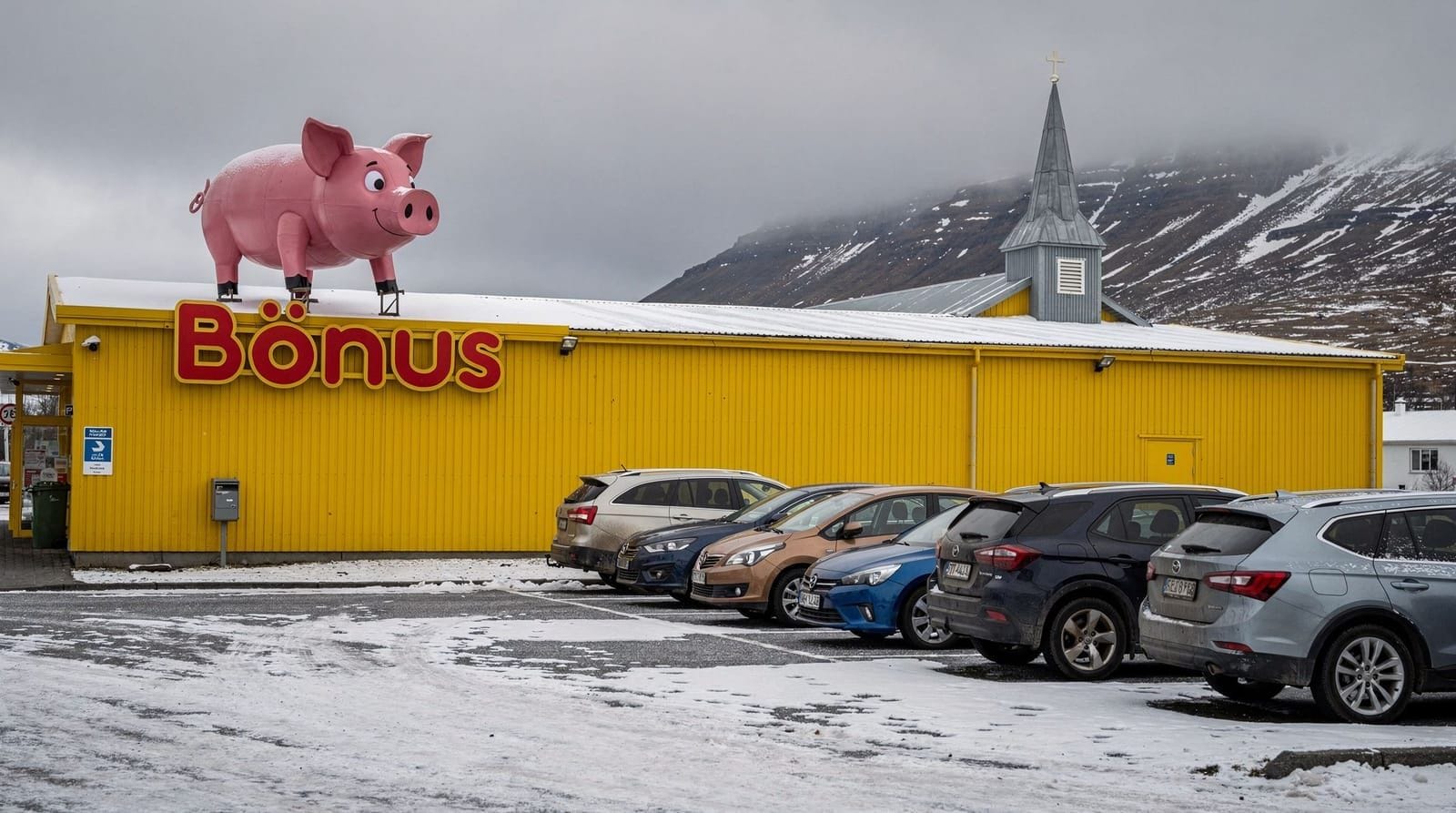
| Cheapest supermarket | Bónus (yellow pig sign) |
The food cost situation in Iceland
A restaurant dinner main course in Iceland costs 3,500–5,500 ISK (roughly 23–37 EUR). Multiply that by three meals for two people and you’re spending 21,000–33,000 ISK per day on food — more than some people spend on accommodation.
Budget travellers who manage food costs well spend 1,800–3,500 ISK per person per day. Those who eat out for every meal spend 7,000–12,000 ISK. The gap is strategic, not about sacrificing quality: Icelandic supermarket food is genuinely good, and the petrol station hot dog is a legitimate meal.
The N1 pylsur — Iceland’s most famous cheap meal
The pylsur (hot dog) at N1 petrol stations is 500 ISK and genuinely filling. It is not the flimsy fair-food hot dog of other countries — it is a lamb-pork-beef sausage in a steamed bun with:
- Mustard (Icelandic strong mustard, not yellow American)
- Remoulade (a tangy herby sauce)
- Crispy fried onions (dried, not caramelised)
- Raw white onion (you can skip this)
- Ketchup (optional, classic)
Order it “ein með öllu” (one with everything) and you’re doing it right. This is not tourist kitsch — Icelanders eat these regularly. Bill Clinton famously stopped at Bæjarins Beztu Pylsur (Reykjavik’s iconic hot dog stand near the harbour) during a state visit.
N1 stations serve pylsur nationwide. Bæjarins Beztu in Reykjavik (Tryggvagata) is the most famous standalone stand, open late most nights. Price: 500–600 ISK.
Supermarket self-catering strategy
The three budget supermarket chains:
Bónus (yellow pig sign): consistently cheapest in Iceland. Most towns above 1,000 people have a Bónus. Hours vary — typically 11:00–18:30 weekdays, 10:00–18:00 Saturdays, 12:00–18:00 Sundays. Closed on public holidays.
Krónan: slightly larger selection than Bónus with similar pricing. Good for household basics.
Nettó: another discount option, less common than Bónus outside Reykjavik.
Avoid: Hagkaup and Kjarval (premium supermarkets with premium prices), and Melabúðin/Hagkaup for anything but necessity. See the Iceland supermarkets guide for opening hours and a fuller chain-by-chain breakdown.
What to stock in your rental car for self-catering:
- Rúgbrauð (dark rye bread): dense, nutritious, keeps well, cheap (~400 ISK per loaf). Eat with butter and cheese or tinned fish.
- Skyr (Icelandic cultured dairy product): high protein, low fat, inexpensive (~300–500 ISK per 500g). Eat plain or with berries.
- Eggs: around 800–1,000 ISK per 12-pack. Fry at campsite or hostel kitchen.
- Tinned fish: Icelandic tinned herring, mackerel, and cod livers are cheap and authentic. 300–600 ISK per tin.
- Harðfiskur (dried fish): traditionally Icelandic, high protein, eat with butter. ~600–900 ISK per bag. Acquired taste.
- Pasta, rice, oats: bulk starches for multiple meals.
- Cheese: sliced cheese (yellow pack) is affordable and versatile.
- Frozen vegetables: for campsite or hostel kitchen cooking.
- UHT milk: cheaper than fresh and keeps without refrigeration.
A realistic self-catered day (all three meals) for one person from Bónus costs 1,800–2,800 ISK. A week’s self-catered food for two: around 25,000–35,000 ISK.
The dagsréttur (daily lunch special) — eat out cheaply
Many Icelandic restaurants and cafés serve a dagsréttur — a discounted daily lunch special typically running 11:30–14:00. Price: 1,800–2,800 ISK for a main course, sometimes with soup.
This is often the same quality food as the evening menu at half the price. The strategy: have your big meal at lunch and self-cater breakfast and dinner. A 2,500 ISK dagsréttur beats a 5,000 ISK dinner version of the same dish.
Where to look for dagsréttur signs:
- Look for “Dagsréttur” or “Dagsmatur” on chalkboards outside cafés
- Petrol station cafés (Orkan, N1) often have cheap daily specials
- Guesthouse dining rooms
Reykjavik’s best value eating
Bæjarins Beztu Pylsur (Tryggvagata 1): hot dog stand, one of Iceland’s best known. From 500 ISK.
Hlöllabátar / Hlölla Bátar (Laugavegur): a submarine sandwich chain — the Icelandic equivalent of a deli sandwich shop. Sub sandwich from 1,200 ISK. Multiple locations.
Sandholt Bakery (Laugavegur): high-quality Icelandic bakery. Sourdough, pastries, coffee. A cinnamon roll and coffee for 1,500 ISK.
Ramen Momo and other Asian restaurants in Reykjavik: ramen and Korean/Japanese dishes often cost 2,500–3,500 ISK — cheaper than Icelandic food for comparable calories.
Reykjavik Roasters (coffee only): Iceland’s best specialty coffee, no food, 800–1,000 ISK per cup.
Supermarkets in Reykjavik: Bónus on Laugavegur, Krónan on Austurstræti.
On the Ring Road: where to eat cheaply
Outside Reykjavik, eating options thin out. The pattern becomes:
- Breakfast: self-catered from the car
- Lunch: petrol station or guesthouse dagsréttur
- Dinner: self-catered or guesthouse set menu
Key locations with food options:
- Vík: has a handful of restaurants and a Krónan supermarket. The Skool Beans café (a converted school bus) is consistently noted for value and quality.
- Höfn: famous for langoustine (humarsúpa — lobster soup, 3,500–4,500 ISK). More expensive but a regional speciality worth trying once.
- Egilsstaðir: has a Bónus supermarket. The main town in East Iceland with the most food options east of Vík.
- Akureyri: Iceland’s second city. Has a proper café and restaurant scene, a Bónus and Krónan, and some of the best value eating outside Reykjavik.
- Mývatn: very limited options. Reykjahlíð has a couple of cafés and a petrol station convenience store. Buy food in Akureyri before heading east to Mývatn.
Alcohol: the most flexible budget item
Alcohol is Iceland’s biggest optional cost spike. One strategy: buy at Vínbúðin (state-owned liquor store network, most towns above 500 people) and drink in your accommodation or campsite. A 500 ml Gull lager from Vínbúðin is 400–600 ISK. The same beer in a bar is 1,200–1,800 ISK.
Vínbúðin has limited opening hours (roughly 11:00–18:00 weekdays, 11:00–16:00 Saturdays, closed Sundays and public holidays). Plan purchases before weekends.
Avoiding tourist food traps
Harpa concert hall area in Reykjavik: the restaurants immediately adjacent to Harpa and the tourist zone of Laugavegur are overpriced. Walk one block back for better value.
Airport food: KEF airport food and drink is extremely expensive. Eat before your flight or buy from a Reykjavik supermarket for the journey.
Whale meat and puffin: offered in some tourist restaurants. Not necessary, ethically questionable to many, and expensively priced. Most Icelanders don’t eat puffin.
Organised food tours: fun, but at 12,000–18,000 ISK per person for a walking food tour, these are premium experiences. The Reykjavik food walking tour guide covers the independent version. If you’d rather have a guide curate the tastings for you on a short trip (see the Reykjavik 48 hours itinerary for how it fits a stopover), a structured option exists:
Reykjavik food walking tour with 6 tastingsFrequently asked questions about cheap eating in Iceland
Is there a McDonald’s or fast food in Iceland?
Iceland notably does not have McDonald’s (it closed in 2009). Subway and KFC exist in Reykjavik. Hlöllabátar (sub sandwiches) is the closest local equivalent to cheap international fast food. The N1 hot dog remains the best value fast eat.
How much does a coffee cost in Iceland?
An Americano at a regular café: 700–900 ISK. Specialty coffee (Reykjavik Roasters, Kaffitár): 850–1,100 ISK. Petrol station coffee: 300–500 ISK for a basic filter coffee.
What is skyr and is it worth buying?
Skyr is Iceland’s traditional cultured dairy product — similar to thick yogurt, very high protein, low fat. It is a staple of Icelandic diet, genuinely cheap at Bónus (300–500 ISK per 500g tub), and nutritionally excellent for travel. Eat it plain or with granola and skyr is a legitimate budget breakfast.
Can I find vegetarian food in Iceland?
Yes, with varying ease. Reykjavik has several vegetarian and vegan options. On the Ring Road, restaurant choices are limited — the practical approach is to self-cater for most meals and ask at guesthouses for vegetarian options. Skyr, eggs, cheese, vegetables from supermarkets, and tinned legumes make self-catering vegetarian practical.
Are there grocery stores along the Ring Road?
Yes, in main towns: Selfoss, Hvolsvöllur, Vík, Kirkjubæjarklaustur (small shop), Höfn, Egilsstaðir, Akureyri, Sauðárkrókur, Blönduós, Borgarnes. The longest stretch without a proper supermarket is in the East Fjords between Egilsstaðir and Höfn. Stock up in Egilsstaðir for that segment.
Eating on the South Coast and Ring Road
The South Coast has the best collection of affordable eating options outside Reykjavik. A practical eating itinerary for the South Coast drive:
Selfoss: Bónus and Krónan for supplies. Kaffi Krús for a reasonable lunch.
Hvolsvöllur: The town has a small café and a Krónan supermarket. The Saga Centre museum has a café.
Skógar / Skógafoss area: The hotel restaurant at Hótel Skógafoss has a standard menu (3,500–5,000 ISK for mains). The petrol station nearby sells basic hot food.
Vík: Iceland’s most frequently visited South Coast town. Eating options are better than the size suggests. The Halldórskaffi restaurant in the centre has good fish and chips for around 3,000–3,800 ISK. Brydebúð, a combination café and shop, offers soup and sandwiches at reasonable prices. Avoid the most tourist-facing restaurants nearest the car parks.
Kirkjubæjarklaustur: The Systrakaffi restaurant has a daily special (2,500–3,200 ISK) that represents good value for the remote location. Stock up at the small supermarket before the long eastern stretch.
Höfn: If you’re going to spend once on a restaurant meal on the South Coast, Höfn’s langoustine (humarsúpa — lobster soup) is worth it. Price: 3,500–4,500 ISK for a bowl. This is a genuine local speciality, not a tourist version of it — the langoustine (actually Norway lobster) is fished locally.
Cooking at a campsite: what works
If you’re camping or in a campervan, having a stove setup expands your options significantly. Iceland’s campsites vary in kitchen provision:
Sites with full kitchens: Usually have a gas or electric hob, sink, and workspace. Common at Camping Card network sites.
Sites with BBQ grills only: Some sites have communal grills but no covered cooking area.
Vehicle cooking: Campervans typically have a gas stove integrated. For tent campers with a portable stove, wind is the main challenge — an enclosed stove or windscreen is worth packing.
Practical campsite meals that work in Iceland:
- Pasta with tinned tomatoes and cheese: 10-minute prep, minimal equipment, under 800 ISK per person
- Scrambled eggs and rye toast: Fast breakfast, high protein, the eggs are genuinely good in Iceland (most come from free-range Icelandic hens)
- Skyr with granola and blueberries: No cooking required; supermarket granola is around 400 ISK per bag
- Tinned sardines/mackerel on rúgbrauð: No cooking required; deeply Icelandic; excellent with butter
Avoid: trying to cook elaborate meals at exposed coastal campsites in wind. Keep camp cooking simple.
Where to find good value food in Akureyri
Akureyri is Iceland’s second city (around 20,000 people) and has a legitimate café and restaurant scene at prices lower than Reykjavik:
Rub23: Known for the sushi and grill combination. Lunch prices 2,200–3,200 ISK.
Bautinn: A long-standing Akureyri institution. Traditional Icelandic food at honest prices. The fish of the day runs 2,800–3,500 ISK.
Strikið: Upscale by Akureyri standards, with a view. Lunch specials give good value relative to evening prices.
Bónus: The Akureyri Bónus is excellent for stocking up before the Diamond Circle loop or westward Ring Road driving.
For more detail on eating well in Iceland, see Icelandic food guide and best restaurants Reykjavik.
Icelandic food worth spending on
Budget travel doesn’t mean eating nothing local. A few experiences are worth the price even on a tight budget:
Lambakjöt (Icelandic lamb): Icelandic lamb is among the world’s best — grazed on highland herbs all summer, genuinely different from commercial breeds. A lamb soup (kjötsúpa) at a farmhouse or rural restaurant costs 2,500–3,000 ISK and is a legitimate cultural experience.
Skyr desserts: Any version of skyr with Icelandic blueberries (aðalbláber) or crowberries, topped with cream, served at a farm or restaurant costs 1,200–1,800 ISK. Worth it once.
Fresh fish: Iceland’s fishing industry is world-class. Arctic char (bleikja), cod (þorskur), and haddock (ýsa) from a local fish restaurant cost 3,500–5,000 ISK for a proper portion but represent the core of what Iceland actually produces. In coastal towns — Höfn for langoustine, Reykjavik’s harbour for fresh catch — the quality is exceptional.
Handmade Icelandic ice cream: Búðarklettur (a roadside hut in South Iceland) and several Reykjavik spots sell ice cream made with Icelandic dairy. The milk quality is noticeably different. Around 600–900 ISK per scoop.
The lunch window: Iceland’s best budget eating time
The dagsréttur (daily special) system is one of Iceland’s best budget food mechanisms. Most restaurants and cafés — from filling stations to proper restaurants — offer a lunch special between 11:30 and 14:00. Typical structure:
- Main course: 2,200–2,800 ISK
- Sometimes includes soup of the day
- Same kitchen producing the evening menu, fraction of the price
Examples of what you get:
- Fish of the day with vegetables and potatoes: 2,400 ISK
- Lamb stew with rye bread: 2,200 ISK
- Pasta with Icelandic meat sauce: 2,000 ISK
The strategy that works: plan your driving to arrive at towns during the lunch window, eat a full hot meal, then drive on. Self-cater breakfast and dinner. This reduces daily food spending to approximately 3,000–4,000 ISK per person while still getting one quality sit-down meal per day.
Food allergy and dietary restriction notes
Gluten-free: The rise of rye bread culture means many restaurants are aware of wheat vs rye distinctions. Dedicated GF menus are available in Reykjavik; outside the city, ask specifically. Skyr, fish, meat, and eggs are naturally GF.
Vegan: Reykjavik has legitimate vegan options (Gló restaurant is widely regarded as the best health-food option in the city). On the Ring Road, veganism is difficult at restaurants — self-catering with Bónus supplies is the practical approach. Iceland’s legume, grain, and vegetable sections are adequate.
Lactose intolerance: Skyr is low in lactose (the culturing process reduces it significantly). Most guesthouses serve butter-based cooking. Express lactose intolerance clearly to restaurant staff — Iceland’s dairy culture means it is everywhere.
Seafood allergies: This is a serious concern in Iceland, where seafood is foundational to the cuisine. Be explicit with any restaurant about the allergy; cross-contamination in small kitchens is a real risk.
The food price vs experience trade-off
Iceland’s food culture rewards patience and research. The difference between:
- A tourist-facing restaurant in the harbour area of Reykjavik: 5,000 ISK for fish and chips
- A local café 3 streets back with the same lunch: 2,800 ISK
Is often just a matter of walking 5 minutes from the main tourist zone. The N1 hot dog versus the identical hot dog at a restaurant branded as “Icelandic food experience”: 500 ISK vs 1,800 ISK.
For the Iceland on a budget full strategy, and how much does Iceland cost for per-day estimates across all categories.
A realistic sample day of eating
Putting the strategy together, a typical budget-conscious day on a Ring Road trip looks like this:
| Meal | What | Cost |
|---|---|---|
| Breakfast | Skyr, rúgbrauð, coffee from the cooler box | around 400 ISK |
| Lunch | Dagsréttur at a town café | around 2,200–2,800 ISK |
| Snack | N1 pylsur if driving through in the afternoon | around 500 ISK |
| Dinner | Pasta or eggs cooked at the guesthouse/campsite | around 900–1,300 ISK |
That totals roughly 4,000–5,000 ISK per person for a full day with one proper hot restaurant meal — a sustainable number for a week-plus trip, without ever feeling like you’re skipping Icelandic food culture.