Fuel and gas stations in Iceland — prices, locations, and remote driving tips
How much does fuel cost in Iceland and where do I fill up?
Petrol (95 RON) costs approximately 265–295 ISK per litre in 2026. The main chains are N1, Orkan, ÓB, Skeljungur, and Costco (near Reykjavik only). On the Ring Road, fill up whenever you see a station — gaps of 100–200 km exist in the east and Westfjords. Never let your tank drop below a quarter in remote areas.
Fuel planning matters more in Iceland than in most self-drive destinations — stations thin out fast once you leave the Ring Road’s main population centres, and running dry in the Westfjords or East Fjords is a genuine problem, not just an inconvenience. This guide covers current prices, the main chains, where the real gaps are, and how to avoid ever finding out the hard way.
| Petrol (95 RON) | 265–295 ISK/litre |
| Diesel | 245–275 ISK/litre |
| Cheapest option | Costco Garðabær (membership required) |
| Watch for gaps | East Fjords (Egilsstaðir–Höfn), Westfjords, Highlands (no fuel at all) |
| Payment tip | Automated pumps need a PIN-enabled card; try 00000 if asked for a postal code |
Fuel prices in Iceland
Iceland’s petrol prices are significantly higher than the European average — partly because the country imports all its fossil fuels, partly due to taxes. In 2026, typical pump prices:
- Petrol (95 RON unleaded): 265–295 ISK per litre
- Diesel: 245–275 ISK per litre (diesel is cheaper than petrol at most stations)
- LPG/Autogas: very limited availability; not practical for tourists
To give context: filling a 45-litre tank in a compact car from empty costs approximately 12,000–13,000 ISK (roughly 80–90 EUR). A full Ring Road loop (~1,332 km) in a compact car consuming 7 litres/100 km uses about 93 litres — three full tanks, or roughly 25,000–27,000 ISK in fuel.
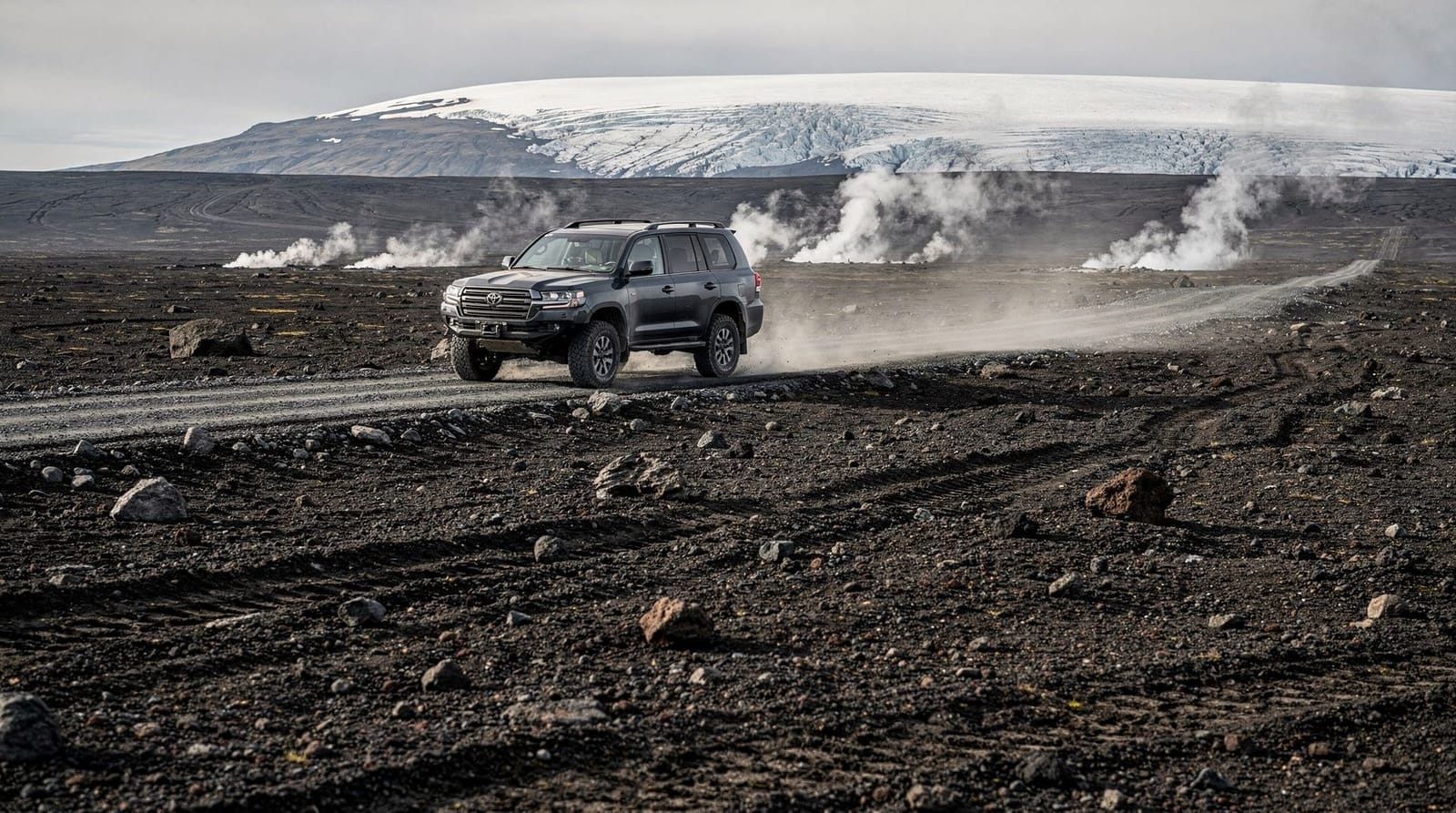
Campervans and larger 4WD vehicles use more fuel. A Landcruiser-class 4WD at 12 litres/100 km over the Ring Road uses 160 litres — around 44,000–47,000 ISK.
Cheapest fuel in Iceland: Costco near Reykjavik consistently undercuts the major chains by 10–20 ISK per litre. You need a Costco membership card. ÓB (owned by Skeljungur) typically prices lower than N1. Orkan and N1 operate the most extensive remote networks.
The main petrol station chains
N1
N1 is Iceland’s largest petrol station network and the most visible on the Ring Road. Most stations have:
- 24-hour automatic pumps (card payment only after hours)
- Attended daytime service
- A convenience shop (basic food, hot dogs — the famous Icelandic pylsur, around 500 ISK each)
- Often a café with soup, sandwiches, and coffee
The N1 hot dog is an Icelandic institution: a lamb/pork sausage with brown mustard, remoulade, crispy onions, and raw onion. Budget travellers eat here regularly — it’s filling and cheap.
Orkan
Orkan is a discount fuel brand, slightly cheaper than N1 at many locations. Self-service with card payment. Fewer staffed shops but common along the Ring Road.
ÓB
ÓB stations offer some of the cheaper prices in the network. Predominantly automated/self-service. Common near Reykjavik and on the South Coast.
Skeljungur / Esso
Older Esso-branded stations have been rebranded under Skeljungur. Declining network, some remote locations remain.
Costco (Reykjavik area only)
Located in Garðabær, just south of Reykjavik. Requires a Costco membership card. Cheapest per-litre price in the country. Worth filling up here before beginning any Ring Road trip if you’re departing from Reykjavik.
Campervan and larger vehicle fuel planning
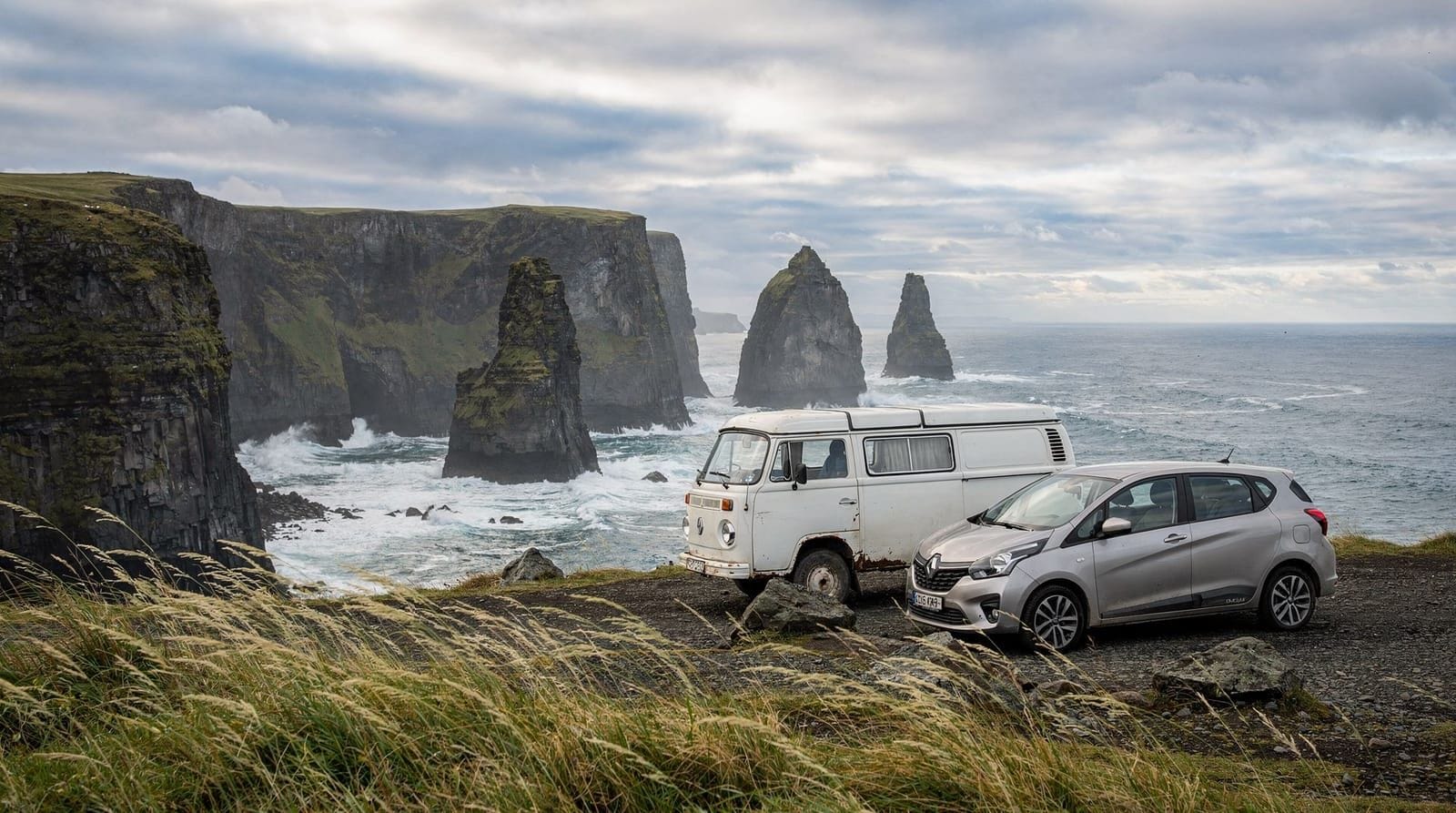
Campervans and larger 4x4 vehicles need a different mental model than a compact rental car, mainly because of higher consumption and, for some campervans, a smaller effective range per tank once you factor in the extra weight of water tanks, gas, and gear.
Typical consumption: a mid-size campervan uses roughly 10–13 litres/100 km, noticeably more than a compact car’s 6–7 litres/100 km. Over a full Ring Road loop, this can mean an extra full tank compared to a compact car — worth budgeting for explicitly rather than assuming similar costs.
Range anxiety in remote sections: because campervans burn fuel faster, the same “distance to next station” gap that’s comfortable in a compact car can be tighter in a campervan. Treat every regional fuel gap listed in this guide as slightly more urgent if you’re driving a larger vehicle.
Overnight parking and fuel: many campervan pitches and rest areas are not near a petrol station. Plan your fill-up for before you arrive at an overnight stop, not after — arriving on a low tank and discovering the nearest station is 40 km away the next morning is avoidable with a small habit change.
Ring Road fuel gaps — where you need to be careful
The Ring Road has petrol stations roughly every 50–100 km in most sections. But some gaps are longer:
East Fjords (Egilsstaðir to Höfn): This 260 km stretch has very few towns. Djúpivogur is the main stop between Egilsstaðir and Höfn. Fill up at Egilsstaðir and again at Djúpivogur. Do not leave Egilsstaðir with less than a full tank.
North Iceland (Akureyri to Mývatn and east): Reasonably well-served, but Mývatn has one main petrol station (Reykjahlíð). Fill before entering the Mývatn–Dettifoss–Ásbyrgi loop.
South Iceland (Kirkjubæjarklaustur to Höfn): The section crossing the Skeiðarársandur sand flat has minimal services. Fill at Kirkjubæjarklaustur before the long push to Höfn.
Westfjords fuel warning
The Westfjords have the sparsest fuel infrastructure in Iceland. Main stations at Ísafjörður, Patreksfjörður, and Hólmavík. Between these towns, fuel can be 150+ km away, sometimes on unpaved roads. Always fill to full before leaving any town in the Westfjords. There are remote farms with 24-hour automatic card pumps, but these can be out of service.
Highland F-roads: fuel planning is critical
The highland interior has no petrol stations. Landmannalaugar, Kerlingarfjöll, and Askja have no fuel available. You must carry enough fuel from your last fill-up to complete the F-road route and reach the next paved road station.
For longer F-road routes (Kjölur F35, Sprengisandur F26), carry a jerrycan of extra fuel. Rental companies often provide one, or it can be purchased and filled. Know your vehicle’s fuel consumption on rough terrain (4WD vehicles use more on F-roads than on paved roads) and plan your range conservatively.
Payment at petrol stations
All attended stations accept credit and debit cards. Most also accept cash.
Automatic/unmanned pumps (common after 22:00): require a PIN-enabled credit card or debit card — contactless alone may not work at all pumps. Visa and Mastercard work. Some pumps require you to enter a 5-digit postal code — Iceland doesn’t use these, so try entering 00000 (five zeros) or simply your card’s PIN as prompted.
Tip: if your card doesn’t work at an automated pump, try a second card or wait for the station to open in the morning. Carrying a small amount of cash (2,000–3,000 ISK) for emergency automated pump situations is advisable in remote areas.
How to pay less for fuel
- Fill up at Costco before leaving Reykjavik (requires membership)
- Use ÓB or Orkan where available — they undercut N1 by 5–15 ISK/litre
- Avoid running on empty — a short fill-up at whatever station appears is better than running out
- Eco-driving on Iceland’s roads: the 90 km/h speed limit already keeps fuel consumption reasonable; avoiding sharp acceleration and using engine braking on descents helps
A note on unleaded vs diesel
Most compact rental cars run on 95 RON unleaded. Diesel is slightly cheaper in Iceland and many larger SUVs and campervans are diesel. Check your fuel cap sticker before pumping — putting petrol in a diesel tank (or vice versa) causes serious engine damage and is not covered by standard insurance. The rental company will present you with the repair bill.
Frequently asked questions about fuel and gas stations in Iceland
How far apart are petrol stations in Iceland?
On the Ring Road in the south and west: typically 50–80 km. In the East Fjords: up to 130 km between stations in some sections. In the Westfjords: 80–160 km. Fill up whenever practical, especially east of Egilsstaðir and anywhere in the Westfjords.
What fuel does Iceland use?
Standard unleaded petrol (95 RON) and diesel are universally available. LPG and E85 bioethanol are not practically available for tourists.
Why won’t my card work at the automatic petrol pump?
Automated Icelandic pumps often require a PIN (not just contactless). Some international credit cards without chip-and-PIN may fail. Try entering 00000 if it asks for a postal code. If the pump still rejects your card, try a different card.
Are there petrol stations in the Highlands?
No. There are no fuel points in Iceland’s highland interior. Plan your fuel from the last paved-road station and carry extra in a jerrycan for long F-road routes.
Is there a fuel station near Keflavik Airport?
Yes. An Orkan station is located near the Ring Road junction just north of the KEF airport access road. Convenient for filling up before returning a rental car.
Can I use Costco fuel in Iceland?
Yes, if you have a Costco membership. The Costco Garðabær station is open to members only and consistently offers the cheapest petrol in the country. Not worth buying a Costco membership solely for this, but if you already have one it’s a meaningful saving on a long trip.
What is the speed limit on Icelandic roads and does it affect fuel efficiency?
The national speed limit on paved rural roads is 90 km/h, 80 km/h on unpaved roads, and 50 km/h in towns. Driving at 90 km/h rather than 120 km/h saves approximately 15–20% on fuel. Since 90 km/h is the legal maximum on most roads, fuel efficiency is naturally higher in Iceland than in countries with motorway limits of 110–130 km/h.
How much should I budget for fuel on a 10-day Ring Road trip?
For a compact car doing the full 1,332 km Ring Road loop plus side trips, budget around 25,000–35,000 ISK (roughly €170–235) in fuel for the circuit itself, more if you add detours to the Westfjords, Snæfellsnes, or highland F-roads. A 4x4 or campervan will run meaningfully higher — see the specific consumption figures earlier in this guide for planning your exact budget.
Do electric rental cars work for a Ring Road trip in 2026?
With careful planning, yes, for summer travel — the Ring Road now has DC fast chargers at roughly 180–250 km intervals. It requires more planning than a petrol or diesel car, particularly around the East Fjords and Westfjords where charger density is lower, and is not recommended for winter Ring Road driving given range loss in cold weather and highland/remote gaps in the network.
Planning fuel stops by region
Reykjavik and the Reykjanes Peninsula
The greater Reykjavik area has the most concentrated petrol infrastructure in Iceland. Major stations:
- Costco Garðabær: Cheapest pump in Iceland. Members only.
- N1 near Kringlan mall (Ármúli): Central, well-located
- ÓB Breiðholt: Budget pricing, south Reykjavik
- Orkan Hafnarfjörður: Good price near KEF access route
Fill up fully in Reykjavik before departing in any direction.
South Coast (Reykjavik to Höfn)
- Selfoss: N1, Orkan, ÓB — good selection, stock up here
- Hvolsvöllur: N1 with café — useful pit stop
- Vík: N1 station — last major stop before the long eastern stretch
- Kirkjubæjarklaustur: One station (N1). Small but reliable. Fill here before crossing Skeiðarársandur.
- Fagurhólsmýri / Skaftafell area: Limited; a service station near the Skaftafell junction, but small
- Höfn: N1 and ÓB — fill completely before the East Fjords
East Fjords (Höfn to Egilsstaðir)
The most fuel-critical section of the Ring Road. From Höfn to Egilsstaðir is approximately 260 km with very limited infrastructure.
- Djúpivogur: Small N1 station. The key mid-point stop — do not skip it.
- Breiðdalsvík: Small station
- Reyðarfjörður: N1 in town
- Egilsstaðir: Full infrastructure including Bónus supermarket and multiple stations
Strategy: Fill to full in Höfn, top up in Djúpivogur, and fill again in Egilsstaðir.
North Iceland (Egilsstaðir to Akureyri)
- Egilsstaðir: Fill up before heading north
- Seyðisfjörður side trip: Small station in town
- Vopnafjörður (if inland route): Small N1
- Akureyri: Multiple stations, competitive prices — one of the best spots outside Reykjavik
Diamond Circle area
- Húsavík: N1 station. Fill here before Ásbyrgi, Dettifoss loops.
- Reykjahlíð (Mývatn): One station with decent infrastructure for a remote location
- There is no fuel on the Dettifoss east-bank road (Road 864) — fill in Húsavík or Reykjahlíð
Snæfellsnes Peninsula
- Borgarnes: Full selection. Stock up here before heading onto the peninsula.
- Grundarfjörður: Station in town
- Ólafsvík: N1 station
- Ísafjörður (Westfjords — different route): Main town has full infrastructure
Westfjords
The most critical fuel planning in Iceland outside the Highlands. The Westfjords’ small towns are your only options:
- Ísafjörður: Main town, multiple stations
- Patreksfjörður: N1 station
- Hólmavík: Station on the southern approach
Between these towns, fuel may be 100–150+ km away. Never enter a Westfjords driving day with less than a near-full tank.
Fuel in winter: special considerations
In winter, some remote stations reduce hours or close temporarily during severe weather. The automated 24-hour pumps are designed to work even in harsh conditions, but occasional technical issues occur.
Winter fuel planning extras:
- Fill up before driving into any mountain section where a closure could leave you stranded
- Keep the fuel tank above half as a general rule — a stuck vehicle consumes fuel idling for heat
- Carry a small emergency supply (1–2 litres) for genuine emergencies, especially on F-roads open in late summer (some F-roads remain open until October)
For driving conditions in winter, see Iceland in winter driving.
The N1 experience: more than just fuel
N1 stations are woven into the Iceland travel experience in a way that petrol station chains in other countries simply aren’t. Beyond fuel and hot dogs, N1 stations serve as:
Rest stops with weather forecasts: Many N1 stations post printed road condition updates and are staffed by people who know the local road conditions. In remote areas, a chat with the N1 cashier about what the road ahead is like is genuinely useful information.
Restrooms: Clean, maintained facilities. On a long Ring Road drive, N1 is the reliable bathroom stop.
Emergency supplies: Rain jacket forgotten? N1 sells waterproofs and emergency gear. Phone charger needed? N1 has adaptors. The station shop selection in remote locations is deliberately broad because N1 understands it’s often the only shop for 100 km.
Wi-Fi: Most staffed N1 stations have free Wi-Fi. Useful for checking road.is, downloading offline maps, or posting that photo before driving into an area without signal.
Local knowledge: N1 staff in small Ring Road towns are locals. If you’re unsure about a road ahead, ask. They know which routes flooded last night.
Understanding fuel pricing in Iceland
Iceland’s fuel pricing works on a relatively transparent market system:
- Prices are set by the importing companies (Orka, N1, Skeljungur)
- Daily fluctuations track crude oil prices and króna exchange rate
- No significant price zones — rural prices are broadly similar to urban prices (unlike Norway or Sweden where rural premium exists)
- Weekend pricing is consistent with weekday pricing
- VAT (11% on fuel) is included in the displayed price
Checking fuel prices before you fill: The apps from N1 and Orkan show current prices. The website íslenskar vöruverðslegar (price comparison) sometimes lists pump prices but is not always up to date. In practice, the price difference between operators is small enough (~15–20 ISK/litre) that the most important thing is to fill where you are, not to hunt for the cheapest station.
EV charging: the emerging infrastructure
Iceland’s electric vehicle adoption has grown rapidly — the country is one of Europe’s leaders in EV uptake (partly due to cheap geothermal electricity). The charging network has improved correspondingly:
Fast chargers (50–150 kW DC): Available in Reykjavik (multiple locations), Selfoss, Vík, Höfn, Egilsstaðir, Akureyri, Borgarnes, and Ísafjörður. The Ring Road now has DC fast charger coverage at approximately 180–250 km intervals.
Type 2 AC chargers: More widespread. Most guesthouses and campsite networks have begun installing Type 2 chargers. If you rent an EV, ask your operator about guaranteed charging at overnight stops along your route.
Gaps in the charging network: East Iceland (Höfn to Egilsstaðir) has fewer fast chargers than other sections. The Westfjords have limited fast charge provision outside Ísafjörður. Highlands have no charging infrastructure.
For ICE car drivers, this remains irrelevant. For travellers considering an EV rental for Ring Road travel, the infrastructure has improved enough in 2025–2026 to make it viable with careful planning in summer.
Alternative fuels
LPG / CNG: Not practically available at public pumps.
E10 bioethanol blended petrol: Standard 95 RON in Iceland contains a small ethanol blend (5–10%). No action required for drivers — standard petrol cars handle this without modification.
B7 diesel: Standard diesel in Iceland contains up to 7% biodiesel. Again, standard diesel vehicles handle this normally.
No special consideration is needed for these blends in a standard rental car.
Emergency fuel situations
If you genuinely run out of fuel on a remote road:
- Pull off the road safely — do not leave the vehicle in the road
- Call your rental company for roadside assistance
- Call 112 if in a genuinely isolated situation with no assistance available
- Register your situation on safetravel.is if you registered your trip
Icelandic Search and Rescue (Landsbjörg) is a volunteer organization that responds to traveller emergencies. Running out of fuel in the Westfjords in October is not trivial — response time for non-life-threatening breakdowns can be several hours. The precaution of never letting the tank drop below quarter in remote areas is not excessive.
For all car rental and road driving guidance: renting a car in Iceland, driving in Iceland, and Iceland road conditions.
Building a fuel stop plan into your itinerary
Rather than treating fuel as an afterthought, build it into your route planning the same way you plan overnight stops. A simple system that works for most Ring Road itineraries:
- Fill to full at the start of every driving day, not just when the gauge gets low — this removes the need to calculate range mid-drive.
- Treat any town with a station as a mandatory top-up, even if you’re only using a quarter tank, on the East Fjords and Westfjords legs specifically.
- Never let the tank drop below a quarter in the East Fjords, Westfjords, or before any Highland F-road approach — this is the buffer that accounts for unexpected detours, weather delays, or a closed station.
- Cross-check your planned route against this guide’s regional breakdown before departure, not while driving, so you’re not searching for signal to check fuel gaps on the road itself.
This system costs a little extra time in fuel stops but removes the single most common driving anxiety reported by first-time Iceland self-drivers: uncertainty about whether the next station is real or how far away it actually is.
Top experiences
Best-rated activities across GetYourGuide and Viator.
Reykjavik: From airport to adventure private Reykjanes peninsula tour
- GetYourGuide
Reykjavik: Kef bus transfer to from Reykjavik shuttle
- GetYourGuide
Reykjavik: Keflavik airport transfer to Reykjavik
- GetYourGuide
Reykjavik: Kef private transfer to from Reykjavik
- GetYourGuide
Reykjavik: Keflavik airport to Reykjavik bus transfer
- GetYourGuide
Reykjavik: Private transfer to from kef airport
- GetYourGuide