Budget accommodation in Iceland — hostels, guesthouses, camping, and farm stays
What is the cheapest accommodation in Iceland?
Camping is the cheapest option at 1,500–2,500 ISK per person per night, with the Camping Card (22,900 ISK for 2 people) covering 28 nights at participating sites. Hostel dorms run 5,000–8,500 ISK per bed. Guesthouses start around 18,000 ISK per double room. Book at least 3–4 months ahead for summer travel — Iceland accommodation sells out.
| Cheapest option | Camping, around 1,500–2,500 ISK/person/night |
| Camping Card | ~22,900 ISK for 2 people, covers 28 nights |
| Hostel dorms | 5,000–8,500 ISK/bed |
| Guesthouses | From around 18,000 ISK/double room |
| Booking lead time | 3–4 months ahead for summer travel |
Why accommodation costs matter so much in Iceland
Iceland’s accommodation costs are the primary variable in any budget calculation. A dorm bed versus a double room varies by 15,000–25,000 ISK per night. Over a 10-night trip, that gap compounds to 150,000–250,000 ISK — enough to fund another 2–3 days of travel, or cover car hire for the whole trip.
Getting accommodation right means: booking early, choosing the right category for your travel style, and knowing where each option is geographically available.
Option 1: Camping
Designated campsites (tjaldsvæði)
Iceland has a well-developed campsite network along the Ring Road and at most major tourist sites. Sites typically offer:
- Toilets (always)
- Showers (most, sometimes coin-operated at 200–400 ISK)
- Kitchen facilities (some)
- Electricity hook-ups (some, at extra charge)
- Wi-Fi (variable quality)
Price: 1,500–2,500 ISK per person per night. Some sites charge per pitch (tent or campervan) at 3,000–6,000 ISK instead of per person.
Season: Most campsites open from mid-May to mid-September. A few remain open year-round in larger towns. Outside these months, camping in tents in Iceland’s weather is genuinely challenging.
The Camping Card
The Iceland Camping Card covers 28 nights for 2 adults at participating campsites. 2026 price: approximately 22,900 ISK. If you use all 28 nights between two people, you pay around 800 ISK per person per night.
For a 10-day camping trip with two people: the Camping Card costs the same as about 7–8 nights at standard campsite rates. If you camp 8+ nights, the card pays for itself.
Where to buy: Online at campingcard.is before departure, or at participating campsites on arrival. The card includes a directory of all participating sites (around 100 sites across Iceland).
Limitation: Not all campsites participate. Highland and some remote campsites have their own pricing. The Landmannalaugar and Þórsmörk highland huts are not part of the card.
Ferðafélag Íslands (Touring Club of Iceland) huts
For trekkers on Laugavegur and Fimmvörðuháls, the mountain hut network operated by Ferðafélag Íslands provides basic shelter, sleeping bags for rent, and cooked meals. Hut sleeping places: 7,000–12,000 ISK per night. Must be booked months in advance — spots for July/August Laugavegur fill by February.
Option 2: Hostels
Reykjavik hostels
Reykjavik has multiple hostels ranging from budget student-style to well-maintained modern ones:
HI Reykjavik Guesthouse (Fossil): Reykjavik’s Hostelling International affiliate. Basic, central, reliable. Dorm beds from around 5,800 ISK.
Loft HI Hostel: More central, above a café. Popular and social. Dorm beds from around 6,500 ISK.
Kex Hostel: Laugavegur location, bar downstairs, design-focused. Slightly pricier but social. From 7,000 ISK per dorm bed.
Galaxy Pod Hostel: Pod-style private sleeping spaces in dorm format. Popular with solo travellers. From 7,500 ISK.
Private doubles in Reykjavik hostels: 22,000–32,000 ISK.
Ring Road hostels
Several towns on the Ring Road have hostels or affordable guesthouses:
- Vík: Hostel Vík and other budget options, dorms from 5,500 ISK
- Höfn: Budget rooms and guesthouses, from 16,000 ISK double
- Egilsstaðir: Hostel options, from 5,000 ISK per dorm
- Akureyri: Multiple hostels and budget guesthouses; this is a full city with good options
- Blönduós / Varmahlíð: Simple guesthouses, sparse options
Booking ahead matters
In July and August, Reykjavik hostels book up months in advance for specific dates. The same applies to popular Ring Road stops (Vík especially). Use Hostelworld, Booking.com, or the hostel’s own site. Book as soon as your dates are confirmed.
Option 3: Guesthouses and farm stays
Guesthouses (gistiheimili)
The backbone of Ring Road accommodation. Family-run guesthouses in farmhouses, converted outbuildings, or purpose-built facilities. Quality varies enormously — some are excellent, some are very basic.
Typical prices:
- Double room without bathroom: 16,000–24,000 ISK
- Double room with bathroom: 22,000–35,000 ISK
- Breakfast (often continental): 2,000–3,500 ISK extra per person
Booking: Directly on guesthouse websites or through Booking.com, Hotels.com. Many of the best guesthouses don’t appear on aggregators — a direct Google search for “[area name] guesthouse” often finds options.
Farm stays (Icelandic Farm Holidays)
Iceland’s farm stay network (farmasafn.is) connects travellers with working farms offering accommodation, sometimes including horse riding, fishing, or farm activities. Prices are broadly similar to guesthouses but the experience is more authentic. Popular with families and anyone wanting to engage with Icelandic rural life beyond the tourist circuit.
Farm stays range from simple sleeping-bag accommodation in a barn (7,000–10,000 ISK per person) to private rooms with breakfast.
Option 4: Sleeping-bag accommodation
Many guesthouses and hostels offer “sleeping-bag accommodation” — access to a mattress in a dormitory-style room, providing your own sleeping bag. Price: 3,500–6,000 ISK per person. Very common in smaller Ring Road towns and highland areas.
If you bring your own sleeping bag (which you should if camping anyway), this is a cheap fallback when nothing else is available. Guesthouses sometimes don’t advertise this; call ahead and ask.
Option 5: Campervans (accommodation + transport combined)
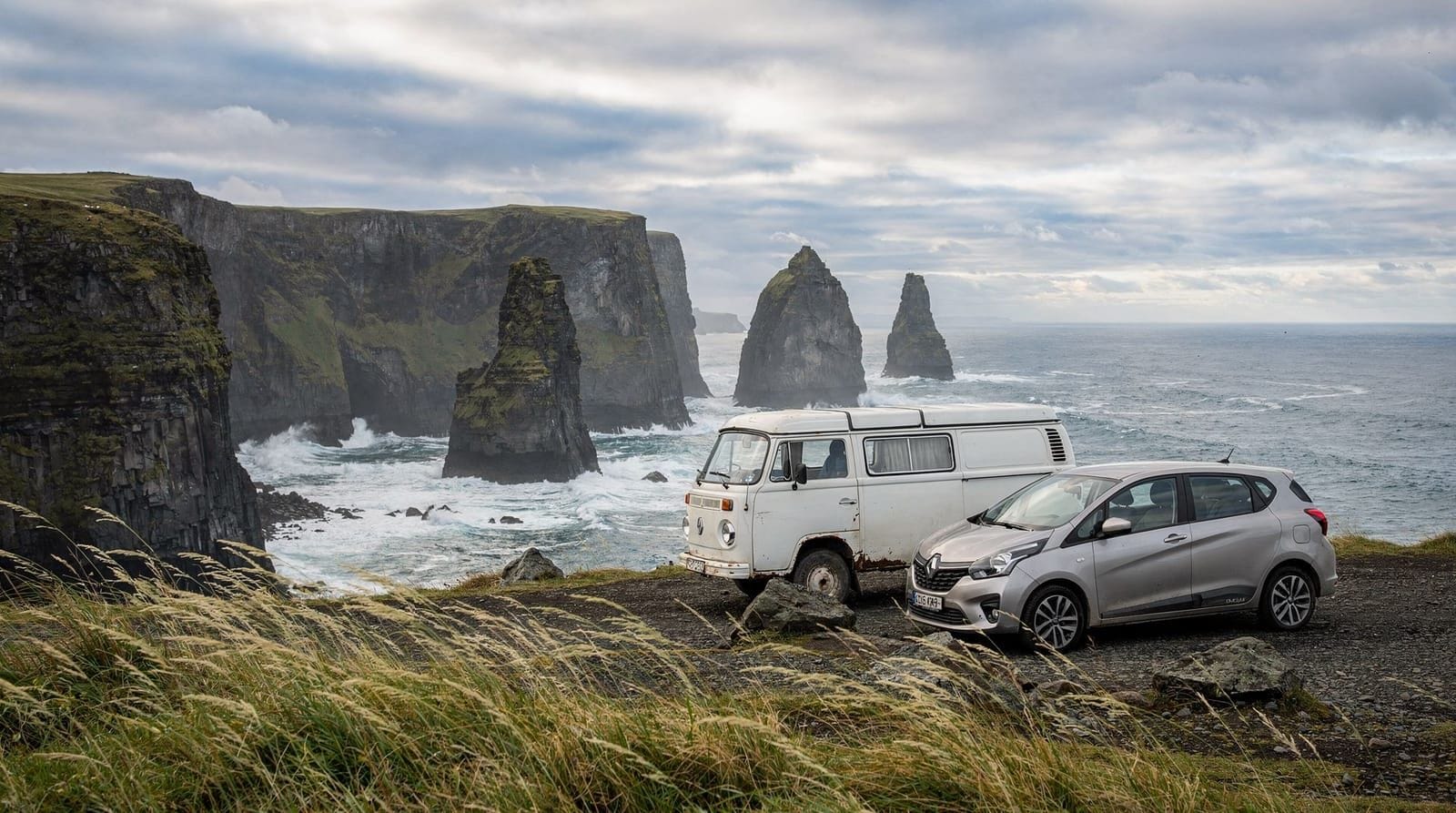
If you’re already committed to a campervan, you essentially have rolling accommodation — see the campervan vs car comparison for total cost analysis. Campervans park at designated campsites for the same 1,500–2,500 ISK per person that tent campers pay.
Where accommodation is hardest to find / most expensive
Reykjavik in July–August: The most expensive city accommodation in Iceland. Book 3–4 months ahead for dorms; 5–6 months for decent hotels at reasonable prices.
Vík and the South Coast: The choke point of the Ring Road. Single guesthouses with 10–15 rooms serving hundreds of daily visitors. Very limited options — book 6+ months ahead for July.
Jökulsárlón area: There is no town at Jökulsárlón — Höfn is the nearest base, 70 km east. Don’t expect to find accommodation adjacent to the lagoon.
Westfjords: Very limited accommodation network. Ísafjörður has several options; elsewhere is sparse. The Westfjords guide covers logistics.
What to do when everywhere is full
- Check for cancellations on Booking.com up to 48 hours before peak dates — people change plans
- Expand your search area — a guesthouse 20 km off the main route often has availability when Ring Road stops are full
- Sleeping bag accommodation at petrol stations — some N1 and Orkan stations have basic accommodation (sleeping bag spots) in designated rooms, particularly in remote areas
- Stay flexible on dates — moving your Ring Road day by one day often frees up accommodation
Frequently asked questions about budget accommodation in Iceland
Is camping safe in Iceland?
Yes, in summer at designated sites. The main risks are weather (wind, rain, cold) rather than crime or wildlife. Iceland has no dangerous predators. Bring a good tent rated for high winds — a cheap festival tent will not survive an Iceland storm.
What is the cheapest accommodation in Reykjavik?
Hostel dorm beds from around 5,500–6,500 ISK. Sleeping bag accommodation (where available) from 4,000–5,000 ISK. Camping at the Reykjavik campsite (Laugardalur area) from 2,000 ISK per person, though it’s not centrally located.
Can I camp anywhere in Iceland?
No. Iceland restricts freedom camping — you must use designated campsites. Some areas permit camping with landowner permission on private land. The 2015 regulations tightened rules significantly after environmental damage. Fines for illegal camping start at 50,000 ISK.
Does the Camping Card cover the Blue Lagoon?
No. The Camping Card covers campsite accommodation only. The Blue Lagoon is a separate paid entry.
Are Iceland hostels good quality?
Quality varies. Larger Reykjavik hostels (Kex, Loft) are well-maintained with good social atmospheres. Rural hostels can be basic — shared bathrooms down the hall, thin walls, poor insulation. Reviews on Hostelworld tend to be accurate; read recent ones.
Is Airbnb worth it in Iceland?
For groups of 3–5 people, whole-apartment Airbnbs can undercut guesthouse rates while providing kitchen facilities for self-catering. In Reykjavik, Airbnb pricing has risen significantly. Run a comparison with guesthouses before assuming Airbnb is cheaper.
Is a campervan cheaper than budget guesthouses?
For 2 people camping most nights in summer, a campervan is usually cheaper than mid-range guesthouses but more expensive than a rental car plus tent camping. See the campervan vs hotel guide for a detailed cost breakdown by group size.
Booking accommodation by route segment
Reykjavik
For the city itself, the range of options is widest. Hostels are concentrated around Laugavegur and the old harbour district. Budget guesthouses exist in the Hlíðar and Breiðholt neighbourhoods, though public transport connections are less convenient.
The Reykjavik campsite at Laugardalur is 4 km from the city centre — accessible by bus (Route 11) or a 40-minute walk. It’s a proper campsite with facilities but less central than many visitors expect.
Golden Circle area
The Golden Circle (Þingvellir–Geysir–Gullfoss) is easily done as a day trip from Reykjavik. If you want to overnight in the area:
- Þingvellir: The national park service cabins (Ferðafélag Íslands) are basic but well-located for walks. Limited availability.
- Laugarvatn: A small town between Þingvellir and Geysir with a campsite, a guesthouse, and the Fontana geothermal bath. Mid-range pricing.
- Flúðir: A village near the Secret Lagoon with several guesthouses. Quieter and cheaper than Reykjavik.
South Coast
The most booked section of Iceland outside Reykjavik. Key accommodation hubs:
Hvolsvöllur: The last sizable town before the waterfalls. Budget guesthouses and a campsite. Convenient for Seljalandsfoss and Skógafoss without Vík prices.
Vík: The most visited South Coast overnight stop. Limited supply means high prices — rooms in July can be 30,000–45,000 ISK per night for a basic double. Book 5–6 months ahead for summer. The campsite in Vík is well-maintained and cheaper.
Kirkjubæjarklaustur: Often overlooked, but has a good campsite and several guesthouses at lower prices than Vík due to lower demand. Useful for breaking the drive to Höfn.
Skaftafell (Vatnajökull National Park area): Campsite only in the immediate area. Guesthouses nearby in Freysnes and Skaftafell hamlet. Fill up on food in Kirkjubæjarklaustur — local options are limited.
Höfn: A proper town with multiple guesthouses and a campsite. Good base for Jökulsárlón day trips.
North Iceland
Akureyri: Multiple hostel and guesthouse options. Genuinely affordable by Iceland standards. Dorm beds from around 5,500 ISK; guesthouses from 20,000 ISK per room.
Mývatn area (Reykjahlíð): Limited accommodation; book ahead. The campsite at Reykjahlíð is the budget option.
Húsavík: Small town with a couple of good guesthouses and a campsite. Popular in summer for whale watching.
Making the most of the Camping Card network
The Camping Card works at about 100 campsites Iceland-wide. The printed directory that comes with the card has useful information about facilities at each site (kitchen, showers, electrical hook-ups). A few tips:
Best-facility sites in the network:
- Þingvellir: Well-maintained, close to park walking
- Skógar (Skógafoss area): Popular, sometimes busy but well-run
- Akureyri city campsite: Excellent facilities, good location
Sites often at capacity in July:
- Vík area campsites: arrive early or risk being turned away
- South coast campsites in general in peak season
Sites with quiet locations:
- East Fjords campsites (Djúpivogur, Breiðdalsvík) are often lightly used even in summer
Accommodation booking platforms for Iceland
Booking.com: Best coverage for guesthouses and hotels. Many Icelandic guesthouses list here with free cancellation policies — useful for uncertain itineraries.
Hostelworld: Better for hostels specifically. Dorm bed coverage is broader here than on Booking.com.
Icelandhotels.is / Keflavik.com / Icehotels: Niche platforms covering specific chains.
Direct booking: Many smaller guesthouses have their own booking pages that offer the same price as Booking.com (or cheaper) without the platform’s commission cutting into their margins. If you see a property you want, check their direct site.
Always check cancellation policies before booking in Iceland — weather and transport disruptions can require itinerary changes, and a non-refundable booking on a road you can’t reach is lost money.
What budget travellers consistently get wrong about accommodation
Booking too late: The single most common mistake. Iceland’s accommodation for July–August at budget price points sells out by March–April. Not “might sell out” — it sells out. Travellers who book flights in January and accommodation in June are paying 40–60% more than the early bookers, or finding no budget options left.
Underestimating Reykjavik pre/post costs: Many travellers budget for accommodation during the Ring Road but underestimate Reykjavik’s cost at the start and end. Two nights in Reykjavik at the beginning and end of a trip can cost 30,000–60,000 ISK per couple — a significant portion of the total accommodation budget. Book Reykjavik first.
Assuming campsites are interchangeable: They’re not. A well-equipped campsite in Akureyri (hot showers, heated kitchen, Wi-Fi) is very different from a basic field campsite in the East Fjords with only a toilet block. The Camping Card directory describes facilities; read it.
Not checking kitchen facilities: If your budget strategy depends on self-catering, a campsite or hostel without kitchen access forces you into restaurants. Always confirm kitchen access before booking.
Accommodation for multi-person groups
Groups of 4–6 people have the most budget accommodation options in Iceland:
Self-catering cottages (sumarbústaðir): Available for weekly rental throughout Iceland. A cottage sleeping 6 people for one week costs 150,000–350,000 ISK depending on location and quality — comparable to 6 people in individual guesthouses but with kitchen access and more space.
Youth hostel dorms (4+ people): Some hostels have 4–6 bed dorms that a group can book privately, effectively getting a private room at dorm prices (typically 15,000–25,000 ISK for 4 beds).
Farmhouse large rooms: Many farm guesthouses have rooms sleeping 4–5 people at flat rates (not per-person). A room sleeping 4 at 22,000 ISK total is 5,500 ISK per person — excellent value.
Alternatives to commercial accommodation
Couchsurfing: Still active in Iceland. The community is small but genuine. Works best in Reykjavik and larger towns. Not practical for the Ring Road unless you build in extra days for host arrangement flexibility.
WWOOFing (Worldwide Opportunities on Organic Farms): A small number of Icelandic farms participate. You work (typically 4–6 hours per day) in exchange for food and accommodation. Not a “travel Iceland for free” strategy — you’re working — but an authentic immersion for travellers with flexibility.
University accommodation (summer): The University of Iceland occasionally opens dormitories to visitors in summer (July–August) when students are absent. Prices are lower than commercial hostels. Check Háskóli Íslands directly for summer availability.
The minimum-spend viable Iceland trip
For absolute budget planning purposes, here’s what the floor looks like for a 10-day Iceland visit:
- Flights (cheapest available from Europe, shoulder season): 25,000–45,000 ISK per person
- Accommodation (camping card + 2 hostel dorms in Reykjavik): 35,000 ISK per person
- Rental car 2WD + basic insurance (10 days, split 2): 70,000–85,000 ISK per person
- Fuel (Ring Road + excursions): 16,000–18,000 ISK per person
- Food (primarily supermarket): 20,000–25,000 ISK per person
- Activities (mostly free + Secret Lagoon): 5,000 ISK per person
Total excluding flights: approximately 146,000–171,000 ISK per person. With flights from Europe: roughly 175,000–220,000 ISK per person for a 10-day trip.
This is Iceland on a genuine shoestring. It requires camping most nights, cooking your own food, skipping the Blue Lagoon, and doing only free activities. It is a real number, achievable, and the experiences are 80% as rich as a trip costing three times as much. See saving money on car rental for car cost optimisation strategies.
Budget accommodation by traveller type
| Traveller type | Best option | Why |
|---|---|---|
| Solo backpacker | Hostel dorms + occasional camping | Lowest per-person cost, social atmosphere |
| Couple, summer | Camping Card + a few guesthouse nights | Camping Card pays for itself past 7–8 nights |
| Family with young kids | Budget guesthouses or farm stays | Camping logistics with children are genuinely harder |
| Group of 4–6 | Self-catering cottages (sumarbústaðir) | Splits cost per person while keeping kitchen access |
| Winter traveller | Guesthouses only | Most campsites close November–March |
How accommodation choice interacts with your route
Budget accommodation strategy is not independent of how you’re travelling. A campervan folds accommodation and transport into one cost, which changes the maths compared to a rental car plus separate nightly bookings — see the campervan vs hotel comparison for the full breakdown by group size. If you’re doing the Ring Road, the accommodation hubs described above (Vík, Höfn, Akureyri, Egilsstaðir) roughly correspond to a sensible daily driving distance, so plan bookings and driving legs together rather than separately. For a full view of what a realistic daily budget looks like beyond just accommodation, see how much does Iceland cost and Iceland on a budget.