Campervanning in Iceland: costs, logistics, and honest trade-offs
Is a campervan worth it in Iceland?
For flexible travelers in summer (May–September), a campervan reduces planning stress and can cut accommodation costs for groups of 2–3. A 2-berth campervan costs ISK 20,000–45,000/day (€135–305) including the bed; compare that to a double guesthouse room at ISK 20,000–35,000/night. For winter travel or solo travelers, the economics rarely work.
| Where | Ring Road, Snæfellsnes, Westfjords (June–September) |
| Cost | ISK 20,000–80,000/day depending on size, plus 1,500–2,500/person/night campsites |
| Time needed | Best value on 7–14 day trips |
| Getting there | Pick up in Reykjavík or at Keflavík Airport |
| Booking | 3–4 months ahead for summer |
What campervan rental actually gets you
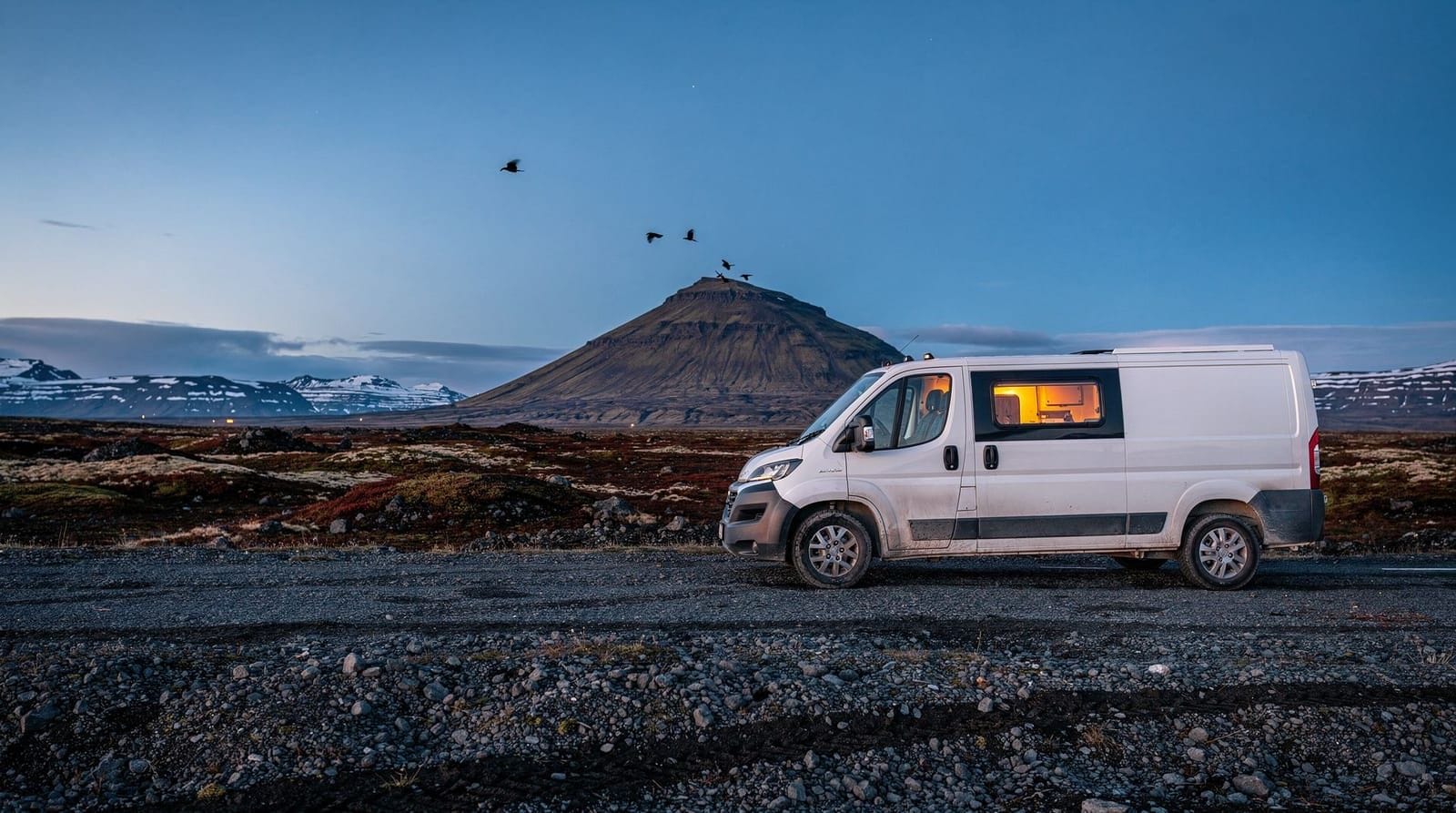
A campervan in Iceland is a rental vehicle with a sleeping area — from a converted VW Caddy with a pop-up roof to a full Fiat Ducato motorhome with toilet, shower, and kitchen. The main categories available in Iceland:
Small (2-berth): Converted mid-size van (Renault Trafic, VW Transporter). Sleeping area folds up from the load bed. Kitchen is usually a 2-ring gas hob, mini-fridge, and sink. No onboard toilet. Sleeps 2 adults, tightly. Suitable for the Ring Road in summer; not suitable for F-roads without specific F-road insurance.
Medium (2-4 berth): Full-size van or small motorhome (Fiat Ducato, VW Crafter). Permanent double bed, separate seating area, gas cooking, sink, sometimes a cassette toilet. More comfortable for week-long trips.
Large (4-6 berth): Full motorhome with toilet, shower, and more storage. Higher running costs and more difficult to park at narrow viewpoints. Rare in Iceland’s campsite layouts.
Costs: what you’ll actually pay
Vehicle rental:
- Small 2-berth: ISK 20,000–35,000/day (€135–240) in summer
- Medium 2-4 berth: ISK 30,000–50,000/day (€205–340)
- Large 4-6 berth: ISK 45,000–80,000/day (€305–545)
Prices drop 30–50% in shoulder season (May and September) and 50–60% in winter.
Campsite fees: Most organised campsites on the Ring Road: ISK 1,500–2,500/person/night (€10–17). A 2-person campervan at a campsite costs ISK 3,000–5,000/night — significantly less than a hotel room.
However: Free camping outside designated campsites is heavily restricted in Iceland. Wild camping is legal only on uncultivated land far from farmland and roads, with Leave No Trace compliance. In practice, most accessible viewpoints and roadside spots near the Ring Road are on private or protected land. Camping outside designated areas near major sites is actively fined; Iceland increased enforcement significantly from 2023.
Electricity hookup: ISK 700–1,500 extra per night at sites with hookups. Essential in winter for heating.
Showers: Most campsites have warm showers for ISK 200–500 extra. Budget for these unless your campervan has onboard shower.
Fuel: Campervans consume more fuel than cars due to weight and aerodynamics. Budget approximately 9–12L/100km for a medium campervan vs 6–8L/100km for a small car — add roughly 40–60% to your car fuel budget.
Campsite infrastructure on the Ring Road
Iceland’s campsite network is extensive and well-designed for Ring Road travel. The national Camping Card (Tjaldferðakort) costs approximately ISK 18,500 (€126) and gives 28 nights at member sites for 2 adults — a meaningful saving if you’re doing the full loop at a slow pace. Check campingcard.is for current pricing and participating sites.
Key campsite clusters:
- Reykjavik: Multiple options including Reykjavik Campsite in Laugardalur (right next to the pool). Busy but well-run.
- South Coast: Sites at Skógar (near Skógafoss), Vík, and Kirkjubæjarklaustur. Book ahead July–August.
- East Iceland: Quieter sites with more space. Egilsstaðir is the main hub.
- North Iceland: Akureyri has a large well-equipped site; Mývatn area has several smaller options.
- Snæfellsnes Peninsula: Sites at Arnarstapi and Ólafsvík.
Most sites are open June–September. A handful operate year-round in Reykjavik and Akureyri.
Practical campervan logistics
Electricity: Most campsites offer electrical hookup for an extra fee. Without hookup, your campervan relies on a leisure battery for lights and small devices — typically 8–16 hours of capacity. Running the fridge overnight without hookup drains it. Solar panels are fitted to some newer campervan fleets.
Water: Fresh water at every campsite. Carry a 10–20L tank for between sites. Iceland’s tap water is excellent — no need to buy bottled water anywhere.
Grey water disposal: Iceland has designated grey water disposal points at campsites. Do not empty grey water on the ground or into natural water bodies — this is illegal and damaging. Some campervans have onboard grey water tanks; others require you to drain into campsite disposal points.
Cassette toilet: If your campervan has one, empty at service stations — Motorstop facilities at larger campsites, or petrol stations with RV dump points (common at N1 and Orkan).
Gas: Camping gas canisters (typically Primus or Coleman threading) available at most petrol stations and outdoor stores (66North, Útilíf). Bring a multi-thread adapter if you have a specific stove system.
Campervans and F-roads
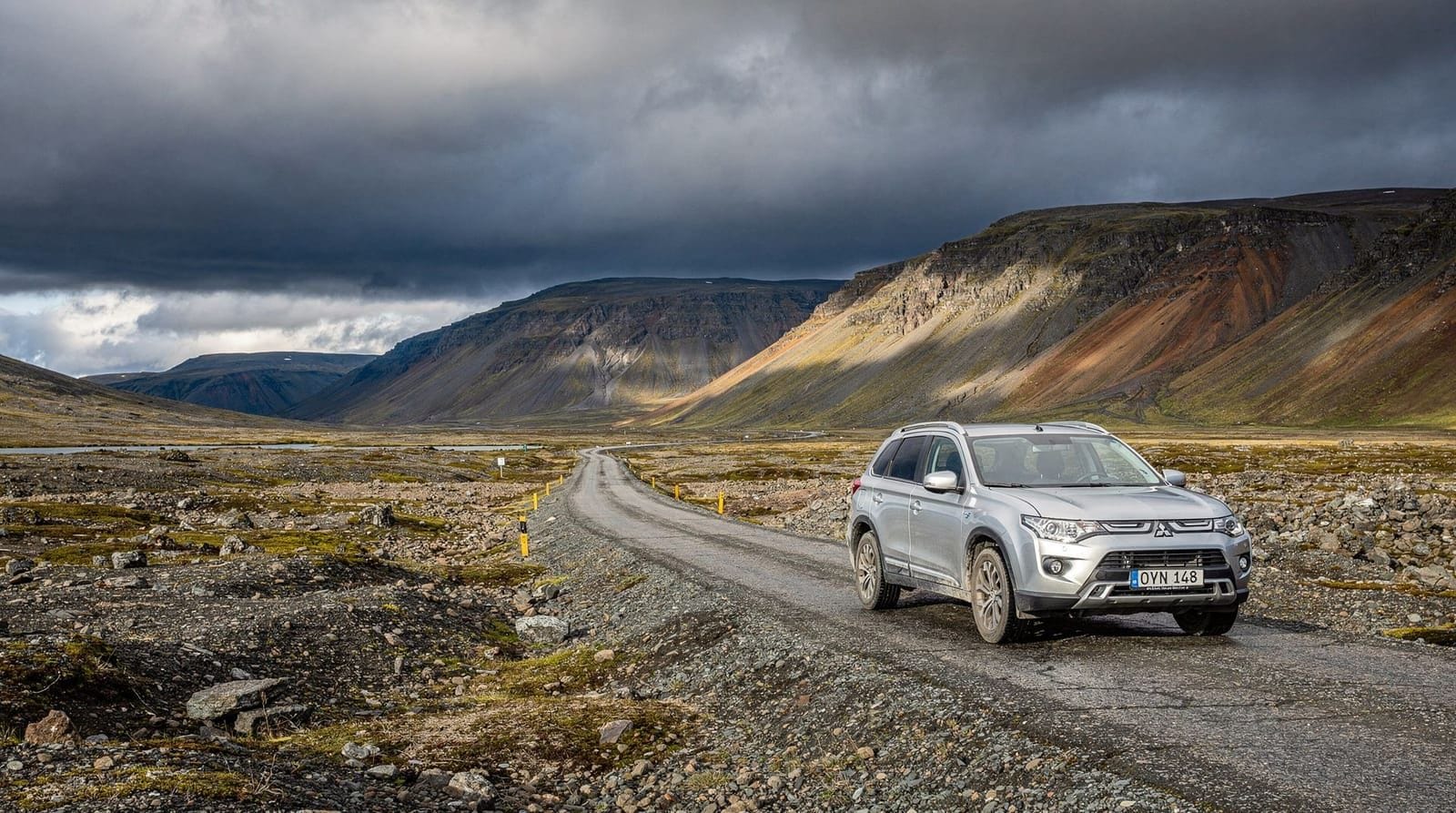
Most campervan rental contracts explicitly prohibit F-road use. Even if the vehicle is a 4x4, the contract typically excludes F-roads. The combination of a heavy campervan body, suspension not designed for river crossings, and the specific insurance exclusions makes this a firm no. If Highland F-road access is important to your trip, rent a 4x4 car and book accommodation at Highland huts instead.
Winter campervanning
Technically possible but with significant caveats:
- Most campsites close November–March
- The sites that remain open (Reykjavik, Akureyri, a few others) require electricity hookup for campervan heating systems to function overnight
- Campervan plumbing freezes if external temperatures drop below -5°C without hookup
- Snow and ice on the roof adds weight and the pop-up roofs on smaller vans can jam
If you insist on a winter campervan trip, use a larger vehicle with onboard heating and confirmed winter-open sites with hookup. Budget ISK 5,000–8,000/night extra for electricity and heated campsite facilities.
Campervan vs car and hotel: a realistic comparison
Two adults, 10 nights, summer (August):
| Option | Daily cost | 10-night total |
|---|---|---|
| Small 2-berth campervan | ISK 28,000 vehicle + 4,000 camping | ~ISK 320,000 |
| Small rental car + guesthouses (mid-range) | ISK 12,000 car + 25,000 accommodation | ~ISK 370,000 |
| Small rental car + campsites (tent) | ISK 12,000 car + 4,000 camping | ~ISK 160,000 |
The campervan is cheaper than mid-range hotels but significantly more expensive than a car plus tent. The value proposition is flexibility — no booking, sleep wherever the campsite network takes you, no check-in times.
Full comparison with more scenarios in our camper vs hotel guide.
The best campsite spots on the Ring Road
Not all Iceland campsites are equal. These are the ones that justify the location:
Skógar campsite (South Coast): Directly behind Skógafoss waterfall. The sound of the waterfall is present all night. Views of the waterfall from your tent (or campervan window) at sunrise. ISK 2,000/person. Popular — arrive by 15:00 in July–August.
Vík campsite: In town, walking distance from Víkurfjara beach and Reynisfjara. Serves as the hub for the South Iceland cluster. Basic facilities, reliably open.
Jökulsárlón area: There is no campsite at Jökulsárlón itself. The nearest are approximately 15 km east (Hof campsite near Skaftafell). Camping here means morning access to the lagoon before tour buses arrive — a significant advantage.
Mývatn campsite (Vogar): On the lake shore with views of the lake and the pseudocraters. Ducks and Arctic terns nesting nearby. Warm showers at the camp facility. ISK 1,800–2,200/person.
Þórsmörk (Langidalur/Básar): Only accessible by 4x4 or bus. The most dramatic campsite position in Iceland — surrounded on three sides by glaciers and a glacial river. Þórsmörk requires advance hut/camping booking in July–August.
Snæfellsnes / Arnarstapi: Small campsite in the fishing village at the base of the Snæfellsnes sea stacks. Walking distance to the coastal trail to Hellnar. ISK 1,700/person.
Cooking and eating from a campervan
One of the underrated advantages of campervanning in Iceland is the ability to eat well without paying restaurant prices. Iceland’s restaurants are expensive — a main course in a Ring Road guesthouse runs ISK 3,500–6,500 (€24–44). A week of restaurant meals for two adds ISK 150,000–250,000 (€1,000–1,700) to your trip cost.
Supermarket strategy:
Stock up at Bónus (cheapest, yellow pig logo) or Krónan before long stretches. Main supermarket locations with Bónus on the Ring Road: Reykjavik (multiple), Selfoss, Akureyri. Smaller Krónan and Nettó in Hveragerði, Vík area (small shop), Höfn, and Egilsstaðir.
The Eastfjords has limited supermarket access — shop in Egilsstaðir before heading south or north from there.
Campervan cooking tips:
- A portable camping coffee maker (Bialetti moka style) and gas is significantly better than instant coffee from a hob
- Smoked lamb (hangikjöt) is a traditional Icelandic smoked meat available in supermarkets, excellent cold or heated in a pan
- Icelandic dairy (skyr, butter, fresh cream) is high quality and surprisingly affordable in supermarkets
- Lobster (langoustine) from Höfn — the town sells them cheap from boats at the harbour, and one pan of butter-fried langoustines beats any restaurant experience at a fraction of the price
Campervan breakdown and roadside scenarios
What to do if your campervan develops a problem on the Ring Road:
- Call the rental company’s emergency number (on the rental contract, usually free 24-hour line)
- Stay with the vehicle on the road shoulder (use hazard lights, place warning triangle if you have one)
- Call 112 if you are in danger or the vehicle is blocking traffic in a dangerous location
- Do not accept roadside “repairs” from strangers — Iceland has legitimate mechanics in main towns, not roadside assistance culture
Most rental companies have relationships with garages in Reykjavik, Akureyri, and Höfn. In remote areas, the realistic timeline for mechanical repair is 12–48 hours. Having travel insurance with trip interruption cover helps here.
Campervanning with pets
Iceland allows bringing pets (primarily dogs and cats) from EU and Schengen countries under specific entry rules — a veterinary certificate, microchip, and proof of rabies vaccination are required. Pets are subject to a pre-inspection process on arrival.
For campervanning with a dog: most Ring Road campsites allow dogs on leads. Some guesthouses and camping areas prohibit pets in certain zones. The main practical consideration is that national park areas (Þingvellir, Skaftafell) have specific rules about keeping dogs on leads and away from sensitive ground-nesting bird areas during breeding season (April–July).
If you are campervanning with a dog, carry a long stake-in-ground lead (for campsite use) and be aware that Iceland has sheep everywhere — dogs approaching sheep are a serious countryside offence.
Campervan rental companies: what to look for
Iceland’s campervan rental market has expanded significantly since 2015. Key companies:
Kúkú Campers: Budget-oriented, popular with backpackers. Converted campervans with basic cooking setups. Prices at the lower end. Review the specific vehicle condition before accepting — some vehicles in the fleet are older.
Campervan Iceland: Mid-range, reliable equipment. Good for first-timers who want equipment to work consistently.
Happy Campers: Well-reviewed for reliability and customer service. Slightly higher priced than budget operators but fewer reported issues with equipment failures.
Motorhome Republic / Camper Travel: Larger motorhome rentals for families or comfort-oriented travelers.
What to check before accepting the vehicle:
- Test the gas hob before leaving the collection point
- Check the leisure battery charges correctly from the vehicle’s alternator
- Verify the fridge is at temperature
- Test the water pump and sink drainage
- Check tyre condition (ask specifically about spare tyre)
- Photograph every scratch, dent, and mark on the exterior before driving off
Most companies do a walk-around but miss minor damage. Your photos protect you from charges at return.
Mobile connectivity in a campervan
Unlike guesthouse stays where WiFi is available, campervan travelers may go 1–3 days between reliable internet access, particularly in the East Fjords and Westfjords.
Icelandic SIM cards: Available at the airport (Síminn, Nova) for ISK 2,000–5,000 (€14–34) including data. Síminn has the widest coverage on the Ring Road. A 10GB+ data allowance is recommended for two weeks.
eSIM options: International eSIMs (Airalo, Holafly, local-eSIM) work in Iceland and can be purchased before departure. Coverage is carrier-dependent — check which Icelandic carrier the eSIM roams on. Our eSIM guide covers this.
Wifi hotspots: N1 petrol stations increasingly have public WiFi. Some campsite reception areas have WiFi. Reykjavik has widespread city WiFi.
For navigation offline use: download your Iceland map to Google Maps before leaving a WiFi connection. A 1GB download covers all of Iceland’s offline map data.
Frequently asked questions about campervanning in Iceland
Do I need a special driving licence for a campervan?
Not for campervans under 3.5 tonnes gross vehicle weight (GVW) — a standard car licence applies. Larger motorhomes over 3.5T require a category C1 licence. Most rental campervans are under 3.5T; check the vehicle registration document if unsure.
Can I cook inside the campervan?
Yes. Most campervans have a gas hob and ventilation. Do not cook inside with all vents closed — carbon monoxide risk. Use the side door or rear hatch open for ventilation when cooking.
Where can I empty the campervan toilet?
Cassette toilet service points exist at larger campsites and some N1 petrol stations. Never empty a cassette toilet into the natural environment. Iceland’s groundwater supplies are vulnerable and enforcement is active.
Is free camping legal in Iceland?
On uncultivated, non-protected land with no trace left, technically yes under Icelandic law. In practice, almost all roadside areas near tourist routes are either private farmland or protected conservation areas where this doesn’t apply. The safe rule: use designated campsites. The Camping Card network covers the full Ring Road adequately.
What happens if I arrive at a campsite after 23:00?
Most sites have a night check-in system — your pitch number is assigned at the site entrance, payment in the morning. Iceland campsite culture is relaxed about late arrivals. Call ahead if you are significantly delayed to reserve a pitch in July–August.
Are campervans available for one-way rental?
Some companies allow one-way rental (pick up in Reykjavik, drop off in Akureyri or vice versa) but charge a repatriation fee of ISK 15,000–50,000. Useful if you only want to drive one half of the Ring Road.
What size licence do I need for an Iceland campervan?
Most campervan rentals in Iceland are under 3.5 tonnes GVW and require only a standard category B (car) licence. Larger motorhomes over 3.5T require category C1 (available on most European licences after a separate test). Always confirm the vehicle GVW with the rental company before booking, particularly for larger 4-6 berth vehicles.
What insurance does a campervan rental include in Iceland?
Campervan rentals include a basic CDW (Collision Damage Waiver) in the quoted price. This covers standard vehicle collision damage but excludes gravel damage, sand/ash damage, F-road use (usually explicitly prohibited), and any water damage. Supplemental protection (Gravel Protection, Sand/Ash Protection) should be added for the Ring Road — particularly for the South Coast black sand plains and any gravel campsite access roads. Ask your rental company for a specific list of exclusions in the CDW before signing. See our car rental insurance guide.
Is there a minimum rental period for campervans in Iceland?
Most companies have a minimum rental of 3 days; some require 5–7 days in peak season. One or two-day campervan rentals exist but are uncommon and typically more expensive per day. The sweet spot for campervan value is 7–14 days, where the per-day cost comes down and the cooking/accommodation savings compound.
Can I take a campervan on the ferry to the Westfjords?
Yes. The Baldur ferry between Stykkishólmur and Brjánslæk accepts campervans for an additional vehicle fare. Book the ferry slot well ahead in summer — it sells out. Our Westfjords itinerary covers this route.
Is a campervan or a rental car with guesthouses better for a first-time Iceland visitor?
For most first-timers, a rental car plus guesthouses is the lower-friction choice — it removes the daily task of finding a campsite and managing water/gas logistics while you’re still learning Iceland’s roads. Experienced Iceland travellers, or those on a longer 10+ day summer trip, get more value from a campervan.
Campervan size at a glance
| Size | Berths | Toilet/shower | Fuel use | Best for |
|---|---|---|---|---|
| Small (2-berth) | 2 | No | Moderate | Couples, budget summer trips |
| Medium (2-4 berth) | 2–4 | Sometimes cassette toilet | Higher | Week-long trips, more comfort |
| Large (4-6 berth) | 4–6 | Toilet + shower | Highest | Families, harder to park |
Campervan or car plus guesthouse: the honest trade-off
Campervanning is not automatically the cheaper or better option — it depends heavily on group size, season, and how much you value flexibility over comfort. For a full side-by-side cost and comfort breakdown across different group sizes, see the campervan vs hotel comparison and the more general campervan vs car guide. If you decide a car and guesthouses suit your trip better, renting a car in Iceland and 2WD vs 4x4 Iceland cover the vehicle side of that decision.
Top experiences
Best-rated activities across GetYourGuide and Viator.

From Reykjavik: Snaefellsness Peninsula small group day tour
- Viator

Lake Myvatn Day Tour and Godafoss Waterfall for Cruise Ships from Akureyri Port
- Viator

Private Jökulsárlón Glacier Lagoon 2 Day Tour & Glacier Hike
- Viator

From Reykjavik: Katla Ice Cave and South Coast Day Tour
- Viator

Reykjanes Peninsula Private Day Tour - up to 9 passengers
- Viator

Thorsmork Hike Day Tour
- Viator