Car rental insurance in Iceland — what you need and what to skip
What insurance do I need for a rental car in Iceland?
At minimum: CDW (collision waiver) is usually included in the rental price. You should add SCDW (super CDW to reduce/eliminate your excess) and SAAP (gravel and sand protection). Do NOT assume your credit card covers all Icelandic risks — most credit card policies exclude gravel damage and off-road damage explicitly.
Rental car insurance is the one line item almost every Iceland visitor gets wrong — either by over-buying cover they don’t need for a Reykjavik-only trip, or under-buying before a Ring Road loop that crosses gravel, sand and ice. This guide breaks the products apart so you can pick only what your route actually needs.
| Minimum for any rental | Basic CDW (usually included) |
| Add for the Ring Road | SAAP/Gravel Protection + windscreen cover |
| Add for F-roads/highlands | Written F-road permission + tyre/rim protection |
| Typical excess without SCDW | around 150,000–250,000 ISK |
| Credit card cover | Verify with your issuer before relying on it |
Why Iceland rental insurance is unusually complex
Iceland sits at an intersection of risks that don’t exist in most rental car destinations. Flying gravel chips windscreens and strips paint within minutes on unsheltered roads. Sandstorms near Mýrdalssandur can sandblast an entire vehicle. River crossings on F-roads can submerge the vehicle if misjudged. Snow, ice, and narrow cliff-edge roads add further exposure.
Standard car rental insurance packages were designed for driving in city traffic. Most of them don’t cover Iceland’s specific hazards. This creates a situation where tourists pay at the rental desk for cover that doesn’t actually protect them, or discover that their credit card policy has explicit Iceland exclusions.
This guide explains each category of cover and what it actually means for your situation.
Standard CDW (Collision Damage Waiver)
Nearly all Iceland rental contracts include basic CDW in the quoted price. CDW eliminates or caps your liability if the car is damaged in a collision — you pay the excess (typically 150,000–250,000 ISK), and the rental company absorbs the rest.
CDW does NOT cover:
- Glass/windscreen damage (separate cover needed in most contracts)
- Gravel damage to paintwork or windscreen
- Sand and ash damage
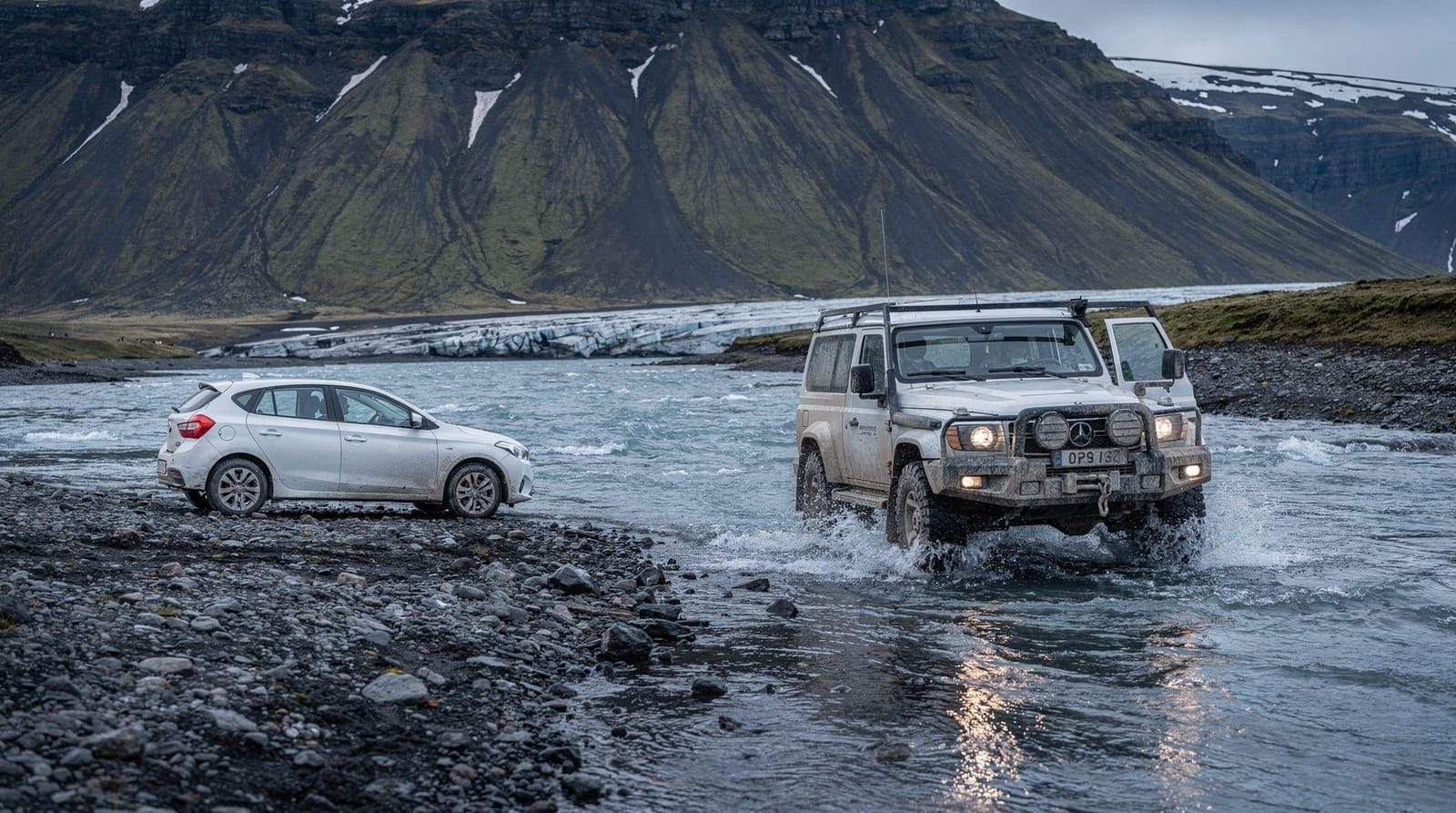
- Damage from driving on F-roads with an inappropriate vehicle
- Negligence (leaving the handbrake off on a slope, reversing into a post without checking)
SCDW (Super CDW / Zero Excess)
SCDW reduces your CDW excess to zero, meaning you pay nothing for a covered collision. This costs 1,000–3,000 ISK per day depending on the vehicle and operator.
Worth it? If you’re an inexperienced driver or driving in winter, reducing your excess to zero removes a significant financial risk for relatively little per day. On a 10-day trip, SCDW adds 10,000–30,000 ISK — often worthwhile for peace of mind.
SAAP (Sand and Ash Protection) / GP (Gravel Protection)
This is the most important Iceland-specific insurance category and the one most likely to catch visitors off guard.
What it covers: Damage from gravel impact (chips, cracks, paint stripping), sand and volcanic ash abrasion.
What happens without it: If a gravel stone cracks your windscreen (common on the Ring Road between Vík and Jökulsárlón) and you don’t have SAAP, you pay 100% of the repair cost — often 50,000–150,000 ISK for a windscreen replacement. For paintwork damage, claims can run higher.
Cost: 700–2,500 ISK per day depending on operator and vehicle class.
Driving conditions where SAAP is particularly relevant:
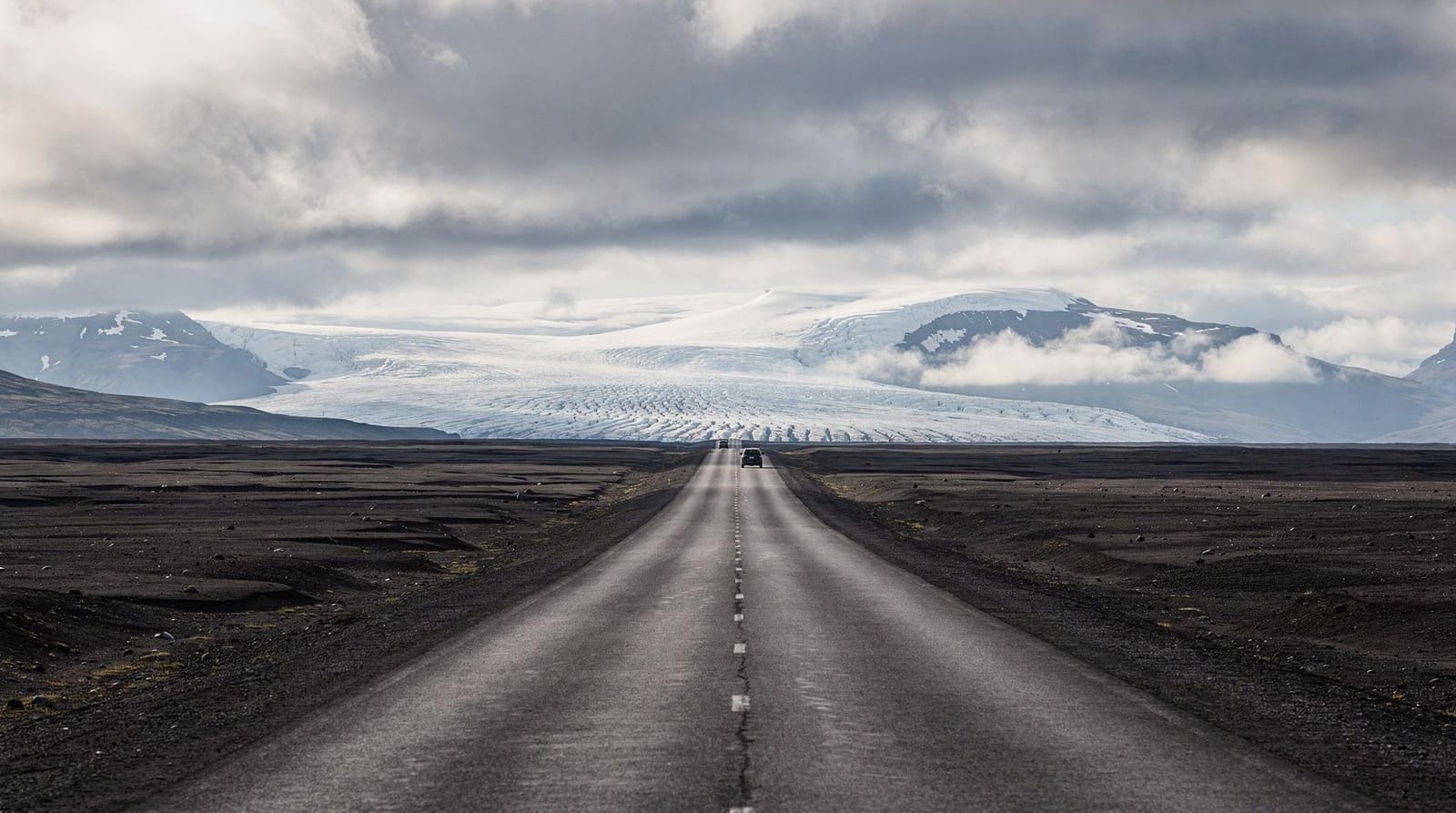
- Any section of the Ring Road in the south between Vík and Höfn (lots of truck traffic and loose gravel edges)
- The Mýrdalssandur black sand flat east of Vík (sandstorm risk)
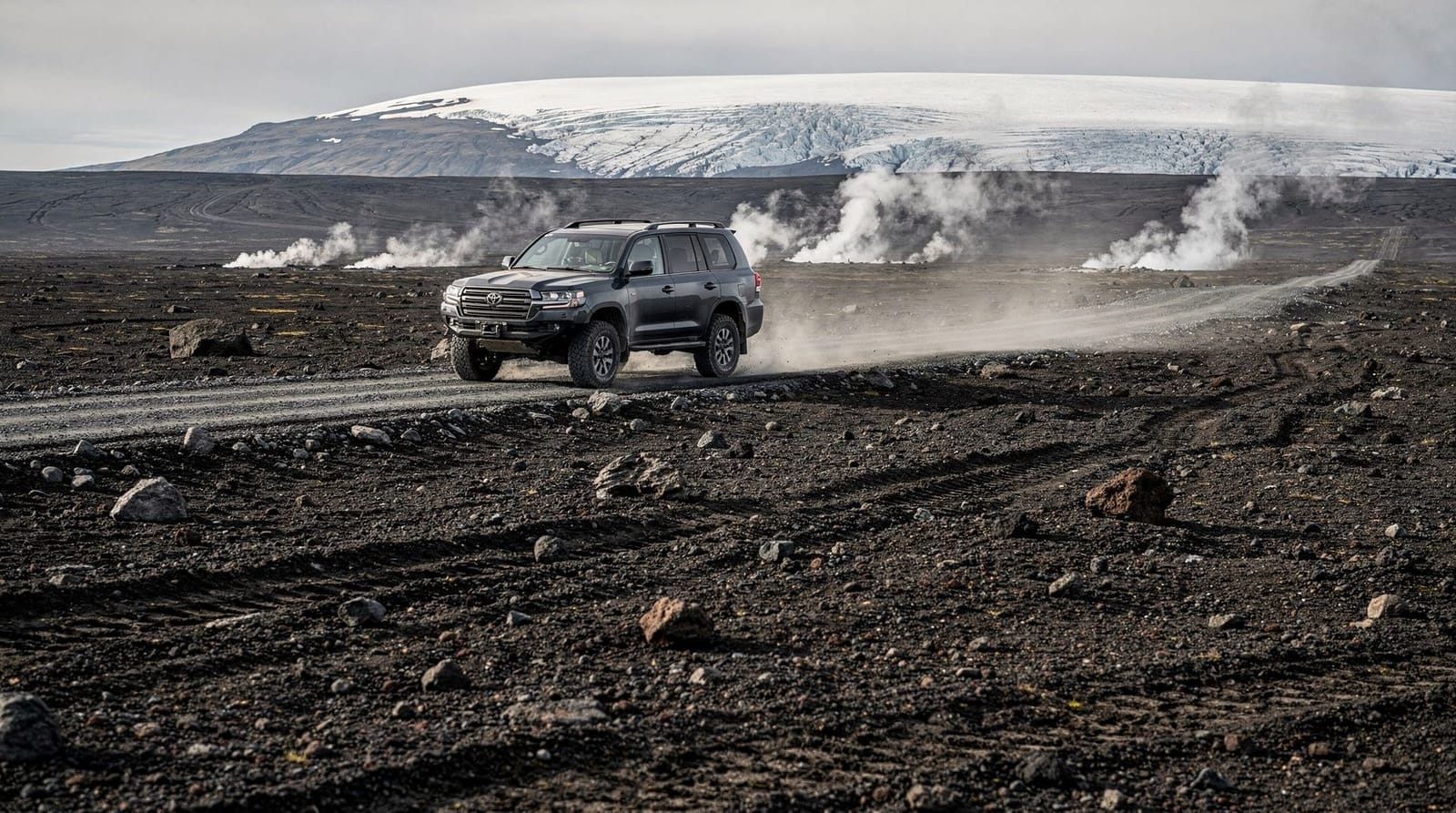
- Lakagígar and any road near active volcanic zones
- Any unpaved road in windy conditions
Recommendation: Take SAAP on any Ring Road trip lasting more than 2–3 days. The cost-to-risk ratio is straightforward.
Windscreen/Glass protection
Often sold as a separate add-on (around 500–1,200 ISK per day). Some SAAP packages include windscreen cover; others don’t. Ask specifically: “Does your SAAP package include windscreen damage?” Read the policy document, not just the sales description.
Windscreen claims are common in Iceland. Stones hit windscreens on the Ring Road regularly, especially in summer when traffic is heavy and gravel edges see more use.
Tyre and rim protection
Tyre blowouts and rim damage are separately charged in most contracts. A blown tyre on a rental car costs 30,000–60,000 ISK for replacement. Tyre protection add-ons (500–1,500 ISK/day) cover this. Worth considering for F-road driving or older rural roads with pothole exposure.
What your credit card actually covers
Many travellers carry credit cards with “travel insurance” or “rental car insurance” and assume they’re covered. The reality is more nuanced:
What most credit cards cover: Collision damage waiver (similar to CDW) — i.e., damage to the rental car in a collision, typically up to a limit of USD 50,000–75,000. This cover kicks in as secondary insurance after the rental company’s basic policy.
What most credit cards do NOT cover in Iceland:
- Gravel and sand damage (explicitly excluded in the fine print of most Visa, Mastercard, and Amex policies)
- Tyres and rims (excluded)
- Damage from driving on F-roads (operators say this voids all cover)
- Undercarriage damage
- Theft of personal belongings from the vehicle
Critical step before relying on credit card cover: Call your card issuer before your trip and ask specifically: “Does my travel insurance cover car rental damage from gravel impact in Iceland?” Get the answer in writing or documented via chat. If they can’t confirm this, don’t rely on it.
Premium credit cards (Amex Platinum, high-tier Visa Signature, Chase Sapphire Reserve): These have broader rental car cover than basic cards, but Iceland-specific exclusions still commonly appear. Verify explicitly.
The insurance products to be cautious about
Rental company “full protection” packages: Bundled insurance packages sold at the desk often sound comprehensive but may exclude the same risks as à la carte cover. Read what’s included rather than trusting the label.
Third-party insurance brokers (rental cover dot com, insurance4carhire type products): Some travellers pre-purchase third-party rental car excess insurance. These can be legitimate, but scrutinise the Iceland-specific exclusions in the policy document before buying. Coverage gaps in these policies are frequently discovered after the damage occurs.
Real-world cost of going uninsured
Based on commonly reported rental claims in Iceland:
- Windscreen replacement: 50,000–180,000 ISK depending on vehicle
- Full bonnet respray (gravel pitting): 100,000–300,000 ISK
- Sandblast damage to entire vehicle: 400,000–800,000 ISK (not hypothetical — Mýrdalssandur and Skeiðarársandur can cause this in serious conditions)
- 4WD stuck in a river (F-road): rescue plus repairs, 200,000–600,000+ ISK
- Full CDW excess if unprotected: 150,000–250,000 ISK
Practical insurance checklist for Iceland
Before signing the rental contract:
- Confirm CDW is included in the quoted price
- Add SCDW (zero excess) or note your excess amount
- Add SAAP/Gravel Protection — do not skip
- Ask if windscreen is included in SAAP or requires separate cover
- Decide on tyre/rim protection based on your route (F-roads: yes)
- Call your credit card company if you plan to rely on card cover — verify Iceland gravel damage is covered
- Photograph the car on all sides, including the roof and undercarriage if accessible, before driving away
For full rental booking guidance, see renting a car in Iceland. For what requires 4WD and where insurance gaps arise from taking wrong vehicles on F-roads, see F-roads Iceland.
Frequently asked questions about car rental insurance in Iceland
Is CDW enough for Iceland?
No. CDW covers collision damage but not gravel, sand, windscreen, or tyre damage — which are Iceland’s most common rental car risks. Add at minimum SAAP (gravel protection) and verify windscreen cover.
Do I need gravel protection (SAAP) in Iceland?
Yes, for most Ring Road itineraries. The section between Vík and Höfn, the Westfjords, and any unpaved road in windy conditions pose real gravel and flying stone risks. The daily cost of SAAP is small compared to the cost of a windscreen replacement.
Will my credit card cover gravel damage in Iceland?
Most standard credit cards explicitly exclude gravel and sand damage from their rental car cover. Premium cards vary. Call your issuer and ask specifically before relying on card cover.
What is the typical excess on an Iceland rental car?
150,000–250,000 ISK for a standard CDW without SCDW upgrade. This is the amount you would pay per damage incident. SCDW reduces this to zero.
What happens if I drove on an F-road and got damaged without permission?
Your rental company’s insurance is void for the damage. You pay the full repair cost. The rental company will also charge you the immobilisation cost (loss of revenue while the car is off the road) in addition to repair costs.
Is theft covered by standard rental insurance in Iceland?
Some rental contracts include theft (TW — theft waiver). Many don’t by default. Check your specific contract. Note: theft from the vehicle (personal belongings) is almost never covered by rental insurance — use your travel insurance for personal effects.
Can I return a car damaged without saying anything?
No. Rental companies inspect vehicles on return and compare to the pre-rental condition form. Unreported damage discovered at return is charged at full non-covered repair rates. Always report damage when it occurs during the rental period.
How Iceland’s rental insurance compares to other countries
In Spain, France, or Germany, CDW plus travel insurance from a premium credit card often provides comprehensive protection. Why does Iceland require a different approach?
The specific gap is gravel and particulate damage, which is widespread in Iceland but absent in most mainland European car rental contexts. European CDW policies were written for roads where the main hazard is collision with another vehicle or barrier — not flying stones from unpaved roads.
Iceland has approximately 32,000 km of road, of which only around 13,000 km is paved. Even on the paved Ring Road, passing trucks kick up loose stones from road shoulders. The South Coast between Vík and Höfn, where Ring Road traverses the Mýrdalssandur and Skeiðarársandur plains, is particularly exposed to loose surface material and occasional volcanic ash.
Sandstorms are not hypothetical either. The black sand deserts east of Vík can generate ground-level sandblasting in strong southerly winds. A vehicle parked for two hours in a Mýrdalssandur sandstorm can emerge with a uniformly etched surface — all paint microscratched, wiper seals abraded, even rubber trims damaged. This event is not a single damage claim; it’s comprehensive surface damage. Without SAAP, the repair bill approaches the value of the vehicle.
What happens if the weather causes damage?
Iceland’s weather-related vehicle damage falls into several categories:
Flooding/river damage: Driving into a flooded river crossing without adequate assessment can result in a hydrolocked engine or worse. Flood damage is explicitly excluded from most rental contracts — it constitutes negligence. Water depth assessment before crossing is the driver’s responsibility.
Storm damage while parked: If a storm blows your campervan door into a wall, or debris falls on the car — this is typically treated as a weather incident and may be covered under your base CDW if the car was parked and you were not at fault. The specific coverage depends on the operator. Check.
Lava rock damage: Parking near an active lava field and having the car affected by gases or minor rock falls is an extreme edge case but has occurred. Most rental contracts have force majeure clauses that exclude natural disaster damage. Iceland’s volcanic activity is frequent enough that this is worth being aware of.
Steps to take if you have an accident
- Stop and check for injuries — call 112 immediately if anyone is hurt
- Photograph everything — all vehicles, road conditions, any damage, road signs in view
- Get the other party’s details if another vehicle was involved
- Call your rental company’s emergency number — reported immediately, not the next morning
- Do not admit liability to anyone at the scene — that is for insurance to determine
- File a safetravel.is report if you were in a serious enough incident on a remote road
Rental company emergency numbers are on your rental agreement and usually on a sticker inside the vehicle. Save the number to your phone before you drive away from the lot.
Third-party liability in Iceland
Your rental car’s insurance automatically includes third-party liability insurance (TPL) — required by law in Iceland. This covers damage to other people’s property and injuries to third parties. You don’t need to separately purchase TPL.
The confusion sometimes arises with UK/US travellers whose own car insurance includes TPL for Europe — this does NOT extend to rental cars in Iceland. The rental car’s own TPL is what covers third parties; your home policy is irrelevant.
A note on rental company reputations
Iceland’s rental market has companies ranging from excellent to exploitative. Some operators have a reputation for charging for pre-existing damage, using low-resolution photos to dispute condition at return, or applying aggressive upselling tactics at the desk.
Before booking, check:
- TrustPilot or Google Reviews for specific operators
- r/VisitingIceland on Reddit (recent traveller reports are candid)
- Whether the operator uses GPS tracking (some do, and will check your logs against F-road restrictions)
Operators with long operating histories and consistent reviews (SADcars, Hertz, Northbound) are lower risk than newer discount operators with very low prices and sparse review records. With insurance in particular — the cheapest operator offering “full cover” at a low price may be using terms that significantly limit what’s actually covered.
For more on choosing and booking, see renting a car in Iceland.
Campervans and motorhomes: does the cover change?
Campervan rental contracts add exposure that a normal sedan doesn’t have: the roof height (bridge and canopy strikes), the habitation area (gas, water, cabinets) and often a lower ground clearance that makes gravel and pothole damage more likely on rough farm-track parking spots. Ask specifically whether SAAP extends to the habitation shell, not just the drivetrain — some operators price these separately. If you’re weighing a campervan against a regular car with hotels, see campervan vs car in Iceland and the fuller campervan Iceland guide for how the insurance maths factors into the overall cost comparison.
Saving money without cutting the cover you need
The instinct to skip SAAP or SCDW to save 1,000–2,500 ISK a day is understandable but usually false economy on anything beyond a short Reykjavik loop — a single windscreen claim wipes out several trips’ worth of savings. Real savings come from booking early for better base rates, choosing a smaller/older vehicle class where excess amounts are lower, and comparing operators rather than cutting cover. Our saving money on car rental guide has the full breakdown of where the genuine discounts are. For how road conditions change what you actually need day to day, check Iceland road conditions before you commit to a route.
Insurance for specific Iceland routes
Different routes have different risk profiles:
Ring Road summer (standard): CDW + SCDW + SAAP with windscreen. This covers the main risks. Tyre protection optional but reasonable.
Highland F-roads: Same as above, plus explicit written confirmation of F-road permission in your contract. Tyre and rim protection strongly advisable. Some operators offer a “highland pack” that bundles the extra cover for a premium.
Westfjords in summer: SAAP important (unpaved roads, some wind exposure). Standard CDW/SCDW apply. Tyre protection worth adding.
Winter Ring Road: Standard cover applies; winter driving restriction compliance is your responsibility (don’t drive on closed roads, check road.is daily). Standard rental insurance does not cover damage from driving on a road that was officially closed at the time.
Reykjavik city only: Standard CDW, SCDW optional depending on excess tolerance. SAAP less critical for city-only driving. Parking damage (a common urban incident) is covered under standard CDW.
When to file an insurance claim vs pay yourself
The excess deductible (CDW or SCDW level) determines this calculation:
If you have zero excess (SCDW): report and claim everything. No financial exposure.
If you have a 150,000 ISK excess: small damage (minor scratch, 20,000 ISK repair estimate) is cheaper to pay directly than to claim. Larger damage (cracked windscreen, 100,000+ ISK repair): claim.
The complication: some rental companies charge an “administration fee” per claim regardless of damage size (typically 5,000–10,000 ISK). This is legitimate and disclosed in the contract. Factor it into your small-claim calculation.
Always report damage to the rental company regardless of whether you’re claiming. Failure to report is considered concealment and can void your insurance entirely for that incident.
Multi-driver bookings and insurance validity
Adding a second driver to the rental agreement usually costs a small daily fee, but skipping it is a genuine insurance risk: if the unregistered driver is behind the wheel during a collision, the policy can be voided entirely, leaving you liable for the full repair cost. Confirm every person who might drive is listed on the contract before you leave the lot, and check that each driver meets the minimum age and licence-holding requirements (commonly 20–23 depending on vehicle class). This matters most on longer Ring Road trips where driving is shared to manage fatigue.
Seasonal insurance considerations
Summer: Standard SAAP risk is consistent. More traffic means higher collision exposure. Tourist-density areas like Þingvellir, Seljalandsfoss, and Blue Lagoon car parks have parking-lot fender incidents.
Winter: Ice and snow increase collision probability. Black ice incidents on rural roads are the primary cause of rental car accidents. Standard CDW applies; the key exclusion to watch for is “negligent driving in adverse conditions” clauses — some contracts define driving at speed on icy roads as negligence.
Spring thaw: March–April can have refreezing conditions (black ice in the morning after snow melt the day before). Also: gravel road surfaces loosen as the ground thaws, increasing stone projection. SAAP is particularly valuable in spring.
Autumn: September–October brings the first highland snowfall and possible ice on mountain passes. The first ice of the season, before drivers have adjusted, causes more incidents per mile than deepest winter.
Summary: Iceland rental insurance priorities
| Priority | Cover | Why |
|---|---|---|
| Essential | CDW (basic) | Usually included; covers collision |
| Essential | SAAP/Gravel Protection | Most common claim type in Iceland |
| Essential | Windscreen cover | Chips are very common |
| Recommended | SCDW (zero excess) | Removes financial exposure completely |
| Situational | Tyre/rim protection | F-roads and rough unpaved roads |
| Verify | Credit card cover | Call issuer; do not assume |
| Not needed | Third-party liability | Already included in rental |
For the complete Iceland car rental guide: renting a car in Iceland, 2WD vs 4x4 Iceland, and F-roads Iceland.
Top experiences
Best-rated activities across GetYourGuide and Viator.
Reykjavik: From airport to adventure private Reykjanes peninsula tour
- GetYourGuide
Reykjavik: Kef bus transfer to from Reykjavik shuttle
- GetYourGuide
Reykjavik: Keflavik airport transfer to Reykjavik
- GetYourGuide
Reykjavik: Kef private transfer to from Reykjavik
- GetYourGuide
Reykjavik: Keflavik airport to Reykjavik bus transfer
- GetYourGuide
Reykjavik: Private transfer to from kef airport
- GetYourGuide