Tipping in Iceland — what locals actually do
Do you tip in Iceland?
No. Iceland has no tipping culture. Restaurant prices include service. Rounding up or leaving small change is appreciated but never expected. Tour guides, taxi drivers, and hotel staff do not expect tips. Do not feel awkward about not tipping — it is the local norm.
The short answer
| Expected tip | None — Iceland has no tipping culture |
| Restaurant prices | Service included in the menu price |
| Rounding up | Welcome for exceptional service, never required |
| Card terminal tip prompt | Generic software; select 0 or skip it |
| Best practice | A small cash gesture (1,000–2,000 ISK) only for truly exceptional guides |
Iceland does not have a tipping culture. The concept of a mandatory or expected service gratuity does not exist in the same way it does in the United States, Canada, or increasingly in parts of western Europe.
Restaurant workers in Iceland are paid a living wage with no reliance on tips. Taxi drivers are paid by the meter. Tour guides are paid professionals. No one’s income depends on whether you leave change on the table.
The tipping question across different types of Iceland trip
Independent self-drive travellers
If you are self-driving the Ring Road, staying in guesthouses, and cooking half your own meals, tipping situations arise primarily at:
- Guesthouse dinners (if included or purchased)
- Petrol station cafés
- Occasional restaurants in towns
In all of these, no tip is expected. The standard Icelandic experience is that you pay the bill and leave. Many guesthouses run on a “family” model where the owners cook and serve — tipping the owner of a guesthouse is an unusual gesture that may be warmly received but is not expected.
Package tour travellers
If you are on a guided tour that includes a tour leader/guide for multiple days (a common format for small-group Ring Road tours), some tour companies include a note in their briefing documents about “optional gratuities.” This is primarily there to manage expectations from North American and Australian customers.
The tour guide is a professional employee earning a wage. A small gesture at the end of a multi-day tour from the group is a personal choice, not a professional obligation.
Cruise passengers
Iceland cruise stops (Reykjavik, Akureyri, Ísafjörður) involve shore excursions where tipping norms can be confused by the cruise ship environment. On the ship itself, standard cruise tipping norms apply (these vary by cruise line). On shore, Icelandic norms apply: no tip expected from local operators, restaurants, or taxis.
Cruise excursion guides — contracted locally — follow Icelandic norms. A small gesture after an outstanding excursion is appreciated but not expected.
In restaurants and cafés
Restaurant bills in Iceland include the full cost of service. There is no separate “service charge” added at the end (as in the UK) or an expectation of a 15–20% tip (as in the US). The price on the menu is the price you pay.
Card payment terminals: When paying by card in Iceland, the terminal typically asks “Do you want to add a tip?” or shows a pre-set percentage. These options appear because the payment software is often designed for international markets. Most Icelanders select zero or close the tip screen without adding anything.
You may choose to round up to the nearest 100 ISK or add a small amount for genuinely exceptional service — a waiter who spent extra time with you, a chef who accommodated a difficult allergy, a café that went out of their way. This is a gesture, not an obligation, and Icelanders receiving it will appreciate it without expecting it.
A practical note for Americans: The hardwired habit of tipping 15–20% for restaurant service does not apply in Iceland. Following this habit will cost you real money over a week’s worth of restaurant meals (Iceland is already expensive) and does not reflect local norms. Enjoy eating without the tip calculation.
Tour guides and organised excursions
Tour guides in Iceland are paid employees of tour companies, not tip-dependent workers. Many are highly knowledgeable naturalists, historians, or certified guides earning professional wages.
It is not standard Icelandic practice to tip a tour guide. If a guide gave you an exceptional experience — personalised attention, expert knowledge, went significantly above the advertised description — a small gesture (1,000–2,000 ISK per person) is a meaningful acknowledgment without being expected. Some groups from tipping cultures do this; many do not.
Specific tour types:
- Golden Circle coach tours: no tipping expected
- Glacier hiking guides: no tipping expected
- Whale watching guides: no tipping expected
- Northern lights hunts: no tipping expected
- Private tours with a single guide/driver: a small tip for exceptional service is a personal choice, never an obligation
Taxis and ride shares
Taxis in Iceland run on a meter. The meter price is what you pay. There is no standard tip percentage, no “round up to nearest X,” and taxi drivers do not have tip boxes.
If you feel like rounding up (e.g., the fare is 3,600 ISK and you hand over 4,000 ISK and wave off the change), that is fine. It is not the norm.
Hotels and accommodation
Porters at major Reykjavik hotels may carry bags. A small tip (500–1,000 ISK) for this is appreciated but not expected. Housekeeping at guesthouses and hotels does not receive routinely left tips in Iceland — the practice is almost entirely absent compared to North American hotels.
Bars and nightlife
Reykjavik’s bar scene is active and well-known internationally. Bartenders in Iceland are paid wages, not tips. Rounding up or leaving change at the bar is not standard practice. If you want to do it, no one will refuse, but it is not expected.
Hairdressers and spa services
Not tipped. Service prices are all-inclusive. The Sky Lagoon, Blue Lagoon, and other wellness facilities do not have tipping conventions.
The broader context: why Iceland is this way
Iceland’s egalitarian society and strong labour protections mean service workers receive fair wages. The Scandinavian and Nordic approach to wages — where tipping is broadly seen as unnecessary because people are already paid fairly — applies strongly in Iceland.
Icelanders also find the North American tipping pressure slightly uncomfortable when they travel abroad. The expectation-free payment experience is a genuine feature of Icelandic service culture, not an oversight.
The honest visitor’s guide to reading the situation
Some visitors find it genuinely difficult to navigate tipping norms when visiting from a strong tipping culture. A few practical scenarios:
You had an extraordinary glacier guide: She kept the group safe, gave expert geological commentary, and found a rarely visited section of the glacier off the standard route. You want to acknowledge this. Leaving 1,000–2,000 ISK per person ($7–15) is a genuine gesture. She will be pleased but not expecting it.
The restaurant was mediocre but you feel social pressure from the card terminal: The terminal is a generic piece of software. The restaurant staff are not watching whether you tip. Press zero or select “no tip” without concern.
The guesthouse owner personally drove you to the local waterfall and spent an extra hour with you: This is above and beyond. A thank-you in the guestbook, a positive online review (which actually impacts their livelihood), and a small cash gesture if you feel moved to make one are all appropriate.
The tour guide was clearly experienced and passionate but the tour itself was standard: No tip necessary. The experience was what it was advertised to be. That is what you paid for.
The general principle: the impulse to tip comes from gratitude for something genuinely above the contracted service, not from social obligation. Iceland’s no-tip culture removes the obligation component entirely. If you feel genuine appreciation for something exceptional, expressing it in any form (tip, review, personal thank-you) is welcome. If you do not, no one will notice or mind.
Iceland’s service culture vs tipping culture
Iceland’s service quality is generally high but without the exaggerated performative friendliness that tipping cultures sometimes generate. Icelandic service is:
Efficient and direct: Staff will give you the information you need without extended pleasantries. This can read as cold to visitors from warmer service cultures. It is not unfriendly — it is Nordic professional standard.
Knowledgeable: Tour guides especially tend to be highly educated about their subject. Many have degrees in geology, biology, or history. The knowledge base is one of Iceland’s genuine service strengths.
Not dependent on tips for motivation: Because wages are fair, service quality does not fluctuate based on tipping expectations. You are treated the same whether you tip generously or not at all.
This creates a consistent, reliable service experience that many visitors find refreshing after experiences in heavy tipping cultures where service quality correlates with perceived tip potential.
Handling the card terminal tip prompt
If a card terminal shows a tip option and you do not want to leave one:
- Select “0%” or “Other amount” and enter 0
- Or simply press the zero or “no tip” button if present
- Some terminals let you proceed without engaging the tip screen at all
Do not let the presence of a tip prompt imply you should tip. The software is generic; the local expectation is not.
What about using round numbers for convenience?
Paying 4,000 ISK when the bill is 3,750 ISK and saying “keep the change” is fine — it is paying to a round number, not a formal tip. Icelanders do this occasionally. It is not an expectation.
Tipping at specific Iceland experiences
Whale watching boats
Several whale watching operators depart from Reykjavik’s old harbour and from Húsavík. These are professional commercial operations. Guides and crew are salaried. Some international visitors leave small tips after exceptional sightings or when a guide went significantly beyond the standard presentation. This is not expected or requested. See whale watching in Iceland.
Horse riding tours
Icelandic horse riding is a popular activity, especially around the south and west. Guides leading horse riding tours are professional employees. No tip is expected or customary.
Northern lights tours
Northern lights tour guides and drivers in Iceland work for tour companies and are paid wages. Tipping is not standard practice. A small gesture after a particularly memorable evening (a guide who stayed out three hours past the scheduled return, drove to a second location to find clear skies) is a personal choice, not an obligation.
At the Blue Lagoon
The Blue Lagoon is a resort with staff at various points — reception, the in-water bar, the Lava Restaurant, the changing rooms. None of these roles in Iceland has a tipping expectation. The in-water bar uses a wristband system for payment; there is no mechanism or expectation to leave a tip.
Geothermal pool attendants
Facilities like the Secret Lagoon, Mývatn Nature Baths, Sky Lagoon, and smaller pools have staff managing the facilities. No tip is expected.
How this compares to other countries
To contextualise Iceland’s no-tip culture for visitors from different countries:
From the US: The US has one of the most entrenched tipping cultures in the world — 18–22% has become standard at restaurants, with pressure at coffee shops, spas, and even fast food. Iceland is a complete contrast. No one will be offended or disadvantaged by not tipping.
From the UK: UK restaurant tipping (optional 10–12.5%) has become more common but remains less obligatory than in the US. Iceland is even more tip-free than the UK.
From Germany, Austria, Switzerland: The Germano-European tradition of small rounding (Trinkgeld) is roughly aligned with Iceland — a rounding up is acceptable, a formal percentage tip is unusual. Iceland is similar.
From Japan: Japan is famously tip-free. Icelandic culture on this point is similar — the service is in the price, and additional payment can sometimes feel awkward. Iceland is easier than Japan for most people to navigate because everyone speaks English and the card terminal makes the tip screen option visible, making it clear you are actively choosing not to add one rather than missing a social cue.
The economics behind no-tipping culture
Iceland’s labour market and social contract are fundamentally different from the US model. Key differences:
- Minimum wage: Iceland’s minimum wage is negotiated through collective bargaining (Iceland has very high union membership, over 85% of workers). In 2026, the minimum adult wage is approximately 375,000 ISK/month (~$2,700/month), well above the living wage.
- Healthcare: Universal healthcare means service workers are not one medical bill away from financial catastrophe regardless of tips.
- Education: Free university education means service workers do not carry student debt that tips help service.
- Social benefits: Unemployment insurance, parental leave, and pension system are relatively comprehensive.
The result: service workers in Iceland do not depend on tips to meet basic needs, so the social obligation to tip for average service does not exist.
Frequently asked questions about tipping in Iceland
Will Icelandic staff be offended if I don’t tip?
No. It is entirely normal. Do not worry about this.
Do I need to tip on a guided glacier hike?
No. Glacier guides are professional, well-trained, and paid wages. A tip is a gesture, not a requirement.
Is tipping becoming more common in Iceland due to tourism?
There has been some gradual change, particularly at places with high proportions of American visitors. Some Reykjavik restaurants have begun prompting for tips via card machines. This reflects the influence of tipping-culture visitors, not a shift in Icelandic norms. Locals generally still do not tip.
What if my tour specifically says tips are welcome?
Some tour operator websites add a line about tips being appreciated. This is often added because the primary customer base includes many Americans and Canadians. It is still not an expectation or obligation. Pay what you feel is appropriate.
How much do service workers make in Iceland?
Minimum wage in Iceland for adults (2026) is approximately 375,000 ISK per month (~$2,700/month), among the higher minimum wages in Europe. Service workers at hotels, restaurants, and tour operators typically earn at or above this. This is why tips are not necessary for basic financial survival as they are in some other systems.
Is tipping in Iceland expected at hot springs and spas?
No. The Blue Lagoon, Sky Lagoon, Secret Lagoon, and other wellness facilities are all-inclusive in their stated prices. Locker room attendants and in-water bar staff do not expect tips.
Can I tip in foreign currency?
Theoretically, but there is no practical reason to do so. Tips in Iceland, if you give them, should be in ISK or left as a credit card addition. Leaving foreign coins that cannot be exchanged is not useful.
Does tipping fit into Iceland’s broader etiquette norms?
Yes — the no-tipping norm is part of a wider directness in Icelandic social and service culture. See the Icelandic etiquette guide for the fuller picture: efficient, low-formality interactions are the norm across restaurants, shops, and tours, not just at the point of payment.
Should I budget for tips when planning my Iceland trip costs?
No — and this is genuinely useful when working out your budget. Unlike destinations where tipping adds a meaningful percentage on top of every restaurant bill and tour, Iceland’s stated prices are the actual prices. See the Iceland on a budget guide and the how much does Iceland cost guide for what to budget instead — accommodation, car rental, and food are the real cost drivers, not gratuities.
Tipping and currency practicalities
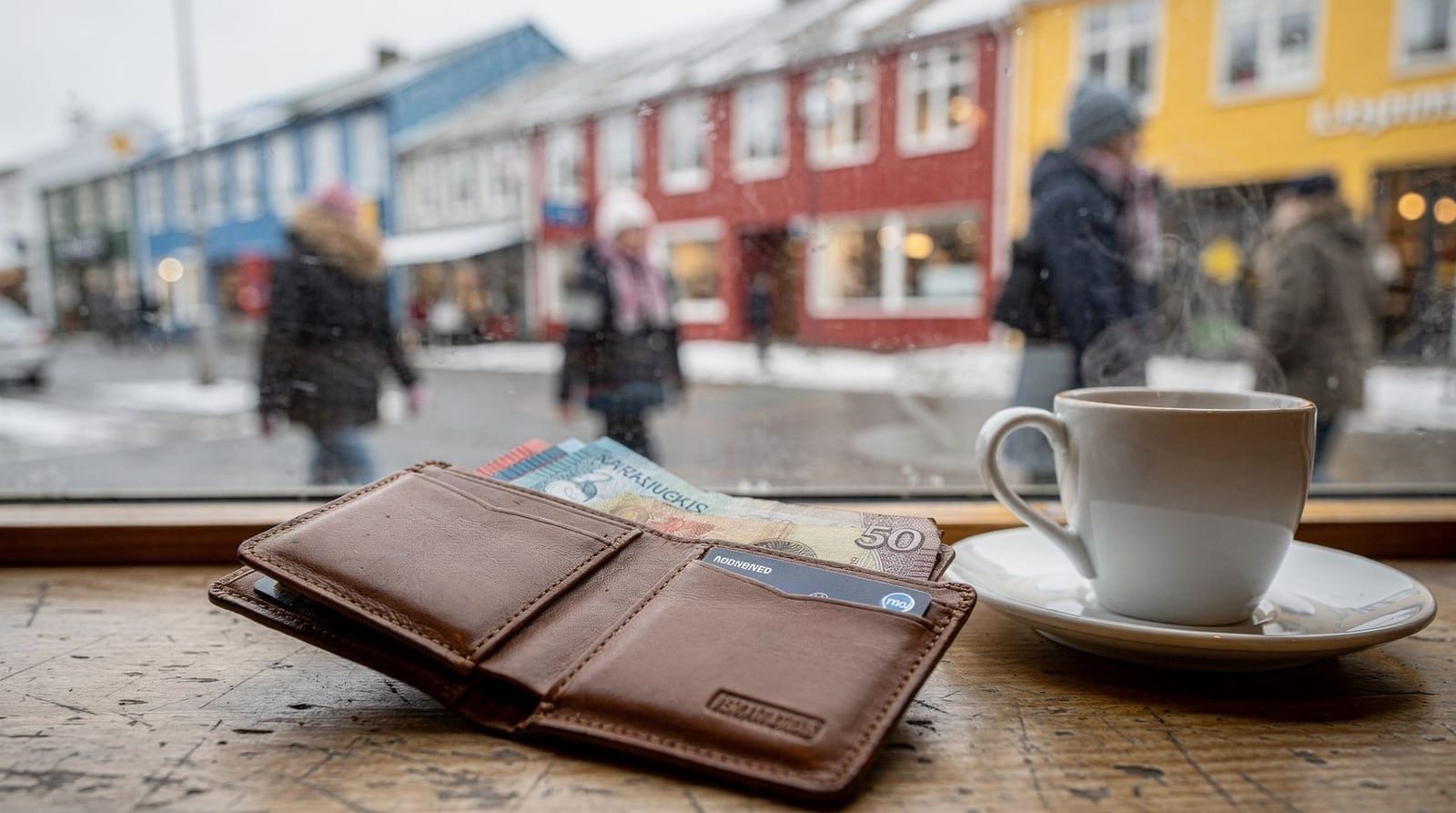
If you do decide to leave a small cash gesture for an exceptional guide or host, it’s worth having a little Icelandic króna cash on hand, since not every situation has a convenient card-tip option and rural guesthouses in particular may not have a terminal at all. The Iceland currency and money guide covers where to get cash, current ATM availability, and how card-first Iceland’s economy generally is — useful context for understanding why tipping culture never really took hold here in the first place.
Tipping at hot springs and geothermal pools specifically
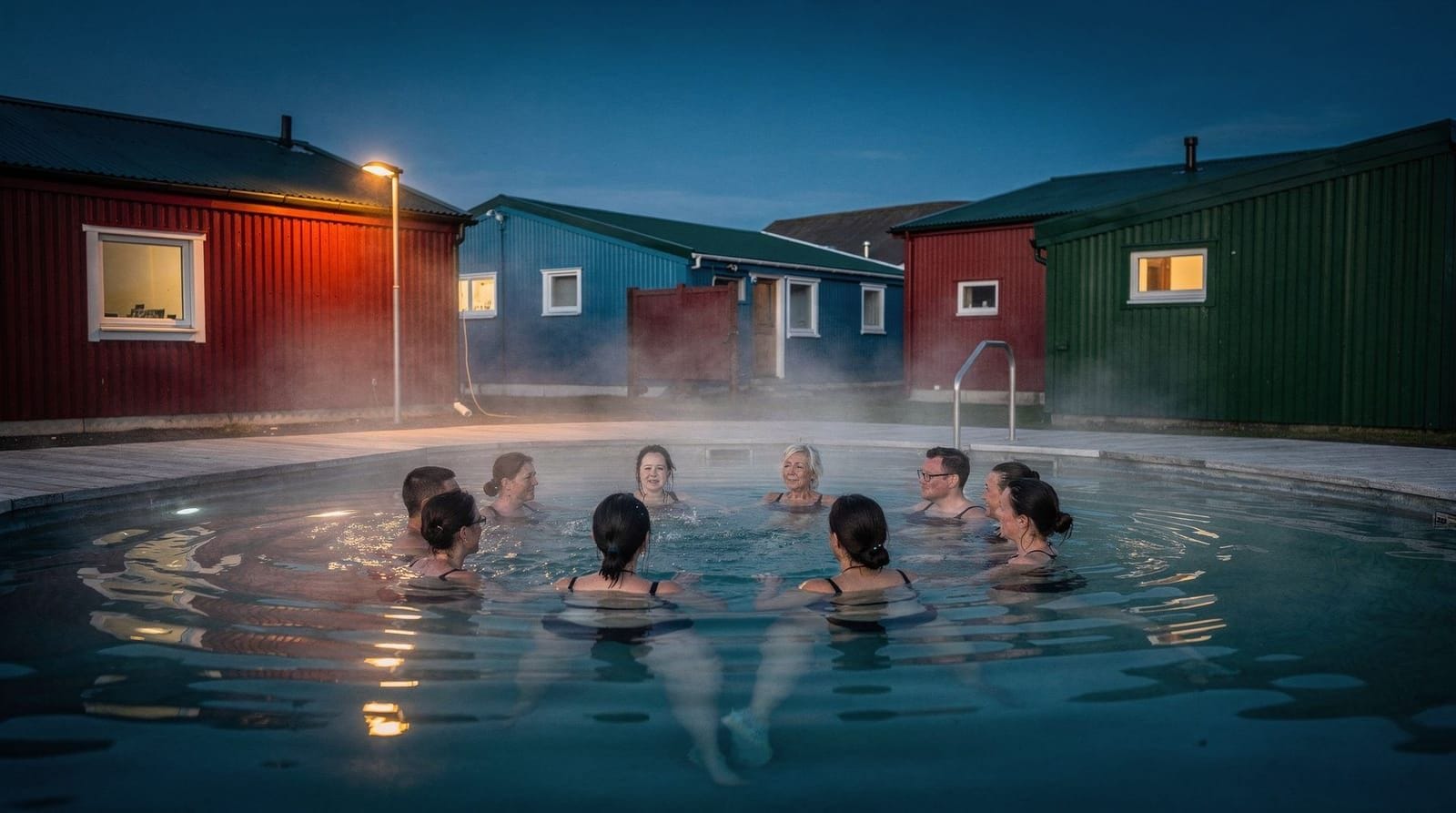
Given how central hot spring bathing is to a typical Iceland trip, it’s worth a specific note: none of Iceland’s geothermal facilities, from the international-name Blue Lagoon and Sky Lagoon to smaller sites like the Secret Lagoon and Mývatn Nature Baths, operate any form of tipping expectation. Admission prices are all-inclusive, in-water bar staff work on a wristband payment system with no tip prompt, and locker attendants are salaried employees.
This extends to the municipal swimming pools (sundlaug) found in every Icelandic town, which are a genuinely local experience at a fraction of the cost of the premium lagoons — again, no tipping involved at any point, from entry to the snack counter.
Restaurant recommendations without the tipping calculation
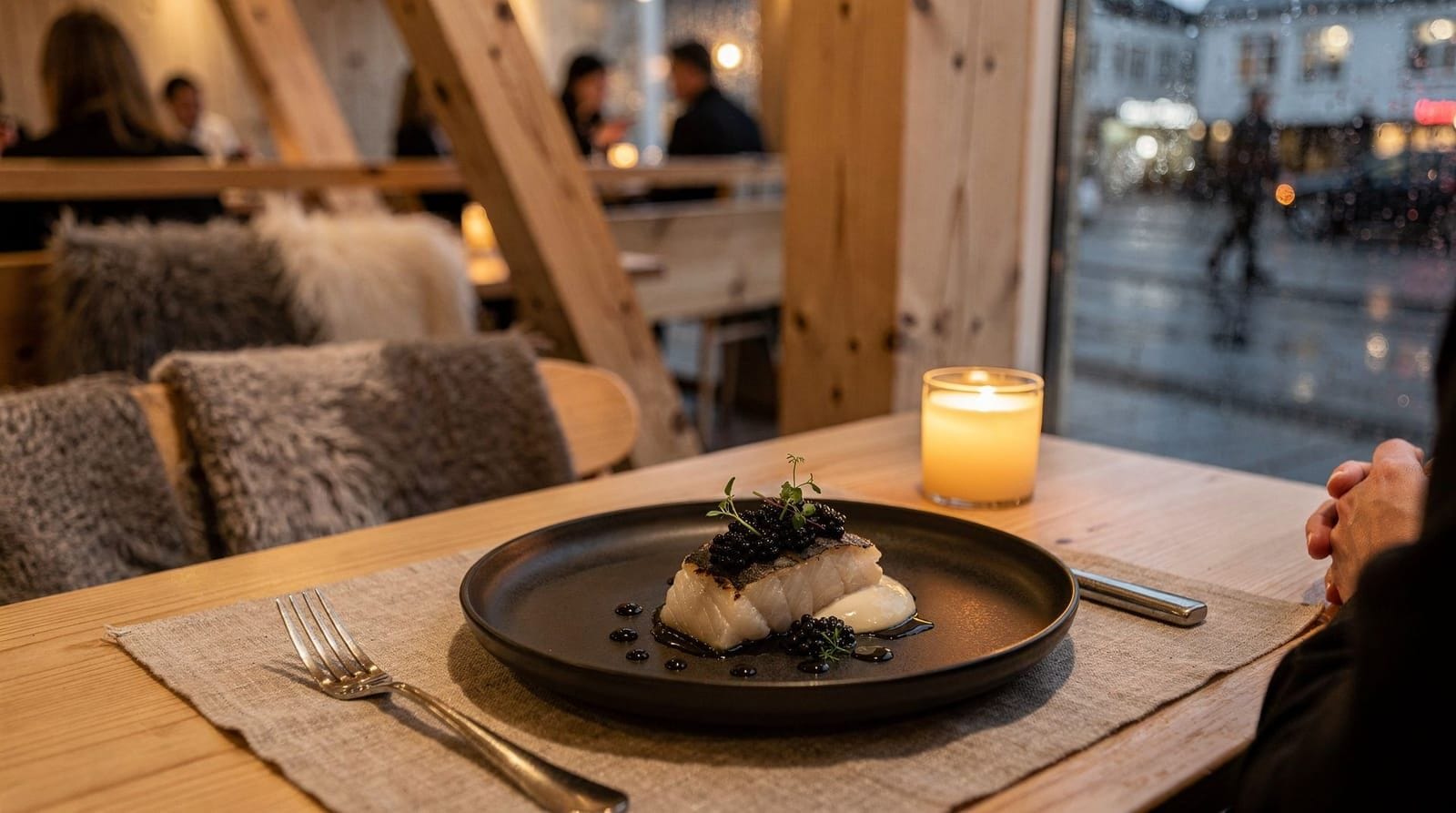
One underrated benefit of Iceland’s no-tip culture is that restaurant prices are directly comparable — what’s on the menu is genuinely what you’ll pay, with no need to mentally add 15–20% before deciding if a place fits your budget. This makes browsing options in the best restaurants in Reykjavík guide simpler than in tipping-heavy destinations, since the sticker price is the real price throughout.