Best time to visit Iceland — honest seasonal guide
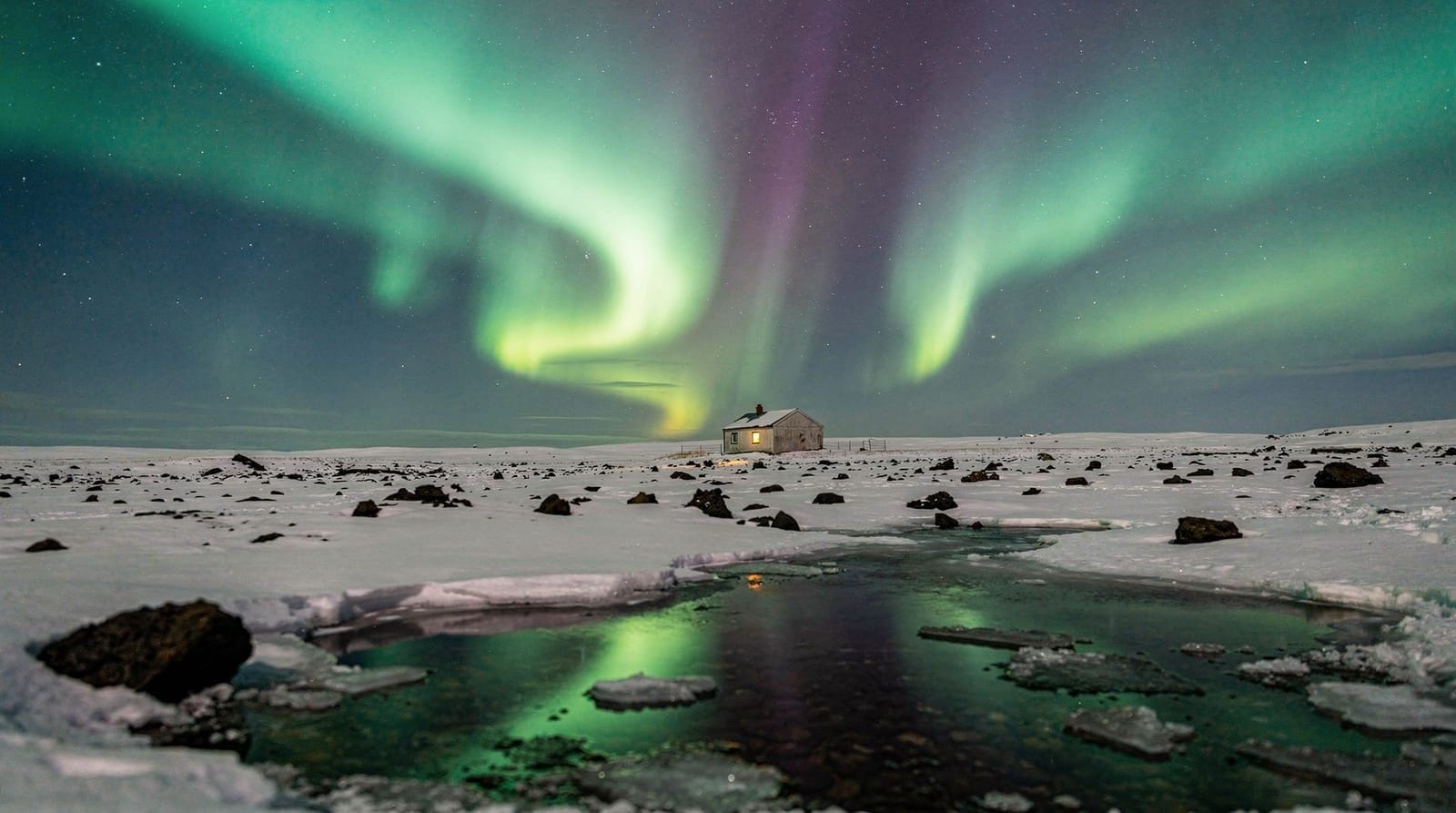
Reykjavik: Northern Lights lifetime guarantee
When is the best time to visit Iceland?
There is no single best month — it depends on your goals. June to August gives long daylight and accessible F-roads. September to March offers northern lights and ice caves. April, May, and October are quieter shoulder months with lower prices and reasonable weather.
Why the “best time” question has no simple answer
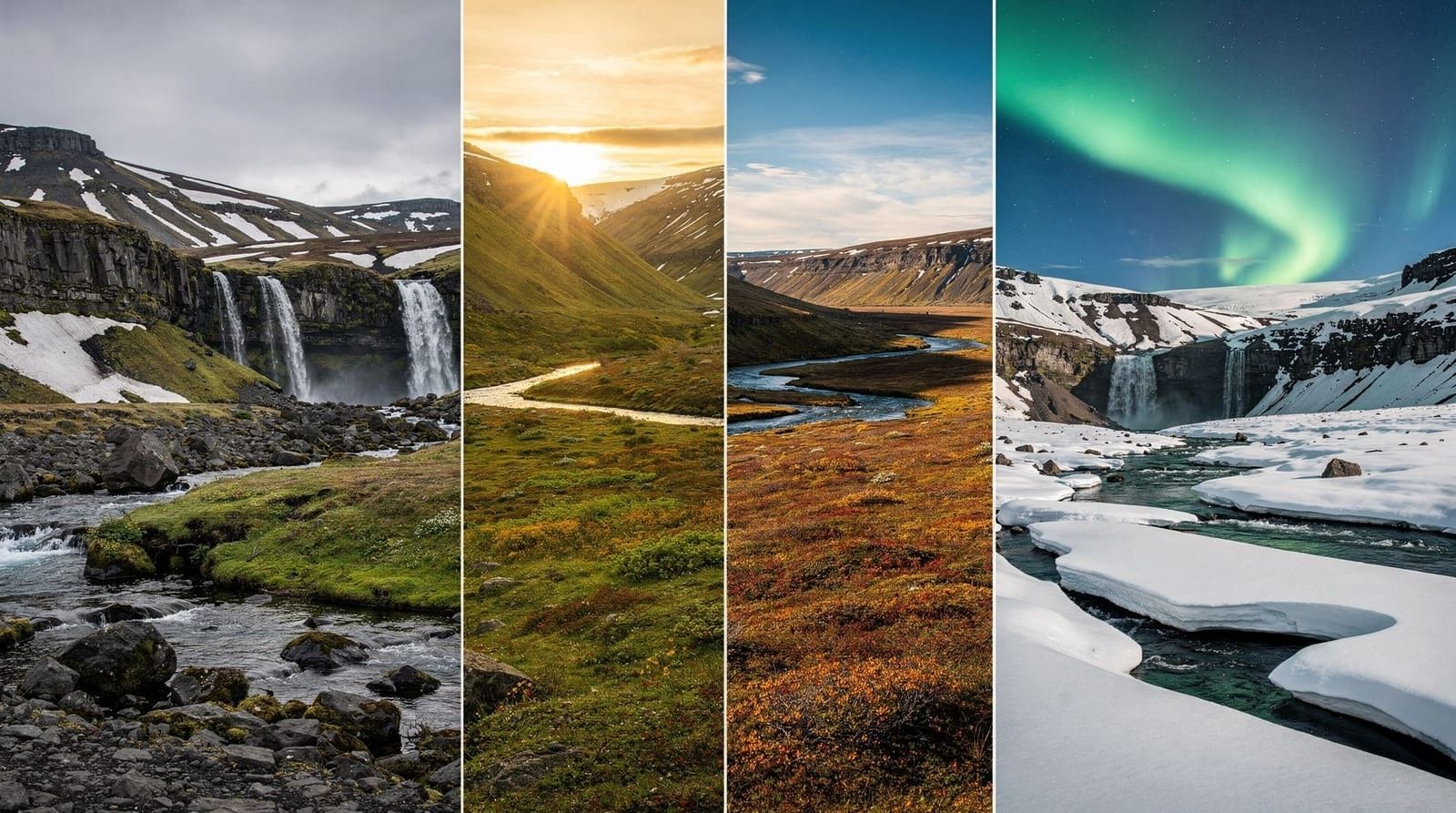
Iceland’s appeal changes dramatically through the year, and what counts as ideal depends entirely on what you want. Chasing northern lights? You need darkness, which means August at the earliest and ideally September through March. Driving the interior F-roads to Landmannalaugar or Askja? They only open reliably from mid-June to early September. Seeing puffins? They arrive in late April and leave by mid-August.
This guide covers every month honestly, including the real downsides that travel-magazine articles tend to skip.
| No single best month | Depends on priority: lights, F-roads, wildlife, or budget |
| Cheapest window | January–February and October–November |
| Busiest window | June–August (book everything early) |
| Quietest with good access | September |
| Booking lead time | 3–6 months ahead for July accommodation and car rental |
Daylight hours month by month
Daylight is the single biggest variable in Iceland. In late June, Reykjavík has around 21–22 hours of daylight and the sun barely dips below the horizon at night — what locals call the midnight sun. By December, you get roughly 4–5 hours of weak light.
| Month | Daylight (Reykjavík) | Notes |
|---|---|---|
| January | ~4–5 hours | Dark, but good aurora |
| February | ~7–8 hours | Still strong aurora season |
| March | ~12 hours | Equinox, aurora possible |
| April | ~15–16 hours | F-roads still closed |
| May | ~18–19 hours | Shoulder, wildflowers |
| June | ~21–22 hours | Midnight sun peaks |
| July | ~21 hours | Peak summer |
| August | ~17–18 hours | Aurora returns late month |
| September | ~13–14 hours | Best shoulder month |
| October | ~10–11 hours | Good aurora, fewer crowds |
| November | ~6–7 hours | Quiet, often windy |
| December | ~4–5 hours | Christmas magic, aurora |
Summer (June–August): pros and cons
Summer is Iceland’s peak tourist season and prices reflect that. A basic guesthouse room that costs 15,000–20,000 ISK (roughly $110–145 USD) in February may run 30,000–40,000 ISK ($215–290 USD) in July.
The advantages are real, though. F-roads to Landmannalaugar, Askja, and the highlands open roughly June 15 to September 15, depending on snowmelt. You can hike the Laugavegur trek and camp under the midnight sun. Puffins are at their best in May through July on the Westfjords cliffs and Westman Islands.
The main downsides: it never gets dark, so northern lights are invisible. Popular spots like Jökulsárlón glacier lagoon and Geysir can feel crowded. Campsite bookings for July fill months in advance.
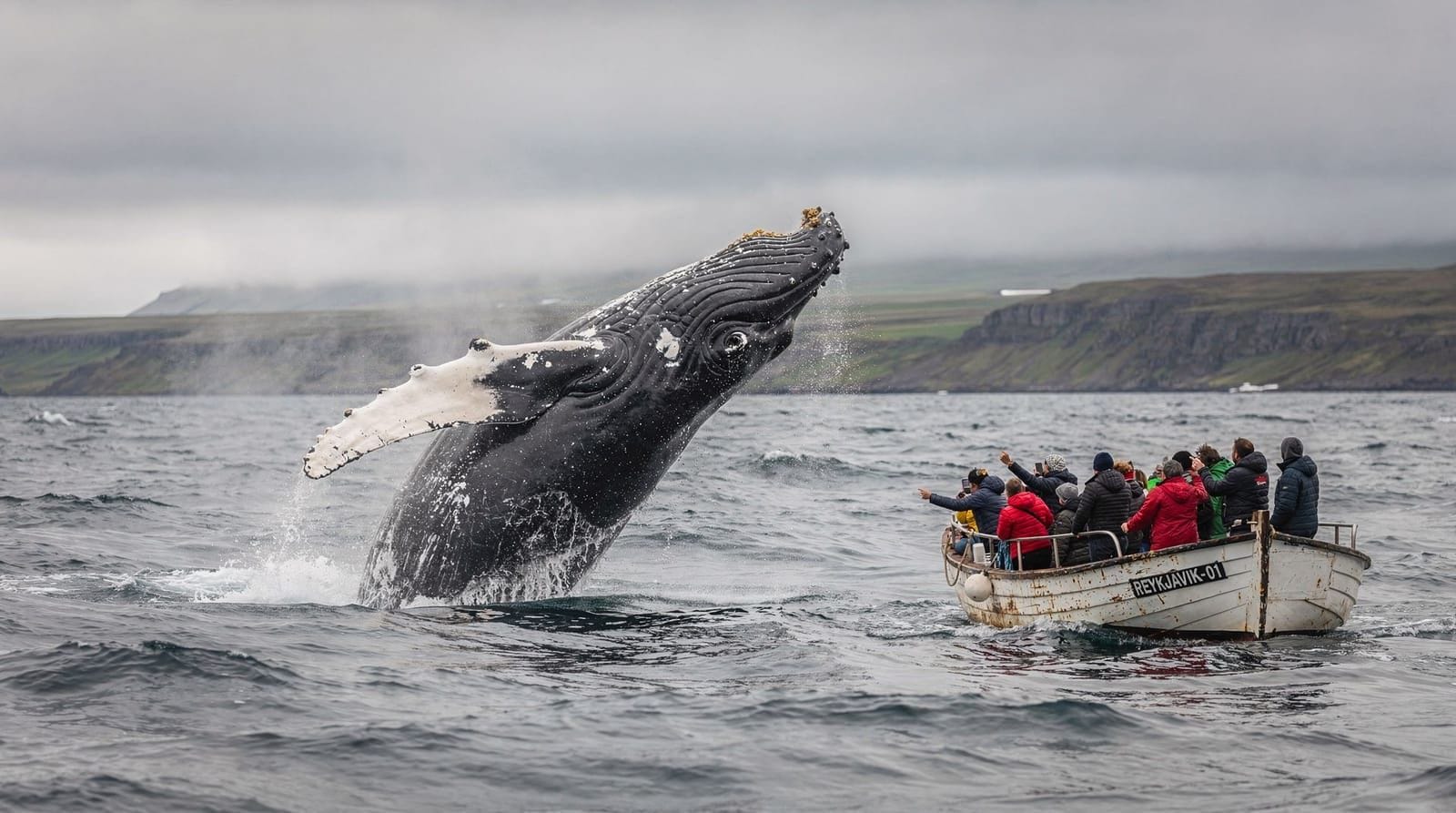
Whale watching from Húsavík peaks in summer — humpback and minke whales are almost guaranteed June through August. This is the most reliable wildlife window of the year.
Winter (November–March): pros and cons
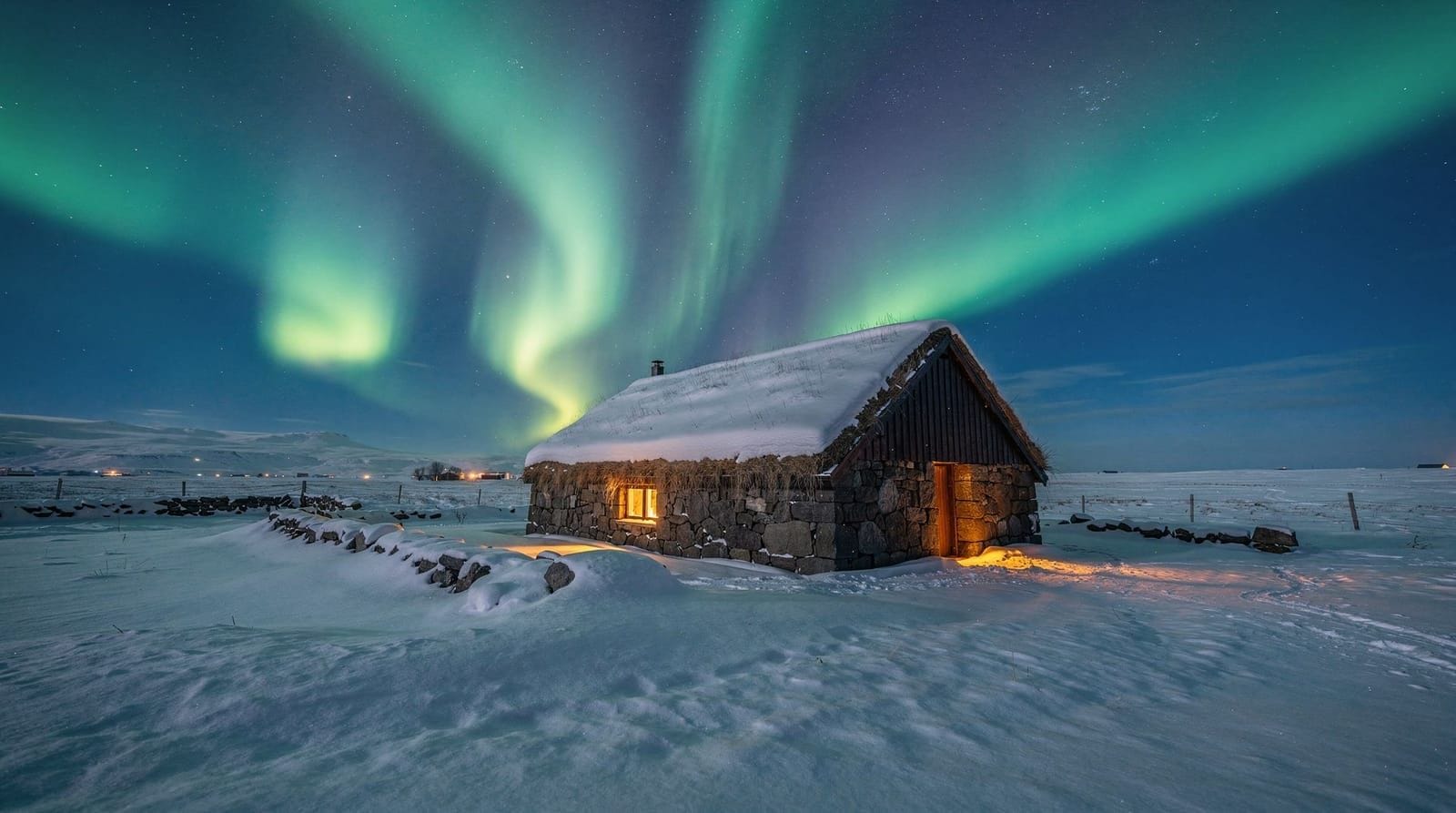
Winter is Iceland’s northern lights season. Darkness returns in late August, but the classic aurora window runs September through March. Temperatures in Reykjavík average -1°C to 4°C (30–39°F) in January — cold but not extreme. Inland and in the north, it’s significantly colder.
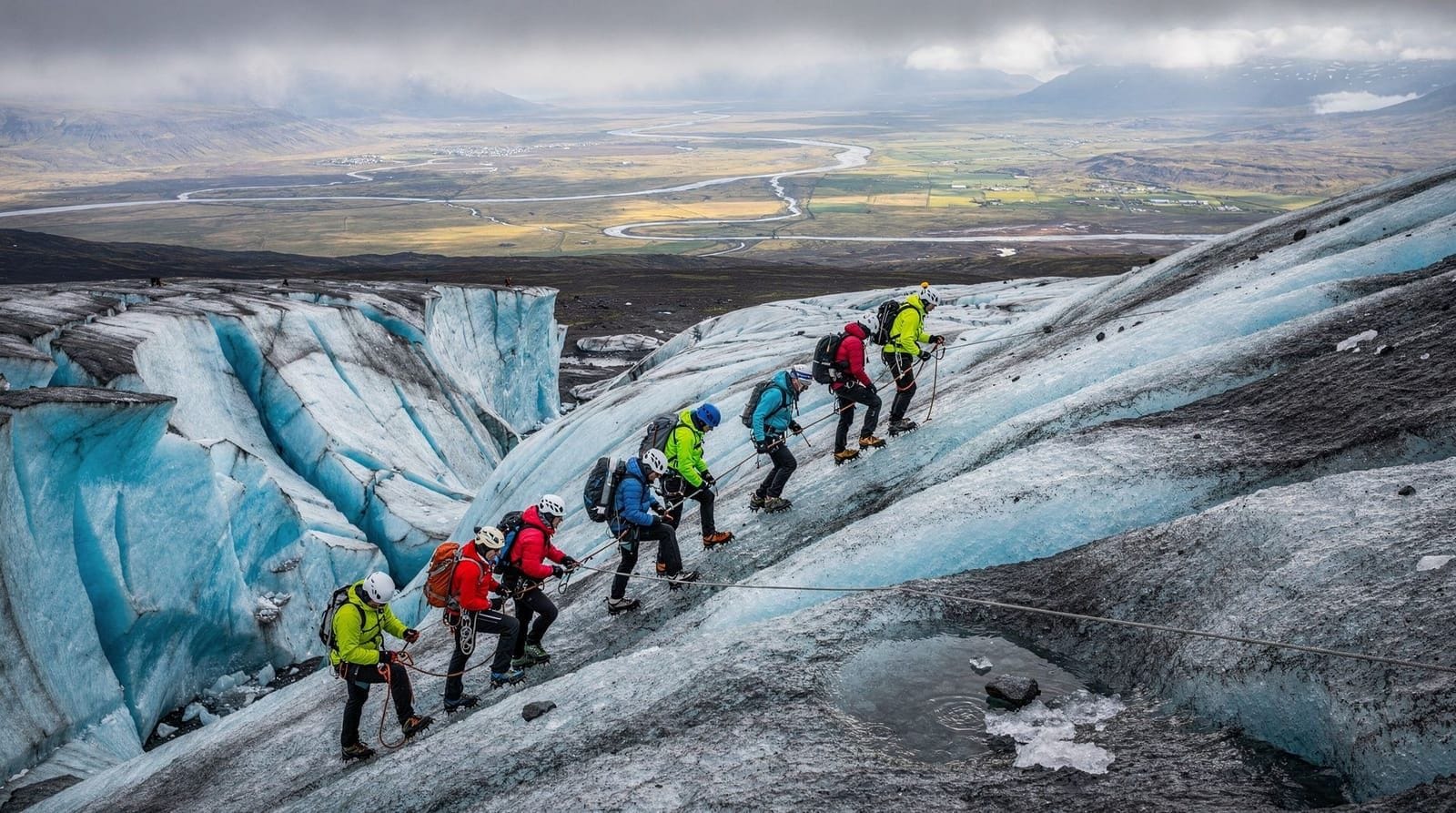
Ice caves in Vatnajökull are only safe to enter November through March when the ice is stable. A natural ice cave tour is one of the most striking experiences Iceland offers, and it’s entirely winter-exclusive.
Road conditions are the real challenge. The Ring Road stays open most of winter but sections in the north and east can close for days during storms. The Safetravel website (safetravel.is) publishes road conditions daily — bookmark it before you go. Driving in winter requires a 4WD vehicle and genuine experience with ice roads.
Vatnajökull ice cave tours run November through March when the crystal blue ice is accessible. Tours sell out weeks ahead — book early if winter is your window.
Shoulder seasons (April–May and September–October): the honest case
These are, for many travellers, the genuinely best periods to visit.
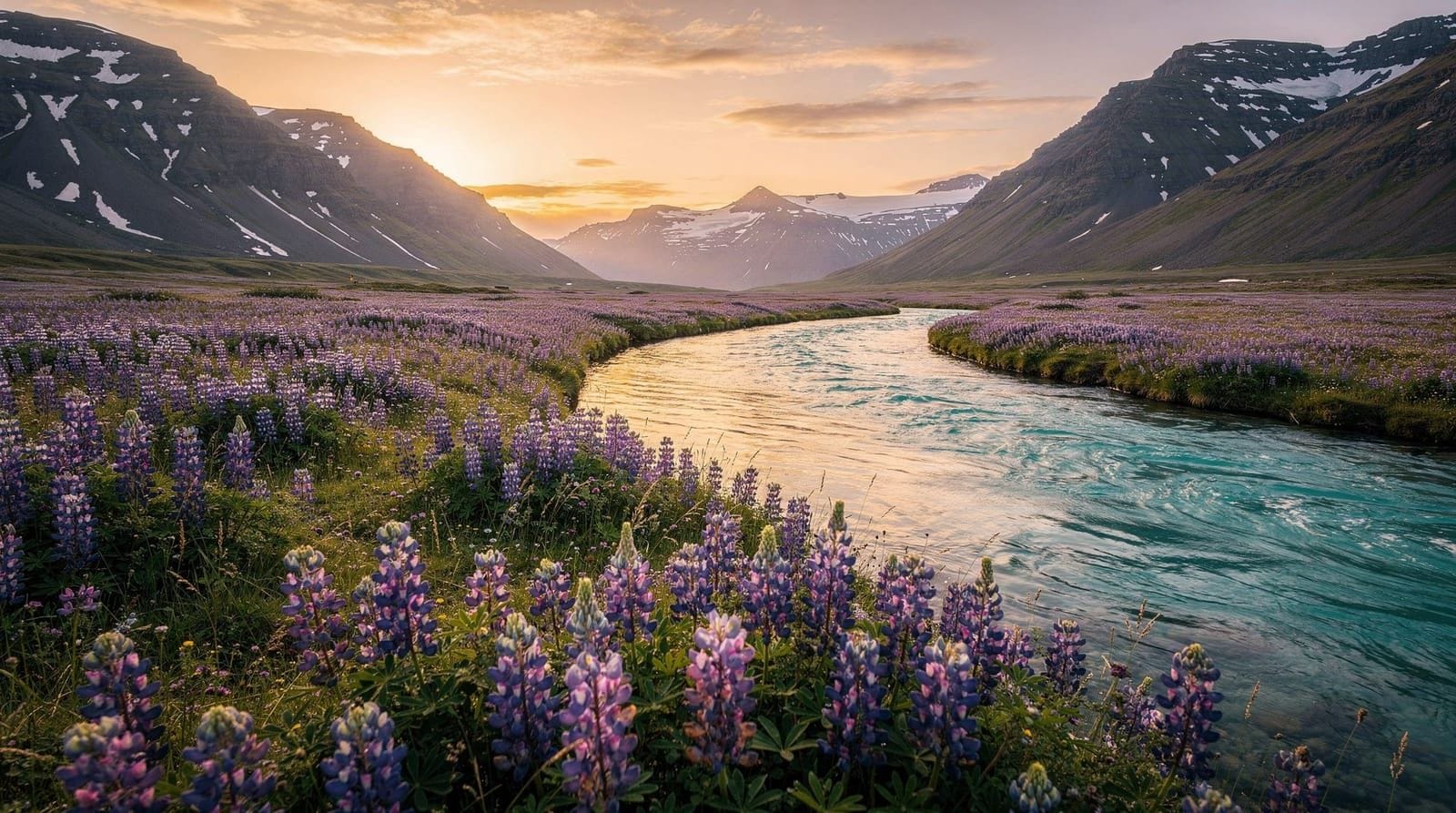
April and May see longer days arriving fast — from 14 hours in April to nearly 19 hours in May — while crowds have not yet peaked. You can usually see Skógafoss without fighting for a parking spot. Lupine fields bloom across the south in May and early June. The downside: F-roads remain closed until June at the earliest, so no highlands access.
September is a personal favourite of many guides who work here. The aurora becomes visible again by mid-month, the summer crowds thin sharply after the first weekend, and highland F-roads often stay open through September. You might catch both a northern lights display and a daylight glacier hike in the same trip.
October offers strong aurora chances and genuinely quiet roads. However, weather becomes more unpredictable, with the first real storms arriving.
Read the full breakdown in Iceland in shoulder season.
Costs by season
Iceland is expensive year-round, but prices vary meaningfully:
- Peak summer (July): Car rentals from $80–150/day for a basic 2WD, $120–200/day for 4WD. Most mid-range hotels $200–350/night.
- Shoulder (April–May, September–October): Car rentals 20–30% lower. Some smaller guesthouses close, but options remain. See how much does Iceland cost for a full breakdown.
- Winter (December–February): Flights from Europe and North America often at annual lows. Hotel rates drop 30–40% outside Christmas week.
Christmas (December 22–January 2) is an exception — prices spike again, and Reykjavík fills with Scandinavian and European visitors for the festive atmosphere. Read Christmas and New Year in Iceland if that’s your target window.
The Iceland month-by-month breakdown
Each month has its distinct character, crowds, and accessibility. The detailed Iceland month-by-month guide covers specific festivals, weather patterns, and what each window is best for. Key highlights:
- February: Quiet, cheap, northern lights peak, no tourists, basic services fully open
- June: Midnight sun, maximum daylight, most active camping season
- September: Best all-round balance — aurora, open F-roads, thinning crowds
- December: Christmas atmosphere in Reykjavík, northern lights on dark nights
Road conditions and driving practicalities
F-roads (marked F on maps) are the unpaved mountain tracks that access the interior. They require:
- A proper 4WD vehicle with good clearance (not all-wheel-drive cars qualify)
- Experience on rough terrain
- Mandatory river crossings on several routes
F-roads typically open: June 15 – September 10 for most main routes. Check the Vegagerðin road authority website for current status.
For year-round driving advice, see driving in Iceland and Iceland road conditions.
Which season suits which traveller
| Priority | Best season | Guide |
|---|---|---|
| Northern lights | Sep–Mar | Best time for northern lights |
| Ice caves | Nov–Mar | Ice caving in Iceland |
| Puffins and whales | May–Jul | Best time for whales and puffins |
| Midnight sun | Jun–Jul | Midnight sun Iceland |
| F-roads and highlands | Jun 15–Sep 10 | Highlands |
| Budget travel | Jan–Feb, Oct–Nov | Iceland on a budget |
| Fewer crowds | Apr–May, Sep–Oct | Avoiding crowds Iceland |
The Golden Circle runs year-round and is one of the few major routes that stays accessible regardless of season, making it a reliable anchor for any timing.
Iceland’s geography and why timing affects access
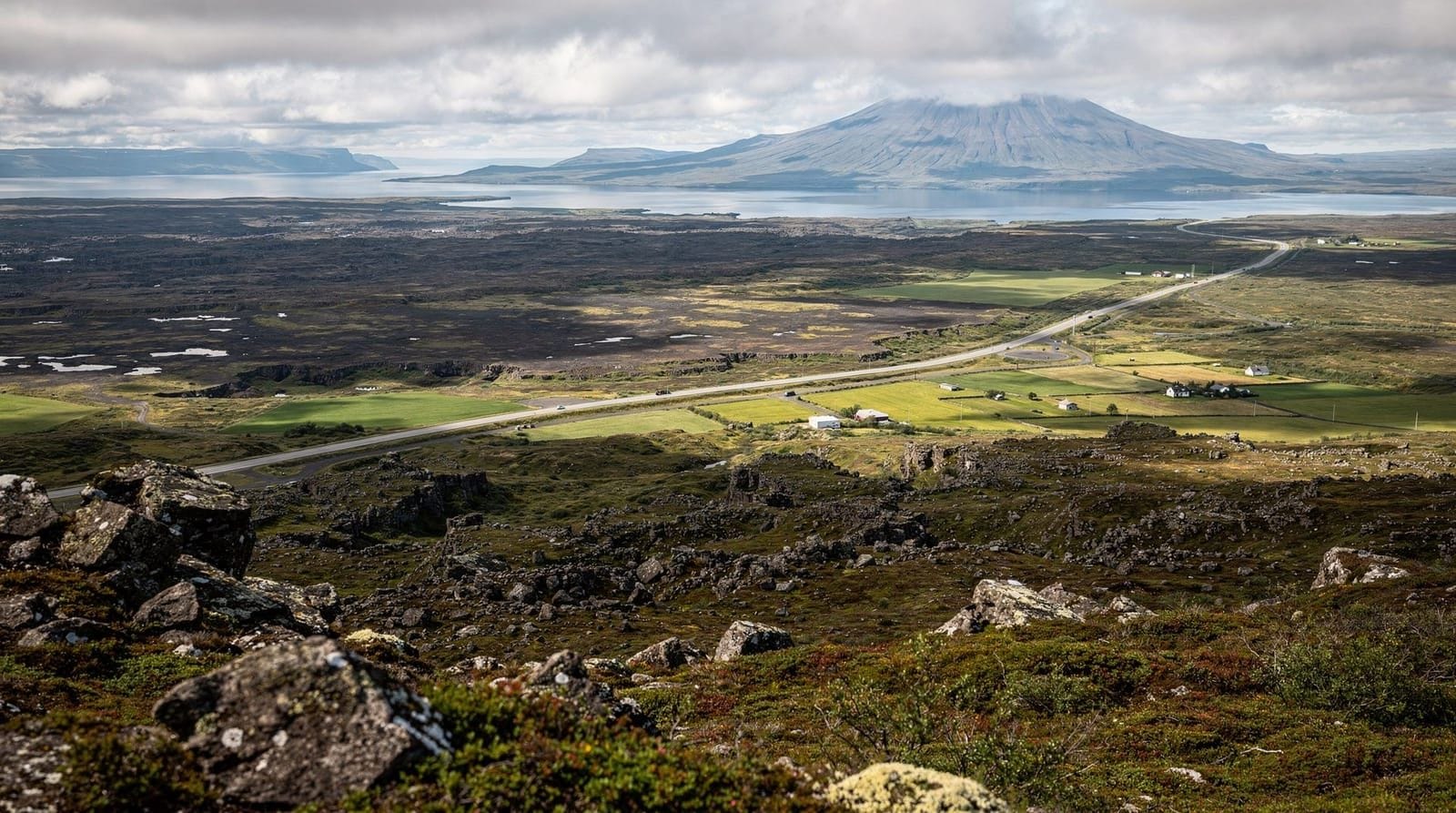
Iceland’s geography creates dramatically different access across seasons. The country is bisected by a central highland — the interior plateau sitting above 400–600 metres, primarily volcanic desert, uninhabited year-round, accessible only when snow-free in summer.
The Ring Road (Route 1) circumnavigates the coast and avoids the highland interior entirely. It is Iceland’s always-accessible circuit. The F-roads — the highland interior routes — are a separate access system that only functions in summer.
This creates a fundamental two-Iceland situation:
- Ring Road Iceland: Accessible 12 months. Waterfalls, glaciers, geothermal areas, small towns. The majority of visitor-accessible Iceland.
- Highland Iceland: Accessible June–September only. Volcanic moonscapes, highland lakes, rhyolite mountains, the starting points for multi-day treks. Completely closed in winter.
If the highlands are on your itinerary — Landmannalaugar, Askja, Kerlingarfjöll, the Laugavegur trek, the highland hot spring circuit — the season choice is simple: go in summer. For Ring Road Iceland, the choice is more nuanced.
Northern lights forecast and what it means for timing
The northern lights are the single most common reason visitors choose specific Iceland travel dates. The forecast works on two separate variables that both need to be favourable simultaneously: geomagnetic activity (measured by the Kp index) and clear skies.
Kp index: A scale from 0–9 measuring geomagnetic activity. Aurora is typically visible in Iceland at Kp 3 and above. Kp 5+ produces strong displays visible even in light-polluted city areas. The Icelandic Met Office (vedur.is) publishes 3-day forecasts; the Space Weather Prediction Center (swpc.noaa.gov) publishes 27-day outlooks based on the solar rotation cycle.
Clear skies: Iceland’s island position in the North Atlantic means significant cloud cover for much of the year. September–October tends to have slightly clearer conditions than November–February. However, cloud cover is the harder variable to predict and the more common obstacle.
The practical implication for timing: any trip of 5+ nights in the aurora season (September–March) gives reasonable probability of at least one aurora-visible night. Shorter trips of 2–3 nights are a gamble — you may hit three cloudy nights and see nothing.
For the full strategy on maximising northern lights chances, see best time to see northern lights and aurora forecast explained.
Travel insurance and why it matters more in Iceland
Iceland’s weather and road conditions make travel insurance more consequential than in most European destinations. Specific scenarios that affect Iceland trips:
- Road closures that delay or prevent access to booked accommodation
- Tour cancellations due to weather (typically covered if operator cancels; not covered if you choose not to go)
- Medical evacuation from remote areas (Iceland has good emergency response but helicopter evacuations from highland or coastal areas are expensive)
- Vehicle excess/damage on rental car (the local insurance excess is often higher than visitors expect — additional CDW coverage is worth considering)
Iceland’s search and rescue (ICE-SAR) is volunteer-funded. There is no charge for rescue services in Iceland, but this does not cover the costs of hospitalisation, repatriation, or damage to rental vehicles.
See travel insurance Iceland for specific policy considerations.
Iceland’s key annual events by season
Understanding what happens when helps narrow down timing beyond pure weather logic.
Spring events (April–May):
- Easter week sees some Icelanders travel to the countryside, though no major national festivals
- Puffins arrive on cliffs from late April — the first sighting each year is a minor cultural event
- Reykjavík Marathon (May) if running interests you
Summer events (June–August):
- Secret Solstice music festival, Reykjavík (mid-June): four-day festival under the midnight sun
- National Day of Iceland (June 17): celebrates the 1944 declaration of the Republic, with parades in Reykjavík and public celebrations across the country
- Þjóðhátíð (Westman Islands, first weekend of August): Iceland’s largest outdoor festival
- Verslunarmannahelgi (first weekend of August): national long weekend; most Icelanders camp
- Sea Baron Seafood Festival, Reykjavík (August): modest but genuine food event
Autumn events (September–October):
- Menningarnótt (Culture Night, Reykjavík): late August/early September, free museum entry and outdoor events
- Reykjavík International Film Festival (late September/early October): 10-day event across multiple venues
- Harvest season: Réttir (sheep round-up) happens in late September and early October — farmers and volunteers gather sheep from the highlands in a tradition unchanged for centuries
Winter events (November–March):
- Iceland Airwaves music festival (Reykjavík, November): four-day festival across 20+ venues
- Winter Lights Festival (Reykjavík, late January–February): illuminated buildings and museum open nights
- Þorrablót (February): traditional mid-winter feast with fermented and preserved foods
- Christmas markets (Reykjavík, late November through December 23)
- New Year’s Eve: community bonfires and national fireworks
What to book ahead regardless of season
Some Iceland experiences book out regardless of when you travel:
- Blue Lagoon: Requires advance booking throughout the year. Peak summer and Christmas-New Year sell out weeks ahead.
- Ice cave tours: The natural Vatnajökull ice caves (November–March) sell out 2–4 weeks ahead in peak winter months.
- Popular hiking huts: The Laugavegur trail hut system books out months ahead for July and August dates — reservations open in the autumn preceding the summer season.
- Small-group specialty tours: Northern lights boat tours, super-jeep highland tours, and glacier helicopter rides all have limited capacity.
- Central Reykjavík accommodation in July: The most central guesthouses and hotels book out 2–3 months ahead for July.
Car rentals particularly need advance booking — Iceland’s rental fleet is genuinely finite and July is the one month when inventory runs out entirely. Book your car before booking your accommodation; losing a good accommodation option is easier to recover from than having no car for your Ring Road trip.
Building your itinerary around the season
Different seasons call for different itinerary structures.
Summer Ring Road (June–August): The full Ring Road is accessible. Plan 7–10 days minimum for the circuit, including meaningful time in the highlands if F-roads are open. Book accommodation the entire route in advance — flexibility is limited in July.
Winter southern focus (November–March): The south coast from Reykjavík to Jökulsárlón is the most practical winter circuit, accessible in all but the worst conditions. Add northern lights tours from Reykjavík, ice cave tours, and the Golden Circle. Allow 5–7 days.
Shoulder Ring Road (September): September is uniquely placed — the Ring Road is fully accessible, F-roads are still open early in the month, aurora is returning, and you do not need to book 3 months ahead. A 7-day Ring Road in September is one of the most rewarding Iceland trip structures.
Short city break (any season): Reykjavík, the Golden Circle, and the south coast can fill a 3–4 day trip in any month. Best day trips from Reykjavík covers the main options within range of the capital.
Regional timing: the same month, different experience
Iceland’s regions don’t all peak at the same time, which matters if your itinerary favours one area over a full Ring Road loop.
| Region | Best window | Why |
|---|---|---|
| Reykjavík & Golden Circle | Year-round | Fully accessible in all seasons, so timing is driven by your other priorities |
| South Coast (Vík, Jökulsárlón) | May–September for weather, Nov–Mar for ice caves | Two distinct seasonal draws on the same route |
| Snæfellsnes Peninsula | June–August for hiking; Oct–Feb for orcas | Coastal weather is milder than the highlands but still season-dependent |
| Westfjords | June–August only | Roads are minimal and slow outside summer; some close entirely in winter |
| North Iceland (Akureyri, Lake Mývatn) | June–September for access; Oct–Feb for aurora away from southern cloud | Often clearer skies than the south in winter due to rain-shadow effect |
| Highlands | Mid-June to mid-September only | Closed by snow and impassable rivers the rest of the year |
If your trip is anchored around one region rather than the full loop, check that region’s specific access window before locking in dates — a month that’s fine for the south coast can be entirely wrong for the Westfjords or highlands. Travellers combining wildlife with a specific region should also check the best time for whales and puffins guide, since puffin colonies and humpback season peak in the same May–August window as the busiest regional access, not outside it.
First-time vs repeat visitor timing
First-time visitors usually benefit from summer (June–August) or September, since the widest range of attractions — F-roads, glacier hikes, wildlife, and the Golden Circle — are all reliably accessible at once, and daylight leaves plenty of margin for a packed itinerary. The trade-off is price and crowds, which are unavoidable in that window.
Repeat visitors who have already done the classic Ring Road often deliberately choose winter, specifically to chase northern lights or ice caves, or narrow their focus to a single region like the Westfjords or East Iceland that a first, broader trip skipped. If you’ve already seen Jökulsárlón and the south coast, a second Iceland trip built around Snæfellsnes or the highlands in summer often feels fresher than repeating the same route.
Frequently asked questions about the best time to visit Iceland
Is Iceland worth visiting in winter?
Yes, but with realistic expectations. Roads can close for 2–3 days during storms, some highland attractions are inaccessible, and days are very short. The payoff is northern lights, ice caves, and a fraction of the summer crowds.
What month has the best weather in Iceland?
July is the warmest and most reliably calm month, averaging 11–13°C (52–55°F) in Reykjavík. But Icelandic weather is unpredictable year-round — you can have a rainy July week or a crisp, sunny February day.
When are F-roads open in Iceland?
Most major F-roads open between June 10–20 and close between September 10–20. Exact dates depend on snowmelt and the road authority’s assessments. Never drive an F-road before the official opening — they are gated for a reason.
Is Iceland crowded in summer?
Yes, particularly July. Jökulsárlón, Geysir, Seljalandsfoss, and the Blue Lagoon all see significant queues. Early morning visits (6–8am) reduce crowds at natural sites considerably. See avoiding crowds in Iceland.
Can you see northern lights in summer?
No. The midnight sun means the sky never gets dark enough between mid-May and late July. Aurora activity can theoretically occur, but it’s invisible. The aurora viewing season runs late August to mid-April.
How much does Iceland cost in different seasons?
July is the most expensive month. February is typically the cheapest. A mid-range two-person trip in July costs roughly $400–600/day including accommodation, car, food, and entry fees. In February that drops to $250–350/day. Full analysis at how much does Iceland cost.
Should I visit in spring or autumn?
Both are strong choices. Spring (May) means wildflowers, long evenings, and puffins arriving on the cliffs. Autumn (September–October) brings the aurora back while keeping summer’s accessible roads and relatively mild temperatures. September is marginally better for F-road access; May is marginally better for wildlife.
Is it safe to drive in Iceland in winter?
Experienced winter drivers can handle most of the Ring Road safely in winter with a proper 4WD. Black ice, drifting snow, and sudden visibility loss are genuine hazards. The Safetravel 112 app is mandatory. Read Iceland in winter driving before deciding.
Is it better to visit Iceland once or plan a second trip focused on one region?
Both work well. A single 7–10 day trip covering the Ring Road highlights suits most first-time visitors. A second, more focused trip — the Westfjords, the highlands in summer, or a dedicated winter aurora trip — rewards visitors who already know the classic stops and want depth over breadth.
Top experiences
Bookable activities with verified prices and instant confirmation on GetYourGuide.