Jökulsárlón glacier lagoon guide — icebergs, boat tours, and logistics
Reykjavik: Jokulsarlon glacial Lagoon with boat tour
What is Jökulsárlón and is it worth the long drive?
Jökulsárlón is a glacial lagoon filled with icebergs calved from Breiðamerkurjökull glacier, 375 km from Reykjavík (4.5 hours). Boat tours run May–October. The Diamond Beach, 200 m away, has washed-up icebergs on black sand. Yes, it is worth the drive — nothing else in Iceland looks like this.
Jökulsárlón is a glacial lagoon on the edge of Vatnajökull National Park, fed by icebergs calving from the Breiðamerkurjökull glacier outlet. The icebergs drift slowly across the lagoon before the current carries them under the Route 1 bridge and into the sea, where they wash up on Diamond Beach 200 m to the south.
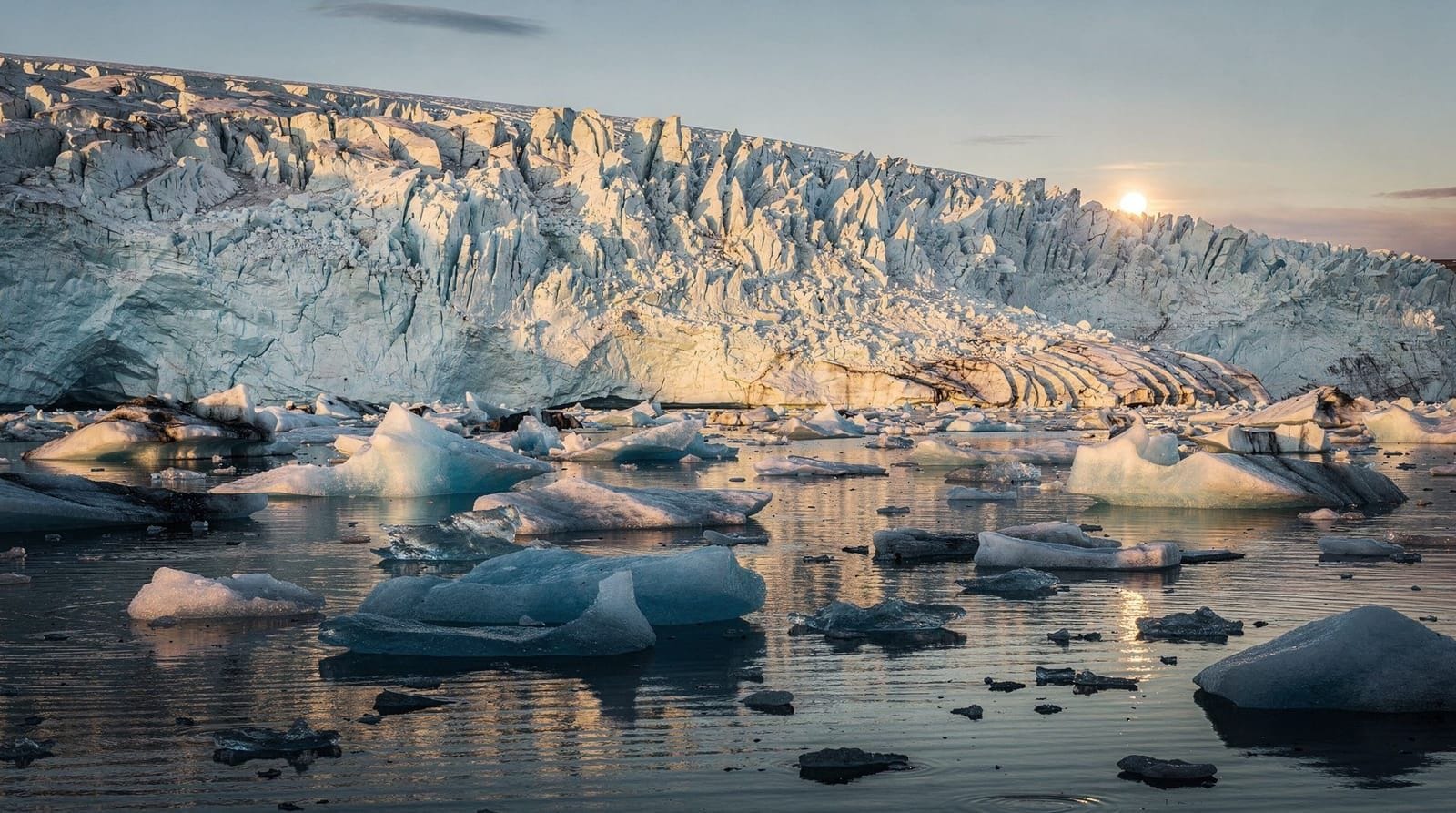
The visual effect — blue-white icebergs against black sand, with the white glacier wall visible behind the lagoon — is genuinely unlike anything else in Iceland, and Iceland is not a country short of dramatic scenery. Jökulsárlón consistently ranks as the most memorable single natural site for visitors who’ve done the south coast route.
The lagoon is 375 km from Reykjavík. This requires a genuine commitment, but it is one of the few Icelandic destinations that reliably justifies the distance.
| Where | 375 km from Reykjavík, southeast Iceland, Route 1 |
| Cost | Free shore access; amphibious boat ~9,500 ISK, Zodiac ~14,000–17,000 ISK |
| Time needed | 3 hours minimum, 4+ hours comfortably |
| Getting there | Self-drive (4.5h), guided day tour, or fly to Höfn + drive |
| Best time | Year-round; boat tours May–October, ice caves Nov–March |
The lagoon itself — what you’re seeing
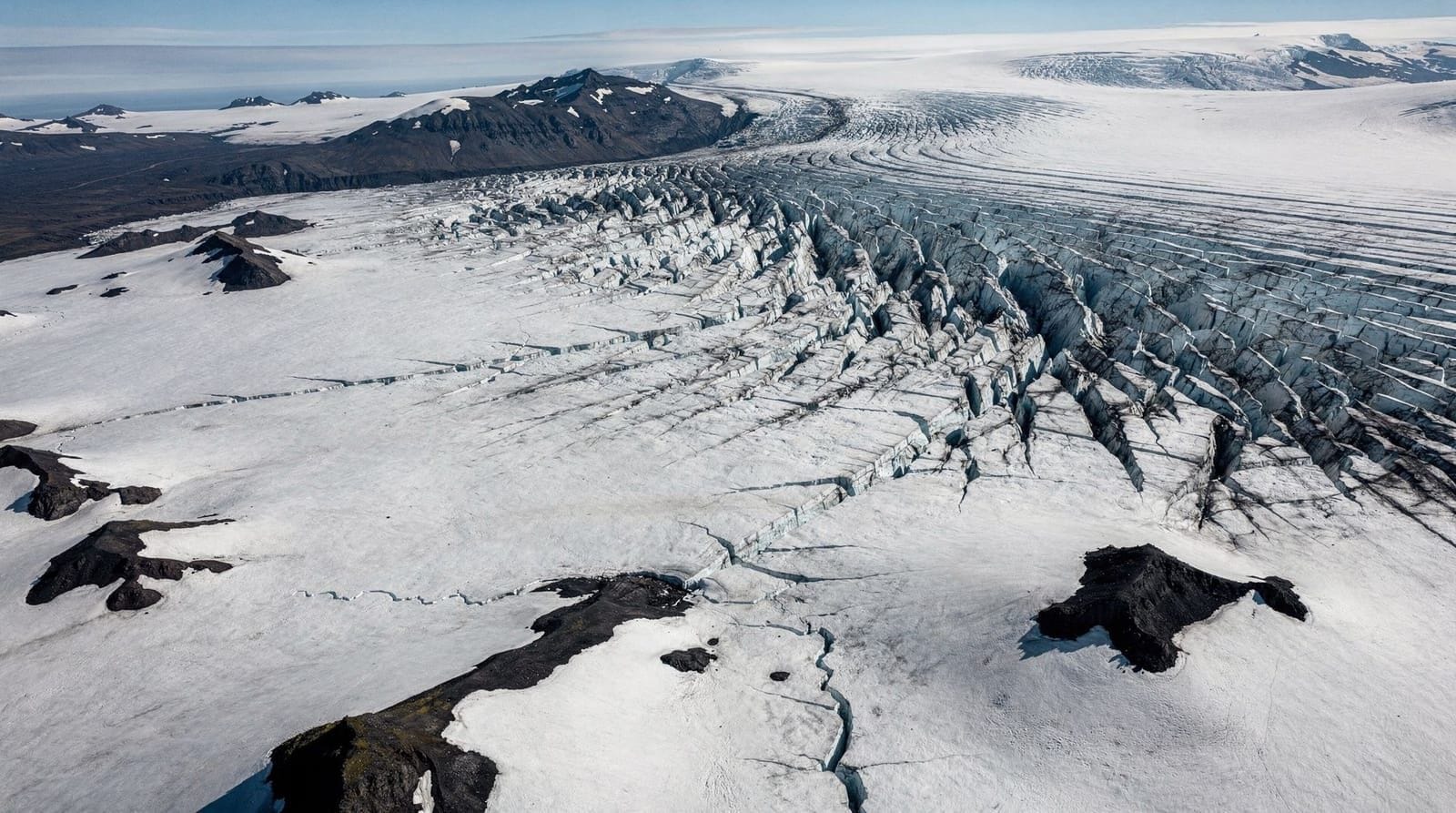
Jökulsárlón is approximately 25 km² in area and up to 284 m deep. It is Iceland’s deepest lake. It is also one of Iceland’s youngest — it didn’t exist before 1935. Breiðamerkurjökull glacier previously extended to the Atlantic Ocean. As the glacier retreated (at an accelerating rate since the mid-20th century), the lagoon formed and grew. In 1975, the lagoon was 7 km²; today it’s more than three times that.
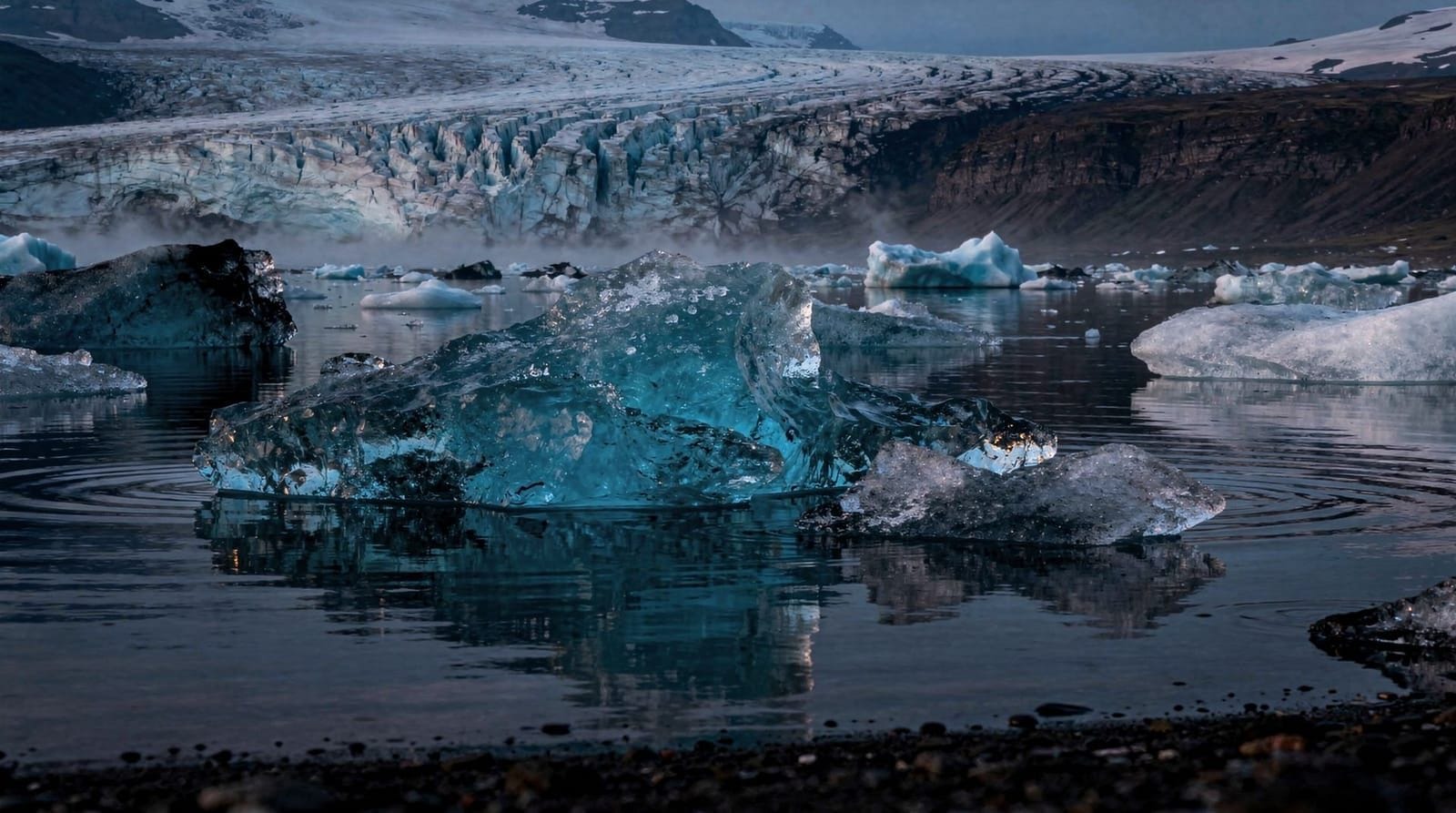
Icebergs in the lagoon range from small ice blocks you could carry to towering formations 10–15 m tall. Some are white (trapped air bubbles), some are nearly transparent blue (dense glacier ice with few air bubbles), and some are striped with dark volcanic ash layers deposited by historical eruptions and compressed into the glacier over centuries.
The lagoon freezes partially in cold winters (December–February), transforming the landscape entirely. In summer (May–September), the bergs are at their most active — calving events from the glacier face happen regularly, though predicting timing is impossible.
Boat tours on the lagoon
Two types of boat operate on Jökulsárlón:
Amphibious boats (DUKW-style “duck boats”)
The most popular option — a 40-minute tour on a large amphibious vehicle that drives into the water from the shore. Departs from the car park area and navigates among the icebergs at close range. Guides explain glacier science and point out notable berg formations.
Cost: Approximately 9,500 ISK (~€62) per adult (2025 rates — check the operator site for current prices) Duration: 40 minutes on the water Frequency: Every 15–30 minutes in peak season (June–August), less frequent in May and September Season: May to October (weather dependent) Book ahead: Yes, especially July–August; the boats sell out on busy days
Zodiac rigid inflatable boat (RIB) tours
Smaller, faster boats that navigate closer to the glacier face. Longer tours (60–90 minutes). More expensive but more intimate experience. Fewer per boat (8–10 passengers vs 50+ on the duck boats).
Cost: Approximately 14,000–17,000 ISK (~€93–113) per adult Season: June to September
Booking the Jökulsárlón amphibious boat tour in advance is essential for July–August visits. The boats run throughout the day but popular time slots fill up. The tour includes close-up iceberg navigation and sometimes an ice sample to touch and taste (glacial water, several thousand years old).
Diamond Beach — the companion experience
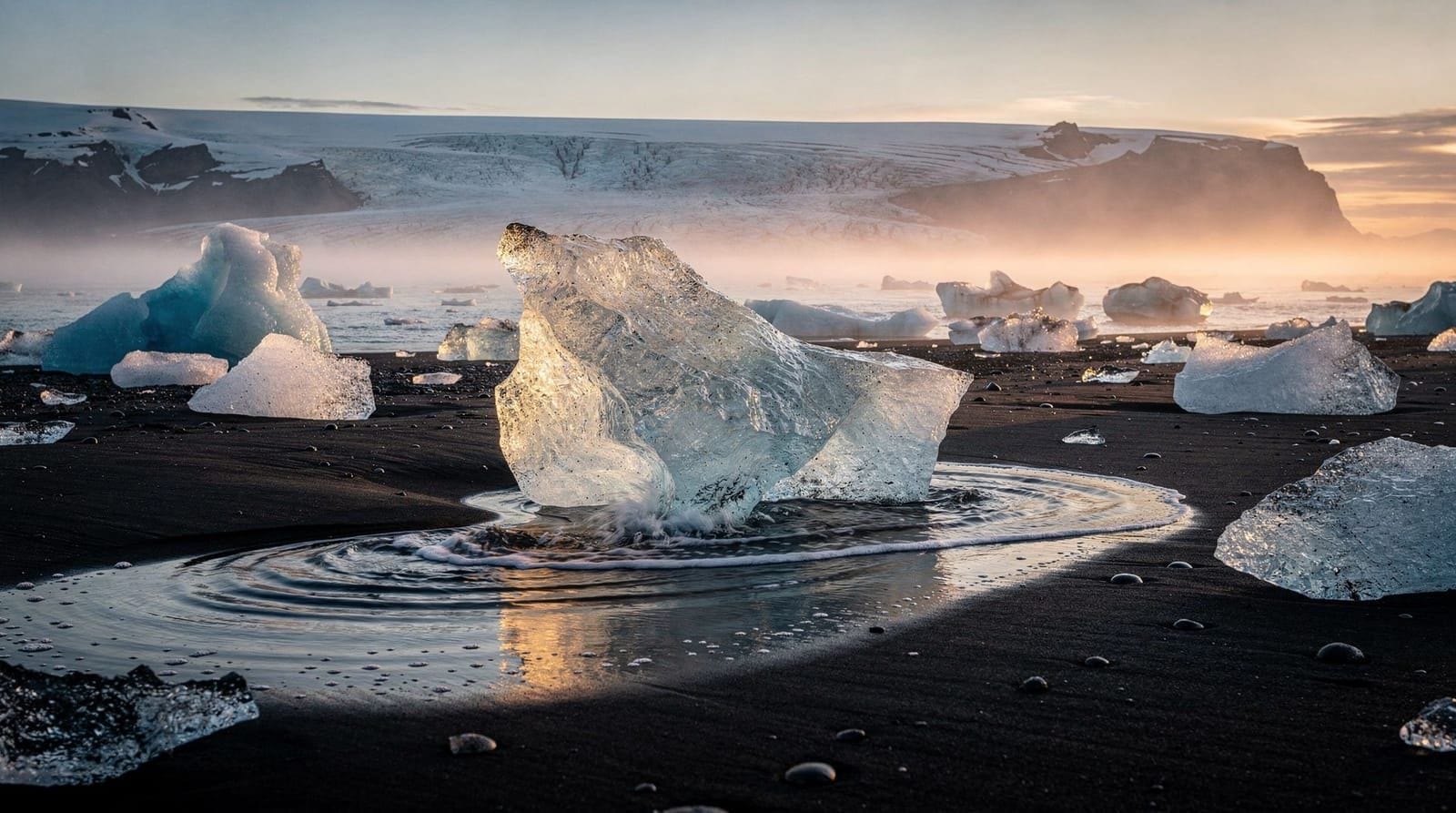
Diamond Beach is the stretch of black volcanic sand beach where icebergs washed out through the lagoon’s tidal channel come to rest. The contrast of transparent blue-white ice against jet-black sand produces photographs that look manipulated but are not.
The beach is 200 m south of the lagoon parking area, across Route 1. Walk through the underpass or cross carefully at the road (traffic is fast here).
Best times at Diamond Beach:
- Sunrise and sunset: Low light across the ice creates extraordinary colour refraction. In summer, sunrise is around 3–4 am and sunset around 11 pm, which means good light at times when the beach is deserted.
- After storms: Storm surges push large icebergs onto the beach and deposit them in dramatic positions. The day after rough weather often offers the best formations.
- Winter: The frozen lagoon combined with snow-covered black sand and icebergs is extraordinary. Low-angle winter light is useful all day.
See the complete Diamond Beach guide for photography detail.
Tours from Reykjavík that specifically combine the glacier lagoon boat tour and Diamond Beach save considerable planning effort — the transport, boat tickets, and timing are handled, leaving you to focus on the experience rather than logistics. A sensible option if you’re doing this as a day trip from Reykjavík (8–9 hours total).
Getting to Jökulsárlón
By car from Reykjavík: Route 1 east the entire way. 375 km, approximately 4.5 hours without stops. The road is fully paved. A 2WD is adequate in summer; in winter, 4WD with winter tyres is advisable for the highland sections. Allow a full day minimum for this as a day trip.
Combined south coast tour: Many visitors combine Jökulsárlón with the south coast attractions — Seljalandsfoss, Skógafoss, Reynisfjara — in a single long day from Reykjavík. This is possible in summer (16+ hours of daylight) but you won’t have much time at each stop. A better approach is the south coast glaciers 4-day itinerary.
By bus: Strætó bus services connect Reykjavík to the east coast, stopping at Jökulsárlón. Journey time is approximately 5.5–6 hours. Services are limited in winter and on weekdays. Check the Strætó website for current timetables.
Accommodation near Jökulsárlón: The nearest towns are Höfn (80 km east, full services) and Kirkjubæjarklaustur (100 km west, limited options). Several guesthouses and a campsite operate within 5–20 km of the lagoon. Staying overnight allows sunrise/sunset visits without the pressure of returning to Reykjavík the same day.
Seasonal differences
Summer (June–August): Peak iceberg activity, most boat tours, longest daylight hours, largest crowds. The lagoon is fullest in summer as glacial melt is highest. Car park can be chaotic between 10 am and 4 pm.
Autumn (September–October): Fewer visitors, still functional boat tours (September), possible northern lights reflecting in the lagoon at night. One of the best seasons.
Winter (November–March): Lagoon partially freezes. Boat tours suspended. Icebergs may be frozen in place creating a surreal still landscape. Northern lights viewing above the lagoon is exceptional. Access requires 4WD in icy conditions.
Spring (April–May): Ice breaking up, boat tours resuming in May. High water from melt increases calving events. Moderate crowds.
See the Iceland month-by-month guide for full seasonal detail.
The science of icebergs
What you’re looking at when you watch an iceberg: compressed glacier ice, often 1,000–2,000 years old, that has been slowly moving from the accumulation zone of Vatnajökull toward the glacier front over millennia. When the glacier face reaches the lagoon water and the calving threshold is exceeded, a section breaks off.
Approximately 90% of an iceberg is underwater (this is where the metaphor comes from). The visible portions are the spectacular shapes; the submerged portions determine how the berg orients and drifts.
The blue colour of dense icebergs: glacier ice that has had air bubbles compressed out of it over time absorbs red light wavelengths and reflects blue. The deeper blue the ice, the denser and older it is.
Black stripes in the ice: volcanic ash layers deposited on the glacier during historical eruptions — sometimes centuries ago — compressed into the ice over millennia. They appear as dark horizontal or angled bands through the berg.
What the boat guides won’t always tell you
The amphibious boat tours are operated by a single dominant company (Glacier Lagoon, formerly Bakkaflug). Their guides are generally good but the tours are heavily scripted. If you have specific geological questions, ask directly; the guides know more than the script. Tipping is not expected in Icelandic culture but guides do appreciate it.
The tours prioritise the photogenic areas of the lagoon rather than maximising time near the glacier face (which is further into the lagoon and takes more time to reach). The RIB tours go closer to the glacier. If seeing the calving face rather than just the icebergs is your priority, the zodiac tour is worth the extra cost.
Frequently asked questions about Jökulsárlón
How long should I spend at Jökulsárlón?
For the lagoon shore, Diamond Beach, and an amphibious boat tour: 3 hours minimum, 4 hours comfortably. If you want to do both the duck boat and zodiac tours plus photograph both sites properly: a full day.
Can I kayak in Jökulsárlón?
Yes — guided kayak tours operate in the lagoon during summer. This puts you at water level among the icebergs, which is a completely different scale experience from the boat tours. See the tour listings for current operators.
Is there a fee to enter Jökulsárlón?
No entrance fee for the lagoon shore viewing area. Boat tours are paid experiences. Parking is free.
What if I can’t make it to Jökulsárlón?
The Fjallsárlón glacier lagoon is a smaller, similar experience 7 km west of Jökulsárlón, less visited and with its own boat tours. If you’re short on time at the main lagoon, Fjallsárlón is worth considering as an alternative.
Is the water in the lagoon cold?
Very — approximately 2–4°C year-round. The lake is fed by glacial meltwater. Swimming in the lagoon is not officially permitted and genuinely dangerous due to temperature, currents, and iceberg proximity. Do not enter the water.
Can I see the northern lights at Jökulsárlón?
Yes — with a clear sky and in the right season (roughly September–March). The lagoon’s dark setting and reflective water surface make northern lights sightings here among the most spectacular in Iceland. See the northern lights guide for probability forecasting.
What nobody tells you about the Jökulsárlón boat tour
The amphibious boat tours are Iceland’s most popular paid attraction after the Blue Lagoon. They run efficiently and the guides are competent. But several things are worth knowing before you book:
One operator: All amphibious boat tours on Jökulsárlón are operated by Glacier Lagoon (formerly Bakkaflug). There is no competition. Prices reflect this.
The duck boats vs RIBs: The DUKW-style amphibious vehicles (duck boats) are the standard tour. They hold 50–80 passengers and operate on a fixed 40-minute circuit. The zodiac RIB tours are operated separately, hold 8–10 passengers, and go closer to the glacier face. The price difference (~5,000 ISK extra) is justified if you want the glacier face experience specifically.
Timing matters: The duck boats run every 15–30 minutes in peak season, but the 9–11 am and 2–4 pm slots fill fastest. If you want a specific time, book online in advance. Walking up and getting on the next boat is usually possible outside peak season.
Weather can cancel: In high winds, the boat tours suspend operations. This is non-negotiable safety. If you’re on a tight schedule, build in flexibility for a weather cancel.
Jökulsárlón and the film industry
The lagoon has been used as a filming location in two James Bond films: A View to a Kill (1985) and Die Another Day (2002). Scenes involving vehicles on ice were filmed here when the lagoon partially froze. The lagoon has also appeared in Lara Croft: Tomb Raider (2001) and Batman Begins (2005).
The reasons for the film industry’s preference: the lagoon looks otherworldly and unique, the logistics of filming in Iceland (compared to constructed sets) are manageable, and the Icelandic Film Office provides permits efficiently. The local knowledge that you’re standing where James Bond drove a vehicle is mildly amusing context.
Understanding the lagoon’s growth
Jökulsárlón is growing. In 1975, the lagoon covered 7 km². In 2015, it was 18 km². In 2025, it’s approximately 25 km². The growth is driven by the continued retreat of Breiðamerkurjökull — the glacier face that calves into the lagoon is moving further back each year.
What this means practically: the lagoon will continue to grow. The icebergs you see in 2026 are being calved from a glacier face that was, in 1900, at the current southern shore of the lagoon — where the car park and road now sit. The glacier once reached the sea directly at this location.
By 2100, projections suggest the lagoon could cover 100+ km². The Diamond Beach experience will likely be more dramatic as more ice passes through the channel. The landscape is actively changing in visible ways within a single human lifetime.
Beyond the lagoon: the east Iceland continuation
If Jökulsárlón is not the end of your trip but a waypoint on the Ring Road, east Iceland begins 80 km beyond it. Höfn (80 km east) is a fishing town with good accommodation and the langoustine restaurant scene Iceland is known for. Egilsstaðir (250 km east) is the main east Iceland hub.
The contrast between the glacier lagoon’s ice and icebergs and the fjord-and-forest landscape of east Iceland is marked. Iceland presents genuinely different faces in different regions.
For longer itinerary planning, see the Ring Road guide and the Ring Road 10-days itinerary.
Season-by-season summary
| Season | Boat tours | Ice caves | Crowds | Highlight |
|---|---|---|---|---|
| Summer (Jun–Aug) | Yes, frequent | No | Highest | Longest daylight, most active calving |
| Autumn (Sep–Oct) | Yes (Sep only) | Beginning | Falling | Aurora starts, fewer visitors |
| Winter (Nov–Mar) | No | Yes | Lowest | Ice caves, northern lights over the lagoon |
| Spring (Apr–May) | Resuming (May) | Ending | Moderate | High water, breaking ice, calving events |
What the entrance fee actually covers (and what it doesn’t)
There is no entrance fee for the lagoon shore itself — parking and shore access are free, which surprises many first-time visitors expecting a national-park-style gate charge. What you pay for is the boat tour, which is operated commercially rather than by the national park authority. This distinction matters for budget planning: a visit built purely around the free shore walk and Diamond Beach costs nothing beyond fuel or transport, while adding the amphibious boat tour or a Zodiac RIB tour brings the per-person cost up to 9,500–17,000 ISK. For travellers on a tight budget, the free shore and beach experience alone is still one of Iceland’s best free attractions; the boat tour is a worthwhile add-on rather than a requirement for a satisfying visit.
Combining with the wider South Coast
Most visitors reach Jökulsárlón as part of a longer South Coast drive rather than as an isolated destination, and the sequencing matters. Coming from the west, the standard stops before Jökulsárlón are Seljalandsfoss, Skógafoss, Reynisfjara, and Vík — each worth at least 30–45 minutes, which is why cramming Jökulsárlón into the same single day from Reykjavík leaves so little slack. See the honest breakdown in the Jökulsárlón day trip guide if you’re weighing a single-day drive against an overnight stop.
For visitors coming from the east instead — having driven down from east Iceland or flown into Höfn — Jökulsárlón is the first major stop on the way west, and arriving with fresh energy rather than after a full day’s driving noticeably improves the experience.
What locals say the tour groups miss
Guides who’ve worked Jökulsárlón for years consistently point to the same overlooked detail: most visitors treat the lagoon as a single photo stop and leave within 45 minutes, never walking more than a few hundred metres from the car park. The east shore, a 15–20 minute walk from the boat launch, gets a fraction of the foot traffic and offers a genuinely different vantage — looking back across the lagoon toward the glacier face with far fewer people in frame. If you have the extra half hour, it’s worth the walk regardless of the season.
Accommodation strategy for Jökulsárlón visitors
Staying overnight near Jökulsárlón transforms the experience. Instead of a rushed day trip with 4.5 hours of driving at each end, you can:
- Visit the lagoon at dusk (around 9–10 pm in summer, in golden light)
- Return at sunrise (around 3–4 am in summer)
- Have the boat tour as a mid-day activity rather than the whole day’s focus
Accommodation options near the lagoon:
- Hotel Skaftafell (35 km west, near Skaftafell/Vatnajökull NP): mid-range, restaurant, reliable, good base for glacier activities
- Jökulsárlón Guesthouse (directly adjacent to the lagoon): fills quickly, book months ahead for July–August
- Glacier world hotels (various, 10–80 km range): scattered guesthouses with varying quality
- Höfn (80 km east): the best selection of services and accommodation in this area; Hótel Höfn is the main mid-range option
Camping at Skaftafell (35 km west) with an early morning drive to the lagoon is a popular budget strategy. Campsite fee approximately 2,000 ISK (~€13) per person. See the campervan Iceland guide for van camping advice.
The lagoon wildlife
Arctic terns: Aggressive divers that nest near the lagoon shore in June–July. They’re protecting nesting sites. If a tern starts dive-bombing you, raise your arm above your head — the tern targets the highest point. The attacks are alarming but harmless unless it actually strikes.
Seals: Grey seals and harbour seals regularly use the lagoon ice floes and the beach near the tidal channel. The seals eat fish that follow the cold lagoon water outflow. A dozen or more may be visible on busy days.
Skuas: Great skuas (bonxies) patrol the lagoon area and attempt to steal fish from terns. Watching the aerial battles between skuas and terns is a wildlife spectacle in itself.
Ptarmigan: Occasionally visible on the heath surrounding the car park. Iceland’s ptarmigan are the only year-round land bird in the country (other than ravens). White in winter, mottled brown in summer, they’re masters of camouflage.
The glacier face: Breiðamerkurjökull’s calving face is the most active wildlife-adjacent feature — ice-calving events create waves that distribute ice and attract birds. Watch the far end of the lagoon for calving sounds and the sudden movement of nearby icebergs.
Getting the best from a 4-hour visit
If you have exactly 4 hours at Jökulsárlón (arriving at the car park and leaving 4 hours later), this is the optimal allocation:
Hours 1–2: Duck boat amphibious tour (book the first available slot when you arrive, or pre-book online). This sets the context for everything else — once you’ve seen the glacier face from the water and navigated among the bergs, the shore visit is richer.
Hour 2.5: Walk the lagoon shore east and west from the car park (1–1.5 km total). The east side is less visited and gives views back toward the boat launch area with the glacier behind.
Hours 3–4: Diamond Beach, 200 m south across Route 1. The ice pieces here are the lagoon’s graduates — spend time with individual formations before the tide changes their arrangement.
If you have more time — and most visitors wish they had allocated 6–8 hours — add the Fjallsárlón lagoon (7 km west, 45 minutes including drive), a glacier viewpoint at Skaftafell (35 km west), or simply sit at the lagoon edge and watch the icebergs move, which is more meditative than it sounds.
Top experiences
Bookable activities with verified prices and instant confirmation on GetYourGuide.
Top experiences
Best-rated activities across GetYourGuide and Viator.

Ice Cave by Katla Volcano Super Jeep Tour from Vik
- Viator

Puffin and Volcano Tour with Ebbi
- Viator

Dynjandi Waterfall & Farm Visit Tour from Isafjordur Port
- Viator

3,5-Hour Sightseeing Tour To Dynjandi Waterfall
- Viator

Volcano ATV Tour
- Viator

Lake Myvatn Day Tour and Godafoss Waterfall for Cruise Ships from Akureyri Port
- Viator