South Coast and glaciers — 4-day self-drive itinerary
Reykjavik: Solheimajokull Glacier hike Reykjavik
Iceland’s South Coast is complete in three days of driving. This four-day version makes the same journey but slower, adding two experiences that transform the itinerary from scenic to genuinely physical: a guided glacier hike on Sólheimajökull and an ice cave tour inside Vatnajökull.
Both activities require pre-booking. The glacier hike is available year-round. The ice cave is seasonal — natural ice caves are only accessible October–March when the ice is stable; summer visitors have access to constructed ice tunnels inside Langjökull or the Katla ice cave, which is accessible year-round.
| Adds vs the 3-day route | 1 extra day for the glacier hike, more time at Vatnajökull |
| Cost per person (mid-range) | around 130,000–175,000 ISK for 4 days, incl. activities |
| Book ahead | Glacier hike, ice cave (Oct–Mar) or Katla cave, Vík lodging |
| Fitness needed | Moderate — glacier hike involves uneven ice, no technical skill |
| Best time | Year-round; winter adds the natural ice cave option |
Driving overview
- Total distance: ~900 km including glacier and ice cave detours
- Day 1: Reykjavík to Vík — 188 km, 2h30 driving
- Day 2: Vík area — glacier hike day, stay near Vík
- Day 3: Vík to Jökulsárlón — 190 km, 2h30 driving, ice cave afternoon
- Day 4: Return to Reykjavík — 375 km, 4h30 driving
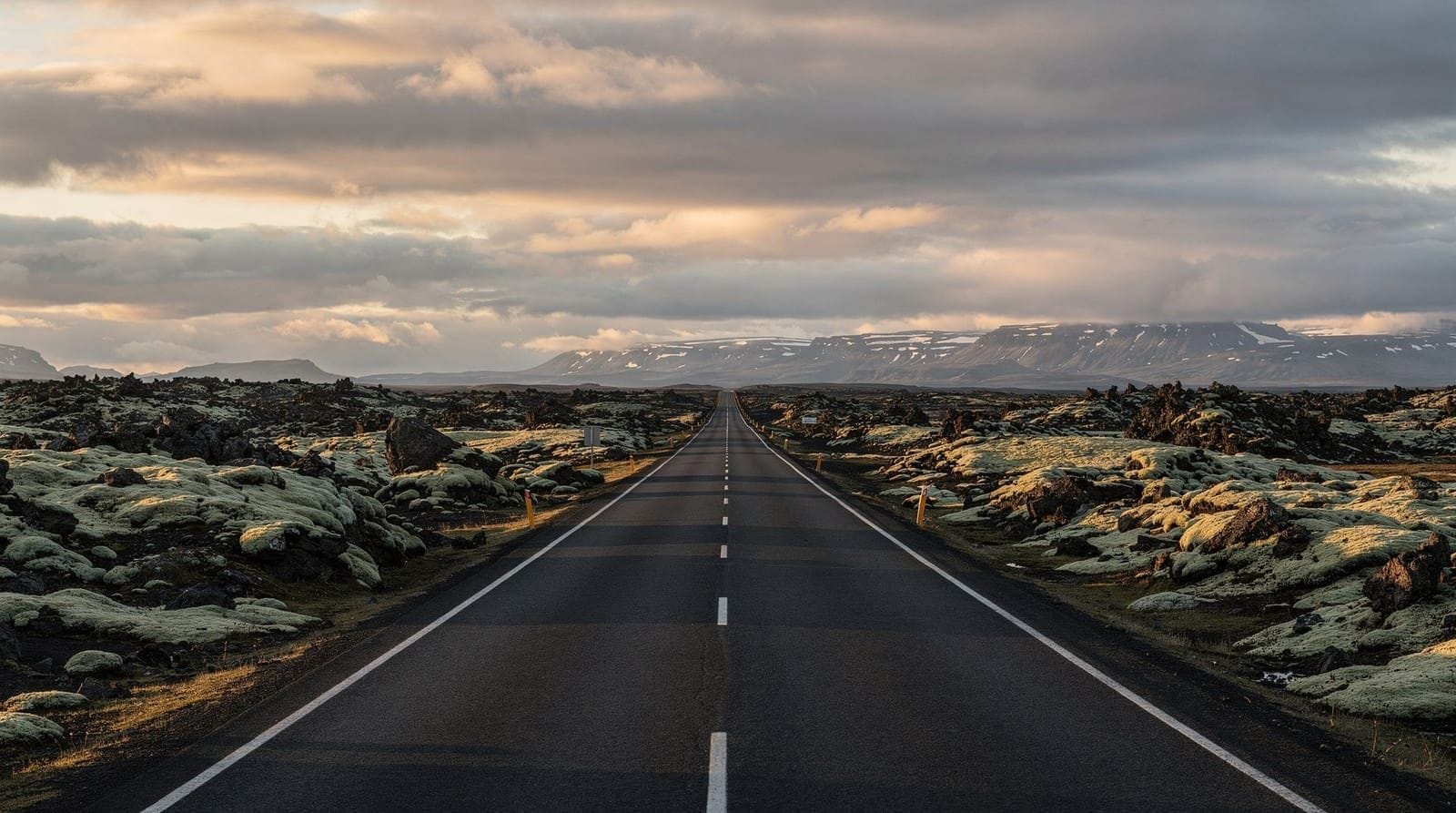
All roads paved. 2WD adequate in summer. Winter tyres legally required November–March.
Day 1: Reykjavík to Vík — the waterfalls
Depart Reykjavík: 08:00
Follow Route 1 east. The South Coast waterfalls come in sequence over the first 200 km.
Seljalandsfoss (09:15–10:15)
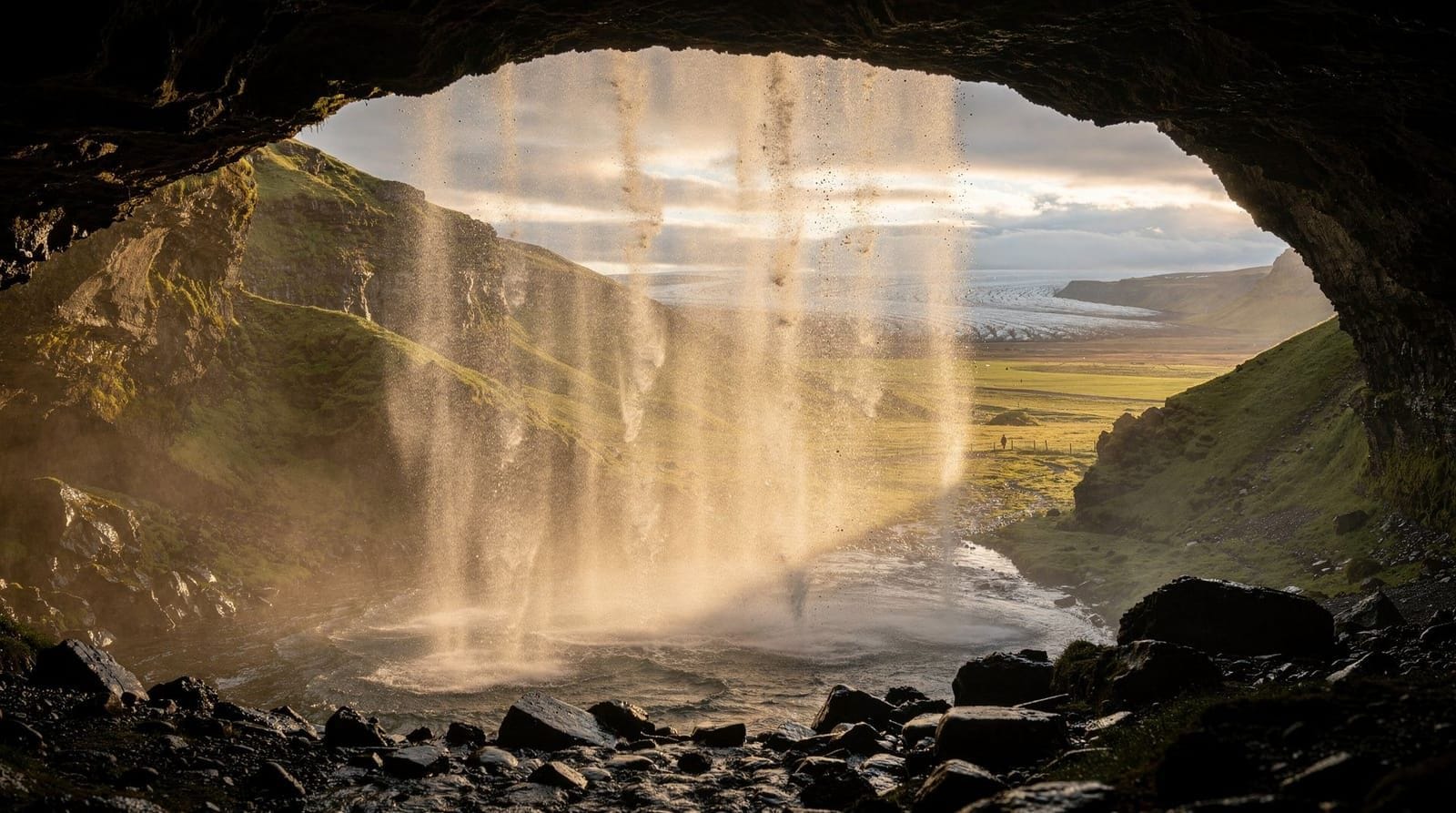
Seljalandsfoss is the behind-the-falls waterfall — a path circles the falling water curtain through a hollow in the cliff. Open roughly May to October; iced in winter. Gear needed: full waterproofs. The adjacent Gljúfrabúi gorge waterfall (200 m north of the car park, hidden inside a rock gap) is worth the extra 15 minutes.
Car park fee: 900 ISK (€6). Allow 60 minutes for both falls.
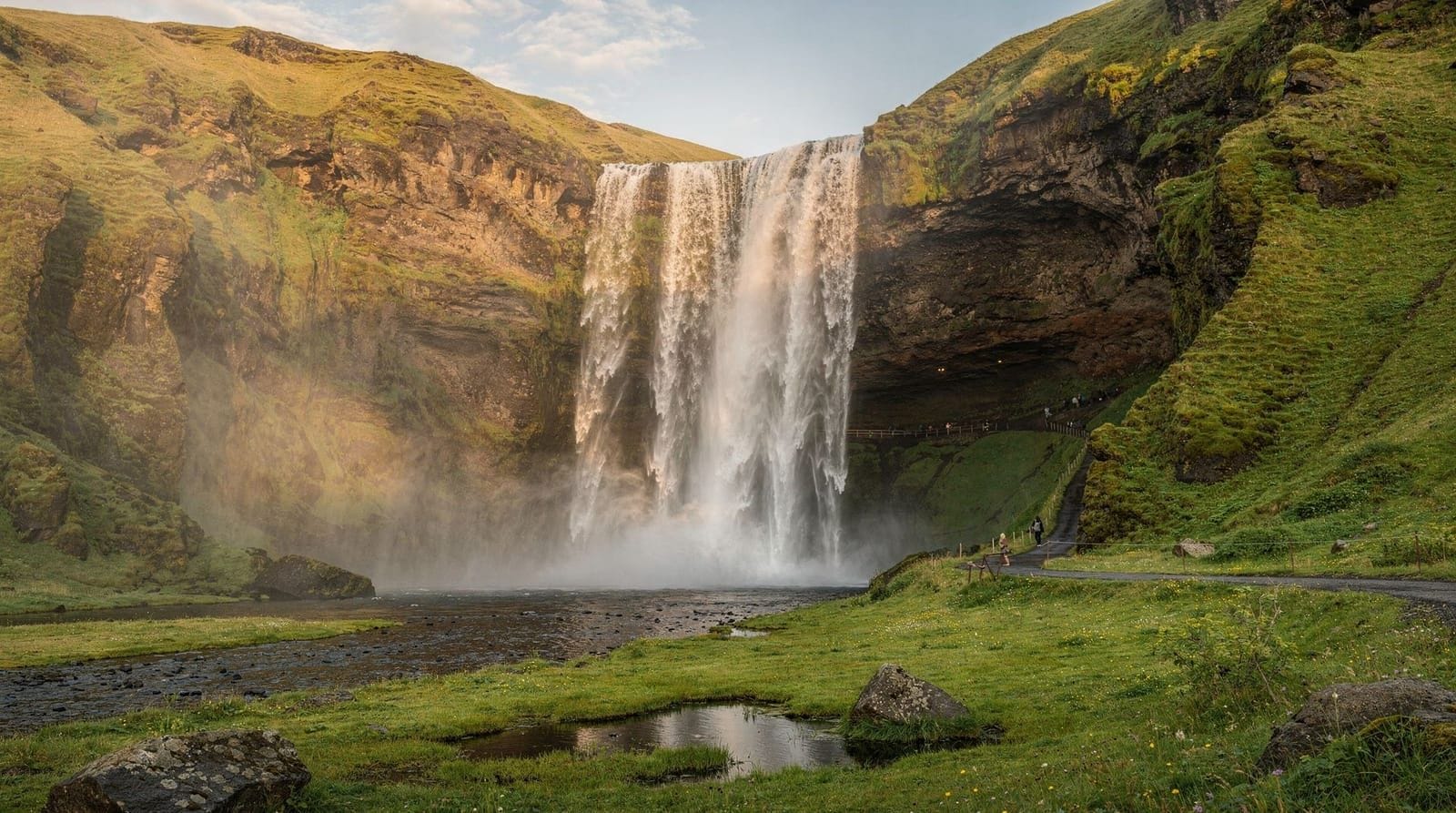
Skógafoss (10:45–11:45)
Skógafoss is 40 km further east — a wide high-volume waterfall with a staircase of 430 steps to the top. The upper viewpoint overlooks the Skóga valley and the Fimmvörðuháls ridge. Allow 60 minutes to climb the steps and return.
Lunch in Vík (12:30)
Vík í Mýrdal is 188 km from Reykjavík — the southernmost village in Iceland, with a population of around 500. Suður-Vík restaurant on the main road does solid lamb soup and fish dishes (mains 2,500 ISK / €16). Halldórskaffi has better coffee and baked goods.
Check in to your accommodation before heading to Reynisfjara.
Reynisfjara and Dyrhólaey (13:30–16:00)
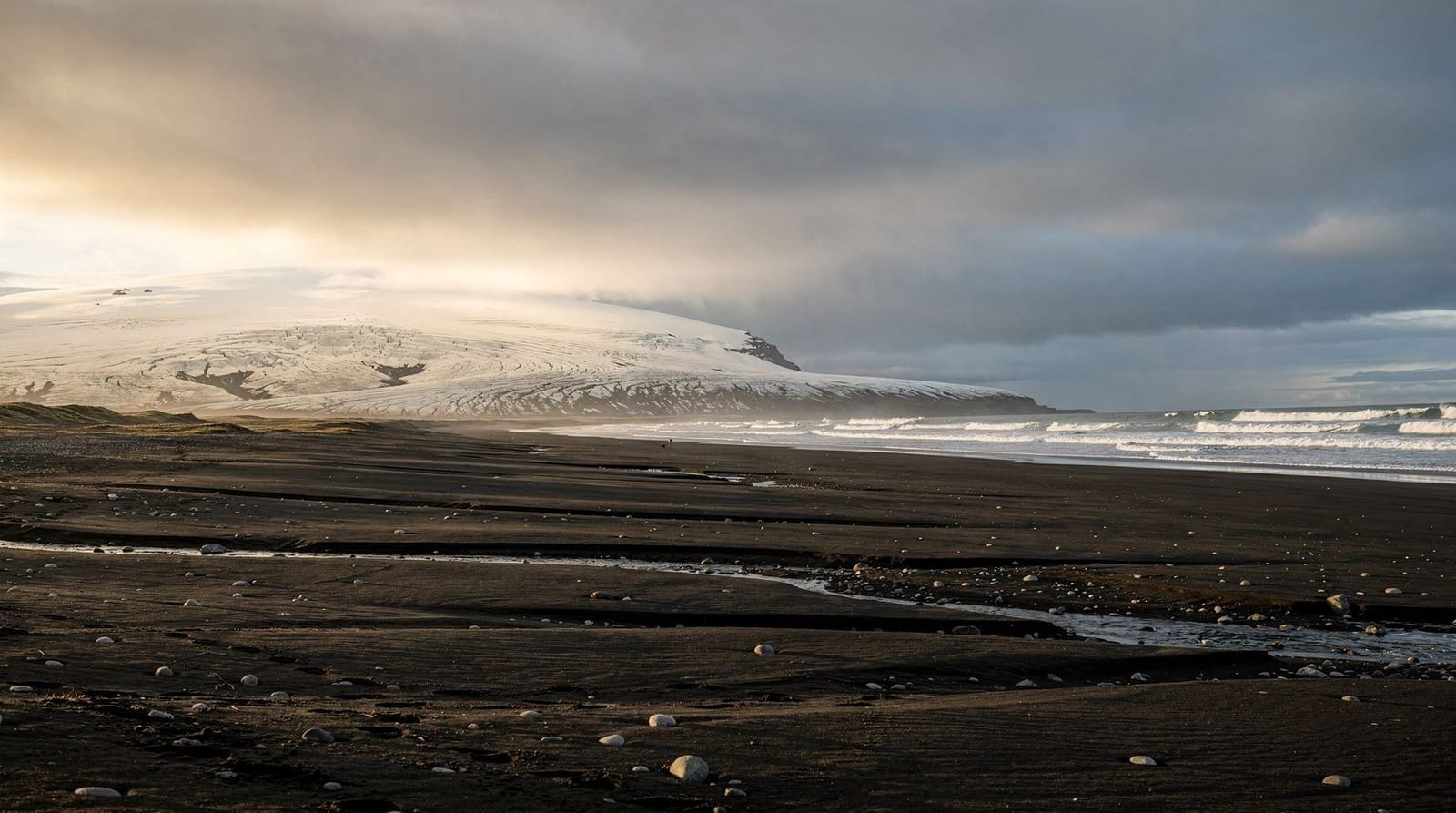
Reynisfjara black sand beach is 8 km south of Vík on Route 215. The basalt column cave at the east end is the main draw beyond the beach itself. Wave safety is serious here — stay 30 m from the waterline, never turn your back on the sea. Fatalities have occurred.
Dyrhólaey is a basalt headland 7 km west of Vík — the lighthouse at the top gives panoramic views. Puffins nest here in summer (access restricted May 1–June 25; open after late June).
Accommodation in Vík:
- Hótel Kría: the main Vík hotel, ocean views, good breakfast. From 25,000–35,000 ISK (€163–228)
- Black Beach Suites: design suites with direct beach view, slightly outside the village. From 30,000–40,000 ISK (€195–261)
- Icelandic Farm Holidays at Höfðabrekka: 10 km east of Vík, working farm guesthouse with glacier views, genuinely good breakfast. From 18,000–24,000 ISK (€117–157)
Book 2–3 months ahead for summer.
Day 2: Sólheimajökull glacier hike
The glacier hike day — plan around the tour departure time
Sólheimajökull is a glacier tongue of Mýrdalsjökull, 18 km north of the Ring Road between Seljalandsfoss and Skógafoss. The access road is Route 221, signed from Route 1.
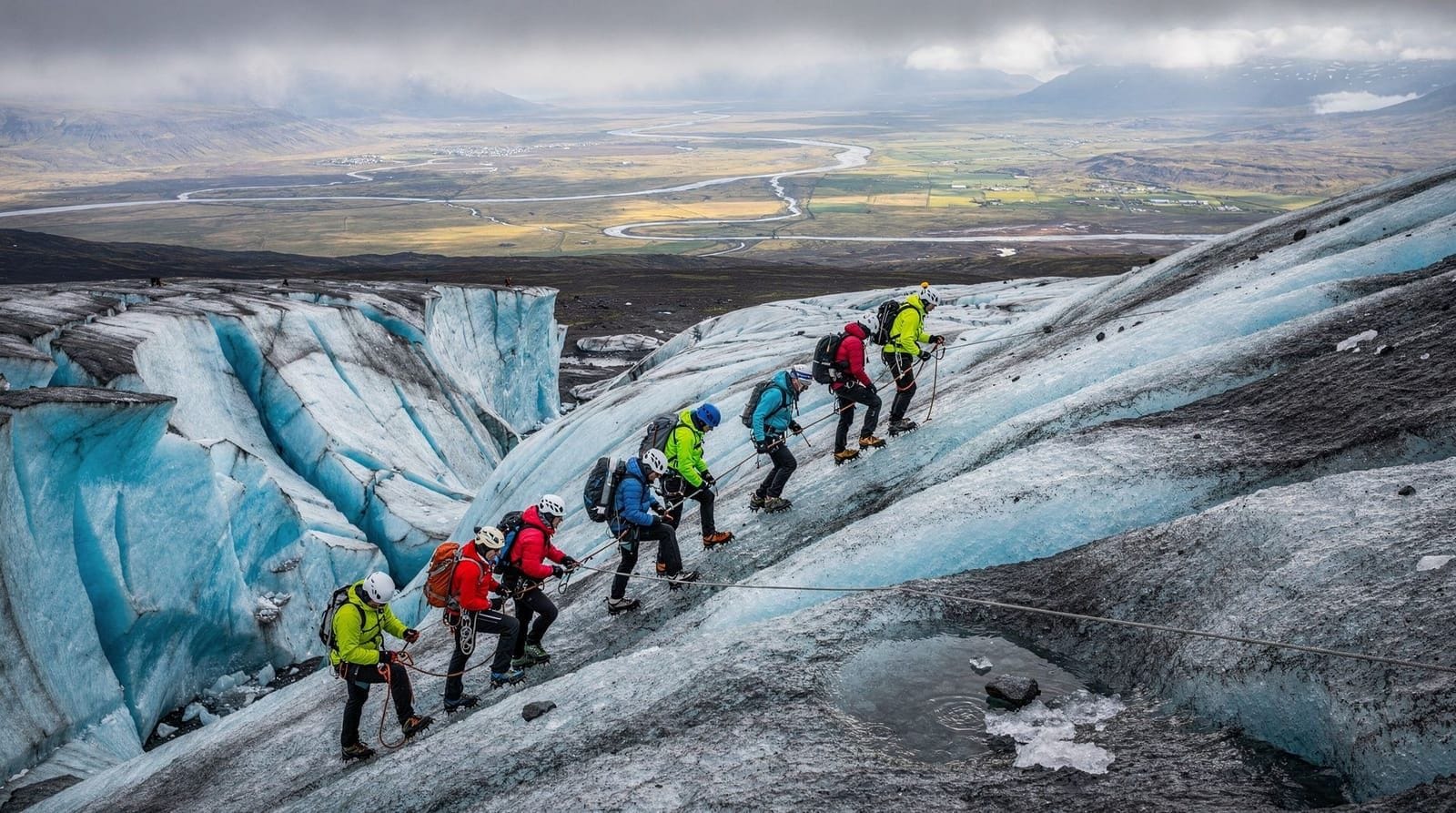
Sólheimajökull glacier hike from Reykjavík — guided 3-hour walk on blue ice and crevasses, crampons and helmet included, small groupIf departing from Vík: tours depart from the glacier car park directly. Drive from Vík to the glacier car park (~25 km west, 25 minutes). Tours operating from the glacier include options with Troll Expeditions, Icelandic Mountain Guides, and Arctic Adventures. All provide crampons, helmets, and ice axes. Duration: 3–4 hours for a standard guided walk.
What to expect on the glacier: Sólheimajökull has retreated significantly in recent decades — the moraine lake at the base of the glacier exists only because the ice has pulled back. The glacier surface is a mix of grey ice (ash-covered from eruptions), deep blue ice in crevasse walls, and in some areas remarkably clear ice. A 3-hour guided hike covers the accessible glacier margin; longer tours can go deeper onto the ice.
Honest note about the glacier’s condition: Sólheimajökull is receding fast — about 35 metres per year. The glacier you see today is smaller than the one photographed five years ago. This is not a negative selling point — the contrast between the dark moraine and the ice is striking — but it means the glacier will continue to change. The experience is genuine and worth doing.
Tour timings: most standard glacier hikes depart 10:00 or 14:00. A morning hike from the glacier car park (not Reykjavík) allows time for other activities in the afternoon.
After the glacier hike:
Return to Vík. The afternoon is free — options:
- Walk the Víkurkirkja church hill above the village: 15-minute climb, views over the black beach and coast
- Drive to Þakgil valley (14 km north of Vík on a gravel road): a dramatic gorge and mountain valley that most South Coast visitors miss entirely. Good hiking and a campsite in a hidden valley. Drive is suitable for 2WD in good conditions.
- Rest and early dinner — you’ve been on ice all morning
Dinner in Vík: the options are limited to Suður-Vík and Halldórskaffi. Suður-Vík is better for a full dinner.
Day 3: Jökulsárlón, ice cave, and Diamond Beach
Depart Vík: 07:30
This is the longest driving day — 190 km to Jökulsárlón, with stops, then ice cave in the afternoon.
Fjaðrárgljúfur canyon (08:30)
30 km east of Vík, turn south on Route F206 (gravel, 2WD suitable in summer). The canyon is 100 m deep with dramatic eroded walls. A 30-minute walk along the rim is sufficient. Often empty before 09:00.
Skaftafell and Vatnajökull National Park (09:30–11:30)
Skaftafell is the main access point for Vatnajökull National Park. The visitor centre has good glacier exhibits. From the car park (750 ISK / €5 per vehicle), the walk to Svartifoss waterfall is 3 km return through birch forest, with the hexagonal basalt columns at the falls worth the effort.
If you want a second glacier hike, Skaftafell has guided glacier hikes on Falljökull and Skaftafellsjökull — these are operated by local guide companies from the visitor centre area.
Jökulsárlón glacier lagoon (12:00–13:30)
Jökulsárlón is the glacier lagoon where icebergs calve from Breiðamerkurjökull and float in the lake. The boat tour is the best way to understand the scale.
Jökulsárlón amphibious boat tour — 40 minutes among the icebergs, guide explains the glacier system and the age of the iceThe lagoon has grown significantly in recent decades as Breiðamerkurjökull recedes — it is now 25 km2 and up to 248 m deep. The contrast between the blue-white icebergs and the dark water is consistent regardless of weather.
Lunch at Jökulsárlón café: soup and sandwiches, reasonable quality. Or bring supplies from Vík.
Diamond Beach (13:30–14:15)
Diamond Beach immediately south of the bridge — clear ice chunks from the lagoon washed onto the black sand. Walk east along the beach for quieter sections.
Ice cave tour (October–March only, or year-round alternatives)
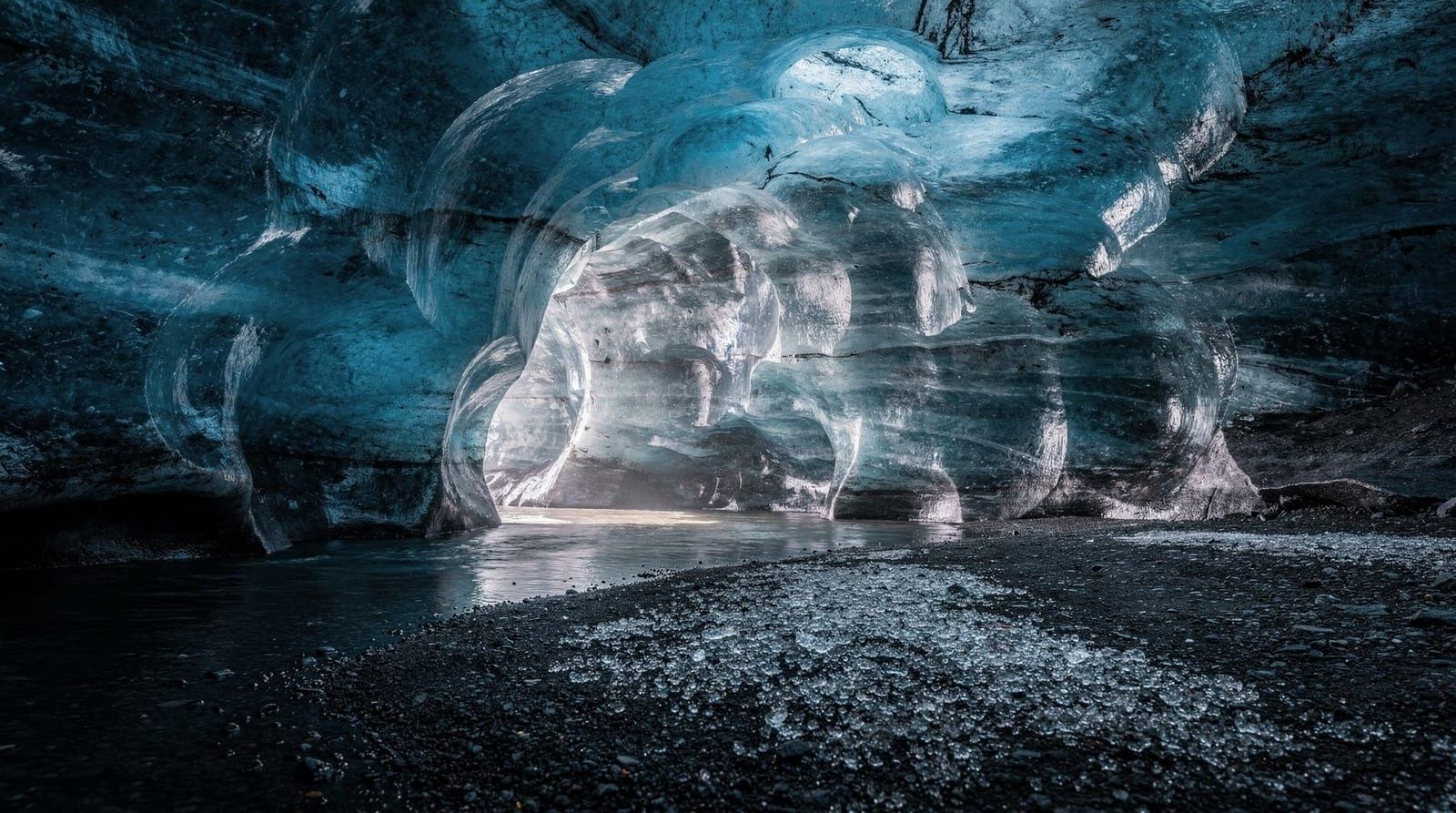
Natural ice caves inside Vatnajökull are only accessible October–March when the ice is stable enough for safe entry. These tours depart from the Crystal Cave meetup point near Jökulsárlón and run from local operators (Glacier Guides, Local Guide, Arctic Adventures). The cave ceilings are luminous blue — the colour comes from compressed ancient glacier ice.
Vatnajökull ice cave guided tour — small group entry into the natural blue ice cave, departing Crystal Cave meetup near Jökulsárlón, October–MarchSummer alternative (April–September): The Katla ice cave under Mýrdalsjökull near Vík is accessible year-round via super-jeep. This is a different experience — a volcanic ice cave with black ash streaks through the ice — and worth doing if natural ice cave season is closed.
Where to sleep after the ice cave:
Option A — Stay near Jökulsárlón:
- Fosshotel Glacier Lagoon (adjacent to the lagoon): the most convenient option. From 35,000–50,000 ISK (€228–326) in summer — expensive but logistics are excellent for an early ice cave tour
- Hali Country Hotel (10 km west of Jökulsárlón): a working farm with guest rooms and excellent lamb on the menu. From 28,000–38,000 ISK (€182–248)
Option B — Return to Vík (not recommended on Day 3): adds 190 km of driving after an ice cave tour — exhausting.
Day 4: Return to Reykjavík
Depart near Jökulsárlón: 09:00
The 375 km return along Route 1 takes approximately 4h30–5 hours without stops. Allow 6–7 hours with stops.
Suggested stops on the return:
- Skógafoss (if you want the staircase view again, or skipped it on Day 1)
- Seljalandsfoss (different light on return, and less crowded mid-afternoon)
- Reykjadalur hot river near Hveragerðí: a natural hot spring river accessible via a 3 km uphill hike from the car park. Bring a swimsuit. The river is warm enough to bathe in for about 600 m. This is a good stop on the return — 45 km east of Reykjavík, a genuine geothermal experience without tourist infrastructure.
Arrive Reykjavík: 15:00–16:00.
If your flight is the next morning, this is a good structure. If you fly the same evening (18:00+), the Reykjadalur stop is possible but tight.
Gear notes for the glacier hike
- Waterproof outer layer (jacket and trousers) — provided by some tour operators, bring your own to be sure
- Warm mid-layer — glacier temperatures are 5–8°C lower than coastal temperatures
- Sturdy ankle-support boots — crampons clip over boots; soft shoes do not work
- Sunglasses on clear days — glacier glare is intense
- Crampons, ice axe, and helmet: provided by all reputable tour operators — do not bring your own unless you’re an experienced mountaineer
All reputable operators provide full glacier kit. Do not book with any operator that does not include crampons and a guide.
Extending this itinerary
If four days still feels rushed, or if the glacier and ice cave experiences leave you wanting more time in the region, two extensions fit naturally onto the end of this route. Continuing east from Jökulsárlón into Höfn and the East Fjords picks up where the ring road itineraries begin their eastern section — a natural way to turn this into a longer loop rather than backtracking the same 375 km twice. Alternatively, travellers focused specifically on glaciers and ice can add a day around Skaftafell for a second, different glacier hike (see the comparison below) before continuing to Jökulsárlón, effectively turning Day 3 into two calmer days instead of one long one.
Frequently asked questions about this 4-day Iceland itinerary
When is the best time for the ice cave?
October to March for natural ice caves inside Vatnajökull. The peak months are November–February when the ice is most stable and the caves are at maximum depth. The Katla ice cave is accessible year-round. See the ice caving in Iceland guide for full seasonal breakdown.
Can I do the glacier hike without a guide?
No. Walking on a glacier without crampons and a guide is dangerous due to crevasses, unstable ice edges, and hidden meltwater channels. All reputable glacier hikes are guided. Independent access to the glacier is not permitted at Sólheimajökull.
Is this itinerary manageable in winter?
Yes, with adjustments. Winter driving requires winter tyres (legally mandatory November–March), more conservative driving speeds, and checking road.is daily. Seljalandsfoss behind-the-falls path is often closed due to ice in December–March. Jökulsárlón in winter has partially frozen sections and ice-encrusted bergs — visually distinctive. The ice cave is only available in winter. See the Iceland in winter driving guide for full logistics.
What is the Katla ice cave?
Katla is a subglacial volcano under Mýrdalsjökull, near Vík. The ice cave accessible from Vík is formed by geothermal heat — meltwater carved tunnels through the ice. The resulting cave has dramatic black ash layers within the ice walls, giving it a distinctive appearance different from the pure blue-white of Vatnajökull ice caves. It is accessible year-round (unlike natural Vatnajökull caves) and less crowded. See the Katla ice cave guide for details.
How difficult is the Sólheimajökull glacier hike?
The standard 3-hour tour is rated easy-moderate. The terrain is uneven ice with crampons — it requires balance and some physical effort but no technical climbing skills. The most challenging aspect is the initial 20-minute walk from the car park across the moraine (loose rock and gravel). Minimum age varies by operator (usually 8–10 years). See the Sólheimajökull glacier hike guide for full details.
Is Höfn worth an overnight stop?
Yes, if you’re extending to a 5-day trip. Höfn (75 km east of Jökulsárlón) is known for langoustine fishing and has good restaurants. Staying in Höfn on Day 3 allows a more relaxed Day 4 return and adds Stokksnes peninsula (a remarkable beach with Vestrahorn mountain as backdrop) as a morning stop before driving back. This leads naturally to the ring road itineraries.
How is this different from the 3-day South Coast itinerary?
The route is identical — same waterfalls, same beach, same lagoon — but this version adds a full extra day dedicated to the Sólheimajökull glacier hike and gives the ice cave / Vatnajökull section more breathing room on Day 3 rather than squeezing it into a single long day. If a hands-on glacier experience is not a priority, the 3-day South Coast itinerary covers the same scenic highlights in less time and at lower cost.
What if the glacier hike or ice cave tour gets cancelled?
Glacier tours occasionally cancel for high winds or unstable ice conditions, more often in winter. Reputable operators rebook or refund rather than simply cancelling outright — confirm the policy when booking. If a Day 2 glacier hike cancellation happens with no same-day rebooking slot, Þakgil valley (described above) is a solid fallback that does not require pre-booking. If the ice cave tour on Day 3 cancels, the Katla ice cave near Vík is a year-round back-up that does not depend on natural cave stability in the same way.
The glacier hiking market — who to book with
Iceland’s glacier hiking market has consolidated around several reliable operators. All legitimate operators are members of the Icelandic Association for Search and Rescue (ICE-SAR) and certified through Safe Travel Iceland.
Reputable companies for Sólheimajökull: Troll Expeditions, Icelandic Mountain Guides, and Arctic Adventures all operate from the glacier car park. Prices for a standard 3-hour hike are comparable: 10,000–12,000 ISK (€65–78) per person. Small groups (max 12–16) are standard.
What to look for when booking: clear statement that crampons and ice axe are included; certified guide with wilderness first aid training; maximum group size; cancellation policy (weather cancellations are uncommon on Sólheimajökull but occur; a refund or re-schedule policy is standard with good operators).
What to avoid: any operator offering glacier access without a guide, or at a significantly lower price than the market rate. There are a handful of companies offering “glacier walks” that are actually moraine walks to the glacier edge without actual ice access — read descriptions carefully.
Vatnajökull National Park — scale and context
Vatnajökull National Park is the largest national park in Europe and the second largest in the world outside Antarctica and Greenland. The Vatnajökull glacier itself covers 7,900 km2 and reaches depths of 900 m. To put this in context: the glacier contains more ice than all the glaciers of continental Europe combined.
Skaftafell and the Jökulsárlón lagoon are both within the national park’s boundaries. The visitor centre at Skaftafell has the best free exhibition on glacier geology and the environmental changes that have reduced Vatnajökull by approximately 10% of its volume since 1890.
The Vatnajökull glacier has outlet tongues (separate glacier extensions flowing from the main ice cap) that are individually accessible — Skaftafellsjökull, Falljökull, Svínafellsjökull (visible from the Ring Road near Skaftafell), and Breiðamerkurjökull (the source of Jökulsárlón). Each has a different character and level of accessibility.
Guided tours on Vatnajökull: more serious glacier tours, including snowmobile rides on the main ice cap and multi-day glacier traverse expeditions, are available from Skaftafell. These require advance booking and appropriate fitness. The Iceland self-drive guide has more detail on planning glacier excursions within a longer self-drive trip.
Which glacier hike suits you
Both Sólheimajökull and Skaftafell’s outlet glaciers offer guided walks, but they are not interchangeable choices — pick based on where your trip naturally overnights.
| Sólheimajökull (Day 2) | Skaftafell glaciers (Day 3, optional) | |
|---|---|---|
| Access | 25 minutes from Vík | Within Vatnajökull National Park, on Day 3 route |
| Character | Ash-darkened surface, dramatic crevasse walls | Cleaner ice, national park setting, Svartifoss nearby |
| Typical duration | 3 hours | 3–5 hours depending on operator |
| Best if | You are basing two nights in Vík | You want to combine it with Skaftafell’s other sights |
Doing both is possible but demanding — most travellers get more value from choosing one and using the saved time for Þakgil, Fjaðrárgljúfur, or a slower Jökulsárlón visit instead.
Top experiences
Bookable activities with verified prices and instant confirmation on GetYourGuide.