Ring Road in 7 days — Iceland's classic first loop itinerary
Southern Region Iceland: Journey around Iceland 7 day Circle tour
Duration: 7 days
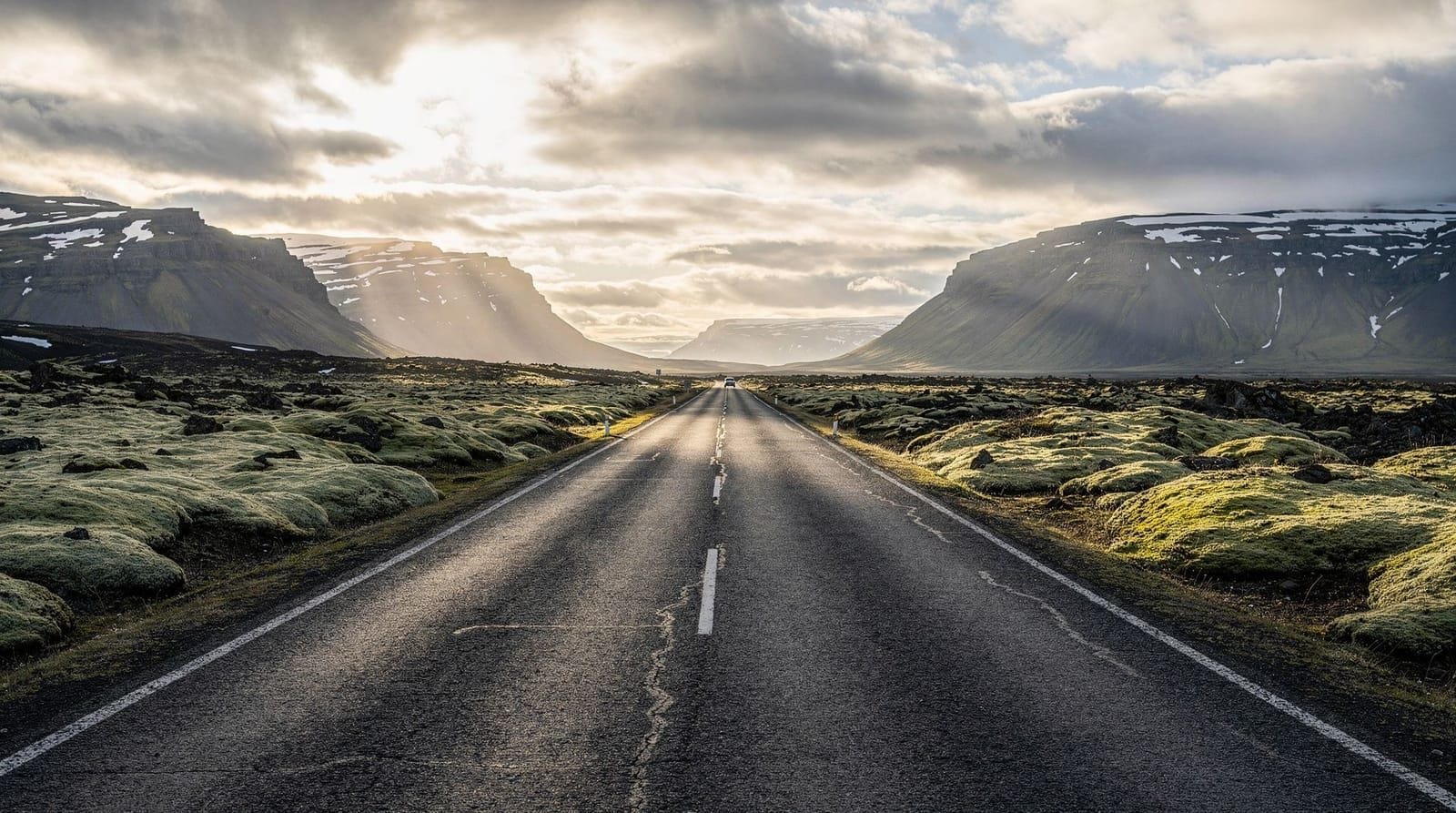
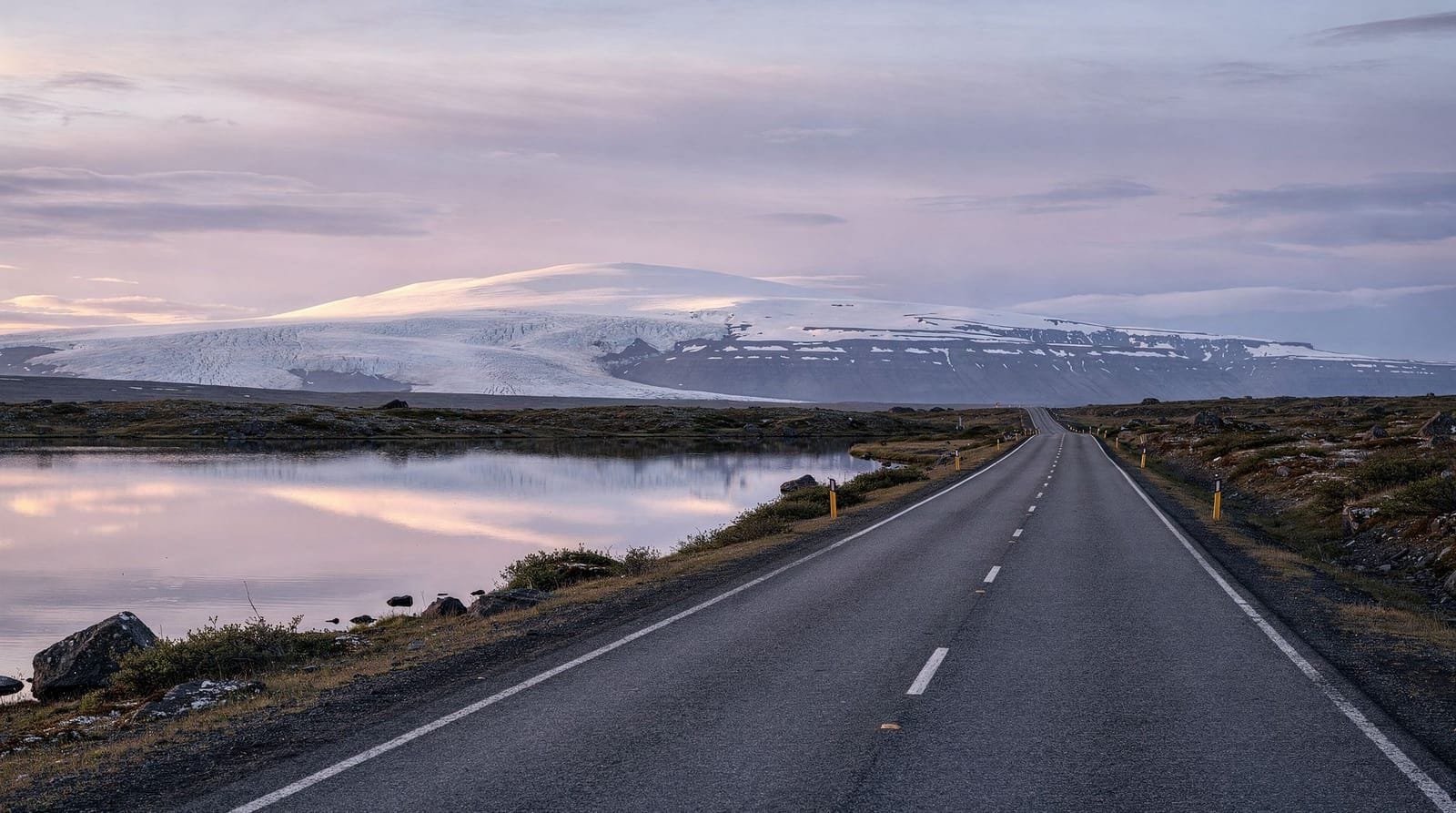
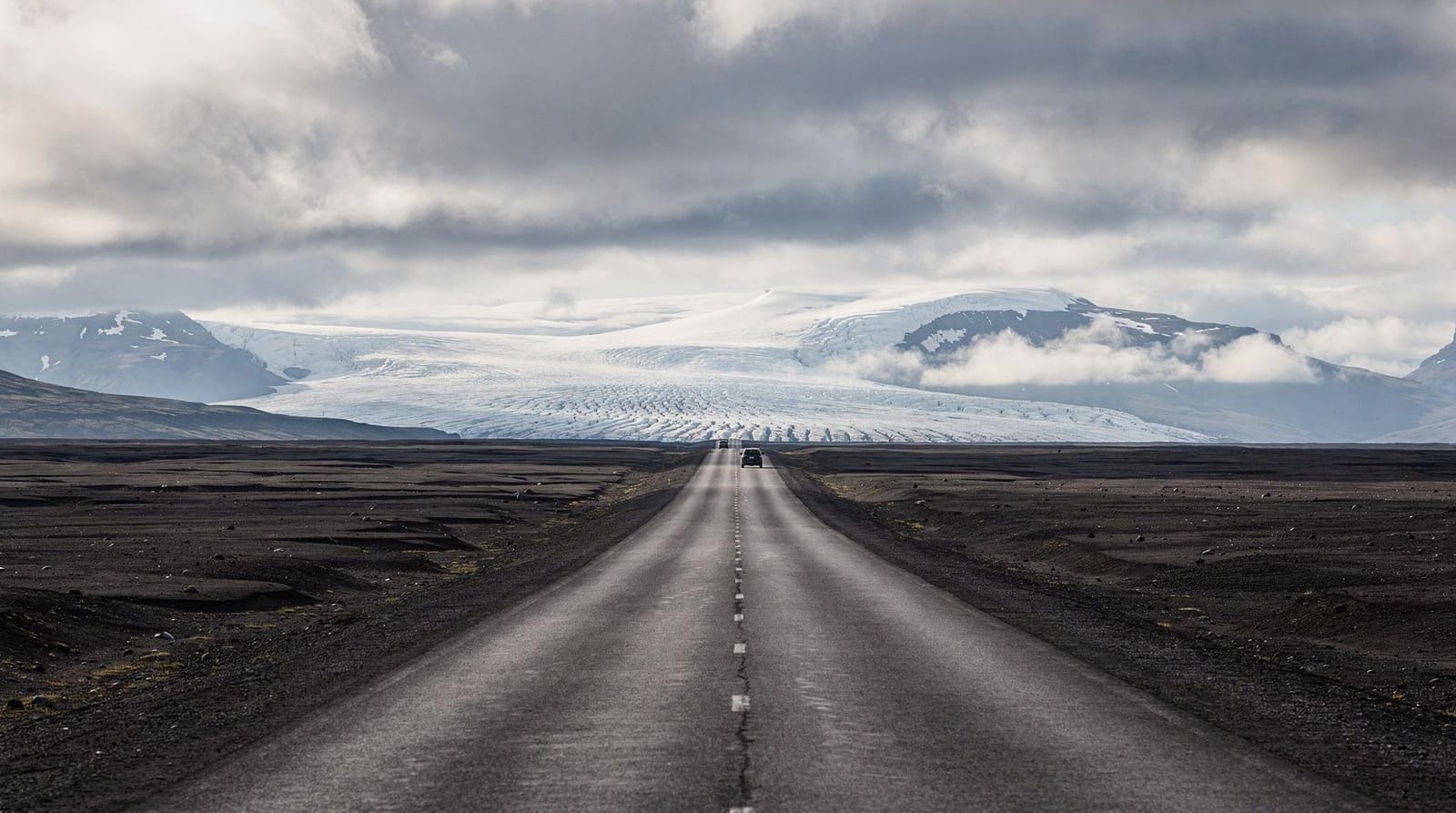
Iceland’s Ring Road (Route 1) is 1,322 km long. Seven days is enough to complete the circuit, see the essential sites, and understand the scale and variety of the country — provided you are honest about what “seven days” actually means on this route.
This itinerary does not try to fit everything in. It prioritises depth over coverage. Seven days at a reasonable pace leaves you with genuine memories of specific places; seven days of maximum coverage produces a list of GPS coordinates.
| Total distance | 1,322 km circuit, 220–280 km/day with detours |
| Car needed | 2WD hatchback, summer only — see car rental notes below |
| Cost per person (mid-range) | around 350,000–460,000 ISK for 7 days |
| Book ahead | Whale watching, glacier hike add-ons, all summer accommodation |
| Best months | June–August for full access; shoulder months need a 4x4 |
What seven days on the Ring Road realistically covers
The Ring Road has four distinct sections:
- South Coast (Reykjavík to Höfn): 460 km, mostly paved flat road, highest concentration of stops
- East Fjords (Höfn to Egilsstaðir): 270 km, winding coastal roads, quieter
- North Iceland (Egilsstaðir to Akureyri): 270 km, includes Mývatn and Goðafoss
- Return west (Akureyri to Reykjavík): 390 km, with optional Golden Circle
Seven days allows roughly one day per section plus dedicated time at the highest-priority sites. The trade-offs: the East Fjords get one night maximum; the Westfjords are not on the Ring Road and require a separate trip.
Honest caveat about Ring Road distances: driving 1,322 km over 7 days averages 189 km per day. That is achievable — but only if you account for the fact that the East Fjords section (Höfn to Egilsstaðir, 270 km) takes 4 hours due to the winding fjord road, not 2h30. See the Ring Road guide for driving time specifics.
Car rental notes
For 7 days, a standard 2WD hatchback (Toyota Yaris class) is adequate if you stay on paved roads and skip the Highlands. A 4WD is necessary only for F-roads (Highland tracks). Budget: 12,000–20,000 ISK (€78–130) per day including CDW insurance. Book well in advance for summer; demand is high June–August.
Day 1: Reykjavík to Vík (188 km, 2h30 driving)
Depart Reykjavík: 08:00
Drive Route 1 east along the South Coast.
Stops:
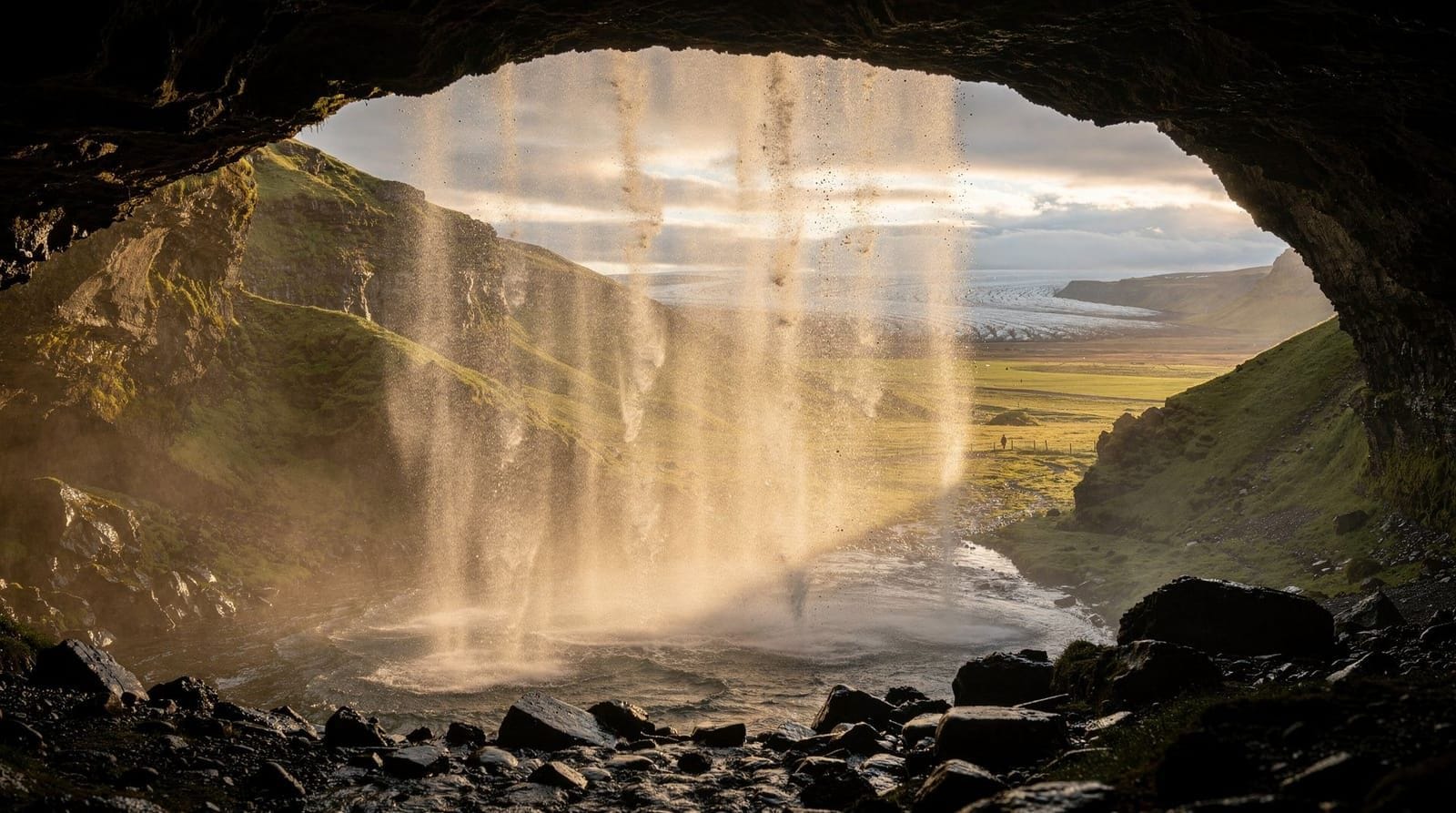
- Seljalandsfoss (09:15, 1 hour): waterfall with behind-the-falls path, plus hidden Gljúfrabúi gorge falls
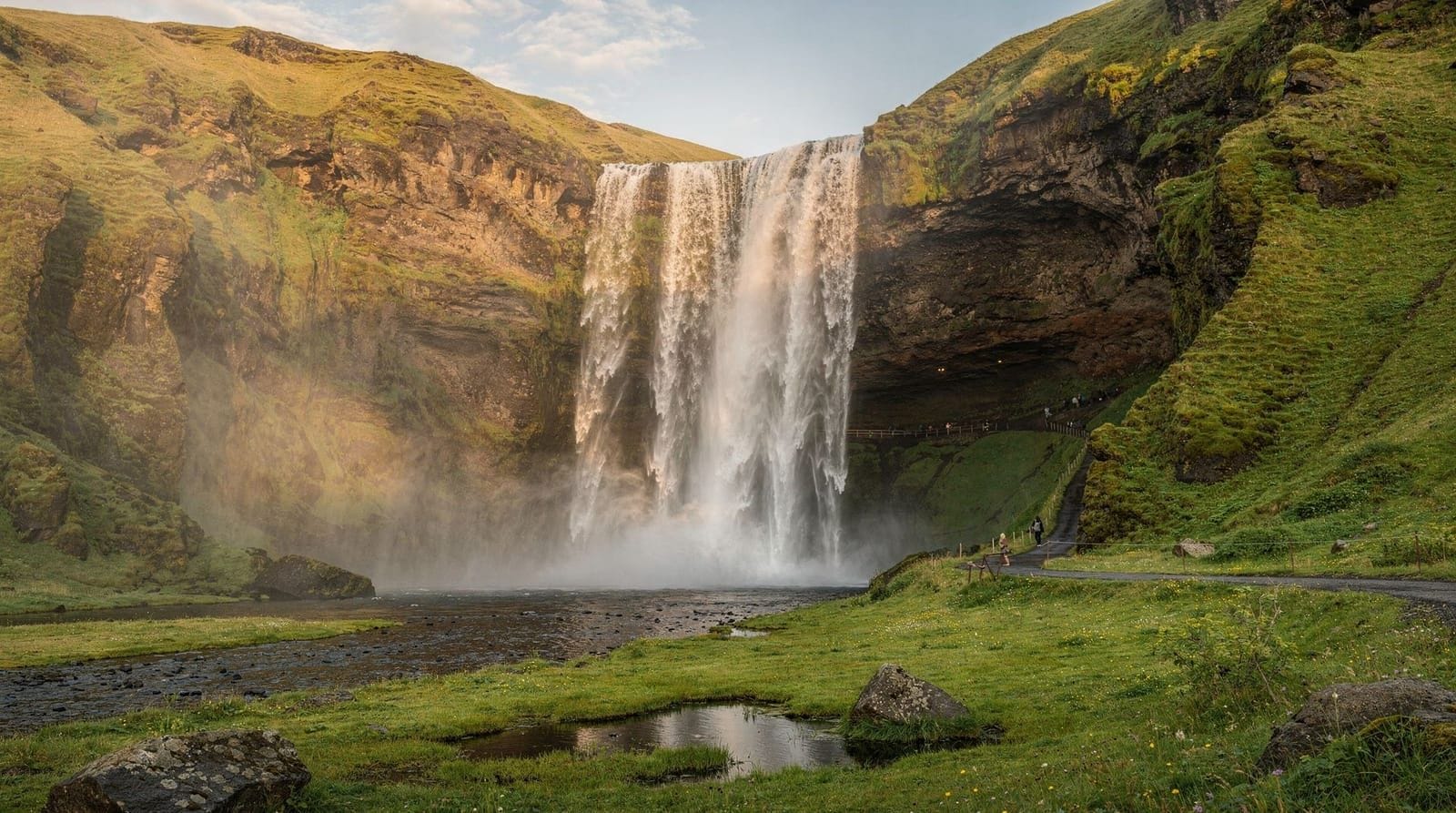
- Skógafoss (10:45, 1 hour): wide powerful waterfall, 430-step staircase to top
- Reynisfjara (13:00, 45 minutes): black sand beach with basalt columns — wave safety essential
- Dyrhólaey (14:15, 45 minutes): basalt headland and sea arch, lighthouse viewpoint
Arrive Vík: 15:30
Sleep: Hótel Kría (Vík, from 25,000 ISK) or Black Beach Suites (from 30,000 ISK). Book months ahead for summer.
Fuel: Fill up in Vík at the N1 station.
Day 2: Vík to Höfn (270 km, 3h15 driving)
Depart Vík: 08:30
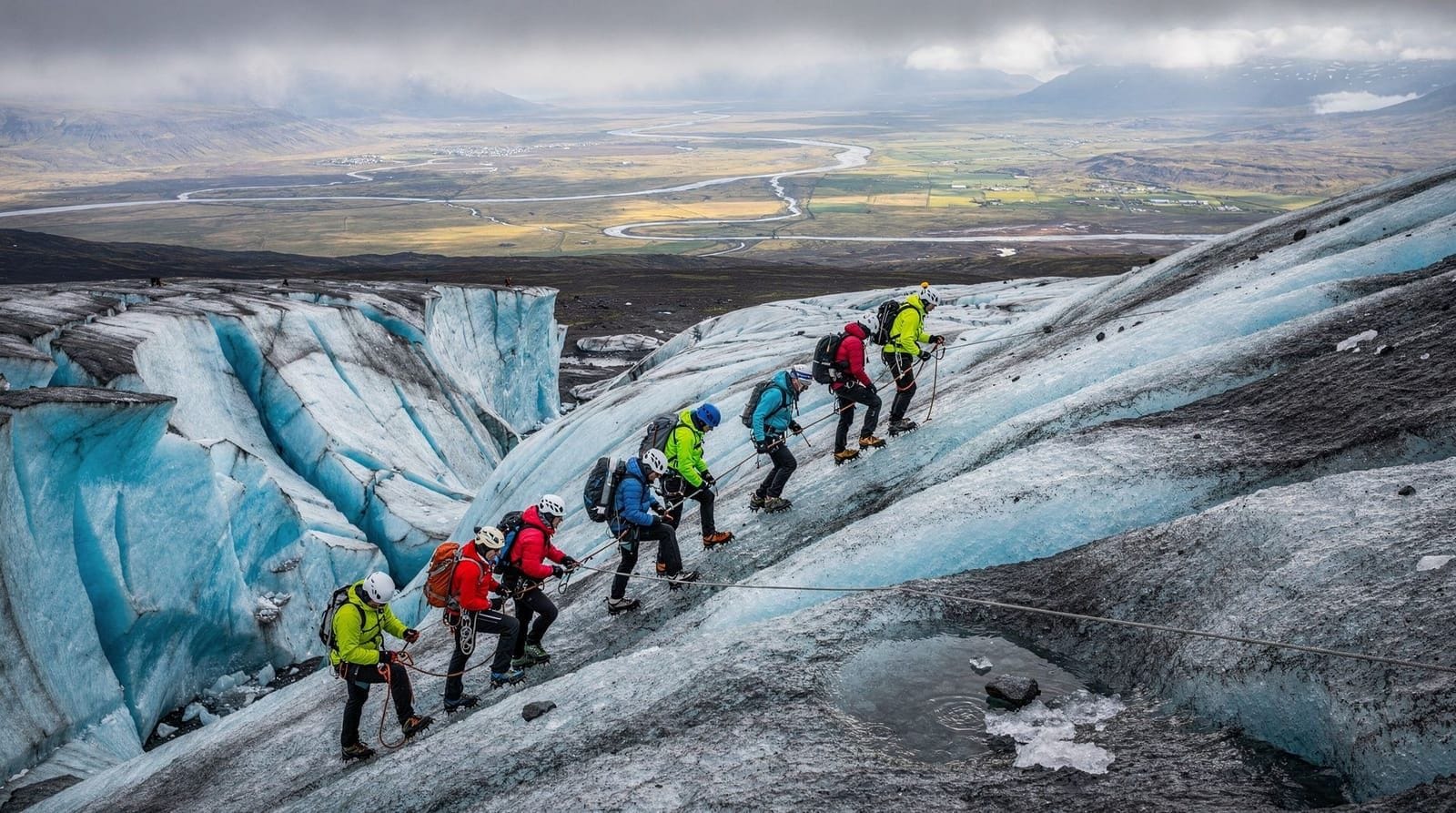
South Coast and glacier hike — if you want to hike Sólheimajökull on the first day, join a guided glacier hike in the morning before continuing eastStops:
- Fjaðrárgljúfur canyon (09:30, 45 minutes): 100 m deep canyon via Route F206, 30 km east of Vík. Gravel road, 2WD suitable
- Kirkjubæjarklaustur (10:30, 30 minutes): fuel, coffee, optional Systrafoss waterfall (10-minute walk)
- Skaftafell / Vatnajökull National Park (11:30, 2 hours): Svartifoss waterfall walk (3 km return), glacier views
- Jökulsárlón (14:00, 1.5 hours): glacier lagoon boat tour, walking the shoreline
- Diamond Beach (15:30, 45 minutes): ice chunks on black sand, immediately south of the bridge
Arrive Höfn: 17:30
Höfn dinner: The town is Iceland’s langoustine capital. Pakkhús restaurant (Krosseyjarvegi 3) does the best langoustine in a region that takes them seriously — mains 4,000–6,500 ISK (€26–42).
Sleep: Fosshotel Vatnajökull (Route 1, east of Höfn, from 30,000–40,000 ISK), or Milk Factory guesthouse (in Höfn town, budget-friendlier, reliable), from 20,000–28,000 ISK (€130–182).
Day 3: Höfn through the East Fjords to Egilsstaðir (270 km, 4h driving)
Depart Höfn: 09:00
The East Fjords section is Iceland’s most beautiful drive and its least visited major region. Route 1 follows the coast through a series of fjords, with small fishing villages at the bottom of each one.
Stops:
- Stokksnes peninsula (10 km east of Höfn): a spit of black sand with Vestrahorn mountain as backdrop — genuinely cinematic landscape. Entry fee to the Viking Café landowner: 1,000 ISK (€6.50). Worth it; the mountain-and-beach combination is one of Iceland’s best landscape photographs.
- Djúpivogur (approximately 100 km east of Höfn): a small harbour village with a public art installation (Eggin í Gleðivík — a series of stone eggs by artist Sigurður Guðmundsson). A 15-minute coffee stop.
- Breiðdalsvík or Fáskrúðsfjörður: two fishing villages on the fjord road. Fáskrúðsfjörður (signed in French as “Eskifjörður” — it was a French fishing base in the 19th century) has a surprisingly good history museum. Stop for fuel and lunch if running to schedule.
The fjord road: this section is not fast. Route 1 takes approximately 4 hours to cover 270 km due to the winding coastal road. There are sections with significant ascent and descent. In fog (common on the East Fjords), visibility can be poor. Drive to the conditions.
Arrive Egilsstaðir: 14:00–15:00
Egilsstaðir is a functional hub town rather than a destination. It is, however, the best place to stock up on supplies for North Iceland.
Optional detour: Seyðisfjörður is 27 km east of Egilsstaðir over a mountain pass. A small fjord town with a Norwegian-era painted church, several artist studios, and the ferry terminal for the Denmark/Faroe Islands ferry. The town is lovely and worth a visit if time permits. The pass road can close in bad weather or in winter.
Sleep in Egilsstaðir or Seyðisfjörður: Hótel Aldan (Seyðisfjörður, restored historic building, from 25,000–32,000 ISK / €163–208) is the better option. In Egilsstaðir: Lake Hotel Egilsstaðir (Route 1, from 22,000–30,000 ISK / €143–195).
Day 4: Egilsstaðir to Akureyri via Mývatn (270 km, 5h with stops)
Depart Egilsstaðir: 08:30
This is the richest single day in terms of sites per kilometre on the Ring Road.
Stops:
- Dettifoss (optional, 2h return from Route 1 via Route 862/864): Europe’s most powerful waterfall by volume — 500 tonnes of water per second during peak flow. Route 862 (west bank, paved) gives the dramatic view. Route 864 (east bank, gravel) is also accessible in 2WD. The 2 km walk to the falls is on flat ground. Allow 2 hours total for the detour.
- Ásbyrgi canyon (optional, 35 km north of Dettifoss): a horseshoe-shaped canyon that Norse mythology attributes to Sleipnir (Odin’s eight-legged horse) touching the ground with one hoof. The canyon floor is a birch forest; the walls are 100 m high. Good walking but adds time.
- Lake Mývatn (12:00, 2 hours): Iceland’s most geothermally active accessible area. The Námafjall geothermal field (boiling mud pools, sulphur vents), the Hverfjall crater (40-minute walk around the rim), and the Dimmuborgir lava formations (45-minute walk through twisted volcanic shapes). The Mývatn Nature Baths (geothermal pool, quieter than the Blue Lagoon, entry around 6,200 ISK / €40) is worth a 1–1.5 hour stop.
- Goðafoss (15:00, 30 minutes): the “Waterfall of the Gods” — Iceland’s most historically significant waterfall. The chieftain Þorgeir Ljósvetningagoði threw his pagan statues into the falls in 1000 AD when Iceland adopted Christianity. The falls are wide and accessible from a short path; the curved horseshoe shape is distinctive.
Arrive Akureyri: 17:00–18:00
Sleep in Akureyri: Hótel Kea (Hafnarstræti 87–89, from 28,000–38,000 ISK / €182–248) is the main city hotel, central location. Gistihúsið Lake Hotel (quieter, 5 km from centre, lake views, from 20,000–26,000 ISK) for a calmer option.
Akureyri dinner: The city (population 20,000 — Iceland’s second largest) has Iceland’s best restaurants outside Reykjavík. Rub23 (Kaupvangsstræti 6) for sushi and Arctic fish; Strikið (Skipagata 14) for traditional Icelandic with harbour views; Bautinn (Hafnarstræti 92) for a cheaper lamb soup and fish lunch option.
Day 5: Akureyri area — whales and exploration
Akureyri day or drive toward the north coast
Husavík is 90 km east of Akureyri and is Iceland’s whale watching capital — the bay has one of the highest year-round concentration of humpback whales in the northern Atlantic.
Húsavík original whale watching — traditional oak boat, high success rate for humpbacks, resident marine biologist, 3-hour tourDepart Akureyri 09:00, drive to Húsavík (1 hour 10 minutes), take the 11:00 whale watching tour (book in advance), return to Akureyri by 15:00.
Or: stay in the Akureyri area
Akureyri itself has good things that a late arrival on Day 4 may have missed:
- Akureyri Botanical Garden (free, open daily): the world’s northernmost botanical garden, with an extensive collection of Icelandic and sub-Arctic plants
- Kjarnaskógur forest (free): Iceland’s largest urban forest, walking trails
- Gamla bíóið cinema (Hafnarstræti 82): Iceland’s oldest operating cinema, shows classic Icelandic films
Sleep night 5: Akureyri again, or begin the drive west toward Blönduós or Varmahlíð.
Day 6: Akureyri to Reykjavík (390 km, 4h30 driving)
Option A — Direct return via Route 1 west
The direct return from Akureyri to Reykjavík along Route 1 west takes 4.5–5 hours without stops. Passing through Blönduós, Borgarnes, and through the Hvalfjörður tunnel or over the fjord road. This is a long but straightforward driving day.
Stops on the direct return:
- Glaumbær folk museum (near Varmahlíð, ~80 km west of Akureyri): one of Iceland’s best preserved turf farm complexes, with 19th-century interiors. Entry ~2,500 ISK (€16). Allow 1 hour.
- Hvammstangi seal colony (Route 711 northwest of Blönduós): Iceland’s largest seal-watching site on the Vatnsnes peninsula. Seals haul out on rocks at Hvítserkur — a dramatic basalt sea stack shaped like a drinking dragon. Takes 1.5–2 hours as a detour.
Arrive Reykjavík: 18:00–19:00
Option B — Return via the Golden Circle (adds 3 hours)
Depart Akureyri early (07:00), drive Route 1 west to Þingvellir, then complete the Golden Circle (Geysir, Gullfoss), arriving Reykjavík in the late afternoon. This turns a driving day into a final full-day experience but requires an early start.
Day 7: Reykjavík and departure
Morning in Reykjavík
If your flight is in the afternoon, the morning is free for any Reykjavík items missed on arrival:
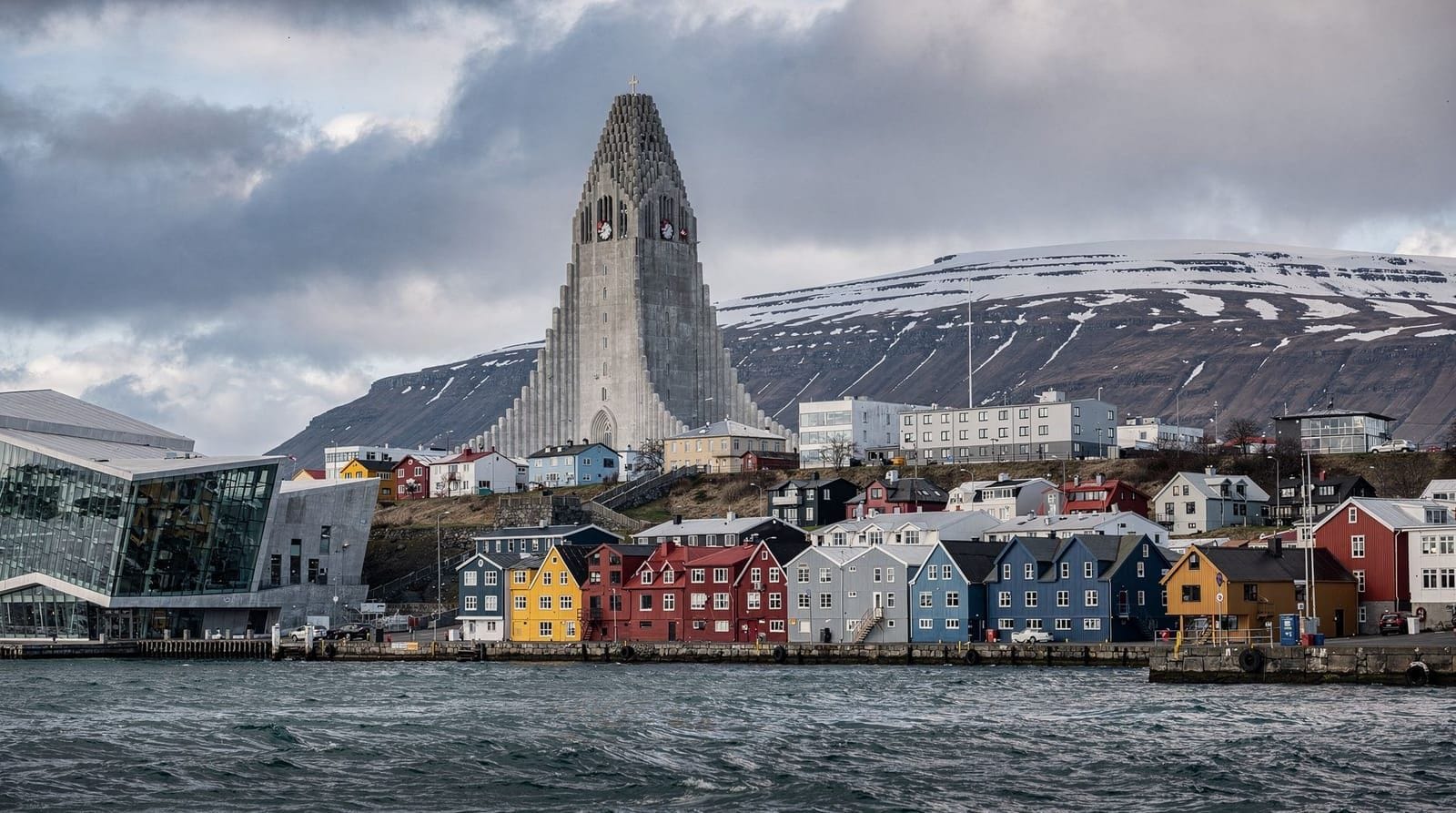
- Hallgrímskirkja tower for final views
- Perlan museum (Öskjuhlíð, entry ~€20): glacier exhibition, aurora simulator, Iceland geology content — genuinely good museum, better than expected
Blue Lagoon on departure:
The Blue Lagoon sits between Reykjavík and Keflavík airport. If flying in the afternoon, a 10:00 or 11:00 entry at the Blue Lagoon, followed by an airport transfer, is the standard departure structure.
Pre-booking is mandatory. Basic entry (Comfort package) with towel, one drink, and silica mask runs 12,900–15,900 ISK (€84–104).
Accommodation summary
| Night | Location | Budget option | Mid-range option |
|---|---|---|---|
| 1 | Vík | Þakgil campsite | Hótel Kría |
| 2 | Höfn | Milk Factory | Fosshotel Vatnajökull |
| 3 | Egilsstaðir/Seyðisfjörður | Campsite | Hótel Aldan |
| 4 | Akureyri | Gistihúsið | Hótel Kea |
| 5 | Akureyri or Blönduós | Campsite | Hótel Kea |
| 6 | Reykjavík | Loft Hostel | Hótel Borg |
Guided vs self-drive Ring Road
Self-driving gives complete control and the ability to stop spontaneously. A guided tour removes logistics but constrains timing and stops.
7-day guided Ring Road tour from Reykjavík — small group, expert guide, accommodation included, all major stops coveredIf logistics (rental car, navigation, accommodation booking) add stress rather than pleasure, a guided tour is a genuinely good option. The best small-group Ring Road tours run with 12–16 people, include a knowledgeable guide, and stay at mid-range accommodation throughout.
Self-drive vs guided tour: real cost comparison
| Self-drive (2 people sharing) | Guided small-group tour | |
|---|---|---|
| Cost per person | around 175,000–230,000 ISK (car, fuel, own pace) | around 350,000–500,000 ISK all-inclusive |
| Flexibility | Full — stop anywhere, change plans daily | Fixed itinerary and stop durations |
| Driving stress | You drive every day, including the East Fjords | None — sit back and let the guide navigate |
| Booking effort | High — car, every hotel, every activity | Low — one booking covers everything |
The honest calculus: self-driving is cheaper and more flexible if you are comfortable navigating unfamiliar roads (including single-lane bridges and gravel spurs) and do not mind the logistics of booking six different hotels. A guided tour costs roughly double per person but removes every planning and driving decision — worth it for travellers without an international licence, without confidence driving in winter conditions, or who simply want a holiday rather than a logistics project.
If you only have time for three photo stops
Every stop on this route rewards a camera, but if a day genuinely runs short, three are worth protecting above all others: Jökulsárlón and Diamond Beach (Day 2) for the icebergs against black sand, unmatched anywhere else on the circuit; Seljalandsfoss (Day 1) for the behind-the-falls angle that few other Icelandic waterfalls allow; and Goðafoss (Day 4) for the wide horseshoe shape and, in clear weather, reflections in the still water below. The Iceland photography guide has stop-by-stop timing advice for shooting each of these in the best light.
Frequently asked questions about this 7-day Iceland itinerary
Is 7 days enough for the Ring Road?
Seven days is the minimum for a meaningful Ring Road experience. You will see the major sites but will need to be selective — you cannot stop everywhere. Ten days is the more comfortable option. See the Ring Road 10-day itinerary for the version with more breathing room.
Should I drive clockwise or counter-clockwise?
Both options are equal in terms of road quality. Clockwise (starting with the South Coast) means you see the highest concentration of sites early in the trip while energy is fresh. Counter-clockwise means arriving at Jökulsárlón from the east in better morning light. See the ring road clockwise or counter-clockwise guide for detailed analysis.
What is the Ring Road total distance?
1,322 km. At an average of 189 km per day over 7 days, this is a comfortable daily distance — but it does not account for detours (Dettifoss, Seyðisfjörður, Húsavík) which add 80–120 km. Budget for actual daily distances of 220–280 km when planning.
What type of car do I need for the Ring Road?
A standard 2WD hatchback is adequate for the entire Ring Road if you stay on paved Route 1. A 4WD is only required if you want to explore F-roads (Highland tracks). See the 2WD vs 4WD guide for details.
How much does the 7-day Ring Road cost?
Approximate budget for one person, mid-range: accommodation 18,000–28,000 ISK per night (€117–182) × 6 nights = 108,000–168,000 ISK; car rental 15,000–20,000 ISK per day = 105,000–140,000 ISK; fuel ~40,000 ISK total; food 10,000–15,000 ISK per day = 70,000–105,000 ISK; activities/entrance fees 30,000–50,000 ISK. Total: approximately 350,000–460,000 ISK (€2,280–2,990) per person for 7 days. See the Iceland cost guide for detailed breakdown.
Is 7 days too rushed compared to 10 or 14 days?
It depends on what you want from the trip. Seven days is genuinely enough for the highlights covered here, but it means one night maximum in the East Fjords and no Westfjords or Highlands. The 10-day itinerary adds a full East Fjords day and a proper Snæfellsnes stop without feeling rushed; the 14-day itinerary adds the Westfjords or Highland F-roads on top of that. If your total holiday is under a week, this itinerary is the honest choice rather than trying to compress the longer routes — but do not expect leisurely mornings.
What if I only have 3-4 days, not 7?
Do not attempt the full circuit. Pick one region and do it properly instead: the South Coast in 3 days or the South Coast and glaciers in 4 days cover the most rewarding stretch of Route 1 without the long East Fjords and North Iceland driving days that a short Ring Road attempt would otherwise cut short.
Can I do the Ring Road in winter?
Yes, but with significant preparation. Winter tyres are legally required November–March. Some sections can close temporarily due to storms. Daylight is limited (4–5 hours in December). The upside: northern lights every clear evening, fewer tourists, lower accommodation prices, and a completely different — often more dramatic — landscape. See the Iceland in winter driving guide.
Road conditions and driving realities
The Ring Road is less straightforward than it appears on a map. Some realities worth knowing before departure:
Single-lane bridges: numerous on the Ring Road, particularly in the east. The rule is that the first vehicle to the bridge has priority — the other yields. They are signed; slow before them.
Livestock on roads: sheep roam free in Iceland from June to August. Collisions are common and the driver is legally at fault. Drive below limit near farms and watch for sheep on or near the road at all times.
Tunnels: Iceland has a growing tunnel network that bypasses previously difficult sections. Some tunnels charge a toll (paid by credit card at a booth). The Hvalfjörður tunnel (between Reykjavík and Akureyri direction) costs around 1,500 ISK (€10) — you can avoid it by driving over the fjord road instead (adding 30 minutes but providing good views).
Wind: Iceland’s wind is significant. High-profile vehicles (campervans, SUVs) are affected; some rental contracts restrict driving high-sided vehicles in wind above a certain speed. The north and northeast sections of the Ring Road are particularly exposed.
Road.is: the Icelandic road authority website at road.is provides real-time road closures, weather conditions, and F-road status in English. Check it every morning before driving.
Packing for a Ring Road self-drive
Beyond standard travel gear, specific items for the Ring Road:
- Car charger and power bank: long driving days between charging points; keeping GPS and camera batteries alive matters
- Physical map or downloaded offline map: mobile data is absent on some secondary roads and in tunnels
- Warm layer for every stop: glacier car parks and coastal viewpoints are 5–8°C colder than the Ring Road in summer
- Waterproof bag for camera: coastal stops (Jökulsárlón, Diamond Beach, waterfalls) involve spray
- First aid kit: Iceland requires a basic kit in rental vehicles; confirm with your rental company or bring your own
The what to pack for Iceland guide has a comprehensive packing checklist for Ring Road conditions.
What to cut if a day falls through
Weather, road closures or a cancelled tour can force a change mid-trip, and knowing what to drop in advance beats improvising. If a day is lost, cut the Golden Circle detour on Day 6 (Option B) first — it is the one genuinely optional full stop in this itinerary and easiest to fold into a future trip or a half-day from Reykjavík using the Golden Circle day trip guide. The next thing to trim is the Dettifoss/Ásbyrgi detour on Day 4 — both are real detours off Route 1, not on it, so skipping them saves 2–3 hours without touching the core circuit. Do not cut the East Fjords drive itself or the Jökulsárlón stop; both sit directly on Route 1 with no realistic bypass, and Jökulsárlón is consistently rated the single most memorable stop on the whole route.
Top experiences
Bookable activities with verified prices and instant confirmation on GetYourGuide.