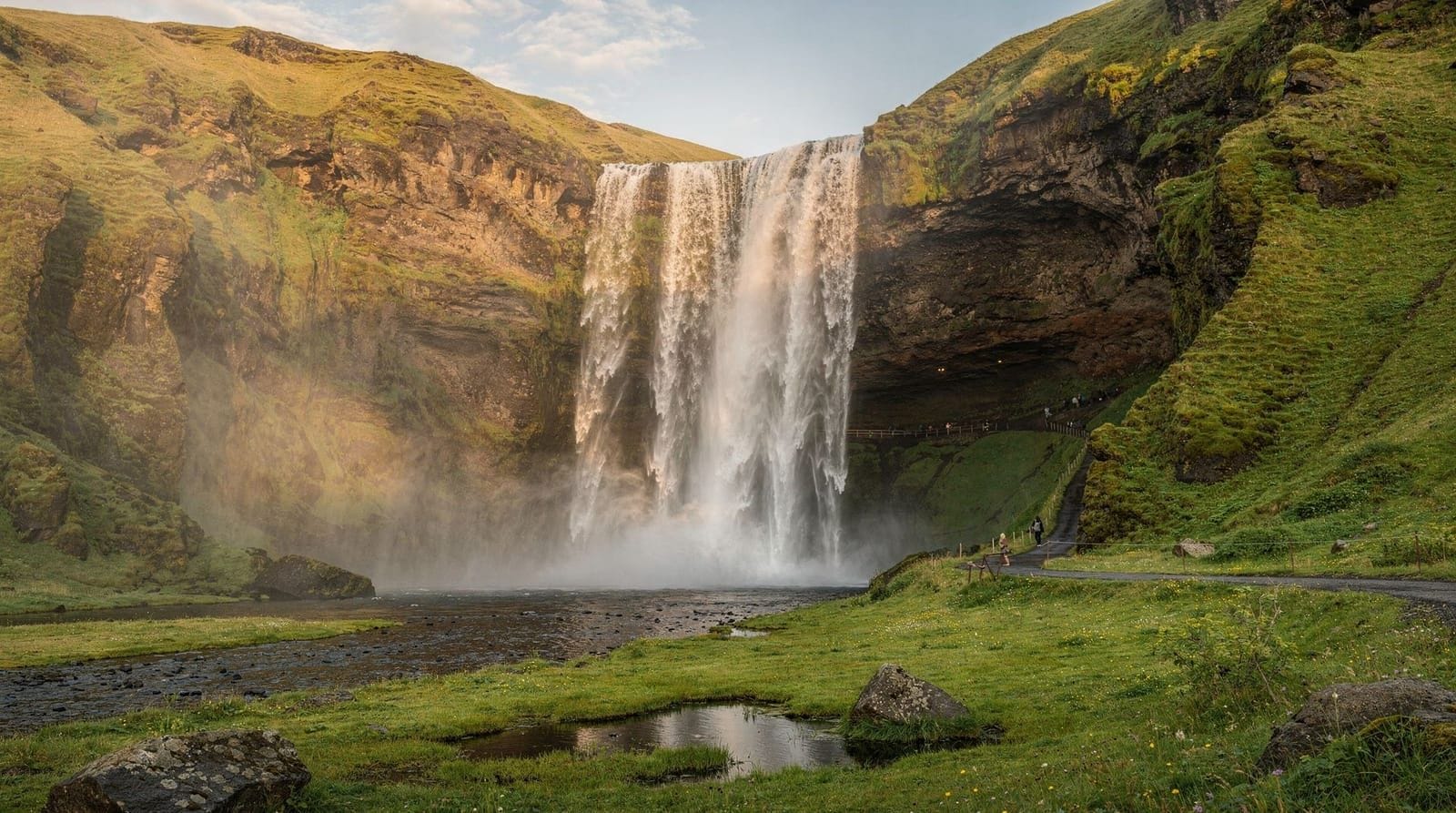
Ring Road complete — 14-day Iceland itinerary with Westfjords and Highlands
Akureyri: Reykjavik 8 day Iceland Ring Road guided small group tour
Duration: 8 days
Fourteen days gives you Iceland as it actually is, rather than the curated highlights version. The Ring Road takes 7–10 days at a good pace. The Westfjords and the accessible Highlands are each worth 3–4 additional days. Fourteen days allows all three regions without rushing any of them.
This is not a beginner’s itinerary. The Westfjords involves remote roads, limited fuel stations, and driving conditions that change more quickly than on the main Ring Road. The Highland day trip requires a 4WD vehicle. If this is your first time driving in Iceland, the 10-day Ring Road itinerary is the better starting point.
| Regions | Full Ring Road + Westfjords + Highlands + Golden Circle |
| Car needed | 4WD required (Highland F-roads and remote Westfjords gravel) |
| Cost per person (mid-range) | around 826,000–1,189,000 ISK solo, less shared |
| Season | Summer only as written (mid-June–September, F-roads open) |
| Experience level | Not for first-time Iceland self-drivers |
Vehicle requirement
A 4WD vehicle is required for this itinerary — not for the Ring Road itself, but for the Highlands section (Days 12–13) where F-roads (Highland tracks) are legally restricted to 4WD. For the Westfjords, a 4WD is not strictly necessary but strongly recommended given the road quality in wet conditions.
Budget: 20,000–30,000 ISK (€130–195) per day for a 4WD SUV with CDW insurance in summer.
Overview
- Days 1–3: Reykjavík → South Coast → Jökulsárlón
- Days 4–5: East Fjords
- Days 6–7: North Iceland (Mývatn, Húsavík, Akureyri)
- Days 8–9: Westfjords
- Days 10–11: Snæfellsnes Peninsula
- Days 12–13: Golden Circle + Highland day
- Day 14: Reykjavík and departure
Days 1–3: South Coast (Reykjavík to Jökulsárlón)
Follow Days 1–3 of the South Coast 3-day itinerary for full detail. Summary:
Day 1: Reykjavík to Vík via Seljalandsfoss, Skógafoss, Reynisfjara, Dyrhólaey. Sleep Vík.
Day 2: Glacier hike on Sólheimajökull in the morning, afternoon at Þakgil valley. Sleep Vík or Kirkjubæjarklaustur.
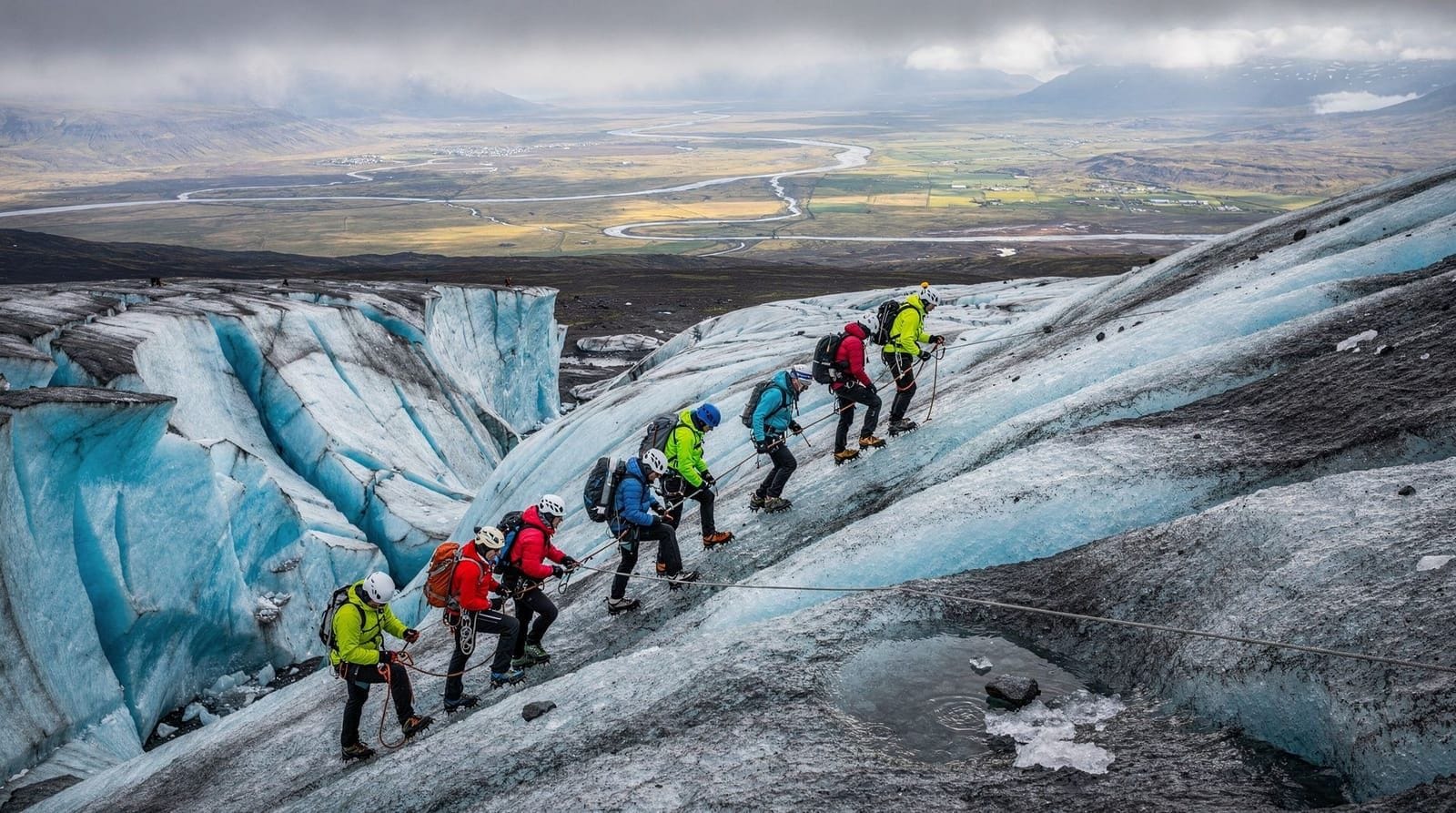
Sólheimajökull glacier hike — guided 3-hour walk on blue ice, crampons and helmet included, year-round availabilityDay 3: Fjaðrárgljúfur canyon, Skaftafell, Jökulsárlón boat tour, Diamond Beach. Sleep Höfn.
Days 4–5: East Fjords
Day 4: Höfn → Stokksnes peninsula (Vestrahorn backdrop) → East Fjords drive via Djúpivogur, Breiðdalsvík. Sleep in East Fjords (Fáskrúðsfjörður or Reyðarfjörður area).
Day 5: East Fjords → Seyðisfjörður day visit (Norwegian-era architecture, Bláa Kirkjan church, artist studios) → Egilsstaðir. Sleep Egilsstaðir.
The East Fjords deserve two days — one day reveals the road, two days reveals the places. The fishing villages of Fáskrúðsfjörður and Neskaupstaður have genuine character that is easy to pass through in a hurry.
Days 6–7: North Iceland
Day 6: Egilsstaðir → Dettifoss (via Route 862 paved road) → Ásbyrgi canyon → Lake Mývatn (Námafjall, Hverfjall, Dimmuborgir) → Mývatn Nature Baths → Goðafoss → Akureyri. Sleep Akureyri.
Day 7: Akureyri → Húsavík whale watching → return to Akureyri.
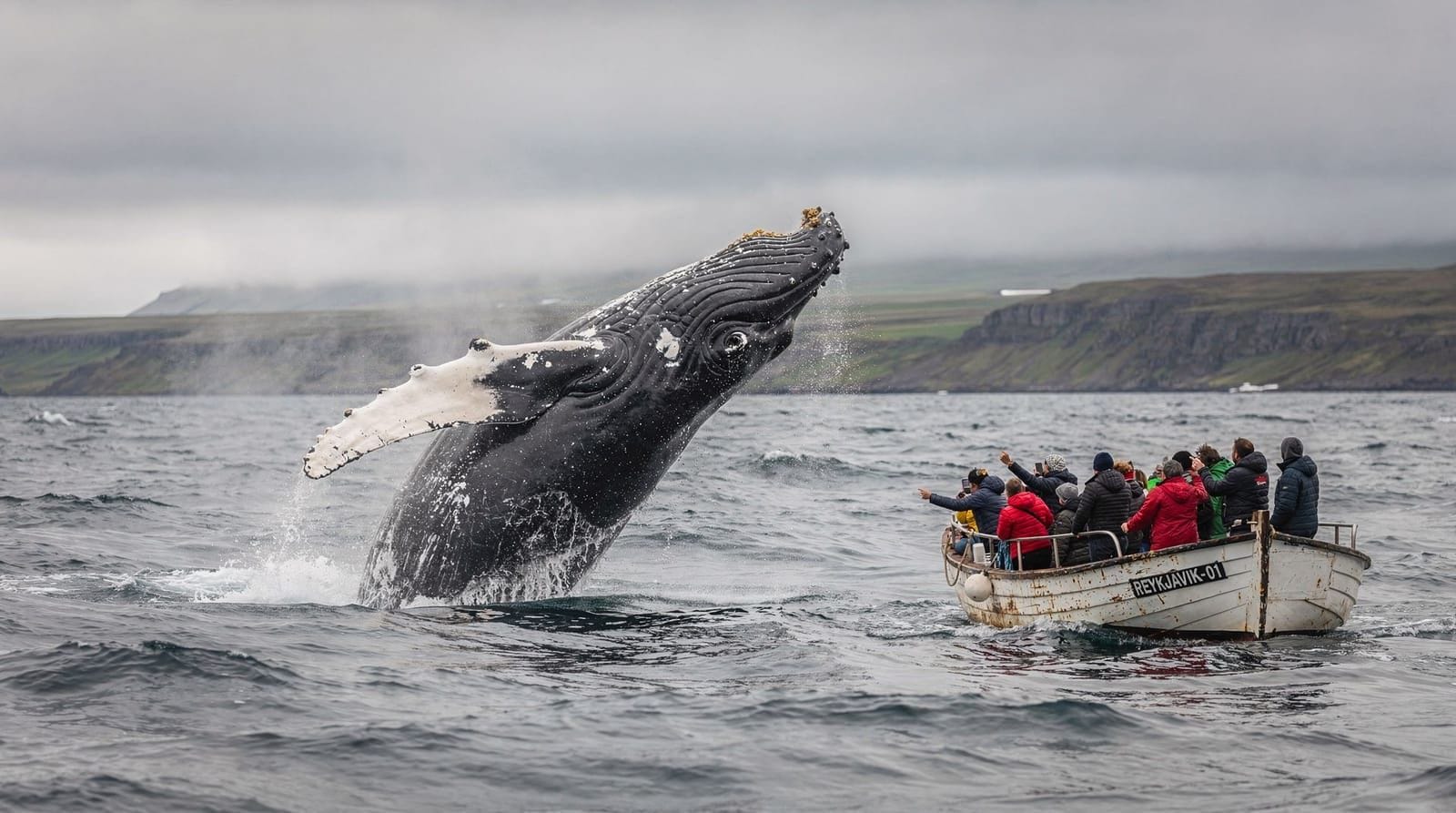
Húsavík original whale watching — traditional oak boat, marine biologist guide, 3-hour tour, humpback whale success rate among Iceland’s highestHúsavík is 90 km east of Akureyri. Take the 11:00 tour, return to Akureyri by 16:00. The Húsavík Whale Museum is one of Iceland’s best natural history museums; allow 1.5 hours alongside the boat tour.
Akureyri is Iceland’s second city and deserves more than a transit stop. The Botanical Garden (free, the world’s northernmost), the riverside walking path, and the old town houses are all worth time. Dinner at Rub23 for Arctic fish.
Days 8–9: Westfjords
The Westfjords is Iceland’s most remote main region — a series of deep fjords and high plateaus in the northwest. It has 7% of Iceland’s coastline and a tiny fraction of its visitors. The roads are mostly gravel, distances are longer than they appear on the map, and fuel stations are widely spaced. It is also genuinely extraordinary.
Day 8: Akureyri → Drive west and north via Route 68, Route 60 through Hólmavík, toward Ísafjörður (approximately 300 km, 4–5 hours). The approach to Ísafjörður through the narrow Ísafjarðardjúp fjord is dramatic — the town appears suddenly at the base of a steep fjord wall.
Ísafjörður is the Westfjords’ capital (population 2,600). It has a working fishing harbour, a small historic wooden town centre, and the best restaurant in the Westfjords (Tjöruhúsið on the harbour — fish-based menu, communal tables, must book in advance, around 5,000 ISK / €33 for a full meal). Sleep in Ísafjörður: Hótel Ísafjörður (from 28,000 ISK), or Litlibær guesthouse on the Westfjords road for character.
Day 9: Dynjandi → Látrabjarg bird cliffs
Dynjandi is the Westfjords’ most spectacular waterfall — a wide tiered cascade that fans out as it falls, shaped like a wedding veil. The approach on the narrow fjord road is equally dramatic. 2 km walk from the car park to the base. Free entry.
Látrabjarg is the westernmost point of Iceland and one of the largest seabird cliffs in Europe. The cliff runs 14 km and rises 441 m above the sea. In June–July, the cliff ledges are covered in puffins, razorbills, guillemots, and northern gannets. The puffins here are notably unafraid of humans — you can sit on the cliff edge with puffins 1–2 m away.
Important: Látrabjarg is a 2.5 hour drive from Dynjandi one-way on a gravel road (Route 612). Plan this as an out-and-back from a base near Patreksfjörður. Allow 3 hours at the cliffs. Patreksfjörður: Hótel West (from 22,000 ISK).
Or skip Látrabjarg if time is tighter — Dynjandi alone is worth the Westfjords detour and the drive is much shorter. For the full bird cliff experience, Látrabjarg is however unmatched in Iceland.
Days 10–11: Snæfellsnes Peninsula
Drive south from the Westfjords via Route 60 to Stykkishólmur (approximately 200 km, 2.5 hours), then south along the north coast of Snæfellsnes.
Day 10: Arrive Snæfellsnes. Kirkjufell mountain near Grundarfjörður (Iceland’s most photographed mountain), Djúpalónssandur black pebble beach (south coast), Arnarstapi fishing village with basalt arch formations.
Sleep on Snæfellsnes: Hótel Búðir (most scenic and expensive, from 35,000–50,000 ISK in summer), Hótel Fransiskus (Hellnar, from 20,000 ISK), or guesthouses in Hellissandur.
Day 11: Snæfellsjökull National Park — the glacier-capped volcano at the western tip. The park visitor centre has good volcano geology exhibits. The glacier itself is accessible by guided snowmobile or super-jeep tour from Arnarstapi in summer. Alternatively, the crater rim is accessible on foot in good conditions (ask locally about current conditions — the glacier is retreating and crevasse risks change).
Drive south from Snæfellsnes via Route 54 toward Borgarnes.
Days 12–13: Golden Circle and Highlands
Day 12: Golden Circle self-drive — Þingvellir, Geysir, Gullfoss, plus Kerið crater. Return to Reykjavík or stay near the Golden Circle.
Day 13: Highland day trip (4WD required, summer only — June to mid-September)
The accessible Highlands day trip from Reykjavík covers Landmannalaugar or Kerlingarfjöll.
Option A — Kerlingarfjöll (approximately 200 km from Reykjavík via Route F35 Kaldidalur): a geothermal mountain range in the interior with steaming vents, coloured rhyolite mountains, and hot spring rivers. The access road (Route F347) requires 4WD. The site itself is accessible on foot from the mountain hut area. Allow 5–6 hours round trip from Reykjavík.
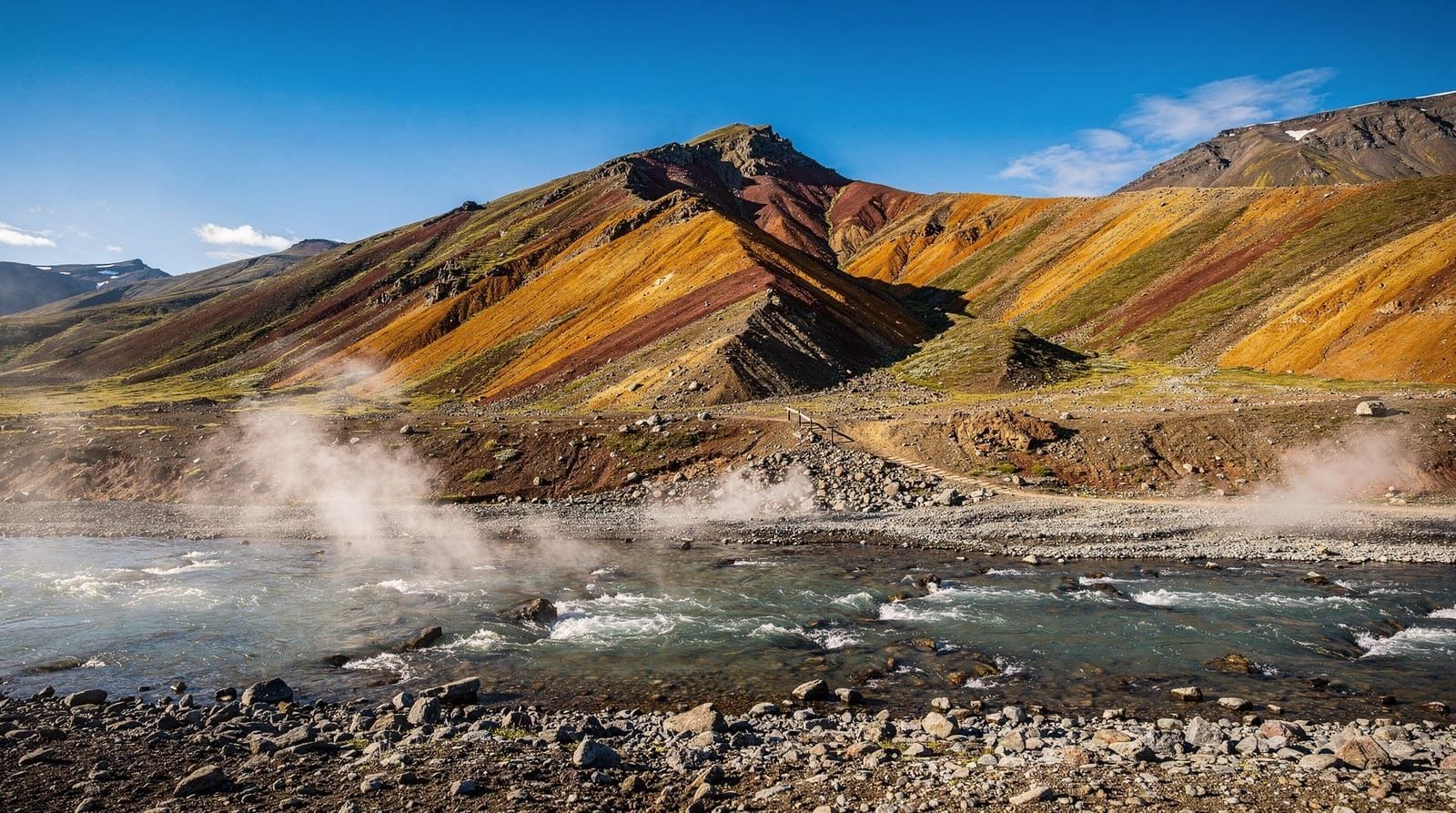
Option B — Landmannalaugar (approximately 180 km from Reykjavík via Route F208 Fjallabak): the Highlands’ most dramatic destination — multicoloured rhyolite mountains, geothermal rivers, and the start of the Laugavegur trek. Route F208 requires 4WD (there is a major river crossing). A long but remarkable day trip.
The Highlands in summer guide has full detail on these routes.
Day 14: Reykjavík and departure
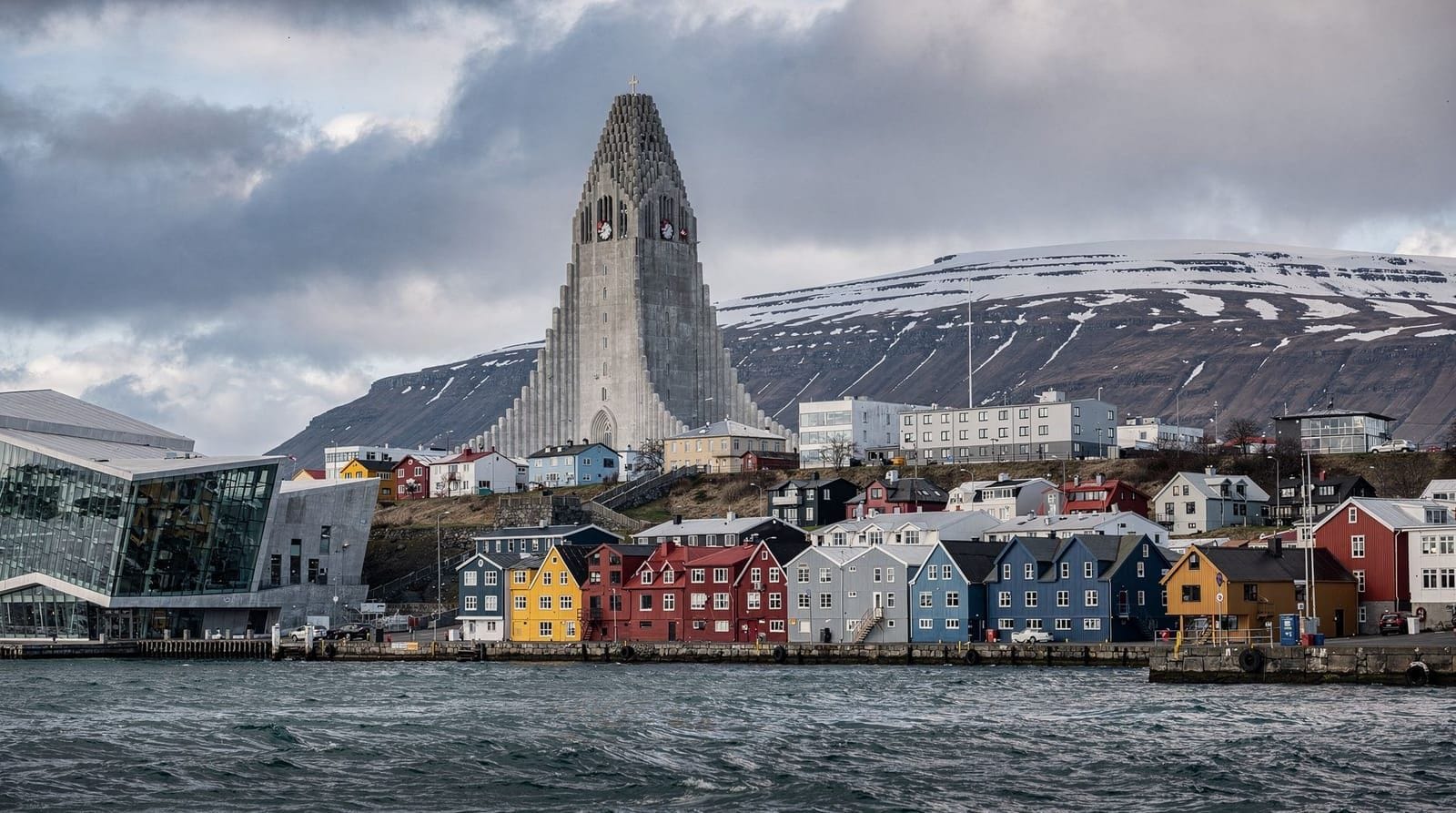
Reykjavík — final morning. Perlan museum (glacier and aurora exhibition, €20) if you haven’t been; Hallgrímskirkja tower for a final view; old harbour lunch.
Blue Lagoon on departure if flying afternoon: Route 1 south from Reykjavík, Route 41 toward Keflavík, follow signs to Blue Lagoon. Pre-book entry (12,900–15,900 ISK / €84–104 for Comfort level, towel and drink included). Bath for 2 hours, take bus or transfer to Keflavík airport.
The ice cave decision
If visiting October–March, the Vatnajökull ice cave fits on Day 3 (Jökulsárlón area) or Day 5 (on route through the east).
Vatnajökull blue ice cave tour — small group, expert glacier guide, natural ice cave with luminous blue ceilings, October to March onlyNatural ice caves are only accessible October–March. Summer visitors have year-round access to Katla ice cave (near Vík — volcanic cave with ash-streaked ice walls) or the artificial ice tunnels inside Langjökull glacier.
Skipping the drive: ferries and domestic flights
Not every leg of this itinerary has to be driven. A domestic flight from Reykjavík to Ísafjörður cuts the long Day 8 drive to under an hour, useful if the Westfjords approach is the part of the trip you would rather not spend a full day on — see the domestic flights guide for routes and typical fares. The car-carrying ferry Baldur, connecting Snæfellsnes to the southern Westfjords across Breiðafjörður, is another option worth knowing about even if this itinerary’s road route does not use it; the ferries guide covers timetables and whether it makes sense for your dates. Neither replaces the point of a self-drive Westfjords visit — having the car for Dynjandi and Látrabjarg still matters — but both are legitimate ways to shorten the drive time between regions if 14 days feels tight once real driving hours are added up.
Westfjords practical notes
Fuel: fill up before entering the Westfjords at Hólmavík or Ísafjörður. There are no fuel stations on the most remote routes. A full tank from Ísafjörður reaches Patreksfjörður and back with margin.
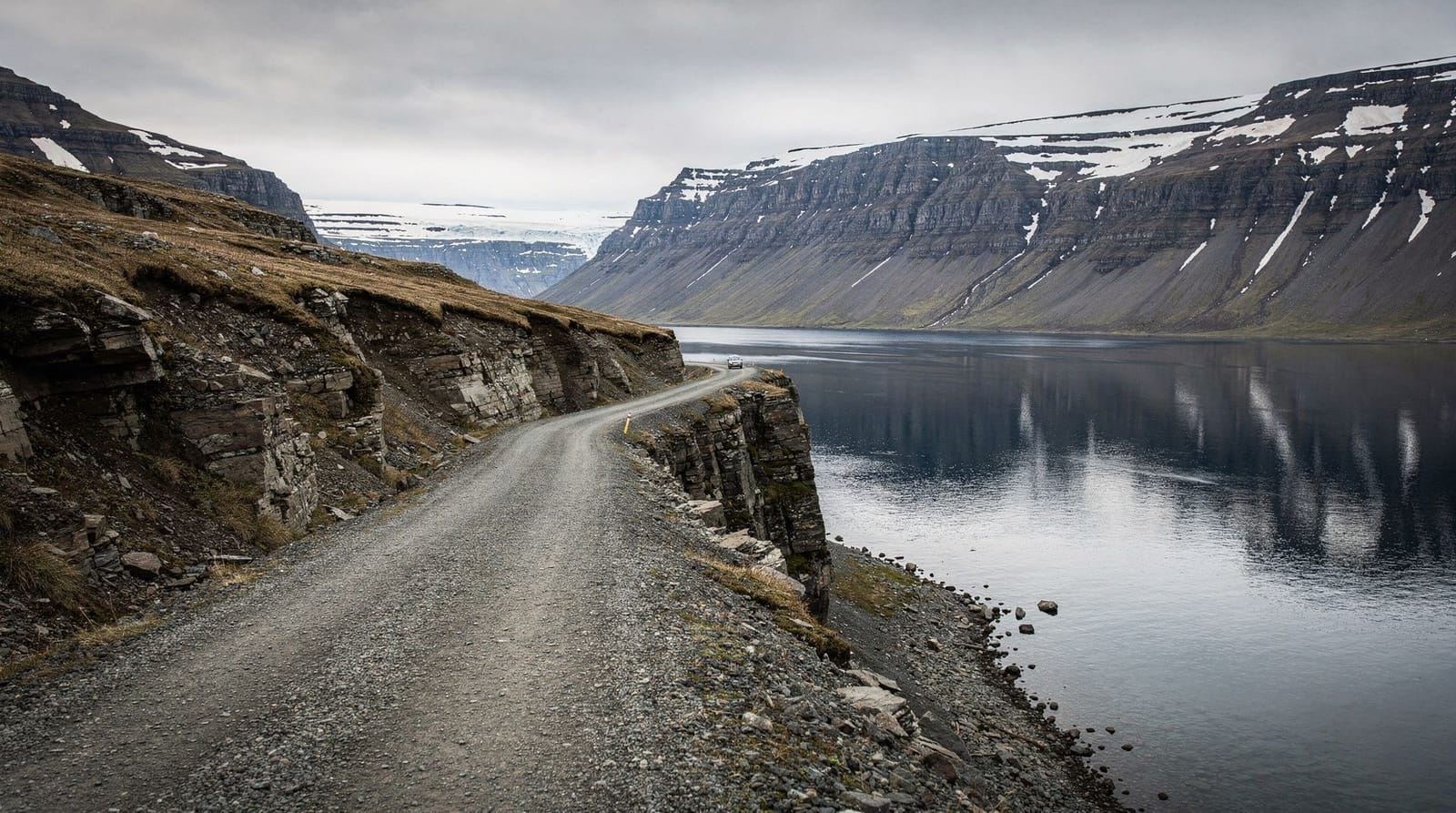
Roads: the Westfjords has a mix of paved main routes and gravel secondary roads. Route 60 (Ísafjörður access) is paved. Route 612 (Látrabjarg) is gravel and narrow in places. In wet conditions, a 4WD is advisable even where 2WD is technically sufficient.
Weather: the Westfjords receives more rain and wind than the Ring Road regions. A full day at Látrabjarg requires reasonable weather — the cliff edge is exposed to Atlantic wind. Check vedur.is before driving to the cliffs.
Accommodation overview for 14 days
14 nights at mid-range (20,000–28,000 ISK per night) = 280,000–392,000 ISK (€1,820–2,550) accommodation total. Budget travellers using campsites (with a sleeping bag) can reduce this to 40,000–60,000 ISK total.
Frequently asked questions about this 14-day Iceland itinerary
Is 14 days too long for Iceland?
No. Iceland is large relative to its population — the country is 103,000 km2, similar in area to South Korea or Hungary. Fourteen days allows a genuine understanding of the country’s regional differences, which are significant. The Westfjords and the Highlands are completely different landscapes from the South Coast and North Iceland.
Can I do the Westfjords without a 4WD?
The Westfjords main roads (Route 60 to Ísafjörður) are paved and accessible in 2WD. The Látrabjarg cliff road (Route 612) is gravel and narrow — technically 2WD but practically easier in a 4WD. If skipping the secondary gravel routes and focusing on Dynjandi and Ísafjörður, a 2WD is manageable.
When do F-roads open in summer?
Typically June 10–15 for Route F35 (Kaldidalur to Kerlingarfjöll). Route F208 (Landmannalaugar) usually opens in early June. Always check road.is for current F-road conditions — opening dates vary by year based on snowpack. Never drive an F-road in a 2WD — the fine is substantial and you risk being stranded.
Is the Westfjords worth the extra days?
Yes, if remote landscapes and very few other tourists matter to you. The Westfjords has the same quality of scenery as the Ring Road but with perhaps 5–10% of the visitors. Dynjandi waterfall is genuinely magnificent and consistently empty. Látrabjarg is one of the great bird cliff experiences in Europe. The 2-day extension adds significant reward for modest additional effort.
Can I combine this 14-day itinerary with the northern lights?
October–March gives the northern lights as a real possibility on clear evenings throughout the itinerary. The Westfjords has extremely low light pollution — some of the best northern lights viewing in Iceland on clear nights. The northern lights photography guide has technique notes for capturing them.
What is the best month for this 14-day itinerary?
Late June–early July: midnight sun, all routes open including F-roads, puffins at Látrabjarg, maximum daylight. August is also excellent with fewer tourists than July. September has the first aurora opportunities and autumn colours on the Highlands vegetation. This itinerary is summer-only as written — in winter, several sections (F-roads, some Westfjords gravel roads) are inaccessible or very difficult.
Should I do the Westfjords or the Highlands if I have to pick one?
If short on days, most travellers get more lasting value from the Westfjords: Dynjandi and Látrabjarg are accessible without a river crossing, the scenery is dramatically different from the Ring Road, and the region rewards even a rushed two days. The Highlands (Landmannalaugar or Kerlingarfjöll) require more driving skill (river fords on F-roads) and a narrower weather window, and reward multi-day hiking more than a single day trip does. See the 5-day Westfjords itinerary or the 4-day Highlands summer itinerary if you end up choosing one region for a dedicated trip instead of squeezing both into this 14-day loop.
Is this itinerary too much driving?
It is a genuinely demanding amount of driving — roughly 2,200–2,500 km total once Westfjords and Highland detours are included, spread over 14 days. That averages under 200 km/day, which is manageable, but several individual days (the Westfjords approach, the Highlands F-road day) are long and require concentration on gravel or river-crossing roads. This is not an itinerary to attempt jet-lagged on Day 1; build in a slow Reykjavík morning before starting the drive.
The Westfjords in depth
The Westfjords deserve more than the two days allocated here — there is a full 5-day Westfjords itinerary for travellers who want to dedicate a separate trip to the region. For this 14-day overview, the two-day Westfjords section covers the most important sites (Dynjandi, Látrabjarg, Ísafjörður) without the time for the smaller fjords, the Strandir coast, or the sea kayaking.
Dynjandi is genuinely one of Iceland’s best waterfalls — an argument can be made that it is the most beautiful. The tiered cascade fans out as it falls, widening from about 30 m at the top to 60 m at the base. The surrounding fjord scenery is completely different from the South Coast — narrower, greener, quieter. The approach road from Þingeyri along the fjord is worth the driving for its own sake.
Ísafjörður is a functioning town, not a staged tourism environment. The harbour has working fishing boats. The restaurants serve the actual local catch. The museum (in the oldest surviving wooden warehouse in Iceland, built 1765) is small but genuine. The town is pleasant in a way that feels earned rather than manufactured.
Hornstrandir Nature Reserve (accessible by ferry from Ísafjörður): the most remote accessible area in Iceland — no roads, no permanent inhabitants, no services. A day trip by ferry allows hiking in a landscape that has had no human presence for 70 years. Arctic foxes are common and completely unafraid. This is a serious add-on that requires pre-booking the ferry, appropriate hiking experience, and a full day. It transforms the Westfjords visit from scenic to genuinely remote.
Highlands considerations
The Icelandic Highlands are the country’s interior — a vast plateau of volcanic rock, geothermal fields, and summer-only tracks (F-roads). They are inaccessible in winter (October/November through May/June, depending on year). Summer access requires a 4WD.
The two most accessible Highlands destinations from the Ring Road:
Landmannalaugar: the multi-coloured rhyolite mountains of the Fjallabak Nature Reserve, with hot spring rivers suitable for bathing. The access road (F208, Fjallabak route) crosses a river (Tungnaá) that requires 4WD and careful timing — check the river level at road.is before attempting. This is the starting point of the famous Laugavegur trek — Iceland’s most famous multi-day hike.
Kerlingarfjöll: a geothermal mountain range more easily accessible than Landmannalaugar (Route F35, shorter river crossings). The landscape is similar to Landmannalaugar — rhyolite mountains in red, orange, and grey with steaming vents — but with better infrastructure (mountain hut, café). Excellent for a day trip from the Golden Circle area.
Both are covered in the Highlands summer guide.
The complete cost of 14 days in Iceland
At mid-range pricing (2026 estimates):
- Car rental (4WD, 14 days with CDW): 280,000–420,000 ISK (€1,820–2,730)
- Fuel (1,800 km at 10L/100km, 240 ISK/L): approximately 43,000 ISK (€280)
- Accommodation (13 nights at 20,000–28,000 ISK average): 260,000–364,000 ISK (€1,690–2,370)
- Activities (glacier hike, whale watching, ice cave, boat tour, Blue Lagoon, park fees): approximately 75,000–110,000 ISK (€488–715)
- Food (12,000–18,000 ISK per day × 14): 168,000–252,000 ISK (€1,094–1,640)
Total per person: approximately 826,000–1,189,000 ISK (€5,370–7,740). Shared across two people in one car and one room, the per-person cost drops significantly. Budget travellers using campsites, cooking from supermarkets, and skipping premium activities can complete a similar itinerary for approximately 400,000–500,000 ISK (€2,600–3,250) per person. See the Iceland budget guide for detailed cost-saving strategies.
What to trim if 14 days becomes 12
Flights, work commitments or weather sometimes force a shorter trip than planned, and this itinerary has two sections that compress more gracefully than the rest. Days 12–13 (Golden Circle plus a Highland day trip) are the easiest to cut entirely — the Golden Circle day trip guide covers the same ground as a single half-day from Reykjavík on a future visit, and the Highland F-road day depends on river and weather conditions that can force a cancellation anyway. The next candidate is trimming the Westfjords from two days to one, seeing Dynjandi and Ísafjörður but skipping the long out-and-back to Látrabjarg — a real loss for birdwatchers, but a workable compromise for everyone else. Do not trim the East Fjords below one full day; it is the section most itineraries under-allocate and most visitors later say they wish they had lingered in.
Top experiences
Bookable activities with verified prices and instant confirmation on GetYourGuide.