Ferries in Iceland — Westman Islands, Westfjords, and international routes
What ferries operate in Iceland?
Three main routes: Herjólfur connects Landeyjahöfn to Vestmannaeyjar (35 min, daily); Baldur crosses Breiðafjörður between Stykkishólmur and Brjánslækur (2.5 hours, connecting the Snæfellsnes and Westfjords regions); and Smyril Line runs weekly international sailings from Seyðisfjörður to the Faroes and Denmark.
Ferries fill three specific gaps in Iceland’s otherwise road-and-air transport network: the Westman Islands, the Breiðafjörður shortcut between the Snæfellsnes Peninsula and the Westfjords, and the international Faroe/Denmark connection. None are essential for a standard Ring Road trip, but each solves a real problem for the itineraries that need it.
| Herjólfur (Westman Islands) | 35 min crossing, multiple daily sailings, from ~1,700 ISK/adult |
| Baldur (Snæfellsnes–Westfjords) | 2.5 hrs, saves 4–6 hrs of driving, book cars ahead in July–August |
| Smyril Line (int’l) | 4–5 days to Denmark via the Faroes, for travellers bringing a vehicle |
| Booking urgency | Car spaces sell out in summer; walk-on passengers rarely have issues |
| Weather risk | Herjólfur cancels most often; build a buffer day if visiting Westman Islands |
Iceland’s ferry network
Iceland is an island, but internal ferry routes are few and specific. The main services fill gaps where roads are long, expensive to build, or absent — the Westman Islands, the Breiðafjörður crossing to the Westfjords, and the international Smyril Line route to continental Europe.
Unlike Scandinavia or Scotland, Iceland does not have an extensive coastal ferry network. Most inter-regional travel is by road or domestic flight.
Herjólfur — Landeyjahöfn to Westman Islands
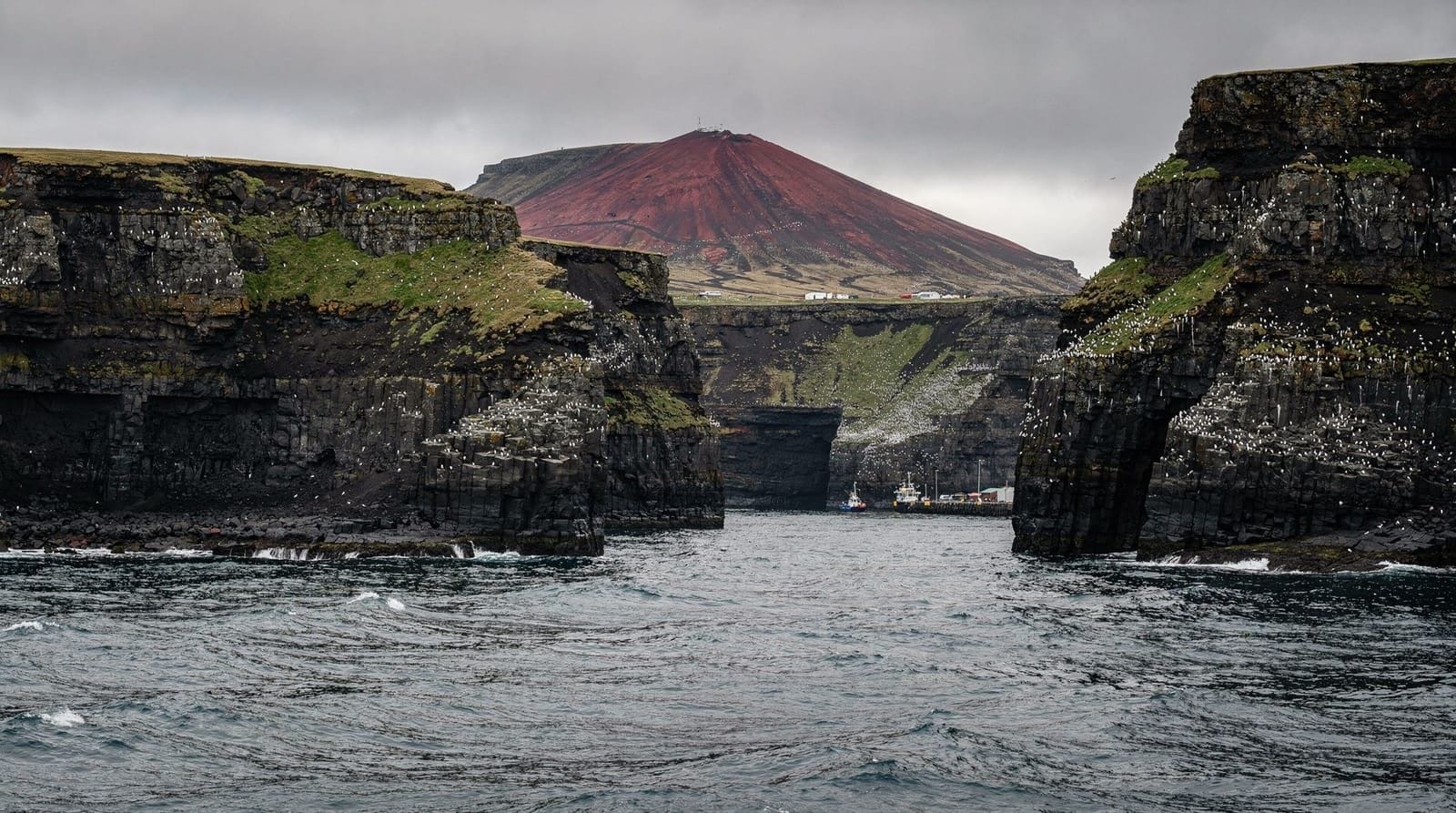
The car and passenger ferry Herjólfur connects mainland Iceland to the Westman Islands (Vestmannaeyjar), a cluster of volcanic islands about 15 km off the south coast. The crossing from Landeyjahöfn takes 35 minutes — one of the shortest sea crossings in Iceland.
Schedule: Multiple daily crossings; roughly 8–10 sailings per day in summer, fewer in winter. Check current schedules at herjolfur.is.
Prices (2026 indicative):
- Adult passenger: 1,700–1,900 ISK one way
- Standard car + driver: 5,500–6,500 ISK one way
- Bicycles: 700 ISK
Important: The crossing can be cancelled in rough sea conditions — the South Atlantic sends swells that make Landeyjahöfn approach unsafe. In winter, cancellations happen multiple times per week. An alternative route exists via Þorlákshöfn (longer, also in south Iceland) with less frequency.
Getting to Landeyjahöfn: The terminal is about 140 km from Reykjavik, off Road 1 near Hvolsvöllur. No regular public transport — you need a car or organised transfer.
What’s on the Westman Islands? The town of Heimaey is the only inhabited island, with a population of about 4,000. The islands are famous for the 1973 Eldfell eruption (which nearly consumed the harbour), the world’s largest puffin colony (summer), Atlantic puffin rescue programmes, and dramatic sea cliffs. A visit of 1–2 nights does the main sites justice. See Westman Islands.
Baldur — Stykkishólmur to Brjánslækur
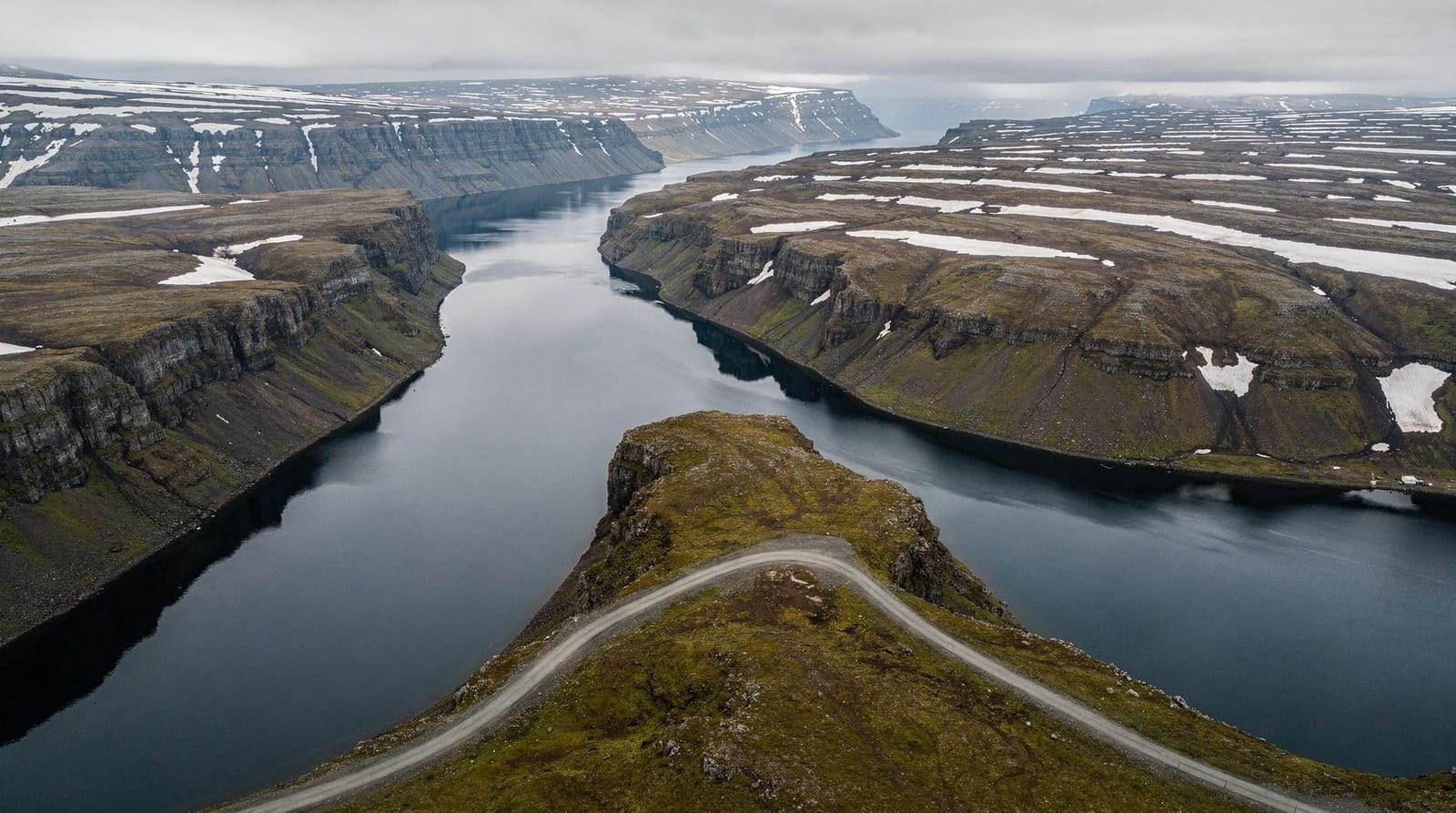
The Baldur ferry crosses Breiðafjörður bay between the Snæfellsnes Peninsula town of Stykkishólmur and Brjánslækur at the southern edge of the Westfjords. The crossing takes about 2.5 hours.
This route is primarily useful as a road shortcut: instead of driving the long route south to Reykjavik and back north into the Westfjords, the ferry cuts directly across the bay and saves 4–6 hours of driving.
Schedule: Two crossings per day each way in summer, reduced to one daily in off-season. Check seatours.is for schedules.
Prices (2026 indicative):
- Adult passenger: 3,200–3,600 ISK one way
- Standard car + driver: 10,500–12,000 ISK one way
Practical notes: The Baldur passes through the islands of Breiðafjörður, which is a scenic bonus — bring binoculars for birdwatching (eiders, gulls, possible white-tailed eagles). The ferry is popular in summer; book car spaces at least a week ahead during July–August. Walk-on passengers can almost always get on.
Connecting itinerary: A classic route takes visitors from Reykjavik to the Snæfellsnes Peninsula (Snaefellsnes Peninsula, 2 days), then the Baldur ferry to Brjánslækur, and onward into the Westfjords (Westfjords). This avoids a 650 km round-trip through Reykjavik.
Smyril Line — international ferry from Seyðisfjörður
Smyril Line operates the M/S Norröna, the only regular passenger ferry linking Iceland to continental Europe. It departs from Seyðisfjörður in the East Fjords, with stops at the Faroe Islands and onward to Hirtshals (Denmark).
Route: Seyðisfjörður → Tórshavn (Faroe Islands) → Hirtshals (Denmark). Return route reverses. Total voyage Seyðisfjörður to Hirtshals: approximately 4–5 days.
Frequency: Weekly in summer (roughly April–October), less frequent in winter. Specific schedules vary by year — check smyril-line.com.
Prices (2026 indicative, person + vehicle):
- Seyðisfjörður to Tórshavn: from around 25,000–40,000 ISK per person (cabin included)
- Seyðisfjörður to Hirtshals: from around 45,000–80,000 ISK per person (cabin + car varies widely by cabin class and season)
The Smyril Line experience is an event in itself — the ship is large and comfortable, with restaurants, bars, a gym, and lounges. Crossing the North Atlantic in the Norröna in July is a particular experience, especially if the Faroe Islands are a goal. It is slower and more expensive than flying but uniquely suited to travellers who want to bring their own car into and out of Iceland.
Seyðisfjörður: A small fjord town in the East Iceland region, known for colourful houses and a vibrant arts scene — worth a night’s stay on either side of the crossing. See Egilsstaðir and Seyðisfjörður.
Grímsey Island ferry
A small passenger and cargo ferry, the Sævar, serves Grímsey — Iceland’s only inhabited island north of the Arctic Circle. The ferry departs from Dalvík (north of Akureyri) and takes about 3 hours each way. Service is about 3 times per week. Eagle Air also flies to Grímsey from Reykjavik.
Grímsey is primarily visited for the Arctic Circle claim. The island has seabird colonies and a permanent population of around 100. Not a mainstream tourist route, but worth knowing for travellers with time in the north.
Travel insurance and ferry disruption
Ferry cancellations in Iceland are common enough — particularly Herjólfur in winter — that it’s worth checking whether your travel insurance covers disruption-related costs: an extra night’s accommodation if you miss a connection, or a rebooked flight if a cancelled crossing forces a schedule change. Standard travel insurance policies vary considerably on this. See travel insurance for Iceland for what to look for before you rely on a tight ferry connection as part of your itinerary.
As a practical rule, avoid scheduling a ferry crossing for the same day as a flight departure, especially in the shoulder or winter season. Build at least one buffer day between an island crossing and any onward international flight.
Summary: which ferry for which purpose
| Route | Use case | Duration | Book at |
|---|---|---|---|
| Herjólfur (Landeyjahöfn–Vestmannaeyjar) | Westman Islands visit | 35 min | herjolfur.is |
| Baldur (Stykkishólmur–Brjánslækur) | Snæfellsnes to Westfjords shortcut | 2.5 hrs | seatours.is |
| Smyril Line (Seyðisfjörður–Faroes–Denmark) | Europe connection with vehicle | 4–5 days | smyril-line.com |
| Sævar (Dalvík–Grímsey) | Arctic Circle island visit | 3 hrs | samskip.is |
Frequently asked questions about ferries in Iceland
Can you take a ferry from the UK to Iceland?
No direct UK–Iceland ferry service currently operates. Smyril Line’s Norröna route connects Iceland to Denmark via the Faroe Islands. From the UK, you would take this ferry to/from Denmark or fly.
How rough is the crossing to the Westman Islands?
It depends on the day. The 35-minute crossing can be smooth or quite rough, depending on Atlantic swell. People who experience seasickness should take precautions. The ferry occasionally cancels — if this matters to your plans, build a spare day or consider flying (Air Iceland Connect serves Vestmannaeyjar).
Do I need to book a car on the Herjólfur in advance?
In summer, yes — car spaces sell out. Walk-on passengers rarely have issues. Book at herjolfur.is.
Is the Baldur ferry suitable for large campervans?
The Baldur carries campervans and motorhomes. Measure your vehicle and book accordingly — large vehicles require specific deck placement. Contact Seatours for vehicle width and height limits.
Can I visit the Faroe Islands from Iceland on a day trip?
No — the Smyril Line crossing to the Faroes takes approximately 36–38 hours from Seyðisfjörður. The Faroes are not a day-trip destination from Iceland. A minimum of 3–4 nights in the Faroes makes the journey worthwhile.
Is there a ferry between Reykjavik and Akureyri?
No. There is no passenger ferry along Iceland’s west or north coast. The only options between Reykjavik and north Iceland are driving (5.5–6 hours), a domestic flight (45 minutes), or a long-distance bus.
Do I need to book ferries far in advance for a summer trip?
For passengers on foot, no — walk-on tickets rarely sell out. For anyone bringing a car, yes: book Herjólfur and Baldur car spaces at least 1–2 weeks ahead for July–August travel, and Smyril Line vehicle spaces 3–6 months ahead for summer sailings, since cabin and vehicle capacity is limited on the single Norröna ship.
Are Iceland’s ferries suitable for people prone to seasickness?
The short Herjólfur crossing (35 minutes) can still be rough in Atlantic swell; take seasickness precautions if you’re sensitive. The Smyril Line’s multi-day North Atlantic crossing is the more serious consideration — prescription seasickness medication is a better plan than over-the-counter tablets for that route, particularly in autumn.
Using the Baldur ferry in your itinerary
The Baldur crossing between Stykkishólmur and Brjánslækur is the most practically useful ferry for route planning. Here’s how travellers typically incorporate it:
Westfjords without doubling back
The direct road from Reykjavik to the Westfjords goes north through Borgarnes, then west to Reykhólar, and then the Westfjords circuit begins. The return via the same route is essentially the same 4–5 hours.
The alternative with the Baldur: drive from Reykjavik to Stykkishólmur on the Snæfellsnes Peninsula (1.5–2 hours), take the ferry to Brjánslækur in the south Westfjords (2.5 hours on the water), then drive north into the Westfjords from there. On the return, drive south to Reykhólar or Ísafjörður (depending on your Westfjords circuit), and drive back to Reykjavik on the northern Ring Road.
This makes the Westfjords a natural extension of a Snæfellsnes visit rather than a separate out-and-back.
What to see between Stykkishólmur and Brjánslækur
The ferry passes through Breiðafjörður, an archipelago of hundreds of small islands (the number is famously uncountable — Icelandic legend says you cannot count all the islands and the stars simultaneously). Highlights visible from the deck:
- White-tailed eagles: Iceland has a growing population; they’re regularly spotted from the ferry
- Eider ducks: dense populations on the island clusters
- Flatey Island: a small inhabited island in the middle of the bay, sometimes a brief stop. Has a church with modern fresco artwork inside and a handful of year-round residents.
Bring binoculars. The wildlife density on Breiðafjörður is genuinely impressive.
Herjólfur cancellations and what to do
When the Herjólfur cancels (most common in winter and during Atlantic low-pressure systems), you have limited options to reach the Westman Islands:
- Wait for the next sailing: Cancellations are usually 12–36 hours in duration
- Fly via Air Iceland Connect: Reykjavik to Vestmannaeyjar takes 25 minutes; check availability quickly as seats go fast when the ferry cancels
- Extend your mainland stay: Build a buffer day into any Westman Islands itinerary if visiting between October and April
The other Westman Islands ferry terminal at Þorlákshöfn operates when Landeyjahöfn is closed by conditions. It’s a longer crossing (about 3 hours) but provides a backup. The website herjolfur.is lists current operating status in real time.
The Smyril Line experience in detail
The M/S Norröna is a large vessel by North Atlantic standards — 35,400 gross tonnes, capacity for over 1,500 passengers and several hundred vehicles. The crossing from Seyðisfjörður to Hirtshals (Denmark) via Tórshavn (Faroe Islands) takes approximately 4.5–5 days including port stops.
What’s on board:
- Cabins ranging from 4-berth inside cabins to outside premium suites
- Multiple restaurants (from self-service cafeteria to sit-down dining)
- Tax-free shop (competitive alcohol and perfume prices)
- Bar with live music on some sailings
- Small pool and sauna
- Children’s play area
Who takes the Smyril Line:
- Travellers bringing their own car into Iceland for a long stay (6+ weeks)
- People using Iceland as a stopover on a broader Nordic journey
- Those specifically wanting the Faroe Islands as a destination
- Expedition travellers and motorcyclists who want their bike
For a 7–14 day Iceland holiday, the economics rarely work compared to flying. But for a 6-week road trip through Iceland arriving by ferry, the Norröna makes the trip itself part of the experience.
Getting to Seyðisfjörður
Seyðisfjörður is in the East Iceland region, 26 km east of Egilsstaðir on a winding mountain road (Road 93). In summer, this road is fully passable. In winter, it can close due to avalanche risk — check conditions before driving. Eagle Air connects Reykjavik to Egilsstaðir in about 1 hour; a taxi or rental car covers the last stretch to Seyðisfjörður.
The town itself is worth 1–2 nights regardless of the ferry: colourful wooden houses, a renowned arts and music scene (the LungA festival in July draws international attention), and dramatic fjord scenery. See Egilsstaðir and Seyðisfjörður for what to do.
When to use each ferry: summary decision guide
Use the Herjólfur if:
- The Westman Islands are on your itinerary (they’re worth it for 1–2 nights)
- You want puffin watching in summer (May–August) or Eldfell volcano hiking
- Your car or van needs to go with you
- Weather is favourable — check herjolfur.is the morning before you drive to Landeyjahöfn
Use the Baldur if:
- You’re combining Snæfellsnes with the Westfjords
- You want to avoid the 500+ km detour through Reykjavik
- You want to see the Breiðafjörður birdlife from the water
- Car space is booked (do this in advance for July–August)
Use Smyril Line if:
- You’re bringing your own vehicle to Iceland for a longer stay
- The Faroe Islands are a specific travel goal
- The crossing experience itself is part of your trip
- You prefer not flying and have time for a 4–5 day sea voyage
Skip all ferries if:
- Your trip is short (7 days or less, focusing on the Ring Road only)
- You’re flying domestically to cover regional distances
- Weather is bad for the Herjólfur crossing and you don’t have flex days
The ferries and Iceland’s coastal geography
Iceland’s shoreline is 4,970 km — proportionally very large for a country of this size due to the extensive fjording of the Westfjords and East Fjords coastlines. Despite this, Iceland has developed road rather than maritime connectivity as its primary transport infrastructure.
The reason is practical: Iceland’s fishing industry required a network of small boats rather than passenger ferries, and the main population centres (Reykjavik, Akureyri, Egilsstaðir) are connected more efficiently by road or air than by coastal shipping.
The existing ferry routes all serve specific geographic constraints: the Westman Islands (separated by open sea), the Breiðafjörður crossing (where the fjord is too wide for a practical bridge), and the international Smyril Line (where no road connection is physically possible).
Future ferry infrastructure development in Iceland is unlikely in the near term. The country has prioritised road investment and the Ring Road system provides connectivity to most inhabited areas.
Safety on Iceland’s ferry crossings
Iceland’s maritime safety standards are rigorous. All ferries operating in Icelandic waters comply with Samgöngustofa (Icelandic Transport Authority) safety regulations. Life jacket demonstrations are conducted before departure. Emergency procedures are posted in cabins and passenger areas.
The North Atlantic and the coastal waters around Iceland can produce significant swell. The Herjólfur crossing, despite being short (35 minutes), occasionally sees rough conditions. The Smyril Line’s North Atlantic crossing can be genuinely challenging in autumn storms — the Norröna has a modern stabiliser system but is not immune to heavy Atlantic swells.
Travellers with severe seasickness should take prescription medication rather than relying on over-the-counter motion sickness pills for the Smyril Line crossing.
Booking and advance planning
Herjólfur: Online at herjolfur.is. Passenger-only travel requires no advance booking; car spaces sell out in summer.
Baldur: Online at seatours.is. Book car spaces 1–2 weeks ahead in summer minimum.
Smyril Line: Online at smyril-line.com. Cabin categories range significantly in price; book 3–6 months ahead for summer sailings. The cheapest option is a recliner seat rather than a cabin on short legs.
For all ferry bookings, have your vehicle registration details to hand if travelling with a car.
For getting to and from these ferry terminals, see public transport Iceland for bus and transfer options, and renting a car in Iceland for road access.
What ferries reveal about Iceland’s geography
Iceland’s ferry network, sparse as it is, tells you something important about the country’s geography: connections to offshore and distant regions that roads cannot cheaply serve.
The Westman Islands (Vestmannaeyjar) rise sheer from the Atlantic with no causeway — nature made the ferry the only surface option. The Breiðafjörður bay is 50 km wide at its narrowest crossing point — a bridge would be an engineering feat comparable to the Great Belt in Denmark, economically unjustifiable for the population served. The international Smyril Line serves Iceland’s role as a mid-Atlantic waypoint between Europe and Greenland, a position it has held since the Norse settlement.
Understanding why ferries exist where they do helps you assess whether they’re genuinely useful for your trip. The Herjólfur is essential if Vestmannaeyjar is your goal. The Baldur is a real route saving for the Westfjords circuit. Smyril Line is for a specific kind of extended travel.
For most Iceland Ring Road visitors, ferries are optional enhancements to the core itinerary rather than necessities. For those targeting the Westman Islands or Westfjords specifically, the ferry options are the defining transport logic of the trip.
Ferries and the overall Iceland transport picture
Iceland’s transport hierarchy, from most-used tourist method to least:
- Rental car (Ring Road, self-drive: dominant for 80%+ of visitors)
- Day tours from Reykjavik (structured group transport: for visitors who prefer not to drive)
- Domestic flights (Akureyri, Westfjords, East Iceland time savings)
- Ferries (Westman Islands, Westfjords shortcut, international)
- Public buses (Strætó city network in Reykjavik; limited intercity)
- Hitchhiking (summer only; complement to bus travel for budget travellers)
Ferries occupy a specific niche that car rental, flights, and buses can’t replace for the specific routes they serve. For a comprehensive Iceland itinerary, knowing where each of these modes fits helps you make efficient, cost-effective transport decisions.
For the full Iceland transport picture: see public transport Iceland, domestic flights Iceland, renting a car Iceland, and getting from Keflavik airport.
Ferry vs domestic flight: which to choose
For the routes where both exist as alternatives — mainly the Westman Islands — the choice between ferry and flight comes down to time, cost, and what you want from the journey:
| Herjólfur ferry | Domestic flight (Eagle Air) | |
|---|---|---|
| Duration | 35 minutes | 25 minutes |
| Cost | 1,700–1,900 ISK one way | Typically higher, varies with booking window |
| Reliability | Can cancel in rough Atlantic swell | More weather-resilient but limited daily flights |
| Vehicle | Yes, if you need your car on the island | No — you’d need to rent locally |
| Experience | Scenic crossing, sea air, possible dolphin sightings | Fast, no scenery beyond the flight itself |
If your car needs to come with you, or you enjoy the crossing itself, take the ferry and build in a weather buffer. If the ferry has just cancelled and you need to reach the islands reliably, book the flight.
Top experiences
Best-rated activities across GetYourGuide and Viator.

Reykjavik: From airport to adventure private Reykjanes peninsula tour
- GetYourGuide
Reykjavik: Kef bus transfer to from Reykjavik shuttle
- GetYourGuide
Reykjavik: Keflavik airport transfer to Reykjavik
- GetYourGuide
Reykjavik: Kef private transfer to from Reykjavik
- GetYourGuide
Reykjavik: Keflavik airport to Reykjavik bus transfer
- GetYourGuide
Reykjavik: Private transfer to from kef airport
- GetYourGuide