Travel insurance for Iceland — what you actually need
Do I need special travel insurance for Iceland?
Yes, beyond a standard policy. Iceland-specific risks include mountain rescue (costs €5,000–50,000+), adventure sports (glacier hiking, snowmobiling, ice caving), volcanic disruption, and expensive medical treatment. Check your policy covers search-and-rescue, has adequate medical evacuation limits, and explicitly includes any activities you plan.
Iceland’s mix of glaciers, F-roads, geothermal areas and genuine wilderness makes it one of the most rewarding — and most insurance-relevant — destinations in Europe. A policy built for a Mediterranean beach holiday will not necessarily cover a helicopter rescue off Vatnajökull or a snowmobile mishap near Mývatn. This guide breaks down exactly what a policy needs to include, what it typically costs, and how to avoid the coverage gaps that catch out otherwise well-prepared travellers. For the wider safety picture, pair this with is Iceland safe and SafeTravel emergency info.
| Minimum medical cover | around €500,000 (ideally €1 million) |
| Search & rescue | must be explicitly named in the policy, not assumed |
| Typical cost (10 days) | around €80–150 per person |
| Adventure sports | check glacier hiking, snowmobiling and ice caving individually |
| Buy by | before departure — conditions that exist before your start date are excluded |
Why Iceland needs more than basic travel insurance
A standard travel insurance policy designed for beach holidays in Mallorca or city breaks in Paris is likely to have coverage gaps that matter specifically in Iceland.
Iceland’s main insurance-relevant risks:
- Mountain rescue: Iceland’s Landsbjörg (Association for Search and Rescue) responds to thousands of incidents per year involving tourists. A mountain rescue operation — helicopter, ground teams, multi-day search — can cost €5,000 to €50,000 or more. This is not covered by Iceland’s public health system for foreign visitors.
- Medical treatment: Iceland has excellent hospitals (Landspítali in Reykjavik, Akureyri Regional Hospital in the north), but non-residents receive bills. Emergency surgery or hospitalisation runs to tens of thousands of euros.
- Adventure sports: Glacier hiking, ice caving, snowmobiling, super jeep tours on F-roads, horse riding, ATV tours — many standard policies exclude “hazardous activities” without an explicit add-on.
- Volcanic disruption: Eruptions can close airspace, roads, and the Blue Lagoon. Standard policies often exclude “natural disasters” from trip cancellation and curtailment coverage.
- Car rental damage: Iceland’s rental car insurance is complex. Wind-caused damage (windscreen, body panels) and ash damage from volcanic eruptions are often excluded from the rental company’s basic coverage.
What to check in your policy
Medical coverage and evacuation
The minimum useful medical coverage for Iceland is €500,000 in medical expenses, including emergency medical evacuation. If you require air evacuation from a remote part of the Ring Road to Reykjavik and then onward to your home country, costs can reach €50,000–100,000.
Check specifically:
- Does the policy cover emergency helicopter rescue?
- Is there a separate “search and rescue” clause, and what is the limit?
- Does it cover repatriation to your home country if you are hospitalised?
Adventure activities
Many policies have a list of covered and excluded activities. Read the exclusions section carefully before any of these activities:
- Glacier hiking (often covered, but check)
- Ice caving (sometimes excluded as “underground activities”)
- Snowmobiling (often excluded without an add-on)
- ATV/quad bike tours (sometimes excluded)
- Horse riding (sometimes excluded)
- F-road driving (most car rental insurances exclude this; travel insurance may cover you as a passenger)
- Volcano crater hiking (near active eruptions: often excluded as “participation in dangerous activities”)
If an activity is not explicitly covered, contact your insurer before you go. Getting written confirmation takes 10 minutes and can save enormous stress later.
Trip cancellation and disruption
Icelandic eruptions have disrupted flights, closed roads, and forced evacuations of towns (Grindavík, 2023–2024). Check whether your policy covers:
- Volcanic eruption causing flight cancellation or delays
- Official evacuation orders (some policies cover this, others consider it a “government action” exclusion)
- Ash cloud disruptions (the 2010 Eyjafjallajökull eruption grounded European aviation for six days)
A “cancel for any reason” (CFAR) add-on provides the broadest protection but costs more.
Car rental coverage
Your travel insurance does not automatically replace car rental insurance. However, some credit cards and dedicated travel policies include:
- Collision damage waiver (CDW) coverage for rental vehicles
- Sand and ash protection (a specific Iceland concern — volcanic ash can be as abrasive as sandpaper on paintwork)
- Gravel protection (flying gravel from other vehicles on Icelandic roads is a major cause of windscreen and bodywork damage)
Iceland rental companies sell multiple types of insurance. The basics (CDW) are usually mandatory; gravel protection, sand protection, and Super CDW are optional add-ons. These add up quickly — budget 30–50% extra per day above the base car rental rate for comprehensive coverage. Compare the cost of rental company add-ons against your travel insurance policy’s coverage before deciding.
The cost of not having insurance: real scenarios
To make the insurance question concrete, here are realistic cost scenarios for uninsured visitors:
Scenario 1: Ankle fracture from a fall at a waterfall A common injury. Treatment involves: hospital emergency visit (Landspítali), X-ray, consultation, casting or surgical repair. Without insurance: €3,000–8,000 depending on whether surgery is required. With evacuation to home country if surgery is complex: add €10,000–30,000.
Scenario 2: Helicopter rescue from Laugavegur trail A hiker in bad weather fails to return. A two-day search-and-rescue operation, followed by helicopter evacuation: €15,000–40,000. Icelandic Landsbjörg currently does not charge for volunteer rescue (the rescue itself is free), but helicopter operations and extended multi-day searches by paid staff can result in bills for the rescued party.
Scenario 3: Car accident on gravel road You hit loose gravel at 80 km/h, lose control, and the car is totalled. Your rental CDW covers most of the vehicle. But you have a whiplash injury requiring hospital treatment, follow-up physiotherapy, and 4 days of cancelled accommodation: €3,000–6,000 out of pocket without insurance.
Scenario 4: Volcanic ash disruption Your flights are cancelled for 3 days due to an ash cloud event. Hotel extensions, rebooking fees, and changed arrangements: €500–2,000 per person, depending on timing and flexibility.
In each case, a comprehensive travel insurance policy typically covers these scenarios for a premium of €80–150 for the entire trip.
EU/EEA visitors and the EHIC
Citizens of EU/EEA countries should carry their European Health Insurance Card (EHIC) or the UK’s Global Health Insurance Card (GHIC). The EHIC entitles you to emergency state-funded healthcare in Iceland at the same rate as Icelandic residents.
Important limitations:
- The EHIC covers medically necessary emergency treatment only — not planned treatment, not repatriation, not mountain rescue costs.
- It does not cover private healthcare (which is common in Iceland).
- It does not replace travel insurance — get both.
UK residents should carry the GHIC (which replaced the EHIC post-Brexit for UK nationals). It works in Iceland under the same conditions.
Travel insurance and Schengen visas
If you are applying for a Schengen visa to visit Iceland (i.e., you do not have visa-free access), you are required to have travel insurance with a minimum of €30,000 in emergency medical coverage, valid throughout the Schengen area. This is a visa application requirement, not optional.
Visa-free visitors (UK, US, Canadian, etc.) are not required by law to show insurance, but the practical need for coverage is just as strong.
What a good Iceland policy looks like
For a standard Iceland holiday involving some adventure activities:
- Emergency medical: minimum €500,000 (ideally €1 million)
- Medical evacuation/repatriation: €100,000+
- Search and rescue: explicitly covered
- Adventure activities: glacier hiking, snowmobiling, horse riding explicitly included
- Trip cancellation: covers volcanic disruption and government travel advisories
- Baggage: standard coverage
- Rental car excess: at least €3,000 (to cover typical car rental excess charges)
Providers worth comparing for Iceland-specific coverage: World Nomads (excellent adventure activity coverage), SafetyWing, Battleface (good for volcanic disruption), and specialist adventure travel insurers in your home country.
| Provider type | Strongest for | Watch for |
|---|---|---|
| Adventure-sports specialist (e.g. World Nomads) | Glacier hiking, snowmobiling, ice caving named explicitly | Higher base premium than generic policies |
| Digital nomad / long-stay (e.g. SafetyWing) | Extended Iceland stays, remote work trips | Search-and-rescue limits can be lower — check before highland trips |
| Disruption-focused (e.g. Battleface) | Volcanic eruption, flight and road closures | Adventure activity add-ons may cost extra |
| Generic annual multi-trip | Cost, simplicity for city-only visits | Often excludes hazardous activities by default |
Match the provider type to your actual itinerary rather than to price alone — a cheap policy that excludes the one activity you plan to do is not a saving.
Costs
Travel insurance for a 10-day Iceland trip typically runs:
- Basic annual policy without adventure activities: €50–80
- Comprehensive single-trip with adventure activities: €80–150 for one person
- World Nomads standard plan (14 days, one person, US resident): approximately $100–130
The math is simple: a mountain rescue operation costs more than 500 times the price of a good policy. Iceland is a country where budget travel insurance is a false economy.
Insurance for specific Iceland activities
Glacier hiking insurance checklist
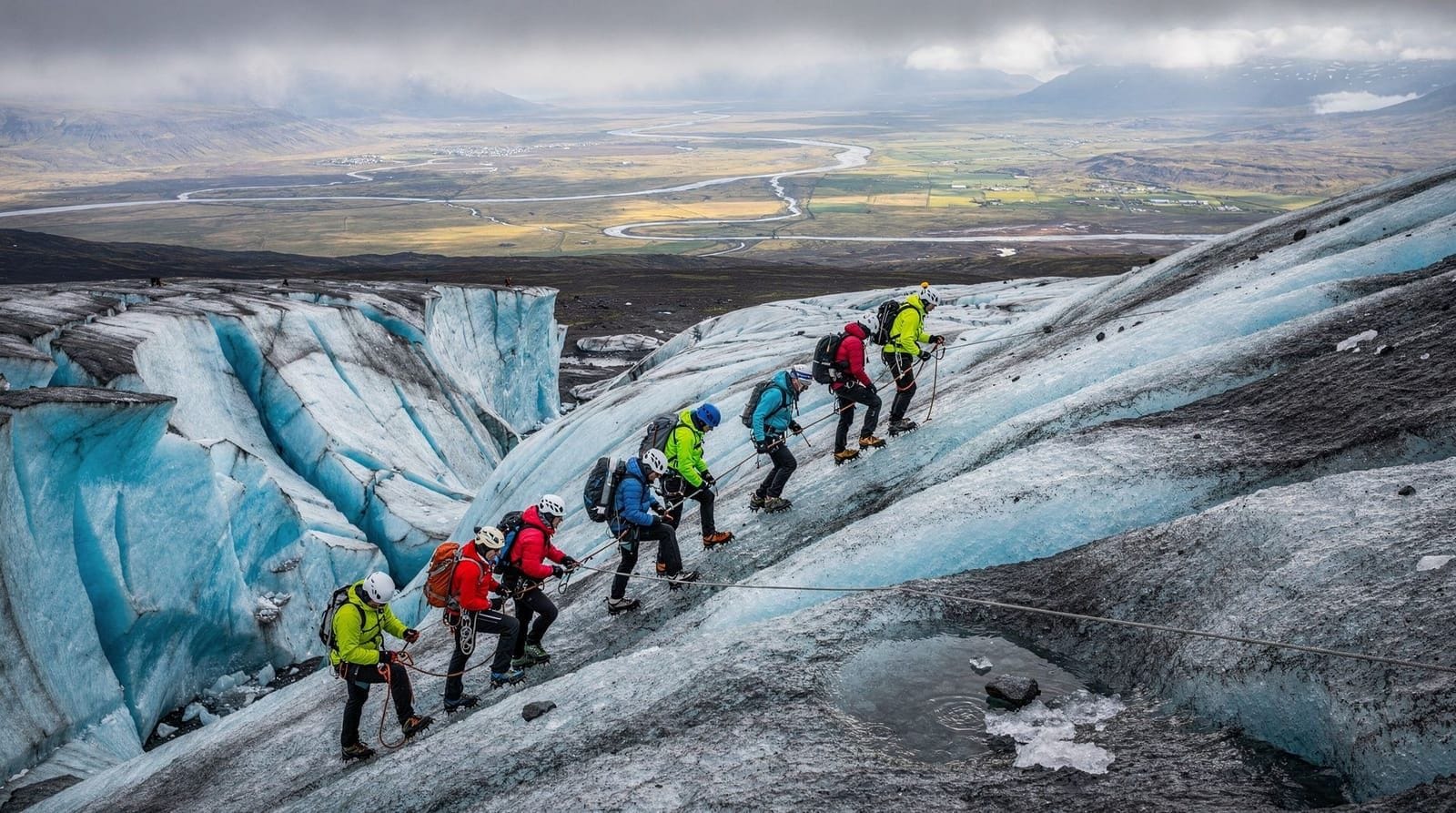
Glacier hiking with a certified operator is statistically safe — serious accidents are rare. Insurance considerations:
- Confirm “glacier hiking” or “guided glacier hike” is covered (some policies class this as standard hiking; others as hazardous activity)
- Check the medical limit — a rescue from the middle of Vatnajökull requires helicopter access, which costs €5,000–20,000
- Some operators require confirmation of insurance before departure — check your booking documents
Winter self-drive insurance considerations
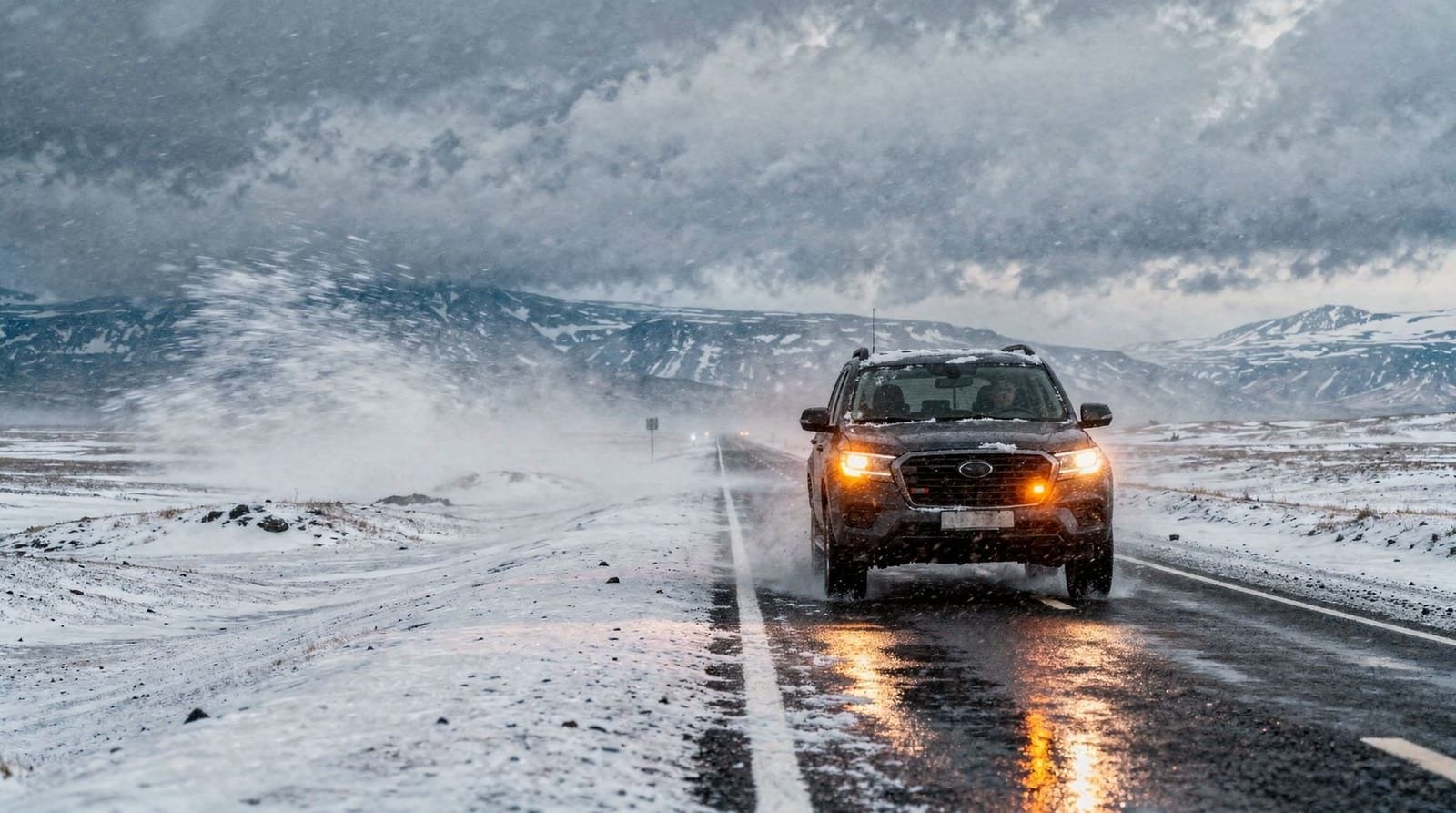
If your trip includes winter self-driving on Route 1, insurance sits alongside — not instead of — good route planning: check road.is before setting out, carry the 112 Iceland app, and confirm your policy covers personal injury if you are a passenger in a rescue vehicle or another driver’s car after a shared-road incident. See our full driving in Iceland guide for the practical side.
Ice cave tour insurance
Ice cave tours take place inside glaciers. They are guided, and safety records are good. Insurance considerations:
- Check for “underground activities” exclusions — some policies specifically exclude activities inside caves or underground
- Ice cave tours run November–March; cold-weather medical conditions (hypothermia, frostbite) should be covered
Super jeep and F-road tours
As a passenger in an operator’s super jeep on an F-road, you are on a commercial tour. Personal injury coverage under your travel insurance applies as a passenger. The vehicle and its insurance are the operator’s responsibility.
If you rent a 4x4 yourself and drive F-roads, your rental car insurance terms apply to the vehicle. Your travel insurance applies to personal injury. Ensure both are in order before driving remote F-roads.
Snowmobiling
Snowmobiling is frequently excluded from standard travel policies. It is typically available as a paid add-on (10–15% premium addition). If you plan to snowmobile (glacier snowmobile tours near Jökulsárlón are popular), check your policy before booking the tour.
Pre-existing conditions and Iceland
Iceland is a destination some travellers choose specifically for physical activity — hiking, glacier walks, horse riding. Pre-existing conditions that affect physical activity should be:
- Declared to the insurer at purchase: Failure to declare is grounds for claim refusal
- Discussed with your doctor before the trip: Confirm fitness for the planned activities
- Relevant medications packed in sufficient supply
Common conditions that require specific declaration: cardiovascular disease, diabetes, asthma (cold air can trigger), joint problems, recent surgery, pregnancy.
Iceland’s hospitals are well-equipped for emergencies but are far from specialist centres for complex conditions. The evacuation component of your insurance is particularly important if your condition could require treatment beyond Landspítali’s capabilities.
The 112 Iceland app — not insurance, but works alongside it
Download the 112 Iceland app (free, iOS and Android) before you enter remote areas. If you need mountain rescue, the app sends your GPS coordinates to the rescue coordination centre, which significantly reduces search times and therefore costs.
This does not reduce your insurance need, but it may reduce the scale and cost of a rescue. Register your itinerary on safetravel.is as well — this gives rescue services a starting point if you go missing. See safetravel emergency info.
Comparing policies: what to actually look for
Insurance policies are full of small print that matters. Here is a practical guide to reading Iceland-relevant policy terms:
Search and rescue clause: Look for the exact words “search and rescue” in the policy document. Some policies cover “emergency evacuation” but not the cost of search operations that precede an evacuation. In Iceland, a multi-day ground search before a helicopter evacuation is possible — you want coverage for both phases.
Adventure activities definition: Policies differ on what constitutes “hazardous activity.” Some define glacier hiking as hazardous; others do not. Read the list carefully. If the policy has a “hazardous activities list” and your planned activity is on it, you need an explicit endorsement (add-on) for coverage.
Exclusions for “obvious risk”: Some policies exclude claims if the insured “knowingly exposed themselves to unreasonable risk.” This clause has been used to deny claims after incidents at known dangerous locations (certain cliff faces, approaching active eruptions beyond warning signs). Follow official guidance, stay within safety barriers, and register your routes — this creates a paper trail showing responsible behaviour.
Pre-existing conditions: Declare everything relevant when you buy. Failure to declare a condition (cardiovascular, respiratory, orthopedic) that subsequently contributes to a claim gives insurers grounds to void coverage entirely.
Volcanic activity exclusion: Many policies exclude claims “arising from volcanic eruption” under a natural disaster clause. This is especially relevant on the Reykjanes Peninsula where eruptions have caused road closures, Blue Lagoon closures, and flight disruptions. A policy that explicitly includes volcanic disruption for trip cancellation/curtailment is worth the premium.
What to do immediately after an incident
The order of priority:
- Safety first: Medical treatment, rescue, shelter. Documentation is secondary to survival and health.
- Call 112 if emergency rescue is needed.
- Call your insurer’s 24-hour emergency line as soon as practicable. Most policies require notification within 24–48 hours of an incident for certain claim types. The emergency line number should be stored in your phone before you travel.
- Collect documentation: Medical reports, police reports (for theft or accidents), receipts for any emergency expenses, flight delay/cancellation certificates, accommodation invoices.
- Submit the claim: Most insurers allow online claim submission. Do it promptly — policy deadlines for claim submission are typically 30–90 days from the incident.
Do not: Pay out-of-pocket for a medical procedure without contacting your insurer first if possible. Many insurers have preferred providers or can arrange direct billing with Icelandic hospitals, which prevents large upfront costs.
Annual multi-trip vs single-trip policies
Frequent travellers often default to an annual multi-trip policy because it is cheaper overall, but Iceland-specific coverage is where these policies most often fall short. Many annual plans cap each trip at 30 or 45 days (fine for most Iceland visits) but exclude “winter sports” and “hazardous activities” as standard, requiring a separate add-on that has to be purchased explicitly, not assumed to be bundled. Before relying on an existing annual policy for an Iceland trip:
- Check whether glacier hiking, ice caving and snowmobiling are named in the winter sports or hazardous activities add-on, not just implied by a general “outdoor activities” clause.
- Confirm the search-and-rescue limit on the annual policy — some entry-level annual plans cap this well below the €50,000+ that a genuine highland rescue can cost.
- If you already hold an annual policy that falls short, a single-trip “top-up” policy for the Iceland dates specifically covering the gap is usually cheaper than upgrading the whole annual plan.
A single-trip policy bought specifically for Iceland, with adventure activities and search-and-rescue explicitly listed, is often the simplest route for a one-off visit — and removes the guesswork of interpreting an annual policy’s small print against Iceland’s specific risks.
Insurance and Iceland’s entry requirements
Visa-free visitors are not asked to show insurance at the border, but airlines and rental car companies increasingly ask about coverage informally, and it matters for ETIAS applicants and anyone confirming their entry requirements through the do you need a visa for Iceland guide — both are worth checking well before booking flights, since the insurance question is easiest to resolve at the same time as the visa question. Keep a digital and printed copy of your policy summary and emergency contact number; some Icelandic hospitals and rescue coordinators ask for it directly during an incident, and having it ready saves time when it matters most.
Frequently asked questions about travel insurance for Iceland
Is the EHIC/GHIC enough for Iceland?
No. It covers emergency state healthcare only. It does not cover mountain rescue, repatriation, adventure sports injuries, or trip cancellation. Get travel insurance on top of your EHIC.
Does my credit card travel insurance cover Iceland?
Possibly, in part. Credit card travel insurance typically covers trip cancellation and basic medical, but frequently excludes adventure activities and has lower coverage limits than standalone policies. Check the specific terms. Most credit card policies have a €100,000 medical limit — sufficient for most scenarios but potentially not for major incidents with repatriation.
Will travel insurance cover me if I drive on an F-road?
Travel insurance does not directly cover vehicle damage — that is car rental insurance. Your rental car insurance will almost certainly be void on F-roads if you have an unsuitable vehicle (most do: rental cars are for roads, not F-tracks). For personal injury on an F-road as a passenger or pedestrian, travel insurance should apply (check your policy).
Does travel insurance cover volcanic eruption delays?
It depends on the specific clause. Look for coverage under “natural disasters” or “natural catastrophe.” Some policies explicitly include volcanic eruption; others exclude it. Given Iceland’s current volcanic activity, this clause is worth checking specifically.
What if I need emergency evacuation from the highlands?
You call 112. Iceland’s rescue teams will respond. The cost of the rescue will be billed to you or your insurer. If your policy covers search and rescue (most good adventure travel policies do), your insurer handles the bill. If you have no coverage, you receive a bill.
Do I need to inform my insurer before going to Iceland?
Not usually, but disclose any pre-existing medical conditions when purchasing the policy. Failure to disclose can void coverage for medical claims. Some policies require advance notification before undertaking specific adventure activities — check your terms.
Can I buy travel insurance after I arrive in Iceland?
Some providers allow this, but most exclude events that began before the policy start date. If a volcanic eruption started before you bought your policy, claims related to it will be excluded. Buy before you travel.
How do I make a claim from a remote area in Iceland?
Keep documentation of any incidents: police or rescue reports, hospital receipts, flight cancellation notices. Most insurers have 24-hour emergency lines — store the number in your phone before you travel. For medical emergencies, treatment comes first; paperwork follows.