Snowmobiling in Iceland — glaciers, costs, and what to expect
Reykjavik: South Coast Glacier Snowmobile ride
Can you go snowmobiling in Iceland year-round?
Yes — Iceland's glaciers maintain snowmobile conditions year-round at higher elevations. Mýrdalsjökull (near Vík), Langjökull, and Vatnajökull all offer snowmobiling throughout the year. Summer snowmobiling runs on higher sections where snow coverage is reliable even in July.
Snowmobiling in Iceland — the essentials
| Where | Mýrdalsjökull (from Vík), Langjökull, or Vatnajökull |
| Cost | Around €120–€200 per person for a standard glacier tour |
| Time needed | 1–1.5 hours snowmobiling; 3 hours total with transfer |
| Getting there | Self-drive to the operator’s meeting point, or tour with transfer |
| Best time | Year-round; clear days for the best mountain views |
Iceland’s glaciers provide year-round snowmobiling terrain that’s essentially unique in Europe. While Alpine snowmobiling typically requires winter conditions and specific mountain access, Iceland’s ice caps sit at elevations where snow coverage is reliable throughout the year, even at sea level approaches in winter.
The main glaciers offering snowmobiling are Langjökull (western Iceland), Mýrdalsjökull (south coast, above Katla), and Vatnajökull (south-east). Each offers a different setting and access dynamic, but the experience on all three involves guided convoys across open glacier surfaces with mountain and ice scenery that’s entirely unlike anything in mainstream European winter sports.
Mýrdalsjökull — south coast snowmobiling
Mýrdalsjökull sits above Vík and the south coast, covering the Katla volcanic system. Snowmobile tours here are primarily run from Vík or from operators on the south coast highway.
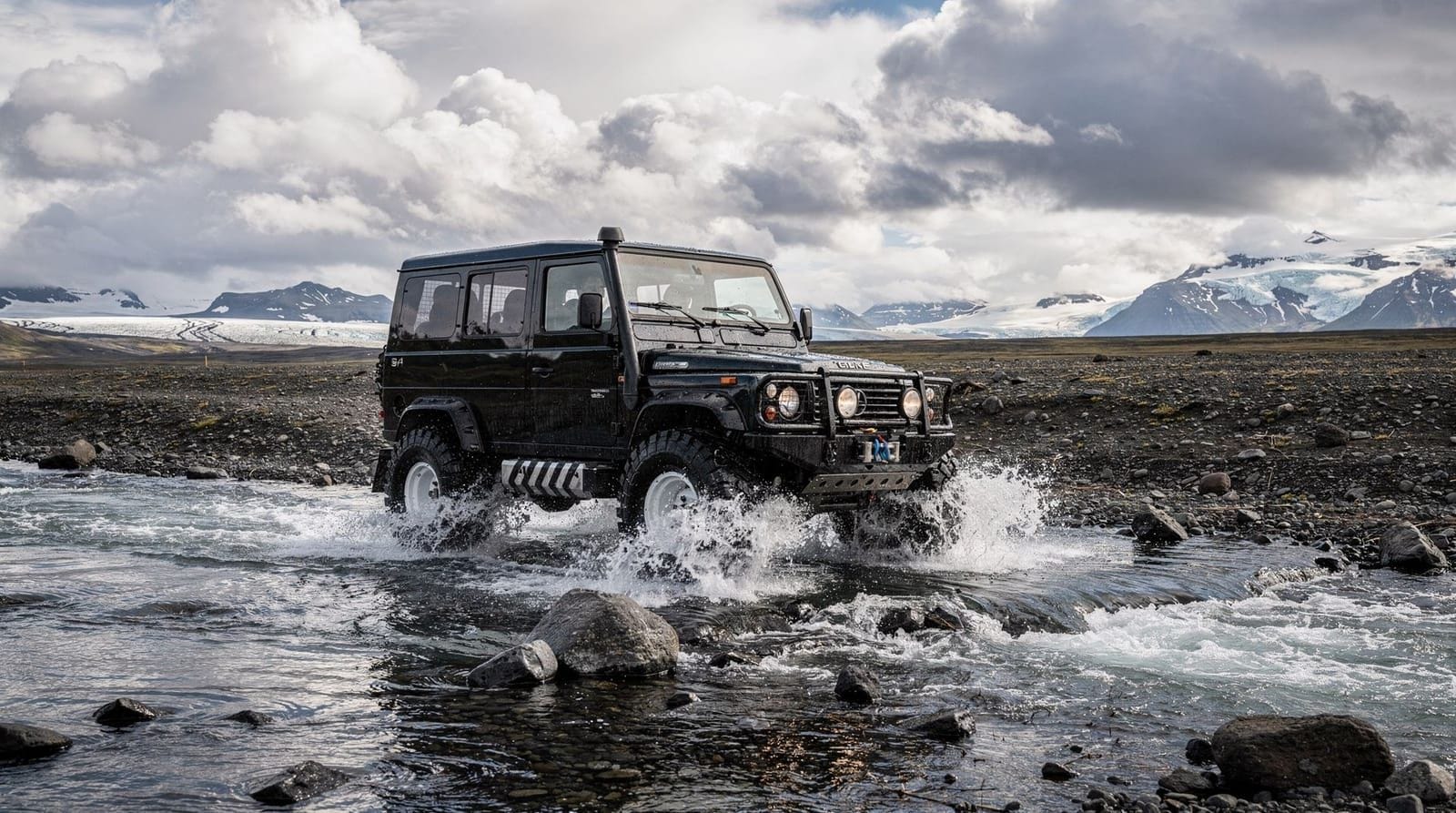
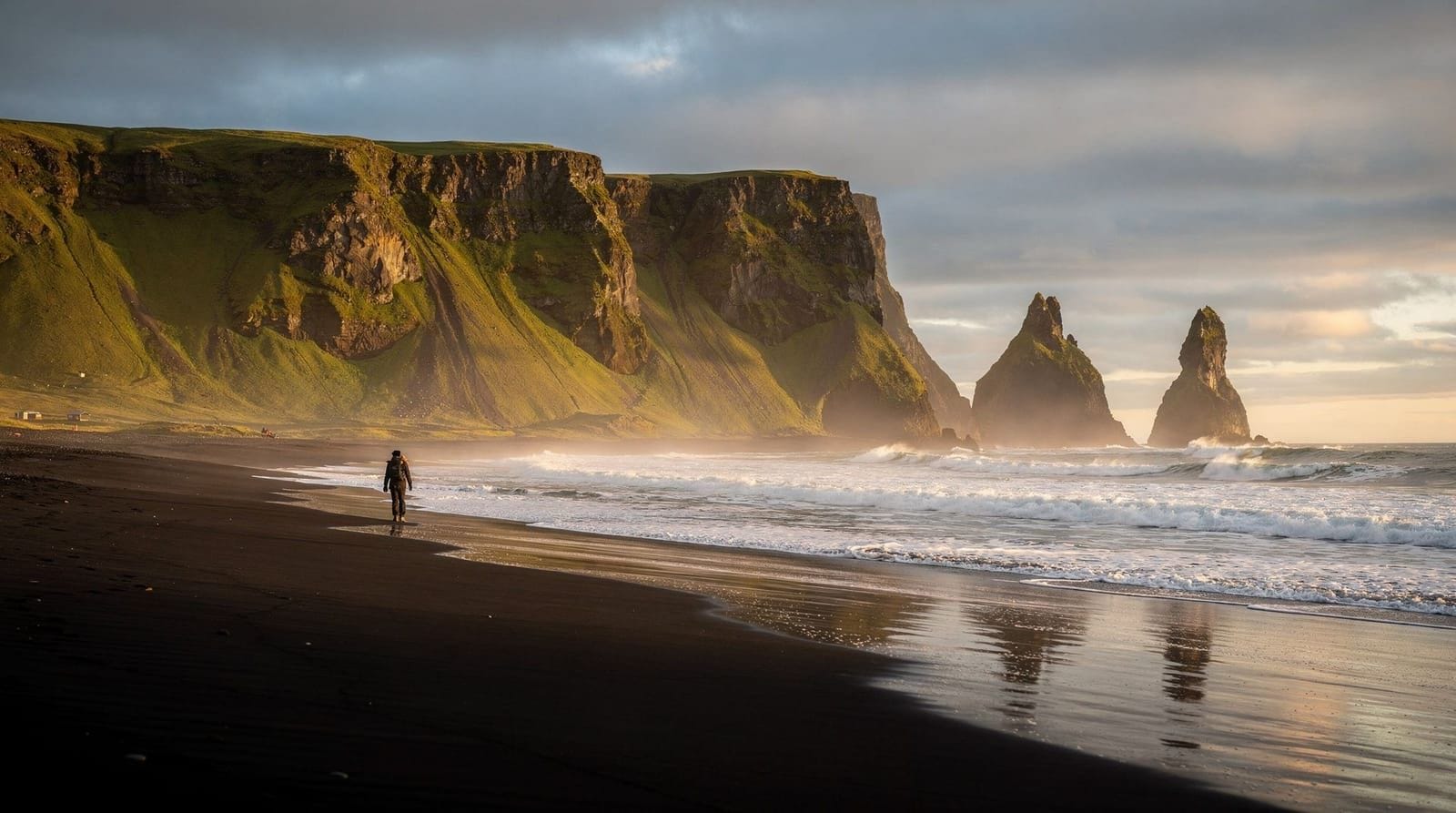
The approach involves a jeep transfer up the glacier access road (Mýrdalsjökull slopes steeply from the south coast), followed by snowmobiling on the upper glacier plateau. The view from up here is exceptional on clear days: Reynisfjara black sand beach and the Atlantic to the south, the highland interior to the north, and Eyjafjallajökull (the 2010 eruption volcano) to the west.
The snowmobiling portion typically runs 1–1.5 hours on the glacier. Tours including jeep transfer from Vík last about 3 hours total.
Seasonal note: Mýrdalsjökull snowmobiling runs year-round. Summer tours operate on the upper glacier where snow coverage is reliable. Winter adds the additional drama of low-light conditions and occasional northern lights opportunities.
Mýrdalsjökull snowmobile adventure from Vík
Combining snowmobiling with south coast activities
Snowmobiling at Mýrdalsjökull pairs naturally with other south coast activities. If you’re driving from Reykjavík:
- Morning: Seljalandsfoss and Skógafoss waterfalls
- Midday: Sólheimajökull glacier hike (15 km west of Vík)
- Afternoon: Snowmobiling at Mýrdalsjökull (from Vík)
- Evening: Reynisfjara black beach and Vík town
This is a long day (12+ hours including Reykjavík departure and return), but logistically achievable if you leave early.
South coast glacier snowmobile ride from Reykjavík
What the snowmobiling experience is like
Equipment: Operators provide insulated overalls (important — the wind chill at glacier elevation at speed is significant even in summer), helmets, gloves, and goggles. You need sturdy boots; waterproof footwear is advisable but operators sometimes have spare gear.
Machine familiarisation: Most tours include a 15–20 minute briefing and slow-speed practice before heading onto the open glacier. Snowmobiles have throttle and brake controls — straightforward even for first-timers. The main learning curve is managing throttle smoothly to avoid jerky acceleration.
The riding: You follow the guide in single file. On flat, open sections, the pace is brisk — the sensation of moving across a white glacier at 40+ km/h with mountain views is one of those experiences that’s genuinely memorable. Guides stop at scenic points for photos.
Challenges: First-timers sometimes find sustained riding more physically tiring than expected — gripping the handlebars and managing body position on uneven surfaces engages core muscles. Two-person machines reduce individual effort since the passenger doesn’t control the machine.
Safety and honest risk assessment
Snowmobiling has a meaningfully higher accident rate than glacier hiking — the machinery introduces injury possibilities that don’t exist on foot. Rollovers happen when riders hit unexpected terrain transitions at speed. Operators using well-maintained modern machines with experienced guides reduce this risk substantially; cut-price operators with older machines and minimal briefing increase it.
Recommended precautions:
- Follow the guide’s pace precisely — don’t speed up on open sections just because it feels tempting
- Keep both feet on the footrests at all times during riding
- Never attempt to stand while riding
- Maintain sufficient distance from the machine ahead (guides specify this)
The crevasse risk on snowmobile tours is managed by strict route discipline. Guided convoys stay on assessed-safe terrain; any deviation from the route is prohibited for this reason.
Langjökull alternative
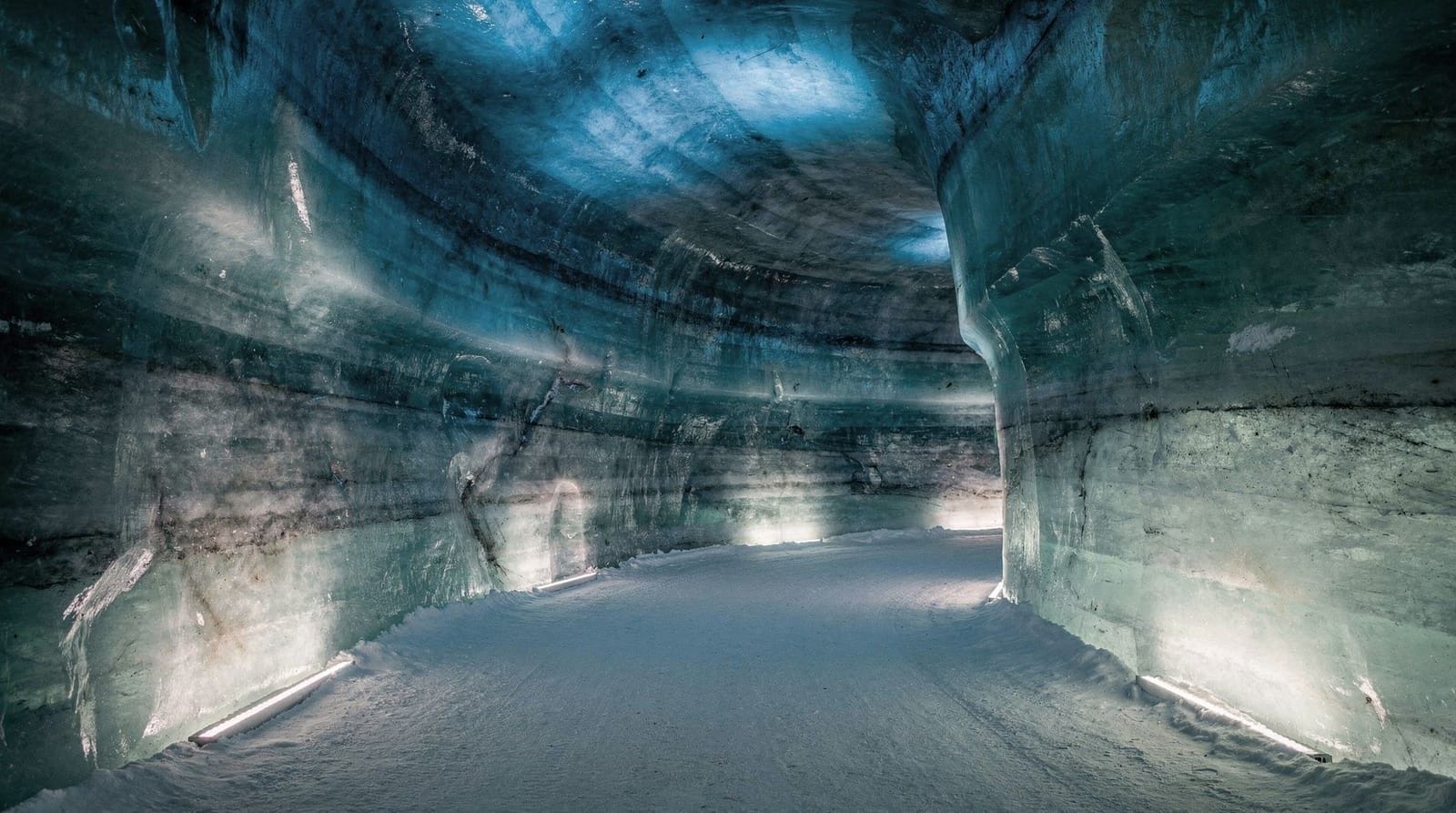
While this guide focuses on south coast snowmobiling, it’s worth noting that Langjökull in western Iceland is arguably Iceland’s premier snowmobiling destination. Located roughly 2 hours from Reykjavík (via Route 1 and Route 35), Langjökull’s summit plateau offers excellent snowmobiling terrain and is also the location of the Into the Glacier ice tunnel.
Combined tours (ice tunnel visit + snowmobiling) are available at Langjökull and represent good value if you’re in the western region.
Langjökull snowmobiling in detail
Langjökull deserves more than a passing mention because it’s consistently where the most experienced glacier snowmobile operators in Iceland work. The glacier plateau is broad, relatively flat at its summit, and predictably snow-covered even when south coast glaciers are experiencing unusual melt. Routes here cover 15–25 km on a single tour, significantly more distance than the Mýrdalsjökull tours which are constrained by the glacier’s steeper topography.
The approach to Langjökull uses specially modified glacier trucks — massive vehicles with tyres deflated to near-flat pressure for surface grip — making the drive to the snowmobile departure point itself an attraction. The 30-minute transfer from the highland road to the snowmobile area crosses terrain no standard vehicle could negotiate.
Operator names to look for: Arctic Snowmobiles, Glacier Journey Iceland, and Mountaineers of Iceland all run Langjökull operations. The latter is the same company that operates the Into the Glacier tunnel, making combined bookings straightforward.
Combining with golden circle: Langjökull is geographically adjacent to the Golden Circle route — Þingvellir is about 60 km south, Gullfoss is accessed via Route 35 which also serves as the Langjökull approach road. A full day combining Golden Circle highlights with Langjökull snowmobiling is logistically workable.
What happens if the weather changes
Iceland’s weather shifts faster than almost anywhere in Europe. On a glacier, visibility can drop from panoramic to near-zero in under 30 minutes as cloud rolls in from the coast. Experienced guides manage this conservatively:
- If visibility drops below safe convoy distance, guides pause the group and wait
- If visibility is forecast to remain poor, tours may be abbreviated
- If safety threshold is crossed, tours are ended and participants returned to the glacier access point by the support vehicle
For guests, the practical message is: dress as if the weather will be worse than the forecast suggests. Bring an extra layer even on forecast clear days. The glacier environment amplifies wind and cold far beyond what sea-level conditions suggest.
Advanced and private snowmobiling
For experienced riders who find guided convoy tours limiting, some operators offer:
Extended private tours: Guide and one or two participants only, covering more terrain with more flexible pace and more technical routes. Cost is typically 60,000–90,000 ISK (€395–€595) per group.
Multi-glacier expeditions: Combining Langjökull snowmobiling with helicopter transfer to Vatnajökull for snowmobiling on Europe’s largest glacier. Extremely expensive (400,000+ ISK / €2,650+) but unique.
Night tours: In winter, snowmobiling at night under the northern lights or under Iceland’s polar night sky is an increasingly popular option. Not all operators offer this; it requires specific lighting equipment on the snowmobiles and guide familiarity with the route in darkness.
Snowmobiling safety in detail
Beyond the basic safety briefing, there are a few snowmobiling-specific risks worth understanding:
Whiteout conditions: On a uniformly white glacier surface with overcast sky, the horizon disappears — the sky and snow surface look identical. Depth perception vanishes. Guides navigate these conditions using GPS and route knowledge; riders should reduce speed and increase following distance.
Hypothermia awareness: Wind chill at 40 km/h at -5°C ambient is equivalent to approximately -18°C effective temperature. The full insulated oversuit and helmet provided by operators are essential, not optional. Shivering is an early warning sign — signal your guide immediately.
Machine handling: First-time riders sometimes discover during the tour that controlling a snowmobile on side-slope terrain requires more physical engagement than expected. If you feel uncertain about terrain at any point, slow to walking pace and inform your guide. No competent guide will pressure you to continue beyond your comfort level.
Snowmobiling physics and technique
For first-time snowmobile riders, a few technical points make the experience more comfortable:
Throttle control: Snowmobiles respond to thumb throttle (right hand). The common mistake is holding the throttle wide open on flat sections and then suddenly releasing it — this creates a seesaw effect in convoy that backs up into the riders behind you. Smooth, gradual throttle application and release keeps the convoy flowing evenly.
Weight distribution: Unlike a bicycle or motorcycle, where leaning into turns is instinctive, snowmobile cornering uses counterweight — leaning slightly outward in gentle turns keeps the machine tracking its intended path on packed snow. On steeper side-slopes, shifting body weight uphill keeps the machine from sliding downhill. Guides explain this in the briefing; the technique becomes natural within 10–15 minutes of riding.
Trail following: In convoy, follow the exact track of the snowmobile ahead of you. The guide’s machine compresses the surface and makes it predictable. Deviating even slightly off the track on a glacier surface can mean hitting unpredictable snow depth or hidden surface features.
Braking: Snowmobiles brake on the rear track — pulling the brake lever (left hand) slows the machine. Hard braking on a slope causes the rear to slide, which is startling for beginners. Ease into braking with gradual pressure, especially on descents.
Costs in detail — what you’re actually paying for
Snowmobile tour pricing in Iceland seems high at €120–€200 per person until you understand the cost structure:
Machine costs: A new snowmobile costs €8,000–€15,000. Operators need to service, insure, and eventually replace machines. High alpine wear is significant — glaciers are harder on equipment than groomed trails.
Transportation: Getting people to the glacier requires specially equipped transport (modified trucks or snowcats), which add operational costs far beyond a standard bus.
Guide costs: Glacier guide certification is a skilled qualification. Guides working on crevassed terrain are responsible for multiple participants’ safety simultaneously. Compensation reflects the responsibility.
Season: A typical Iceland snowmobile operator runs 5–7 months of peak season. All annual costs (maintenance, insurance, training, storage) are amortised across this window.
Compared to alternatives: A 2-hour snowmobile tour at €120 compares to a 3-hour glacier hike at €80, a Silfra snorkel at €130, or a boat trip at €100. The pricing is aligned with the Iceland adventure market broadly.
Mýrdalsjökull in depth — the volcano-glacier combination
Mýrdalsjökull is Iceland’s fourth-largest ice cap (596 km²) and the one with the most immediately dramatic geological context: Katla volcano directly beneath. For snowmobile riders, this context transforms what would otherwise be a scenic winter ride into something more layered.
The upper snowmobile area on Mýrdalsjökull offers views that encapsulate south Iceland in a single panorama: the Atlantic coast and black sand beaches to the south, the Westman Islands archipelago visible offshore on clear days, Eyjafjallajökull to the west (the 2010 eruption volcano), and the green south coast valleys below.
The glacier surface here also shows the effects of Katla’s geothermal heat more directly than the surface tours suggest: sub-glacial melt means the glacier above Katla is thinner and more dynamic than comparable altitude ice caps without volcanic heat. Guides who work this area regularly notice year-to-year surface changes that reflect subglacial activity.
The snowmobiles on Mýrdalsjökull typically access the glacier via the mountain track from near Vík — a steep jeep track that is an experience in itself before reaching the snow. The track itself requires a guide vehicle; most snowmobile operations include this transfer as part of the tour package.
Frequently asked questions about snowmobiling in Iceland
Can children snowmobile in Iceland?
Children under 16–17 typically cannot drive independently but can ride as passengers on two-person machines with an adult driver. Minimum age for passenger riding is around 6–8 years depending on the operator. Confirm with the specific operator before booking.
What clothing should I bring?
Operators provide insulated overalls, helmet, and gloves. Underneath, dress in layers — thermal base layer, fleece, and a windproof mid-layer minimum. Your own waterproof boots are better than rental options if available. Cold and wind at glacier elevation at speed is significant even in summer.
How do snowmobiling tours work in a group?
You ride in convoy behind the guide. Group sizes vary: smaller specialist operators run 4–8 snowmobiles; larger commercial operations can have 15–20. Smaller is better for the experience. The guide determines pace and routing for the entire group.
Is there a weight limit?
Most machines have a combined rider/passenger weight limit of 200–230 kg. Solo riders above 120 kg may find some older machines challenged — worth confirming when booking.
Can I book same-day?
Possible in shoulder season but risky in summer peak. Snowmobiling is popular and the number of machines any operator runs is finite. Book 1–2 weeks ahead for summer, 1 week for winter outside December–January peak.
Is snowmobiling in Iceland better than a super jeep tour?
They deliver different things. Snowmobiling gets you moving under your own control across the glacier surface; a super jeep tour is more passive but covers more varied terrain (highland tracks, river crossings, multiple stops) and doesn’t require any physical activity. Many visitors combine both across a trip rather than choosing one over the other — a super jeep to reach remote areas, snowmobiling for the glacier itself.
Do I need glacier hiking experience to snowmobile?
No. Snowmobiling and glacier hiking require completely different preparation — snowmobiling needs no fitness beyond sitting upright and managing the throttle and brake, while glacier hiking is a walking activity with crampons. Neither is a prerequisite for the other, and many visitors do both on the same trip as contrasting ways to experience the same ice cap.
Which glacier should you choose
With three realistic options, the decision usually comes down to where the rest of your trip is heading and how much distance you actually want to cover.
Choose Mýrdalsjökull if you’re already driving the south coast and want to add snowmobiling without a major detour — it slots naturally after Sólheimajökull glacier hiking or a south coast day trip.
Choose Langjökull if you’re based in or near Reykjavík, want the longest routes (15–25 km versus Mýrdalsjökull’s steeper, shorter terrain), or want to combine snowmobiling with the Into the Glacier ice tunnel in a single day.
Choose Vatnajökull only if budget and time are not constraints — reaching Europe’s largest ice cap for snowmobiling typically means a helicopter transfer or a significant detour, and the multi-glacier expeditions that include it run into the hundreds of thousands of ISK.
Fitness and who should skip it
Snowmobiling has a lower physical bar than glacier hiking or ice climbing, but it isn’t entirely passive. You need to grip the handlebars, brace your core over uneven surfaces, and hold a semi-crouched position for the duration of the ride — over an hour this is more tiring than it looks in photos. Anyone with lower back problems, recent shoulder or wrist injuries, or vertigo triggered by vibration should consider a two-person machine as a passenger, or choose a lower-intensity glacier activity instead.
Pregnant travellers are generally excluded by operators due to vibration and rollover risk — check directly if this applies to you. Children too young to drive can usually ride as a passenger behind an adult, but confirm the operator’s specific age and weight policy in advance, since it varies more between operators than most Iceland activities.
Top experiences
Bookable activities with verified prices and instant confirmation on GetYourGuide.
Top experiences
Best-rated activities across GetYourGuide and Viator.

Ice Cave by Katla Volcano Super Jeep Tour from Vik
- Viator

Sólheimajökull Glacier Hike – Adventure in a Small Group
- Viator

Ice Cave Tour from Vík
- Viator

Blue Ice Discovery – Guided Glacier Hike from Skaftafell
- Viator

Glacier Hike from Skaftafell - Extra Small Group
- Viator

East Glacial River – Grade 4 Rafting with Drysuits, North Iceland
- Viator