Super-jeep tours in Iceland — what they are and when to book one
Reykjavik: Landmannalaugar super jeep day tour
What is an Iceland super-jeep tour?
A super-jeep tour uses heavily modified 4x4 vehicles with oversized low-pressure tyres that can drive on river crossings, snow-covered highlands, and glacier surfaces that are inaccessible to standard vehicles. They access Landmannalaugar, Þórsmörk, Askja, glacier interiors, and off-road areas that no rental car can legally or safely reach.
What super-jeep tours actually access
| Where | Highlands, Landmannalaugar, Þórsmörk, Askja, glacier interiors |
| Cost | Around 80,000–150,000 ISK private; group tours less per person |
| Time needed | Full day (8–12 hours) for most highland destinations |
| Getting there | Only by super-jeep or on foot — standard rental cars are prohibited |
| Best time | F-roads typically open late May/June to October |
Iceland’s most dramatic landscapes — the highlands, active volcanic areas, glacier interiors, and remote F-road territories — are off-limits to standard rental cars for good reason. F-roads involve river crossings without bridges, kilometres of unbridged highland track, and terrain that changes character dramatically after rain or snowfall. The legal prohibition on standard vehicles attempting F-roads exists because of the real cost of rescue operations when tourists make the attempt anyway.
Super-jeeps resolve this constraint. These vehicles — heavily modified 4x4s with outsized tyres running at extremely low pressures — can ford rivers, traverse snow fields, and drive across glacier surfaces that defeat ordinary 4x4 hire cars. They’re driven by guides who typically know specific routes intimately and carry the equipment to self-rescue if the vehicle becomes stuck.
The destinations accessible by super-jeep represent some of Iceland’s most spectacular terrain: the rhyolite mountains of Landmannalaugar in the highlands, the green valley of Þórsmörk surrounded by glaciers, the volcanic caldera at Askja in the north, and the interior Highlands that see perhaps 1% of Iceland’s total tourist visits.
The main super-jeep destinations
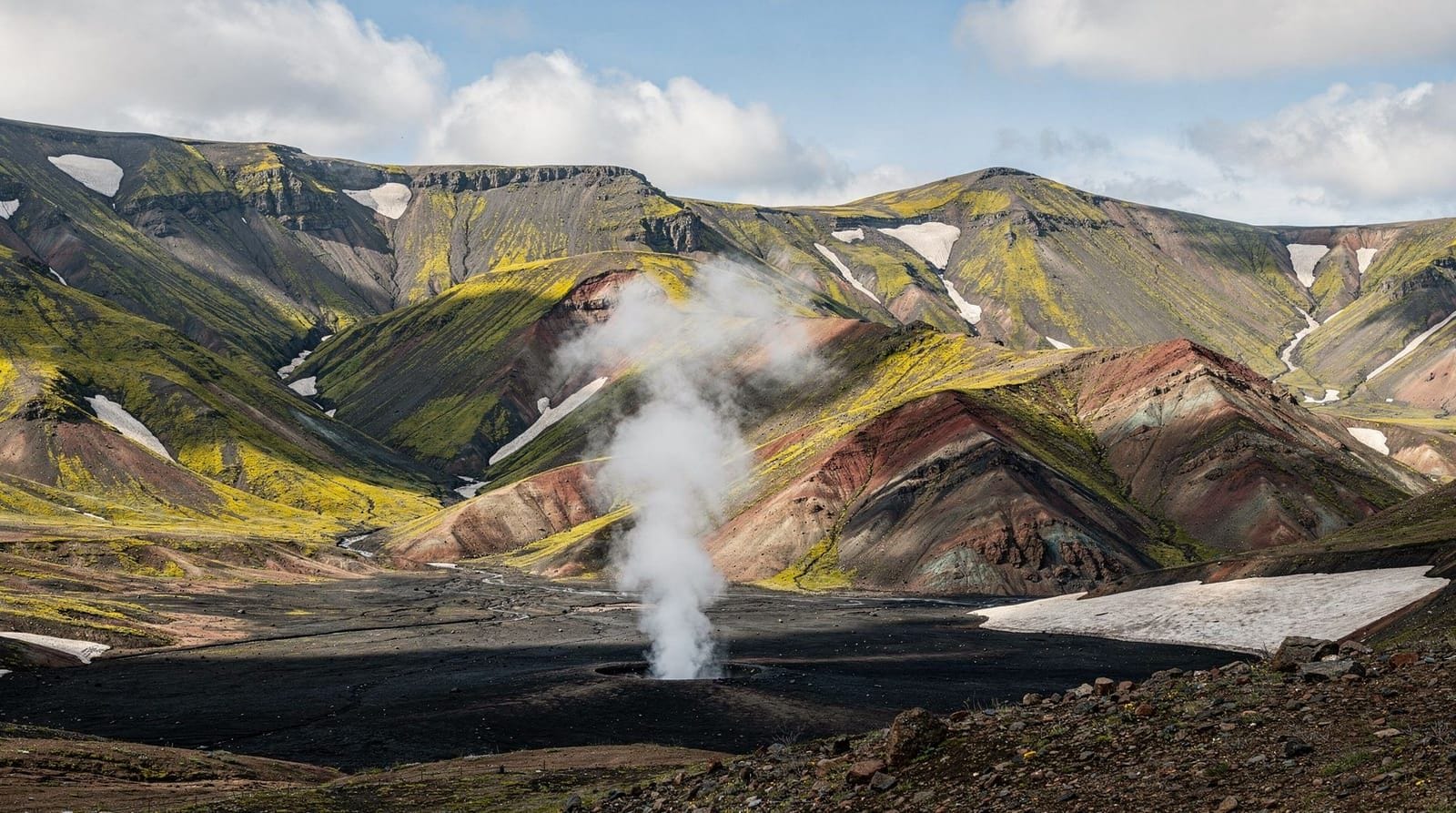
Landmannalaugar: The multicoloured rhyolite mountains of the central south highlands, combined with the natural hot spring at Landmannalaugar itself, draw most highland super-jeep traffic. The route from Reykjavík involves the F26 or F208, both proper highland roads with river crossings and soft volcanic terrain. Tours run June–September when roads are open.
Þórsmörk (Thorsmork): A valley in the southern highlands, accessible via the Þórsmörk F-road and the Krossá river crossing — one of Iceland’s most frequently cited dangerous river crossings for unprepared drivers. Tour operators from south-iceland and from Hvolsvöllur (the village nearest the access road) run daily super-jeep departures in summer.
Þórsmörk super-jeep day tour from Hvolsvöllur
Askja: The remote volcanic caldera in the north-east, accessible via the F910 across the interior desert. Tours from Mývatn area run through the summer months. The landscape en route — black lava desert, dust storms, and the brilliant Öskjuvatn crater lake — is like nowhere else in Iceland.
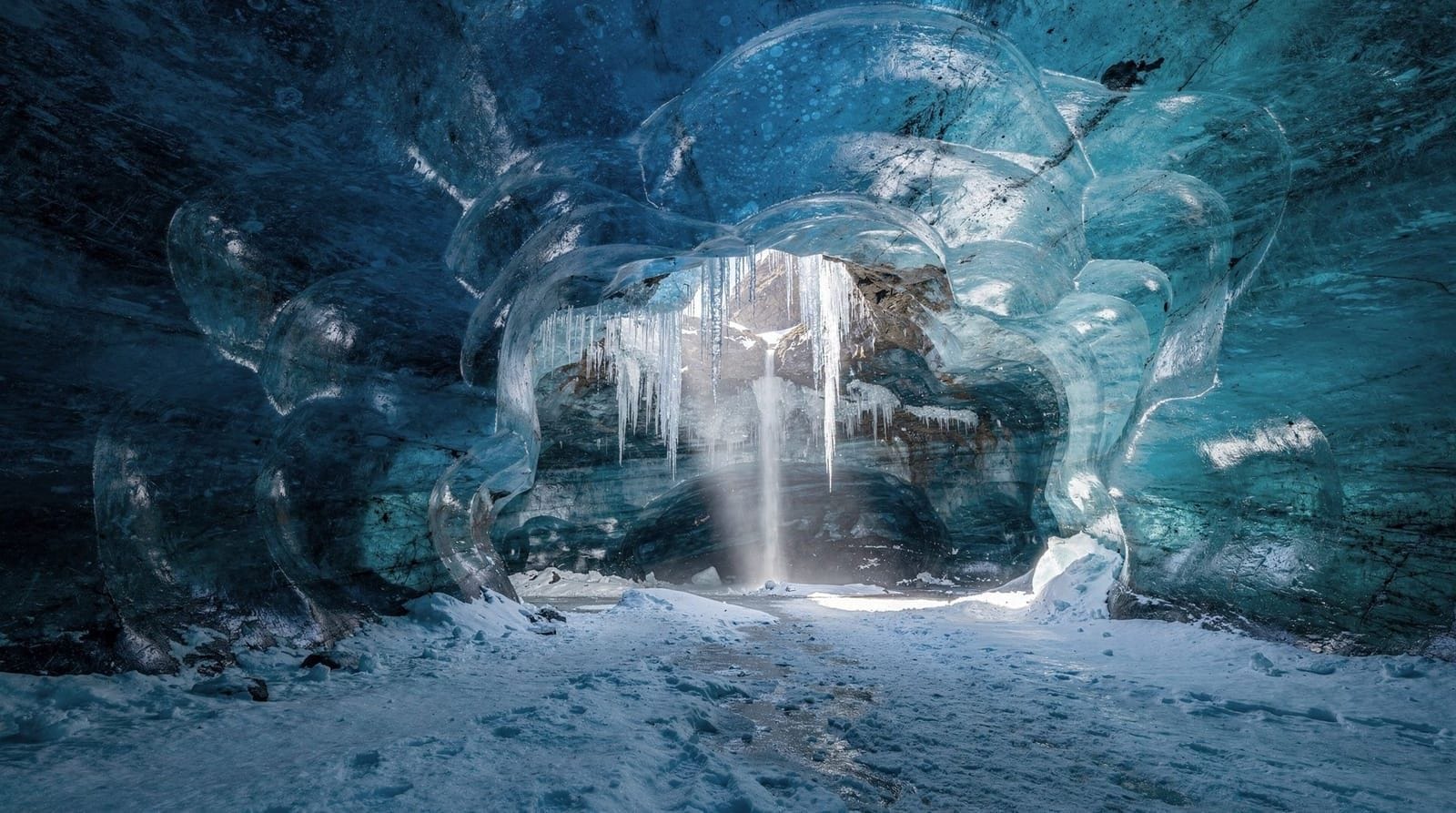
South coast glacier access: Super-jeeps are used by ice cave operators to access glacier cave entrances that can’t be reached by normal vehicles. The jeep itself becomes part of the experience — the low-pressure tyre drive across a glacier surface is sensory and memorable.
The highlands interior: Uninhabited Iceland. Super-jeep operators offer bespoke multi-day highland traverses, crossing from south to north or accessing the Kerlingarfjöll geothermal highlands.
South coast super-jeep tours
For south coast visitors, super-jeep tours offer a faster, more flexible, and higher-access alternative to the large bus tours:
South coast by super-jeep: Standard south coast sights — waterfalls, black beach, glacier — covered in a vehicle that can pull off the main road, access restricted areas, and stop wherever conditions are interesting. Group sizes are typically 6–8 maximum.
Ice cave + super-jeep combo: Many Vatnajökull ice cave operators use super-jeeps to access cave entrances. This is integral to the product — the vehicle’s terrain capability is why the cave is reachable.
South coast full-day tour by super-jeep from Reykjavík
North Iceland super-jeep: Askja and beyond
Lake Mývatn in north Iceland is the base for super-jeep adventures into the volcanic highlands to the south, including the Askja caldera. This area receives a fraction of the visitors that the south coast does — it’s genuinely remote, genuinely dramatic, and the super-jeep is the only practical way for most visitors to reach it.
The Askja route from Mývatn involves hours of highland driving across black lava desert. The crater lake Öskjuvatn is a vivid blue at the bottom of the caldera, and the adjacent Víti explosion crater contains geothermally heated water where swimming is possible (though recently closed intermittently due to volcanic activity — always check current status before planning a swim here).
Askja volcano wilderness super-jeep tour from Mývatn
How to choose a super-jeep operator
The super-jeep operator market is less standardised than the glacier hike or whale-watching sectors. Some operators run genuinely excellent small-group experiences with guides who have deep knowledge of specific areas; others are relatively basic transport providers.
Key questions to ask:
- What is the maximum group size? (8 is fine; 12 is marginal; more than that defeats the small-group advantage)
- What is the guide’s specific experience with this route?
- What happens if the weather or F-road conditions prevent access? (Full refund policy should be standard)
- Is the vehicle equipped for emergencies? (Communication, tow-out equipment, first aid)
Red flags: Operators who guarantee specific access to F-road destinations regardless of conditions are either lying or taking unsafe risks. F-road access depends on current conditions; good operators communicate honestly about uncertainty.
Private vs. group super-jeep tours
Private tours (just your group in one super-jeep) are available from most operators at a premium — typically 80,000–150,000 ISK (€530–€1,000) for a private full-day highland tour. This is expensive but transforms the experience: you set the pace, the guide focuses entirely on your interests, and you can request route modifications.
Group tours (4–8 passengers) are the standard product and represent good value for the access they provide. The social dynamic with a small group is generally fine — highland super-jeep passengers tend to be seriously interested in Iceland’s landscape rather than casual tourists.
Seasonal access — when F-roads open
Highland F-roads typically open between late May and late June, depending on snowmelt that year. They close again in October, earlier if early snowfall arrives. The exact opening dates are published by the Icelandic Road Administration (Vegagerðin) and updated in real time — operators plan around these dates and will inform you of any closures affecting your tour.
Some super-jeep tours run year-round on routes that don’t require F-road access — glacier ice cave tours, winter coastal routes, and volcano area access. These use the vehicle’s terrain capability for winter conditions rather than F-road river crossings.
Super-jeep vehicles — what they actually are
The term “super-jeep” is used loosely in Iceland marketing, so it helps to know what the genuine article looks like. Real super-jeeps for highland touring are modified production 4x4 platforms — most commonly Toyota Land Cruiser 200 series, Land Rover Defender 110, or occasionally Nissan Patrol — transformed through:
Tyre modification: The defining characteristic. Tyres typically measure 35–44 inches in diameter (vs. 28–30 inches on a standard Land Cruiser) and are run at 0.3–0.8 bar pressure — far below the minimum pressure that would damage road tyres. At these pressures, the tyre footprint is enormous, distributing vehicle weight over a large surface area. This allows travel on soft terrain (volcanic ash, snow, wet ground) without sinking.
Lift kits and suspension: Extended suspension travel to accommodate the larger wheels and to handle severe terrain without bottoming out. Most super-jeeps have 100–200mm of additional lift compared to the standard vehicle.
Recovery equipment: Genuine working super-jeeps carry high-lift jacks (Hi-Lift), tow straps, recovery boards, and sometimes winches. Guides are trained in self-recovery procedures. Breakdowns in the highland interior happen, and the ability to self-recover determines whether the group waits 30 minutes or 6 hours.
Passenger capacity: Modified bench seating typically accommodates 6–10 passengers with luggage. The vehicle can feel cramped on longer journeys — this is a reasonable trade-off for the access they provide.
What super-jeeps are not: many companies market standard 4x4 minibuses on paved or well-maintained gravel roads as “super-jeep tours.” Look for vehicles with oversized tyres, not just large body size, when assessing what you’re actually booking.
River crossings — the defining highland challenge
F-road navigation in Iceland is largely about rivers. Unlike mountain roads in most European countries, Icelandic highland roads cross glacial rivers without bridges — the rivers are too dynamic (changing course, flooding seasonally) for permanent bridge infrastructure to be practical on many routes.
A glacial river crossing in an Icelandic super-jeep involves:
- Guide assesses depth and flow speed at the crossing point (often walking it first or probing with a stick)
- Vehicle enters at an angle, moving slightly downstream to maintain momentum
- Steady consistent speed maintained — stopping mid-crossing allows water pressure to build against the underside
- Bow wave in front of the vehicle is monitored — if it rises toward the hood, the depth is approaching dangerous
The famous Krossá river crossing into Þórsmörk has defeated standard 4x4 vehicles repeatedly. The same crossing is managed routinely by experienced super-jeep operators who know the safe line for different water levels.
For passengers, these crossings are genuinely exciting. Some are shallow (60–80 cm) and fast; others are slower with more depth. The guide’s matter-of-fact approach to something that looks alarming to first-timers is usually reassuring.
What Þórsmörk looks like from the inside
Þórsmörk (Thor’s Forest) is a glacier-surrounded valley about 150 km east of Reykjavík that serves as a practical illustration of why super-jeep tours exist. The valley is ringed by three glaciers — Eyjafjallajökull to the south, Mýrdalsjökull to the east, and Tindfjallajökull to the north — with the Þórsmörk valley floor at roughly 200 metres elevation.
Access requires the Krossá river crossing plus 15+ km of rough F-road. Without a capable vehicle, the valley is inaccessible to most visitors (it’s also accessible on foot from the Laugavegur trail, which many hikers do after completing the 55 km trek). By super-jeep, you arrive in under 3 hours from Reykjavík and can spend several hours walking in the valley before returning.
The valley floor has a hut system with basic accommodation, hot showers, and a small café run by the Icelandic hiking association. Day-trippers by super-jeep typically eat here before returning. The forested sections (birch trees, unusual in Iceland’s generally treeless landscape) give the valley its name and a genuinely different character from the surrounding glacier terrain.
Landmannalaugar — the highland showpiece
Landmannalaugar is the destination that best justifies the super-jeep experience for most visitors. The name translates roughly as “the people’s pools” — a reference to the natural hot spring at the site. But the wider appeal is the surrounding landscape:
The Fjallabak Nature Reserve contains the largest area of rhyolite mountains in Iceland. Unlike the uniform basalt that covers most of Iceland, rhyolite is a silica-rich lava that cools differently, producing a range of yellows, reds, greens, pinks, and purples in the mountain surfaces. Combined with obsidian (volcanic glass) flows, black lava, and steam vents, the landscape looks geologically impossible — like a planetary surface from a film set.
The natural hot spring at Landmannalaugar itself (a shallow river pool) is fed by geothermal water mixing with cold runoff. Temperature varies by section — the warmest areas around 38–40°C, cooler where cold water mixes in. Bathing here is free and informal. Bring a swimsuit.
The Laugavegur trek starts at Landmannalaugar and runs 55 km to Þórsmörk over 4 days — one of the most celebrated multi-day hikes in the world. Many hikers use super-jeep transport for the starting or ending logistics.
Access season: Landmannalaugar is accessible by F-road roughly June–September. The specific dates depend on snowmelt. In good years, the road opens in late May; in heavy snow years, it may be mid-June. Operators track opening dates and adjust bookings accordingly.
F-road etiquette and conservation
Super-jeep operators working in the Icelandic highlands are generally conservation-minded — the landscape they work in is their business asset and they have strong incentives to maintain it. However, visitor pressure on highlands is real, and there are behaviours that operators and passengers should both adhere to:
Stay on marked routes: The most important principle. Driving off marked F-roads destroys the lava moss cover that took centuries to grow. This applies to super-jeeps as much as any vehicle — terrain capability is not permission to go anywhere.
No-camping zones: Camping outside designated areas in the highland reserves is restricted. Super-jeep day tours are unaffected; overnight highland tours use established camping locations.
Waste management: The highland interior has no waste infrastructure. Everything brought in comes out. Good operators build this into their operating procedure; some carry portable toilets for longer trips.
Leave-no-trace hot springs: Geothermal pools in the highlands are delicate. At Landmannalaugar, the pool is robust enough to handle the visitor numbers, but remote hot springs accessed by specialist super-jeep tours should be treated with care — no soaps, no contamination.
Frequently asked questions about super-jeep tours in Iceland
What should I wear for a super-jeep highland tour?
Layered warm clothing, waterproof outer layer, and sturdy boots. Highland temperatures are 8–15°C below coastal temperatures in summer and colder in spring/autumn. Some highland areas have persistent wind even on still days. Weather in the highlands changes faster than on the coast.
Can I combine super-jeep access with trekking?
Yes — the Laugavegur trek and Landmannalaugar hiking both involve the same highland areas accessed by super-jeep. Some visitors use super-jeep transport to reach the trailhead and then hike back (or vice versa), which is logistically excellent.
Are children allowed on super-jeep tours?
Most operators accept children. The vehicle ride itself is exciting enough to hold attention. Highland terrain can be rough — small children may find the motion uncomfortable on long drives. Check operator minimums before booking.
Do super-jeeps go on glacier surfaces?
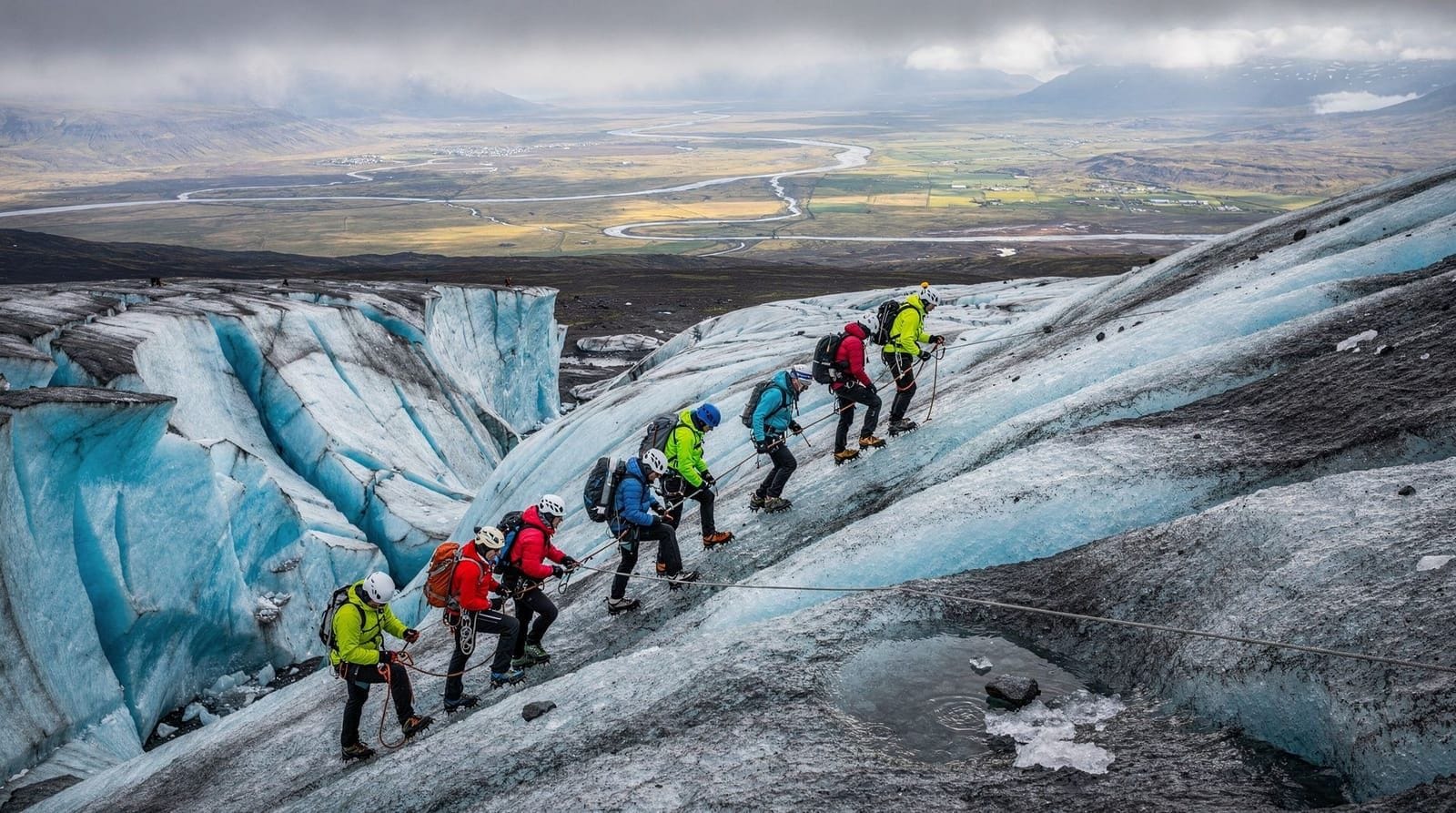
Yes, for ice cave access and snowmobile staging. Some operators offer glacier super-jeep tours specifically (distinct from glacier hikes) — an entirely different type of experience where the driving is the activity rather than preparation for another activity.
What is the maximum weight for super-jeep tours?
Most modified 4x4s accommodate up to 8 adult passengers. Individual passenger weight limits are not typically specified, but vehicles are rated for total payload including luggage.
Is a super-jeep tour better than renting a 4x4 yourself?
For anything involving F-roads or river crossings, yes — self-driving a rented 4x4 on real highland F-roads, especially the Krossá crossing into Þórsmörk, is genuinely risky without local knowledge, and rental insurance typically excludes river-crossing damage entirely. See the 2WD vs 4x4 guide for what a standard rental can and can’t do. For paved and good-gravel routes, self-driving is fine and cheaper; super-jeeps earn their premium specifically on the terrain a rental car legally cannot attempt.
How does a super-jeep tour compare to snowmobiling?
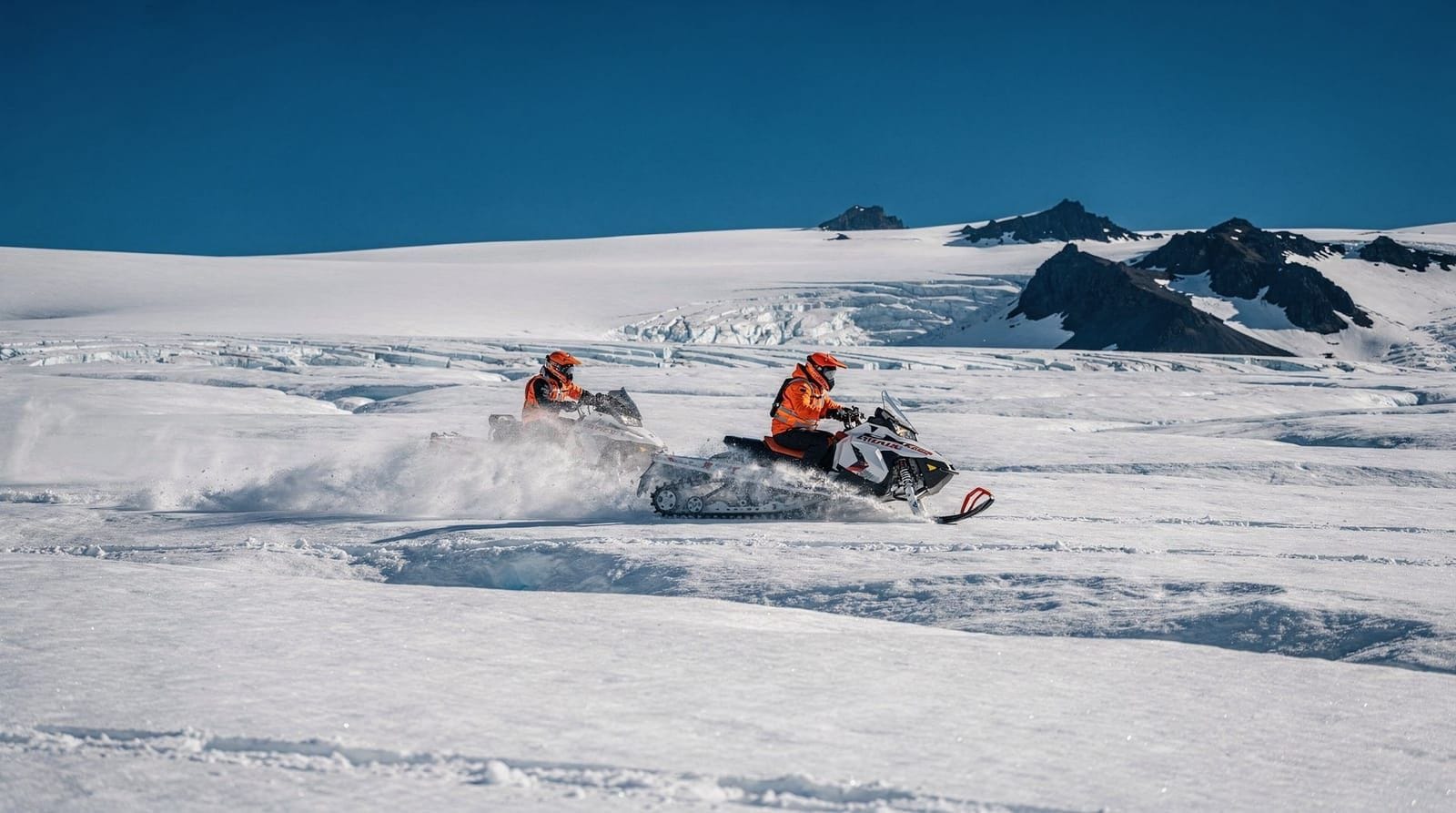
They’re complementary rather than substitutes. A snowmobile tour is a hands-on activity once you reach the glacier; a super-jeep tour is about the journey itself, since the vehicle’s capability is what makes reaching remote highland areas possible at all. Some operators combine both — a super-jeep transfer to a glacier followed by snowmobiling on the ice.
Multi-day highland super-jeep expeditions
Beyond the single-day tours covered above, several operators run multi-day highland expeditions using super-jeeps as mobile base camps — typically 2–5 days crossing the central highlands from south to north or covering a specific region like Kerlingarfjöll and the surrounding geothermal area in depth.
These trips use a mix of mountain huts and, on the more remote routes, tents, and cover significantly more highland territory than any single-day tour can reach. They suit travellers who’ve already done a standard Iceland trip and want genuine backcountry access, rather than first-time visitors — the pace is slower, the logistics more basic (limited showers, simple meals), and the payoff is depth rather than breadth.
Booking these requires more lead time than a day tour, often 2–3 months ahead for summer departures, since group sizes are small and the season is short.
Fitness and comfort on a long highland day
A full-day super-jeep tour is physically undemanding in the sense that you’re seated for most of it, but the terrain itself is genuinely rough — expect to be jolted around on unpaved F-roads for hours at a stretch, which some passengers find more tiring than an equivalent day of walking. Anyone with back or neck problems should mention this when booking; most operators can advise on which seats in the vehicle handle rough terrain more comfortably.
Motion sickness is a real consideration on winding highland routes; if you’re prone to it, sit toward the front and consider medication in advance. Toilet stops on remote routes like Askja can be infrequent and basic (or nonexistent between fixed points), so plan accordingly, especially for children.
Top experiences
Bookable activities with verified prices and instant confirmation on GetYourGuide.
Top experiences
Best-rated activities across GetYourGuide and Viator.

Ice Cave by Katla Volcano Super Jeep Tour from Vik
- Viator

Sólheimajökull Glacier Hike – Adventure in a Small Group
- Viator

Ice Cave Tour from Vík
- Viator

Blue Ice Discovery – Guided Glacier Hike from Skaftafell
- Viator

Glacier Hike from Skaftafell - Extra Small Group
- Viator

East Glacial River – Grade 4 Rafting with Drysuits, North Iceland
- Viator