Iceland highlands
Iceland's central highlands: summer-only F-road wilderness with Landmannalaugar rhyolite mountains, Kerlingarfjöll hot springs, and Askja caldera. 4x4
Reykjavik: Landmannalaugar super jeep day tour
Quick facts
- Best time
- Late June to mid-September ONLY; roads close in all other months
- Days needed
- 2–5 days for a meaningful highlands experience; Landmannalaugar can be a long day trip
- Getting there
- 3–4 hours from Reykjavík to Landmannalaugar; 5–6 hours to Askja — all requiring 4x4 and F-roads
- Budget per day
- 15,000–30,000 ISK / €102–€203 (fuel costs high; guided super jeep tours 20,000–35,000 ISK)
Iceland’s central highlands are a protected wilderness covering roughly a third of the country’s land area and containing none of its permanent population. The interior is a volcanic plateau of lava fields, rhyolite mountains, geothermal fields, glaciers, and river crossings that cannot be accessed legally by any standard passenger car — and cannot be reached at all for eight to nine months of the year. The F-roads that cross the highlands open when snow conditions allow, typically from late June, and close again in September or October depending on the year.
This matters: if you arrive in Iceland before late June or plan to visit in autumn or winter, the central highlands are inaccessible. There are no exceptions. The road closures are enforced and the terrain is lethal for unprepared vehicles.
If you arrive in the correct window with the right vehicle — or join a guided super jeep tour — the highlands deliver landscape experiences that have no equivalent in accessible Iceland.
The F-road requirement
The “F” in F-road designates mountain roads that require 4x4 vehicles with high ground clearance. Standard hire cars — including 2WD SUVs and most crossovers — are not permitted on F-roads. Driving a standard car on F-roads voids all insurance, results in heavy fines, and is likely to damage the vehicle beyond the point of recovery.
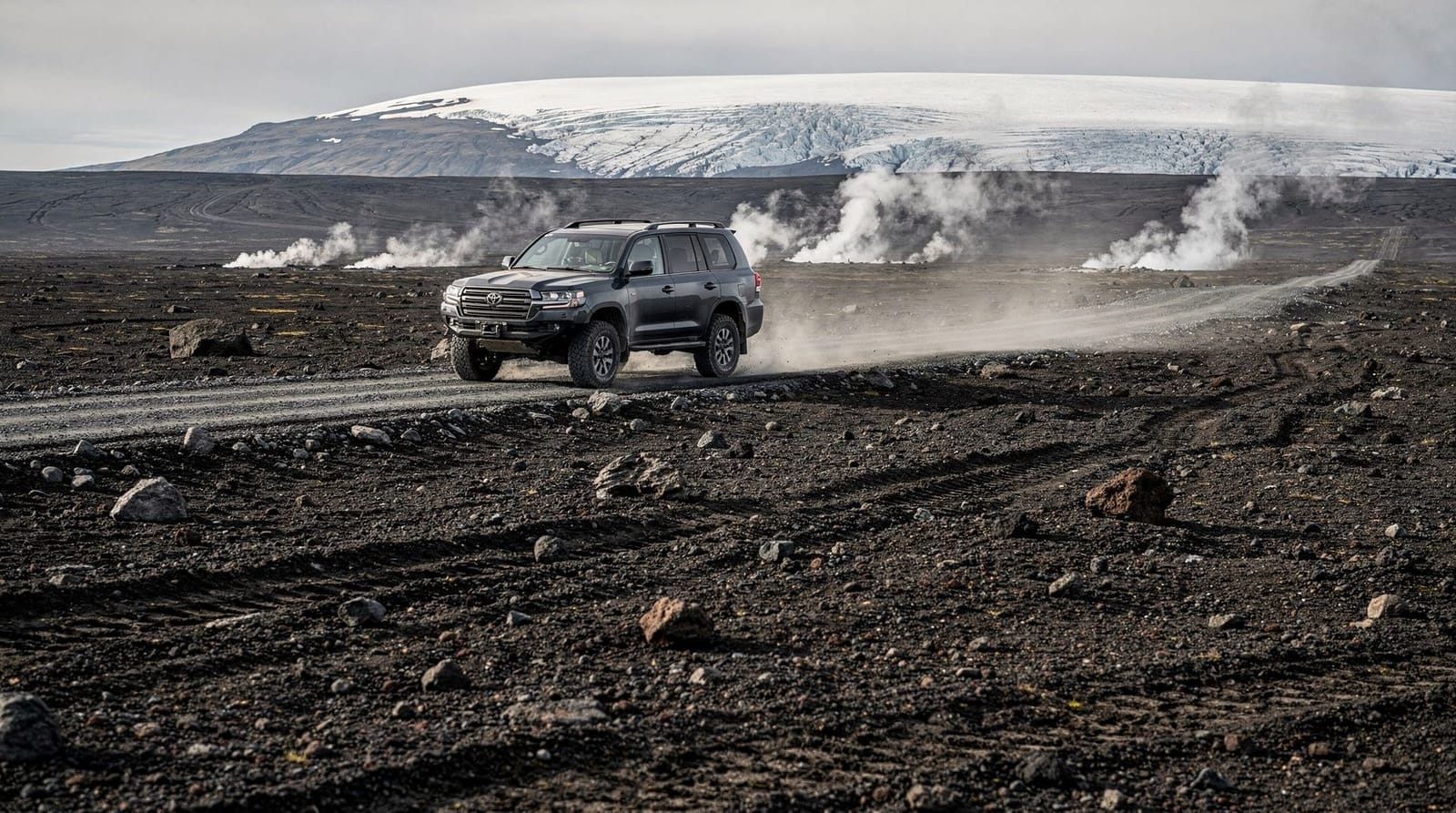
What constitutes an actual 4x4: vehicles with low-range gearing and genuine all-wheel drive — Mitsubishi Outlanders modified for Iceland, full-size Land Cruisers, modified Jeeps, or the super jeep vehicles used by tour operators. “AWD” systems in standard crossovers do not qualify. Before going to the highlands, confirm with your rental company that your specific vehicle is approved for F-roads.
River crossings are a further issue. Many F-roads include unbridged river fords. Water depth and flow vary with weather and snowmelt. Crossing a highland river incorrectly in any vehicle can result in the vehicle being swept downstream. Guided tours handle this risk by having experienced drivers who know current conditions; self-drivers need both the vehicle capability and the knowledge to assess crossings.
The f-roads-iceland guide covers all technical aspects of highland driving in detail.
Landmannalaugar
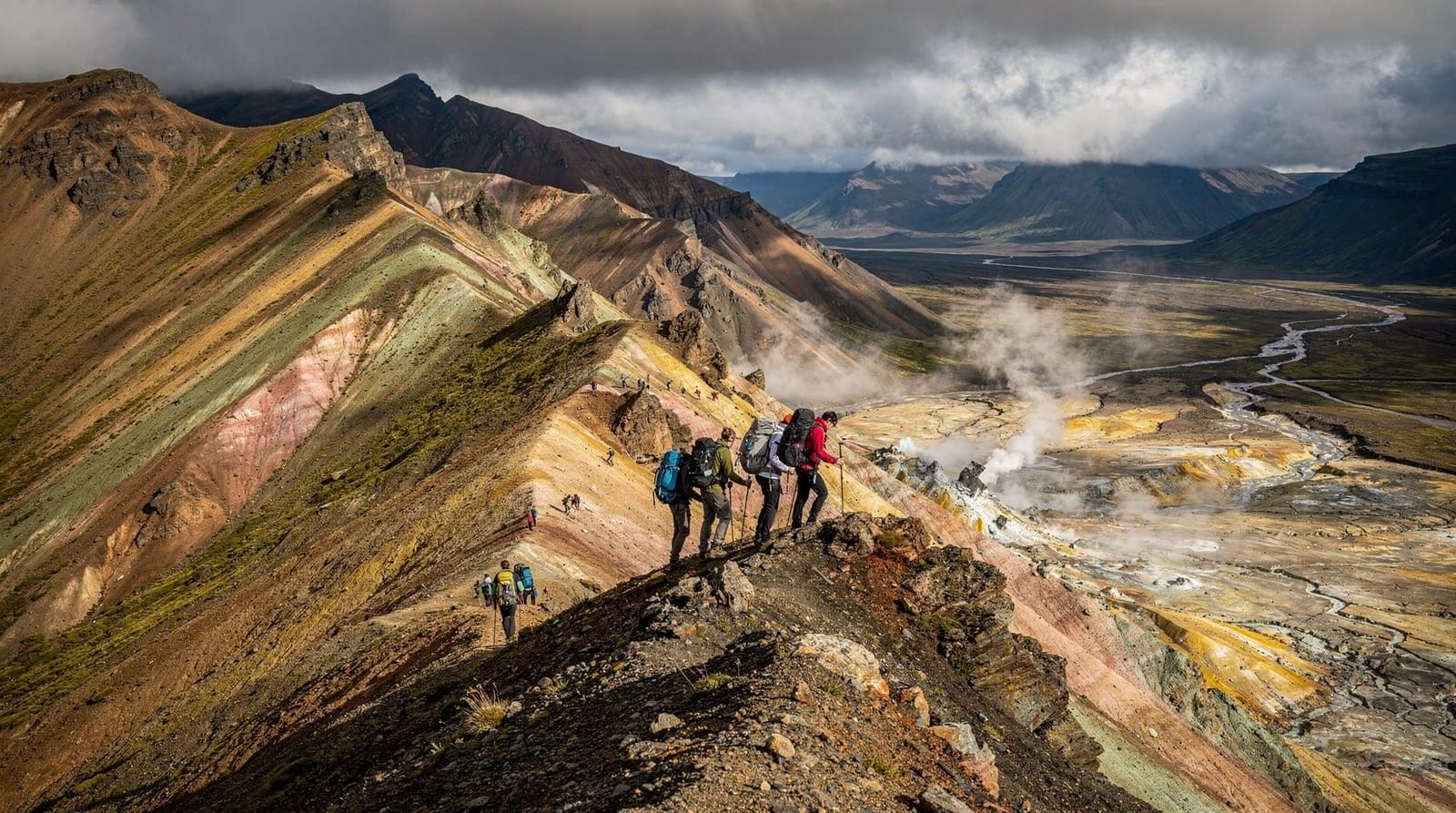
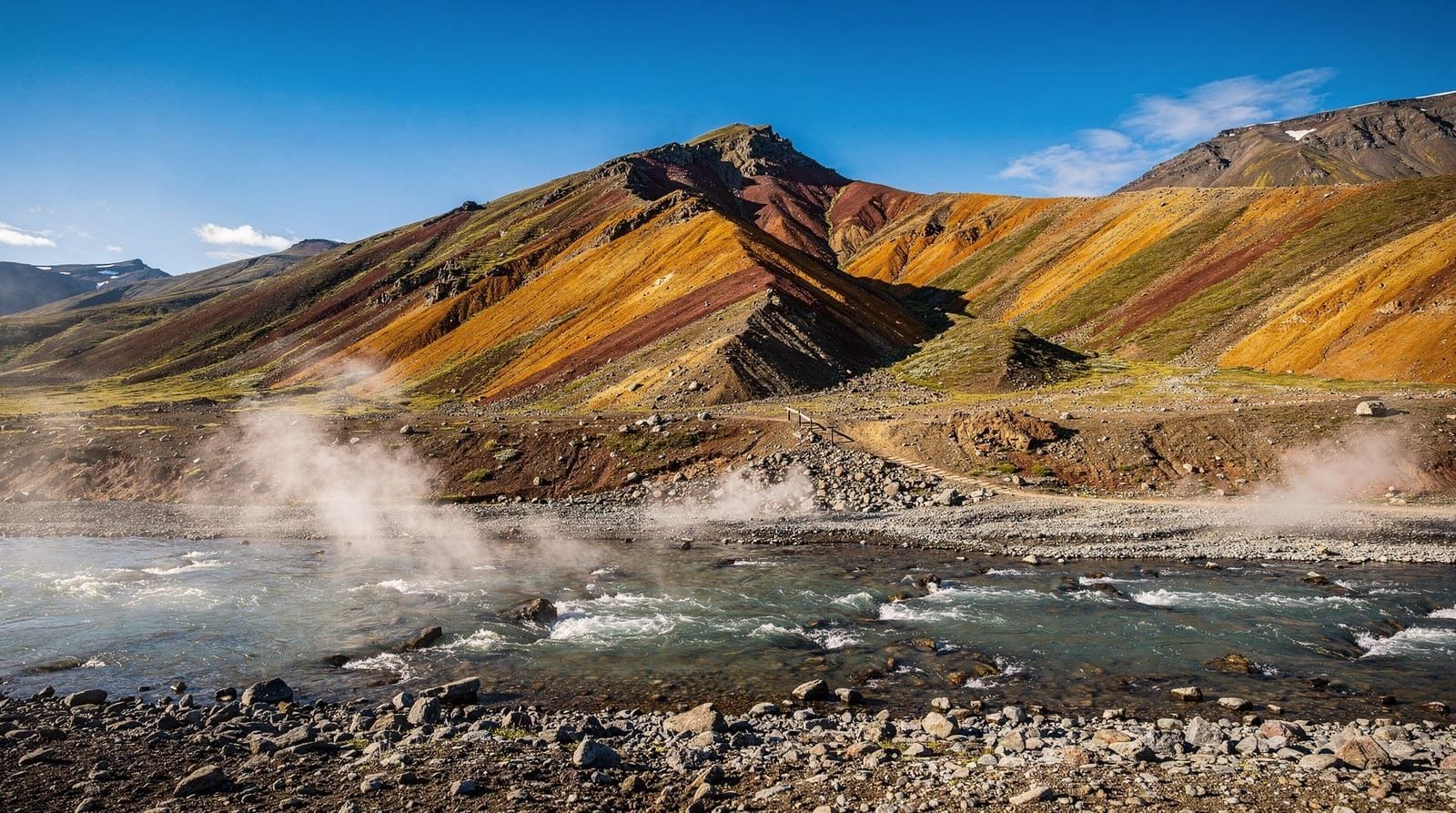
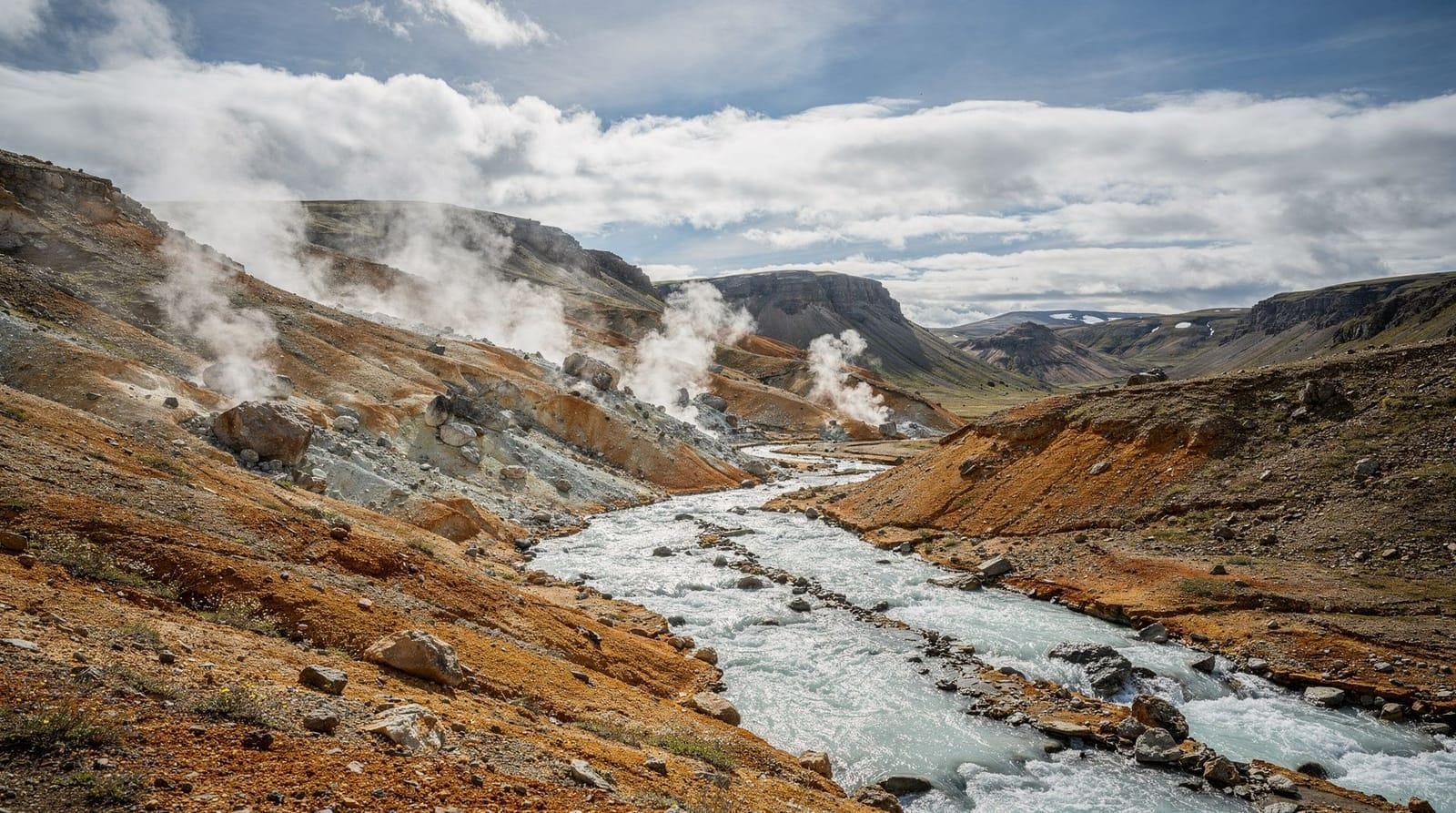
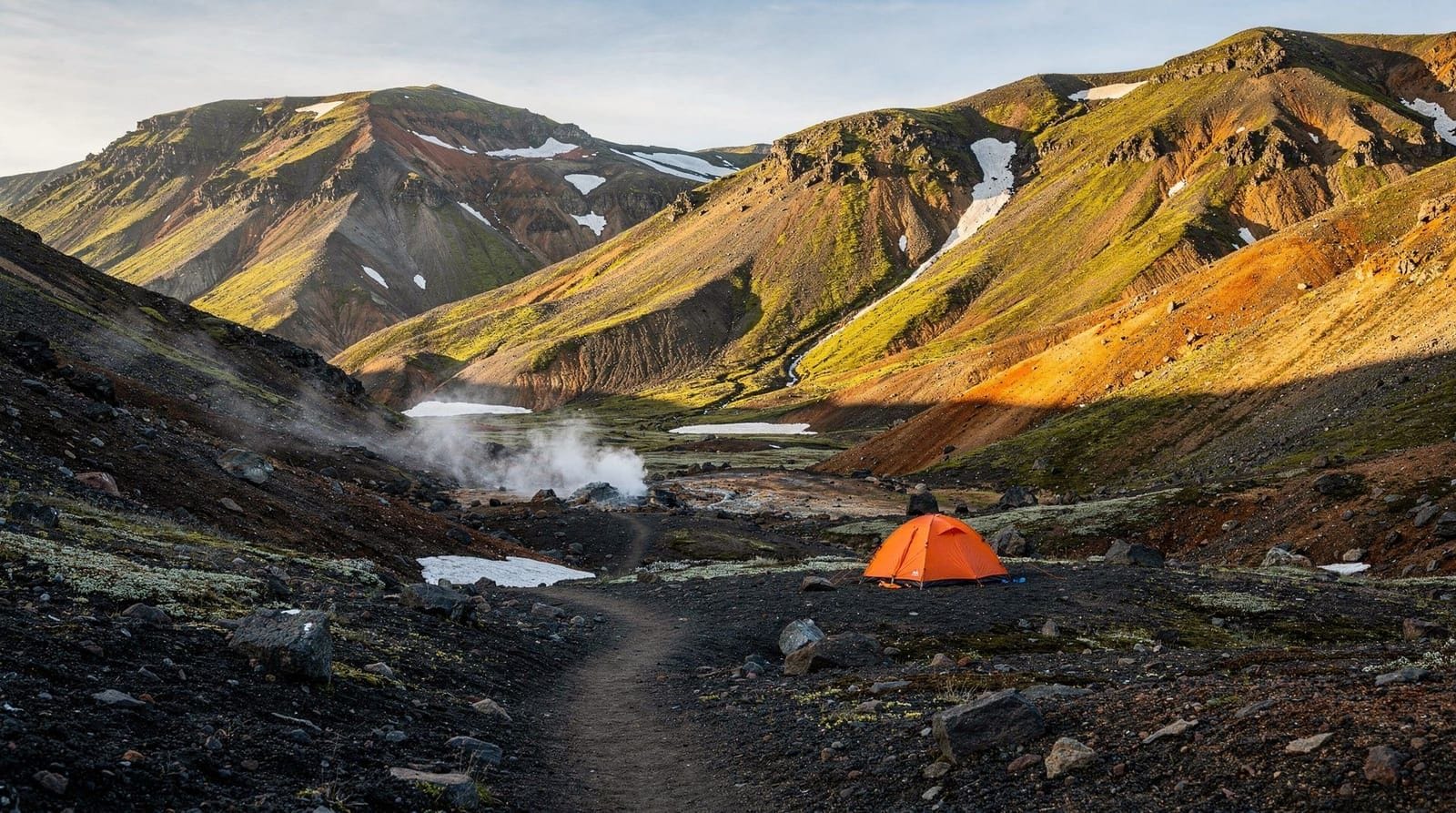
The most accessible significant highlands destination — about 3–4 hours from Reykjavík on F26 (Sprengisandur) or F225 and F208. Landmannalaugar sits at the edge of the Laugahraun lava field at 600 metres altitude, surrounded by rhyolite mountains in colours that seem implausible: orange, purple, green, and yellow-brown, derived from iron and sulphur minerals in the volcanic rock.
The natural hot spring at the lava field edge (free, open access, unmaintained — rough rocks and sulphur smell) is where most visitors spend their first 30 minutes. Temperature runs 37–42°C depending on location. This is one of Iceland’s best free geothermal experiences.
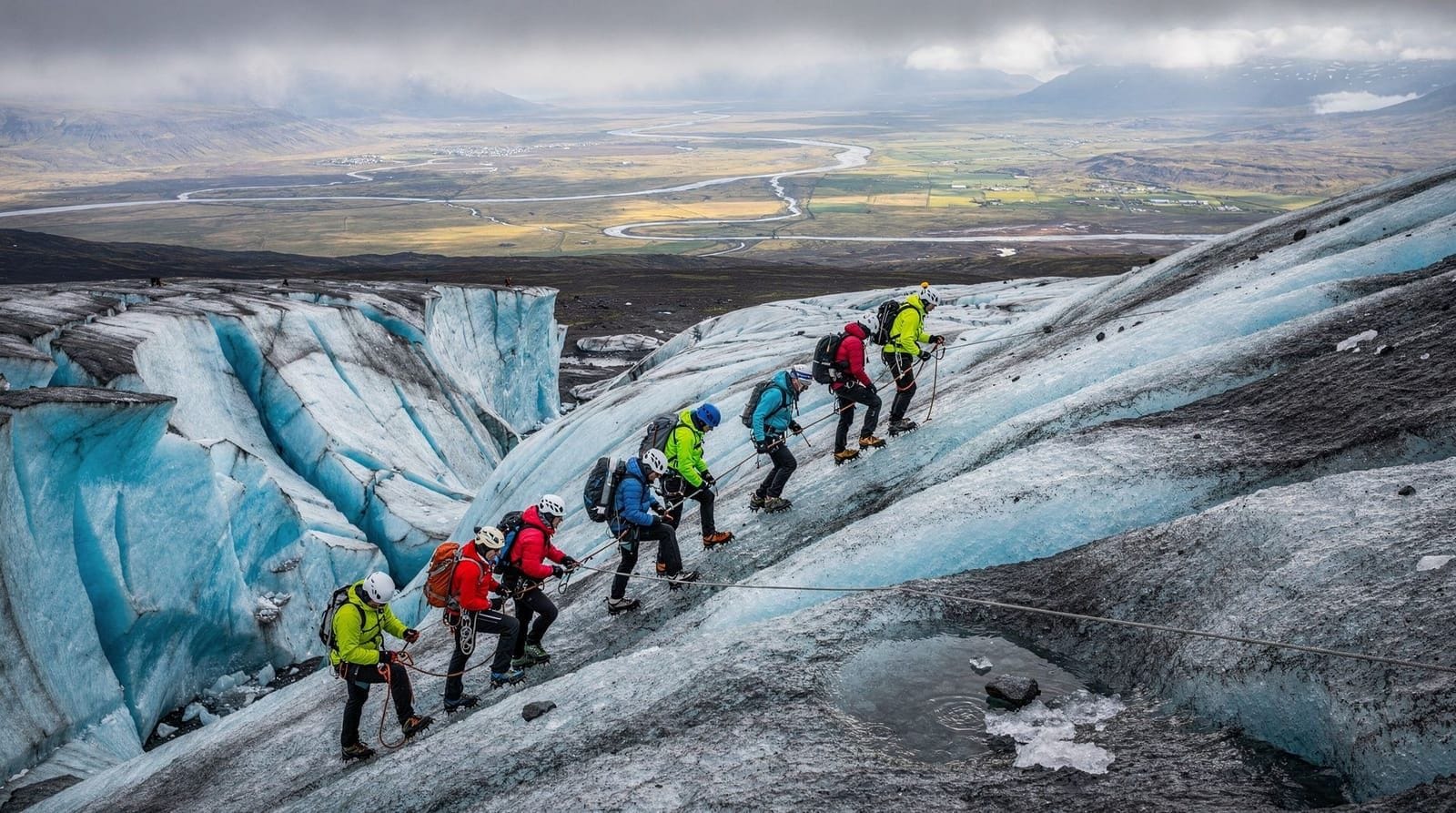
Landmannalaugar super jeep day tour from Reykjavík — one of Iceland’s classic day tripsHiking from Landmannalaugar: the Bláhnjúkur hike (5 km, 3–4 hours return, moderate) gives an elevated view of the rhyolite colour patterns and is the best single hike in the area for the effort involved. The Laugavegur trail (55 km, 4–6 days one-way to Þórsmörk) begins at Landmannalaugar and is Iceland’s most famous long-distance trek. Day hikes on sections of the Laugavegur are also possible from a Landmannalaugar base. Details under Landmannalaugar hiking.
Facilities at Landmannalaugar: a Ferðafélag Íslands (Iceland Touring Association) hut with cooking facilities and sleeping bag accommodation (book months in advance for summer), a camping area (around 2,500 ISK per person per night), and a small shop selling basic supplies and hiking maps. No restaurant.
Bus service: Reykjavík Excursions operates a daily scheduled bus from Reykjavík to Landmannalaugar in summer (approximately 4 hours, from around 8,000–12,000 ISK one-way). This is the option for visitors without a 4x4 who want to go independently.
Landmannalaugar — Pearl of the Highlands day trip from ReykjavíkKerlingarfjöll
A geothermal mountain range in the central highlands, accessible via F35 (Kjölur route) — one of the more accessible highland roads, open somewhat earlier in the year than the F26 or F208. Kerlingarfjöll sits about 170 km from Reykjavík on the Kjölur route — 3–4 hours on highland roads.
The area features active geothermal fields with boiling mud pools, fumaroles, and rhyolite mountains similar to Landmannalaugar but less visited. The Kerlingarfjöll Highland Center (a mountain resort, significantly upgraded in recent years) provides accommodation, meals, and guided hike options. Prices for accommodation run 25,000–40,000 ISK per room; the restaurant serves proper meals at highland prices.
The Kjölur route (F35) is driveable in a serious 4x4 and is one of the more manageable highland routes for self-drivers — fewer major river crossings than the Sprengisandur (F26). The Askja and Kerlingarfjöll guide covers both areas.
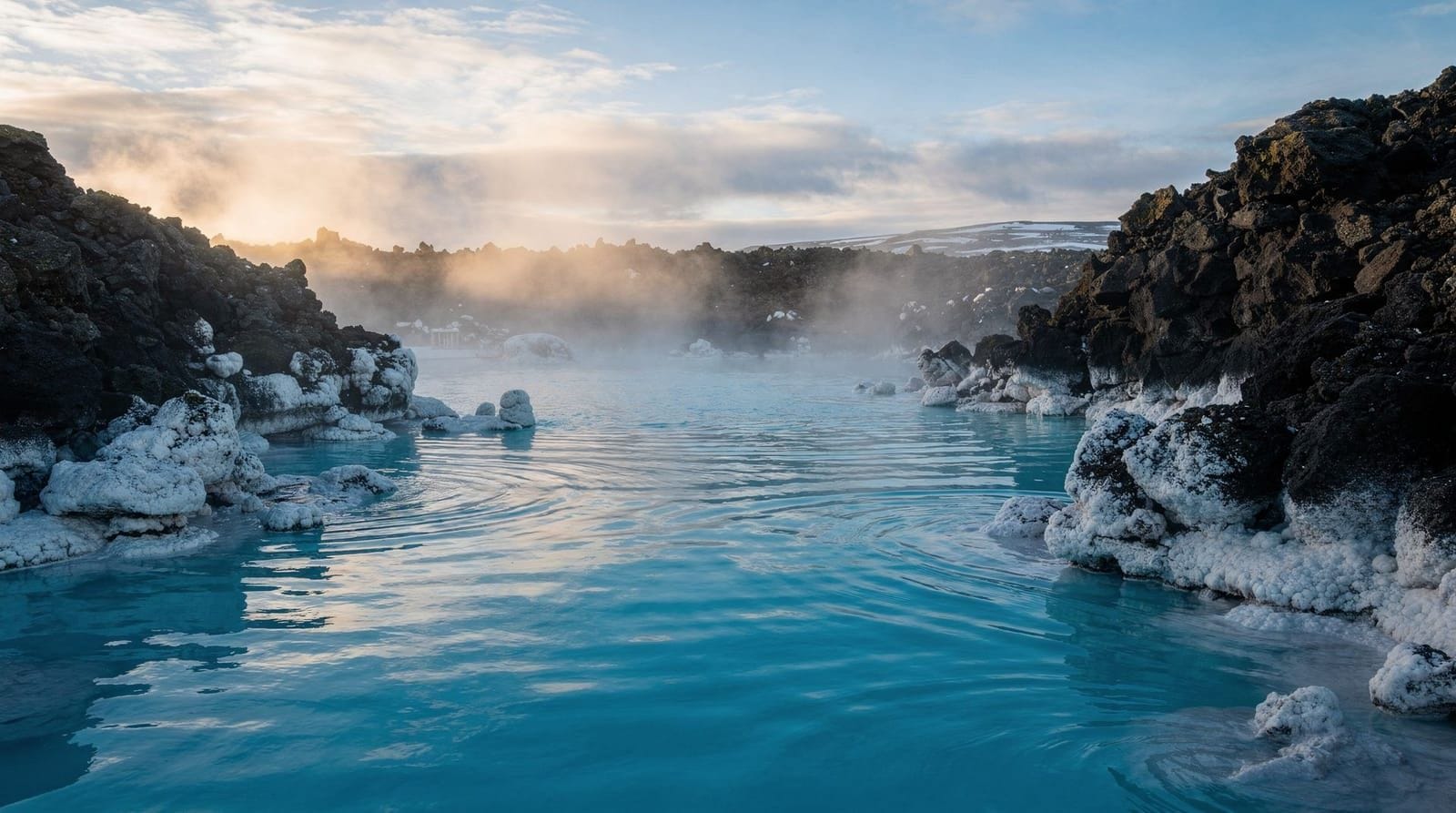
Kerlingarfjöll hiking day tour from Reykjavík — 12 hours round tripAskja caldera
Askja is a volcanic caldera in the remote northeast highlands, accessible via F88 from the Ring Road near Möðrudalur farm. The approach is approximately 5–6 hours from Reykjavík (190 km from Mývatn, about 3 hours on highland roads from the Ring Road junction). Askja is the most remote of the main highlands destinations.
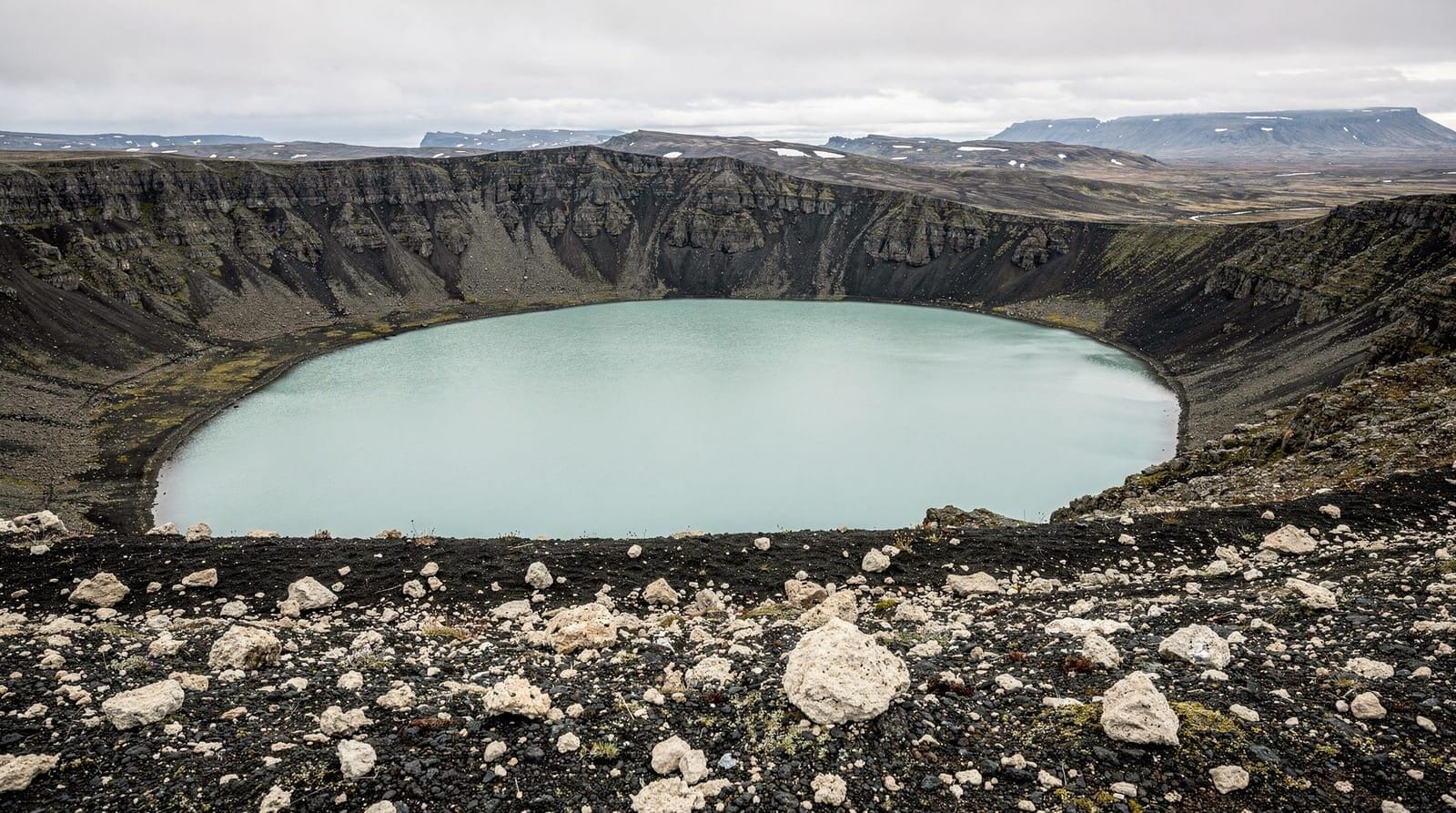
The caldera contains Öskjuvatn lake (40 km² — Iceland’s second deepest lake) and a smaller acidic crater lake (Víti — “hell” in Icelandic) where bathing is possible in warm, milky-blue sulphurous water. The Víti crater is the reason most visitors make the effort. The sense of remoteness — the flat lava plains surrounding the caldera, the complete absence of other facilities — is unlike anywhere else accessible to most visitors.
River crossings on F88 require careful assessment. Guided super jeep tours from Mývatn are the standard option for visitors without highland driving experience.
Þórsmörk
A glacially carved valley between Eyjafjallajökull and Tindfjallajökull glaciers, accessible via F249 and requiring 4x4 and river crossings. Þórsmörk is the end point of the Laugavegur trail from Landmannalaugar and the starting point of the Fimmvörðuháls trail to Skógar on the south coast. As a hiking destination it is exceptional — birch forest, glacier views, and extreme valley scenery. As a destination without hiking context, it is a challenging drive for a picnic spot.
Bus service operates to Þórsmörk from Reykjavík in summer (Reykjavík Excursions), making it accessible without a personal 4x4. Covered under Þórsmörk hiking.
Sprengisandur highland road (F26)
The Sprengisandur route crosses the interior of Iceland north-south, from near Landmannalaugar to Mývatn in the north. It is the most remote of the main highland routes — a two-day drive with no services except two mountain huts. The scenery is predominantly flat black lava desert, which some find monotonous and others find genuinely desolate in the positive sense. Not recommended for first-time highland drivers.
Practical summary
- No F-road access before mid-June or after mid-September in most years
- Actual 4x4 required (confirm with rental company for specific vehicle)
- Highland bus services are the practical alternative for visitors without qualifying 4x4
- Guided super jeep tours cover all main destinations at premium cost (20,000–35,000 ISK per person)
- Book Landmannalaugar hut and camping well in advance (March or earlier for July)
- Fuel: fill up in Reykjavík before heading to Landmannalaugar; the only fuel on the Kjölur route (F35) is at the Kerlingarfjöll Highland Center
Which highlands destination first?
| Destination | Approach time from Reykjavík | Vehicle needed | Best for |
|---|---|---|---|
| Landmannalaugar | 3–4 hours | 4x4 or highland bus | Free hot spring, Laugavegur trailhead |
| Kerlingarfjöll | 3–4 hours | 4x4 (Kjölur F35, easier route) | Comfortable accommodation, quieter geothermal fields |
| Askja | 5–6 hours (via Mývatn) | 4x4 or guided super jeep | Remote caldera, Víti crater bathing |
| Þórsmörk | 3–4 hours | 4x4 or highland bus | Hiking base, glacier valley scenery |
Highlands by destination: comparative guide
Landmannalaugar vs Kerlingarfjöll: which first?
Both are rhyolite mountain areas with hot springs and geothermal colour. Practical differences:
Landmannalaugar has a free, open natural hot spring. It is more famous and more crowded. The Laugavegur trail starts here — if trekking is your aim, this is the base. The approach road (F208/F225) has more river crossings than Kjölur and requires more highland driving experience.
Kerlingarfjöll has better accommodation (the Highland Center), less crowding, and the Kjölur route (F35) approach which is less technically demanding — fewer major river crossings. The hot springs at Kerlingarfjöll are in a more active geothermal field with boiling mud pools integrated into the walking area.
If you have one highland day: Landmannalaugar is the classic choice, but Kerlingarfjöll is the better option if you want accommodation and prefer a less demanding approach.
Askja: is it worth the effort?
Askja is approximately 5–6 hours from Reykjavík (7–8 hours including the F88 off-road section from the Ring Road at Möðrudalur). This is a very long day from Reykjavík. The alternatives are: staying overnight at Möðrudalur farm (Iceland’s highest farm at 469 metres, with guesthouse accommodation) and doing Askja as a morning departure; or joining a guided super jeep tour from Mývatn (3 hours each way from Mývatn, standard half-day operation).
The Víti crater bathing experience — the reason most people make the effort — is genuinely unusual: a small round crater lake with warm (20–25°C), milky-blue sulphurous water where swimming is permitted. The water temperature is body-tepid rather than hot; on a cold highland day, the experience is as much about the setting (inside a volcanic crater, in pale blue water, surrounded by highland desert) as the temperature.
Accommodation in the highlands
The highlands have minimal accommodation compared to the rest of Iceland — this is part of their character.
Landmannalaugar FÍ hut: sleeping bag accommodation in a shared dormitory, capacity about 75 persons. Booking opens January/February each year for summer; fills within days. Cost approximately 5,500–7,000 ISK per person per night. Cooking facilities but no restaurant. Essential to book months ahead.
Landmannalaugar camping: the campsite adjacent to the hut area. Approximately 2,500 ISK per person per night. No electrical hook-ups. Cold water facilities only. Open approximately late June to early September.
Kerlingarfjöll Highland Center: the most comfortable highlands accommodation — proper hotel-standard rooms in mountain lodge buildings, plus dormitory options. Doubles from approximately 30,000–45,000 ISK in summer. Restaurant on site (main courses 4,000–6,000 ISK). Advance booking essential for July.
Þórsmörk (Volcano Huts / Húsadalur / Básar): three hut complexes at the end of the Laugavegur trail, each run by a different operator. Sleeping bag accommodation. Prices vary by operator, approximately 6,000–8,500 ISK per person. Book as far ahead as possible.
Möðrudalur farm: near the F88 junction for Askja. Guesthouse accommodation and a small restaurant. Iceland’s highest-altitude inhabited farm — at 469 metres it is cold even in summer. A valid Askja overnight base.
Wild camping: permitted in areas not adjacent to F-roads (within 100 metres is restricted) and not in protected vegetation zones. Leave no trace is not optional — the highland vegetation is extremely slow-growing and tyre tracks or fire marks remain visible for decades.
The bus option: a practical alternative to 4x4
For visitors without a qualifying 4x4 rental, Reykjavík Excursions (also known as RE) operates a highland bus network in summer that is genuinely useful:
Landmannalaugar: daily bus from Reykjavík BSÍ terminal, departing approximately 8:30 a.m., arriving Landmannalaugar around 12:30 p.m. Return bus in mid-afternoon. One-way tickets from approximately 8,000–10,000 ISK. Booking essential.
Þórsmörk: daily service from Reykjavík in summer. Can be combined with the Landmannalaugar service for a Laugavegur trek logistics approach.
Kerlingarfjöll: less frequent service; check the RE website for current season schedule.
The bus option takes longer than self-driving (the highland roads are slow for all vehicles) but removes the vehicle capability requirement and the stress of river crossing assessment. The scheduled bus also means you commit to a departure time from the highlands — this is a constraint but also removes the “one more hike” trap that causes people to miss sunset at their accommodation.
Photography in the highlands
Landmannalaugar colour photography
The rhyolite mountain colours are most vivid in direct sunlight. Overcast light flattens the colour considerably. Early morning or evening light creates shadow relief that defines the mountain contours. A polarising filter enhances colour saturation and reduces atmospheric haze on panoramic shots. The hot spring area in morning light — steam rising from the geothermal field against the coloured mountains — is the characteristic Landmannalaugar image.
Askja caldera at Víti crater
The pale blue-green colour of Víti crater lake is best photographed from the crater rim looking down, in soft overcast light that does not blow out the pale water tones. Direct overhead summer sun creates specular reflection that loses colour. A wide-angle lens (16–24mm) is needed to capture the full crater with rim foreground and lake below.
Highland F-road driving photography
The dramatic emptiness of the Sprengisandur (F26) route — flat black lava extending to both horizons — is best photographed through the windscreen stop. Pull completely off the road surface when stopping (the F-road surface itself is fragile). The scale of emptiness in the central highlands is the photographic subject; focal length matters less than choosing a horizon-splitting composition that conveys the flatness.
Specific practical advice for first-time highland visitors
-
Confirm your rental vehicle is specifically approved for F-roads with your rental company in writing before going. “AWD” is not F-road approved. Ask for the make and model specifically cleared.
-
Fill your fuel tank completely before leaving Reykjavík for Landmannalaugar or Kerlingarfjöll. There is no petrol on F26 or F208. The only fuel on the Kjölur route is at the Kerlingarfjöll Highland Center.
-
River crossings: watch another vehicle cross before attempting. Assess depth from the bank. Never ford a crossing you cannot confidently see the bottom of. If in doubt, wait for another vehicle or turn back.
-
Highland weather changes fast. A clear Reykjavík morning can be a highland blizzard by afternoon. Carry warm layers, waterproofs, and emergency supplies (food, water, space blanket) in the vehicle regardless of the forecast.
-
Tell safetravel.is your route and expected return time before departing. This is free, takes 2 minutes, and is the standard practice for highland driving in Iceland. The safetravel-emergency-info guide covers emergency procedures.
Frequently asked questions about the Iceland highlands
Can I visit the highlands without a 4x4?
Yes, via the scheduled highland buses (Reykjavík Excursions runs to Landmannalaugar and Þórsmörk) or guided super jeep tours. Both options take you to the main sites. Self-driving requires an approved 4x4 with highland road clearance — standard 2WD cars and most crossovers are not permitted.
When do highland F-roads open?
Typically late June, though exact dates vary by road and by annual snow conditions. The Kjölur route (F35) often opens earlier than F26 or F88. Check vegagerdin.is for current road status. Do not plan a highland trip in late June without checking real-time conditions.
Is the Laugavegur trek accessible to casual hikers?
The Laugavegur (55 km, 4–6 days) requires good fitness and camping/hiking experience. It is a proper multi-day mountain trek, not a casual walk. Hut accommodation is available but must be booked months in advance. Single sections (particularly the Landmannalaugar to Hrafntinnusker section, 12 km) can be done as day hikes. The laugavegur-trek guide covers the full route.
How do I get to Landmannalaugar without a 4x4?
The scheduled Reykjavík Excursions bus runs daily in summer (late June to mid-September), departing Reykjavík BSÍ bus terminal at around 8:30 a.m. and arriving at Landmannalaugar around 12:30 p.m. Return bus departs Landmannalaugar mid-afternoon. One-way tickets from around 8,000–10,000 ISK. Booking in advance is essential.
Is wild camping allowed in the highlands?
Camping outside designated sites is technically permitted in some highland areas but is restricted within 100 metres of F-roads and within fragile vegetation zones. The highlands terrain is extremely vulnerable to erosion — use designated campsites wherever they exist (Landmannalaugar, Þórsmörk, Kerlingarfjöll) and leave no trace.
What is the difference between Landmannalaugar and Kerlingarfjöll?
Both are geothermal rhyolite mountain areas with hot springs and coloured volcanic rock. Landmannalaugar is more famous, more crowded, and accessible without accommodation (camping possible, day-trip feasible). Kerlingarfjöll has better accommodation (the Highland Center), fewer visitors, and slightly easier road access via Kjölur. Both are worth visiting if you have time in the highlands.
Top experiences
Bookable activities with verified prices and instant confirmation on GetYourGuide.
Reykjavik: Landmannalaugar super jeep day tour
Reykjavik: From Reykjavik full day Landmannalaugar super jeep tour
Reykjavik: Landmannalaugar pearl of the Highlands
Reykjavik: From Reykjavik kerlingarfjoll hiking day tour
Reykjavik: A day in kerlingarfjoll Highlands and hot springs