Diamond Beach guide — Iceland's icebergs on black sand
Reykjavik: South Coast Diamond Beach Jokulsarlon
What is Diamond Beach and how do I visit it?
Diamond Beach (Breiðamerkursandur) is a black volcanic sand beach where icebergs from Jökulsárlón glacier lagoon wash ashore. It's 200 m from the lagoon car park, across Route 1. Free to access, no tours needed. Best at sunrise or after storms. Allow 1 hour combined with the lagoon.
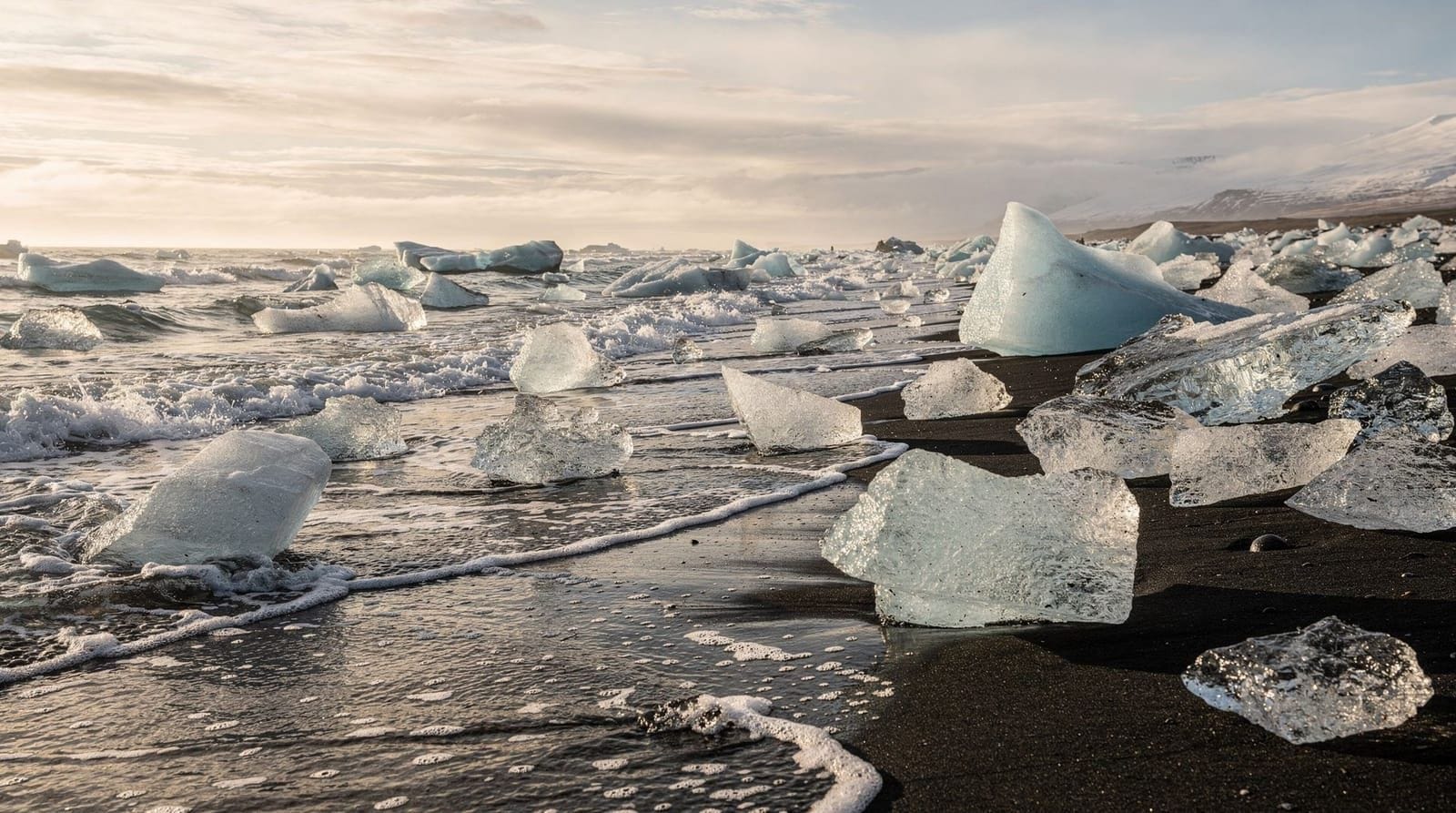
Diamond Beach has one visual trick and it does it perfectly: icebergs from Jökulsárlón glacier lagoon wash through the tidal channel and come to rest on jet-black volcanic sand. The ice is transparent or white; the sand is black. There is nothing else in the composition — no facilities, no markers, no structures. The contrast produces photographs that look over-saturated but are accurate to what the eye sees.
The beach is 200 m south of the Jökulsárlón car park, across Route 1. It requires no tour, no fee, and no physical effort beyond walking to the shore.
| Where | Route 1, south of Jökulsárlón car park |
| Cost | Free |
| Time needed | around 1 hour combined with the lagoon |
| Best time | Sunrise, or the day after an Atlantic storm |
| From Reykjavík | around 375 km, 4.5 hours |
How the ice gets there
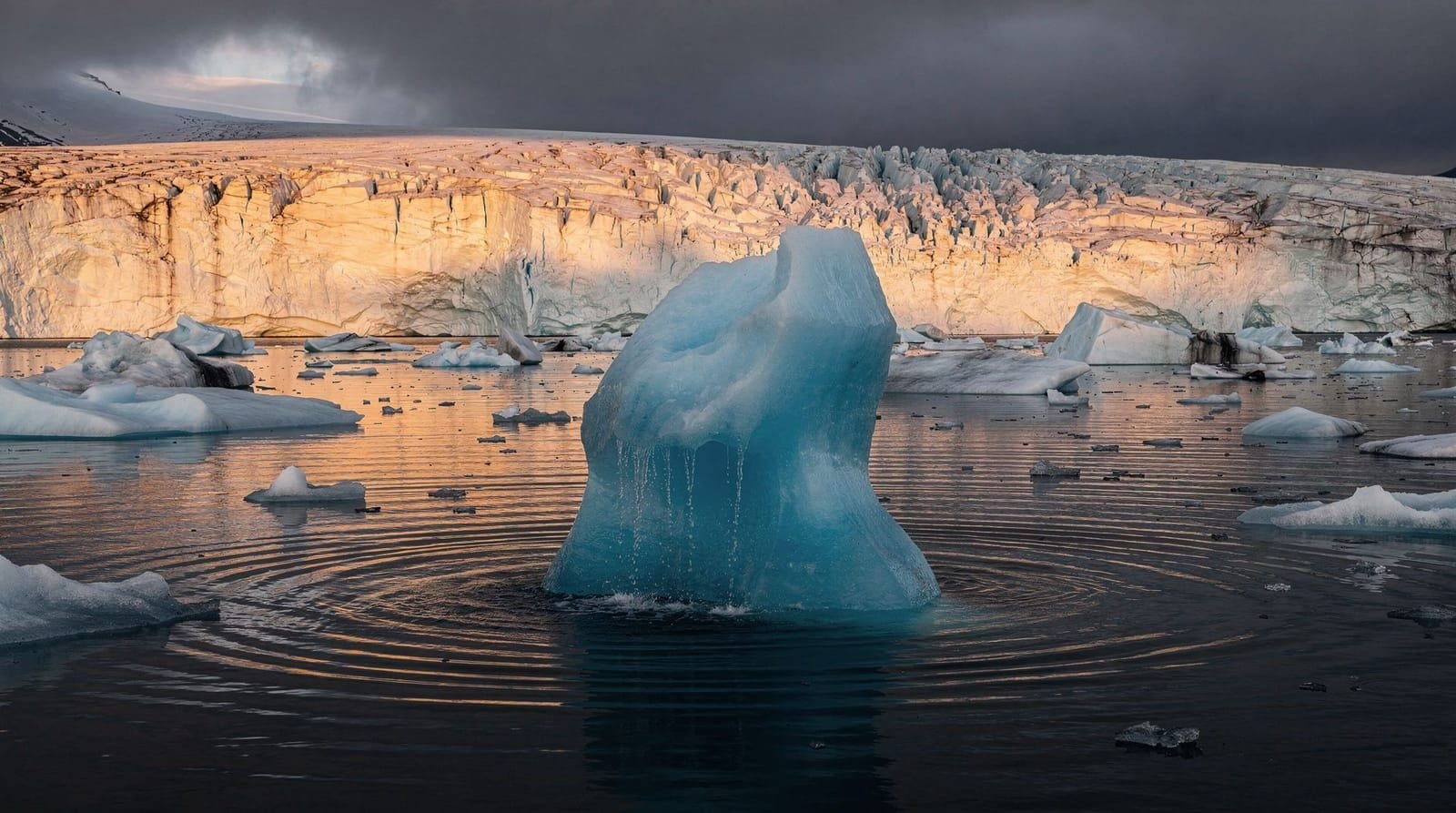
The Breiðamerkurjökull glacier feeds Jökulsárlón lagoon by calving icebergs from its face into the water. These bergs drift slowly across the lagoon — a crossing that takes months to years depending on size and current. The lagoon’s only outlet is a tidal channel that runs under the Route 1 bridge to the Atlantic.
When bergs are small enough, tidal currents push them through the channel and onto the beach. The same tidal action pulls them back and forth — some blocks wash up, melt slightly, wash back, and repeat. Fresh pieces arrive continuously.
The beach itself is called Breiðamerkursandur. The “Diamond Beach” name came from tourism marketing and is now universal. The diamond metaphor references the transparent blue-white ice blocks that resemble large gem stones lying on the black sand.
What you find on the beach
The ice formations vary dramatically by season and recent weather. After storms, large pieces are pushed onto the beach in dramatic configurations. In calm periods, smaller rounded pieces predominate.
Ice shapes:
- Rounded smooth blocks (water-worn)
- Angular chunks with fresh calving faces
- Flat table-top pieces
- Sculptural forms with holes, arches, and curves
Ice colours:
- White (air bubbles trapped in ice)
- Transparent blue-grey (dense glacier ice, almost no air)
- Dark grey or black stripes (volcanic ash layers embedded during historical eruptions)
- Occasional greenish tints (algal growth on older surfaces)
Beach environment: The black sand is fine-grained volcanic material. The beach is a shallow gradient — water advances up the slope and retreats regularly with waves. The surf here is the North Atlantic. There are no lifeguards, no warnings, no barriers. The waves are a genuine hazard.
Safety — this is the critical section
Diamond Beach has a serious and growing safety record for incidents. The hazards are specific:
Rogue waves (“sneaker waves”): The North Atlantic swell is irregular. The beach shelves gradually, which means waves travel much further up the sand than visitors typically expect. A wave that looked small in the water is a different thing when it reaches you 30 m up the beach. Incidents of visitors being knocked over, swept down the beach, and in several cases swept into the water have occurred here.
Rules for Diamond Beach:
- Never turn your back to the ocean
- Never stand or sit on ice blocks near the waterline
- Keep a distance of at least 5–10 m from the waves at all times
- Ice blocks at the water’s edge can be moved suddenly by wave action — do not crouch beside them while photographing
- Children must be supervised closely at all times
The combination of photographically interesting ice at the water’s edge and dangerous unpredictable waves has caused multiple fatalities and near-fatalities globally on this type of beach. Take the warning seriously.
Photography guide
Diamond Beach is one of the best photography locations in Iceland, but timing matters significantly.
Golden hour (sunrise): In summer, sunrise at Diamond Beach is around 3–4 am — effectively no other visitors. The low-angle orange-gold light refracts dramatically in the transparent ice. This is the peak photography window.
Blue hour (just before sunrise): The last 20 minutes before sunrise, the sky is a deep blue that complements the ice and dark sand perfectly.
Sunset: Around 11 pm in June. Similar quality light, but more visitors present.
Overcast days: Good for even lighting without harsh shadows. The ice appears more blue under overcast skies because the colour temperature of the light shifts cooler.
After storms: The day after a significant Atlantic storm typically pushes larger and more varied ice formations onto the beach. Worth tracking weather patterns.
Practical photography setup:
- Wide angle (16–24 mm) for beach scenes including sky
- Standard zoom (35–50 mm) for individual ice block portraits
- Polariser filter: useful for reducing glare on ice surfaces
- Waterproof camera bag or cover — spray from waves extends further than expected
- Tripod for long exposures in low light — set it back from the waves by at least 5 m
See the full Iceland photography guide and best photo spots in Iceland.
Crowds and timing
In peak season (July–August), Diamond Beach between 10 am and 4 pm has significant numbers of visitors. Removing people from compositions requires patience or very early/late arrival. The beach is large enough that even with crowds, it’s possible to find uncrowded sections — walk east along the beach away from the car park access point.
In autumn and winter, the beach is substantially less visited. Winter visits with snow on the black sand and ice blocks create a different but equally compelling scene.
What’s nearby
Jökulsárlón glacier lagoon: 200 m north, the source of the ice. Plan to combine the two — they’re inseparable experiences. Boat tours run May–October. See the Jökulsárlón glacier lagoon guide.
Fjallsárlón: 7 km west, a smaller glacier lagoon with fewer visitors.
Vatnajökull National Park / Skaftafell: 50 km west, the access point for glacier hikes and ice caves.
Höfn: 80 km east, the nearest town with accommodation, restaurants, and fuel. Höfn is the langoustine capital of Iceland — prices are locally appropriate (3,000–4,000 ISK / €20–27 for a langoustine dish), which makes it one of the better-value food stops on the south coast.
Tours specifically combining Diamond Beach and Jökulsárlón from Reykjavík handle the logistics of the long drive and typically include the amphibious boat tour on the lagoon. For first-time visitors who want to see both without a day of driving planning, this is a sensible approach.
Getting there
By car: Route 1 from Reykjavík, 375 km, approximately 4.5 hours. The car park for both Diamond Beach and Jökulsárlón is on the north side of the Route 1 bridge at GPS coordinates 64.0484° N, 16.1794° W. Diamond Beach is south of the road; the lagoon is north.
Parking: Free, large car park.
Facilities at the car park: A small café/kiosk (seasonal, summer only) and toilets. No services on Diamond Beach itself.
Note on crossing Route 1: The road here carries fast traffic and visibility is limited. Use the designated pedestrian crossing near the car park entrance. Do not cross at unmarked points.
The glacier lagoon boat tour combined with Diamond Beach access is one of the most popular Iceland tour formats. Arriving with a guided group means transport, boat tickets, and timing are handled — practical for visitors who don’t want to drive the full south coast independently.
Combining with a south coast road trip
Diamond Beach works naturally as the far end of a south coast drive from Reykjavík, turning around at Höfn or Kirkjubæjarklaustur. The most manageable approach is the south coast 3-days itinerary or the longer south coast glaciers 4-days.
If you’re driving the Ring Road, Diamond Beach and Jökulsárlón are essential stops on the south route before continuing into east Iceland.
Frequently asked questions about Diamond Beach
Why is it called Diamond Beach?
The name comes from the visual resemblance of transparent ice blocks on black sand to diamonds on a dark surface. It is a tourism marketing term, not an official geographical name. The beach’s formal name is Breiðamerkursandur.
Can I take ice home from Diamond Beach?
The ice is naturally distributed from the lagoon and is not protected as a collectable sample. Practically speaking, it would melt before you got anywhere. Legally, collecting material from Vatnajökull National Park is restricted.
Is Diamond Beach accessible in winter?
Yes. Route 1 is maintained year-round and the beach is always there. In winter, snow on the black sand creates a different and equally photogenic landscape. Access requires a 4WD with winter tyres in icy conditions.
Are there sharks or other marine hazards at Diamond Beach?
The North Atlantic offshore has Greenland sharks (extremely rare to see), but the shore itself presents no marine animal hazards. The hazard is the waves and cold water. Hypothermia from immersion in North Atlantic water at this latitude is rapid.
Does Diamond Beach appear in any films?
Several. The beach has been used in fantasy film productions drawn to Iceland’s unique landscape. The juxtaposition of ice and black sand is visually striking enough that it works without modification.
The physics of ice on a black sand beach
Understanding what you’re looking at makes the experience richer. The ice formations at Diamond Beach are not static — they’re going through a continuous cycle of arrival, exposure, and melting.
When a berg washes onto the beach, it begins melting immediately from all surfaces — bottom contact with the sand speeds this up. A berg that arrives looking like a cubic metre of ice may be a fraction of that within 24 hours. The forms that result from selective melting are often more sculptural than the original cubic block. Smooth facets form where melting is uniform; holes and arches form where structural weaknesses allow hollow melting.
The sound of the ice is also distinctive — small pops and cracks as stress fractures develop in changing temperatures. If you stand beside a large berg and listen, you’ll hear it working.
The black sand transfers heat from the sun more efficiently than light sand. This accelerates melting at the base, creating undercuts that can cause large blocks to topple unexpectedly. Another reason not to stand directly beside large ice formations.
Reading the tidal patterns
Diamond Beach’s ice stock changes dramatically with tides. At high tide, the tidal channel from the lagoon pushes fresh ice onto the beach. At low tide, some pieces get carried back into the sea. The best beach compositions occur when tidal action has recently deposited fresh pieces — typically within 2–3 hours of high tide.
Iceland’s tidal range in this area is approximately 3–4 m. You can check tide tables for Jökulsárlón on the Icelandic Meteorological Office website (vedur.is). Planning your visit to coincide with the incoming tide maximises the chance of photogenic fresh ice being deposited during your stay.
Photography without being part of the problem
Diamond Beach has a documented hazard history and also an ethical dimension that some photographers navigate poorly. The instinct to get as close as possible to ice formations for scale and drama is understandable but creates two problems: personal risk from waves, and disturbance to other visitors’ compositions.
Practical ethical photography approach:
- Use a longer focal length (85–200 mm) to compress distance and isolate ice from safe positions
- Work at the margins of the beach (east and west of the main car park access) where formations are less disturbed
- Avoid walking between photographers and their subjects — the beach is wide enough to route around
- Pre-dawn visits mean you can photograph without any consideration of other visitors
The photographers who consistently get the best shots from Diamond Beach are not the ones who get closest. They’re the ones who are there at 3–4 am in June, or who’ve tracked the weather forecast for the post-storm deposits.
Budget planning for the Jökulsárlón / Diamond Beach day
The Diamond Beach itself is free. The Jökulsárlón boat tour adds 9,500–14,000 ISK (~€62–93) per adult. Fuel from Reykjavík is approximately 6,000–7,000 ISK for the 750 km round trip.
If driving from Reykjavík as a day trip, the minimum cost per adult (fuel shared between 2 passengers, one duck boat tour): approximately 12,000–13,000 ISK (~€80). With accommodation en route rather than doing it as a single day from Reykjavík, costs change substantially — the budget accommodation Iceland guide covers Höfn options, which are relatively affordable.
The south coast 3-days and south coast glaciers 4-days itineraries both incorporate Jökulsárlón and Diamond Beach in a structured format that distributes the driving over multiple days.
Diamond Beach in context: why this scene exists
Most beaches are permanent geographical features. Diamond Beach is not, strictly speaking — it is the current expression of a process that is actively changing. The icebergs that appear here today did not exist here 100 years ago, and the lagoon that produces them did not exist as a lagoon 90 years ago.
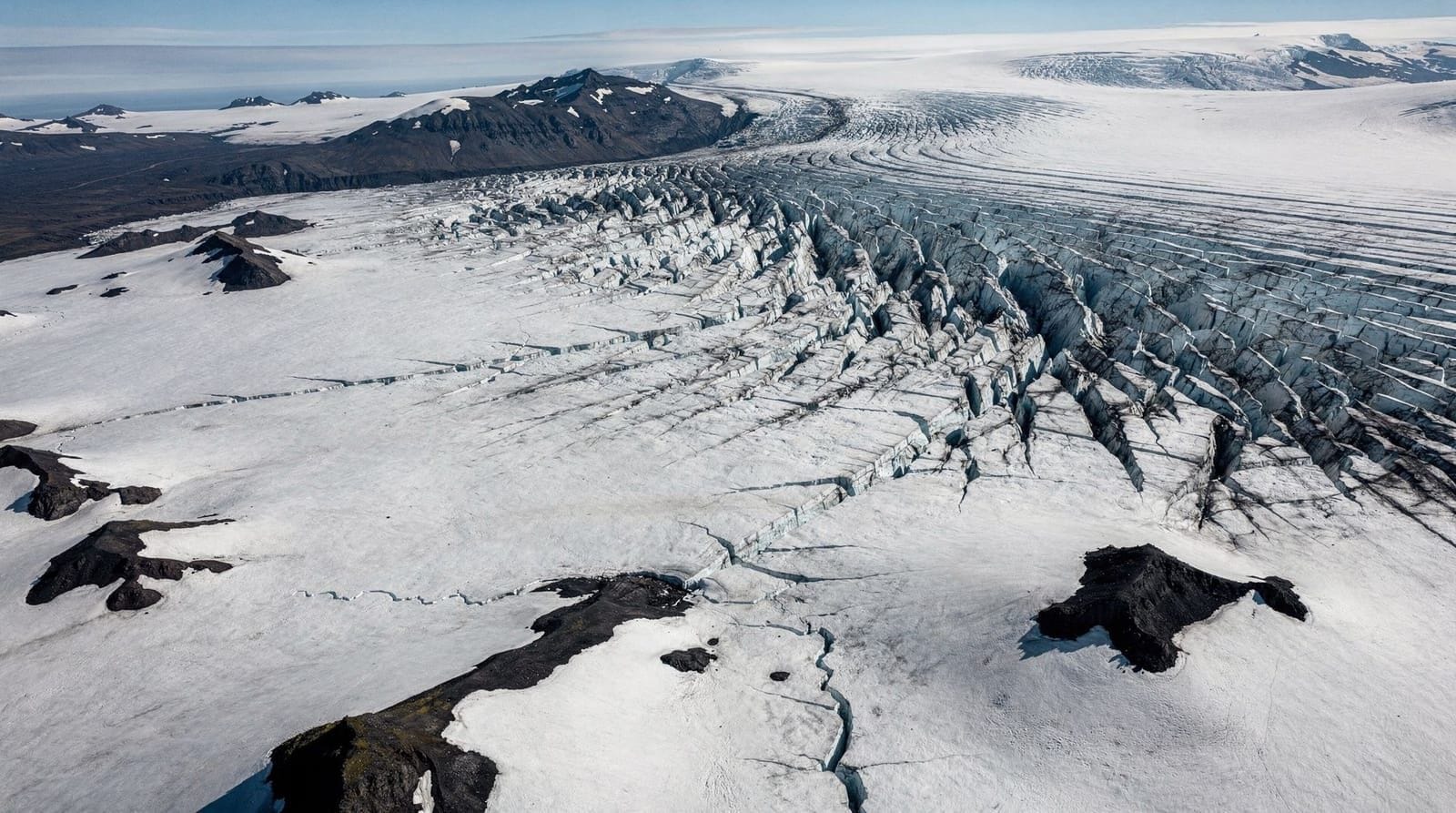
Breiðamerkurjökull glacier previously extended to the ocean shore at this location. Historical photographs from the 1930s show the glacier face at the exact position where the beach and car park now stand. As the glacier retreated, the current tidal channel formed, and the first icebergs were able to wash through to the sea.
This makes Diamond Beach a geological newborn — a landscape feature that emerged within living memory. The “diamond” effect (ice on black sand) will continue for as long as Breiðamerkurjökull continues to produce icebergs that are small enough to pass through the tidal channel. As the glacier retreats further and the lagoon deepens, the iceberg supply may eventually change in character.
Practical comparison: Diamond Beach vs Fjallsárlón beach
Most visitors know Diamond Beach; fewer know the adjacent Fjallsárlón glacier lagoon 7 km west, which has its own smaller beach with icebergs.
Diamond Beach (Breiðamerkursandur):
- Larger beach, more ice (larger lagoon produces more icebergs)
- Boat tours on the adjacent lagoon
- More visited
- Better photography for variety of ice formations
Fjallsárlón beach:
- Smaller, fewer visitors
- Different glacier backdrop (Fjallsjökull rather than Breiðamerkurjökull)
- No boat tours
- Often has smaller, more delicate ice pieces
Both are free and accessible within a few minutes of the main Route 1. If you have time for only one: Diamond Beach. If you have an extra 30 minutes: both.
Seasonal iceberg density — when the beach has the most ice
Ice density on Diamond Beach peaks in winter (November–February). Counter-intuitively, the beach has more ice when the lagoon is partially frozen — pieces break off the frozen surface during tidal action and wash onto the beach in irregular bursts.
In summer (June–August), maximum calving from the glacier face produces the most icebergs in the lagoon, but many are too large to pass through the tidal channel and strand there. The pieces that do reach the beach tend to be medium-sized and heavily wave-eroded from their time in the lagoon.
In autumn (September–October): the water cools, calving continues, and beach pieces are often in the most photogenic middle stage of melting — worn smooth but still substantial. The low-angle autumn light is excellent for photography.
There is no bad season to visit Diamond Beach. There is also no guarantee of large or spectacular formations on any specific day — the ice is controlled by glacial activity, weather, and tides, none of which are on a tourist schedule.
The seal population near Diamond Beach
Arctic seals (primarily grey seals and harbour seals) occasionally haul out on the beach and on ice floes within the lagoon. Seeing a seal resting on a block of glacier ice in the lagoon is one of the more remarkable wildlife sightings at Jökulsárlón.
Seal presence is not guaranteed — they come and go with fish availability and disturbance levels. Calm days with fewer visitors are more likely to have seals present. Early morning (before 9 am) is the most reliable window. Photographing from a distance of at least 20 m respects their space and produces better behavioural shots anyway. See the seals in Iceland guide for Iceland seal watching more broadly.
Atlantic puffins sometimes use ice floes in the lagoon as resting spots in summer (June–July) before heading north. This is not a dedicated puffin-watching location, but an incidental encounter with puffins on ice among icebergs is memorable. See the puffin watching Iceland guide.
Top experiences
Bookable activities with verified prices and instant confirmation on GetYourGuide.
Top experiences
Best-rated activities across GetYourGuide and Viator.

Ice Cave by Katla Volcano Super Jeep Tour from Vik
- Viator

Puffin and Volcano Tour with Ebbi
- Viator

Dynjandi Waterfall & Farm Visit Tour from Isafjordur Port
- Viator

3,5-Hour Sightseeing Tour To Dynjandi Waterfall
- Viator

Volcano ATV Tour
- Viator

Lake Myvatn Day Tour and Godafoss Waterfall for Cruise Ships from Akureyri Port
- Viator