Seals in Iceland — where to see them and what to expect
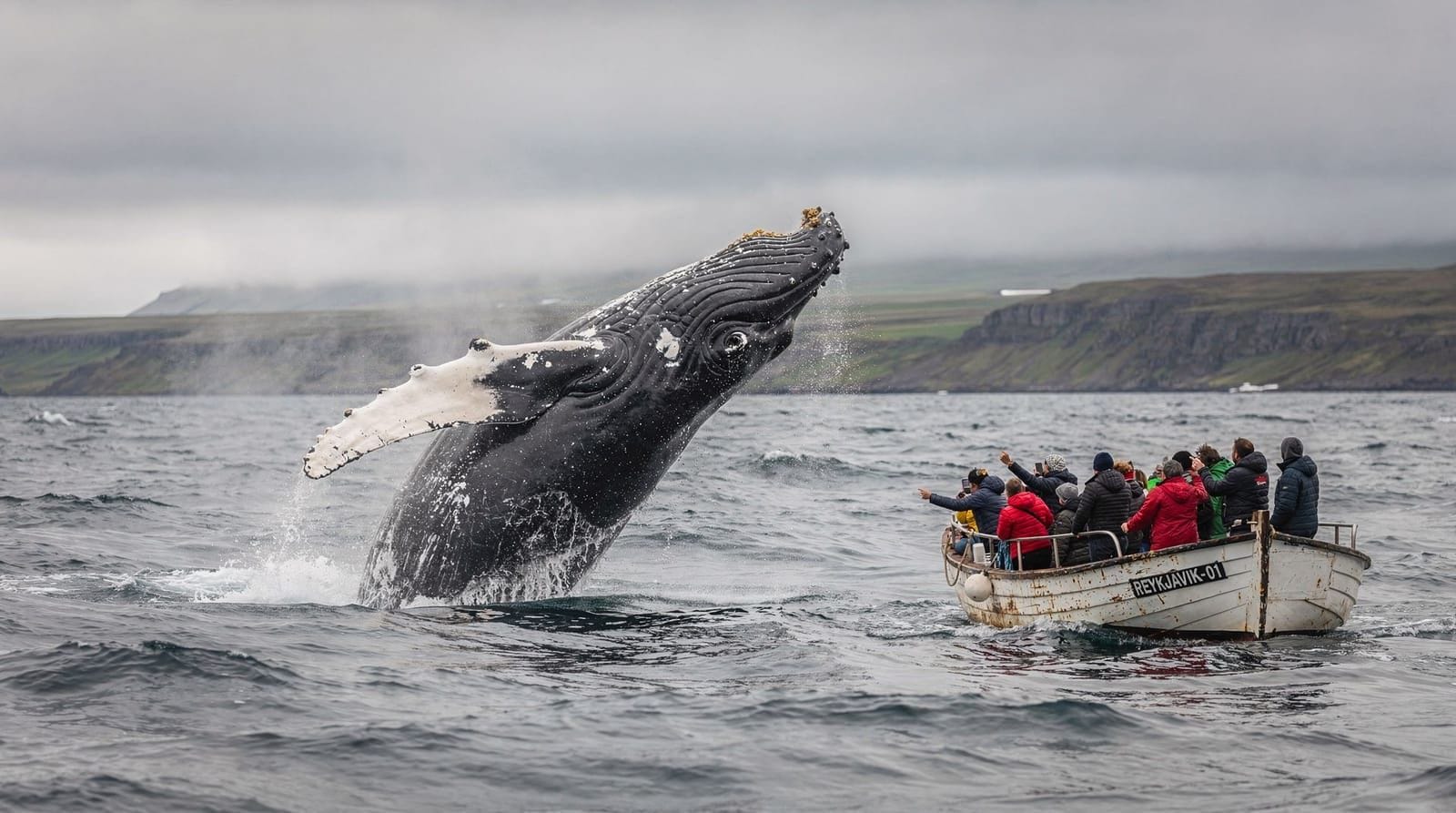
Arnarstapi: Reykjavik Snaefellsnes peninsula whale watching
Where can I see seals in Iceland?
Seals are widespread around Iceland's coast. The best shore-based viewing is at Hvammstangi (northwest Iceland's seal capital), Ytri Tunga beach on the Snæfellsnes Peninsula, and Jökulsárlón glacier lagoon. No tour is needed — seals haul out on beaches and rocks near roads.
Two seal species breed around Iceland’s 4,970 km coastline, and both are accessible to anyone with a car and a free afternoon. Unlike whale watching, which requires a boat, seal watching in Iceland is largely a shore-based activity — you pull off the road, walk to a beach, and scan the rocks. At the best sites, seals haul out in large numbers and will occasionally approach the water’s edge out of curiosity.
Iceland’s coastal landscape — dramatic, remote, and largely undeveloped — provides a natural abundance of undisturbed hauling grounds that simply do not exist along most of Europe’s coastline.
| Where | Ytri Tunga (Snæfellsnes), Vatnsnes Peninsula, Jökulsárlón |
| Cost | Free — no tour or entry fee needed |
| Time needed | 30–60 minutes at a single site |
| Best time | June–July for pups; year-round for adults |
| Getting there | Self-drive, or on a Snæfellsnes tour (Ytri Tunga is a scheduled stop) |
The two Icelandic seal species
Harbour seal (Phoca vitulina, Icelandic: landselur): The more commonly seen species. Adults are 1.5–1.7 m long and spotted or grey-brown, with a characteristic “catlike” face with large round eyes and a concave muzzle. Iceland’s harbour seal population of approximately 12,000–15,000 animals represents one of the most significant populations in Europe, though it has declined from an estimated 30,000 in the 1980s.
Harbour seals pup in June and July. Pups can swim within hours of birth — unlike grey seal pups, which depend on nursing for 3 weeks before they can enter the water.
Grey seal (Halichoerus grypus, Icelandic: útselur): Larger than harbour seals — males reach 2.3 m and can weigh 300 kg. The grey seal has a distinctive elongated snout (earning it the nickname “horsehead seal” in some regions). Iceland’s grey seal population of 4,000–5,000 is concentrated in the northwest and west coasts.
Grey seals pup in November–January, earlier than harbour seals. Pups are born with white lanugo fur that they shed after 3 weeks.
Best viewing sites
Ytri Tunga beach (Snæfellsnes)
The most reliable and most photographed seal haul-out site in Iceland. On the south shore of the Snæfellsnes Peninsula, 28 km west of Grundarfjörður, Ytri Tunga is a curved sandy beach backed by a working farm. Up to 50 harbour seals haul out on the rocks here on a typical summer day.
There is no fee, no infrastructure — just a rough car park, a path to the beach, and seals. In pupping season (June–July), pups lie alongside adults on the larger flat rocks at the east end of the beach. Bring binoculars and observe from the grass above the beach rather than descending to the sand.
Ytri Tunga is easy to include on a Snæfellsnes day trip from Reykjavík — it sits on the main Peninsula circuit road.
Vatnsnes Peninsula
The Vatnsnes Peninsula in northwest Iceland juts into Húnaflói bay and is considered Iceland’s premier seal-watching destination. The peninsula holds 3,000–5,000 harbour seals — a remarkable concentration. Hvammstangi, the peninsula’s main village, has leaned into its seal identity with a Seal Research Centre (Selasetur) offering exhibitions and guided coastal walks.
The gravel road around the peninsula (about 60 km loop) passes multiple hauling sites. The most accessible is Ósar on the west shore, where a wooden viewpoint platform overlooks a lagoon with almost guaranteed seal sightings year-round.
Hvammstangi is 180 km from Reykjavík (2.5 hours) via the Ring Road. It can be combined with a Ring Road northbound itinerary or done as a day trip from Akureyri.
Jökulsárlón glacier lagoon
The famous glacier lagoon on the south coast has a small resident harbour seal population that appears reliably at the outlet channel where the lagoon meets the sea. Seals take advantage of the ice floes for resting and the channel for fishing. You can often see them from the bridge or boat tour without any special effort.
If you are visiting Jökulsárlón for the glacier lagoon — which you should — seals are a side bonus rather than the main reason to visit. But they are there.
Reykjanes Peninsula
The rocky coastline of the Reykjanes Peninsula has scattered harbour seals along its south and west shore, particularly at quiet coves near Garðskagi lighthouse and the cliffs near Reykjanesviti. Sightings are less reliable than dedicated sites above.
Strandir coast (Westfjords)
The remote Strandir coast in the eastern Westfjords has one of Iceland’s lowest visitor densities and correspondingly undisturbed seal populations. Holmavik and the bays south toward Borðeyri host grey seals particularly. This is expedition territory rather than day-trip material — but for travellers doing a full Westfjords itinerary, the seal watching on empty beaches is genuinely special.
Guided tours including seal watching
Most seal watching in Iceland is self-guided and requires only a car. However, a few tour options include seal watching as part of a broader itinerary:
Snæfellsnes full-day guided tour from Reykjavík — includes Ytri Tunga seal beach, Kirkjufell, Arnarstapi, and SnæfellsjökullThe Snæfellsnes Peninsula tour naturally includes Ytri Tunga as a scheduled stop — this is the easiest way to guarantee a seal visit if you do not have your own transport.
Responsible seal watching
Iceland’s Environmental Agency guidelines:
- Maintain 100 m distance from resting seals
- Do not approach seal pups — even if they appear alone or distressed. Seal mothers leave pups on beaches while they feed and will return. Approaching the pup causes the mother to abort the return.
- Dogs must be kept on leads near hauling sites
- Do not attempt to enter the water near seals or encourage them to swim by approaching
- In June–July, give the east end of Ytri Tunga beach (pupping area) extra distance
The instinct to approach and touch a seal is understandable but counterproductive. Most seal “rescue” situations involving human intervention are actually healthy pups temporarily abandoned while the mother feeds.
Seals and Icelandic fishing culture
The relationship between Iceland’s fishing industry and its seal population is complex. Seals compete with commercial fishers for cod and salmon, and there has historically been significant conflict. Iceland’s harbour seal population declined by more than 50% between the 1980s and 2000s, partly due to hunting programmes promoted to protect fish stocks.
Current management allows licensed farmers to take limited numbers of harbour seals for consumption. The meat (selur) is eaten and the skin traditionally used. This is distinct from commercial seal hunting at scale, and far less visible than past practices.
For whale watching and seal watching visitors, the environmental message from most operators focuses on coexistence rather than persecution — the wildlife tourism value of Iceland’s seals substantially exceeds their commercial fishing value in economic terms.
Photographing seals in Iceland
Seal photography is accessible at Ytri Tunga and the Vatnsnes Peninsula without specialist equipment. A few practical notes:
Equipment: at Ytri Tunga, seals on rocks within 10–20 m of the grass observation area are photographable with a standard kit lens (24–105mm equivalent). For seals further out (30–60 m), a 200mm lens gives better results. At the Vatnsnes Ósar viewpoint, seals are often 30–80 m away — a 300–400mm lens is useful.
Light: seals on black or grey rocks in flat overcast light are difficult to expose correctly — the dynamic range between a grey seal and its dark rock background is low. Golden-hour light (morning or evening) provides direction and warmth that dramatically improves the results. The Ytri Tunga car park faces roughly south, so morning light from the east catches the seals’ faces nicely.
Behaviour to wait for: seals entering the water are the most dynamic shots — the transition from awkward land animal to fluid aquatic animal happens in 2–3 seconds. Position yourself where a seal on a rock is oriented toward the water and wait. Seals also yawn, scratch, and interact with each other — all good photograph opportunities.
Drone rules: flying drones near seal haul-out sites in Iceland is subject to the Aviation Authority’s regulations and, ethically, should be avoided during pupping season. Drones disturb seals more significantly than human presence on foot. In June–July specifically, drone overflights of Ytri Tunga beach are inappropriate.
Seal watching vs whale watching: which to prioritise
Visitors with limited time sometimes ask whether to prioritise a boat-based whale watching tour or shore-based seal watching. They are not really competitors — most itineraries can fit both without conflict, since seal watching costs nothing and takes under an hour, while whale watching requires a half-day and a booked departure. If forced to choose one, whale watching delivers more dramatic wildlife (and is covered in depth in our whale watching guide), but seal watching has the advantage of near-certainty at the right site and zero cost or booking logistics — a genuinely reliable wildlife encounter rather than a probability-dependent one.
Reykjavík day trip combining Snæfellsnes Peninsula and whale watchingSeals compared: Iceland vs other Northern European destinations
For travellers who have seen seals elsewhere in Northern Europe — Norway’s coast, Scotland’s Farne Islands, or the Wadden Sea in the Netherlands and Germany — Iceland’s seal watching compares favourably on accessibility and reliability. Ytri Tunga and the Vatnsnes Peninsula offer shore access without a boat, unlike many Scottish and Norwegian seal colonies that require a boat trip to offshore skerries. The trade-off is scale: the Wadden Sea’s harbour seal and grey seal population is considerably larger in absolute numbers, though far more commercialised with organised boat tours rather than Iceland’s quiet, unstructured roadside access.
Seal-friendly accommodation near the best sites
Staying near Ytri Tunga or Vatnsnes overnight rather than day-tripping significantly improves your odds of a quiet, early-morning encounter before any other visitors arrive.
Near Ytri Tunga (Snæfellsnes): Guesthouses in Búðir and Grundarfjörður put you within 20–30 minutes of the beach, letting you time an early visit before continuing the Snæfellsnes day trip circuit.
Near Vatnsnes: Hvammstangi itself has a small selection of guesthouses, positioning you for an early walk to Ósar before the day’s Ring Road traffic passes through. This is the practical way to combine seal watching with a broader Westfjords or North Iceland itinerary without a dedicated detour day.
Frequently asked questions about seals in Iceland
Can you eat seal in Iceland?
Traditionally yes — seal was an important food source in coastal Iceland for centuries. Today it is eaten occasionally in the northwest and Westfjords regions. Some restaurants in Ísafjörður and Þórshöfn may serve seal dishes. It is not a mainstream menu item but is not illegal to sell.
Are seals dangerous to swim near?
Seals are generally not aggressive toward humans in the water. However, entering the water to interact with wild seals in Iceland is inadvisable — the water temperature of 5–10°C poses a serious hypothermia risk, and deliberately approaching wild marine mammals habituates them to humans in ways that are ultimately harmful.
When are seal pups born in Iceland?
Harbour seal pups are born in June and July. Grey seal pups are born in November–January. If visiting in summer, Ytri Tunga and Vatnsnes in June–July will have the highest chance of seeing young pups.
Do seals travel inland in Iceland?
Rarely. Seals occasionally enter river mouths to follow salmon runs, and there are occasional reports of seals appearing in estuaries several kilometres inland. Jökulsárlón’s resident seals use the lagoon well inland from the sea, making it unusual for Icelandic seal viewing.
Is Ytri Tunga or Vatnsnes better for seal watching?
Ytri Tunga is more convenient — it sits directly on the standard Snæfellsnes day-trip route and requires no detour. Vatnsnes has a higher seal density and more varied viewing points but requires a dedicated visit to northwest Iceland. For most visitors combining seal watching with an existing Snæfellsnes plan, Ytri Tunga is the practical choice; dedicated wildlife travellers should make time for Vatnsnes.
Can I see seals without a car, using guided tours only?
Yes, via the Snæfellsnes day tours that include Ytri Tunga as a scheduled stop — this is the standard way to see seals without self-driving. The Vatnsnes Peninsula has no dedicated guided day tour from Reykjavík specifically for seals, so a car (or a Ring Road tour passing through the area) is needed to reach it.
Seal watching in context: planning your visit
Seal watching in Iceland requires minimal planning compared to whale watching or organised birdwatching. The key decisions are:
Which site? For most visitors based in Reykjavík, Ytri Tunga on the Snæfellsnes Peninsula is the most practical — it is a standard stop on any Snæfellsnes tour or self-drive circuit. For dedicated seal watchers, the Vatnsnes Peninsula is superior in terms of animal density and site variety.
Which time? Year-round, but June–July for pup viewing. Midday is fine — unlike birds, seals haul out throughout the day and are visible from mid-morning through afternoon. Early morning is not required for seal watching.
Car or tour? Ytri Tunga is included on guided Snæfellsnes day tours from Reykjavík. The Vatnsnes Peninsula requires a car — no guided day trip from Reykjavík specifically targets it, though Ring Road driving tours pass through the area.
The Selasetur seal research centre at Hvammstangi
The Selasetur (Icelandic Seal Centre) in Hvammstangi on the Vatnsnes Peninsula is a small, dedicated research and education facility focused on Iceland’s harbour seal population. The exhibitions cover population biology, conservation status, and the history of seal hunting in northwest Iceland.
Entry is around 1,500 ISK (€10); the building also functions as a visitor information centre for the Vatnsnes circuit. Staff can point you to the best current haul-out sites and advise on conditions.
The centre runs guided coastal walks to viewing sites (additional fee) in summer — worthwhile if you want to guarantee a sighting with expert company. The walk to Ósar on the west coast (about 3 km) passes multiple haul-out rocks and is the most reliable option.
Combining seal watching with other Snæfellsnes activities
Ytri Tunga sits on the south shore of the Snæfellsnes Peninsula, 28 km east of the national park. Including it in a Snæfellsnes circuit adds only 20 minutes to the standard itinerary:
From Búðakirkja (black church): 8 km east to Ytri Tunga (15 min). Observe the seals (30 min). Continue east to Ólafsvík or Grundarfjörður on the north shore circuit toward Kirkjufell.
If you are doing the full Snæfellsnes day trip circuit, Ytri Tunga is already on the natural route. The additional time investment for the seal viewing is negligible.
What seals actually do at a haul-out site
Visitors expecting dynamic, active behaviour from hauled-out seals are sometimes disappointed — seals at rest are exactly that. They lie on rocks with minimal movement for hours. Their thermoregulation behaviour involves raising a flipper into the air (the “banana pose”), rolling, and occasionally scratching with their claws.
The interesting behaviour happens when a seal slides into the water: they are remarkably agile, completely transformed from the awkward-looking creature on shore. Seals entering the water at Ytri Tunga when disturbed by a careless visitor demonstrates what a genuinely aquatic animal looks like in its element.
Occasionally, seals haul out directly onto the beach close to the grass observation point at Ytri Tunga — within 10–15 m. This happens most often in the early morning before visitors arrive. If you arrive when the beach is empty and sit quietly, seals on the rocks will often swim closer to investigate. Patience is the most effective technique.
Seals and salmon rivers
Iceland has world-class salmon rivers, and seals have always used the lower reaches of salmon rivers as feeding grounds. The conflict between seals and salmon fishing operations is particularly acute in northwest Iceland, where both populations are significant.
The Vatnsnes area, where seal populations are highest, coincides with several productive salmon rivers. Local fishing licence holders have historically been permitted to remove seals near river mouths during salmon season. Current regulations restrict this, but the underlying tension persists.
For visitors, the relevance is context: the Icelanders you meet at Ytri Tunga or Hvammstangi may have complex views on seal conservation that differ from the wildlife tourism perspective. This is honest rather than cynical — Iceland’s relationship with marine wildlife is more multi-dimensional than the “we love whales” framing suggests.
Top experiences
Bookable activities with verified prices and instant confirmation on GetYourGuide.
Top experiences
Best-rated activities across GetYourGuide and Viator.