Black sand beaches in Iceland — where to go and what to know
Reykjavik: South Coast black Beach waterfalls full day
Which black sand beach in Iceland is the best?
Reynisfjara near Vík is the most dramatic — basalt columns, sea stacks, cave, and powerful Atlantic surf. Diamond Beach near Jökulsárlón is unique for icebergs on black sand. Both have serious rogue wave hazards; never turn your back to the ocean. Djúpalónssandur on Snæfellsnes is the most peaceful option.
Iceland has no shortage of black sand beaches — volcanic rock erodes to fine black particles, and this material deposits on the coast wherever wave action and current allow. What varies is the scenery surrounding the sand: sea stacks, basalt columns, caves, glacier ice, or open panorama. The beaches are free to access, but every single one has a wave hazard that kills visitors every few years.
This guide covers the best black sand beaches, what makes each one distinctive, and the safety information that should be read before approaching the waterline.
| Where | Reynisfjara & Vík (South Coast), Diamond Beach (near Jökulsárlón), Djúpalónssandur (Snæfellsnes) |
| Cost | Free to visit; Reynisfjara parking around 700 ISK |
| Time needed | 45–75 minutes per beach |
| Getting there | Self-drive via Route 1, or included on most south coast day tours |
| Never do | Turn your back to the ocean or approach the waterline |
Why is the sand black?
Icelandic black sand is volcanic basalt. Lava flows that reached the ocean and solidified were subsequently broken down by wave action over centuries and millennia. The result is fine to coarse dark particles — iron and magnesium-rich basaltic material — rather than the quartz-and-silica white or yellow sand of tropical beaches.
Some beaches are fine and compact; others have coarser gravel. All are cold.
Reynisfjara — the signature black sand beach
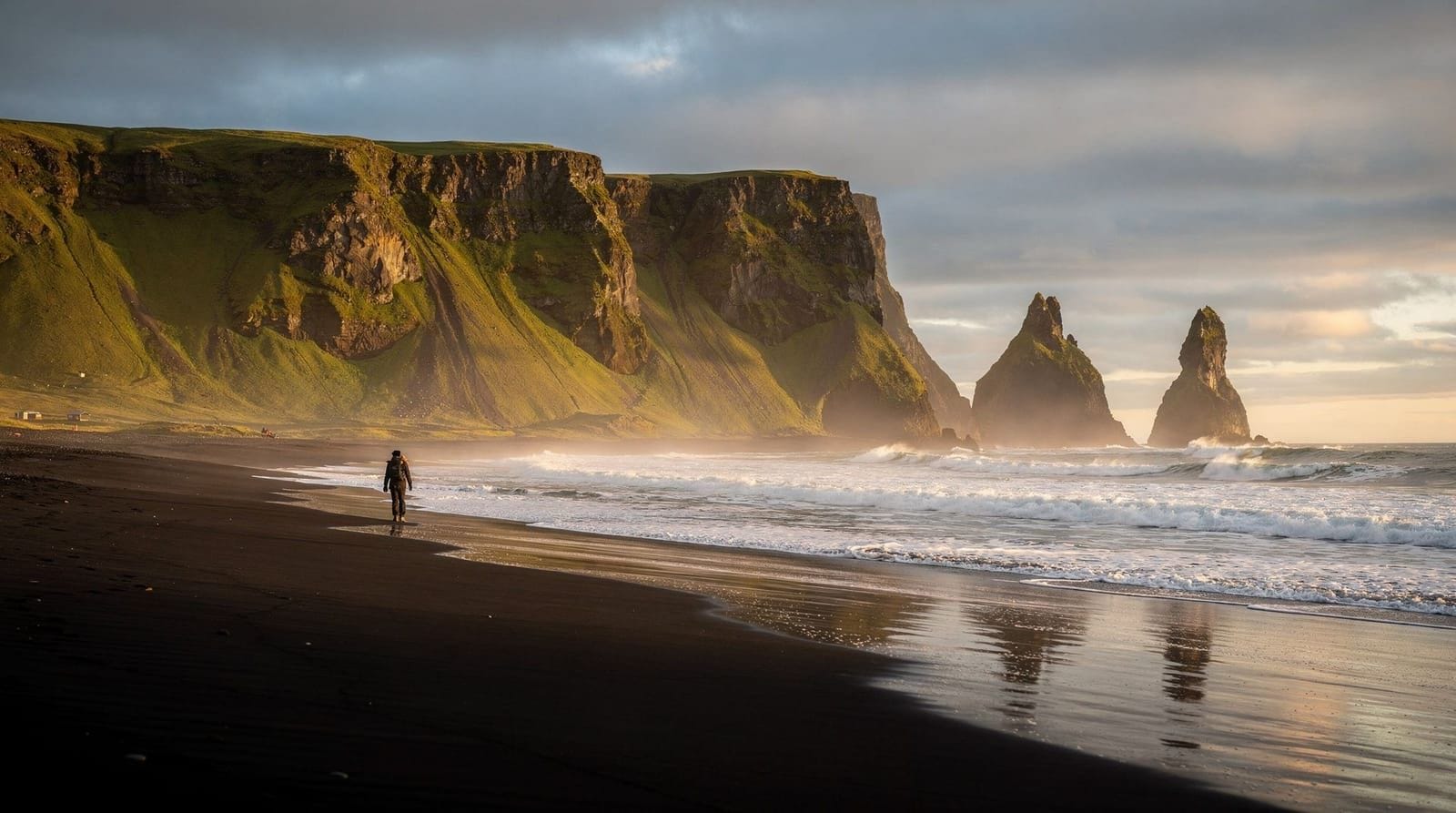
Reynisfjara is 182 km east of Reykjavík, 5 km west of Vík, reached via a short road off Route 1. It is the most visited beach in Iceland after the Blue Lagoon area, and for justified reasons — the combination of features here is exceptional.
What you see:
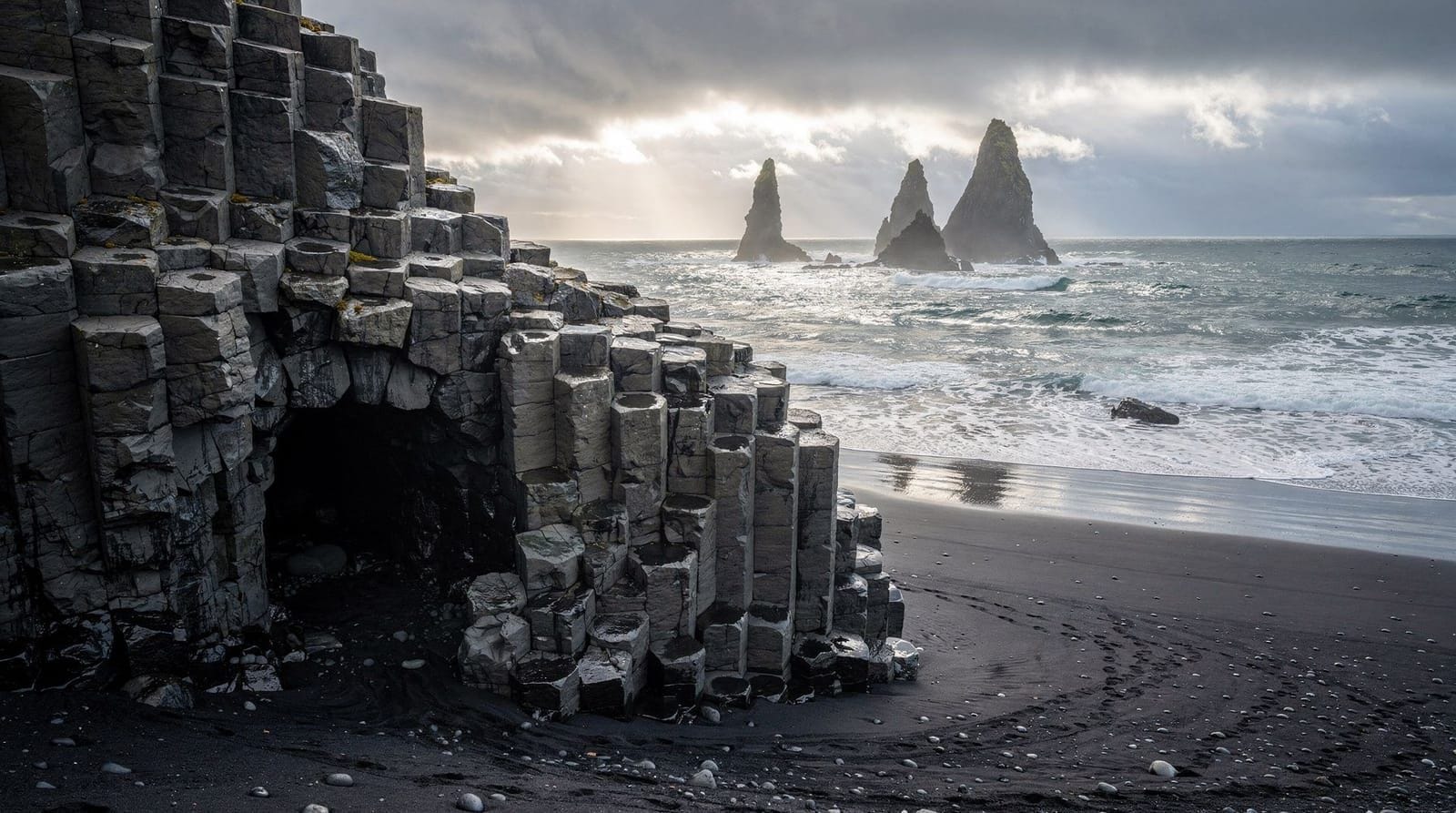
- Regular hexagonal basalt columns stacked in geometric formations at the cliff face (Reynisfjall mountain) — these form when lava cools slowly and contracts, creating column structures
- Hálsanefshellir cave, a shallow basalt cave formed by ancient lava tubes at the south end of the beach
- Reynisdrangar sea stacks — three black basalt columns rising from the sea, according to folklore the remains of two trolls who were trying to pull a ship to shore and were caught by sunrise and turned to stone
- The Dyrhólaey promontory visible to the west, with its sea arch
The beach faces directly south into the North Atlantic. Nothing is between you and Antarctica. The wave energy here is among the highest anywhere on the island.
Small-group south coast tours that stop at Reynisfjara typically spend 60–75 minutes at the beach, which is enough time for the basalt columns, cave, and sea stack viewing. Guides are strict about the danger zone near the waterline — follow their instructions.
Reynisfjara wave danger — please read this
Reynisfjara has killed and seriously injured visitors with regularity. The beach receives “sneaker waves” — individual waves that are significantly larger than the background swell, arriving without predictable pattern. Waves have reached 20–25 m up the beach within seconds.
Warning signs are present at the beach. They are written in multiple languages. People ignore them and sometimes die.
Rules that are genuinely non-negotiable:
- Stand at least 30 m from the water’s edge
- Never turn your back to the ocean
- Do not approach the basalt column formations at the base of the cliff near the water
- If you’re photographing, set up your shot from the safe zone — do not walk close for a better angle
- Children must be held or positioned well back from the waterline at all times
This is not excessive caution. The beach receives dozens of emergency callouts per year. Multiple fatalities have occurred.
Diamond Beach — icebergs on black sand
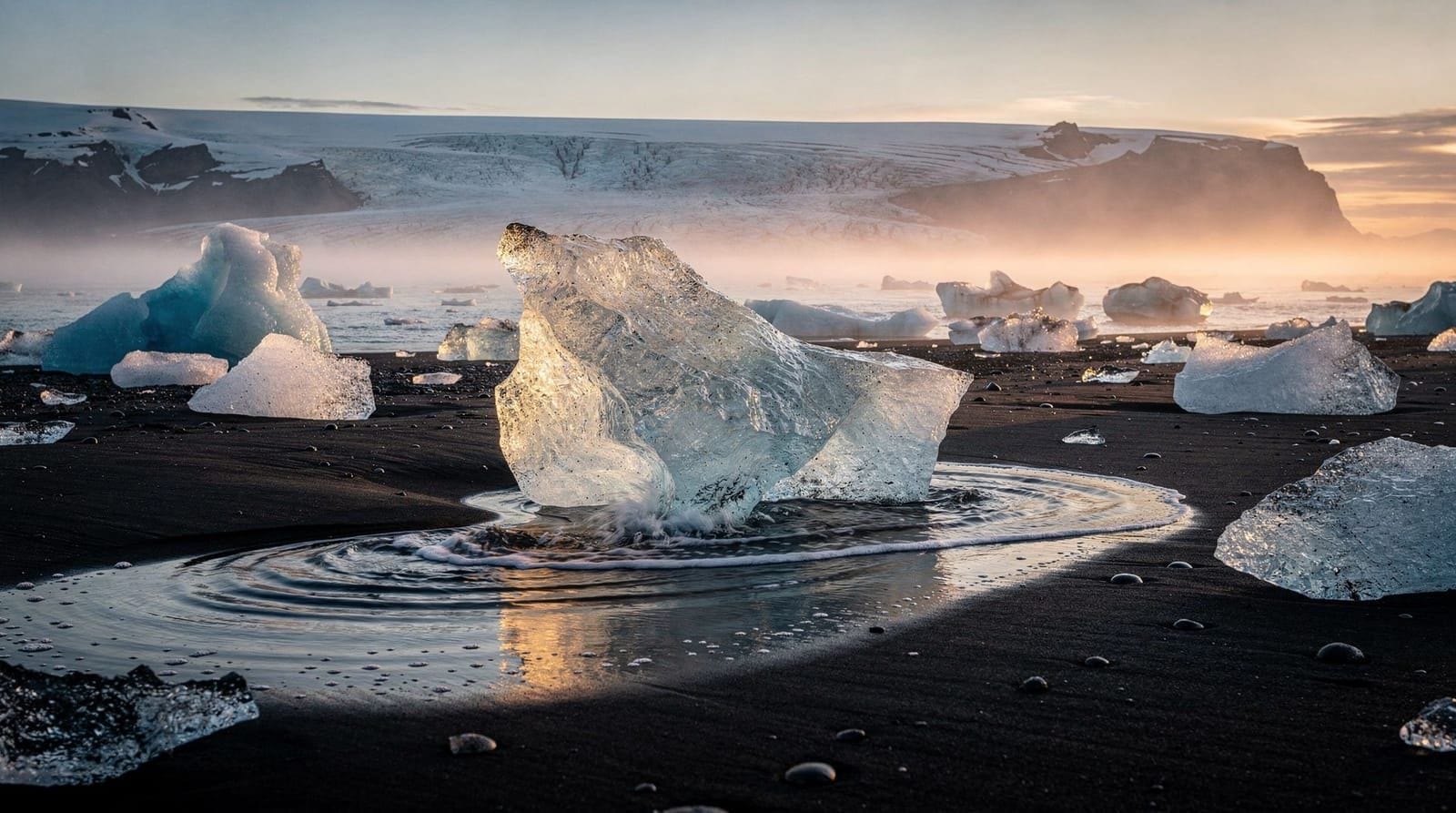
Diamond Beach is approximately 375 km from Reykjavík, adjacent to Jökulsárlón glacier lagoon. The beach is black volcanic sand, but what makes it exceptional is the ice: icebergs that drift from the lagoon through the tidal channel wash ashore and rest on the black sand.
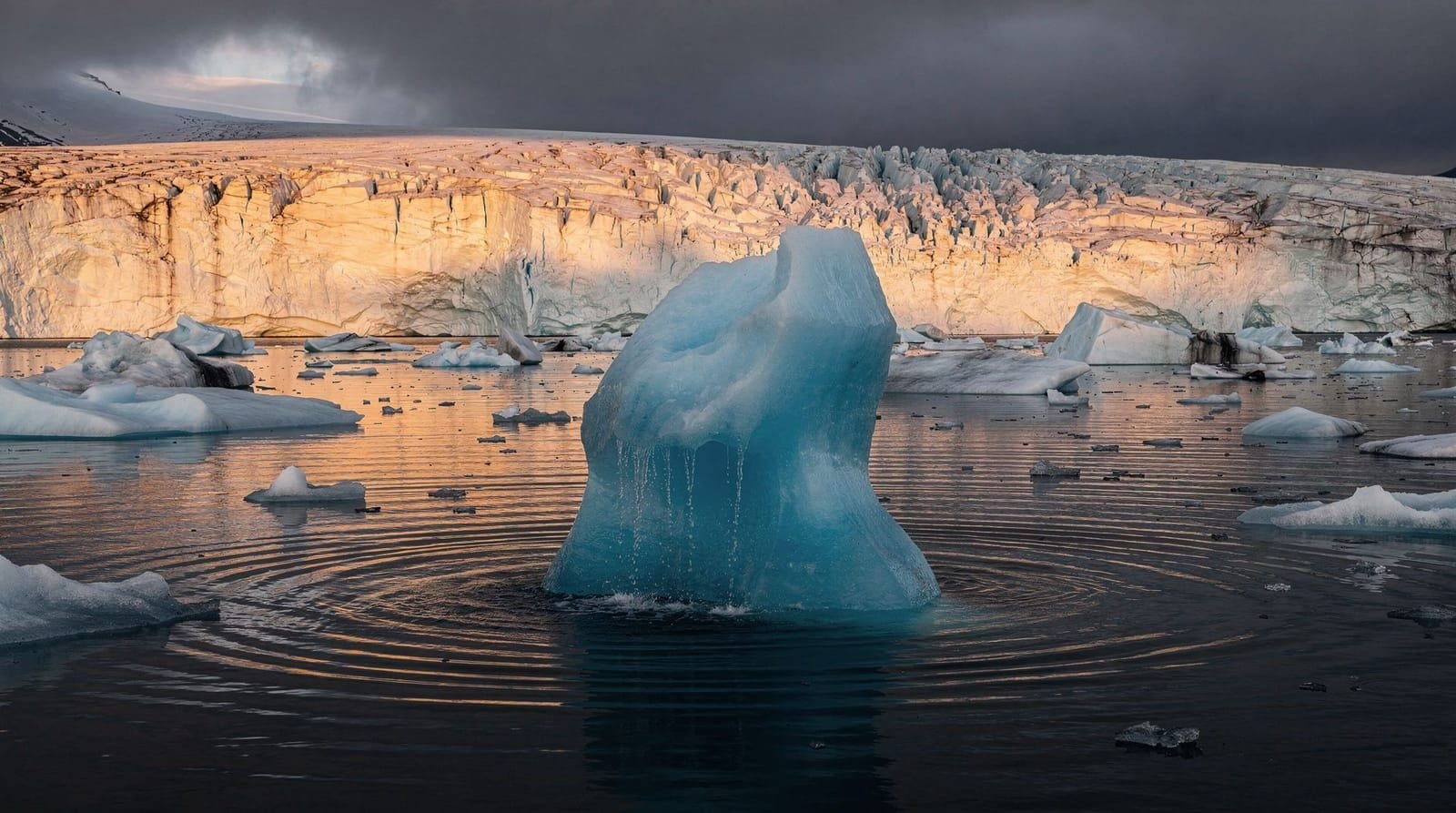
The colour contrast — transparent blue-white ice on jet-black sand — is unlike any other beach in the world. The ice formations change daily as pieces arrive, melt, and are redistributed by tides.
Diamond Beach has the same wave hazard as Reynisfjara. Incidents of visitors being swept down the beach by rogue waves have occurred here too. See the Diamond Beach guide for complete safety and photography details.
South coast day tours from Reykjavík typically include Reynisfjara (south coast) but not Diamond Beach, which requires a longer drive. If you want both in one trip, a multi-day south coast itinerary is the appropriate format.
Vík black sand beach
Vík’s beach is directly below the village of Vík, Iceland’s southernmost town, accessible on foot from the car park. The beach itself is similar to Reynisfjara but without the basalt columns. The same sea stacks (Reynisdrangar) are visible from here, from a different angle. Dyrhólaey promontory is visible to the west.
Puffin colonies: The cliffs above Vík’s beach host Atlantic puffin nesting sites in summer (May–August). The puffins are best seen from the clifftop trail above the village — early morning and evening are best for seeing them near the burrows.
Wave hazard: Present at Vík beach as well. Same rules apply.
Djúpalónssandur — the Snæfellsnes pebble beach
Djúpalónssandur on the Snæfellsnes Peninsula is different in character from the south coast beaches — smaller pebbles (mostly rounded black basalt), more sheltered from the full Atlantic, and extraordinarily peaceful compared to the south coast crowds.
The beach is known for four “lifting stones” (Dverghamrar) — a traditional test of strength used to gauge whether fishermen were strong enough to work a boat. The stones weigh 23, 54, 100, and 154 kg. Visitors attempt to lift them; the results are usually humbling.
The rusted wreck of the British trawler Epine (GY7), which ran aground in 1948, is scattered across the black pebbles near the beach entrance. The Icelandic Maritime Administration requests visitors not to handle the wreck pieces.
Access: Route 574 to a car park, then a 10-minute walk down a lava path. Free.
Skarðsvík — the golden exception
Worth mentioning because it contradicts the premise of this guide: Skarðsvík, on the north coast of the Snæfellsnes Peninsula, is the only significant golden sand beach in Iceland. The unusual golden colour comes from decomposed lava with higher silica content. Small, sheltered, and remarkably picturesque. No significant wave danger. Off Route 574 near the Snæfellsnes tip.
Photography on black sand beaches
Black sand is a challenge for camera exposure systems. The dark surface reflects much less light than white or grey sand, causing automatic metering to overexpose. Compensate by dialling exposure down 1–1.5 stops from what the meter suggests.
Best photography conditions:
- Sunrise/sunset: Low angle light rakes across the sand, revealing texture and lighting ice formations at Diamond Beach
- Overcast: Soft even light, no harsh shadows from basalt columns
- Wet sand: After wave wash, wet black sand reflects the sky, creating mirror effects — effective with wide-angle compositions including the sky
For Reynisfjara basalt columns: photograph in the early morning to avoid harsh shadows in the column crevices. A 35–70 mm lens captures the geometry better than wide angle.
See the Iceland photography guide for Iceland-specific exposure techniques.
Combining the black sand beaches
If you’re doing the south coast in three days:
Day 1: Seljalandsfoss, Skógafoss, Reynisfjara, Vík Day 2: Mýrdalsjökull glacier/Katla area, east toward Kirkjubæjarklaustur, Skaftafell Day 3: Jökulsárlón + Diamond Beach, return west
This covers all major black sand beach experiences in proper sequence with enough time at each location.
Frequently asked questions about Iceland’s black sand beaches
Why is black sand dangerous if white sand beaches aren’t?
All ocean beaches have wave hazards. Iceland’s south-facing beaches are dangerous specifically because: the North Atlantic produces large, irregular swells; the beach gradients are shallow (waves travel far up the beach); and cold-water entry causes rapid hypothermia if someone is swept in. The black colour makes the sand photogenic but has nothing to do with the danger.
Is Reynisfjara beach accessible in winter?
Yes. The basalt columns and sea stacks are visible and arguably more atmospheric in winter light. Wave danger is year-round and possibly higher in winter when Atlantic storms intensify. The access road is maintained. Vík is an interesting stop in winter.
Are there seals or other wildlife at the black sand beaches?
Occasionally. Seals haul out on Sólheimasandur (the black sand plain near Skógafoss) and other south coast beaches periodically. Puffins nest in the Vík cliff area in summer. The beaches are not reliable wildlife-watching spots — see the puffin watching guide and seals in Iceland guide for dedicated wildlife advice.
Can you build fires or camp on Iceland’s black sand beaches?
Open fires outside designated camping areas are illegal in Iceland (fire risk to vegetation). Camping on beaches outside designated campsites is also technically restricted. The main black sand beaches (Reynisfjara, Diamond Beach) have no camping facilities.
Is Reynisfjara suitable for young children?
Manageable with vigilant supervision and strict distance from the water. The basalt columns are genuinely interesting for children. The hazard is real — keep children well back from the waterline, hold their hands in the sandy area, and be aware of your own position relative to waves while managing them.
How much time should I budget for Reynisfjara and Vík together?
Most visitors spend 45–60 minutes at Reynisfjara and another 20–30 minutes at the Vík beach and clifftop viewpoint if combined. Add 15 minutes for the Svarta Fjaran café if you want a break. A full stop for both is comfortably done in under 2 hours.
Do I need a 4x4 to reach the black sand beaches?
No. Reynisfjara, Vík, and Diamond Beach are all reached via paved roads off Route 1, accessible with a standard 2WD car year-round (with winter tyres in winter). Djúpalónssandur on Snæfellsnes is also reachable by a standard car via Route 574.
The basalt column formations at Reynisfjara — how they form
The geometric basalt columns at Reynisfjara’s Hálsanefshellir cave and along the base of Reynisfjall mountain are some of the most regular examples of columnar jointing in Iceland. The formation process:
Lava flows onto a flat surface and begins to cool. As basalt contracts while cooling, it develops fracture patterns that minimise stress — nature’s solution to this geometry is the hexagon, though pentagons and heptagons also occur. The cracks propagate downward through the cooling lava, creating columns. The more slowly the lava cools, the longer and more regular the columns.
At Reynisfjara, the columns are 5–7 m tall and nearly perfectly regular. The cave has columns visible on both walls and ceiling, giving a sense of entering a geometric cathedral. The columns in the cliff face above the cave are taller — some exceeding 10 m.
Similar formations exist at Svartifoss in Vatnajökull National Park (considered by some photographers the more striking example) and at the Giant’s Causeway in Northern Ireland, which is geologically the same formation created by a different eruption at the same geological period.
How to photograph Reynisfjara’s columns
The columns are best photographed in even, diffuse light — either overcast days or the early morning when the cliff face is in shadow. In direct midday sun, the deep crevices between columns create unworkable high-contrast shadows.
For the cave interior (Hálsanefshellir): wide angle lens (16–24 mm), tripod for long exposures (the cave interior is quite dark). The columns on both sides of the cave frame naturally, creating symmetry that’s easy to use.
For the cliff face columns above the beach: telephoto (100–200 mm) to compress the pattern and show the regularity of the jointing. From 100 m back, a 135 mm lens fills the frame with columns.
For the Reynisdrangar sea stacks: standard zoom (35–70 mm) from the beach, including waves and black sand in the foreground. The stacks are most atmospheric in mist or low cloud.
The tourist infrastructure debate at Reynisfjara
Reynisfjara receives approximately 500,000–700,000 visitors per year. The small car park that served the site for decades was replaced with a larger facility, a larger café, and more organised paths. Some visitors and local residents argue the development has compromised the wild character of the beach.
The honest assessment: the beach is more crowded and more commercial than it was 10–15 years ago. The café (Svarta fjaran, operated by the Vík í Mýrdal community) is not bad — the fish soup and lamb dishes are appropriate. The parking charge (introduced in 2024, approximately 700 ISK) is reasonable.
The wave danger has not diminished with the infrastructure improvements. If anything, the crowd creates a false sense of safety — people assume that if hundreds of others are there, it must be fine to stand near the water. It is not.
Vík village — the necessary context
Vík is the small village 5 km east of Reynisfjara, Iceland’s southernmost settlement, with approximately 300 year-round residents. It sits directly below Mýrdalsjökull glacier with Katla volcano beneath.
Katla has erupted regularly throughout recorded history and is considered overdue for its next eruption. A Katla eruption beneath Mýrdalsjökull would produce a catastrophic jökulhlaup that could destroy Vík within 30 minutes of eruption onset. The town has evacuation procedures and elevated concrete bunkers for residents to reach if sirens sound.
This is real, not dramatic exaggeration. If you’re staying in Vík, understand the evacuation route (Route 1 east, away from the glacier flood path). This information is available at the Vík community centre and posted in accommodation. See the safetravel emergency info guide for general Iceland emergency procedures.
Reynisfjara beyond the photograph
Most visitors spend 45–60 minutes at Reynisfjara, take their photographs, and leave. What gets missed:
- The 3 km walk west along the beach to the base of Dyrhólaey cliff (for those who check tides and conditions first)
- The birdwatching on Reynisfjall above the beach — Arctic terns, fulmars, and in season puffins in the cliffs
- The cave interior in detail — the relationship between the floor, wall, and ceiling columns is fascinating if you have a guide or a geology book
- The actual sound of the waves — without a recording, this beach’s soundscape is one of Iceland’s most powerful sensory experiences
See the south coast day trip guide for a properly-timed Reynisfjara visit in a full south coast context.
Practical comparison of Iceland’s main black sand beaches
For first-time visitors choosing where to spend limited time:
If you have only 1 black sand beach: Reynisfjara. The basalt columns, sea stacks, cave, and overall scenery package makes it the most complete visual experience.
If you have 2 days on the south coast: Reynisfjara on day 1, Diamond Beach on day 2 (requires driving to Jökulsárlón).
If you’re on Snæfellsnes: Djúpalónssandur. Completely different character — quieter, pebble rather than fine sand, with shipwreck and lifting stones as added interest.
The one beach most visitors don’t see but should consider: Sólheimasandur, the black sand plain between Skógar and Vík that’s home to the famous Dakota DC-3 airplane wreck (a US military plane that made an emergency landing in 1973; the wreck is a 4 km walk each way from the road). The combination of black sand, mountains, and the intact-but-weathered aircraft is compelling photography.
How black sand forms — the complete process
The transformation from eruption to beach is a multi-stage process:
-
Lava reaches the ocean: When lava flows meet the sea, the sudden cooling produces explosive fragmentation. Lava entering water doesn’t flow smoothly — it shatters into angular fragments.
-
Wave erosion: Over decades to millennia, wave action breaks the angular basalt fragments into progressively smaller pieces. The South Coast beaches are downstream of lava flows from Eyjafjallajökull, Mýrdalsjökull, and Vatnajökull — all sources of fresh volcanic material.
-
Current distribution: Ocean currents and longshore drift move the fine sand particles and deposit them on beaches. Iceland’s south coast faces the full force of North Atlantic swell with no land barrier to Antarctica — the energy available to move and grind material is enormous.
-
The black colour: Basalt is iron and magnesium-rich volcanic rock, without the silica that gives most tropical sand its white or golden colour. The minerals that would create lighter pigmentation are largely absent from Iceland’s volcanic rocks.
This process is ongoing. Black sand beaches in Iceland are actively replenished by continued erosion of basalt coastlines. They are not static deposits — the material turns over continuously with the rhythm of tides and storms.
Winter at Reynisfjara — a different scene
Winter Reynisfjara is significantly less crowded, carries the same wave danger, and offers a completely different visual palette. Snow on the cliff face behind the columns, ice on the basalt surfaces, and low-angle winter light creating strong directional shadows across the geometric stone formations.
The cave (Hálsanefshellir) in winter can have icicles forming on the ceiling and frost on the column faces. The sea condition in winter — heavier swells, more dramatic wave action — makes the wave danger more obvious and the sound more intense.
Driving to Reynisfjara in winter: Route 1 is maintained year-round; the access road off Route 1 toward the beach is paved and plowed. A 2WD with winter tyres handles it in normal conditions. Check road.is for current conditions. See the Iceland in winter guide.
Comparing the main black sand beaches at a glance
| Beach | Distinctive feature | Crowd level | Best for |
|---|---|---|---|
| Reynisfjara | Basalt columns, cave, sea stacks | Very high | First-time visitors, photography |
| Diamond Beach | Icebergs on black sand | High | Contrast photography, glacier lagoon pairing |
| Vík beach | Same sea stacks, quieter access | Moderate | Puffin viewing from the clifftop above |
| Djúpalónssandur | Lifting stones, shipwreck | Low | Travellers wanting solitude on Snæfellsnes |
Fitting black sand beaches into a South Coast itinerary
For visitors building a broader south coast route, Reynisfjara and Vík usually sit between the waterfalls and the glacier lagoon stops. A typical day covers Seljalandsfoss and Skógafoss in the morning, Reynisfjara around midday, then either turns back to Reykjavík or continues toward Skaftafell and Jökulsárlón for a multi-day loop. If you’re short on time, our south coast day trip guide sequences the stops to avoid backtracking, and the south coast 3-day itinerary covers the full version including Diamond Beach.
Travellers combining beach stops with wildlife should note that puffins nest on the cliffs above both Vík and Dyrhólaey from May to August — see the puffin watching guide for timing. Photographers doing a dedicated circuit often add Kirkjufell on Snæfellsnes to the same trip for a different coastal composition entirely.
For visitors self-driving the full Ring Road rather than a South Coast-only trip, the black sand beaches naturally slot into the first two or three days out of Reykjavík, before the route continues east toward East Iceland and eventually loops back via the north. Building a full day around Reynisfjara and Vík rather than rushing through in an hour lets you also catch the birdwatching on Reynisfjall and the walk toward Dyrhólaey mentioned above — details many visitors miss entirely when treating the beach as a 20-minute photo stop.
Top experiences
Bookable activities with verified prices and instant confirmation on GetYourGuide.
Top experiences
Best-rated activities across GetYourGuide and Viator.

Ice Cave by Katla Volcano Super Jeep Tour from Vik
- Viator

Puffin and Volcano Tour with Ebbi
- Viator

Dynjandi Waterfall & Farm Visit Tour from Isafjordur Port
- Viator

3,5-Hour Sightseeing Tour To Dynjandi Waterfall
- Viator

Volcano ATV Tour
- Viator

Lake Myvatn Day Tour and Godafoss Waterfall for Cruise Ships from Akureyri Port
- Viator