Látrabjarg bird cliffs — guide to Iceland's greatest seabird colony
Grundarfjörður: From Reykjavik full day Snaefellsnes peninsula
Duration: ~11 hours
What is Látrabjarg and why is it famous?
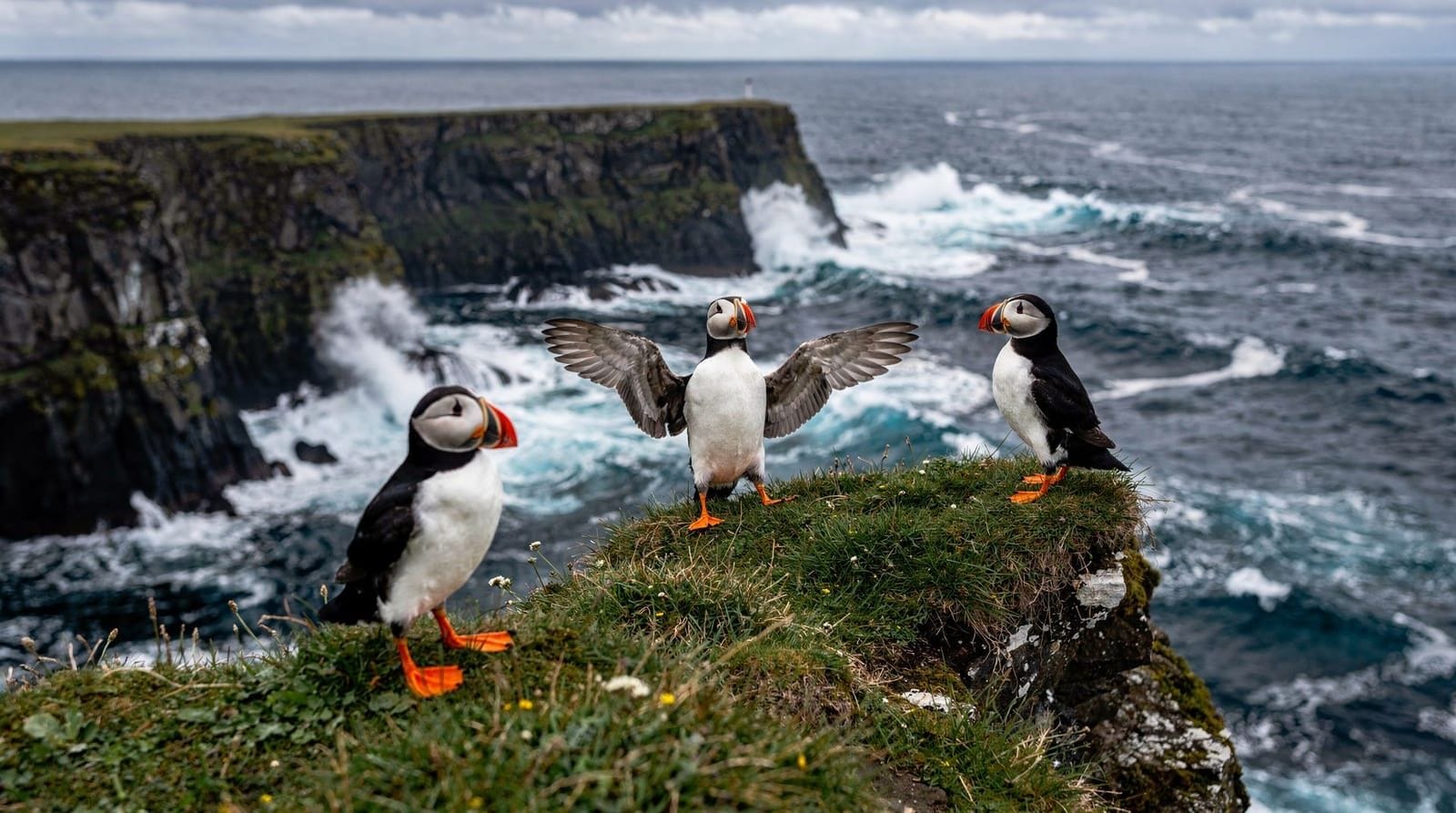
Látrabjarg is a 14 km sea cliff at Iceland's westernmost tip, reaching 441 m high and holding one of the largest and most accessible seabird colonies in the North Atlantic. Atlantic puffins nest in the cliff-top turf within metres of the path — closer approach than almost anywhere else in the world.
Látrabjarg is not a place you stumble upon. Reaching Iceland’s westernmost peninsula requires either a long drive across the Westfjords or a ferry across Breiðafjörður bay — and the reward for making the effort is proportionate. There is no other place in Iceland, and few places in the world, where you can approach nesting seabirds at such close range.
The cliff stretches 14 km along the western coast of the Látrabjarg peninsula and reaches its maximum height of 441 m at Heiðnakinn, roughly in the middle of the section. At the western tip, the Bjargtangar lighthouse marks the start of the accessible viewing area.
| Where | Westfjords, Iceland’s westernmost point |
| Cost | Free — no entrance fee |
| Time needed | 2–3 hours for the cliff walk |
| Getting there | Drive from Ísafjörður (3–3.5h) or Baldur ferry from Stykkishólmur |
| Best time | May–August for puffins; June–July peak activity |
What makes Látrabjarg exceptional
Most seabird colonies are viewed from distance — safety guidelines, boat rides, or sheer inaccessibility keep observers well away. At Látrabjarg, puffins nest in burrows dug into the turf of the cliff top itself. The path runs along the grass just back from the edge, and puffins sit at their burrow entrances within 1–2 m of walking visitors.
This proximity is explained by the absence of terrestrial predators in Iceland. Puffins have not evolved a strong flight response to approach by large mammals — there were none here when they arrived. They watch with apparent equanimity, turn their heads to track movement, and occasionally waddle toward observers. The experience is disarming.
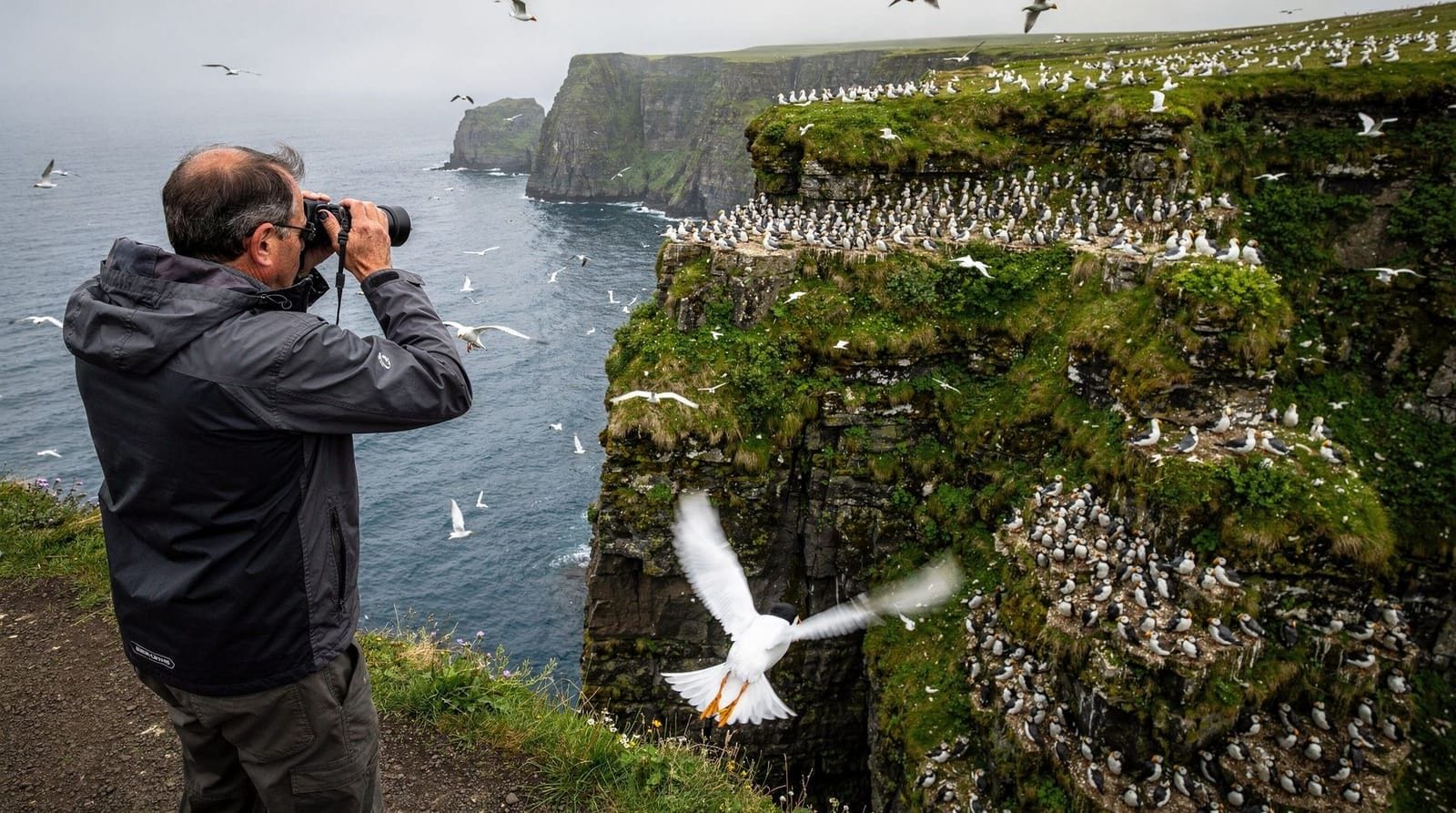
Beyond puffins, the lower cliff ledges are densely packed with guillemots and razorbills in layers of astonishing density — hundreds of thousands of birds visible from cliff-top vantage points, their calls combining into a constant roar.
Getting there
Option 1: Drive from Ísafjörður
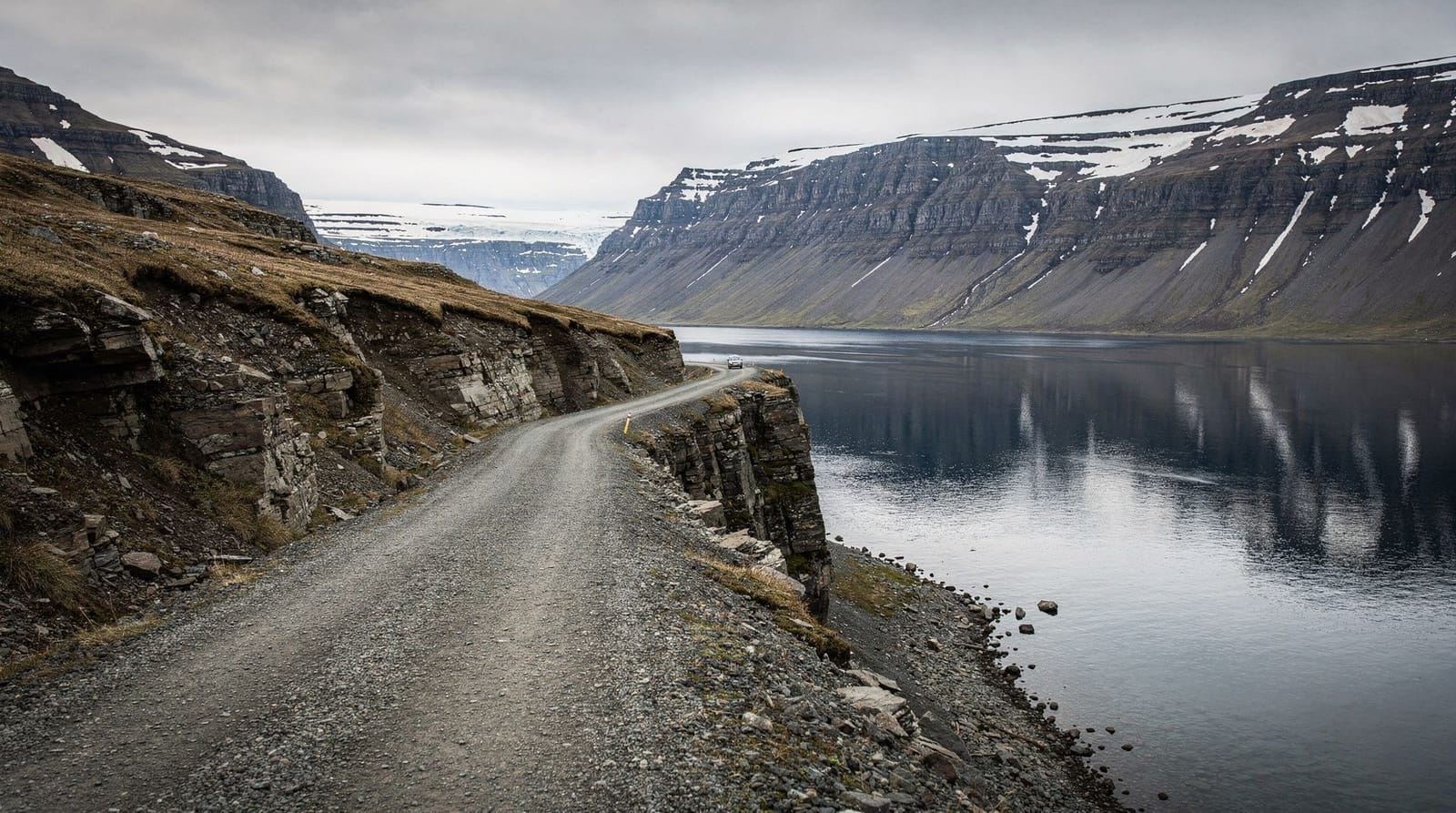
Ísafjörður is reached by domestic flight from Reykjavík (45 min, daily year-round, from ~15,000 ISK / €98 one way). From Ísafjörður, drive south on Route 60 and then west on Routes 62 and 612 — total 180 km, approximately 3–3.5 hours. The road is paved to Patreksfjörður; the final stretch to Látrabjarg is good gravel.
Option 2: Car ferry Stykkishólmur–Brjánslækur
The Baldur ferry connects Stykkishólmur on the Snæfellsnes Peninsula with Brjánslækur in the Westfjords. The crossing takes 2 hours 45 minutes and runs twice daily in summer (departs Stykkishólmur 9:00 and 15:00). From Brjánslækur, Látrabjarg is 40 km (about 45 min). This route is extremely scenic — the crossing passes dozens of small islands in Breiðafjörður.
Cost: approximately 3,500 ISK (€23) per adult, around 8,000–10,000 ISK (€52–65) for a car.
Option 3: Drive from Reykjavík direct
Via Hólmavík and the eastern Westfjords road: approximately 5–6 hours. This is the least comfortable option — long distances on winding roads. Better to break the journey with a night at Flókalundur or Patreksfjörður.
Season by season at Látrabjarg
| Month | Puffins | Other seabirds | Crowds | Notes |
|---|---|---|---|---|
| April–May | Arriving late April | Guillemots, razorbills nesting | Low | Cold, some road access limited |
| June–July | Peak, feeding chicks | Full colony active | Highest | Best combination of activity and access |
| August | Departing by late Aug | Thinning out | Moderate | Puffins leave for the open ocean |
| September–March | Absent | Mostly absent | Very low | Cliff largely quiet, road access difficult |
If you can’t fly to Ísafjörður and can’t spare the days for a full Westfjords loop, a Reykjavík-based puffin boat tour is a lower-commitment alternative, though it won’t match Látrabjarg’s close-range cliff-top access or the sheer density of the colony.
Reykjavík puffin watching boat tour — a lower-commitment alternative if the Westfjords trip isn’t feasibleWhat to pack for the cliff walk
Weather at Látrabjarg changes quickly even by Icelandic standards, given its exposed westernmost position facing the open North Atlantic. Bring a genuinely windproof and waterproof outer layer regardless of the forecast — coastal wind here is stronger and more persistent than inland readings suggest. Sturdy shoes with good grip matter more than technical hiking boots since the terrain is grassy and uneven rather than rocky; wet turf can be surprisingly slippery. A telephoto lens (100mm or longer) is the single most useful photography item given how much of the appeal is close-range bird portraits rather than wide landscape shots. Binoculars add real value for the lower cliff ledges, where guillemots and razorbills are visible in dense colonies but at a distance the puffins on the turf path don’t require.
Where to stay near Látrabjarg
Patreksfjörður (45 km from Látrabjarg): the largest village in the southern Westfjords, with reliable accommodation at Fosshotel Westfjords (doubles from ~25,000 ISK / €163 in summer) and several guesthouses. The town has a supermarket, petrol station, and a restaurant.
Hótel Látrabjarg (4 km from the cliff): small, unpretentious guesthouse right at the Látrabjarg peninsula. Limited rooms, must book ahead in July. The location is ideal for early-morning visits before tour groups arrive.
Flókalundur (60 km east): small hotel and hot pot by the fjord. Good option if arriving via the Breiðafjörður ferry.
The cliff walk
Start from the Bjargtangar lighthouse car park (GPS: 65.497°N, 24.525°W). The cliff-top path runs east along the rim. The most productive puffin section is the first 2 km east of the lighthouse, where the turf is thickest and burrow density highest.
Walking further east reveals the razorbill and guillemot ledges — look over the edge carefully at a safe position to see the lower ledges packed with auks in breeding plumage. The racket from a guillemot ledge is extraordinary.
Wear sturdy shoes with grip — the turf is uneven and can be wet. Keep 1.5 m or more from the cliff edge as a safety margin, and watch for soft ground above burrows. The lighthouse car park has a toilet; no café or facilities.
Species highlights
Atlantic puffin (Fratercula arctica): abundant from May through August, most active June–July when feeding chicks. Best photography from the turf path in the first 2 km.
Razorbill (Alca torda): similar size to puffins, black and white with a distinctive laterally compressed bill. Nest on lower cliff ledges. Iceland has a significant fraction of the global razorbill population.
Common guillemot (Uria aalge) and Brünnich’s guillemot (Uria lomvia): the lower cliff is packed solid with guillemots — one of the densest breeding concentrations in the North Atlantic. Common guillemots are brown above; Brünnich’s have a slightly shorter bill with a pale stripe. Both are present at Látrabjarg.
Northern fulmar (Fulmarus glacialis): gliding constantly along the cliff face on stiff wings, fulmars are among the most effortlessly aerial birds at Látrabjarg. They defend nests aggressively with projectile vomit — approach quietly and without sudden movements.
Kittiwake (Rissa tridactyla): small gulls with characteristic black wingtip “dipped in ink” pattern, nesting on narrow cliff ledges. Their namesake call echoes constantly.
Great skua (Catharacta skua): the most menacing bird at Látrabjarg. Large, dark brown, with white wing flashes, great skuas actively hunt and kill puffins and kittiwakes mid-air. They will also dive-bomb visitors near nest sites — wave something above your head.
Látrabjarg and the Westfjords itinerary
Látrabjarg is the jewel of a Westfjords road trip. A practical 5-day Westfjords route includes:
- Reykjavík → Stykkishólmur → Baldur ferry → Flókalundur (overnight)
- Drive to Patreksfjörður via Dynjandi waterfall; afternoon Látrabjarg
- Full morning at Látrabjarg (early morning for best photography); afternoon Rauðasandur red sand beach; overnight Patreksfjörður
- Drive north: Tálknafjörður and Bíldudalur; then on to Ísafjörður
- Ísafjörður highlights; flight back to Reykjavík
The Dynjandi waterfall is 90 km from Patreksfjörður and should not be missed on any Westfjords route.
Rauðasandur
While at Látrabjarg, the return via Rauðasandur (Red Sand Beach) is strongly recommended. This 10 km stretch of rust-red beach sits at the end of a steep mountain road above Patreksfjörður — the coloured sand comes from crushed shell deposits rather than mineral pigment. It is one of the most otherworldly beaches in Iceland. Seals are often visible at the lagoon end.
Frequently asked questions about Látrabjarg
Do tour operators run day trips to Látrabjarg?
Some operators in Ísafjörður run day-trip hiking and birdwatching tours to the cliff in summer. These are typically minibus excursions that include guidance and brief cliff walks. Good for travellers without a car who have arrived at Ísafjörður by flight.
Can I photograph puffins holding fish at Látrabjarg?
Yes — this is one of the best sites in the world for this. Adults carrying beakfuls of sand lance to their burrows are a regular sight in June–July, particularly in the two hours after sunrise (roughly 04:00–06:00) and in the evening (20:00–22:00). The golden light of Westfjords mornings makes for exceptional photography.
Is Látrabjarg accessible by public transport?
No. Public bus services do not reach Látrabjarg. A rental car or guided tour is required. Renting from Reykjavík for a 5-day Westfjords trip is the standard approach. 2WD vehicles can access Látrabjarg (the road is good gravel in summer).
How dangerous is the cliff edge?
The cliff is genuinely exposed and should be respected. There have been fatalities at Látrabjarg historically due to people getting too close to the edge, particularly in fog. Stay at least 1.5 m back from the edge, watch for undercut turf above burrows, and do not attempt the edge in strong winds. The puffins will come to you — there is no need to approach the edge.
What time of day is best for puffin photography?
Early morning (04:00–07:00) gives the best golden light and avoids the midday crowds that arrive with tour groups. Evening (20:00–23:00) also gives warm directional light. Midday is the worst for photography but fine for observation. Bring a lens of at least 100mm for comfortable framing at 1–2 m distance; a 200mm gives tight portraits.
The broader Westfjords context
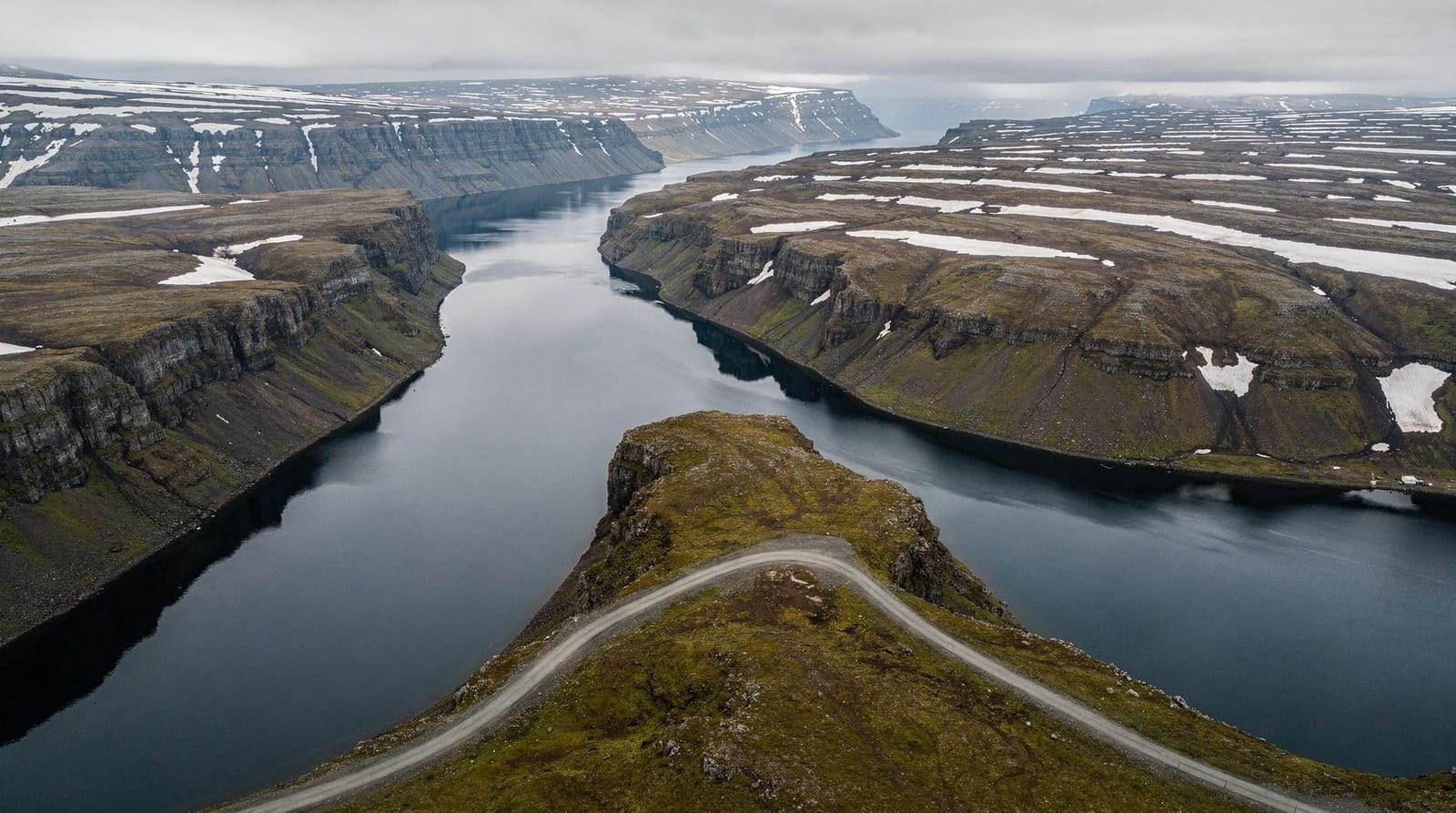
Látrabjarg does not exist in isolation — it is the western anchor of a road trip that represents the most remote and least visited region of Iceland. The Westfjords attract fewer than 10% of Iceland’s annual visitors despite containing some of the country’s most spectacular natural scenery.
The Dynjandi waterfall cascade (also called Fjallfoss) is a must-see on any Westfjords route — a tiered series of waterfalls stepping down a cliff face above Arnarfjörður. The top fall is 100 m wide at its crest, narrowing as it drops. The approach walk from the car park passes four smaller falls before reaching the main cascade. This is 90 km from Patreksfjörður via a scenic mountain road.
Ísafjörður is the region’s largest town and the service hub. Its setting — on a spit of land at the inner end of Skutulsfjörður fjord, surrounded by steep mountain walls — is architecturally and scenically one of Iceland’s most dramatic townscapes. The Westfjords Heritage Museum (Byggðasafn Westfjarða) provides essential context on the region’s fishing and farming history.
The Hólmavík sorcery museum in Strandir is the only museum in the world dedicated to Icelandic folk magic and witchcraft (galdraskræða). Unusual and genuinely interesting; allow 45 minutes.
Why the Westfjords are undervisited (and how to approach it)
The Westfjords account for approximately 25% of Iceland’s coastline but receive a fraction of the visitor traffic directed to the Golden Circle or South Coast. The reasons are straightforward: longer driving distances from Reykjavík, no direct Ring Road access (you leave the Ring Road and commit to a loop), limited accommodation in some areas, and less tourism infrastructure.
The consequence for visitors who make the effort: near-solitude at extraordinary sites. Látrabjarg on a July afternoon with three other visitors is a fundamentally different experience from Reynisfjara with 800. The Westfjords rewards commitment.
Practical approach: fly to Ísafjörður (Norlandair, 40 min from Reykjavík, from ~12,000 ISK one way) and hire a car locally, or drive from Reykjavík (4–5 hours to reach the Westfjords entry point at Flókalundur). The Baldur ferry from Stykkishólmur adds the Snæfellsnes approach and is the most scenic option.
Allow minimum 4 days in the Westfjords. Five days or more is better. A loop returning via Hólmavík and Borgarnes gives the most complete circuit.
Látrabjarg and the decline of Icelandic seabirds
Atlantic puffin populations across the North Atlantic have declined by 30–40% since the 1970s. Iceland, which holds the world’s largest colony, has seen significant year-to-year variation correlated with capelin and sand lance availability — both prey species sensitive to ocean warming and shifting current patterns.
Látrabjarg’s puffin numbers have been relatively stable compared to some other colonies, possibly because the Westfjords coast has experienced less warming than southeast Iceland. But researchers monitoring the cliff are cautious: the species is classified as vulnerable globally, and the apparent stability of current large colonies should not mask the longer-term trend.
Razorbill populations in Iceland have shown more consistent decline, and the guillemot colony at Látrabjarg, while still extraordinary, has contracted measurably over the past 30 years. The cliff is still one of the world’s great seabird spectacles, but visitors today are seeing something diminished from its peak — a useful thing to know.
Conservation organisations including the Icelandic Society for the Protection of Birds (Fuglavernd) run monitoring programmes at Látrabjarg and other key cliffs. Supporting organisations doing this work is the most constructive response for visitors moved by what they see on the cliff.
Other seabird sites in the Westfjords region
Látrabjarg is the headline, but the surrounding Westfjords have additional birding sites that extend a dedicated trip:
Breiðafjörður bay: the broad bay between the Westfjords and Snæfellsnes is scattered with hundreds of small islands and rocky skerries, most of which hold seabirds. The Baldur ferry crossing gives views of kittiwakes, guillemots, and gannets from the boat. White-tailed eagles hunt the smaller islands.
Flókalundur: the small hotel and fuel stop at Flókalundur (named for the Norwegian Viking who first sighted Iceland according to the sagas) sits at the inner end of Vatnsfjörður. The estuary nearby has waders and waterfowl in season.
Arnarfjörður: the long fjord running northwest from Flókalundur is one of the deepest fjords in Iceland. The fjord head has harbour seal populations and the cliffs above the shoreline hold breeding seabirds. Dynjandi waterfall drops into Arnarfjörður — puffins and other seabirds are visible from the waterfall viewpoints.
Ísafjörður town cliffs: the sheer mountain walls rising directly behind the town have nesting kittiwakes and other cliff-breeding species within the town area — an unusual urban birding experience.
Visitor numbers and preservation
Látrabjarg receives approximately 30,000–40,000 visitors per year — a fraction of the numbers at Golden Circle or South Coast sites, but concentrated on a narrow cliff path during the peak June–July period. The daily maximum of tour bus arrivals (typically mid-morning) means the path can be genuinely crowded between 11:00 and 15:00.
The Icelandic Environment Agency has considered formal access management at Látrabjarg in the past — including timed entry permits similar to those used at more-visited nature sites in other countries. Currently no such system is in place, and the site remains freely accessible.
The voluntary code among regular visitors is clear: stay back from burrow entrances, keep the path surface, do not enter the fenced protected zones (marked in breeding season), and leave before or after the tour bus peak. The cliff and its birds will benefit most from visitors who follow these guidelines consistently.
What to read before visiting
Two sources provide useful context before a first Látrabjarg visit:
“The Nature of Iceland” by Jack Rabbit Press: a comprehensive natural history guide covering geology, botany, birds, and mammals. The seabird section includes identification guides for all Látrabjarg species.
Arni Thórisson’s photography: the most complete photographic documentation of Látrabjarg seabirds produced by an Icelandic photographer. His work on puffin and razorbill biology gives the behaviour context needed to understand what you observe on the cliff.
Top experiences
Bookable activities with verified prices and instant confirmation on GetYourGuide.
Top experiences
Best-rated activities across GetYourGuide and Viator.