Sólheimajökull glacier hike: honest review
Vik: Solheimajokull Glacier hike Vik
What the Sólheimajökull hike involves
Sólheimajökull is an outlet glacier of Mýrdalsjökull ice cap, located on the South Coast approximately 180 km from Reykjavik near the village of Vík. It sits between two volcanoes — Eyjafjallajökull and Katla — giving it unusually dark, ash-streaked ice, a visual reminder of Iceland’s volcanic history.
| Where | Route 221, off Route 1, near Vík, South Coast |
| Cost | around ISK 8,000–15,000 per person for a standard hike |
| Time needed | around 3.5 hours total (walk in/out + hike) |
| Getting there | Self-drive to the parking area, or combined day tour from Reykjavik |
| Best time | Year-round; early morning in summer for smaller groups |
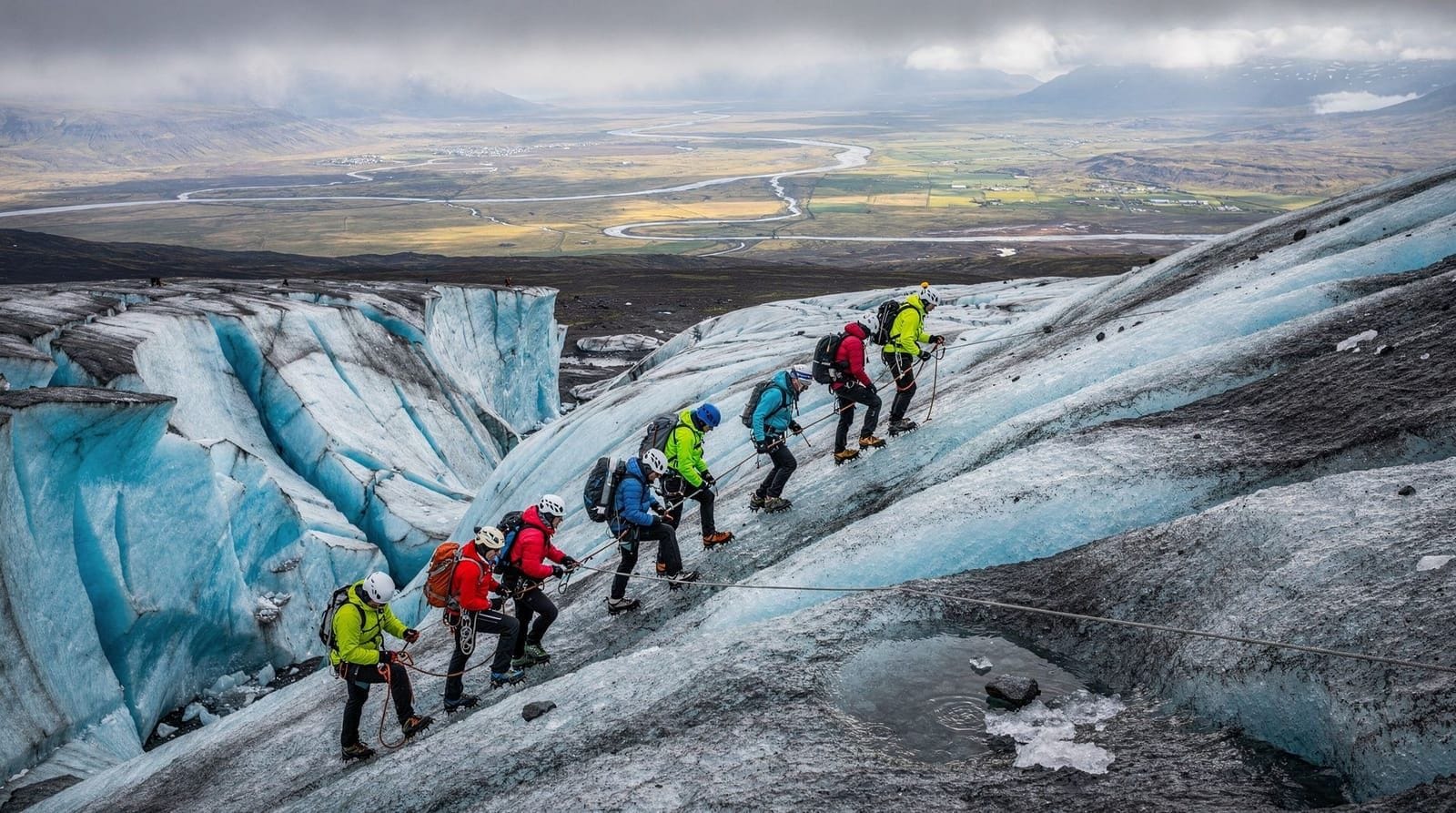
The glacier is reached via a rough gravel track (Route 221) off Route 1, with a flat 15-minute walk from the parking area to the glacier edge. At the terminus, guides fit crampons and give a safety briefing, then lead groups onto the ice.
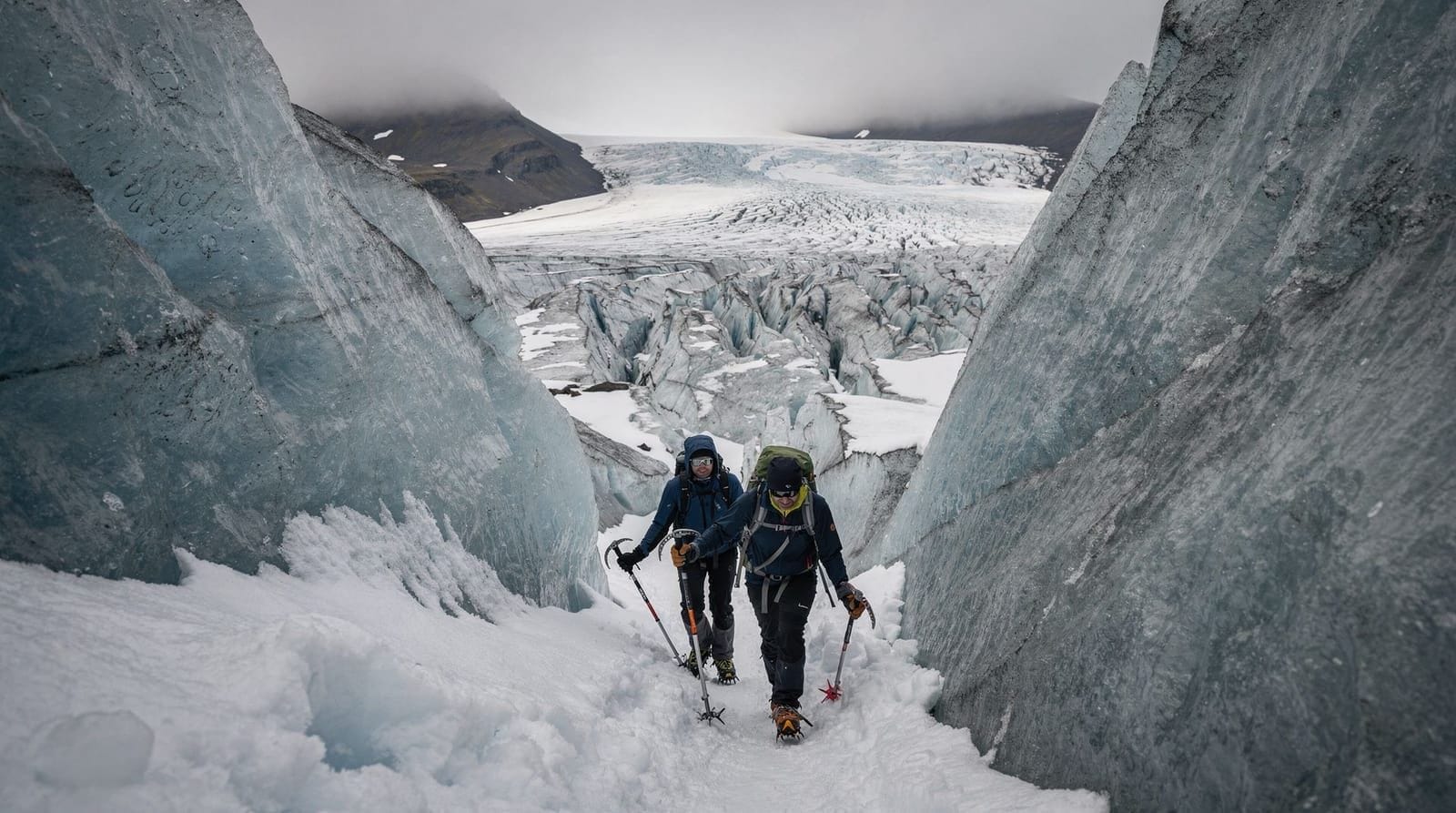
On the glacier surface: The ice is remarkably varied — deep blue crevasses, ash-dark ridges, meltwater channels, and formations called seracs (towers of ice). Guides navigate around crevasses and pick routes that show the most photogenic and geologically interesting features. The terrain is genuinely uneven and requires balance and reasonable walking ability.
Ice axe use: Guides demonstrate basic ice axe technique at the start. You use it for stability on steeper sections.
Photography: Some of Iceland’s best close-up ice photography happens on this glacier. Bring a wide-angle lens for scale — the ice formations appear abstract and alien up close.
Who runs hikes and what they cost
From Vík or the glacier parking area (local operators): Several Icelandic guiding companies operate directly from Sólheimajökull year-round. This is the most cost-efficient option.
- Standard 2.5-hour hike: ISK 8,000–10,500 (~€52–69)
- Ice climbing introduction add-on: ISK 3,000–5,000 extra
- Private group hike: ISK 20,000–30,000 per group
From Reykjavik (combined day tours): Tour operators combine a South Coast day tour with a glacier hike. This is convenient but expensive — you pay for transport plus the hike, and the total day runs 10–12 hours.
- South Coast plus glacier hike from Reykjavik: ISK 18,000–28,000 (~€118–184)
- Savings by booking hike separately (if you have a car): ISK 8,000–12,000 versus ISK 18,000+
If you are self-driving the South Coast, book the glacier hike locally and save significantly.
Is it worth the money?
The case for the glacier hike:
Walking on a glacier is a completely different experience from looking at one from the road. The scale becomes apparent only when you are on the ice. Blue crevasses, formations shaped by seasonal melting, and the sound of meltwater running beneath your feet create a genuinely memorable experience. The glacier hiking guide provides broader context on Iceland’s glaciers, but the Sólheimajökull experience specifically is accessible enough for most people while still feeling substantive.
For families with children over 8, the hike is an excellent choice — physically achievable and guaranteed to leave an impression.
The case for skipping it:
If you have very limited time or a tight budget, the glacier is striking from the viewpoint at the end of the access track (free, no guide required). The view into the crevasse zone is impressive from the edge.
The hike costs ISK 8,000–10,000 per person. That is not trivial for what amounts to a 2.5-hour guided walk. If glacier hiking is not a priority interest, the South Coast’s other highlights (Seljalandsfoss, Skógafoss, Reynisfjara) are free and visually impactful.
What nobody tells you:
The glacier is retreating measurably every year. The route on ice changes seasonally. In some years, the accessible ice coverage is smaller and the hike shorter. Ask the operator about current conditions before booking.
The safety question
Glacier hiking without a guide is dangerous and explicitly discouraged. Crevasses are not always visible from the surface, and meltwater systems can undercut ice. Never step onto the glacier without a guide and crampons.
With a licensed guide on a designated route, risk is low. Guides assess conditions daily and do not take groups onto sections that are unstable. Children as young as 8 join guided hikes regularly.
Age and fitness: Most operators require participants to be at least 8 years old, wear appropriate footwear (sturdy hiking boots or trail shoes — not sneakers), and be capable of walking for 2–3 hours on uneven terrain. No mountaineering fitness required.
Logistics and practicalities
Getting there: Turn off Route 1 at the Sólheimajökull sign (signed for “Glacier”) and follow Route 221 for 2 km on gravel. Parking area at the end; WC facilities available. 15-minute walk to the glacier edge.
What to wear:
- Waterproof hiking boots (ankle support is important)
- Waterproof jacket and trousers
- Warm mid-layer (the ice is cold; wind on the glacier can be sharp)
- Gloves and a hat
- Crampons and ice axe are provided and included in the tour price
Best time of day: Early morning departures in summer mean fewer groups and better light for photography. The access road gets busy by 10 AM in peak season.
Year-round operation: Glacier hikes run every month of the year. In winter, the hike is equally valid and the ice formations (frost, hoarfrost crystals) are different from summer. Black ice on the access road may require care driving in winter months.
Combination tips:
- Pair with Reynisfjara black sand beach (20 minutes away)
- Pair with Seljalandsfoss (1 hour west)
- Stay in Vík overnight to do the glacier at the best morning light — see the South Coast 3-day itinerary
What the glacier recession means for the hike
Sólheimajökull has retreated approximately 1 km since 2000, with the ice surface lowering significantly in some sections. The parking area access road has been extended twice as the glacier pulled back. Currently (2026), the walk from parking to the glacier edge is 15 minutes — a few years ago it was closer to 5.
This retreat is documented, measurable, and the result of warming temperatures. Guides acknowledge it directly during tours and point to reference markers (painted lines on rocks or GPS coordinates) showing the former glacier extent.
Practical visitor impact: The accessible ice surface is smaller than it was a decade ago. Some sections that were formerly used for hikes are no longer safe or no longer exist. The experience is still substantial, but the Sólheimajökull you visit in 2026 is smaller than the one in travel photographs from 2010. Future access is not guaranteed — the current trajectory suggests continued retreat.
This is worth knowing not to discourage a visit, but to frame it accurately: you are seeing a glacier that is actively changing. Some visitors find this context makes the experience more significant, not less.
The glaciers of Iceland guide provides broader context on Iceland’s glaciers and what their recession means for the landscape and water systems.
Comparing glacier hike options in Iceland
Iceland has multiple accessible glaciers for hiking. Here is how Sólheimajökull compares:
| Glacier | Distance from Reykjavik | Best for | Access |
|---|---|---|---|
| Sólheimajökull (this tour) | 2.5 hours | Beginners, families, South Coast day trips | 2WD road to parking, 15-min walk |
| Skaftafell, Vatnajökull NP | 4.5 hours | Larger, quieter ice, dedicated glacier trips | 2WD road, longer approach walk |
| Langjökull (Into the Glacier) | 2 hours (Golden Circle area) | No fitness required, year-round tunnel | Snowmobile or super-jeep transfer |
Sólheimajökull (this tour): Best for South Coast day visitors, beginners, and families. 2.5 hours from Reykjavik, fully accessible 2WD road to the parking area. Most convenient glacier for one-day South Coast itineraries. Ice is visually dramatic (dark ash streaks on blue ice), though smaller than Skaftafell options.
Skaftafell glacier, Vatnajökull National Park: Located 4.5 hours from Reykjavik, within Vatnajökull National Park. Multiple glacier tongues to choose from, including large pristine blue ice areas. Better for travelers already doing the east or the south coast glaciers 4-day itinerary. Fewer crowds on the glacier itself.
Langjökull (Into the Glacier tunnel): A man-made tunnel inside Iceland’s second-largest glacier, accessible from the Golden Circle area. Year-round access. A family-friendly option that does not require crampons or fitness. See the glacier hiking guide for full comparison.
For visitors on a tight South Coast day, Sólheimajökull is the clear choice by location. For visitors specifically dedicated to glacier experiences with more time, Skaftafell offers a larger, less-visited alternative.
Booking locally versus as part of a bigger tour
Two very different booking paths lead to the same glacier. If you already have a car and are working through the South Coast day trip guide or a multi-day itinerary, book the hike directly with a Vík-area operator — you pay only for the hike, arrive on your own schedule, and can adjust timing around weather. If you are not driving, a combined Reykjavik day tour bundles transport and the hike into one ticket, which is more expensive per hour but removes all logistics. Neither path is “wrong”; the right one depends entirely on whether you already have wheels. For the wider self-drive-vs-guided trade-off across Iceland generally, the self-drive versus guided tour guide covers the decision in more depth, and driving in Iceland covers what a 2WD rental can and cannot handle on Route 221 and similar gravel access roads.
Frequently asked questions about the Sólheimajökull glacier hike
Do I need special clothing or footwear?
Waterproof boots with ankle support are required. The operator will refuse participants in sneakers or sandals. Crampons (metal spikes) attach over your boots and are provided. Everything else — jacket, trousers, layers — is your own clothing or available to rent from the operator.
Can I bring a camera on the glacier?
Yes — bring it on a strap around your neck or in an accessible bag. A waterproof bag cover is advisable as meltwater spray is possible. Smartphone photos work; a camera with zoom and manual settings produces better results.
Is there a weight limit?
Some operators specify a maximum weight for crampons (typically 130 kg / 286 lb). Check with the specific operator at booking.
How long does the full experience take including travel?
From the parking area: 15 minutes walk in + 2.5 hours on ice + 15 minutes walk out = approximately 3.5 hours total. From Vík: add 30 minutes each way. From Reykjavik combined tour: 10–12 hours total.
Is the hike available in winter?
Yes. Winter hikes are fully operational. The ice surface changes (less meltwater, more frost formations) and the experience is different but equally valid. Route 221 may require careful driving in icy conditions.
Should I book the hike locally or as part of a Reykjavik day tour?
If you already have a car, book locally in Vík and save ISK 8,000–12,000 versus a combined tour. If you are not driving, the combined Reykjavik day tour is the only realistic option, but budget the full 10–12 hour day for it.
Is Sólheimajökull better than Skaftafell for a first glacier hike?
For a first hike combined with a South Coast day, yes — it’s closer, the road access is easier, and the standard tour is shorter. Skaftafell suits travelers with more time who want a bigger, quieter glacier and are already routing through Vatnajökull National Park.