Reykjavík stopover — the perfect 3-day layover itinerary
Reykjavik: Iceland 4 day stopover Blue Lagoon Golden Circle
Duration: 4 days
Iceland is one of the few mid-Atlantic layover destinations that justifies actually leaving the airport. A 3-day Reykjavík stopover is a genuine trip, not just a brief airport diversion — the city’s centre is 50 km from Keflavík, the Golden Circle is a full-day excursion accessible without a car, and the combination of city, geology, and geothermal bathing is available to anyone with three days and a functioning pair of walking shoes.
This itinerary assumes you arrive on Day 1 afternoon/evening and depart on Day 4 morning — giving three full usable days. No rental car required; all excursions operate on guided coach tours from Reykjavík bus terminal.
| Where | Reykjavík city, Golden Circle, South Coast or Blue Lagoon |
| Cost | Around 220,000–280,000 ISK for 3 days, one person, mid-range |
| Time needed | 3 full days plus arrival evening, no car required |
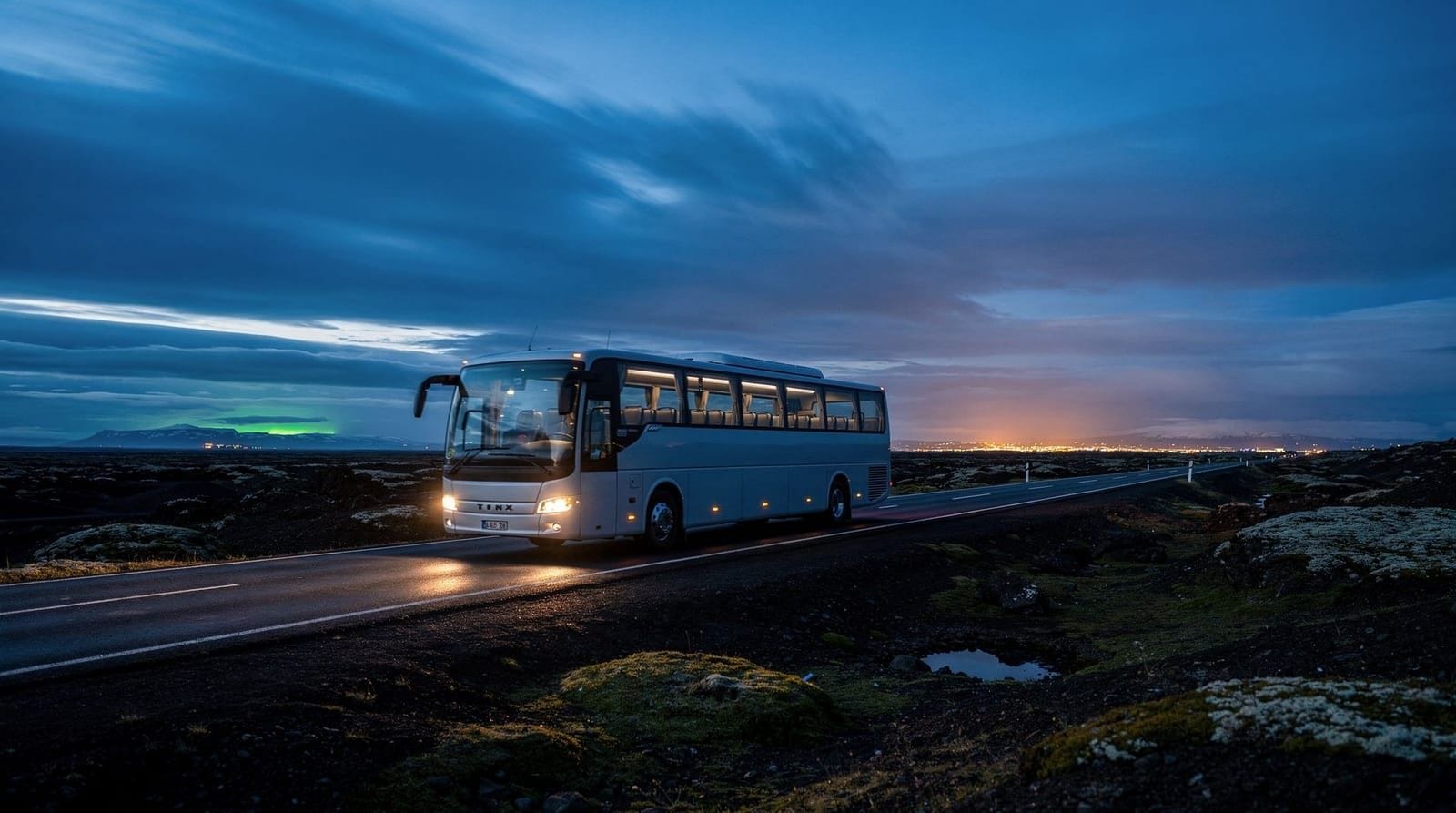
| Getting there | Flybus from Keflavík (45–55 min), then guided coach day tours |
| Best time | May–September for day-trip conditions; June–July for midnight sun |
Day-by-day summary
| Day | Focus | Notes |
|---|---|---|
| 1 | Reykjavík city | Hallgrímskirkja, harbour district, museum or lagoon |
| 2 | Golden Circle guided tour | Þingvellir, Geysir/Strokkur, Gullfoss, ~10 hours |
| 3 | South Coast tour or Blue Lagoon | South Coast if not flying same day; Blue Lagoon for afternoon departures |
Arriving: airport to city
Keflavík International Airport (KEF) to central Reykjavík is 50 km, approximately 45–55 minutes. The Flybus (flybus.is) and Airport Express both run hourly services with hotel drop-offs. Cost: 3,500–4,500 ISK (€23–29) per person. Buy tickets at the terminal kiosk before exiting arrivals. Taxis are available but expensive (15,000–18,000 ISK / €98–118) and not necessary unless you have heavy gear or arrive after midnight.
On the bus, you pass through Garðabær and Hafnarfjörður before reaching Reykjavík — the landscape is flat volcanic lava fields for most of the journey, giving an early sense of Iceland’s geological character.
Evening arrival: check in, walk the harbour and Laugavegur street, eat at one of the places listed below. Do not overplan the arrival evening — jet lag and road fatigue catch up quickly.
Day 1: Reykjavík city
Morning: Hallgrímskirkja and the old quarter
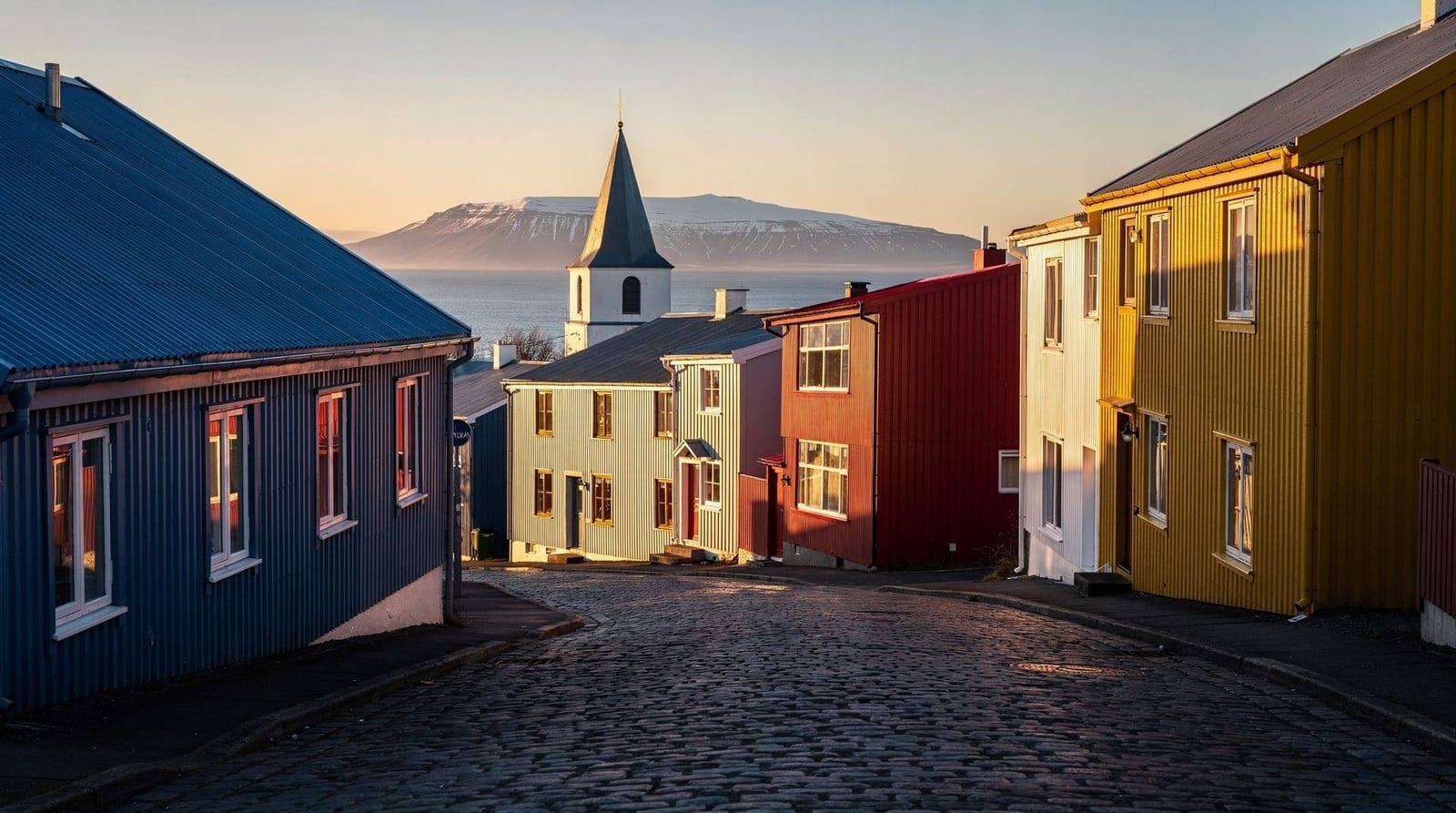
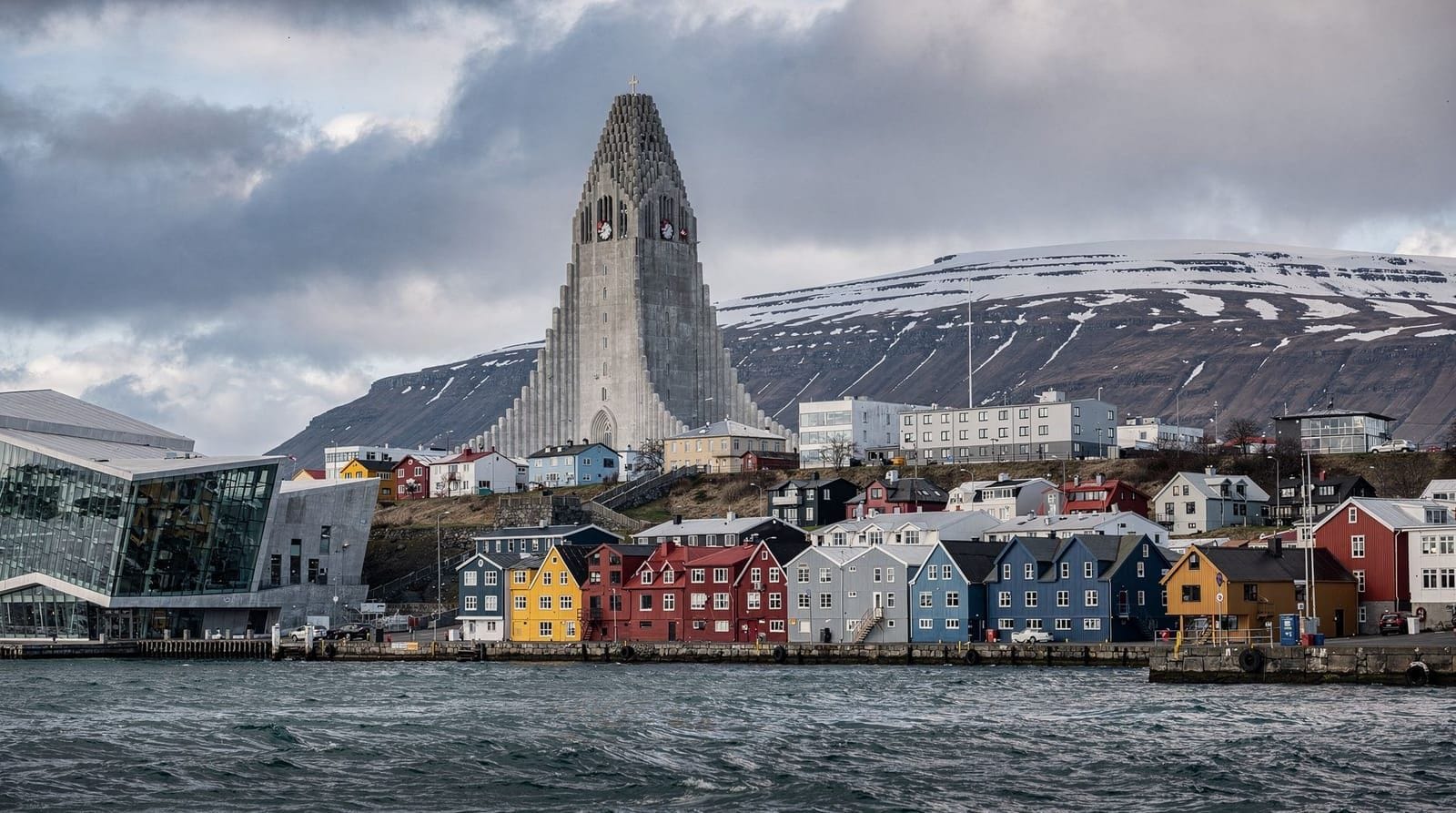
Start at Hallgrímskirkja (the concrete modernist church on the hill — you cannot miss it, it is visible from most of the city). The tower elevator costs around 1,200 ISK (€8) and gives an unobstructed 360-degree view of the city, the bay, and the surrounding mountains. On clear mornings, Esja mountain directly north of the city is well lit. The church interior is austere and worth five minutes inside.
Walk down Skólavörðustígur street toward the harbour — this is the main gallery and independent shop street. For coffee: Reykjavík Roasters (Kárastígur 1) is the standout espresso bar. For lopapeysa (traditional Icelandic wool sweaters): the street has both handmade (from 18,000 ISK / €117) and machine-made (from 9,000 ISK / €58) versions. The difference is significant in quality; handmade is worth the premium if you’re buying one piece that will last.
Midday: harbour district (Grandi)
The old harbour area has several things worth an hour of time:
- Harpa Concert Hall (free to enter the foyer): extraordinary glass façade, harbour views from inside
- Sun Voyager sculpture: stainless steel boat sculpture on the waterfront promenade
- Whales of Iceland exhibition (Fiskislóð 23–25, ~€18): full-scale models of Iceland’s 23 whale species, well produced
For lunch: Matur og Drykkur (Grandagarður 2) for traditional Icelandic cooking (klipfiskur, lamb, skyr), mains around 3,500–4,500 ISK (€23–29). The restaurant is in a converted fish factory — the décor is authentic rather than staged.
Afternoon: museum or lagoon
Two afternoon options depending on weather and interest:
Option A — National Museum of Iceland (Suðurgata 41, ~€14): the most comprehensive overview of Icelandic history from settlement to the present. The saga-era artefacts and Viking-age material are excellent. Allow 2–2.5 hours.
Option B — Sky Lagoon (Vesturvör 44, Kópavogur): the newer geothermal pool south of the city, with an open-edge design facing the ocean. Less famous than the Blue Lagoon, less crowded in summer, and arguably better for an afternoon dip. A bus transfer from central Reykjavík is included with most admission packages. Cost: 11,990–14,990 ISK (€78–97).
Evening: Laugavegur and dinner
Laugavegur is Reykjavík’s main street and the most active evening area. Options at different price points:
- Snaps Bistro (Þórsgata 1): French-Icelandic bistro, reliable food, mains 2,500–3,500 ISK (€16–23)
- Grillmarkadurinn (Lækjargata 2a): upscale Icelandic grill, mains 5,500–8,000 ISK (€36–52)
- Hamborgarabúllan (Geirsgata 1): the city’s most credible burger spot, quick and cheaper
Day 2: Golden Circle guided tour
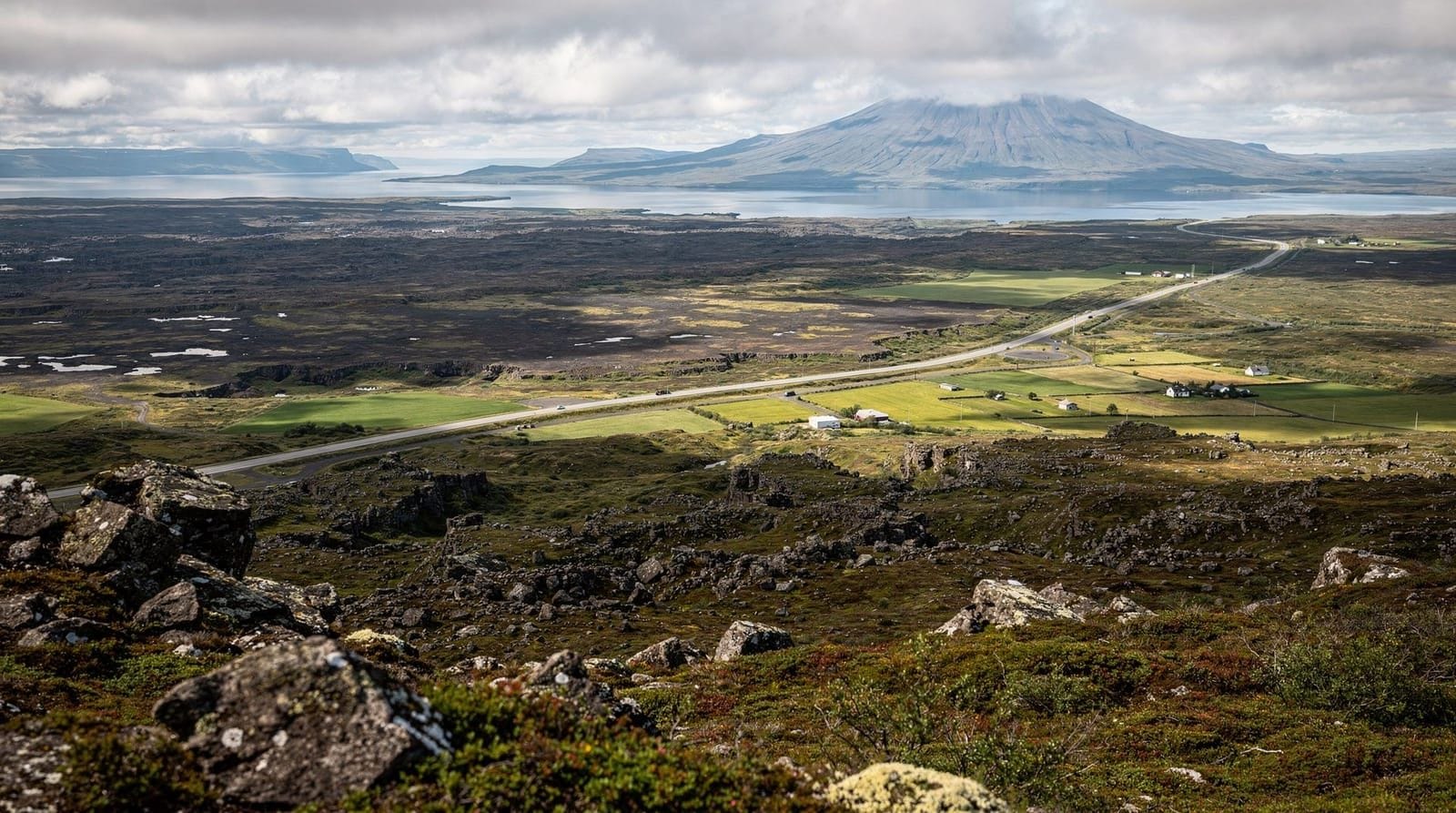
The Golden Circle is the standard full-day excursion from Reykjavík and, despite being the most visited route in Iceland, the three sites genuinely earn their reputation. The 300 km loop is covered by coach tours departing from the BSÍ bus terminal or hotel pick-ups.
Depart 08:30–09:00 from hotel pick-up or BSÍ terminal.
Golden Circle full-day guided tour from Reykjavík — Þingvellir, Geysir/Strokkur, Gullfoss, expert guide, approximately 10 hoursÞingvellir National Park (stop 1)
Þingvellir is simultaneously Iceland’s most important historical site and a dramatic piece of active geology. The original Althing (Icelandic parliament) met here from 930 AD — you can walk the Lögberg (Law Rock) where chieftains gathered and orated. The site is also the visible surface rift between the North American and Eurasian tectonic plates; the fault scarps are walkable.
The Öxará river running through the site was the scene of executions and drownings during the Althing — the most dramatic moments in Icelandic legal history are associated with this river pool. The historical explanation is usually covered on guided tours.
Allow 1–1.5 hours.
Geysir geothermal area (stop 2)
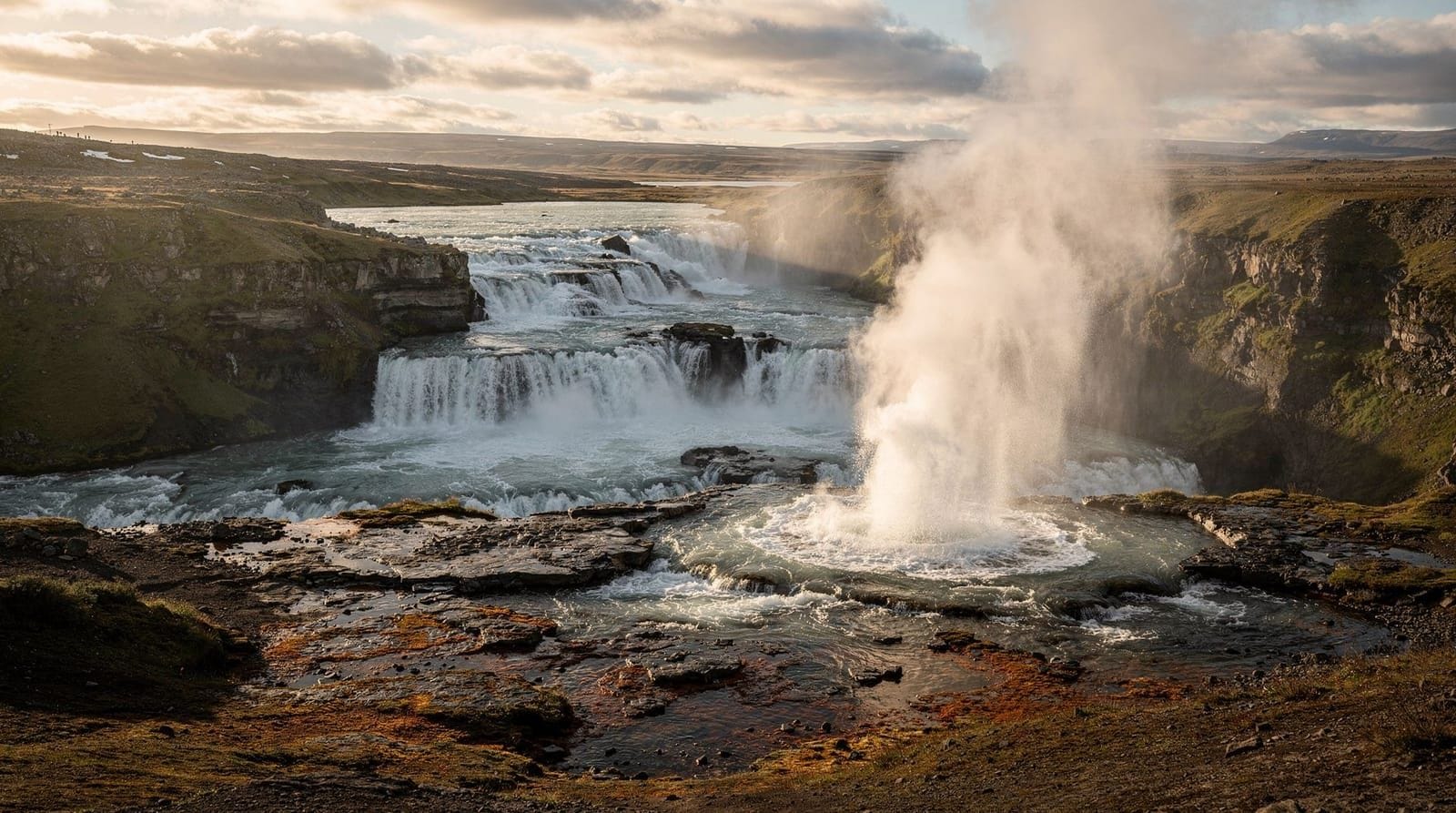
Geysir and Haukadalur is the most reliably entertaining stop on the Golden Circle. The Strokkur geyser erupts every 5–8 minutes to 20–30 m — no waiting uncertainty, just position yourself upwind and wait. The wider geothermal field includes bubbling mud pools, steaming vents, and mineral-stained ground in orange and grey.
The original Geysir (which gave all geysers their English name) is largely dormant but occasionally activates after earthquakes. If you’re very lucky, you’ll see it. Strokkur is the reliable one.
Allow 45–60 minutes, including the inevitable gift shop coffee.
Gullfoss waterfall (stop 3)
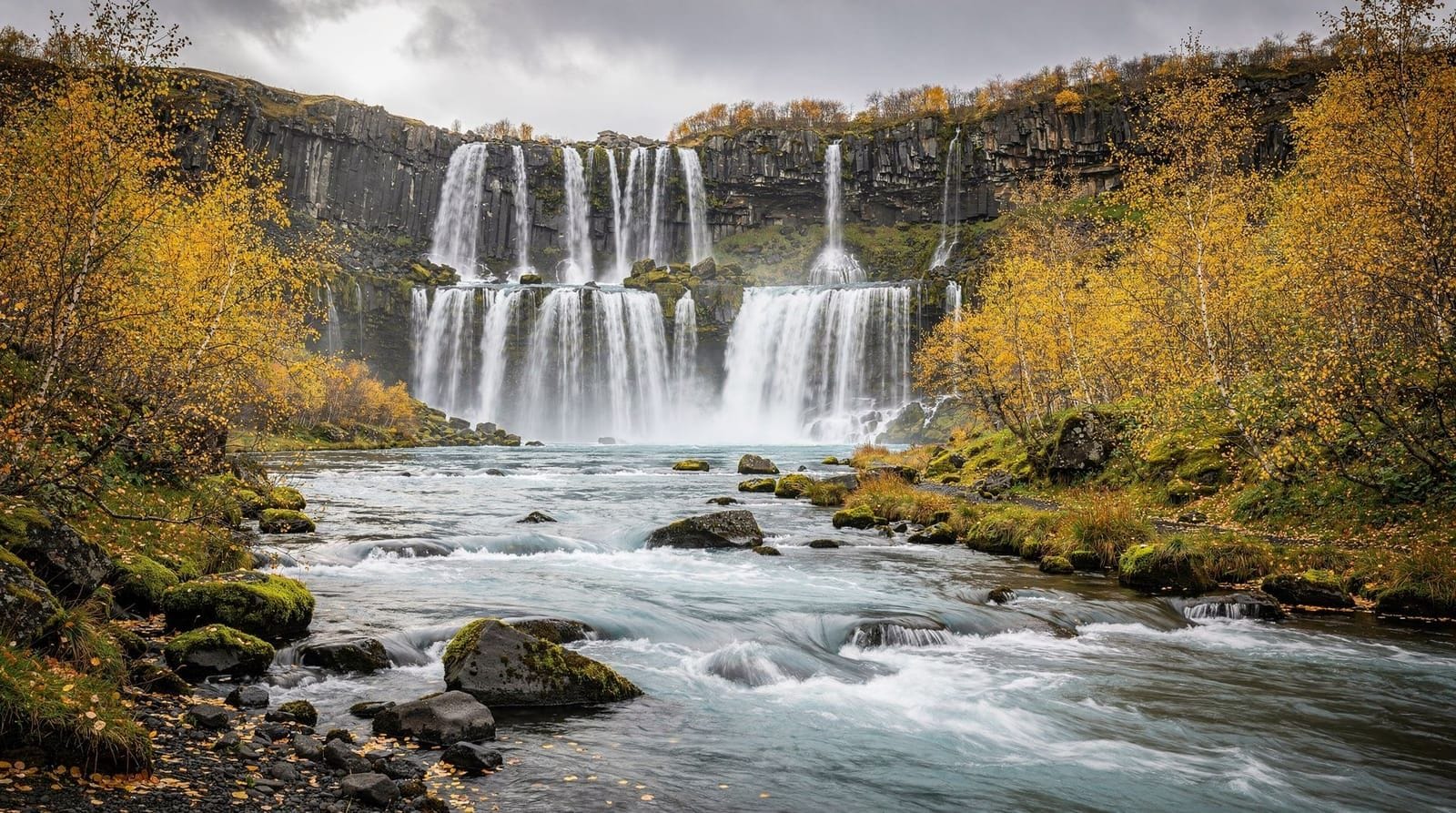
Gullfoss is one of Iceland’s most powerful waterfalls — the Hvítá river drops 32 m into a narrow gorge in two stages. The visual trick of the falls is that from the upper viewpoint the gorge appears to swallow the river; it seems to disappear into the ground. The lower path gets close enough to the spray that waterproofing is advisable.
Spring snowmelt (May–June) maximises water volume. In winter the falls can be partially ice-encrusted, which is a different kind of spectacular.
Return to Reykjavík: 17:30–18:00.
Optional addition: some Golden Circle tours include a visit to the Kerið volcanic crater — a 3,000-year-old explosion crater with an acidic lake at the bottom, coloured by minerals in vivid greens and blues. The 2 km walk around the crater rim takes 25 minutes. If this is included in your tour, take it.
Day 3: South Coast guided tour
On a 3-day stopover, Day 3 offers the choice between a South Coast day tour (more dramatic natural scenery, a longer driving day) or the Blue Lagoon (shorter, more relaxed, good for a departure-day slot if flying in the afternoon).
If flying in the afternoon: Blue Lagoon + airport transfer
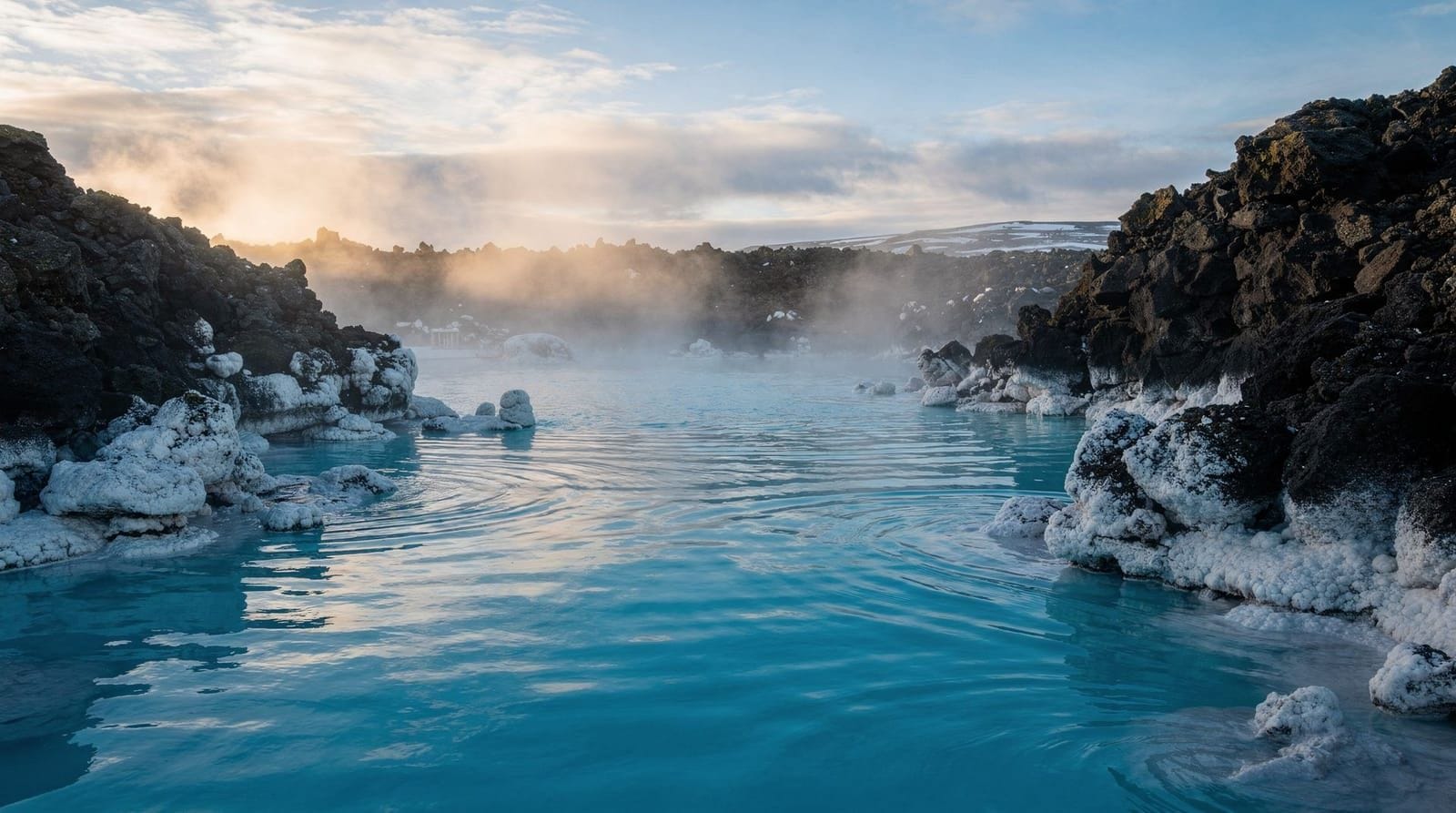
The Blue Lagoon sits 23 km from Keflavík airport and 50 km from Reykjavík. A hotel-to-Blue-Lagoon-to-airport transfer is the logical departure structure. Book the Blue Lagoon session for mid-morning (10:00 or 11:00 entry), then transfer direct to the airport 2.5 hours before departure.
Blue Lagoon Comfort admission — geothermal bathing, silica mud mask, algae mask, one drink, towel rental, pre-booking mandatoryHonest note: the Blue Lagoon at peak summer is very crowded. It costs 12,900–15,900 ISK (€84–104) at the Comfort level. The experience is genuine — the milky-blue silica water is not artificial — but sharing it with 300–400 strangers reduces the tranquillity somewhat. Book at least 2 weeks in advance in summer; it sells out.
If flying in the evening or the following morning: South Coast day tour
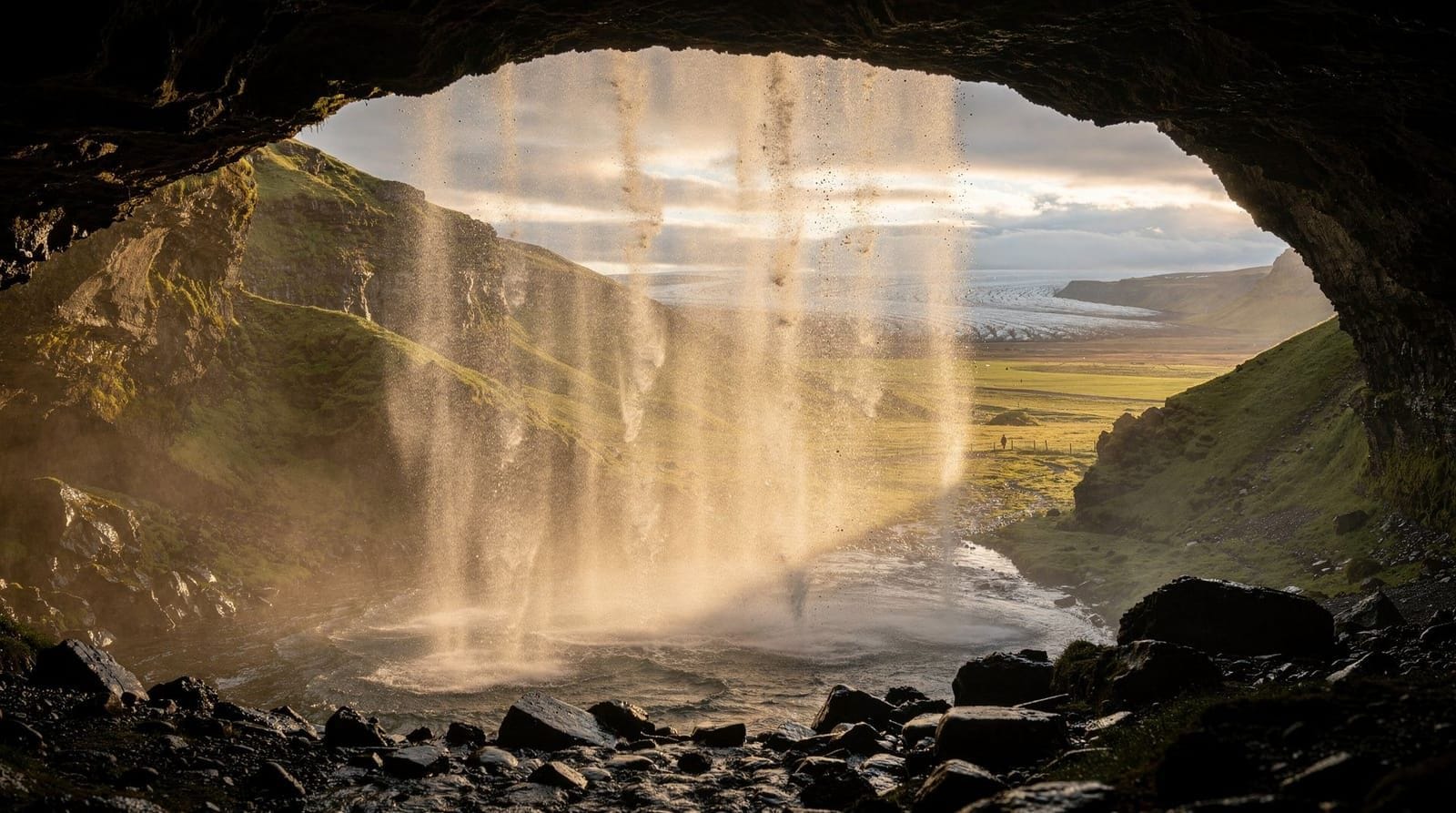
A guided South Coast day tour covers Seljalandsfoss, Skógafoss, Reynisfjara black sand beach, and Dyrhólaey. This is approximately 400 km of driving over 10–11 hours, departing 08:30.
South Coast small-group day tour — Seljalandsfoss, Skógafoss, Reynisfjara, Dyrhólaey, max 19 passengers, guide commentary throughoutThe South Coast is the more rewarding experience of the two options if you have the time — the waterfalls, the black beaches, and the contrast of volcanic and glacial landscape are all distinctive and not available in the city. The Blue Lagoon, by contrast, is a good thing that can feel like expensive tourist processing at volume.
Where to sleep during a Reykjavík stopover
A central hotel simplifies logistics — all guided tours offer hotel pick-ups from central Reykjavík addresses.
Mid-range (16,000–25,000 ISK / €104–163/night):
- Hótel Borg: the city’s original grand hotel (1930, art deco), central location on Austurvöllur square, good breakfast
- Canopy by Hilton Reykjavík: contemporary design, central, works well for short stays
- Óðinsvé Hotel: quiet street between parliament and the pond, reliable mid-range option
Budget (8,000–16,000 ISK / €52–104):
- Kex Hostel (Skúlagata 28): private rooms available, outstanding bar, slightly industrial aesthetic
- Loft Hostel (Bankastraeti 7): central, clean, rooftop terrace
Book at least 6–8 weeks ahead for June–August. The city has high occupancy in summer and last-minute prices reflect that.
Practical stopover notes
Booking tours in advance: in summer (June–August), Golden Circle and South Coast day tours regularly sell out. Book both before you arrive. Iceland’s tour operators are reliable; last-minute cancellations for weather are handled professionally.
Currency: Iceland uses the króna (ISK). Cards accepted universally. You do not need cash for most things; some small cafés are card-only.
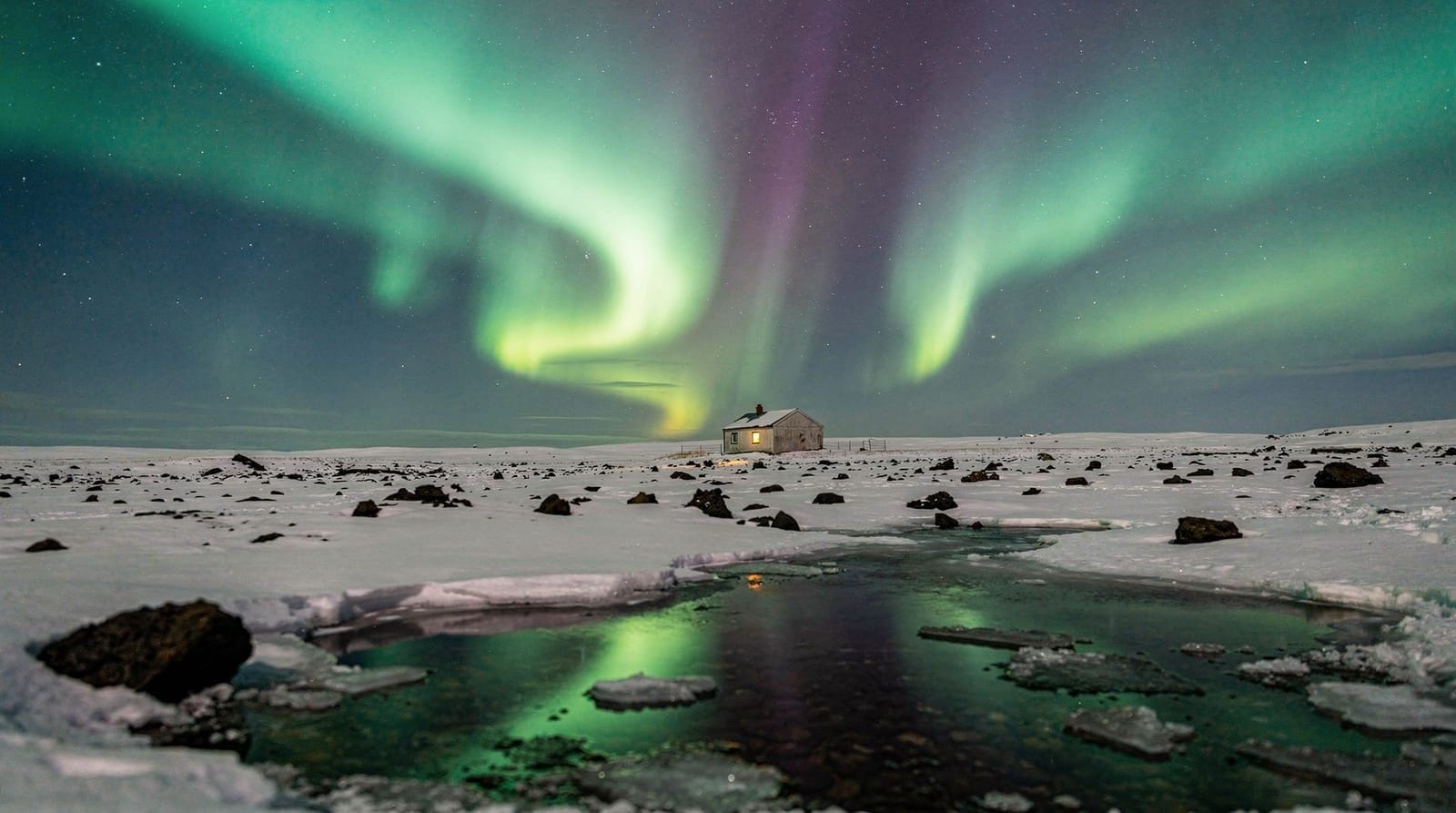
Weather: Reykjavík averages 11–14°C in summer. Waterproof outer layer is essential. In winter (December–February), temperatures hover around 0–3°C with short daylight hours but the northern lights are a realistic prospect on clear evenings.
Tipping: not culturally standard in Iceland. Service charges are included in restaurant bills. Rounding up is appreciated but not expected.
Frequently asked questions about this 3-day Iceland itinerary
Is 3 days enough to see Iceland?
Three days is not enough to see Iceland. It is, however, enough to experience Reykjavík properly plus two of its best day trips. A meaningful taste of the country — the geology, the scale, the quality of light — is achievable in 3 days. The ring road and the Highland interior need much more time.
Do I need a rental car for a 3-day Reykjavík stopover?
No. Guided day tours from Reykjavík cover all the major excursions efficiently. A rental car gives more flexibility on timing and allows independent side stops, but is not necessary for the Golden Circle, South Coast, or Blue Lagoon.
Can I do the Golden Circle and South Coast on the same day?
Technically yes, as a very long guided tour (some operators offer this combined route). In practice, you will see everything from a coach window without time to walk anything properly. The two routes combined cover over 600 km and 12+ hours. For a stopover itinerary, dedicate one day to each.
What is the weather like in Reykjavík in summer?
Variable and unpredictable. The sky changes from sunshine to rain and back multiple times in a day. Average temperatures of 11–14°C mean layers are necessary. A decent waterproof jacket is more important than sunscreen (though the midnight sun in June/July does require UV protection in the evenings). See the Iceland weather guide for month-by-month breakdown.
Is the midnight sun visible during a June/July stopover?
Yes. From mid-May to late July, the sun does not set properly in Reykjavík — it dips near the horizon around midnight but it stays bright enough to read outside. This extends usable hours enormously and is genuinely unusual for most visitors. The flip side: hotel blackout curtains are essential for sleep.
How much does a 3-day Reykjavík stopover cost?
A rough budget for mid-range travel: hotel 18,000–22,000 ISK (€117–143) per night, two guided day tours 15,000–20,000 ISK (€98–130) each, Blue Lagoon entry 12,900–15,900 ISK (€84–104), meals approximately 8,000–15,000 ISK (€52–98) per day. Total for 3 days: roughly 220,000–280,000 ISK (€1,430–1,820) for one person, including accommodation. Iceland is expensive; budget accordingly.
Is it better to book tours as a bundle or separately?
Some operators sell combined stopover packages (accommodation plus both day tours plus airport transfers) that can save a modest amount versus booking everything separately, but they lock you into fixed dates and specific operators. Booking each piece independently costs slightly more but lets you pick the best-reviewed operator for each tour and adjust dates if your flight changes. For a first stopover, independent booking is the more flexible and generally the safer choice.
Do I need travel insurance for a 3-day stopover?
Yes, the same as for any Iceland trip — a short stopover doesn’t reduce the value of cover. Guided tours can be affected by weather cancellations, and a policy that reimburses non-refundable bookings if a tour is cancelled or you miss a connecting flight is worth having even for a brief visit. See travel insurance for Iceland for what to check.
Is this itinerary suitable in winter?
Yes, with adjustments. The Golden Circle and South Coast tours both run year-round on maintained roads, but daylight in December/January is limited to 4–5 hours, so tours depart later and cover less ground per stop. The upside is a genuine chance at the northern lights on a clear evening, and dramatically thinner crowds at every site. See Iceland in winter for what changes, and pack accordingly using the what to pack for Iceland guide — winter stopovers need warmer layers than the summer packing list above assumes.
Practical notes for the stopover
Booking tours in advance: Golden Circle and South Coast tours sell out in summer (June–August). Book before you arrive. Operators are reliable; weather cancellations are rare for these routes and handled with refunds or re-scheduling.
Reykjavík card: the Reykjavík City Card (2,900 ISK/24h, 3,900 ISK/48h) covers all city buses, most museums, and the geothermal swimming pools. Worth calculating if you plan more than 2 museum visits — entry to the National Museum alone is ~2,200 ISK.
Water: Reykjavík tap water is clean, cold, and directly drinkable. Carry a refillable bottle; bottled water is sold but wasteful given tap water quality.
Electricity: Iceland uses European-style round pin plugs (Type C/F, 230V). North American visitors need an adapter — available at Kringlan mall or the Penninn Eymundsson bookshop on Austurstræti.
Language: Icelandic is the official language but English is universally spoken in Reykjavík’s service industry. French, German, and Scandinavian languages are also widely understood. The Icelandic language basics guide has useful pronunciation and courtesy phrases.
The Blue Lagoon silica vs Sky Lagoon ritual: if you are specifically seeking a geothermal spa experience (rather than just a transit convenience), Sky Lagoon’s 7-step ritual (cold plunge, sauna, steam, exfoliation, body mask, warm pool, outdoor lagoon with ocean view) is more structured and arguably more satisfying than the Blue Lagoon’s more free-form layout. Both take approximately 2–3 hours. Sky Lagoon is 15 minutes from the city centre by bus; the Blue Lagoon is 50 minutes away near the airport.
The Golden Circle crowd pattern: the main coach tours from Reykjavík arrive at Þingvellir between 09:30 and 11:00. At Geysir, peak crowding is 11:00–14:00. Arriving at Þingvellir before 09:30 or after 14:00 gives meaningfully more space at the Lögberg and Almannagjá gorge. Self-driving allows this flexibility; guided tours do not. See the Golden Circle day trip guide for timing specifics.
What Reykjavík does well (and what it doesn’t)
Does well: walkable compactness means a lot is accessible without transport logistics. The food scene is genuinely strong for a city of 130,000 — particularly fish, dairy, and Icelandic lamb. The outdoor pool culture (geothermally heated pools in every neighbourhood) is a genuinely unusual civic institution. The arts scene (Harpa, the National Gallery, the contemporary art spaces in Grandi) is active and often free.
Does not do well: shopping for anything practical is expensive. The “downtown” tourist strip between Laugavegur and the harbour is increasingly generic — the same outdoor gear shops, Icelandic wool brand boutiques, and Viking kitsch appear in sequence. Most of the genuinely Icelandic commercial culture has migrated to Grandi (the harbour district) or the Kringlan mall.
The swimming pool is not optional: every Icelander we’ve spoken to about what tourists miss says the same thing: the communal swimming pool culture. Entry costs 1,100 ISK (€7). The hot tub (heiturpottur) at Sundhöllin or Laugardalslaug is where the city’s actual social life happens — not in bars or restaurants. Going once, sitting in the 38°C tub for 30 minutes, and having an unprompted conversation with a stranger about local life is a better cultural experience than any museum in the city.
The local food nobody explains: harðfiskur (dried fish, typically cod or haddock) is sold at petrol stations and supermarkets in small bags. It is an Icelandic snack equivalent to jerky — chewy, high-protein, strongly flavoured. Icelanders eat it with butter. Skyr (a thick dairy product) is not yoghurt — it is closer to strained fresh cheese, with a very mild acidity and very high protein. Both are genuinely worth trying once. See the Icelandic food guide for the full picture on what is actually worth eating.
What to do if it rains all three days: it will rain at some point on your stopover. The days where you have a guided day tour (Golden Circle, South Coast) are largely unaffected by rain — the sites work in any weather and most have covered viewing areas. The city day is the one affected by rain. Useful indoor options: National Museum (2–3 hours), Harpa concert hall foyer (free, covered, good views), Reykjavík city library (Grófarhús, Tryggvagata 15, free, English-language books available), and the Kringlan indoor shopping mall if you need a practical afternoon.
The best day trips from Reykjavík guide covers additional options beyond the three-day stopover structure if you have more flexibility.
Staying connected during a short stopover
For a 3-day trip, an eSIM activated before you land is the simplest way to have maps, tour confirmations, and the Strætó bus app working from the moment you clear customs — no need to hunt for a SIM kiosk or rely on patchy hotel wifi. See eSIM and connectivity in Iceland for setup options that work well for short visits.
Should you rent a car instead for this stopover?
Guided tours are the default for a car-free stopover, but a rental car for Days 2 and 3 is worth considering if you want to set your own pace or add stops the coach itineraries skip, such as Kerið crater or the Secret Lagoon at Flúðir. The trade-off is navigating unfamiliar roads on limited sleep after a long-haul flight, which some stopover travellers would rather avoid. See self-drive vs guided tour for the honest comparison, and renting a car in Iceland for the practical logistics if you go that way.
Extending the stopover to a full week
If this stopover leaves you wanting more, the natural next step is the Ring Road 7-day itinerary, which uses Reykjavík as a base and adds the full loop around the island. Travellers on a tighter schedule sometimes instead extend by 2 days and add the South Coast 3-day itinerary as a self-drive add-on after the guided stopover days above.
Top experiences
Bookable activities with verified prices and instant confirmation on GetYourGuide.