Iceland weather explained — what to expect by season
Reykjavik: Northern Lights lifetime guarantee
What is Iceland's weather actually like?
Unpredictable, changeable, and rarely extreme in temperature — but frequently wet, windy, and foggy. Summers average 10–15°C in Reykjavik. Winters average –1 to +4°C at sea level but feel colder in wind. The saying 'if you don't like the weather, wait five minutes' exists for a reason.
Iceland’s weather is the single biggest variable in how a trip actually feels — bigger than the season you pick on a calendar, and bigger than most itineraries admit. This guide breaks the climate down month by month and region by region, and gives you the tools (and the mindset) to read a forecast the way Icelanders do: as a plan to adapt to, not a promise to expect.
| Warmest months | June–August, 10–15°C average in Reykjavik |
| Coldest months | December–February, –1 to +4°C at sea level |
| Wettest regions | Westfjords and South Coast (Vík, Reynisfjara) |
| Driest region | North Iceland (Akureyri, Mývatn) |
| Windiest conditions | Exposed headlands and highland passes, year-round |
| Best forecast source | en.vedur.is (Icelandic Met Office) |
Why Iceland’s weather is different
Iceland sits at the meeting point of warm Atlantic air (the Gulf Stream moderates temperatures) and cold Arctic air from the north. The island straddles the North Atlantic storm track, which means weather systems move through frequently and unpredictably.
The result is a climate that is:
- Milder than you might expect given the latitude (Reykjavik is at 64°N, further north than Oslo)
- Wetter and windier than average European destinations
- Highly variable — multiple weather types in a single day are normal, not unusual
Iceland’s south and southwest coasts receive the most precipitation (700–1,500mm per year). The north is drier and more continental. The interior highlands have severe conditions year-round.
Month-by-month weather summary
Quick seasonality table — average conditions and how busy things get:
| Month | Avg temp (Reykjavik) | Daylight | Rain/snow risk | Crowd level |
|---|---|---|---|---|
| Jan–Feb | –1 to +3°C | 5–7 hrs | High (snow inland) | Low |
| Mar | 0–5°C | 10–12 hrs | Moderate | Low |
| Apr–May | 4–10°C | 14–18 hrs | Moderate | Low–medium |
| Jun–Aug | 10–15°C | Midnight sun | Lowest of the year | Highest (book ahead) |
| Sep–Oct | 2–12°C | 8–14 hrs | Increasing | Medium |
| Nov–Dec | –1 to +4°C | 4.5–7 hrs | High | Medium (holiday spike) |
January–February: deep winter
- Temperature: –1 to +3°C in Reykjavik; can drop to –10°C or below in the north and highlands
- Daylight: 5–7 hours in Reykjavik; near total darkness in the far north
- Precipitation: Snow in Reykjavik is possible but not consistent; more reliable inland. Heavy snow in the north.
- Wind: Frequent storms, some with extremely high gusts (80–120 km/h gusts are not unusual)
- Road conditions: Variable. Main roads are mostly passable; F-roads fully closed. Highland passes may close temporarily.
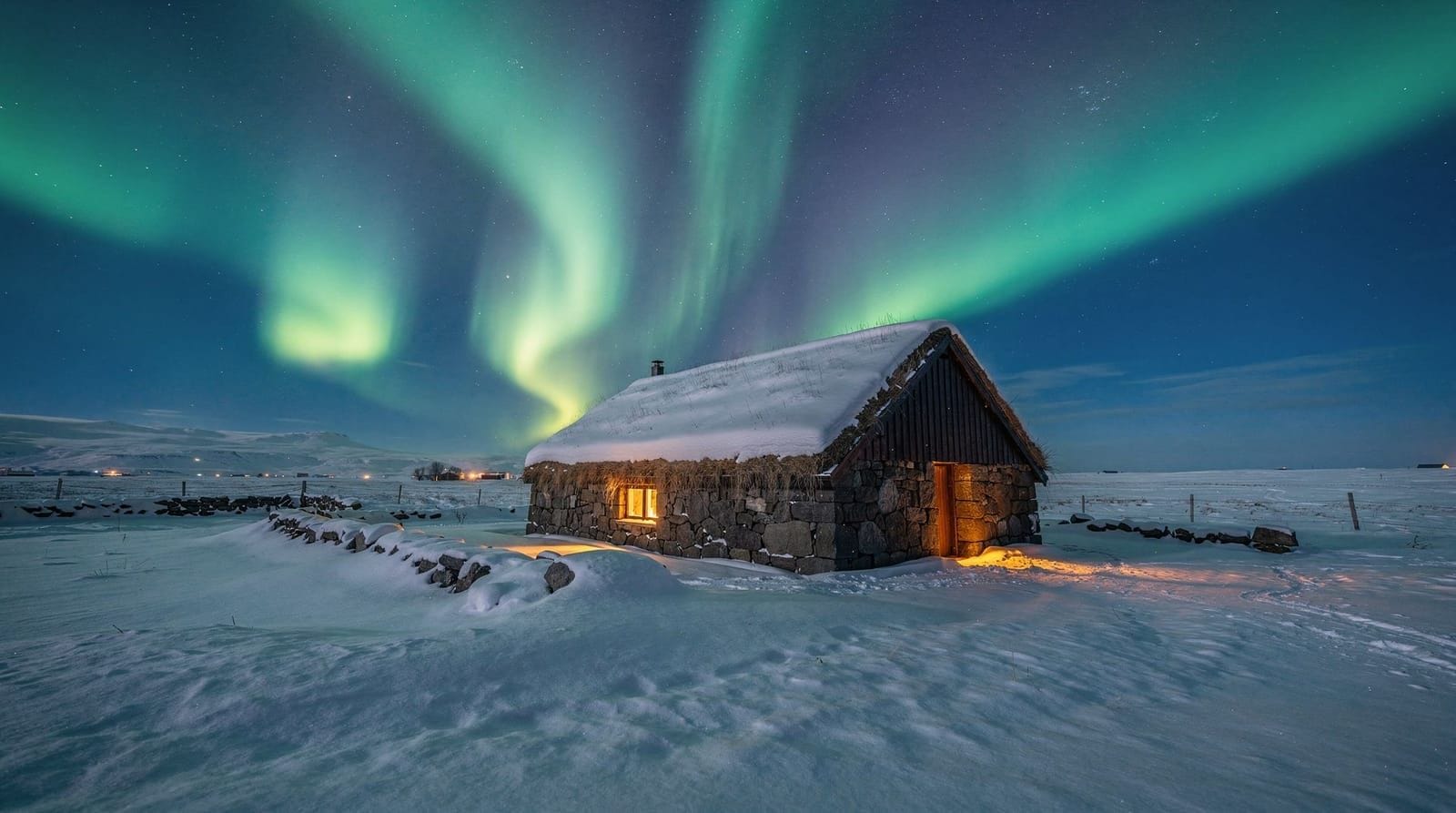
- Northern lights: Prime season — long nights, frequent aurora activity
What this means for visitors: January and February are challenging but rewarding. You get maximum northern lights opportunity, ice caves are at their best, and tourist numbers are lowest. Dress properly and be flexible about itineraries.
March: late winter to early spring transition
- Temperature: 0–5°C in Reykjavik; still very cold in the north
- Daylight: 10–12 hours by end of March (rapid increase)
- Snowfall: Still possible in the capital; common in the north
- Northern lights: Still good chance, but daylight increasing
What this means for visitors: March offers northern lights + increasing daylight hours, fewer crowds than summer. Some ice caves close by mid-March as temperatures rise.
April–May: spring
- Temperature: 4–10°C. Wide daily variation.
- Daylight: 14–18 hours by late May
- Precipitation: Mix of rain and occasional snow at elevation. Snowmelt causes waterfalls to run at peak volume.
- F-roads: Still closed; some may open late May
What this means for visitors: Spring is genuinely underrated. Waterfalls are at their most powerful (snowmelt), tourist numbers are significantly lower than summer, accommodation prices drop, and landscapes have a raw, dramatic quality. Wildlife activity picks up.
June–August: summer
- Temperature: 10–15°C average in Reykjavik; can reach 20°C on warm days but this is unusual
- Daylight: Midnight sun around summer solstice. Reykjavik never gets fully dark in June–July.
- Precipitation: Rain possible at any time, but summer is the driest season on average. Coastal areas get more rain than inland.
- F-roads: Open from approximately late June to mid-September
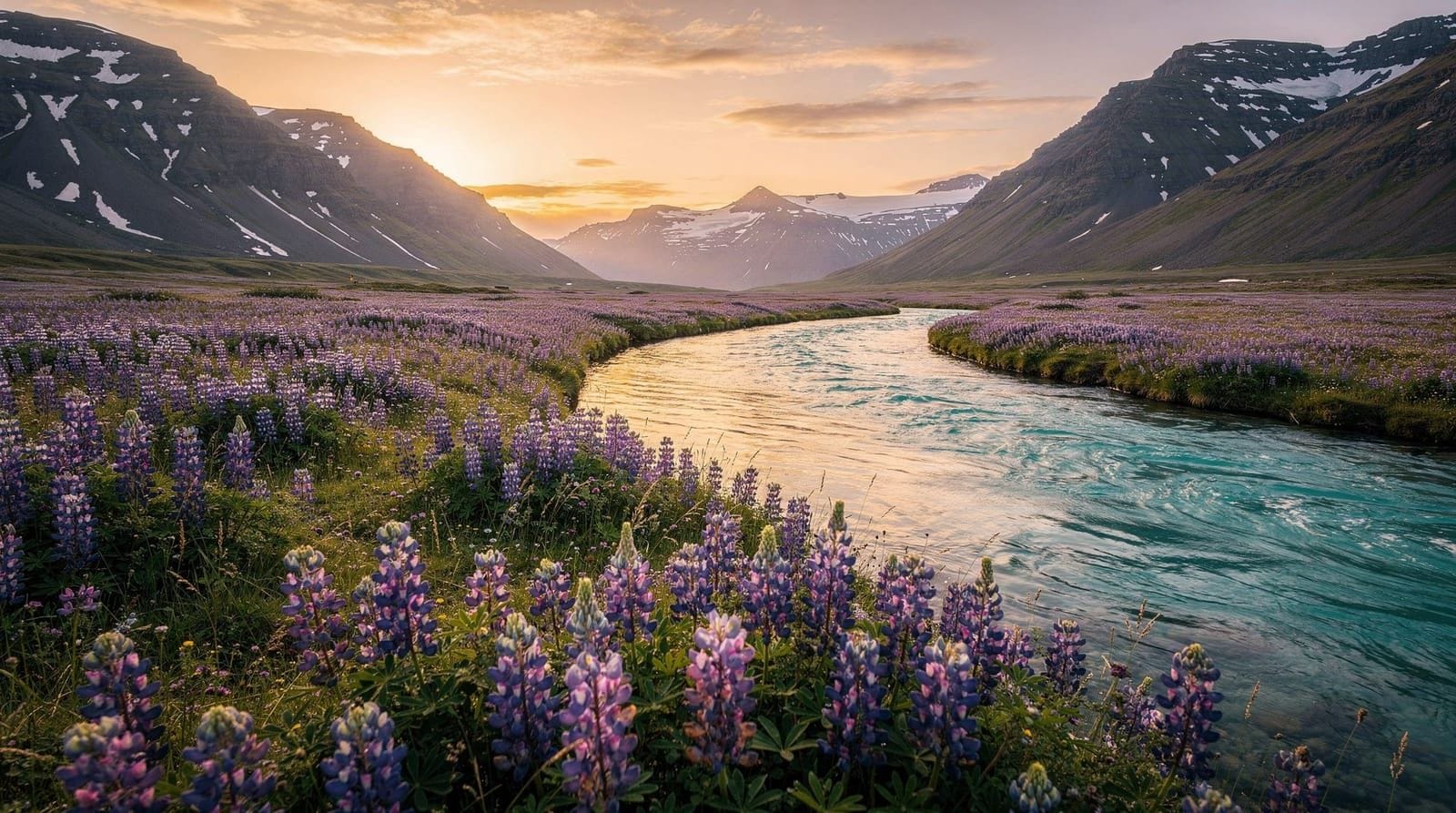
What this means for visitors: Summer is peak season for good reasons — all roads open, puffins, midnight sun, maximum daylight for exploration. Also peak crowds. The Blue Lagoon, Jökulsárlón, Seljalandsfoss, and Geysir are extremely busy. Book everything months ahead. See Iceland in summer.
Temperature warning: 15°C at sea level becomes significantly colder on exposed ridges, at waterfalls (perpetual spray), and in wind. Pack layers even in summer.
September–October: autumn
- Temperature: 6–12°C in September, 2–8°C in October. Wind becomes stronger.
- Daylight: Rapid decrease — from 14 hours in September to 8 hours by late October
- Northern lights: Return in September as nights become long enough (dark enough)
- F-roads: Close progressively through September and October
What this means for visitors: September is one of the best months to visit Iceland — northern lights possible, F-roads still accessible, slightly smaller crowds than August, foliage colour. October has spectacular autumn colours but more changeable weather. See Iceland in autumn.
November–December: early winter
- Temperature: –1 to +4°C in Reykjavik; colder further north
- Daylight: 5–7 hours in Reykjavik. In December, around 4.5 hours.
- Precipitation: Rain in the southwest; reliable snow in the north and east
- Northern lights: Prime season — maximum darkness
- Ice caves: Open from November as temperatures stabilise
What this means for visitors: December has Iceland’s famous Christmas atmosphere, New Year fireworks, and lowest daylight hours. Hotels in Reykjavik fill for Christmas and New Year. See Christmas and New Year in Iceland.
Iceland’s regional weather differences
Reykjavik and southwest: Wettest region. Mild temperatures. Gets rain fronts first.
South Iceland (Vík, South Coast): Exposed to Atlantic weather. High precipitation, strong southerly winds, occasional stunning weather breaks between fronts.
East Iceland: More continental. More sunshine in summer, colder and drier in winter than the southwest.
North Iceland (Akureyri, Mývatn): More sunshine than the south. Cold, snowy winters. Warmer summers than you might expect — Akureyri sometimes records Iceland’s highest summer temperatures.
Highlands: Arctic conditions even in summer. Temperature can drop below freezing any month. Snow and frost in June are not unusual at 600–1,000m elevation. Never enter the highlands without appropriate gear and a checked weather forecast.
Westfjords: Remote, maritime, high precipitation. Dramatic but weather can close roads for days at a time.
Wind in Iceland
Wind is often more disruptive than cold or rain. Iceland sits on one of the world’s windiest shipping lanes.
Average wind speed in Reykjavik: approximately 14 km/h. But gusts routinely exceed 60–80 km/h during Atlantic storms, and extreme events exceed 150 km/h.
Practical wind effects for tourists:
- Car doors: Strong gusts can tear a car door off its hinges if opened carelessly on an exposed headland. Hold firmly.
- Umbrellas: Useless. Do not bring one. A good jacket hood is your tool.
- Cliff edges: People have been blown off cliffs in Iceland. Stay back from unprotected edges in strong wind.
- Tent pegs: If camping, use the heaviest-gauge pegs you can find and guy out thoroughly.
- Driving: High-sided vehicles (campervans, 4x4s) can be pushed sideways on exposed bridges and mountain roads in severe gusts.
The Icelandic Met Office (en.vedur.is) publishes wind forecasts, including orange and red weather warnings. Check these before outdoor activities.
How to check weather in Iceland
en.vedur.is: The Icelandic Met Office. Most accurate local forecasts. English version available. Check the weather map, not just the text forecast.
Yr.no: Norwegian Weather Service. Very accurate for Iceland. Shows hourly forecasts.
road.is: Road condition site. Shows which roads are open, closed, or rated as difficult. Updated frequently.
wind.no / windyty.com: Wind visualisation tools useful for predicting where exposed conditions will be worst.
Check weather every morning of your trip. Iceland’s forecasts are reasonably accurate 24–48 hours ahead; beyond 3 days, treat them as indicative.
The “changeable in 5 minutes” reality
Icelanders are fond of saying: “If you don’t like the weather, wait five minutes.” This is not just a joke — it is a description of how Atlantic weather systems move across Iceland. You can be in sunshine at Seljalandsfoss and in heavy rain by the time you drive to Skógafoss 25 km away.
This changeability has a positive flip side: bad weather often breaks quickly. If you arrive at Jökulsárlón in fog and low cloud, wait an hour. The light that comes after a clearing front is often extraordinary.
Plan days with some flexibility. “If weather X is bad, we go to plan B (indoor activity)” is better than a rigid schedule.
Understanding Icelandic weather warnings
The Icelandic Met Office issues colour-coded weather warnings on a three-level scale:
Yellow (be aware): Weather may be challenging. Relevant for outdoor activities. Proceed with plan adjustments.
Orange (be prepared): Potentially dangerous conditions. Strong winds, heavy precipitation, poor visibility. Evaluate whether outdoor plans should proceed. Driving may be difficult or risky.
Red (take action): Dangerous conditions. Roads may close. Outdoor activities should be cancelled. Sheltering in place may be advisable.
In 2024 alone, Iceland issued multiple red weather warnings for storms affecting the south and southwest. During these events, wind gusts exceeded 150 km/h in exposed areas. These are not theoretical risks — they are periodic realities.
Where to check: en.vedur.is shows the map with coloured overlays. Check specifically for the region you are driving through, not just Reykjavik.
Specific weather patterns by region
Iceland’s geography creates distinct micro-climates. Knowing these helps plan your routing.
South Coast (Vík, Seljalandsfoss, Jökulsárlón area): The most weather-variable region. South and southwest winds push Atlantic fronts directly into this coast. Winds can be intense at Reynisfjara and Dyrhólaey. However, the same exposure means dramatic weather breaks — when a front clears, the light on the South Coast is extraordinary.
North Iceland (Akureyri, Mývatn): Sheltered by the central highlands from the worst Atlantic fronts. North Iceland can have sunny, dry days while the south is in heavy rain. Akureyri occasionally records Iceland’s highest summer temperatures (20–22°C) for this reason. Winter is colder and drier here than in the southwest.
East Iceland: The Eastfjords face the Norwegian Sea rather than the Atlantic, creating slightly different precipitation patterns. East Iceland tends to be colder and drier in winter, with more stable summer weather than the south. The fjords create their own micro-climates with different conditions at the fjord head vs the outer coast.
Westfjords: One of Iceland’s wettest regions. The Látrabjarg peninsula at the far west takes the full force of Atlantic weather. Calm days in the Westfjords are spectacular; stormy days can close roads. The rule here is: check the forecast carefully, build in an extra day, and accept that the weather controls your itinerary.
Highlands: Cold and unstable year-round. Snow possible any month. F-roads in the highlands can have conditions that are dramatically different from sea-level Iceland on the same day. Always check the highland forecast specifically, not just the regional forecast.
How weather affects different activities
Driving the Ring Road: Snow, ice, high winds, and low visibility all affect safety. In winter, road.is closures should be respected absolutely — the consequences of driving into a whiteout on an exposed highland pass are severe.
Glacier hiking: Operators cancel when conditions are dangerous — usually high wind, poor visibility, or active weather systems moving onto the glacier. This happens. Have a flexible schedule if you are booking glacier activities.
Northern lights: Requires cloud-free sky. Iceland’s cloud cover is the primary obstacle to northern lights viewing, not solar activity. Check the cloud forecast alongside the aurora forecast. Apps like My Aurora Forecast and websites like en.vedur.is/astronomy provide cloud cover maps specifically for aurora hunting.
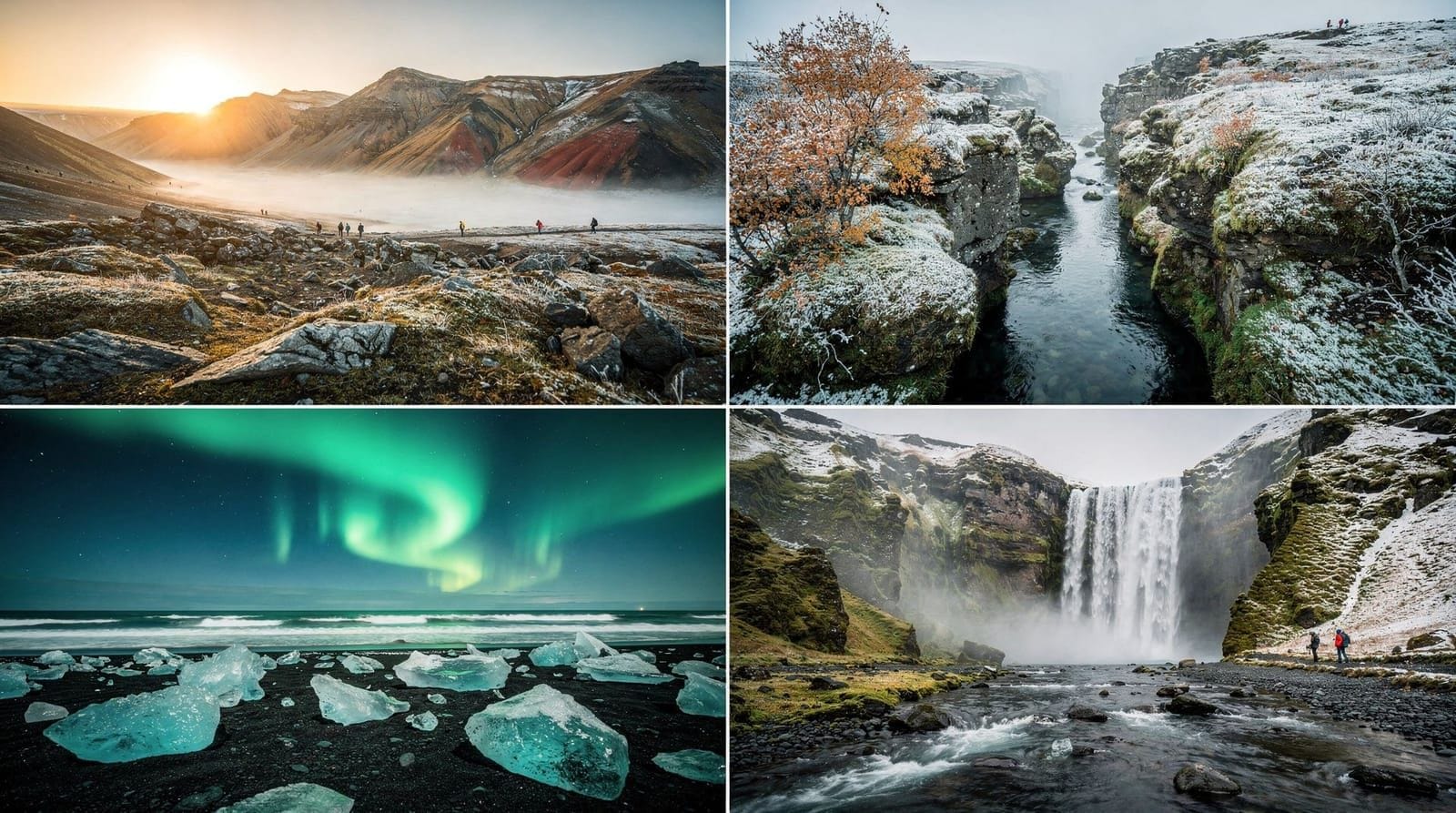
Photography: Some of Iceland’s most dramatic photography conditions come from weather transitions — the light immediately after a storm front passes, the rainbow that appears as cloud breaks over a waterfall, the low angle of sunlight on an overcast autumn afternoon. Bad weather is often followed by extraordinary light.
Whale watching: Tours are cancelled in force 5+ winds or significant swell. This particularly affects spring (March–May) and autumn (September–October) seasons when storms are more frequent. Northern Iceland whale watching from Húsavík tends to be more sheltered than Reykjavik.
Acclimatising to the cold
Iceland is not the coldest place most visitors have experienced in absolute terms — Antarctic expeditions and Canadian winters are far more extreme. But Iceland’s cold is persistent, wet, and wind-enhanced in a way that catches some visitors off guard.
Wind chill: A 10°C day with 50 km/h winds feels like 2–3°C on exposed skin. Iceland’s coastal headlands (Reynisfjara, Dyrhólaey, Þórsmörk area) are frequently exposed to winds that most visitors are unaware of until they step out of the car.
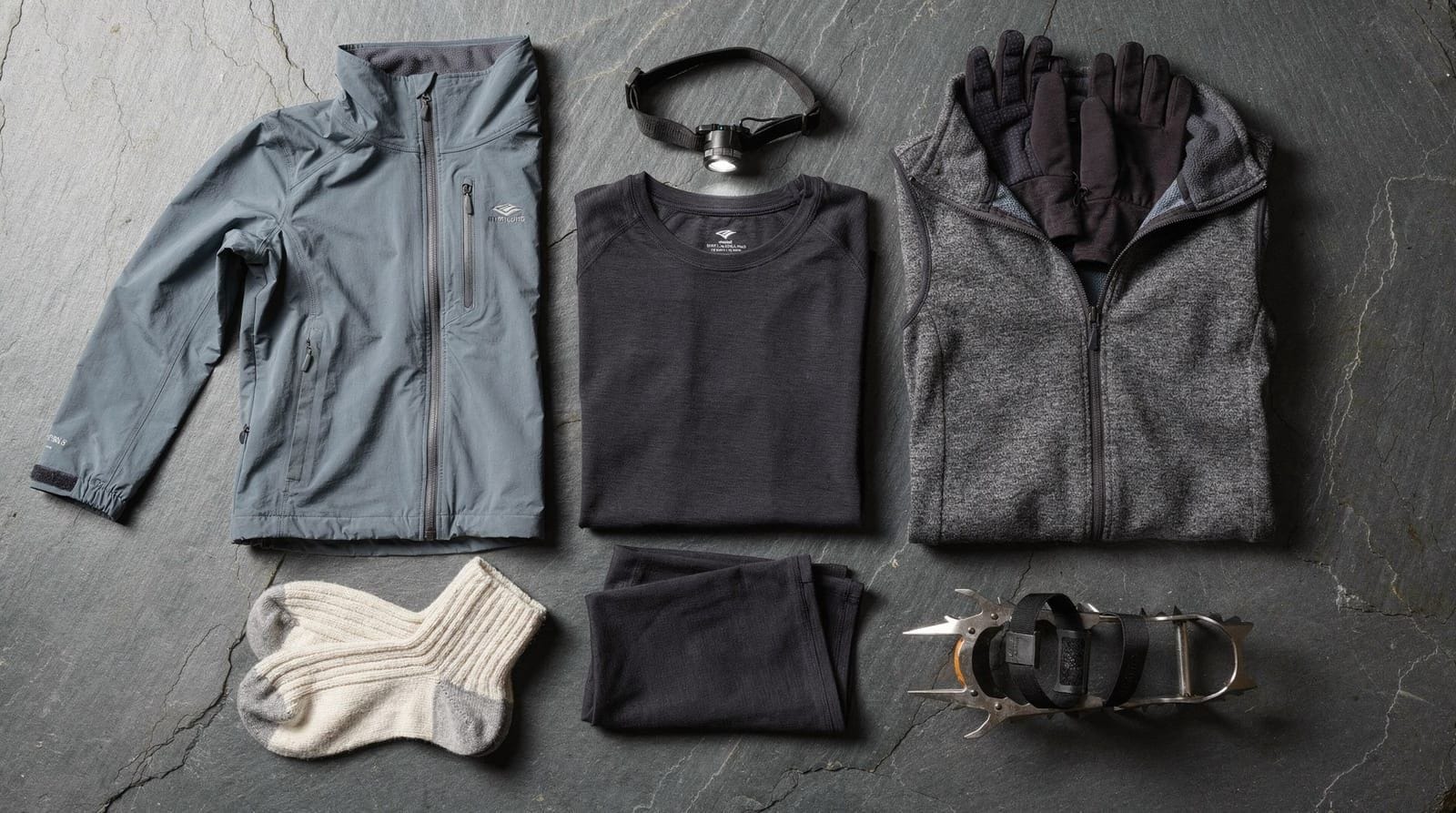
Wet cold vs dry cold: Iceland’s moisture means cold penetrates clothing more effectively than dry continental cold at the same temperature. Waterproof outer layers are not optional — they are functional cold management tools.
Acclimatisation tip: On your first outdoor day, underdress slightly and see how you feel. Most visitors from temperate climates find Iceland manageable with a good base-mid-shell layering system. See what to pack for Iceland.
Midnight sun and polar nights: practical effects
Midnight sun (mid-May to late July): Complete or near-complete daylight 24 hours. Practical consequences:
- Sleep: bring an eye mask. Guesthouse blackout curtains are frequently inadequate.
- Photography: the “golden hour” occurs around midnight rather than early morning. Wake up at 2 AM for extraordinary light conditions on summer nights.
- Wildlife: puffins and other seabirds are active around the clock. Northern lights are invisible — there is no darkness for them to be visible against.
Polar twilight (December–January): In Reykjavik, about 5 hours of daylight. In Akureyri (further north), sunrise is around 11 AM and sunset around 3 PM. In December. The lack of daylight is a genuine psychological challenge for some visitors from mid-latitude countries. Plan for a 4-hour outdoor window each day in the north in December.
Weather myths worth retiring
“Iceland is Arctic-cold year-round.” It isn’t — the Gulf Stream keeps sea-level temperatures milder than the latitude suggests, and summer in Reykjavik is comparable to a cool British or Scandinavian summer, not a polar one. What catches people out isn’t absolute cold, it’s wind chill and wet clothing.
“You need to plan around a single ‘good weather window.’” Icelandic weather doesn’t really work in multi-day windows — plan flexible days instead, with an indoor or short-drive alternative for each outdoor plan. See self-drive vs guided tour for how that flexibility factors into the drive-yourself-or-book-a-tour decision.
“Rain ruins an Iceland trip.” Rain is frequent but rarely constant for a whole day — the same front that soaks the south coast in the morning often clears by afternoon. Waterproof outer layers, not luck, are what makes rain a non-issue. Check best time to visit Iceland if you’re choosing a season specifically to minimise rain risk.
Building a weather buffer into your itinerary
The single most useful planning habit in Iceland is leaving slack in the schedule rather than booking a rigid, fully-timed itinerary. A weather buffer day works like this: build one unscheduled day into a 7–10 day Ring Road trip, and use it wherever the forecast is worst — an extra night in Vík if a storm is forecast for the day you planned to drive the highlands turn-off, or a second attempt at a glacier viewpoint that was fogged in.
This matters most for weather-cancellable activities: glacier hikes, ice cave tours, boat-based whale watching, and anything involving F-roads. Operators cancel for safety, not to inconvenience you, and reputable ones reschedule or refund. Building the buffer in advance means a cancelled slot becomes a delay rather than a missed experience entirely.
Reading the forecast like a local
Icelanders don’t just check “will it rain” — they check the wind direction and the pressure trend, because those two variables explain almost everything else. A falling barometer paired with a southerly wind on en.vedur.is’s map usually means an Atlantic front is inbound within 12–24 hours; a rising barometer with northerly or easterly wind usually means a clearing, calmer spell, especially in the north.
For northern lights planning specifically, the aurora forecast (KP index) is only half the picture — cloud cover is the actual limiting factor most nights, and vedur.is’s cloud map matters more than the KP number for deciding whether to go out.
Reykjavik northern lights tour with a free repeat if you don’t see themFor winter driving specifically, road.is closures should be treated as absolute, not advisory — the map colour-coding (impassable, difficult, slippery) reflects real, current conditions reported by road crews, not a generic seasonal guess.
South coast day tour with a guide who reads the forecast for youFrequently asked questions about Iceland weather
Does it snow in summer in Iceland?
At sea level: very rarely. In the highlands: yes, occasionally in June. At elevation (above 700–800m), snow is possible any month. You may see snow on mountain passes in early June.
Is it cold in Iceland in July?
By Arctic standards, no. By southern European beach holiday standards, yes. Average temperatures in Reykjavik in July are 10–13°C, with occasional warmer days. For outdoor activities with wind and spray, it can feel 5–6°C colder than the thermometer reading. Pack a midlayer.
What is the warmest month in Iceland?
July and August are the warmest months, with average highs of 12–15°C in Reykjavik. Akureyri in the north sometimes reaches 20–22°C on warm summer days.
Does Iceland have four distinct seasons?
Somewhat. The shift between seasons is noticeable, but transitions are faster and less predictable than in continental Europe. Summer (June–August) is the clearest season. The others blend into each other more.
What is the driest time of year to visit Iceland?
July and August have the lowest average rainfall. But “lowest” is relative — rain can come any time. The south coast (Vík, South Iceland) is wetty year-round.
Can bad weather cancel outdoor tours?
Yes. Glacier hikes, ice cave tours, snorkeling tours, and northern lights boat tours can all be cancelled in extreme conditions. Reputable operators will refund or reschedule. Build flexibility into your schedule for this possibility.
How does Iceland’s weather compare to Scotland or Norway?
Iceland is similar to the Scottish Highlands in precipitation and wind, with slightly colder winters and brighter summers (more daylight). Western Norway fjords are wetter. Eastern Norway is drier in summer. For visitors from the UK, Iceland’s weather is challenging but broadly familiar in type if not always in scale.
Does weather differ much between the north and south of Iceland on the same day?
Yes, often dramatically. The central highlands act as a weather divide: south-facing coasts catch Atlantic fronts head-on, while the north is frequently sheltered and can be sunny and calm on the same day the south coast is in heavy rain. Checking regional forecasts separately (not just a single national outlook) pays off, especially on a Ring Road trip crossing from south to north.
Should I change my Iceland dates based on the long-range forecast?
Generally no. Forecasts beyond about 3 days are indicative at best, and beyond 7–10 days they carry little planning value. Choose your season based on daylight, road access, and what you want to do (see best time to visit Iceland), then read the real forecast once you’re within the reliable window and adjust day-to-day plans, not the whole trip.