Midnight sun spots in Iceland — where and when to see it
Reykjavik: Midnight sun Atv tour
When does the midnight sun happen in Iceland and where is it best?
The sun doesn't set below the horizon from approximately June 3 to July 10 in Reykjavík. The further north you are, the earlier midnight sun starts and the later it ends — in Ísafjörður (northernmost accessible town), it runs from May 23 to July 20. The north coast, Hornstrandir, and the highlands offer the purest midnight sun experience.
| When | No sunset roughly June 3 – July 10 in Reykjavík (longer further north) |
| Best spots | Westfjords, Akureyri/Diamond Circle, the highlands, Snæfellsnes |
| Furthest north | Ísafjörður (66.1°N): no sunset May 23 – July 20 |
| Main challenge | Sleep disruption — pack a sleep mask regardless of hotel curtains |
| Trade-off | Northern lights not visible during this window |
The midnight sun is not a metaphor or mild exaggeration. At Iceland’s latitude, the sun actually remains above the horizon for several weeks in summer. At 65° North (roughly Reykjavík’s latitude), the sun dips below the horizon for only a few minutes in mid-June — and rises again before it’s fully dark. Further north in the Westfjords or near the Arctic Circle, the sun doesn’t set at all for weeks.
What this means in practice: at 11 pm, the sun is still 10–15 degrees above the horizon, casting golden light. At midnight, everything is perfectly visible and the light is at its most photographic. At 2 am, you can read a book outside without artificial light.
This is genuinely disorienting for the first few nights. Then it becomes extraordinary.
When exactly does the midnight sun occur?
The midnight sun is not a binary event — it’s a spectrum. Here are the relevant thresholds:
Nautical twilight (doesn’t get fully dark): This is the practical definition most visitors care about. In Reykjavík, it doesn’t get genuinely dark (nautical twilight or darker) from approximately late May to late July. Even outside the “official” midnight sun window, nights are extremely bright.
No sunset (sun stays above horizon): In Reykjavík, approximately June 3 to July 10 (37 days). The sun dips to its lowest point around midnight but remains above the horizon.
Further north:
- Akureyri (65.7° N): No sunset June 1 to July 12
- Ísafjörður (66.1° N): No sunset May 23 to July 20
- Grimsey Island (66.5° N, on the Arctic Circle): Midnight sun period starts a week earlier than Akureyri
Iceland spans from approximately 63° N at its southernmost point to 66.5° N at the Arctic Circle. This means the midnight sun window varies by about 6 weeks across the country.
Best spots to experience the midnight sun
The Westfjords — the extreme northern experience
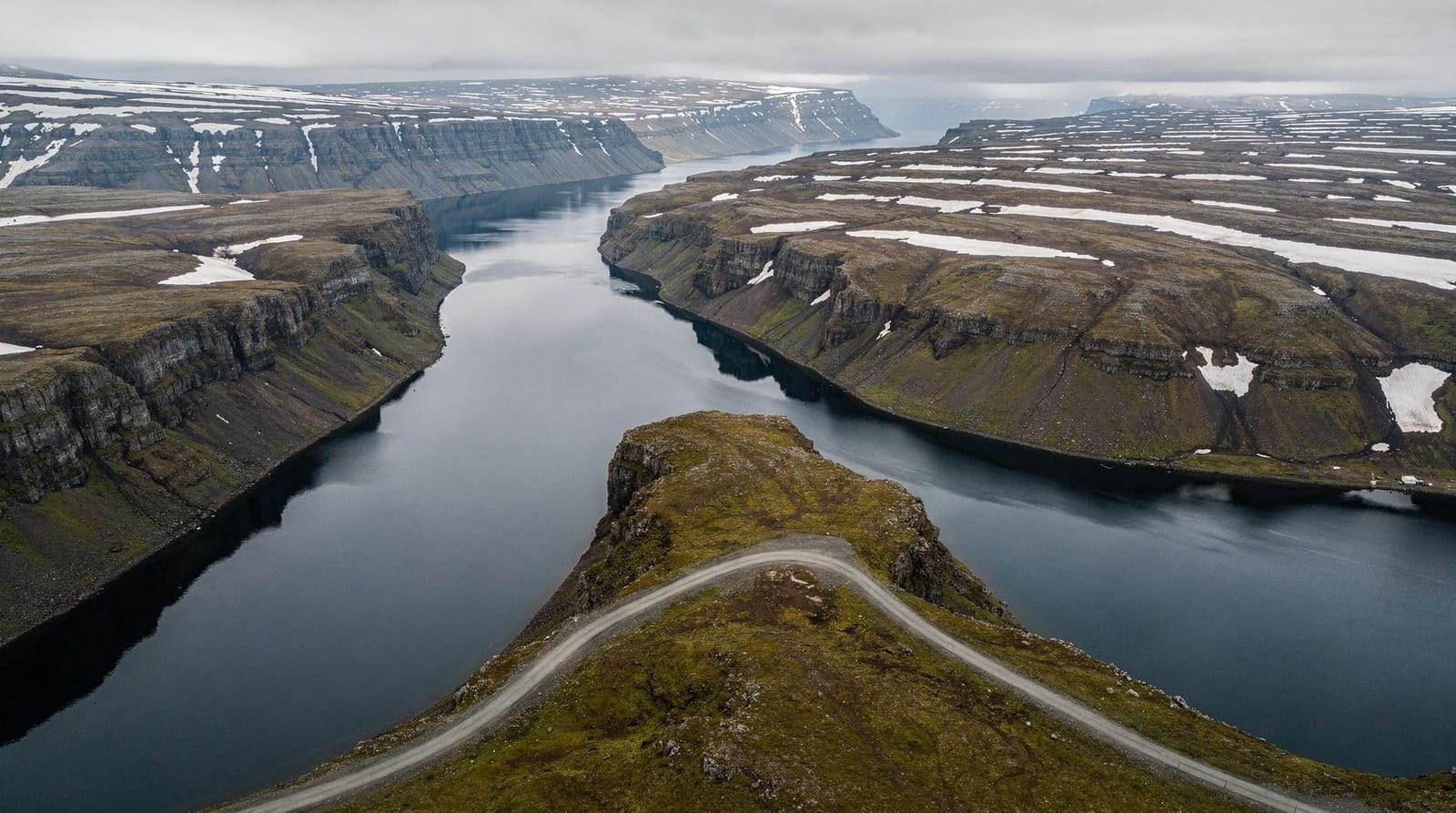
The Westfjords are Iceland’s most northwestern region, reaching 66° N. At this latitude, the midnight sun period extends from late May to late July, and even in May the nights are bright enough to walk without a torch. The combination of dramatic fjord scenery and midnight sun creates an environment that doesn’t exist at lower latitudes.
Dynjandi waterfall in the Westfjords is photographically spectacular in midnight sun light — the golden illumination on the broad waterfall cascade is memorable. Ísafjörður is the main town and a good base.
Hornstrandir Nature Reserve, the uninhabited northernmost peninsula, offers the purest midnight sun experience in Iceland but requires a ferry from Ísafjörður and is not a casual day trip.
North Iceland — Akureyri and the Diamond Circle
Akureyri, Iceland’s second city, sits on a fjord at 65.7° N and has a genuine midnight sun from approximately June 1 to July 12. The town itself celebrates midnight sun with outdoor events and late-night dining.
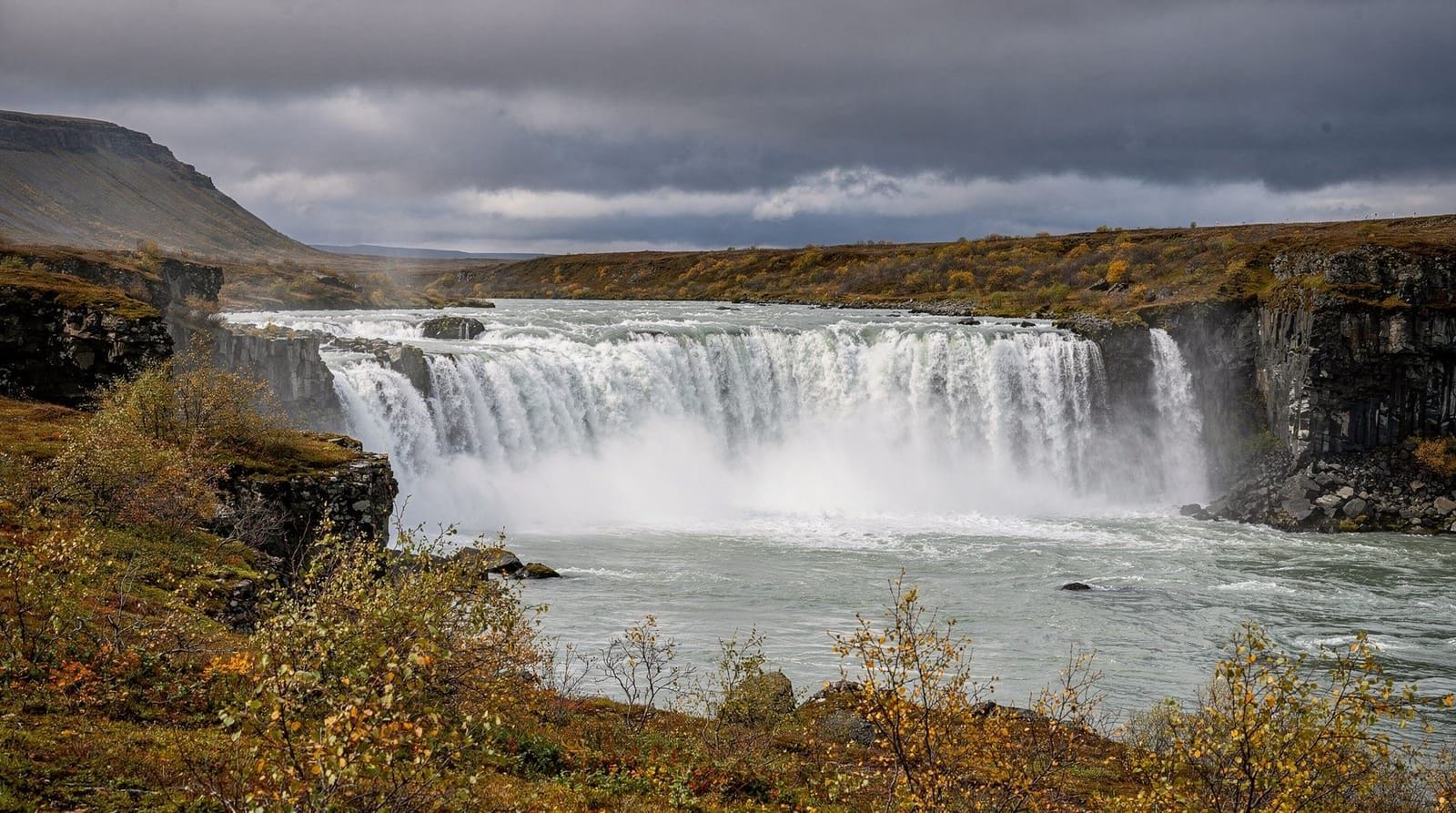
The night sky in north Iceland in summer is extraordinary — the Golden light at 11 pm illuminates Goðafoss, Lake Mývatn, and the surrounding mountains. A midnight drive along the north shore of Mývatn under golden light is one of Iceland’s travel experiences that is difficult to describe adequately.
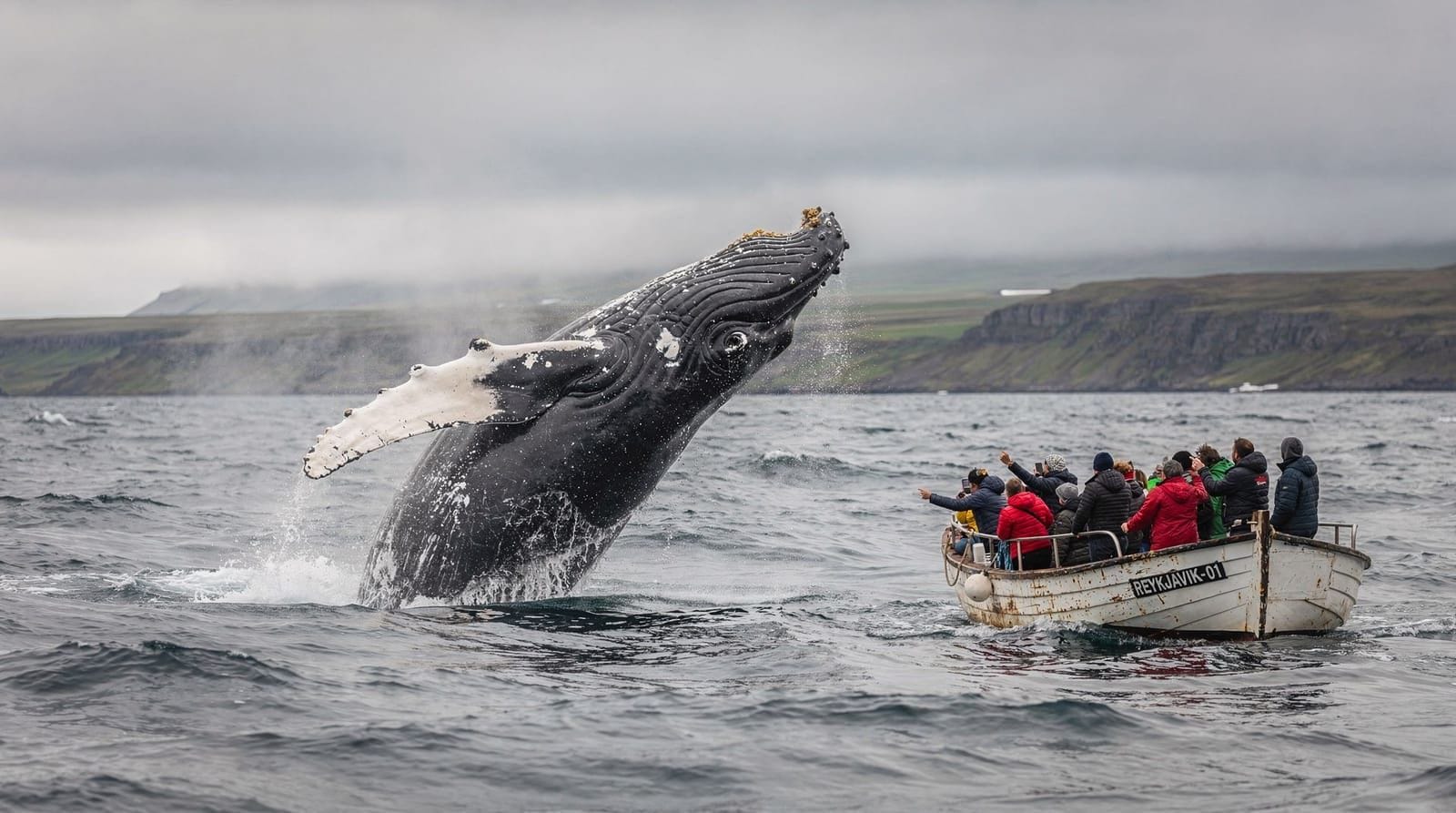
Midnight sun whale watching tours from Akureyri operate in the late evening and run into the early morning hours when the sun stays above the horizon. Seeing humpback whales break the surface under golden midnight light is a combination unique to this latitude.
The Iceland highlands — above 700 m elevation
At high elevation, the midnight sun light combines with mountain panoramas in a way that isn’t possible on the coast. The Kerlingarfjöll highlands, Landmannalaugar, and the road to Þórsmörk all offer midnight sun experiences with virtually no other people, if you’re there at 1 am.
Highland roads are only open from late June to early September, which overlaps perfectly with the midnight sun window.
Snæfellsnes — midnight sun from a glacier tip
The Snæfellsnes Peninsula juts west into the Atlantic, and the western tip near Snæfellsjökull glacier offers midnight sun views across the open ocean. The lighthouse at Öndverðarnes (the westernmost point) is a classic midnight sun watching location — you’re looking west-northwest as the sun rotates slowly around the horizon rather than setting.
Reykjavík — convenient but urban
The midnight sun is real in Reykjavík (no sunset June 3–July 10) but the urban setting reduces the natural drama. The most atmospheric options within the city:
- Öskjuhlíð hill: The hill topped by the Perlan dome provides a 360° view over the city and ocean
- Seltjarnarnes peninsula: The western tip of the Reykjavík peninsula, facing the open ocean with a lighthouse
- Esja mountain: A 45-minute hike to a viewpoint above the city
Midnight sun ATV tours from Reykjavík operate in the late evening and allow you to experience the otherworldly light while moving through the landscape rather than standing at a viewpoint. Departures around 9–10 pm return around midnight or later.
What the midnight sun actually looks like
First-timers often expect a dramatically orange sun at midnight. The reality is more nuanced:
At midnight in mid-June at Reykjavík’s latitude, the sun is at its lowest elevation — approximately 3–5 degrees above the northern horizon. The light is golden to amber, with long shadows even from small objects. The shadow direction is north, which is unfamiliar to anyone used to southern-hemisphere or mid-latitude photography.
The sky doesn’t produce the deep orange and red you see at a regular sunset — the sun’s trajectory is too flat and the duration too long for that degree of atmospheric scattering. The light is golden-white, like a permanent extended golden hour.
The midnight sun photography section of the photography guide covers exposure settings specifically.
Practical challenges — sleeping
The most practical problem: your body does not naturally go to sleep when it’s 11 pm and broad daylight. Most hotels in Iceland provide blackout curtains or blinds, but quality varies significantly.
Effective solutions:
- Request a room with blackout blinds at booking — not all hotels have them
- Bring a sleep mask (cheap, invaluable)
- Accept that your sleep schedule will shift and use the extra energy for early-morning outdoor photography
- Don’t try to go to bed before 11 pm — the light makes this difficult and fighting it is counterproductive
Many visitors find after a day or two that they naturally stay active later (until midnight or 1 am) and wake later (9–10 am). This is fine and actually optimises your schedule for lower-crowd visits to popular sites.
See the Iceland in summer guide for full seasonal context.
What to see in midnight sun light
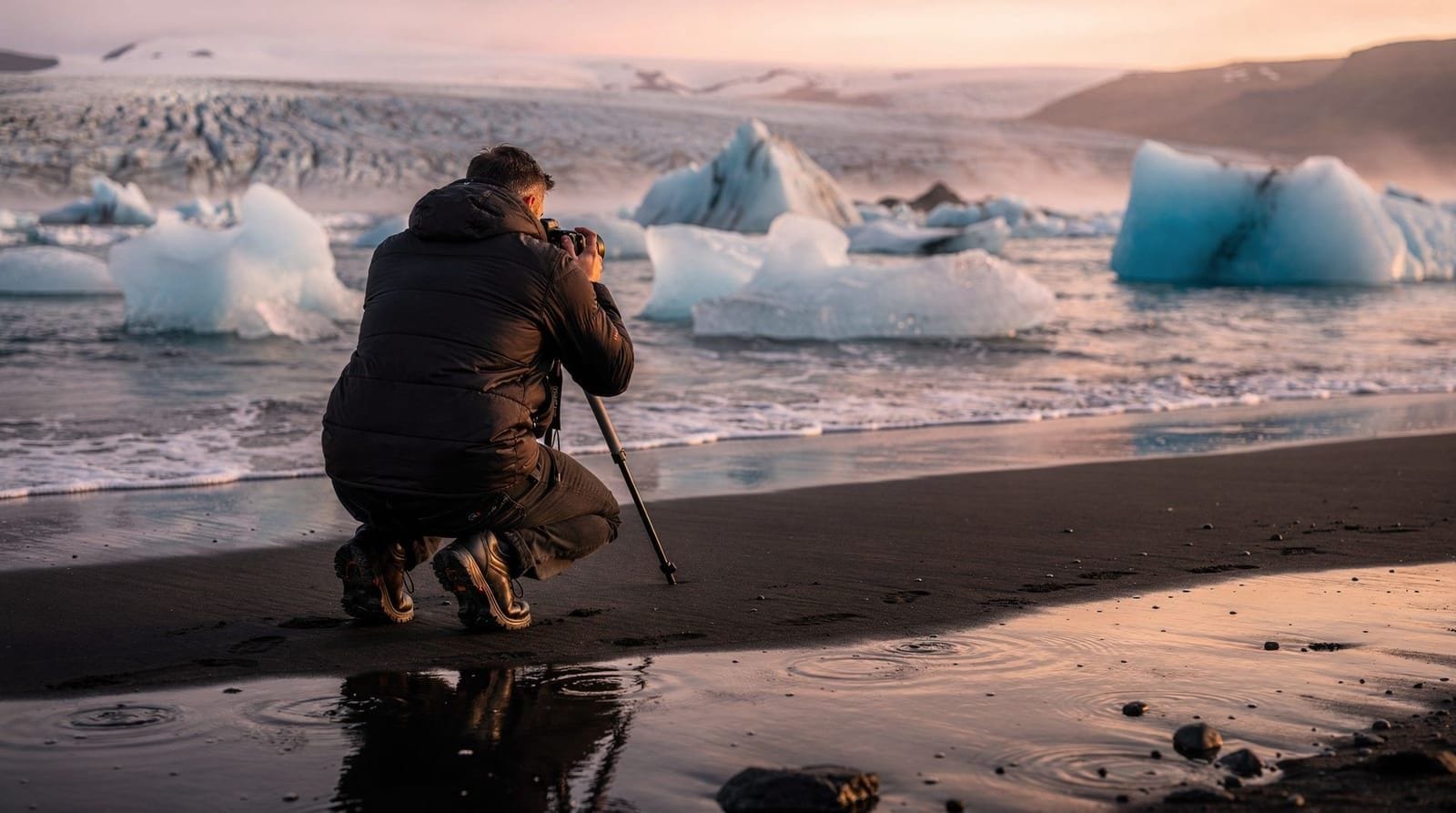
Jökulsárlón glacier lagoon: The icebergs lit by midnight sun golden light are extraordinary. The lagoon faces southwest; the midnight sun illuminates it from a low north-northwest angle, creating long shadows across the ice.
Seljalandsfoss: The falls are illuminated artificially at night, but the natural midnight sun light before artificial lighting kicks in creates better photography conditions.
Kirkjufell: The mountain under midnight sun light from the northeast is the classic shot that very few calendars and travel campaigns actually capture correctly — most “sunrise” shots of Kirkjufell are actually 2–3 am images.
Landmannalaugar: Walking in the geothermal hot spring area at midnight under golden light, with nobody else around, is a genuine once-in-a-lifetime experience.
Frequently asked questions about the midnight sun in Iceland
Does it ever get dark in Iceland in summer?
In Reykjavík, between early June and early July, it doesn’t get darker than nautical twilight (similar to deep dusk). Further south in Iceland it’s slightly darker; further north it doesn’t get dark at all. From mid-July, nights gradually lengthen and the sky gets darker.
Can you see stars during the midnight sun?
No. Stars require astronomical darkness, which doesn’t occur during the midnight sun period. If you want to see stars in Iceland, come in September–March.
Is the midnight sun good for photography?
Excellent. The low-angle golden light persisting for hours creates the same quality as a golden hour that lasts all night. The main challenge is that the light direction is northerly, which means shadows fall in unfamiliar directions. This is a feature once you understand it, not a bug.
Does the midnight sun affect wildlife?
Yes. Some species (particularly birds) use light cues to time activity, and some Icelandic bird species are unusually active around midnight in summer. Puffins often return to their burrows at midnight. See the puffin watching Iceland guide.
How far north do I need to go for the “real” midnight sun?
The midnight sun (sun doesn’t set) starts at roughly 65° N latitude in Iceland, which includes Akureyri and most of north Iceland. Reykjavík at 64° N has a very brief “set” of a few minutes around June 21 but the sky never darkens. Practically speaking, anywhere in Iceland from late May to late July gives a meaningful midnight sun experience.
Can children sleep during the midnight sun?
This is a genuine practical concern for families. Young children are more sensitive to light disrupting sleep schedules than adults. Blackout blinds or a travel blackout blind (portable window-covering systems are available online) are worth bringing for children under 6–8. Older children often adjust reasonably quickly after the first couple of nights.
The midnight sun and the northern lights — they’re mutually exclusive
This is a point of confusion for first-time Iceland visitors. The northern lights (aurora borealis) require darkness to be visible — you need an astronomically dark sky, which Iceland only has from approximately mid-August to mid-April.
If you’re visiting for the midnight sun (June–July), you will not see northern lights. If you’re visiting for the northern lights (September–March), you will not experience the midnight sun. This is not a flaw; these are different experiences that require different seasons.
The weeks around the autumn equinox (mid-September to early October) offer a brief window when the nights are dark enough for northern lights, days are still long enough for comfortable outdoor activities, and the weather is often excellent. This is many experienced Iceland travellers’ preferred season. See the northern lights September vs March guide.
How midnight sun affects nature in Iceland
The continuous summer light drives unusual behaviour in Iceland’s ecology:
Plant growth: Iceland’s growing season is extremely short (May–August) but enormously productive — the 24-hour-plus daylight drives rapid growth that compensates for the cold. The difference between June grass (green, lush) and October grass (yellow-brown) is dramatic.
Bird activity: Many species use light as a behavioural cue. Icelandic puffins (particularly at the Westfjords’ Látrabjarg cliffs) continue activity well past midnight in June. Fulmar petrels nest on cliff faces and are active throughout the 24-hour light period. Migratory waders use the continuous light to feed extensively before continuing north.
Fish migration: Atlantic salmon use river day-length cues partially, but temperature and flow triggers are more important in Iceland. The summer salmon run in Iceland’s rivers peaks July–August regardless of light.
Human activity: Icelanders genuinely do extend outdoor activities into the small hours during midnight sun season. You’ll see people hiking, cycling, and gathering outdoors at 11 pm on a June evening without it feeling unusual. This is not a performance for tourists — it’s a cultural reality shaped by centuries of making the most of short summers.
Specific midnight sun photography spots by region
Reykjavík and surrounds:
- Seltjarnarnes lighthouse (western tip of Reykjavík peninsula, facing open ocean due west)
- Öskjuhlíð hill and Perlan dome viewpoint (city panorama)
- Þingvellir National Park — the rift valley and lake in midnight sun light is extraordinary and surprisingly uncrowded at 1–2 am
South coast:
- Seljalandsfoss — the falls are illuminated at night and the natural midnight sun light before 1 am provides better photography than the artificial lights
- The black sand plain west of Vík — with Dyrhólaey arch and Reynisdrangar in the frame
Snæfellsnes:
- Öndverðarnes lighthouse (westernmost point, 65° N) — the sun circles around the northern horizon from here at the solstice in a way that’s visible as horizontal sun movement
- Kirkjufell from the north bank — the mountain in midnight sun northwest light
North Iceland:
- Lake Mývatn — the entire volcanic landscape in golden midnight light is extraordinary
- Húsavík harbour — the small whale watching town with whale watching boats on the fjord under midnight sun
Westfjords:
- Dynjandi waterfall — the broad falls lit golden at 11 pm from the west
- Hornstrandir (ferry access from Ísafjörður) — the uninhabited peninsula at 66° N gives the purest sun-doesn’t-set experience available to tourists in Iceland
Practical midnight sun logistics
Accommodation: Most Iceland accommodation provides blackout blinds in summer. If it’s not confirmed at booking, call and ask. Some older guesthouses have inadequate window coverage — arriving with a sleep mask regardless is good insurance.
Driving: Iceland requires sober driving, and the midnight sun does extend natural driving hours. However, Iceland’s roads are not immune to wildlife crossings, unexpected gravel sections, and sheep on the road at any hour. Night fatigue is real even in daylight — factor this into your driving plan. See the driving in Iceland guide.
Planning around the midnight sun for photography: Download the PhotoPills or TPE (The Photographer’s Ephemeris) app before your trip. Both show the exact sun position at any time and location in Iceland. The combination of these apps and the knowledge that you have 20+ hours of light per day transforms how you plan an Iceland photography trip.
Water and weather: Summer midnight sun conditions still bring Icelandic weather — rain, wind, fog. The most beautiful midnight sun moments are interrupted by cloud as often as enabled by clear skies. Come with realistic expectations and check forecasts at en.vedur.is before committing to a late-night drive to a viewpoint.
Honest assessment of the midnight sun experience
The midnight sun in Iceland is genuinely extraordinary — but it is not guaranteed spectacular on any specific evening. Iceland’s weather is notably unpredictable, and cloudy evenings are common even in summer. Many visitors experience the phenomenon as general brightness throughout the night rather than a specific dramatic golden-hour event.
What is guaranteed: the sky will not get dark. Everything you want to do outdoors can be done at any hour. Waking at 4 am to hike to a glacier viewpoint is entirely normal and often the best time to do it.
What is not guaranteed: cloudless skies, the specific golden-amber glow, dramatic photography conditions. These require a clear sky and a low sun, which happen on some days and not others.
The best approach: plan outdoor activities without depending on specific midnight sun conditions, then treat spectacular midnight sun moments as a welcome bonus when they occur rather than an expectation. See the Iceland in summer guide and the best time to visit Iceland guide for full seasonal expectations.
For the Ring Road driver, the best midnight sun strategy is simply to be flexible with your daily plan — if you’re near Jökulsárlón or Kirkjufell at 10 pm on a clear evening, stop. Don’t stick to the schedule. The midnight sun is one of the clearest cases where being willing to deviate from the plan produces the best outcomes.
Combining midnight sun spots with wider itinerary planning
Because the midnight sun window overlaps with Iceland’s high season, most of these locations also see peak visitor numbers during the day — but the late-evening hours when the phenomenon is most visible are consistently quieter, since day-trippers and tour buses have moved on by 9–10pm. This makes the midnight sun window a genuine two-for-one: the same locations that are crowded at 2pm become photographable with far fewer people in frame by 11pm, without needing to wake at 4am the way you would to beat crowds during the dark season. Building this into your daily schedule — visiting popular sites like Kirkjufell or Jökulsárlón in the late evening rather than midday — is one of the most practical, underused strategies for a summer Iceland trip.
Spot comparison at a glance
| Spot | Latitude | No-sunset window | Character |
|---|---|---|---|
| Reykjavík | 64°N | Jun 3 – Jul 10 | Convenient, urban, mildly dramatic |
| Snæfellsnes | ~64.9°N | Similar to Reykjavík | Ocean-facing, Kirkjufell classic shot |
| Akureyri/Diamond Circle | 65.7°N | Jun 1 – Jul 12 | Fjord amphitheatre, geothermal steam in gold light |
| Westfjords/Ísafjörður | 66.1°N | May 23 – Jul 20 | Most dramatic, least crowded |
| Grímsey Island | 66.5°N | Starts ~1 week earlier than Akureyri | Genuinely on the Arctic Circle |
| Highlands (700m+) | Varies | Late Jun – early Sep (roads open) | Mountain panoramas, near-total solitude |
Choosing a spot based on your itinerary
Not every visitor can detour to the Westfjords or fly to Grímsey just for the midnight sun, and that’s fine — the phenomenon is real and worth experiencing anywhere in Iceland during the window. If you’re based in Reykjavík for a short city trip, Öskjuhlíð hill or Seltjarnarnes give a genuine and easy midnight sun experience. If you’re already doing a Ring Road or North Iceland trip, building in one deliberate late-evening stop at Mývatn or Goðafoss costs nothing extra and delivers some of Iceland’s best light of the whole trip. Save the Westfjords or Grímsey detour specifically for visitors who have the extra days and want the most dramatic version — it is a genuine step up in remoteness and light quality, not just marginally different from the more accessible options.
Top experiences
Bookable activities with verified prices and instant confirmation on GetYourGuide.
Top experiences
Best-rated activities across GetYourGuide and Viator.

Ice Cave by Katla Volcano Super Jeep Tour from Vik
- Viator

Puffin and Volcano Tour with Ebbi
- Viator

Dynjandi Waterfall & Farm Visit Tour from Isafjordur Port
- Viator

3,5-Hour Sightseeing Tour To Dynjandi Waterfall
- Viator

Volcano ATV Tour
- Viator

Lake Myvatn Day Tour and Godafoss Waterfall for Cruise Ships from Akureyri Port
- Viator