Camper van diary: three weeks around Iceland in a converted Ford Transit
Why a van
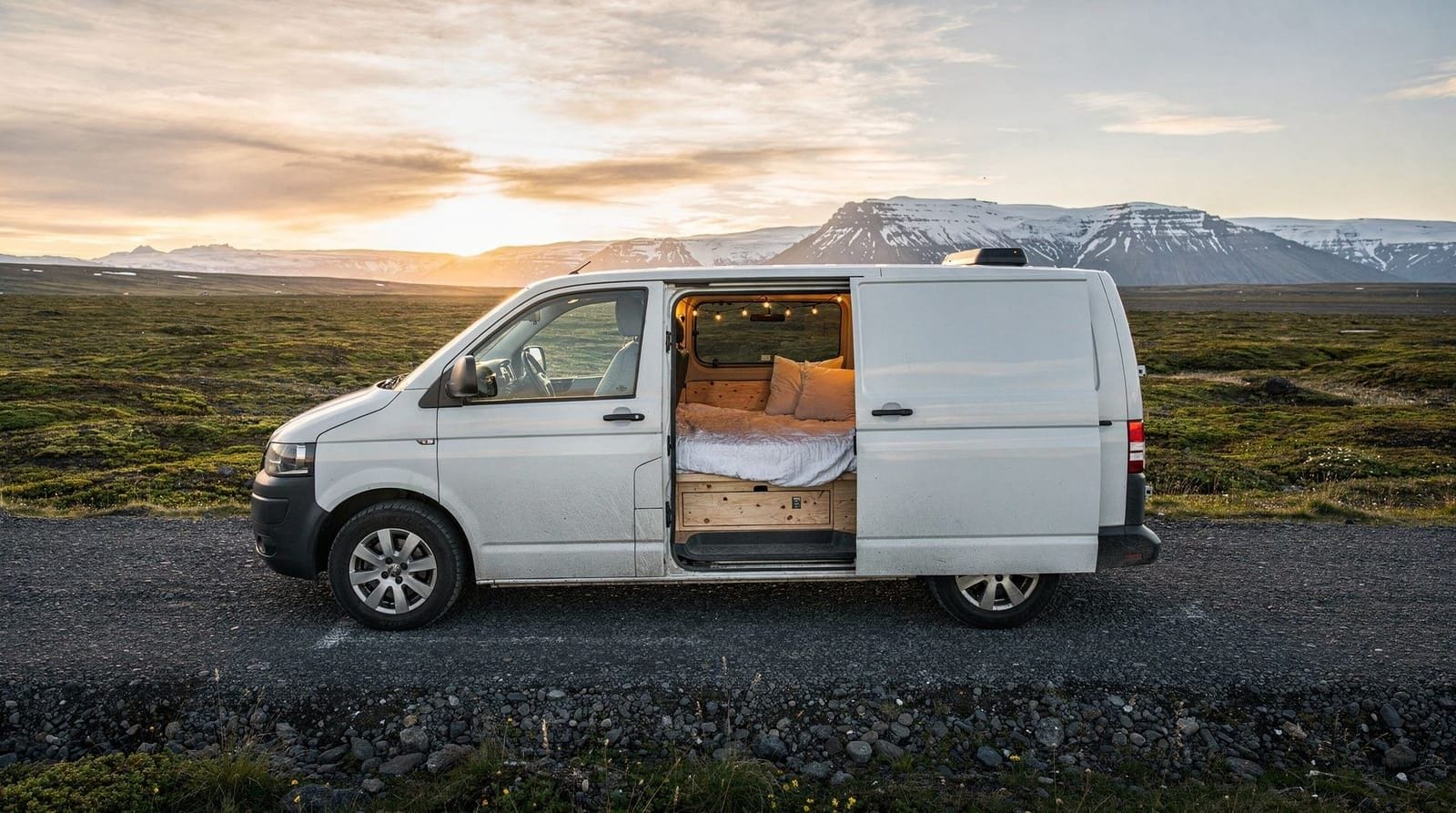
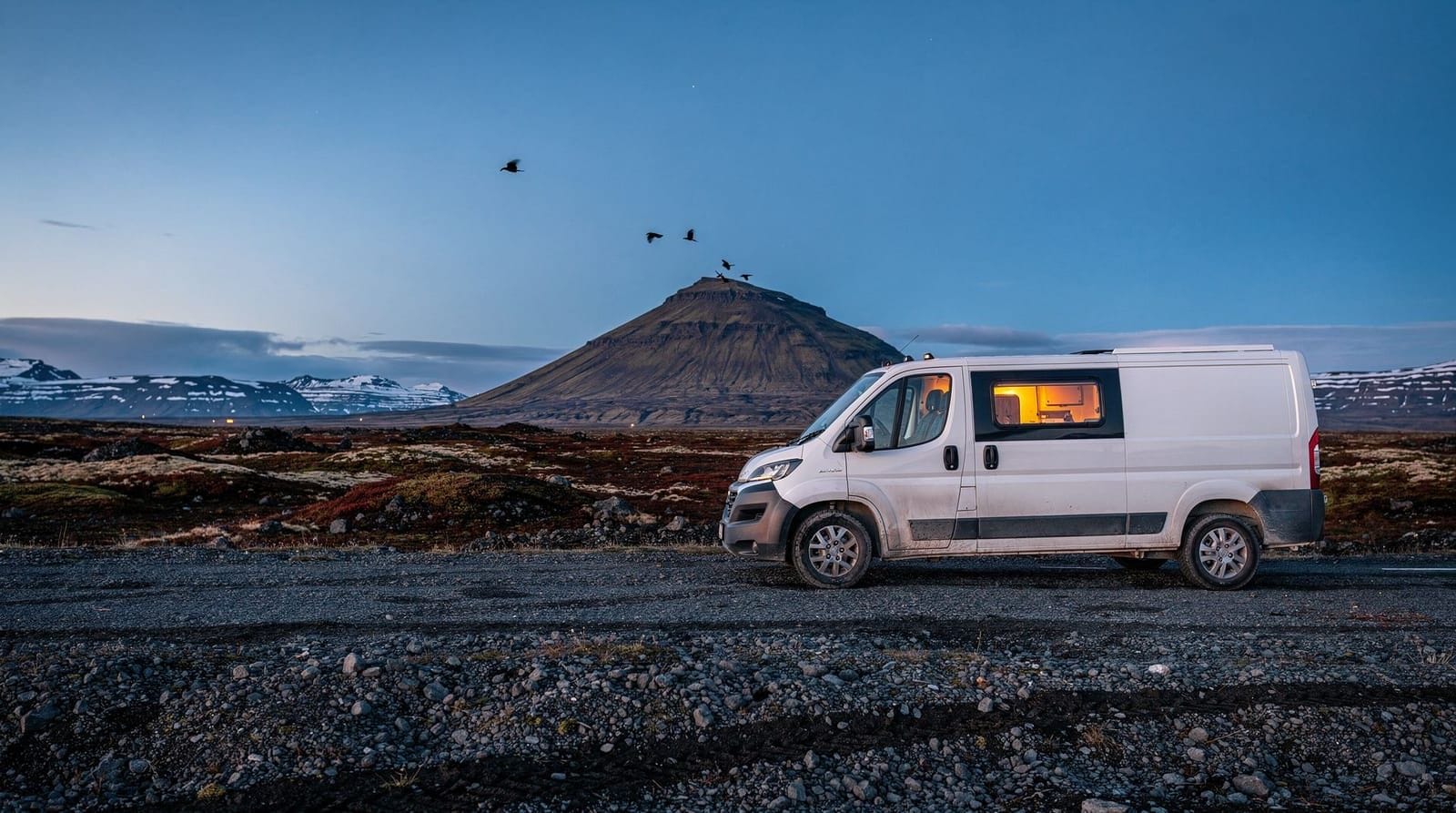
The decision to rent a camper van rather than a car with hostel nights was mostly about flexibility. My partner Ingrid had been talking about Iceland for two years, and we’d both reached the same conclusion independently: the thing that would make the trip different was being able to stop whenever we wanted, sleep wherever we stopped, and not be bound to guesthouse bookings that forced a fixed route.
We rented a converted Ford Transit from Campervan Iceland, a medium-sized rental company based near Keflavík airport. The van cost ISK 32,000 per day (around €200 at June 2021 rates), which sounds steep until you account for the accommodation cost it replaces. For 21 days, the van came to ISK 672,000 (€4,200). That’s €200 per night for accommodation and transport combined, split between two people — €100 each. Comparable guesthouse beds in summer Iceland run ISK 14,000–22,000 per room. The economics made sense.
The van had a fixed double bed, a two-burner propane stove, a 50-litre refrigerator, a 100-litre freshwater tank, and solar panels on the roof. There was no shower. That is the main honest limitation of the format.
| Where | Full ring road, clockwise from Keflavík, 21 days |
| Cost per person | Around €3,155 total for the trip |
| Vehicle | Converted Ford Transit, around ISK 32,000/day |
| Best time | June (midnight sun, all campsites open) |
| Booking | Book the van 3–4 months ahead for summer |
The shower situation
Iceland solves the shower problem in a way that no other country does: geothermal public swimming pools. Nearly every town with more than a few hundred people has one. They cost ISK 800–1,200 per person (€5–8), include a changing room with showers, and usually have a hot tub or two alongside the main pool. We used these as our primary bathing facility throughout the trip. It worked perfectly, and we swam in small-town pools that had almost no tourists — Hvammstangi, Blönduós, Egilsstaðir — that felt genuinely like stepping into Icelandic daily life.
The only day this was a problem was when we camped far from any town. We improvised with a solar shower bag on those occasions. Not ideal but functional.
The route
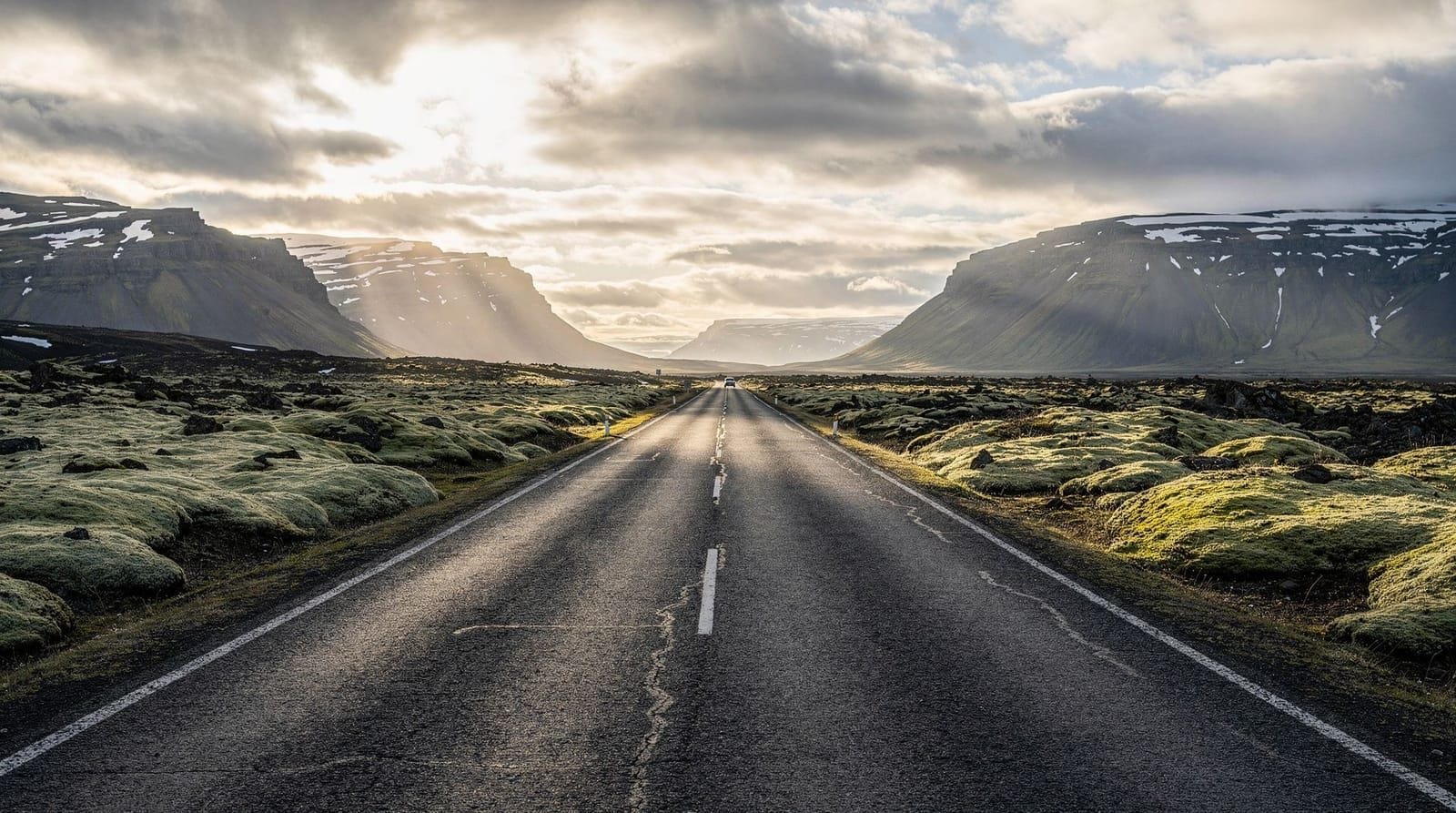
We drove the full ring road, clockwise from Keflavík, over 21 days. The first three nights were in the south: Seljalandsfoss, Skógafoss, overnight near Vík, then east toward Jökulsárlón. We arrived at the glacier lagoon on day four at 5 am, having driven in from a campsite near Kirkjubæjarklaustur. The light on the icebergs at 5 am in late June is extraordinary. We sat by the water with coffee from the camp stove for two hours before any tour buses arrived.
Day seven we were in Höfn for two nights — far longer than most people stop. But Höfn has good hiking access to the Vatnajökull glacier rim above the town, and the lobster soup at Pakkhús is reason enough to stay an extra night.
The east coast — between Höfn and Egilsstaðir — is what Iceland guidebooks call “beautiful but empty.” That’s true. Egilsstaðir is the service hub. We spent one morning driving the 27-kilometre side road to Seyðisfjörður, a small town at the end of a fjord where a Faroese ferry docks. The town has a well-regarded record shop and an arts community; we had coffee at Skaftfell Bistro and found it more interesting than expected.
The north: our favourite section
North Iceland exceeded our expectations significantly. The general perception is that the south coast is Iceland’s “greatest hits” and the north is a long drive between points. This is wrong.
Akureyri was genuinely pleasant — we spent two full days there, visiting the botanical garden, swimming at the city pool (ISK 1,000), and eating at Greifinn (ISK 2,800 for pasta, reasonably good) and Rub23 (ISK 4,800 for sushi, better than it had any right to be in a subarctic town of 20,000).
Lake Mývatn was spectacular: pseudocraters, boiling mud pots, the lava formations at Dimmuborgir, and an afternoon at Mývatn Nature Baths. We camped at the Mývatn campsite, which cost ISK 2,000 per person per night. At night, with the van parked facing the lake and the still water reflecting the sky at midnight, the midges were intense (Mývatn literally means “midge lake”) but the setting was unlike anything we’d seen on the trip.
Booking the Mývatn Nature Baths entrance ahead of time removes the uncertainty of turning up in peak summer and finding the entry queue longer than expected — worth doing the morning you arrive in the area if not before.Húsavík was the whale watching stop. We went with North Sailing on their three-hour traditional oak boat tour. We saw three humpbacks and a minke whale. Ingrid cried during the humpback breach, which she has asked me not to mention in print but which I am mentioning because it captures the experience accurately.
Húsavík has several whale watching companies operating from the same harbour. North Sailing’s traditional oak boats are the most atmospheric option; the season runs May–October with high success rates in June–August.The Snæfellsnes detour
Most ring road itineraries skip Snæfellsnes. We did not, and it was one of the best decisions of the trip. The peninsula extends west from the main road about two hours from Reykjavik, a 90-kilometre finger of land with a glacier at the tip and Kirkjufell mountain on the north coast.
We spent two nights on the peninsula, camped at Ólafsvík campsite facing the sea. The campsite cost ISK 1,800 per person. We walked to the Snæfellsjökull glacier rim — a 4-hour return hike from the car park at Öndverðarnes on the peninsula tip — without a guide, on a clear day. The glacier is retreating visibly and has been doing so for decades; Ingrid had read Jules Verne’s “Journey to the Centre of the Earth” specifically for this trip and arrived with more emotional investment in the glacier than I had.
Kirkjufell at 11 pm in June, with the sun at a low angle and barely below the horizon, is one of the better photography moments of the entire trip. The mountain’s distinctive arrow shape doesn’t look real at that light angle. We stayed until midnight and barely needed a headtorch.
Van vs a car and guesthouses: the real comparison
We get asked constantly whether the van was actually cheaper than renting a car and staying in guesthouses. The honest answer: not by much on paper, but the flexibility changes what the money buys.
| Camper van | Car + guesthouses | |
|---|---|---|
| Cost per person, 21 days | Around €3,155 | Around €2,800–3,400 (varies with room quality) |
| Flexibility to stop anywhere | High | Limited to booked nights |
| Shower access | Public pools only | En-suite most nights |
| Cooking | Full control, every meal | Dependent on guesthouse kitchen access |
| Weather resilience | Vulnerable to wind at night | Better insulated, quieter sleep |
The costs land in a similar range; the deciding factor is really whether you value spontaneity (van) or comfort and better sleep (guesthouses) more. We’d choose the van again for a summer trip specifically because of the freedom to linger at Jökulsárlón at 5 am, but we’d think harder about it for a winter trip given the wind exposure we experienced near Dyrhólaey.
Honest van life problems
Propane refills: We needed to refill propane twice. This is easy at most petrol stations in larger towns but we once went 90 km without a fuel station and ran out on the east coast. Cold cereal for dinner that night.
Wind: One night near Dyrhólaey, wind gusts hit 70+ km/h and the van rocked throughout the night. Not dangerous, but not comfortable. Heavy vans with a high roofline are vulnerable to wind. This is not fixable, just something to accept.
Freshwater: Refilling the 100-litre tank at petrol stations and campsites was necessary every 3–4 days. Easy to manage, just requires planning.
Dump stations: Iceland’s campsite network has grey water dump points at most sites. We encountered three sites without a dump point in 21 days, which required driving on to the next town.
The costs
Van rental (21 days): €4,200 / two people = €2,100 each Fuel (approximately 5,000 km, averaging 10L/100km at ISK 185/L in 2021): €580 / two = €290 each Campsites (averaging ISK 2,000/person/night, 18 campsite nights): €230 each Food (Bónus shopping + 8 restaurant meals): €420 each Activities (Mývatn baths, whale watching, Kerið, museum entry): €115 each Total per person: approximately €3,155
That’s not cheap. But it includes three weeks of travel, accommodation, and transport in one of the world’s most dramatic landscapes, with total freedom to stop where we wanted.
The things nobody tells you about van life in Iceland
The AVIS/Hertz comparison: Most major rental companies don’t offer campervans. The Iceland campervan market is served by specialist companies — Campervan Iceland, Happy Campers, Kuku Campers, Arctic Campers. Price differences between companies can be significant; book 3–4 months ahead in summer for the best rates and vehicle availability.
Campsite cards: Many Icelandic campsites accept the Camping Card (campingcard.is), a prepaid card that costs around ISK 18,700 (€118) and covers 28 nights at approximately 45 participating sites. If you’re doing more than 12–14 nights of camping, the card pays for itself. Check which sites on your route accept it before buying.
The campsite etiquette: Iceland’s campsites range from basic (a flat field, a toilet, maybe a cold water tap) to full-service (heated showers, laundry, kitchen facilities, WIFI). Knowing which type you’re arriving at affects how you plan your evening. The Visit Iceland campsite map (available on their app) has current facility listings.
Wild camping and the law: Iceland permits wild camping outside of designated camping areas, but with conditions: you must camp at least 200 metres from the nearest farm building, must not camp in the same spot for more than one night, and must leave the site as you found it. In practice, good wild camp spots on the ring road — flat, sheltered, not too close to any structure — exist but require finding them before sunset. We did three nights of wild camping and none of them were especially dramatic finds.
When to stop driving: The combination of midnight sun (in June) and the freedom of a van leads to a particular temptation to keep driving past any sensible stopping point. We had nights where Ingrid and I drove until 1 am “because it was still light.” The cumulative tiredness of this catches up after about three days. Make yourself set a stopping time, regardless of daylight.
The campervan vs car guide breaks down when a van makes sense versus a standard rental. The campervan Iceland guide has logistics on campsite networks and freshwater locations.
We came back with 4,000 photos, a deep understanding of Icelandic petrol station geography, and no desire to undo any of it.