Why we went to Iceland in winter (and would do it again)
| Where | South coast and glacier areas, based from Reykjavík |
| Daylight | ~5 hours in January (sunrise ~11:15am, sunset ~3:45pm) |
| Cost | Around 30–40% cheaper than July for cars and rooms |
| Vehicle | 4x4 with winter tyres essential |
| Highlands | Closed — F-roads inaccessible November–May |
The question everyone asked
When we told people we were going to Iceland in January, the reaction was consistent: “Isn’t it dark all the time?” Followed by: “Isn’t it freezing?” And occasionally: “Why?”
The answers are yes (ish), yes, and because winter Iceland turned out to be the version of Iceland we’d been looking for.
We went for nine days in January 2022, two adults, a rental 4x4 (a Nissan X-Trail, necessary for winter roads), and a route that focused heavily on the south coast and glacier areas where winter-specific experiences are concentrated. Here’s what we found.
The daylight situation, honestly
Reykjavik in January gets roughly 5 hours of daylight. Sunrise is around 11:15 am, sunset around 3:45 pm. This sounds terrible. In practice, it’s more nuanced.
First: the low sun angle means the light is in golden-hour quality for most of those 5 hours. Waterfalls, glaciers, and coastline in January afternoon light are genuinely different from how they look in the flat overhead light of July. Every landscape photo has shadows and warmth that July cannot produce.
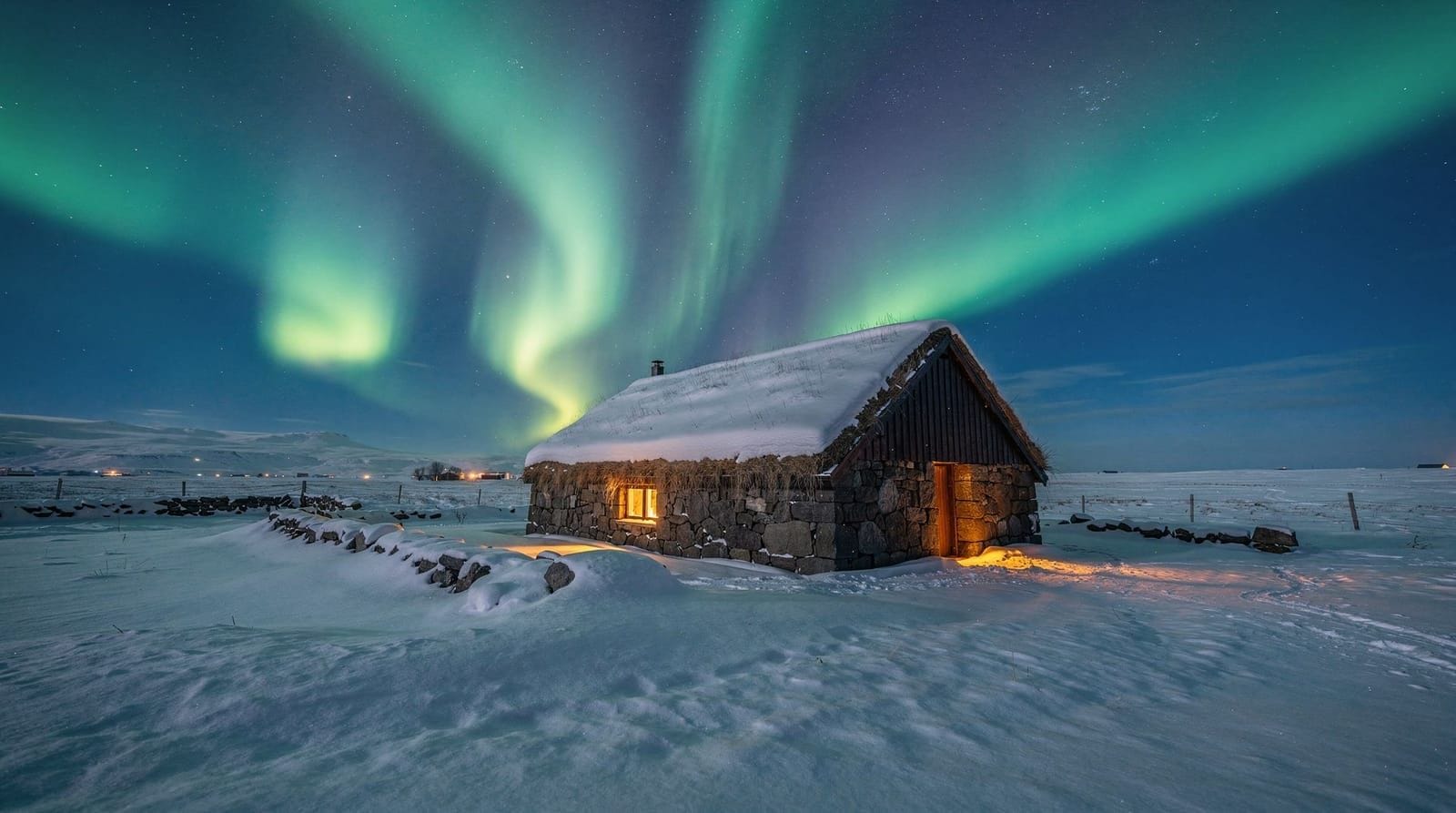
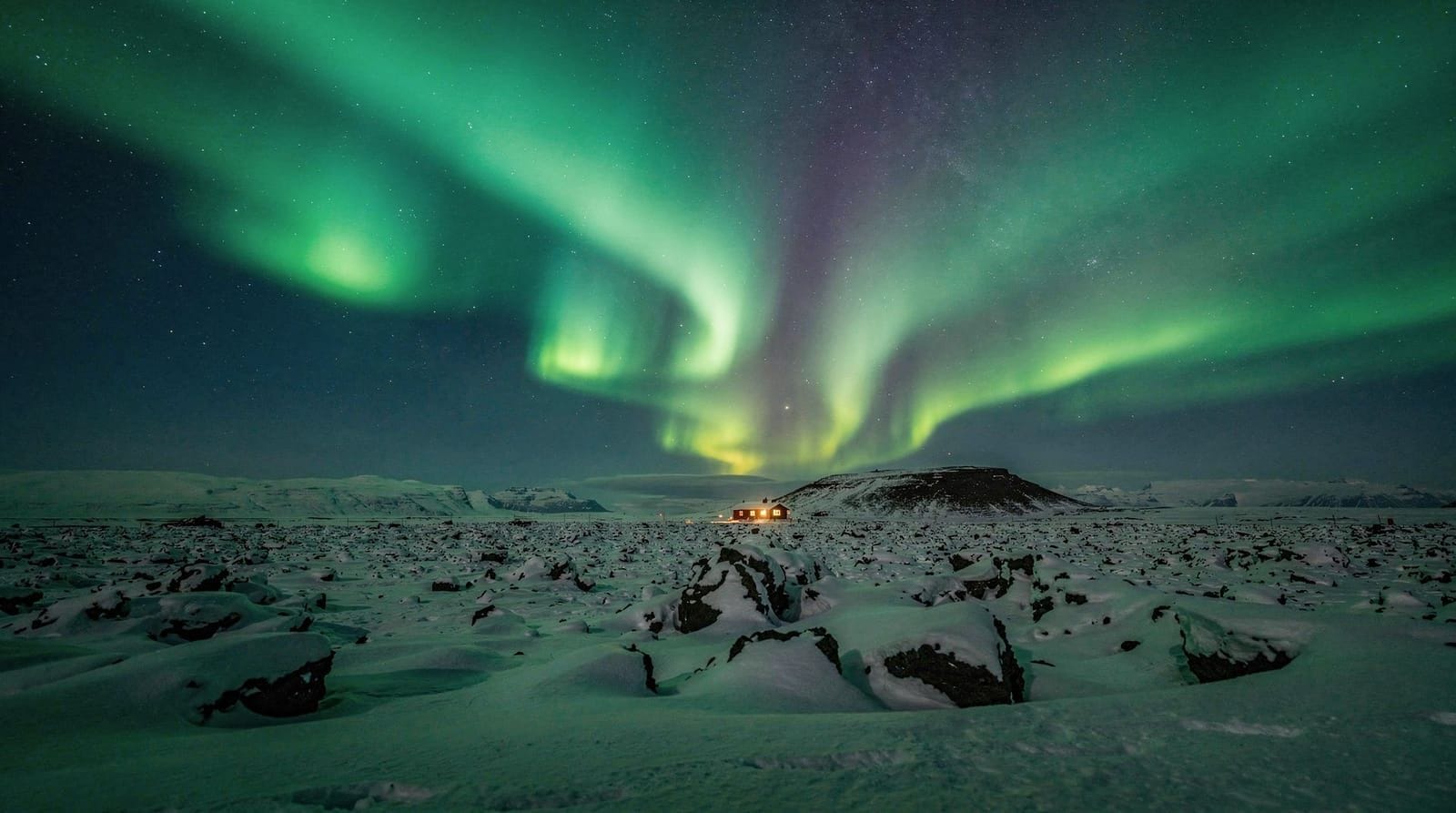
Second: the remaining 19 hours are potential aurora time. You don’t need it to be “night” for the northern lights to be visible — you need it to be dark. January in Iceland is very dark after 4 pm. We had four nights with KP-index activity above 3, and we saw the aurora on two of them. Once faintly near Þingvellir, once dramatically from a hillside near Vík.
Third: what you lose in daylight you gain in atmosphere. Iceland in January is quiet. Not moderately quiet — genuinely quiet. We had Skógafoss waterfall to ourselves for 40 minutes on a Tuesday. Forty minutes, just the two of us and the waterfall, which is one of Iceland’s most visited sites. In July that same site might have 200 people simultaneously.
The things that only happen in winter
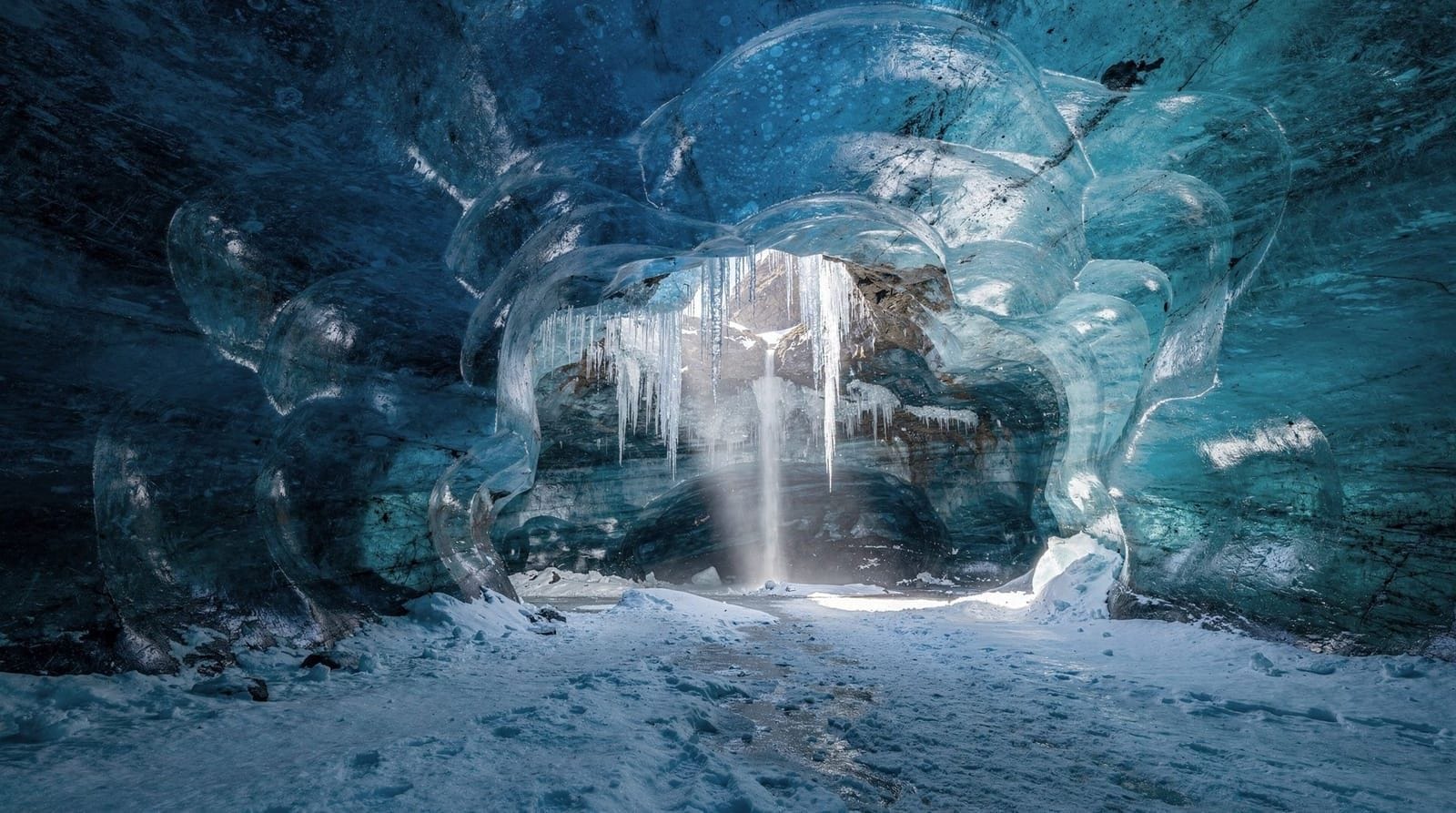
Ice caves in Vatnajökull: The ice caves inside the glacier are only accessible from November through March. During summer, the glacier surface melts and becomes unstable. The crystal blue ice chambers, accessed through Skaftafell or directly via the glacier rim, exist in their accessible form only in the winter season. This was the specific experience that drove the timing of our trip.
Ice cave tours into Vatnajökull run November–March only and require a guide — it’s not safe to enter independently. Small-group tours from the glacier face operate most days when conditions allow, typically lasting 2–3 hours including the drive to the cave entrance.We did the blue ice cave tour from Jökulsárlón. The guide drove us 45 minutes by super-jeep across the glacier margin to the cave entrance. Inside: ice walls in shades of blue from pale turquoise to deep navy, light filtering through the ice ceiling, the sound of the glacier creaking above. The experience is specific to winter and cannot be replicated any other season.
Frozen waterfalls: Skógafoss and Seljalandsfoss freeze partially in cold winters — icicle formations hanging from the edges of the main falls. We arrived at Seljalandsfoss in January with temperatures around -5°C and found the walk-behind path iced over and closed (the site managers close it for safety), but the frozen curtains at the edges of the falls were striking.
Fewer people: This cannot be overstated. Jökulsárlón glacier lagoon in January had perhaps 30 people visible across the entire site when we arrived. In July 2019, when we’d visited previously, the main car park had queues and the viewing areas were dense with tour groups.
The driving reality
Winter driving in Iceland requires genuine preparation. We had the Nissan X-Trail with winter tyres (included in the rental), and we checked the Vegagerðin road conditions website (road.is) every morning before driving. This is not optional — in winter, road closures due to ice or blizzard conditions are common. F1 (main ring road) stays open almost always, but conditions can change rapidly.
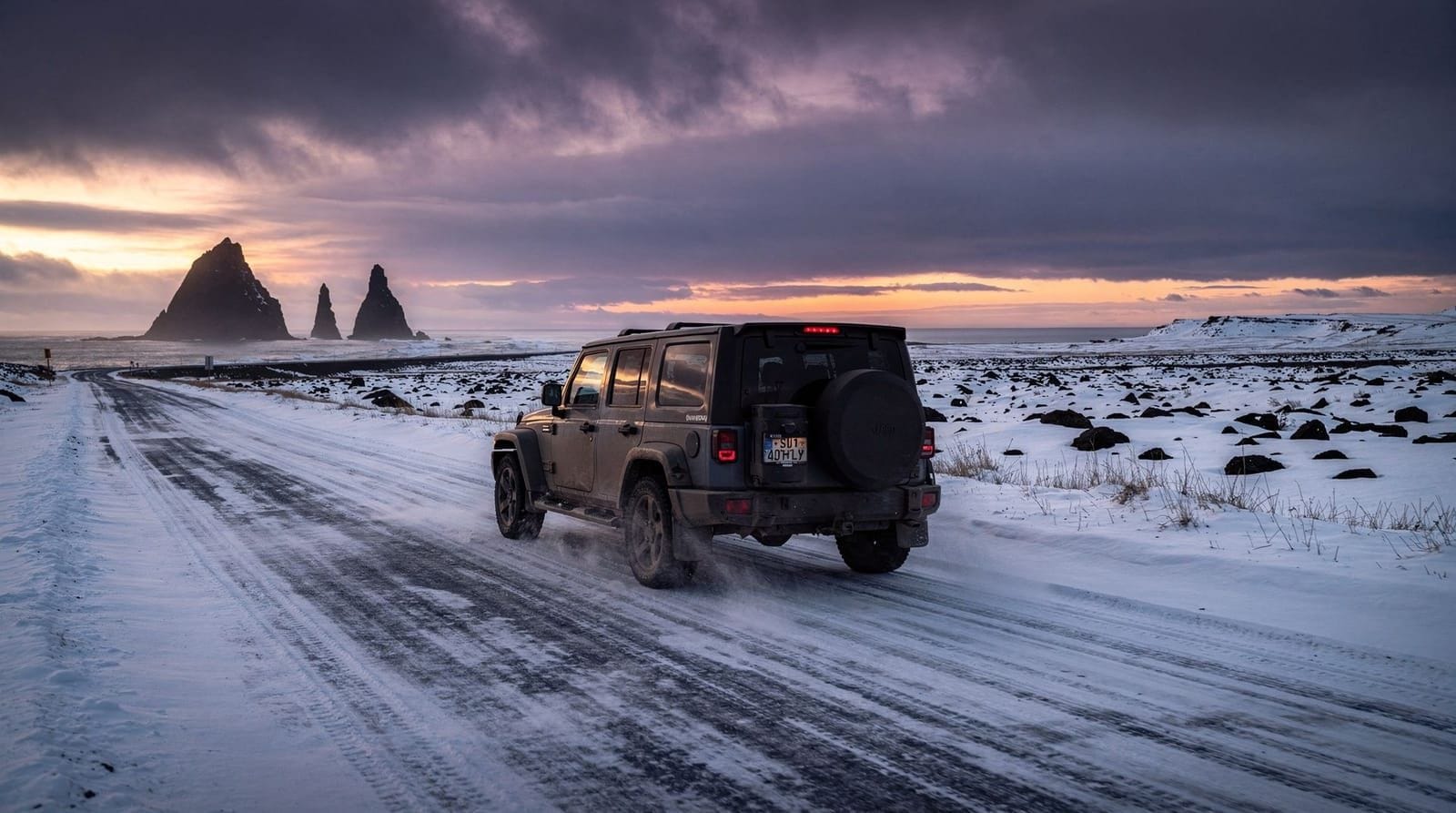
What nobody tells you: winter driving in Iceland can also be spectacular rather than miserable. Driving along Route 1 near Vík at 11:30 am on a clear January day, with snow-covered mountains, frozen black sand beach, and the low sun turning everything amber — this is not a consolation prize for bad summer weather. It’s a different landscape entirely.
The driving in Iceland in winter guide covers specific hazards. Black ice on mountain roads, reduced visibility in blizzards, and the risk of getting stranded are all real. A GPS device, charged phone, emergency kit, and awareness of weather forecasts are standard requirements.
Costs in January
The headline: winter is significantly cheaper. Not everywhere, and not for everything, but hotels and guesthouses that charge ISK 28,000–35,000 per room in July run ISK 15,000–22,000 in January. Car rental prices drop by 30–40%. Flights from most European cities are cheaper in January than in July or August.
The offset: heating costs more, fuel costs slightly more (slower speeds in winter conditions), and some businesses are closed in January. We found a few guesthouses along the south coast that had closed for the season and had to plan our accommodation more carefully than in summer.
We spent approximately €2,200 for nine days for two people including flights, accommodation, car rental, fuel, food, and activities. Equivalent to roughly €1,100 per person — which compares very favourably to the €1,600–2,000 per person we’d have spent in July with the same trip structure.
What winter Iceland doesn’t deliver
Honesty: there are things you cannot do in January.
The highlands are completely inaccessible. F-roads are buried under snow. The Landmannalaugar area, Kerlingarfjöll, and the Askja caldera route are not winter options without specialised expedition equipment. The puffins, which nest from April to August, are in the south Atlantic. Whale watching in Húsavík operates year-round but sightings are less reliable in January (the humpbacks have migrated south; you’re more likely to see minke and harbour porpoise).
Snorkelling at Silfra runs year-round (the water in the tectonic crack is a constant 2°C, which is unrelated to air temperature), but it’s cold in a way that needs proper drysuit experience.
The Iceland in winter guide covers what opens and closes by month. The 5-day winter self-drive itinerary is a starting point if you want a structured route.
Winter month by month
| Month | Daylight | Aurora odds | Notes |
|---|---|---|---|
| November | ~7 hours | Good, but weather unsettled | Some businesses starting to close for season |
| December | ~5 hours | Fair, cloud cover common | Christmas markets in Reykjavík |
| January | ~5 hours | Good on clear nights | Our trip month; lowest prices |
| February | ~7 hours | Good, often clearer skies | Slightly more daylight than Dec/Jan |
| March | ~9–10 hours | Good | Transitional, some highland edges start opening late in the month |
What the south coast looks like in January
The south coast between Reykjavik and Jökulsárlón in January has a visual quality that’s genuinely its own thing. The black sand, the white glacier caps, the grey sea: the colour palette is reduced and stark. When the sun is up — those five mid-day hours — the light is golden and horizontal and the shadows from the mountains are long. Seljalandsfoss runs full and sometimes partially frozen at the edges. Skógafoss generates a mist cloud that freezes on the surrounding rocks and plants into rime ice — white crystal formations on dark lava rock that don’t exist in any other season.
Jökulsárlón in January tends to be more densely packed with icebergs than in summer — they’ve been calving since autumn without summer heat reducing the smaller pieces. The lagoon surface may be partially frozen at the edges. Diamond Beach in winter light, with the low sun hitting ice at a 15-degree angle, is among the best photographic conditions the location offers.
The black sand at Reynisfjara in January is empty of tourists. The basalt columns at Hálsanef — the main visual attraction — are unchanged by season. The sneaker wave warning is unchanged by season too. We had the beach to ourselves for an hour on a Tuesday afternoon in January.
The practical winter checklist
Before arriving in January Iceland, specific preparations:
Car insurance: Standard basic insurance does not cover sand/ash damage, which is relevant year-round but especially in winter when roads and coastal areas have windblown volcanic sand. Gravel/sand protection is a separate add-on and worth the ISK 1,000–2,000 per day.
Road app: Download the Vegagerðin road app before arriving. This is how Icelandic drivers check road closures and condition ratings in real time. Not a nice-to-have in January — a genuine tool for safety.
Aurora alerts: Set up alerts on the Veður app (en.vedur.is) for KP index notifications. When a KP3 or above appears, you want to know within minutes so you can make a decision about driving to a dark location.
Arrival timing: Flying in on a clear night is an opportunity. The drive from Keflavík airport to Reykjavik takes 45 minutes. In January, if the KP index is active and the sky is clear, that drive can deliver your first aurora sighting before you’ve checked in.
The verdict
We’d go back in winter. Specifically in January or February rather than November or December — the winter solstice period in November–December has slightly worse aurora weather on average, and late February starts to get noticeably more daylight without losing the winter atmosphere.
Winter Iceland is not a compromise or a budget option. It’s a different experience, with different exclusive offerings and a different pace. The crowds that are genuinely a problem at key summer sites are absent. The light is extraordinary. The aurora is the bonus condition rather than the main event. The ice caves exist.
If you’ve done Iceland in summer and wanted more space and quiet, consider January.
FAQ
Is Iceland in January too cold and dark to enjoy?
It’s genuinely dark — about 5 hours of daylight in Reykjavík — but the low sun gives golden-hour light for most of those hours, and the extended darkness is what makes reliable aurora viewing possible. Cold is manageable with proper layering; the bigger adjustment is planning each day around the shorter daylight window.
What can’t I do in Iceland in winter?
The highland F-roads, Landmannalaugar, and the Askja caldera route are closed under snow from roughly November to May, and puffins are absent from their cliffs until spring. Ice caves, frozen waterfalls, and northern lights are winter-exclusive in exchange, so the trade-off runs both ways.