Skógafoss guide — Iceland's most photogenic rainbow waterfall
Reykjavik: South Coast black Beach waterfalls full day
What's special about Skógafoss and how long does a visit take?
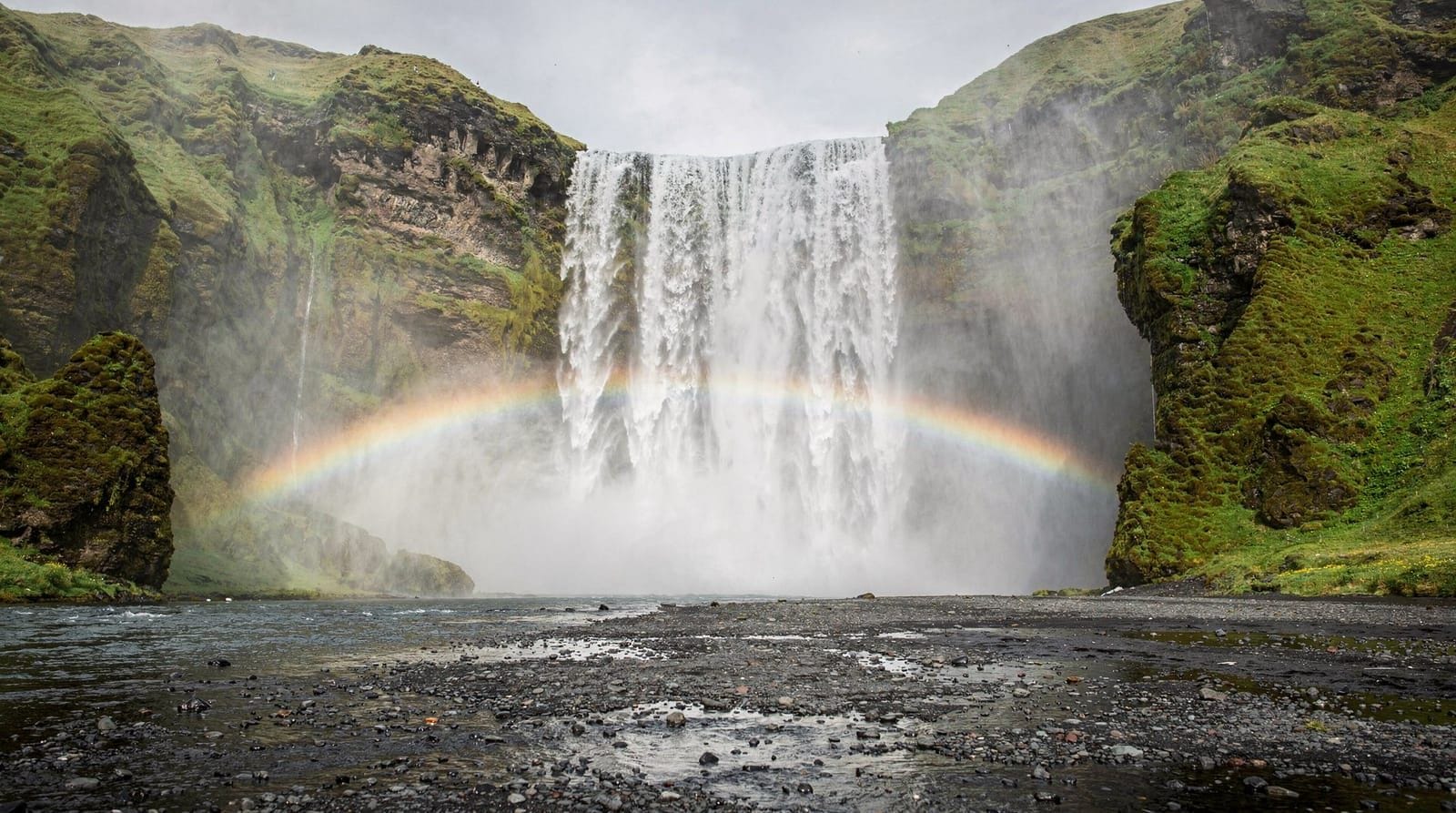
Skógafoss reliably produces double rainbows on sunny mornings due to its dense mist column. A 527-step staircase reaches the top for a birds-eye view. The Fimmvörðuháls hiking trail starts from the top. Budget 1.5–2 hours for a full visit including the staircase. Parking is free.
Skógafoss sits at the village of Skógar, 150 km east of Reykjavík on the south coast. At 60 m high and 25 m wide, it is one of Iceland’s largest waterfalls by cross-section, and in the right morning light it produces some of the most reliable rainbow photography of any waterfall in the country. The base is free to access, parking is free, and a 527-step wooden staircase climbs the eastern bank to the rim for a top-down perspective and access to an excellent riverside trail.
What this guide won’t tell you is that Skógafoss is amazing. It will tell you exactly what to expect: the crowds, the steps, the trail conditions, and when to arrive.
| Where | Skógar village, Route 1, 150 km east of Reykjavík |
| Cost | Free to view; parking free; museum around 2,200 ISK |
| Time needed | 1.5–2 hours (add 1–2 hours for the riverside trail) |
| Getting there | Self-drive on Route 1, south coast day tour, or Strætó bus 51 |
| Best time | Early morning (6–9 am) for the rainbow and quiet base area |
The falls themselves
The Skógá river descends from the Eyjafjallajökull and Mýrdalsjökull glaciers, dropping off the same ancient sea-cliff escarpment that runs along the entire south coast. The cliff here is unusually straight — the falls drop nearly vertically, creating a wide, even curtain without the tiered structure you see at Gullfoss.
The mist column from the base reaches 50+ metres in normal conditions. On a still, sunny morning (especially in late summer), this creates a persistent double rainbow visible from 200 m away. In strong wind, the mist shifts direction and can soak the entire viewing area.
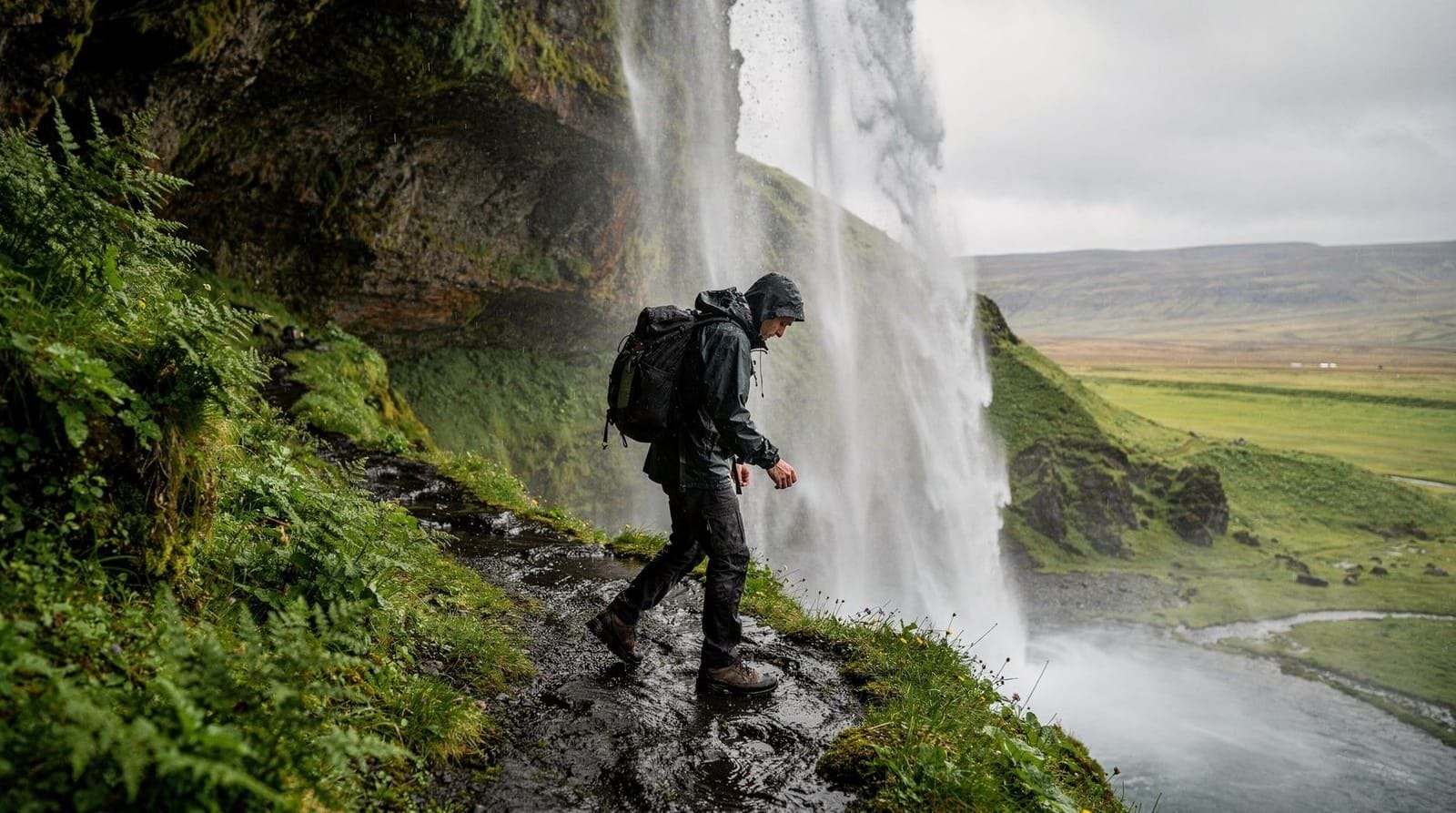
There is no walk-behind path like Seljalandsfoss — the cliff is solid basalt with no cave. The experience here is frontal: you stand 30–60 m from the base and absorb the scale.
The 527-step staircase
The wooden staircase on the eastern bank climbs from ground level to the top of the falls. The 527 steps are counted in Icelandic tourist literature — the exact number varies slightly depending on who’s counting — but it’s a genuine climb of about 80 vertical metres.
Fitness level: Moderate. Anyone in reasonable health can do it. Not recommended with small children who cannot manage stairs independently. The steps are sometimes wet and slippery; handrails are present throughout.
Time to climb: 10–15 minutes at a steady pace. Allow more for photographs.
What you get at the top: A birds-eye view looking straight down into the falls — impressive but not as dramatic as you might expect, because you’re directly above the flow. The more interesting reward is the beginning of the Skógá river trail.
The riverside trail above the falls
From the top of the staircase, a maintained trail continues east along the south bank of the Skógá river. For the first 3–4 km, the walking is easy on well-worn paths through moss and lava, passing a cascade roughly every 500 m. These smaller falls (collectively sometimes called the “26 waterfalls of Skógar”) receive almost none of the visitors who come to the main falls.
After about 5 km, the terrain becomes more demanding — you enter highland heathland before the trail reaches Fimmvörðuháls pass at approximately 1,000 m altitude. The full Fimmvörðuháls trail (typically done Skógar → Þórsmörk, or as part of the Laugavegur trek) is a full-day hike requiring proper equipment, mountain weather clothing, and experience.
For casual visitors: a 1–2 hour walk along the first 3–4 km of riverside trail is free, beautiful, and completely uncrowded. You only need comfortable walking shoes (waterproof recommended) and a snack.
Parking and facilities
Parking: Free car park on the east side of the falls, with clear signage off Route 1. The car park is large (100+ spaces) and rarely fills in spring or autumn; in July and August it fills by 9:30–10 am on peak days. Overflow parking exists on the verge of the access road.
Camping: Skógar Campsite is literally 100 m from the falls. Camping here costs approximately 2,000 ISK (~€13) per person per night (2025 rates, check with the campsite directly). Staying here gets you solo access to the falls at 6–7 am before day-trippers arrive — one of the best strategies in Icelandic tourism.
Café and museum: The Skógar Folk Museum (Skógasafn) is 200 m from the falls. The museum is worth 45–60 minutes if you have time — it’s a genuine collection of turf houses and historical artefacts, not a tourist trap. Admission around 2,200 ISK. The café at the museum serves soup and sandwiches.
Toilets: At the campsite/museum complex. Free to use.
Crowds and timing
Skógafoss is on every south coast day tour from Reykjavík and receives between 1,000 and 2,000 visitors on peak summer days. The falls area between 9 am and 5 pm in July is always busy.
Best strategies:
- Camping at Skógar: Instant pre-8 am access before anyone else arrives
- Early morning day trip: Leave Reykjavík before 6:30 am to arrive at Skógafoss by 8:30 am
- Evening in summer: The falls are light until midnight in June; 8–11 pm is relatively quiet
- Shoulder season: May and September have dramatically fewer visitors, still excellent weather
Small-group south coast tours stop longer at each site and often arrive before the large buses. A maximum of 16 passengers means you’re not competing with 40 others for the same photograph. For Skógafoss specifically, small-group timing often means arriving before the 10 am crowd peak.
Photography guide for Skógafoss
Double rainbow: Reliably occurs when the sun is low in the southeastern sky — early morning in summer (6–9 am), late afternoon in spring and autumn. You need a sunny or partly-cloudy day; pure overcast eliminates the rainbow entirely. The rainbow appears in the mist at the base of the falls. Position yourself 30–50 m from the base.
Classic frontal composition: Wide angle (16–24 mm) from 60–80 m back, including the full height of the falls and some of the basalt cliff walls on either side. In summer, the green cliff faces add colour contrast.
Top-down from staircase platform: Use a standard zoom (35–50 mm) looking straight down. The curtain appears narrower from above than from ground level.
Long exposure: Possible from the base with a tripod on the stone area. Wind and vibration from the falls affect sharp exposures — use a remote shutter release and shoot at ISO 100, f/11, approximately 1 second for soft-water effect. See the long-exposure waterfall photography guide.
For the riverside trail: Smaller falls on a clear morning are excellent in golden hour light. These don’t require any specialised technique.
Winter visit
Skógafoss is one of Iceland’s best winter waterfall visits. The falls continue flowing (the Skógá never freezes completely because of glacial input and flow volume), while ice formations develop on the surrounding basalt cliffs. In cold winters, ice columns form on the cliff faces alongside the falls, creating a dramatic contrast with the white water.
The staircase remains open in winter if conditions allow, but can be icy. Crampons or microspikes are useful. The riverside trail above is normally accessible in winter, though the higher sections toward Fimmvörðuháls require full winter mountaineering equipment and should not be attempted casually.
Driving to Skógafoss in winter: Route 1 is maintained year-round and a 2WD with winter tyres handles it in normal conditions. See the driving in Iceland guide for winter road information.
Combining Skógafoss with the south coast
The classic sequence from Reykjavík east:
- Seljalandsfoss (120 km from Reykjavík) — 1.5 hours
- Skógafoss (30 km east of Seljalandsfoss) — 1.5–2 hours
- Reynisfjara black sand beach (25 km east) — 1 hour
- Optional: Dyrhólaey (5 km off route) — 45 minutes
Full south coast tours that include both waterfalls, Reynisfjara, and a glacier stop are a good value if you’re short on time. The Sólheimajökull glacier walk adds a compelling geological contrast to the water-focused morning.
See the complete south coast day trip guide for full timing and logistics, and the south coast 3-days itinerary if you want to slow down and add Jökulsárlón glacier lagoon.
Frequently asked questions about Skógafoss
Are the 527 steps difficult?
For a healthy adult, no — it’s equivalent to climbing about 7 floors in a building. There are handrails throughout. For older visitors or those with knee problems, the climb is manageable but should be taken slowly. The descent is harder on the knees than the ascent.
Can you swim near Skógafoss?
The pool at the base is not safe for swimming — the current from the falls creates unpredictable subsurface turbulence, and the water temperature is around 5°C. The river above the falls in the first kilometre of the trail has calmer stretches that some people wade in, but water temperature is still very cold.
Is there a restaurant at Skógafoss?
The Skógar Folk Museum café serves basic hot food. There is also a small shop. For a proper meal, the nearest restaurant-quality option is in the village of Vík, about 30 km east on Route 1.
Does Skógafoss appear in movies or TV shows?
Skógafoss appeared in Thor: The Dark World (2013) and has featured in multiple tourism campaigns. The appearance in popular media contributes to the high visitor numbers it now receives.
Can I reach Skógafoss without a car?
Strætó operates bus route 51 from Reykjavík BSÍ terminal to Skógar, stopping at the falls. The journey takes about 3 hours and costs around 5,000 ISK (~€33). Service is more frequent in summer. This is feasible for a day trip if you’re willing to work around bus times. See the public transport in Iceland guide.
How does Skógafoss compare to Seljalandsfoss?
They’re 30 km apart and complement each other rather than duplicate. Seljalandsfoss is unique for the walk-behind experience; Skógafoss is larger and more visually powerful from the front, with the additional bonus of the staircase and hiking trail. Most visitors see both in a single day.
Is Skógafoss worth visiting in bad weather?
Yes, though the experience changes. In heavy rain or strong wind, skip the staircase if the steps look slick and the handrail is your only real safety margin, and expect the mist to blow sideways and soak you well before you reach the base. The waterfall itself is still spectacular in a storm — arguably more dramatic — you just won’t get the rainbow, and photography becomes a matter of protecting your lens rather than composing the shot.
How does Skógafoss compare to Gullfoss?
Gullfoss is tiered and enormous in volume, set inland on the Golden Circle; Skógafoss is a single vertical drop on the south coast with a far more reliable rainbow and the added staircase-and-trail dimension. Neither replaces the other — most itineraries that combine the Golden Circle with the south coast see both within a couple of days.
The Skógar Folk Museum — worth your time
The Skógasafn (Skógar Folk Museum) is 200 m from the falls. This is not a tourist trap — it is a genuine open-air museum of Icelandic rural life. The founder, Þórður Tómasson, spent over 60 years assembling it and donated everything to public ownership.
The museum includes:
- Reconstructed 19th-century turf farmhouses (the traditional Icelandic building form — walls and roof made of peat and grass)
- A fisherman’s hut
- A church moved from elsewhere on the peninsula
- Extensive indoor collection of farm tools, clothing, and household items from the 18th–20th centuries
Admission: approximately 2,200 ISK (~€15) per adult (2025). Allow 45–60 minutes. The context it provides for understanding how Iceland’s rural population actually lived makes the waterfall visit feel more grounded.
The Fimmvörðuháls hike starting from Skógafoss
For visitors with a full day and moderate fitness, the Fimmvörðuháls hike starts at the top of the Skógafoss staircase. This trail crosses the pass between Eyjafjallajökull and Mýrdalsjökull glaciers before descending into Þórsmörk valley on the other side.
The full traverse (Skógar to Þórsmörk, approximately 25 km) is a one-way trail requiring bus transport back from Þórsmörk. It can be done in a single long day (8–10 hours, early start required) or as a two-day trip with camping at the mountain hut near the summit.
The first 3–4 km above Skógafoss is accessible without full hiking equipment and passes numerous smaller waterfalls — an excellent 1.5–2 hour exploration that most Skógafoss visitors skip entirely.
Why the rainbow is reliable at Skógafoss
The double rainbow phenomenon is consistent enough at Skógafoss that many photographers specifically plan around it. The physics:
The falls produce a dense, continuous mist column. When sunlight enters this mist at the right angle, it refracts through individual water droplets to create the spectrum. The specific geometry at Skógafoss — the falls face south, the mist spreads southeast — means morning sunlight (coming from the east/southeast) hits the mist column at close to the ideal 42-degree angle for rainbow formation.
The double rainbow (primary at ~42°, secondary at ~51°) occurs when light internally reflects twice inside droplets. The secondary rainbow is dimmer and has reversed colour order (red on the inside). Both are visible at Skógafoss when conditions are right.
Requirements: direct sunshine, no cloud blocking the sun, mist rising from the falls. Overcast days produce no rainbow. Early morning (before 10 am) in summer gives the right sun angle reliably.
What “25,000 ISK for a campsite” means
The campsite directly adjacent to Skógafoss is owned and operated by the local guesthouses. In 2025, camping rates were approximately 2,000 ISK (~€13) per person per night — normal Icelandic campsite pricing. Some reviews complain about costs, but this is standard.
What the campsite provides in return for the cost: immediate pre-dawn access to Skógafoss, hot showers in the shared facilities, and being within walking distance of the museum. Compared to a budget guesthouse (which starts at 15,000 ISK / ~€100 per room), camping here is cheap.
The campsite fills quickly in July–August. Book directly through the Skógar campsite website if you want to guarantee a pitch.
Getting the most from a Skógafoss visit if you’re on a tour
Most south coast day tours from Reykjavík stop at Skógafoss for 45–60 minutes. In that time you can realistically: view the falls from the base, climb the staircase, stand at the top platform, and walk 200–300 m along the riverbank.
To get the most from this limited time:
- Prioritise the staircase if you’ve seen Seljalandsfoss already (the top view is the distinctive element here)
- Walk upstream along the trail for 10 minutes — you’ll immediately separate yourself from the crowd
- For photography: the base frontal view is the one to take quickly; the upstream riverside requires a walking commitment
If the tour gives you more than 60 minutes, use the extra time at the museum café for coffee and to walk further up the riverside trail. The museum itself requires more time than most tours allow.
Skógafoss pricing and costs breakdown
Being specific about what Skógafoss actually costs:
The falls: Free to view. No entrance fee.
Parking: Free. The large car park has no charge as of 2026 (unlike Seljalandsfoss which charges ~900 ISK).
Museum admission: 2,200 ISK (~€15) per adult. Optional but worthwhile for the historical context.
Campsite: Approximately 2,000 ISK (~€13) per person per night. Iceland standard pricing.
Food: Museum café serves soup (1,800–2,500 ISK / ~€12–17) and sandwiches. No other café directly at the falls. Next services: petrol station at the Route 1 junction, 2 km west.
Tour costs: South coast day tours that include Skógafoss range from 10,000–22,000 ISK (~€65–145) per adult depending on group size and operator. Budget tours use large buses; premium tours use minibuses of 12–19.
The total cost of a self-drive visit to Skógafoss: parking (free) + fuel (already budgeted in your south coast day) + optionally museum (2,200 ISK). It is genuinely one of Iceland’s most cost-efficient major natural sites.
How Skógafoss fits into multi-day south coast trips
The south coast 3-days itinerary uses Skógar as an optional overnight base on night 1, allowing the Fimmvörðuháls trail above the falls early on day 2. This is a particularly good structure for hikers.
For the south coast glaciers 4-days itinerary, day 1 covers Seljalandsfoss and Skógafoss, staying overnight at Vík. This puts Skógafoss as a late-morning stop with enough time for the staircase and river trail before continuing east.
For the Ring Road driver doing the full circuit, Skógafoss is day 1 or 2 heading east, and it should not be rushed — this is one of the top 5 sites on the full Ring Road route regardless of direction.
Skógafoss and the saga landscape
The saga of Þrasi Þórólfsson records that he buried his treasure in a chest inside or near Skógafoss. After his death, his descendants could supposedly see a ring at the front of the chest through the falls, but each time they tried to retrieve it, the chest fell deeper into the rock. The saga sites the location at the base of the falls.
Whether literally true or not, the story says something about the relationship between these falls and the people who lived alongside them. For centuries, the falls were not a tourist attraction but a landmark of the landscape — the boundary between coastal farmland and the highland passes above. The Fimmvörðuháls track above the falls was a practical route between the south coast and the interior, used for centuries by traders, farmers, and travellers.
Standing at Skógafoss now, looking up at the falls and the beginning of the Fimmvörðuháls pass above, the practical and the mythological layers of the landscape are both present if you’re aware of them.
Accessibility at Skógafoss
The base viewing area is reachable on a flat, paved path from the car park — wheelchair users and visitors with limited mobility can get a full frontal view of the falls without climbing a single step. This is one of the more accessible major sites on the south coast precisely because the approach is flat and the parking is close.
The 527-step staircase itself has no accessible alternative; there is no lift or ramp to the top platform. If the staircase isn’t manageable, you are not missing the most dramatic angle — the frontal base view is widely considered the better photograph anyway, and it’s the one everyone gets regardless of mobility.
Surfaces near the base can be uneven gravel and occasionally wet from mist, so sturdy footwear helps regardless of ability level. There are no accessible toilets directly at the falls; the nearest are at the campsite/museum complex, about 200 m away on a similarly flat path.
Skógafoss compared to the other south coast waterfalls
| Waterfall | Height | Signature feature | Time needed |
|---|---|---|---|
| Skógafoss | 60 m | Reliable double rainbow, 527-step staircase | 1.5–2 hours |
| Seljalandsfoss | 65 m | Walk-behind cave path | 45–60 minutes |
| Gullfoss | 32 m (two tiers) | Huge water volume, canyon setting | 45–60 minutes |
| Dettifoss | 44 m | Europe’s most powerful waterfall by flow | 1–1.5 hours |
Of the south coast pair, Skógafoss rewards a longer stop far more than Seljalandsfoss does — the staircase and riverside trail give you an hour of genuine activity that Seljalandsfoss’s flatter site simply doesn’t offer. If your schedule only allows a quick photo stop at each, prioritise the base view and staircase here over the extended trail.
When crowds thin out season by season
Skógafoss crowd levels track the wider south coast tourist season closely, but the swing between peak and quiet is larger here than at more sheltered sites because the car park and staircase are both exposed and finite.
June–August: Consistently busy 9 am–5 pm; the car park fills by mid-morning on clear days. Midnight sun means an 8–11 pm visit is genuinely viable and often near-empty.
May and September: The best overall trade-off — daylight hours are still generous, temperatures are mild, and visitor numbers drop by roughly half compared to July.
October–April: Far fewer visitors, but daylight is short (as little as 4–5 hours around the winter solstice), so plan your whole south coast day around reaching Skógafoss while there’s still light, and check the driving in Iceland guide for winter road conditions before setting out.
Top experiences
Bookable activities with verified prices and instant confirmation on GetYourGuide.
Top experiences
Best-rated activities across GetYourGuide and Viator.

Ice Cave by Katla Volcano Super Jeep Tour from Vik
- Viator

Puffin and Volcano Tour with Ebbi
- Viator

Dynjandi Waterfall & Farm Visit Tour from Isafjordur Port
- Viator

3,5-Hour Sightseeing Tour To Dynjandi Waterfall
- Viator

Volcano ATV Tour
- Viator

Lake Myvatn Day Tour and Godafoss Waterfall for Cruise Ships from Akureyri Port
- Viator