Iceland on a shoestring: two weeks for under €1,800
The myth and the reality
Iceland’s reputation as an expensive destination is not entirely wrong. A hotel room in Reykjavik in July costs around ISK 25,000–45,000 (€160–€290) per night. A restaurant meal in the city centre runs ISK 3,500–5,500 (€22–€35) per main course. A cocktail at a bar on Laugavegur costs ISK 2,200–2,800 (€14–€18). If you travel the way you would travel in a normal expensive European city — hotel room, restaurant meals three times a day, taxis — Iceland will be punishing.
But there is another way to travel here, and it doesn’t require sacrificing the experiences that make Iceland worth visiting. What it requires is cooking your own food, staying in hostels or camping, driving rather than paying for guided day tours, and front-loading the paid attractions rather than doing them all impulsively.
These figures are from a trip I took in February 2020, just before the pandemic disrupted everything. Prices in Iceland have risen since then — the ISK/EUR rate shifted, and post-pandemic accommodation costs are generally higher. Adjust upward by 15–20% for current conditions, but the structural approach remains valid.
| Trip length | 14 days, solo, February |
| Total spend | Around €1,038 solo (adjust +15–20% for current prices) |
| Biggest lever | Cooking own food instead of eating out |
| Vehicle | Small 2WD car, around €278 for 14 days incl. insurance |
| Season trade-off | Cheaper flights and rooms, but limited camping options |
The big three: getting there, getting around, sleeping
Flights: I flew from Berlin Schönefeld to Keflavík with Wizz Air for €108 return, booked eight weeks out. Icelandair and easyJet regularly offer return flights from London for £120–180 when booked early. The flight is three hours from most of northern Europe. The key is booking when sales appear, not when you’ve decided to go.
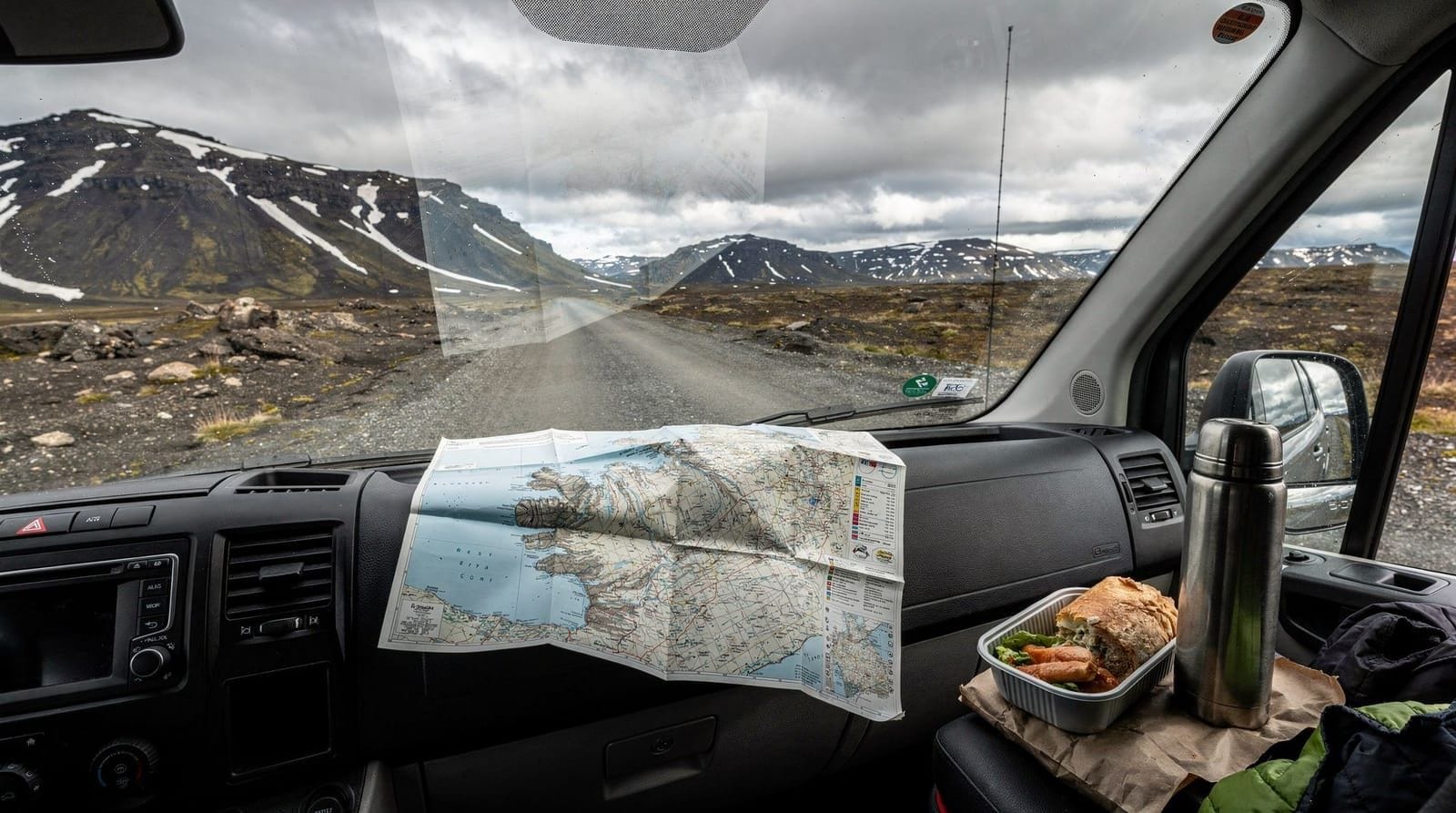
Car rental: This was the most important decision. A small 2WD car from SADcars (a budget Icelandic car rental company that uses older vehicles) cost me ISK 38,000 (€240) for 14 days, including basic liability insurance. I added windscreen protection for ISK 6,000 (€38) — essential for the south coast gravel roads. Total: €278 for two weeks of unlimited mobility.
Without a car, you’re dependent on buses (slow, infrequent, expensive) or shared tours. A car makes everything else cheaper because you can drive to attractions rather than paying to be driven.
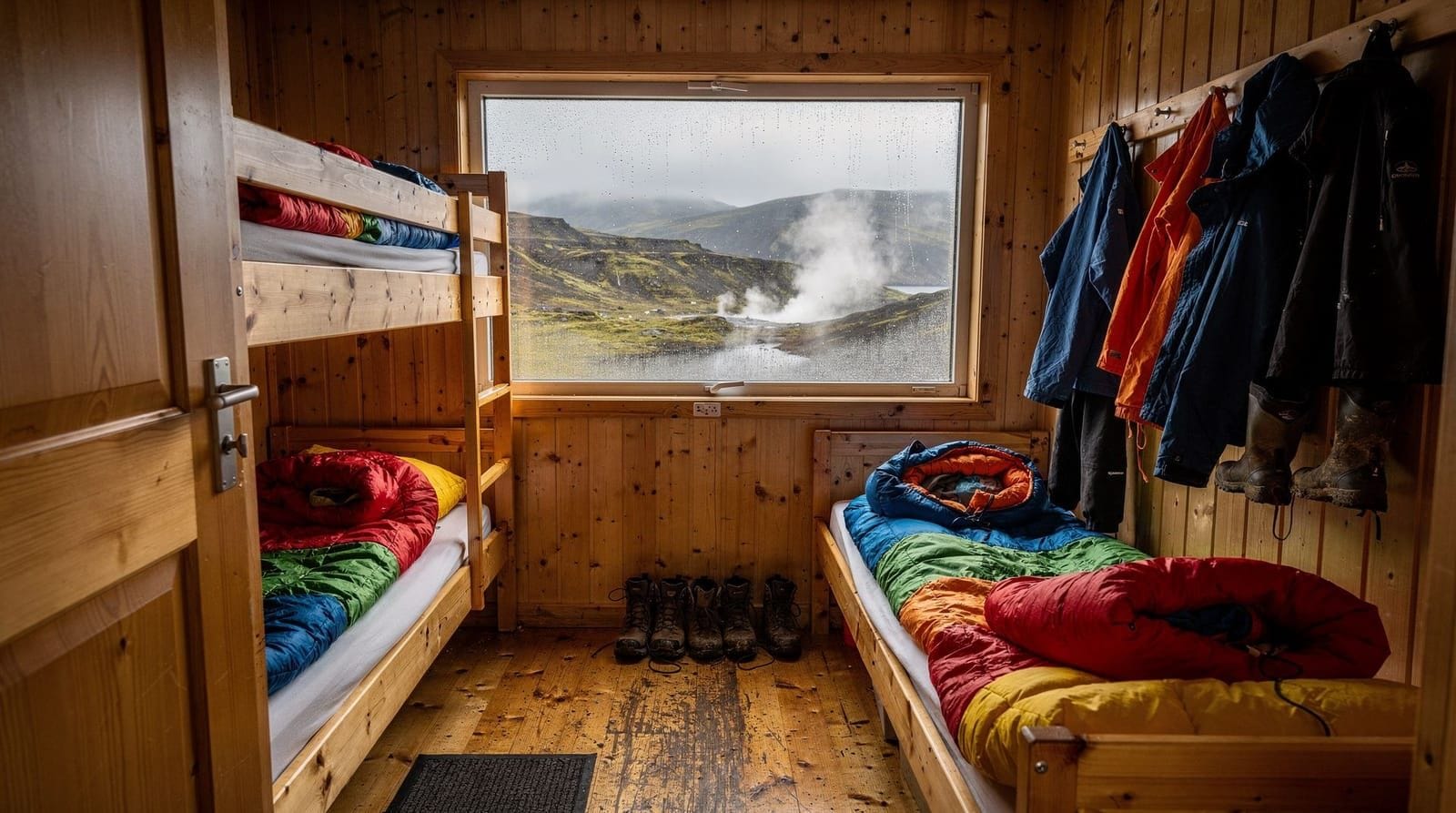
Accommodation: I split the two weeks between guesthouses, camping, and one hostel dorm in Reykjavik. The camping was the key to keeping costs down. In February, many of Iceland’s summer campsites are closed, but several remain open year-round — Þórsmörk, the Landmannalaugar hut area, and a handful of sites along the south coast. I paid between ISK 1,500–2,200 per night for camping (€10–14), and stayed in a hostel dorm in Reykjavik (ISK 5,200/€33 per night at Kex Hostel on Skúlagata) for three nights. Two nights in a budget guesthouse near Vík cost ISK 14,000 total (€88). Full accommodation total for 14 nights: approximately €230.
Food: the single most important lever
Food is where most travellers overspend in Iceland without realising it. Restaurant meals are genuinely expensive and not necessarily better than what you can cook yourself.
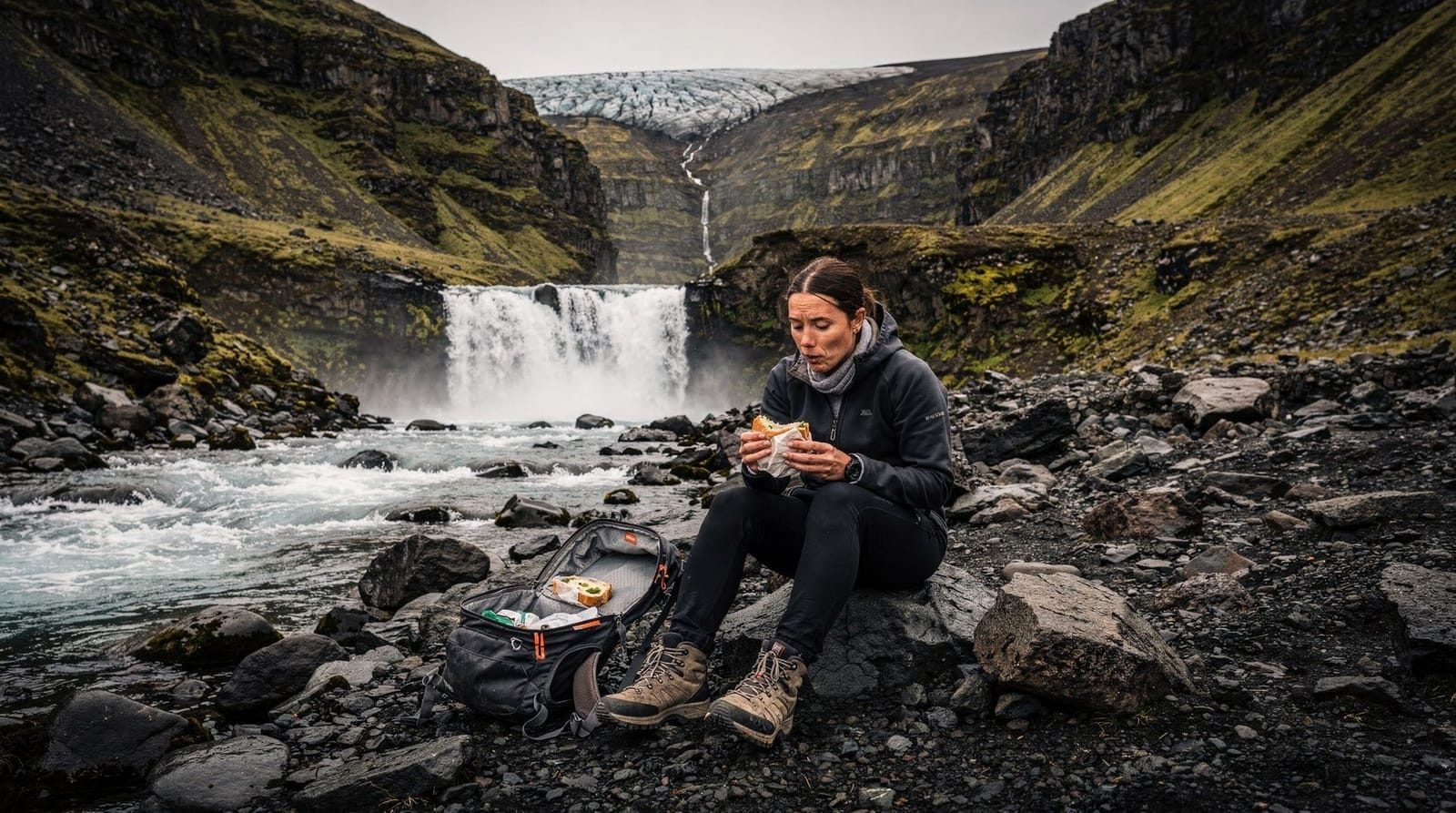
I shopped at Bónus supermarkets (the yellow sign with the pig) — Iceland’s discount chain, significantly cheaper than Krona or 10-11. A standard weekly shop at Bónus for one person: oats, eggs, pasta, canned fish (Íslenskar síldarbitar in tomato sauce, ISK 250 a tin), bread, cheese, skyr, apples, instant coffee. Around ISK 6,500–7,000 per week (€40–45). I cooked on a single-burner camp stove.
I did eat out three times: langoustine soup at Pakkhús in Höfn (ISK 3,500/€22, worth every króna), a lamb soup at Fosshotel’s bar in Núpar (ISK 2,200/€14 at lunch), and a hot dog at Bæjarins Beztu Pylsur in Reykjavik (ISK 480/€3). That was it for restaurant meals across two weeks.
The Bæjarins Beztu hot dog stand on Tryggvagata in Reykjavik is genuinely one of the better quick meals in Iceland. One dog costs ISK 480 with the classic toppings (ketchup, sweet mustard, remoulade, raw and fried onion). It is not a tourist trap — it’s what Reykjavik residents eat for lunch.
Food total for two weeks: approximately €170 (groceries + three restaurant meals).
Free and low-cost activities
The single most important thing to understand about Iceland’s attractions is that most of the genuinely extraordinary ones are free.
Free: Seljalandsfoss waterfall (ISK 1,000 parking fee, but the fall itself costs nothing), Skógafoss, Goðafoss, Reynisfjara black sand beach, Dyrhólaey arch, Jökulsárlón glacier lagoon shore views, Diamond Beach, all national park hiking, Þingvellir, the Reykjanes Peninsula lava fields and fumaroles.
Low cost: Mývatn Nature Baths (ISK 4,500/€28 — much cheaper than Blue Lagoon), Kerið volcanic crater (ISK 700/€4), public swimming pools in Reykjavik (ISK 1,050/€7 for Laugardalslaug).
Skip if budget is tight: Blue Lagoon (ISK 9,000–15,000/€56–95 depending on package), guided glacier hikes (ISK 9,000–18,000/€56–113 per person), whale watching (ISK 7,500–11,000/€47–69). These are all excellent experiences, but they’re not necessary to have a profound trip.
I spent one day doing the Golden Circle route independently — Þingvellir, Geysir/Strokkur, Gullfoss — using my rental car. Total cost: petrol (already included in the driving budget) and the ISK 700 Kerið crater admission. The geysir area is free. Gullfoss is free.
If you don’t have a car, a day tour to the Golden Circle is one of the few guided trips that genuinely justifies the cost — you cover three major sites and the logistics are handled. Prices start around ISK 8,000–9,000 (€50–57).The full budget breakdown
Here’s the honest running total for 14 days, solo traveller:
- Flights (Berlin-Keflavík return): €108
- Car rental + insurance: €278
- Fuel (2,800 km total driving): €145
- Accommodation (14 nights): €230
- Food and drink: €170
- Paid attractions (Mývatn baths, Kerið, one museum in Reykjavik): €48
- Ferries/parking: €22
- Miscellaneous: €37
Total: €1,038
Couple travelling together can split the car and most accommodation costs. For two people, total comes down to around €700–750 each depending on the level of cooking vs eating out. The figure of €1,800 in the headline is a comfortable two-person estimate that allows for slightly nicer accommodation and a couple more restaurant meals.
What I’d change on a repeat trip
Looking back, the one place I’d loosen the budget slightly is on a single mid-trip splurge — one proper restaurant dinner and one paid activity, chosen deliberately rather than skipped by default. Denying every non-essential purchase for two full weeks produces a specific kind of fatigue that a single planned treat, budgeted for in advance, removes without derailing the overall number. I’d also buy the tourist SIM at the airport rather than relying on guesthouse WiFi, which was patchier than expected in smaller towns — a small cost with an outsized effect on being able to check road and weather conditions.
What I didn’t do that most people do
I didn’t go to the Blue Lagoon. I didn’t book a glacier hike. I didn’t do any whale watching. These are all defensible choices from a budget perspective, and I don’t regret them. The glacier at Skaftafell can be admired up close from shore for free, and while hiking on it requires equipment and a guide, the visual experience is significant without that. The Secret Lagoon in Flúðir is a good substitute for the Blue Lagoon at ISK 3,500 (€22) versus ISK 9,000–15,000.
For a thorough breakdown of where Iceland’s costs actually land, the Iceland on a budget guide has current figures and the supermarkets guide lists prices by store. The free things to do guide is also genuinely comprehensive.
Getting around without a car
A car is the most efficient tool for budget Iceland, but not everyone can or wants to drive. The alternatives:
Strætó public buses: Iceland has a reasonable network of public buses connecting Reykjavik to larger towns and along the ring road. The Bus Passport (Strætó’s multi-day option) costs ISK 21,900 (€138) for a complete ring road circuit. The catch: buses are infrequent (some routes run only once daily), don’t serve smaller destinations, and won’t take you down roads toward waterfalls or remote sites. Budget considerable time for connections.
Highland buses: Reykjavik Excursions runs seasonal highland buses to Landmannalaugar, Þórsmörk, and the Kjölur route. These are genuinely useful for reaching areas that buses otherwise don’t serve. Prices range from ISK 6,000–14,000 (€38–88) one-way depending on destination.
Organised day tours from Reykjavik: For specific sites (Golden Circle, south coast, Snæfellsnes), organised day tours from Reykjavik can be surprisingly cost-effective compared to renting a car for a day. Prices start around ISK 8,500 (€53) per person for the Golden Circle. For two people, a car rental plus fuel is cheaper; for a solo traveller, the tour is often close to break-even or cheaper.
Hitchhiking: Practical in summer, less so in winter. Iceland has an active hitchhiking culture, particularly on the main ring road between tourist sites. A thumb and patience will get you between most major south coast stops from June to August.
Comparing the car-free options
| Option | Rough cost | Best for |
|---|---|---|
| Strætó public buses | ISK 21,900 (full ring road pass) | Patient travellers sticking to main towns |
| Highland buses | ISK 6,000–14,000 one-way | Reaching Landmannalaugar, Þórsmörk without a 4x4 |
| Organised day tours | From ISK 8,500/day | Solo travellers where a car rental doesn’t beat the tour price |
| Hitchhiking | Free | Summer only, flexible schedules, more time to spare |
| Small 2WD rental (for comparison) | ISK 38,000 total for 14 days | Anyone valuing flexibility over the above trade-offs |
Rented on your own, a car is almost always cheaper than the equivalent bus and tour combination once you’re travelling more than about five days, which is part of why we rented one even on a tight budget.
Camping: the honest version
Iceland’s camping network is genuine and well-maintained, but February is not ideal camping season. When I did this trip in February 2020, I camped primarily at year-round sites that had heated toilet blocks — essential when temperatures drop to -5°C. Wild camping is technically legal in Iceland (under Iceland’s Outdoor Access Act) but in winter the practicalities of finding a suitable sheltered site, managing condensation in a tent, and dealing with potential storms make it a challenge for anyone without serious cold-weather camping experience.
The budget wins from camping are real and significant in summer and shoulder season. In winter, the compromise is finding budget guesthouses in smaller towns (often ISK 10,000–14,000/€63–88 per room in February) rather than attempting to camp in conditions that require real expedition-level equipment.
Iceland is not cheap. But it is possible to do it without spending the amount that travel blogs often cite as minimum. The key is treating it like a camping/road trip holiday rather than a city-break hotel holiday — and accepting that cooking pasta on a camp stove in a gravel pullout near Vík, with the Atlantic visible through the windscreen, is actually quite a good dinner.