Puffin season in the Westfjords
What nobody tells you about the Westfjords in June
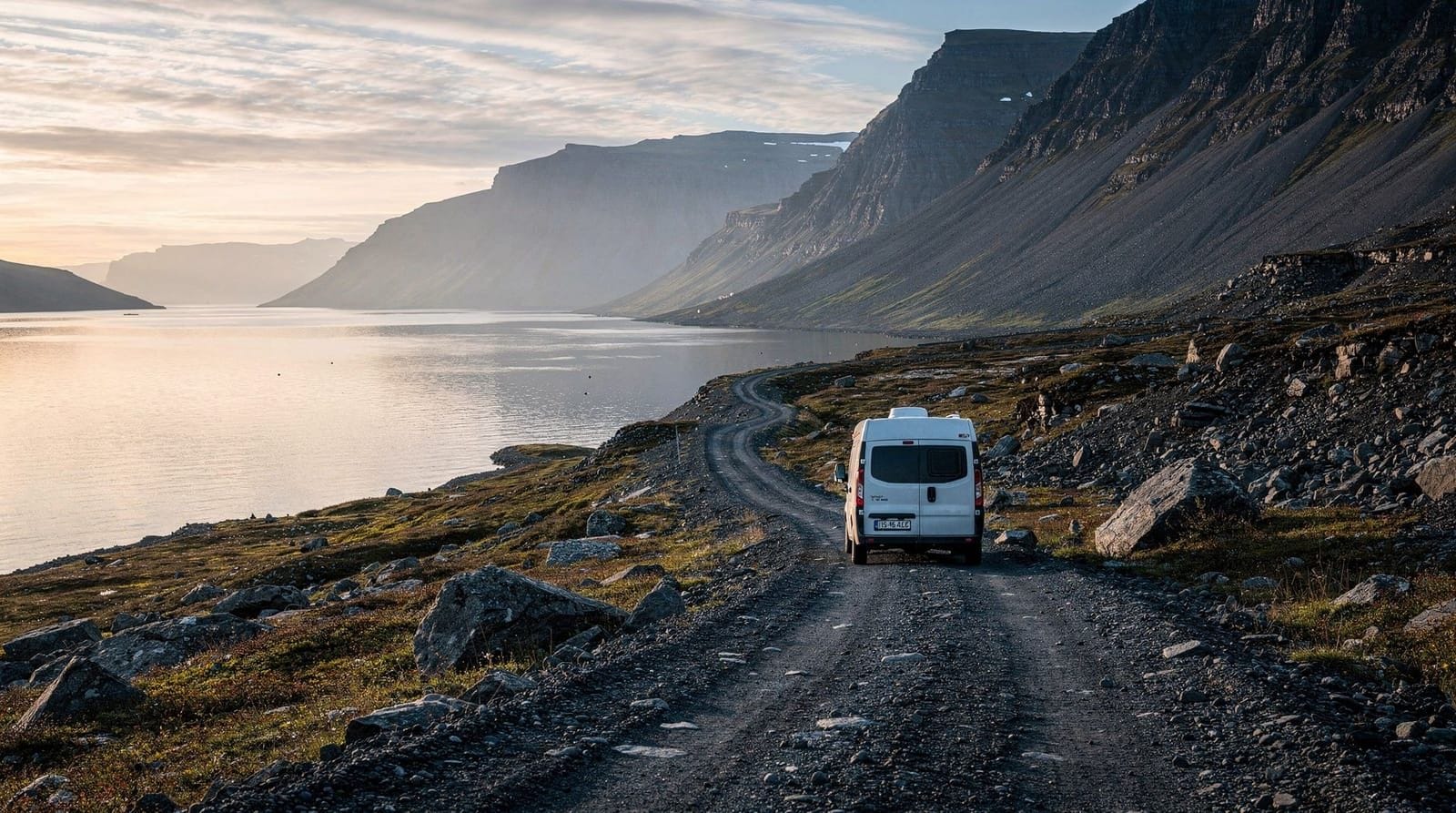
We drove the Westfjords in the second week of June, which turned out to be almost exactly the right moment. The puffins had arrived. The lupine was in full purple riot across every hillside. And the roads — those narrow, unpaved, stomach-dropping roads — were just passable enough in our small 4x4 that we did not have to turn back.
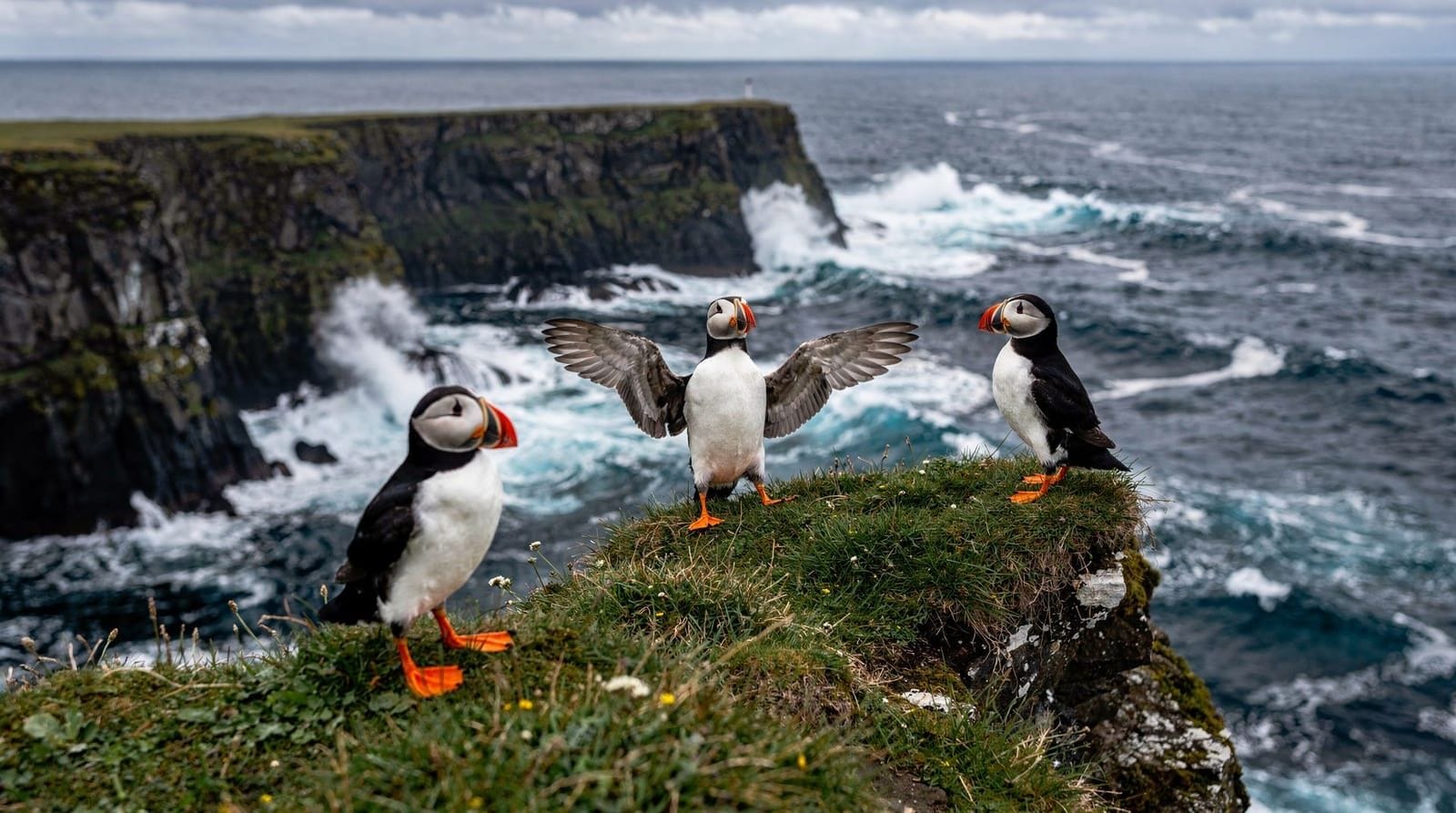
I will admit: before this trip, puffins felt like a poster cliché. Everyone said Iceland has puffins. Everyone posts the same shot of the bird with the beakful of sand eels. What nobody mentioned is that the Westfjords version of puffin-watching is an entirely different experience from the quick boat-out-and-back in the capital. In Reykjavík, you are a tourist observer on a vessel, hoping for a close pass. At Látrabjarg, the birds are nesting three feet from your boots and they could not care less about you.
It took us four hours to drive from Reykjavík to the ferry at Stykkishólmur, then a three-hour crossing to Brjánslækur, then two more hours of gravel to the western tip of the cliff. That is a full travel day. And it was completely worth it.
| Where | Látrabjarg, Westfjords westernmost peninsula |
| Best time | Early-mid June (quieter) or late July–early Aug (chick activity, busier) |
| Getting there | ~9-hour direct drive, or ferry via Stykkishólmur + gravel |
| Cost | Free to visit; accommodation ~6,000–9,000 ISK/person/night |
| Season window | Mid-April to mid-August |
Látrabjarg: the cliff at the end of the world
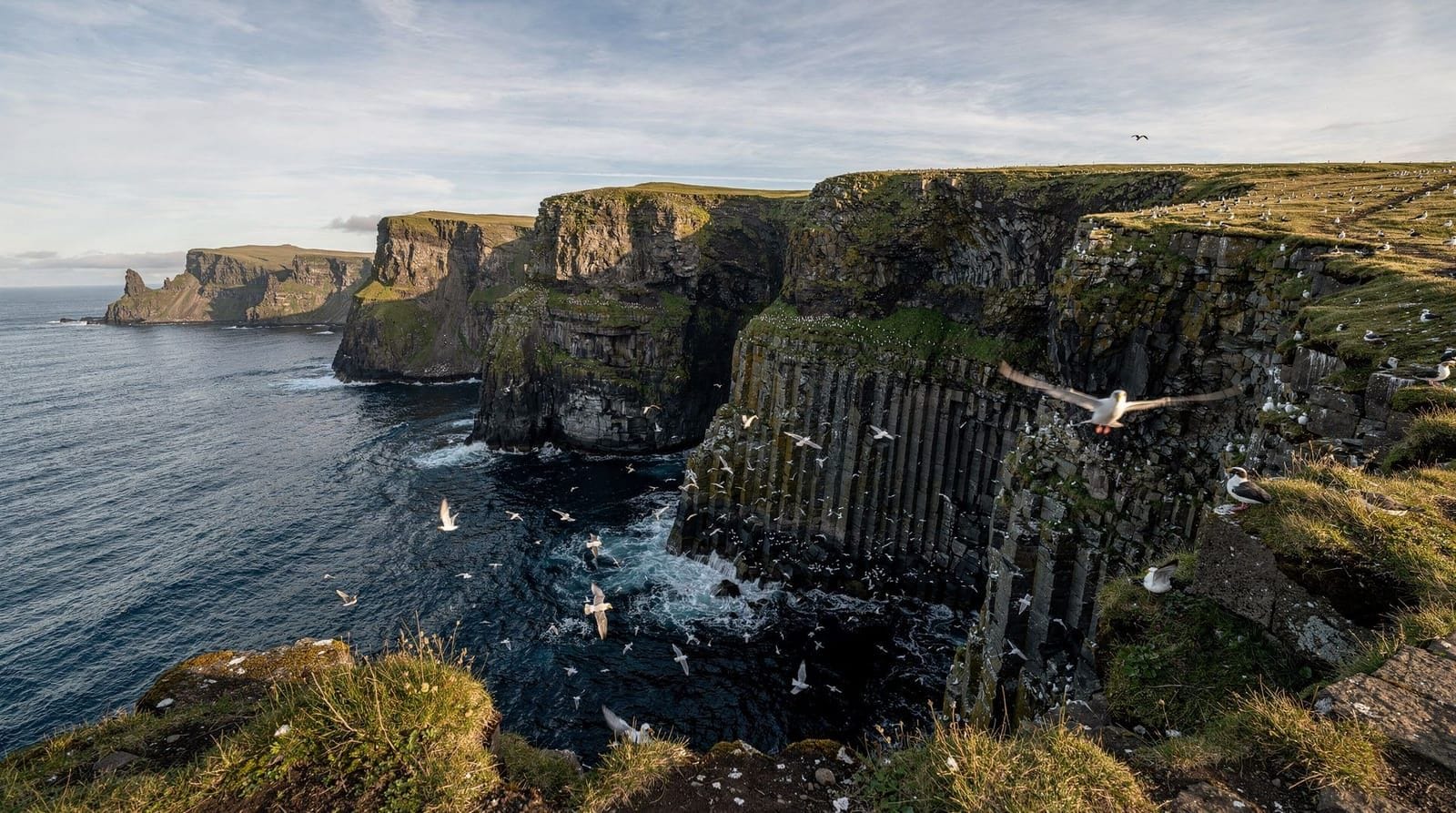
Látrabjarg stretches for about 14 kilometres along Iceland’s westernmost peninsula, and the cliffs drop anywhere from 40 to 440 metres straight into the Breiðafjörður bay. It is the largest seabird cliff in Europe and home, in summer, to millions of birds including razorbills, guillemots, northern gannets — and, yes, Atlantic puffins.
To get there from Reykjavík you have two main options: the long drive around (roughly 5-6 hours of very varied road quality via Route 60), or a combination of driving to Stykkishólmur on Snæfellsnes and taking the Baldur ferry across the bay to Brjánslækur, which cuts a significant chunk off the journey and adds a scenic crossing to boot. We did the ferry crossing on the way in and drove back the long way, which I would recommend: the ferry feels like a proper arrival to somewhere remote.
The Baldur ferry schedule in June runs once or twice daily depending on the day. Check the Seatours website for current times; the booking fills up in high season and the car deck space is limited. Foot passengers have more flexibility but arriving without a car at Brjánslækur with 90 kilometres of gravel road ahead is not practical.
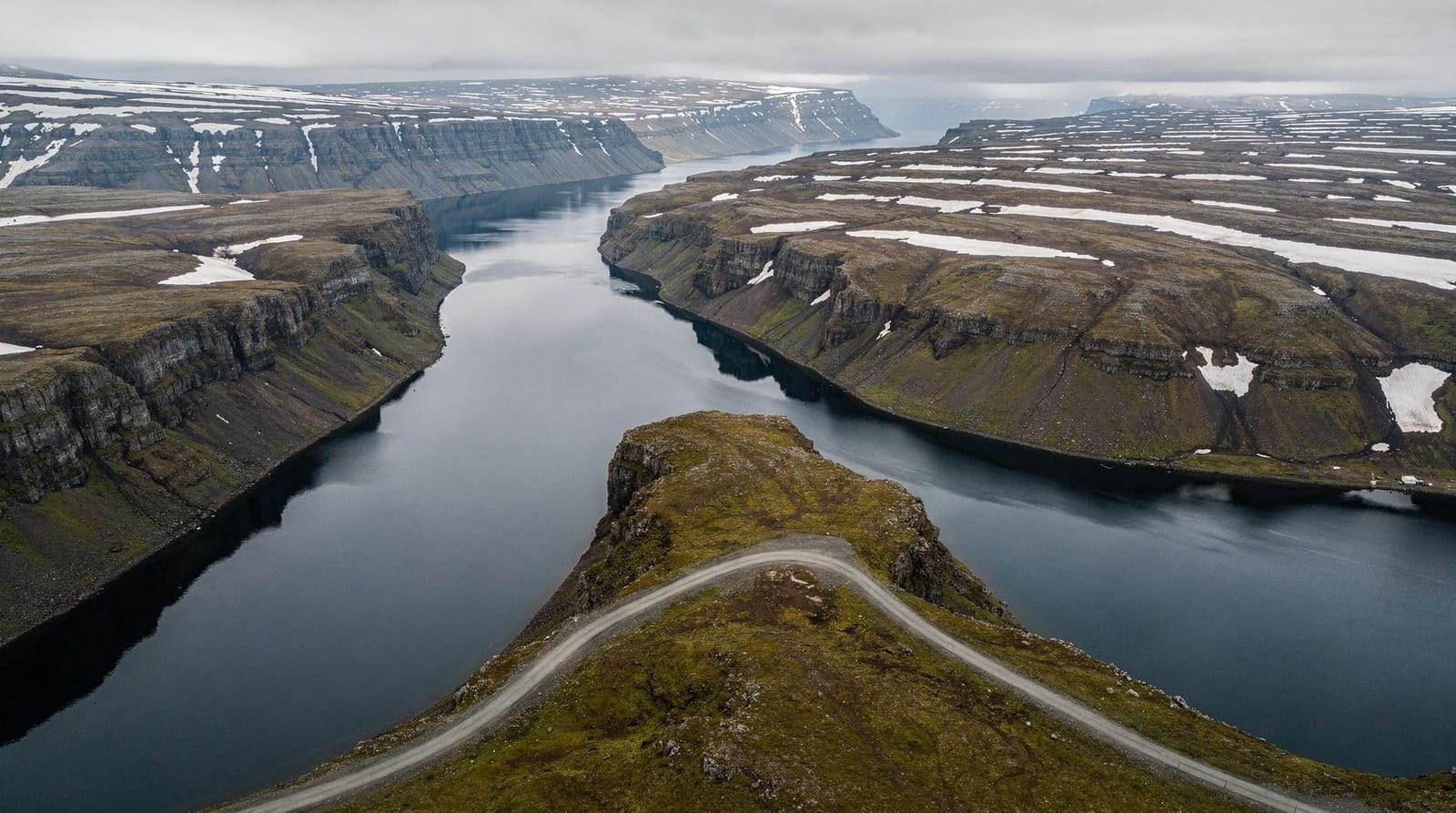
From Brjánslækur, Látrabjarg is roughly 90 kilometres of gravel road to the west. Budget two hours. The last section climbs through a mountain pass that looks impossible and then delivers you to a car park at the western tip of the cliff. From there it is a short walk to where the puffins nest.
Here is the key fact: puffins nest in burrows in the turf right at the cliff’s edge. They are not up on some distant rock face viewed through binoculars. They are on the ground, a few metres away from you, entirely unbothered by human presence. You crouch down. A puffin looks at you sideways with that absurd clown face. You take approximately 400 identical photographs. The bird does not care.
Timing: why June is the sweet spot
Atlantic puffins arrive at Icelandic colonies from mid-April and are reliably present until mid-August, when they abruptly disappear back to sea. By early June, they are nesting and very active — flying in and out of burrows, bringing fish, performing their comedic landing approach. The chicks have not yet hatched so the adults are focused on incubation, which means they stay close to the burrow.
July is the busiest time at Látrabjarg, partly because Icelandic school holidays push more domestic visitors west, and partly because the Baldur ferry schedule expands. June is quieter, the light is extraordinary (sunset after 11 p.m., sunrise before 4 a.m.), and the coastal scenery is at its greenest. The one downside is road conditions: some tracks in the far Westfjords are only passable from mid-June onwards after the snow melts. Always check road.is before leaving.
Late July and early August is when puffin chicks begin emerging and the adults become even more active — more flights, louder colonies. But August also brings the highest chance of crowds at Látrabjarg itself, and late August is when the puffins begin departing, so the window narrows fast.
Other Westfjords puffin spots
Látrabjarg gets the press, but it is not the only place. The sea stacks around Dynjandi waterfall host a smaller colony, and it is a pleasantly surreal experience to watch puffins flapping past a 100-metre cascade. The combination of the waterfall’s roar and the birds wheeling around the basalt stacks below is one of the stranger sensory experiences the Westfjords offer — and that is saying something.
The fjords around Ísafjörður also have scattered colonies on offshore islands; ask at the tourist office on the main street about guided boat trips that specifically target the colonies. These tend to run in July and early August when the season is fully active.
If you want the Westfjords properly organised — including Látrabjarg, Dynjandi, and a stay in Ísafjörður — a 3-day guided tour from Reykjavík gives you a knowledgeable driver for those gravel roads and removes the risk of misjudging road conditions.
Practical notes from the road
Getting to the Westfjords independently requires planning. The distances are long, the roads vary from paved to deeply rutted gravel, and fuel stations are sparse. Fill the tank whenever you see a petrol station — we went more than 120 kilometres once between stops, and that was the easy stretch. A jerry can is not excessive.
From Ísafjörður, there are domestic flights to Reykjavík that can save a full day of driving if your schedule is tight. In June the flight takes about 40 minutes and costs around 12,000-18,000 ISK one way depending on booking timing. We spent five nights in the Westfjords total — two in Ísafjörður at the Edinborg guesthouse (a converted 19th-century trading post, around 22,000 ISK per room per night in a double), one night in a farmhouse near Flókalundur (quieter, around 15,000 ISK including breakfast), and one near the Dynjandi waterfall at a small guesthouse that was serving plokkfiskur — a traditional Icelandic fish stew — for dinner. I ate two portions.
Budget around 6,000-9,000 ISK (roughly 40-65 EUR) per person per night for guesthouse accommodation in the Westfjords; farm stays are often cheaper and more atmospheric. Wild camping is legal but the wind is serious even in June, so a sturdy tent matters. We saw a tent that had been destroyed by overnight wind at the Brjánslækur car park — the poles were bent at angles that suggested a force well beyond what the manufacturer had tested against.
For the Westfjords 5-day itinerary we eventually built from this trip, Látrabjarg works best as a long day from Ísafjörður, returning in time for dinner — roughly 4 hours of driving for the round trip plus 2-3 hours at the cliffs themselves.
What surprised us most
The sheer approachability of the birds. I had expected ropes, barriers, minimum distances. There are none. The cliff path is unmarked and the turf is soft and undercut by burrows, so you have to watch your step — holes appear without warning and you do not want to put your foot through someone’s nest. But the experience of sitting quietly within arm’s reach of a nesting puffin while the Atlantic crashes hundreds of metres below is something genuinely not replicable at a wildlife park or a boat tour.
The second surprise was how many other bird species share the cliff. Razorbills in particular are numerous and impressive: sleek, black-and-white, upright on the rock face like tiny formal waiters. Guillemots crowd onto narrow ledges in dense, noisy colonies. A great skua buzzed us repeatedly, which is their way of saying get away from my territory. We got away.
The third surprise was how tired and happy we were at the end of each day. The Westfjords do that to people. There are very few obligations, the landscape demands your full attention, and by 9 p.m. you are eating fish soup and looking out over a fjord in light that refuses to dim. It is a specific kind of contentment.
Birdwatching beyond the puffins
Látrabjarg is a legitimate reason for serious birders to make a Westfjords trip. The cliff supports one of Europe’s largest razorbill colonies — estimated at several hundred thousand pairs — alongside substantial numbers of thick-billed murres, kittiwakes, and fulmars. The northern gannet colony, visible on the cliff sections to the east of the main puffin area, is enormous and surprisingly dramatic; gannets are large birds and their diving is visible from the cliff top.
If you are specifically interested in birdwatching in Iceland, the Westfjords rewards a dedicated approach. June and early July is the period of maximum activity — birds nesting, feeding, defending territory. Bring decent binoculars (8x42 is ideal for cliff seabirds where distance varies significantly) and allow time to simply sit and watch at the cliff edge rather than walking the full length.
The puffin-watching guide for Iceland covers all the main locations with seasonal timing in detail if you want to plan around the birds specifically. The Westman Islands comparison is worth reading even if you go to Látrabjarg; the Westman Islands colony is the world’s largest and the experience is different again.
Making the most of puffin season elsewhere
If the Westfjords feel too remote for your itinerary, puffins are also accessible from Reykjavík on short boat tours from the Old Harbour, and from the Westman Islands which host the largest puffin colony in the world (an estimated 8 million birds). The Westman Islands are reachable by ferry from Landeyjahöfn on the South Coast in about 35 minutes. Late July through August is the best window there, when the pufflings — the chicks — are leaving burrows at night and sometimes fly toward town lights instead of the sea. Local children help redirect them back to the ocean; it is a genuine community ritual that has been happening for generations.
In north Iceland, Húsavík offers puffin viewing on combined whale watching and seabird tours in Skjálfandi Bay. The combined trip is a good option if you are already in the north for the Diamond Circle and want to add wildlife to the itinerary without a separate journey.
A combined puffin and whale watching speedboat tour from Húsavík is the practical option if the Westfjords don’t fit your itinerary but you still want puffins and whales in the same outing.Puffin-watching options compared
If Látrabjarg’s travel time doesn’t fit your trip, here’s how the main alternatives stack up.
| Location | Colony size | Access | Best for |
|---|---|---|---|
| Látrabjarg (Westfjords) | Large, cliff-nesting | Long drive or ferry + gravel | Closest, most intimate ground-level views |
| Westman Islands | World’s largest (~8 million birds) | Ferry from Landeyjahöfn, ~35 min | Biggest colony, late Jul–Aug pufflings |
| Húsavík | Moderate | Combined boat tour from town | Easiest to combine with whale watching |
| Reykjavík old harbour | Smaller, boat-viewed only | Short boat tour from the capital | Least time commitment |
Two weeks that make or break the trip
If your travel dates are flexible, the single biggest lever is timing within the mid-April to mid-August window. Early June (our trip) means quieter roads, full nesting activity, and the extraordinary light, but the ferry and some tracks may only just have reopened after winter — always confirm at road.is before committing to a date. Late July into early August brings the pufflings and the most dramatic colony activity, but also the summer’s heaviest Westfjords traffic and a Baldur ferry that’s harder to book. There isn’t a wrong answer, only a trade-off between quiet roads and peak activity.
Weather is the other variable worth building slack into a Westfjords plan for. Even in June, a low-pressure system can close the higher gravel passes for a day or push the Baldur ferry off its normal schedule. Building one buffer day into any Westfjords itinerary — rather than treating every day as fully booked — has saved more than one trip of ours from a missed ferry or a wasted long drive in fog thick enough to make the cliff-edge views pointless anyway.
For us, the Westfjords remain the benchmark. The combination of isolation, cliff scenery, and the unembarrassed frankness of a puffin staring at you from three feet away has not been matched anywhere else. The 8-hour drive from Reykjavík, the gravel roads, the ferry crossing — all of it is part of arriving somewhere that has not yet been arranged for mass consumption. That is rarer than it should be in Iceland, and worth protecting.