Westfjords off the beaten path: five days in Iceland's most remote region
| Where | Northwest peninsula, ~6 hours drive from Reykjavík to Ísafjörður |
| Time needed | At least 3 nights, 5 days for the full loop |
| Getting there | Self-drive (2WD minimum, 4x4 better) or fly to Ísafjörður |
| Cost | Guesthouses ~16,000–22,000 ISK/night; camping ~1,800 ISK/person |
| Best time | June–August for puffins, ferries, and open roads |
Why most people skip it
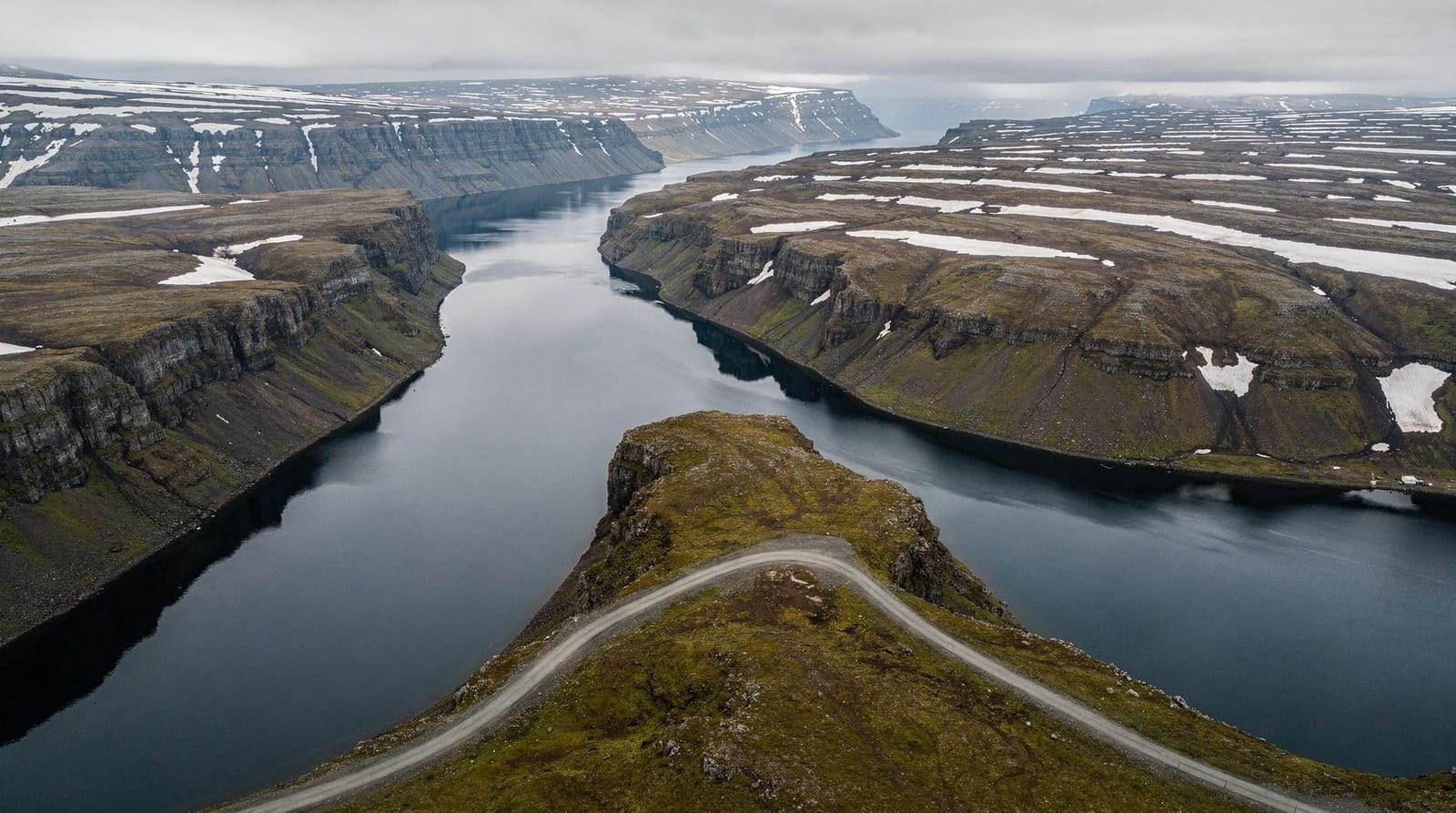
The Westfjords is the roughly triangular peninsula in northwest Iceland that looks, on a map, like it’s about to detach from the main island. About 7,000 people live there. In a normal summer, it receives maybe 5% of Iceland’s total visitors — the vast majority of tourists stick to the ring road, the Golden Circle, and the south coast.
The reasons are practical: the roads are mostly unpaved mountain passes, accommodation is limited, the weather is more severe than the south, and nothing in the Westfjords is easily reached from Reykjavik as a day trip. A proper visit requires at least three nights and the willingness to drive slowly on gravel.
My partner Björk (Icelandic, yes) and I went for five days in August 2023, driving in from Borgarnes via the Holtavörðuheiði mountain pass. The drive from Reykjavik to Ísafjörður, the Westfjords’ largest town (population ~2,600), takes around 6 hours on a good day. We did it in 7.5 because we stopped for a waterfall that wasn’t on our map and again for two arctic foxes that were sitting in the road near Staðarskáli.
The road situation
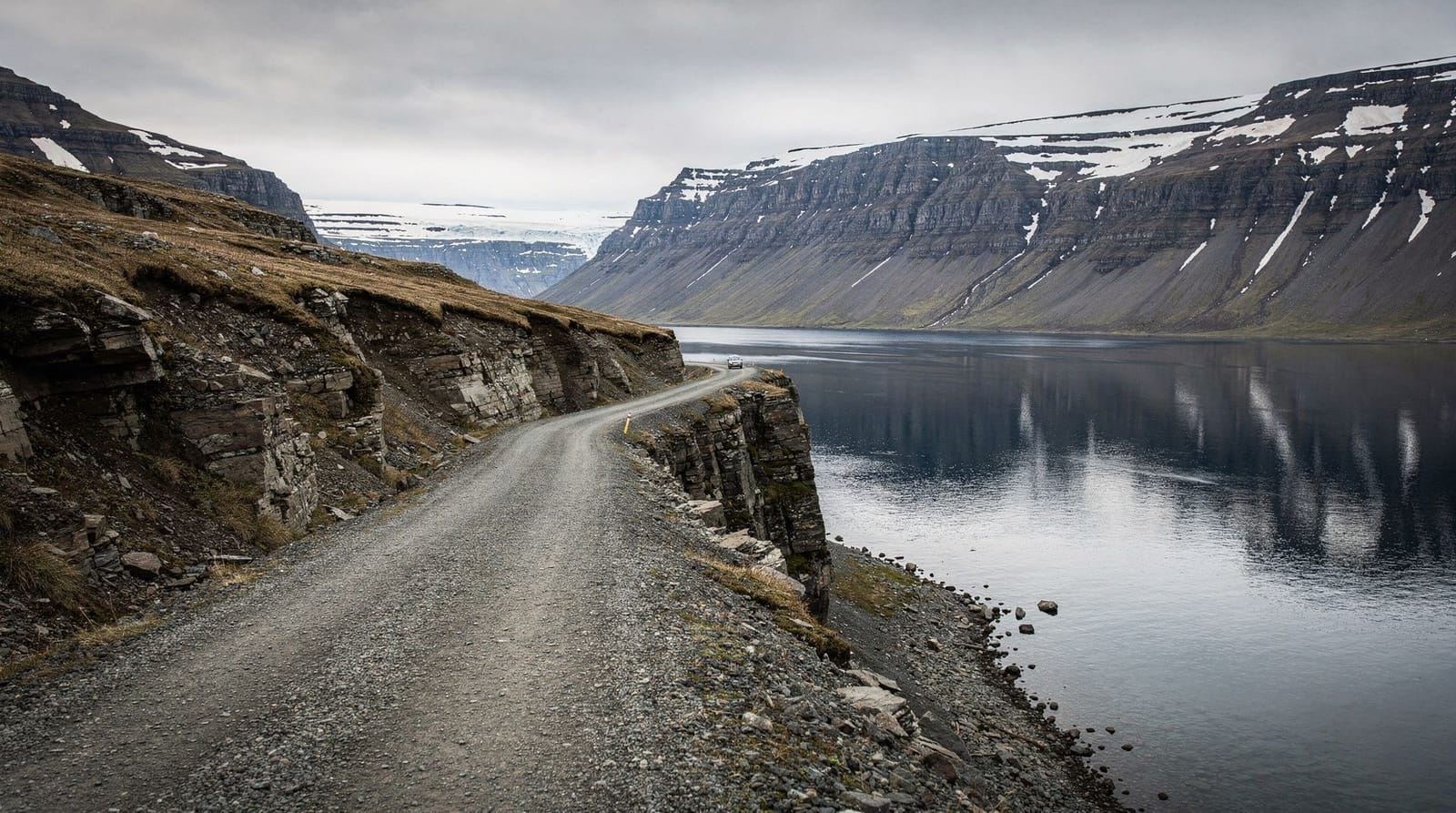
Let me be upfront: much of the Westfjords road network is single-lane gravel, and some of it crosses mountain passes that can close in poor weather even in August. We had a Dacia Duster (2WD), which is the minimum viable vehicle. A 4x4 would be better. A Toyota Hilux would be ideal.
The roads are slow. You drive at 40–50 km/h on gravel passes. On the flat coastal sections, 70–80 km/h is possible. Plan journeys at 50 km/h average to avoid surprise delays.
There are no chain petrol stations on the main Westfjords loop. There are service stations at Hólmavík, Bíldudalur, Patreksfjörður, and Ísafjörður. We filled at every opportunity and carried a 10-litre jerry can. We didn’t need the jerry can but I was glad it was there.
Dynjandi: the hidden waterfall that isn’t hidden
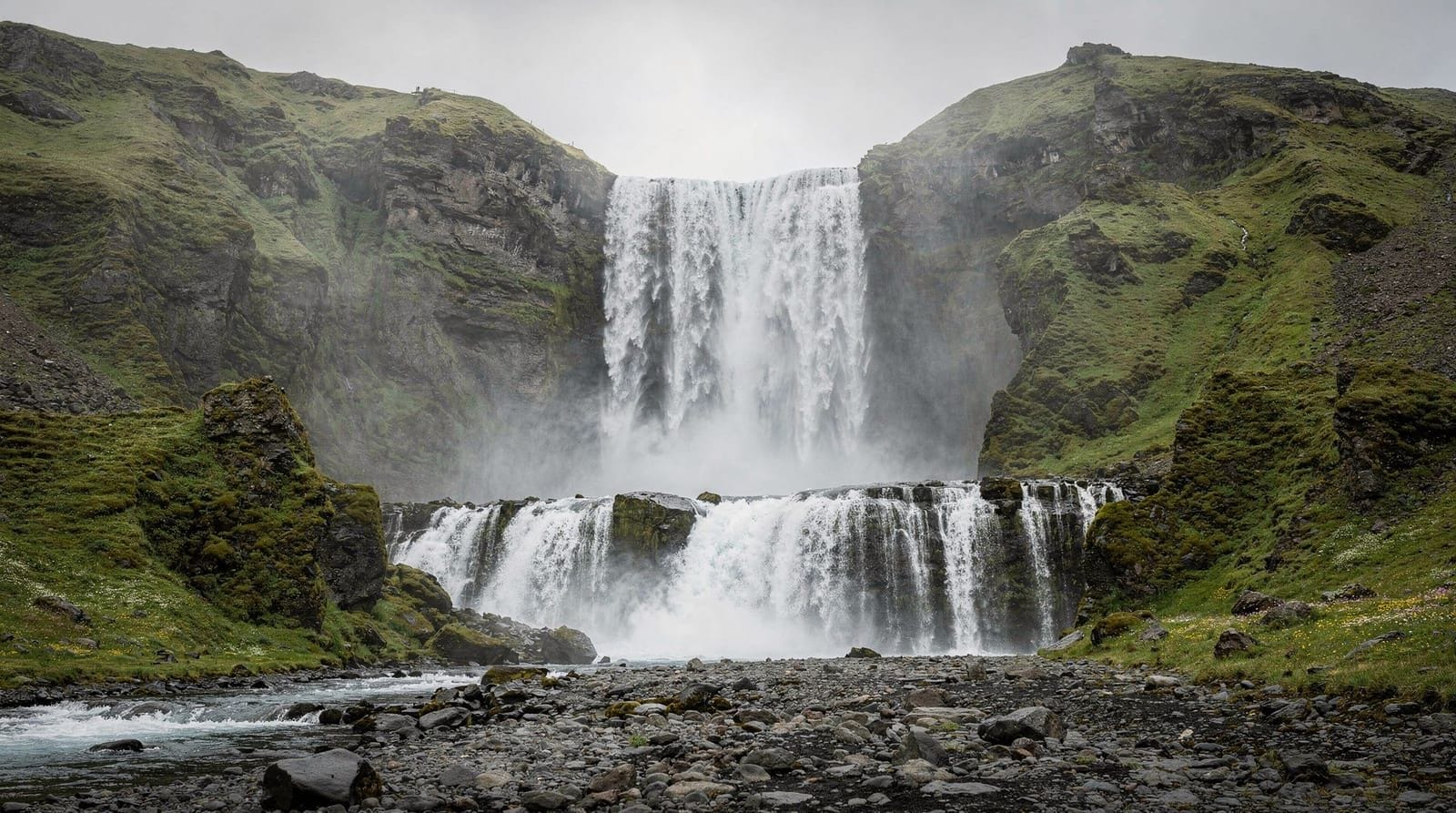
Dynjandi is the Westfjords’ most famous waterfall. At 100 metres tall and fan-shaped — widening from a narrow crest to a 60-metre wide base — it is objectively one of the most remarkable waterfalls in Iceland. It’s also one of the most accessible sites in the Westfjords, with a signposted car park off Route 60 and a 1.5 km trail (20 minutes each way) to the base.
Given that most Iceland visitors have never heard of it, calling it “hidden” feels dishonest. But relative to Skógafoss and Seljalandsfoss — which process hundreds of visitors per hour in July — Dynjandi on a Tuesday morning in late August had perhaps 60 people total.
The trail passes six smaller falls below the main Dynjandi before reaching the main drop. The sound at the base in August — the kind of white noise that removes all background thought — was something we both commented on. The spray range is significant; waterproof gear is necessary.
If you arrive by cruise ship to Ísafjörður, there are organised day tour transfers to Dynjandi that work well. The express version is 3.5 hours and prices start around ISK 13,000 — a reasonable option if you have limited port time.Látrabjarg: puffins at the end of Europe
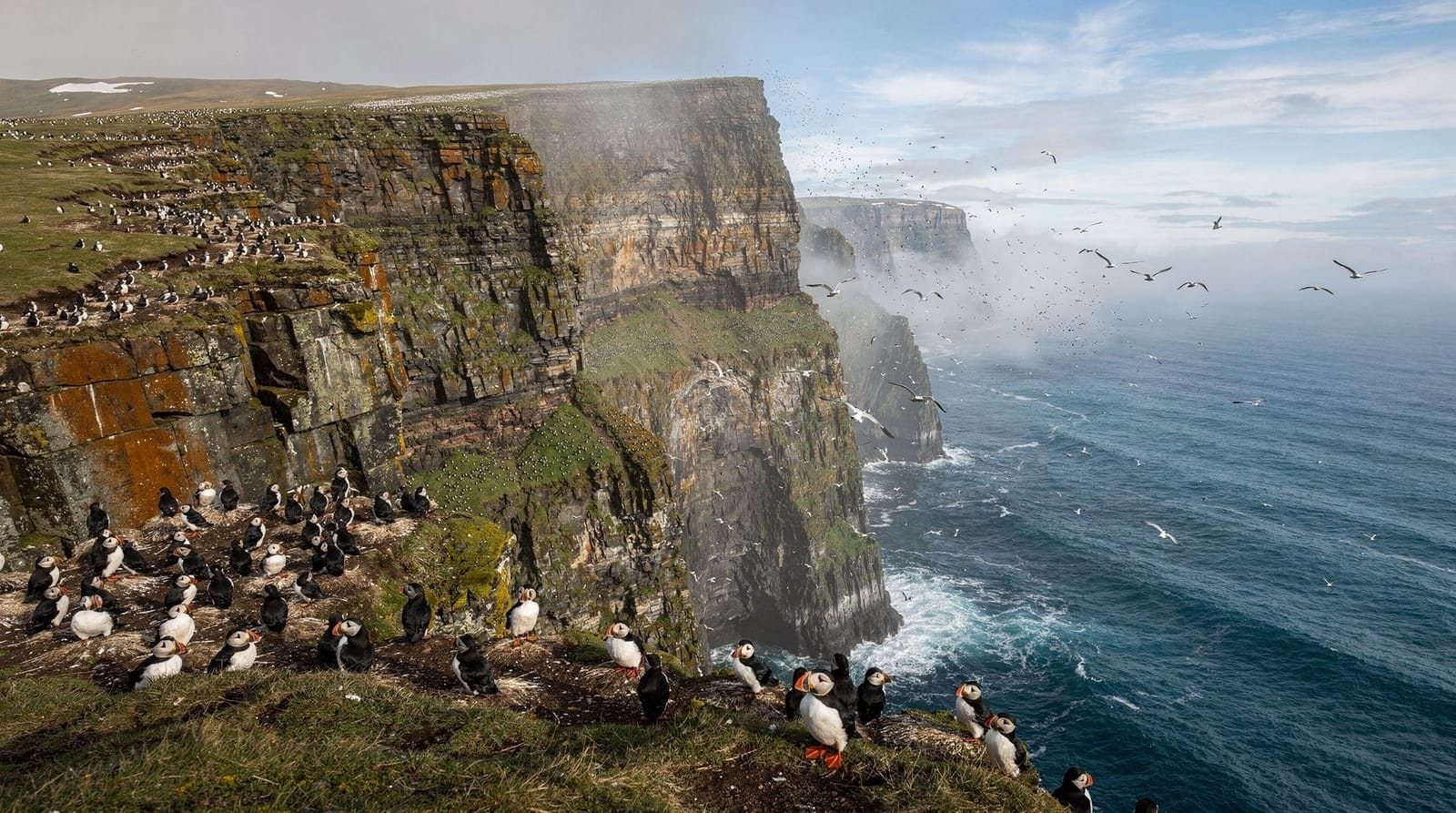
Látrabjarg is the westernmost point in Iceland (and in Europe, depending on how you count). The sea cliff runs for 14 kilometres and rises up to 441 metres above the Atlantic. In summer, millions of seabirds nest in the cliff face: razorbills, guillemots, fulmars, kittiwakes, and most famously puffins.
We drove to Látrabjarg on day three, taking the ferry from Flókalundur to Brjánslækur to avoid the long road around Arnarfjörður — the ferry costs around ISK 2,500 per person plus ISK 5,000 per car one-way, runs twice a day, and saves 2–3 hours of driving. We checked the ferry schedule (seatours.is) a week in advance and booked.
The puffin experience at Látrabjarg is specific and somewhat surreal. The puffins nest in burrows in the cliff-top turf, which means they’re at foot level — you don’t look up at them as at most seabird colonies. They sit at burrow entrances within a few metres of where you’re walking. They do not appear frightened of humans. We sat still for about 30 minutes at one section of cliff with perhaps 40 puffins visible from where we were sitting.
No barriers, no fees, no infrastructure. Just a rough track to a car park, a trail along the cliff edge, and birds.
Two cautions: the cliff edge is unmarked and unfenced. The drop is between 200 and 440 metres. Exercise appropriate care, especially on wet grass. And the drive to Látrabjarg from Patreksfjörður (the nearest town) is 50 kilometres on gravel mountain road — plan two hours each way.
Ísafjörður: a proper town
Ísafjörður surprised us. We’d expected a service stop — somewhere to refuel and sleep — and found a genuinely pleasant small town with an excellent bakery (Gamla Bakaríið on Aðalstræti, open from 7 am, ISK 700 for a cardamom bun that was extraordinary), a small museum about the region’s fishing history (Vestfjarðasafn, ISK 900 entry), and a sea kayak rental operation.
We spent half a day kayaking in the fjord below town, renting from West Tours. The water was glassy. The old town of wooden houses reflected in the bay. It cost ISK 9,000 each for three hours, which was worth it.
Dinner at Tjöruhúsið (fish restaurant in a converted fish factory on the harbour, ISK 5,200 for a three-course fish buffet) was the best meal of the trip. The buffet model means you eat as much as you want of whatever they’ve caught that day — in our case: pan-fried cod, ling in cream sauce, fish soup, salted herring. No menu. You sit at long communal tables and eat what comes out of the kitchen.
The honest parts
The Westfjords is genuinely remote. The road quality and limited services mean things can go wrong more consequentially than on the main ring road. We had a minor problem with a flat tyre near Bíldudalur at 7 pm. The nearest tyre shop was in Patreksfjörður, 45 minutes away. The guesthouse owner in Bíldudalur lent us his workshop and equipment to change the spare, then gave us tea. That kind of problem-solving is part of the appeal but requires accepting that you’re further from support systems.
The weather in August was mixed: two brilliant days, two overcast days, one day of consistent horizontal rain. The rain day we spent largely in the car or in cafés in Ísafjörður. This is expected and built into the plan. If the weather had been consistently bad, the trip would have been significantly harder to enjoy — the visual payoff of the Westfjords is heavily dependent on visibility.
One thing that genuinely underwhelmed: the town of Hólmavík, which some sources describe as an interesting stop for the Museum of Icelandic Sorcery and Witchcraft. We stopped. The museum was quirky but thin — probably 30 minutes of content. We’d driven 90 minutes out of our way for it and left mildly disappointed.
The Westfjords in winter vs summer
We went in August. The roads were open, the ferry was running, the puffins were at Látrabjarg. August is the correct month for the complete Westfjords experience.
In winter (November–April), the situation is different. The main roads through the Westfjords close periodically during heavy snowfall. The Westfjords ferry from Stykkishólmur (on Snæfellsnes) to Brjánslækur runs April–October only. The Ísafjörður airport (small Icelandair prop plane service from Reykjavik) operates year-round, making the town accessible even when roads are bad.
The puffins at Látrabjarg are gone from September to May — they’re at sea in the North Atlantic. The mountain passes that make the driving dramatic are under snow. But Ísafjörður in January — deep in a narrow fjord surrounded by avalanche-prone mountains, population 2,600, dark by 4 pm — has a specific atmosphere that nothing else in Iceland replicates. It’s genuinely remote in a way that feels real rather than constructed.
If you go in winter, fly to Ísafjörður and rent a car there. The direct driving approach from Reykjavik in January is not safe without significant 4x4 experience on mountain pass roads.
The accommodation reality
The Westfjords has limited accommodation, and what exists is mostly small guesthouses and farm stays rather than hotels. We booked six months ahead for August dates. Even so, two of our planned stops had no accommodation available, requiring a re-routing.
Where we actually stayed:
- Night 1–2: Ísafjörður, guesthouse on Aðalstræti, ISK 22,000/night including breakfast
- Night 3: Bíldudalur, a small family guesthouse, ISK 16,000/night (simple but clean, hosts were excellent)
- Night 4–5: Camping at Patreksfjörður campsite, ISK 1,800/person/night
The Patreksfjörður campsite is the logical base for Látrabjarg — it’s 50 km away by gravel road, and the 1.5-hour drive each way is manageable as a day trip from the campsite.
One category that doesn’t exist much in the Westfjords: budget hostels. The Snorrastaðir Farm near Reykhólar has dormitory beds, and there are a couple of HI-affiliated properties, but the shoestring backpacker accommodation common elsewhere in Iceland is thin in the Westfjords. Plan for guesthouse/farm rates or camping.
Our five days, day by day
| Day | Route | Highlight |
|---|---|---|
| 1 | Reykjavík → Ísafjörður (7.5hrs) | Wildlife stops en route |
| 2 | Ísafjörður | Kayaking, bakery, museum |
| 3 | Ísafjörður → Látrabjarg via Flókalundur ferry | Puffins at the cliff edge |
| 4 | Patreksfjörður area | Dynjandi waterfall |
| 5 | Return toward Reykjavík | Bíldudalur, Route 60 scenery |
For a complete route plan, the 5-day Westfjords itinerary is a reliable framework. The Westfjords guide covers the ferry options and road classifications in more detail.
We came back convinced that the Westfjords is the best non-ring-road experience in Iceland. It requires more effort and more flexibility than the standard south coast itinerary. Every bit of that effort is returned.
FAQ
Do I need a 4x4 for the Westfjords?
A 2WD works for the main loop in summer if you drive carefully on gravel, as we did with a Dacia Duster, but a 4x4 gives more margin on rougher sections and is the safer choice if your trip includes Dynjandi’s access road or any shoulder-season travel. In winter, a 4x4 with winter tyres becomes close to essential.
Is the Westfjords worth visiting if I only have a few days?
It’s tight but possible — prioritise Ísafjörður and Dynjandi over Látrabjarg if you have fewer than four days, since the puffin cliffs require the longest detour and ferry timing. The 5-day Westfjords itinerary is built around the minimum time that lets you see the region properly.
How does the Westfjords compare to the rest of Iceland for crowds?
It’s the clearest contrast in the country — the region receives only a fraction of Iceland’s total visitors, and it shows in everything from empty waterfall trails to puffins that show no sign of being habituated to crowds. If space and quiet matter more to you than convenience, the Westfjords delivers that more consistently than anywhere else reachable by road.