Blue Lagoon ticket: honest review for 2026
Blue Lagoon: Admission with drink towel mask
The Blue Lagoon is the single most-booked attraction in Iceland, and also the one visitors argue about most. This review lays out exactly what the ticket price buys, what it doesn’t, and when a cheaper geothermal pool nearby is honestly the better choice.
| Where | Grindavík, Reykjanes Peninsula — 50 km from Reykjavik, 20 km from Keflavik Airport |
| Cost | From around ISK 14,990 (Comfort); realistic all-in budget ISK 20,000–30,000/person with transfer |
| Time needed | 3–4 hours including changing rooms and transport |
| Getting there | Self-drive Route 43 (~45 min), Flybus, or a bundled transfer ticket |
| Best time | Early morning (7–9 AM) or evening (6–8 PM) for smaller crowds and better light |
What you actually get for the price
The Blue Lagoon is Iceland’s most commercially polished attraction — and by some distance the most expensive. The standard Comfort package (ISK 14,990, roughly €99 or $107 at mid-2026 rates) includes:
- Timed entry to the milky-blue geothermal seawater pool (about 8,700 m² of bathing area)
- One drink at the in-water bar (beer, wine, smoothie, or non-alcoholic options)
- One silica mud mask (staff apply it at the bar, you rinse off after 10–15 minutes)
- Towel and robe rental
- Locker use
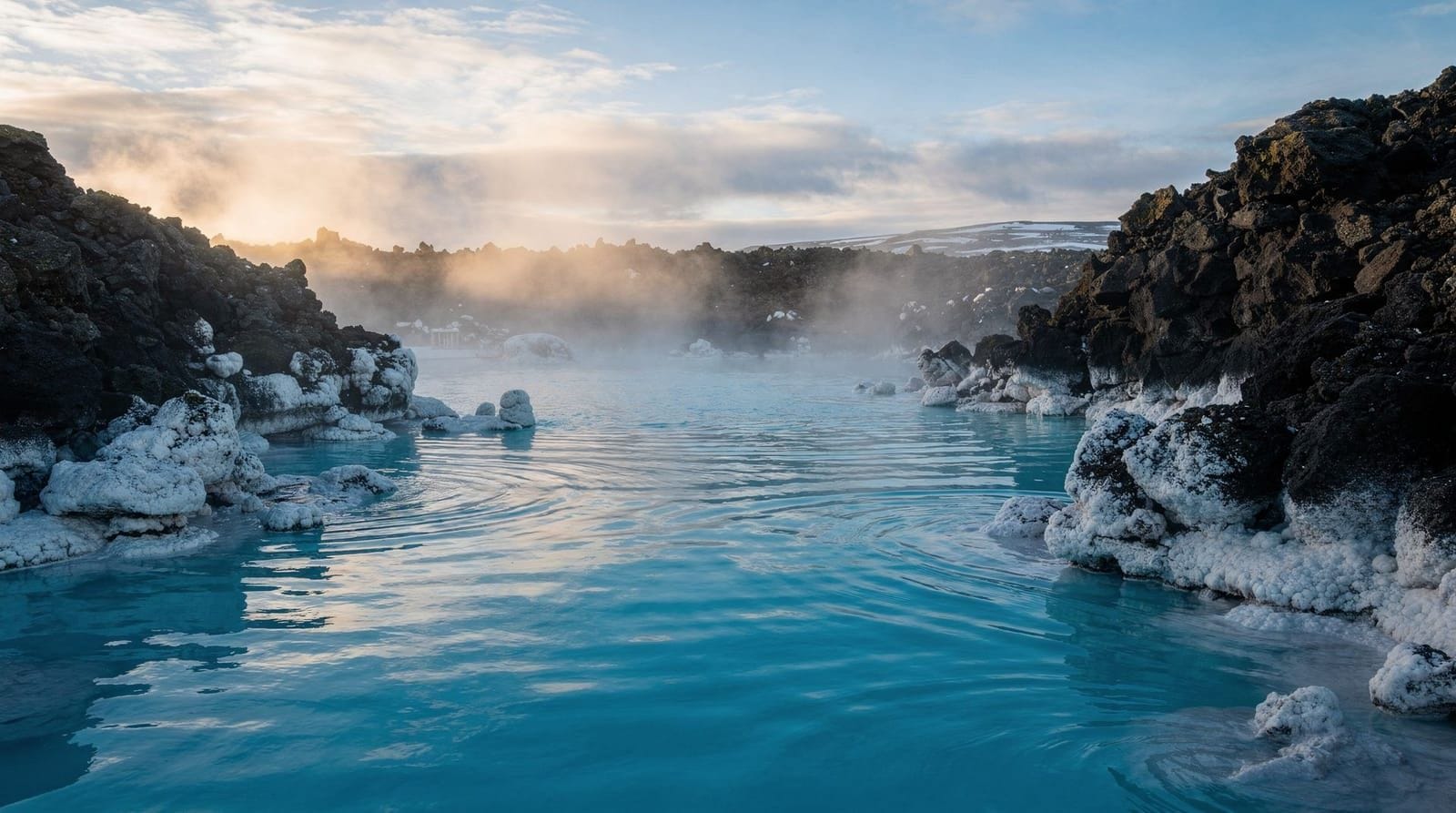
The pool temperature stays between 37 °C and 40 °C year-round. The water is a by-product of the nearby Svartsengi geothermal power plant — not a natural hot spring, which is worth knowing before you go. It is fully renewed every 40 hours and is reportedly free of bacteria. The distinctive white-blue color comes from silica and algae, not minerals.
Time slots run in two-hour windows. In practice, no one monitors how long you stay, but the complex fills up and becomes crowded during busy periods. Most visitors spend three to four hours total including the changing rooms, which are large, clean, and well-designed.
What it costs — full picture
| Package | Price (ISK) | Approx. EUR |
|---|---|---|
| Comfort | from 14,990 | ~€99 |
| Premium | from 19,990 | ~€130 |
| Signature | from 49,900 | ~€328 |
Prices above do not include:
- Transfer from Reykjavik: ISK 3,900–5,500 (~€26–36) each way via Reykjavik Excursions or Flybus
- Additional drinks: ISK 1,500–3,200 each
- Lava scrub body treatment: ISK 5,900
- In-water floating massage: ISK 9,900
- Locker upgrades or private suites: varies
A couple arriving from Reykjavik with transfers, one extra drink each, and parking: budget ISK 45,000–55,000 (~€300–365) total. That is serious money for a bathing experience.
Is it worth it? Honest case for and against
The case for going:
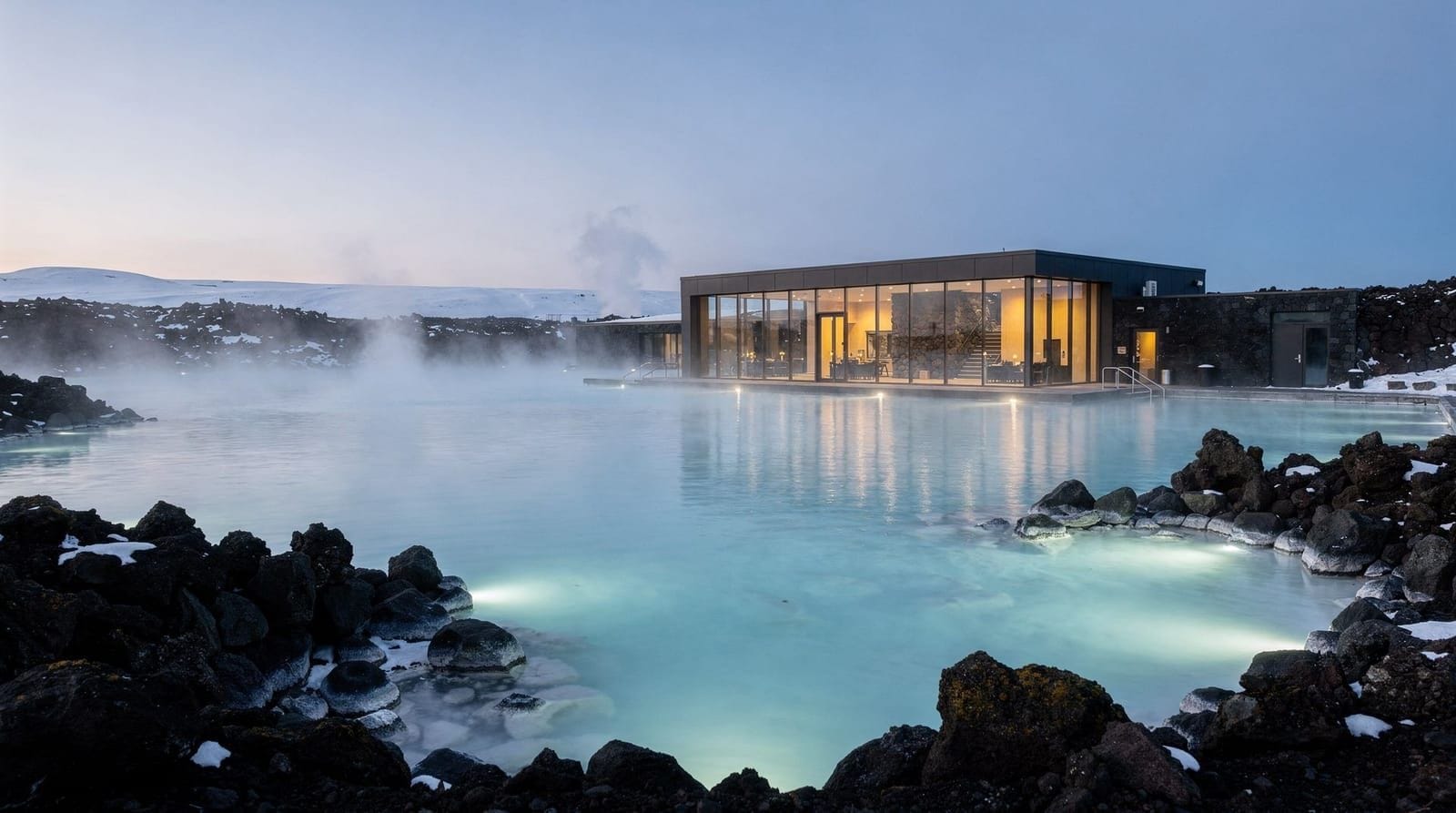
The setting is genuinely striking. The lava field backdrop, the steam rising off the pale blue water at dawn or dusk, and the well-run facilities create an experience that is difficult to replicate elsewhere. The logistics are seamless — you arrive, stow your bag, and float into warm water within minutes. For travelers who value convenience and Instagram-worthy scenery and don’t mind paying premium prices, the Blue Lagoon delivers reliably.
The silica-rich water does leave skin noticeably softer for a day or two. Anecdotal evidence, but widely reported.
The case against:
It is expensive enough that it dominates a daily travel budget. The “natural” framing in marketing materials is misleading — this is an engineered tourist product, not a volcanic hot spring. The crowds during peak season (June–August and November–February) can be significant, and the in-water bar creates a social scene that feels more resort-like than wild Iceland.
The Comfort package feels slightly underdone at ISK 14,990. One drink is barely enough to justify the price tier; most guests end up buying extras, pushing costs higher.
When to skip it entirely:
- If you are on a tight budget, the Secret Lagoon or Reykjadalur hot river give a more authentic experience for a fraction of the cost
- If you have already visited the Blue Lagoon on a previous trip
- If you dislike crowds and commercial environments
Booking and logistics
Book well in advance. The Blue Lagoon sells out, especially July through August and around Christmas. Popular time slots (9–11 AM and 6–8 PM) go weeks ahead. The website allows date and slot selection up to three months out.
Transfer options:
- Self-drive: Route 43 from Reykjavik, about 45 minutes. Parking is ISK 1,000 per day.
- Reykjavik Excursions Flybus: Departs BSÍ terminal, takes about 55 minutes.
- Bundled transfer ticket: Adds roughly ISK 8,000–11,000 (~€52–72) per person round-trip.
Arrival tip: Arrive 15–20 minutes before your time slot to process the entry. The changing rooms are large and modern. Lockers use a wristband system — no coin needed.
Keflavik connection strategy: If flying in or out, a Blue Lagoon stop is genuinely convenient. The Comfort package with one-way transfer from Keflavik is one of the least-inflated add-ons in Iceland tourism.
Cheaper alternatives worth serious consideration
Secret Lagoon (Gamla Laugin), Flúðir — ISK 3,200 (~€21) A natural hot pool dating to 1891 inside a small geothermal field. Small geyser erupts nearby every few minutes. No marble changing rooms, no cocktail bar, just warm water. Located 90 minutes from Reykjavik near the Golden Circle, making it easy to combine with a golden circle day trip. See the secret lagoon guide.
Reykjadalur hot river, Hveragerði — free A geothermal river 45 minutes from Reykjavik, reached by a 45-minute hike. Water temperature varies by section; some spots reach 40 °C. No facilities, no admission fee. Read the Reykjadalur guide for trail conditions. Suitable April through October; ice risks in winter.
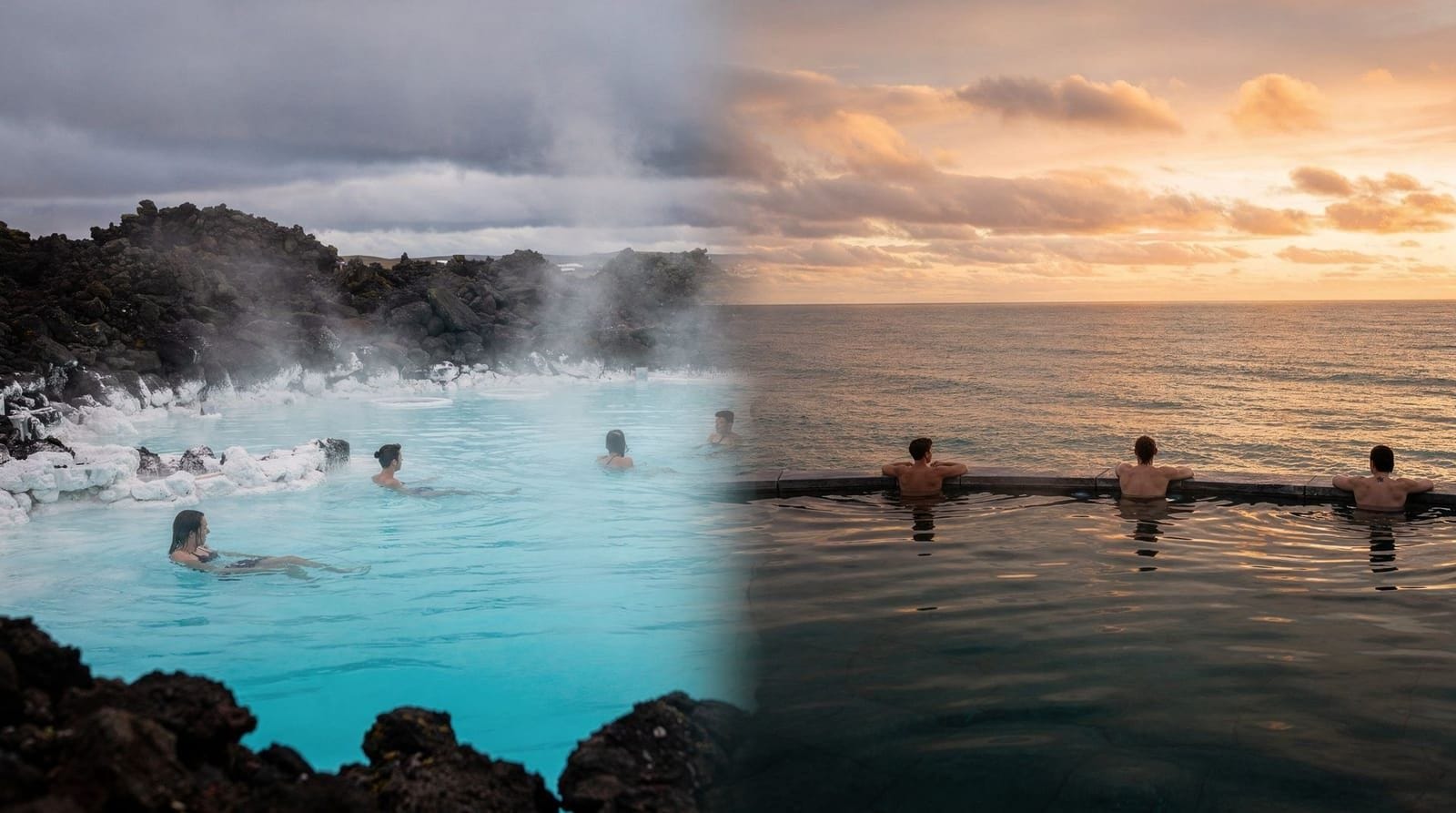
Sky Lagoon, Reykjavik — ISK 9,990 (~€65) for Sér pass Opened in 2021, sits on a cliffside above the Atlantic with a horizon-edge infinity pool. The seven-step spa ritual (cold plunge, sauna, steam, cold fog, salt scrub, shower, lagoon) is better value than the Blue Lagoon’s basic package. Read the Sky Lagoon guide and our Blue Lagoon vs Sky Lagoon comparison.
Myvatn Nature Baths, North Iceland — ISK 6,000 (~€39) Less visited, genuine geothermal lake setting. Best combined with a north Iceland itinerary. See the Lake Mývatn destination guide.
Practical logistics recap
- Opening hours: 7 AM–10 PM most days (varies seasonally — check website)
- Access: By car via Route 43, or shuttle from Reykjavik/Keflavik
- Pre-booking required: Yes, absolutely mandatory. No walk-ins accepted
- Age: Children under 2 are free; ages 2–12 are discounted; under 14 must be accompanied by an adult
- What to bring: Swimsuit (can rent on-site for ISK 1,000). Everything else provided
- Nearest destination guide: Reykjanes Peninsula and Blue Lagoon destination page
Blue Lagoon in the context of a Reykjavik trip
The Blue Lagoon is 50 km from Reykjavik and 20 km from Keflavik Airport. This geography shapes how visitors logistically approach it.
Arrival-day option: Flying into Keflavik and heading to the Blue Lagoon before reaching Reykjavik is one of the most common Iceland itinerary patterns. The 20-minute airport-to-lagoon transfer is straightforward by shuttle or taxi. You soak, then continue to the city. Works well for afternoon and evening arrivals.
Departure-day option: The reverse route — Blue Lagoon on the way back to Keflavik — is equally popular. Morning slots (7 AM) work before afternoon flights. An afternoon slot works for evening departures.
Standalone Reykjavik day: If you want to visit the Blue Lagoon while based in Reykjavik without connections to the airport, budget 4–5 hours total including transport. This works better earlier in the trip than as a final day, since most visitors prefer to use their last Reykjavik day in the city.
With the Golden Circle: Possible logistically — the Blue Lagoon is southwest of Reykjavik, the Golden Circle is northeast. Combining both in a single day adds 3–4 hours to an already long day. Not recommended unless you have very limited time. Splitting into two days is a better experience.
See the Reykjavik 48-hour itinerary and stopover itinerary for how the Blue Lagoon fits into short trip structures.
The thermal water explained (and what’s actually in it)
The Blue Lagoon’s milky-white color and its famous skin-softening effect come from silica and algae suspended in geothermal seawater. The water is not from a natural hot spring — it is outflow from the Svartsengi geothermal power plant, which has been running since 1976. The water temperature underground is around 240 °C; it is cooled to the bathing temperature through the plant’s operations.
The silica content: the rock below Reykjanes is primarily basalt. When superheated water passes through it, silica dissolves into the water in the form of small particles. In the lagoon, these particles give the water its characteristic opacity. On the skin, they act as a mild exfoliant.
The algae: Microalgae grow in the warm, mineral-rich water. These contribute to the skin treatment effects and give the silica mask its distinctive pale color. The algae are harvested by the Blue Lagoon facility and used in the masks and the range of Blue Lagoon-branded skincare products sold in their shop.
Chlorine levels: The Blue Lagoon maintains water quality through both UV light treatment and minimal chlorine addition. Guests with chlorine sensitivities rarely report problems at normal Blue Lagoon chlorine levels. The water is fully renewed approximately every 40 hours.
Hair care: The silica-rich water is hard on hair, particularly dyed or chemically processed hair. The Blue Lagoon provides hair conditioner at dispensers inside the pool (at the bar area) — use it generously if you have fine or treated hair. Many visitors tie their hair up entirely.
Best time of day to go
Time slot choice affects the experience more than most first-time visitors expect. The 9–11 AM window is popular with early risers and can feel busy within the first hour after opening. The quietest slot most days is genuinely the first one, right at opening, before tour buses arrive from Reykjavik and Keflavik. The 6–8 PM slots in summer catch long, low evening light over the lava field, which photographs beautifully and tends to thin out as families with young children leave earlier. Midday slots (12–3 PM) are consistently the busiest, especially June through August, because they suit both morning-arrival and afternoon-arrival flights.
Winter visits change the calculation again: darkness falls by mid-afternoon from November to February, so an evening slot means soaking under a dark sky, occasionally with the northern lights overhead — genuinely one of the best possible settings to see them, since you’re already outside and warm. Check the aurora forecast guide before booking a winter evening slot, and pair the visit with the best time to see northern lights guide if the aurora is a priority for your trip.
The overtourism question
The Blue Lagoon is frequently cited in debates about Iceland’s tourism growth, and it’s worth addressing directly. Visitor numbers have grown enormously since the early 2010s, the facility has expanded repeatedly to absorb demand, and prices have risen well ahead of inflation. Some longtime visitors feel the experience has shifted from a local secret to an assembly-line operation. Others point out that the expansion has actually improved crowd management compared to a decade ago, with timed entry smoothing out what used to be genuinely overcrowded free-for-alls.
Where you land on this probably depends on what you’re looking for. Readers weighing the broader picture should see the Blue Lagoon debate and the wider is Iceland overtourism real discussion — both are useful context before you decide whether to book the icon or one of the quieter alternatives above.
Frequently asked questions about the Blue Lagoon ticket
Can I just show up without a reservation?
No. Since 2016, walk-in entry has not been possible. The Blue Lagoon operates on a timed-entry reservation system only. Book via the official website or through a reputable tour operator.
What is the difference between Comfort and Premium?
Comfort: one drink, silica mask, towel/robe, locker. Premium adds a second drink, access to the premium lounge area, a reservation at the lava restaurant, and an algae mask. If you plan to eat and stay longer, Premium can make financial sense versus Comfort plus separate restaurant booking.
Is the water safe? Does it bleach hair?
The water is high in silica, which can leave hair noticeably tangled and dry after prolonged soaking. Most visitors with fine or chemically treated hair tie it up or use the hair conditioner stations on the pool deck. It is safe for normal skin.
Can I visit the Blue Lagoon on a day trip from Reykjavik?
Yes — it works well as a half-day excursion. A 9 AM entry slot gets you in and out by noon, leaving the afternoon for Reykjavik. Alternatively, an evening slot (6–8 PM, sunset in summer) is the most scenic time.
Is there food at the Blue Lagoon?
Yes — the Lava Restaurant inside the complex serves Icelandic cuisine at full restaurant prices. A main course runs ISK 4,500–7,500. Budget-conscious visitors should eat before arriving or grab food in Grindavík or Keflavik.
Can I combine the Blue Lagoon with the Reykjanes Peninsula?
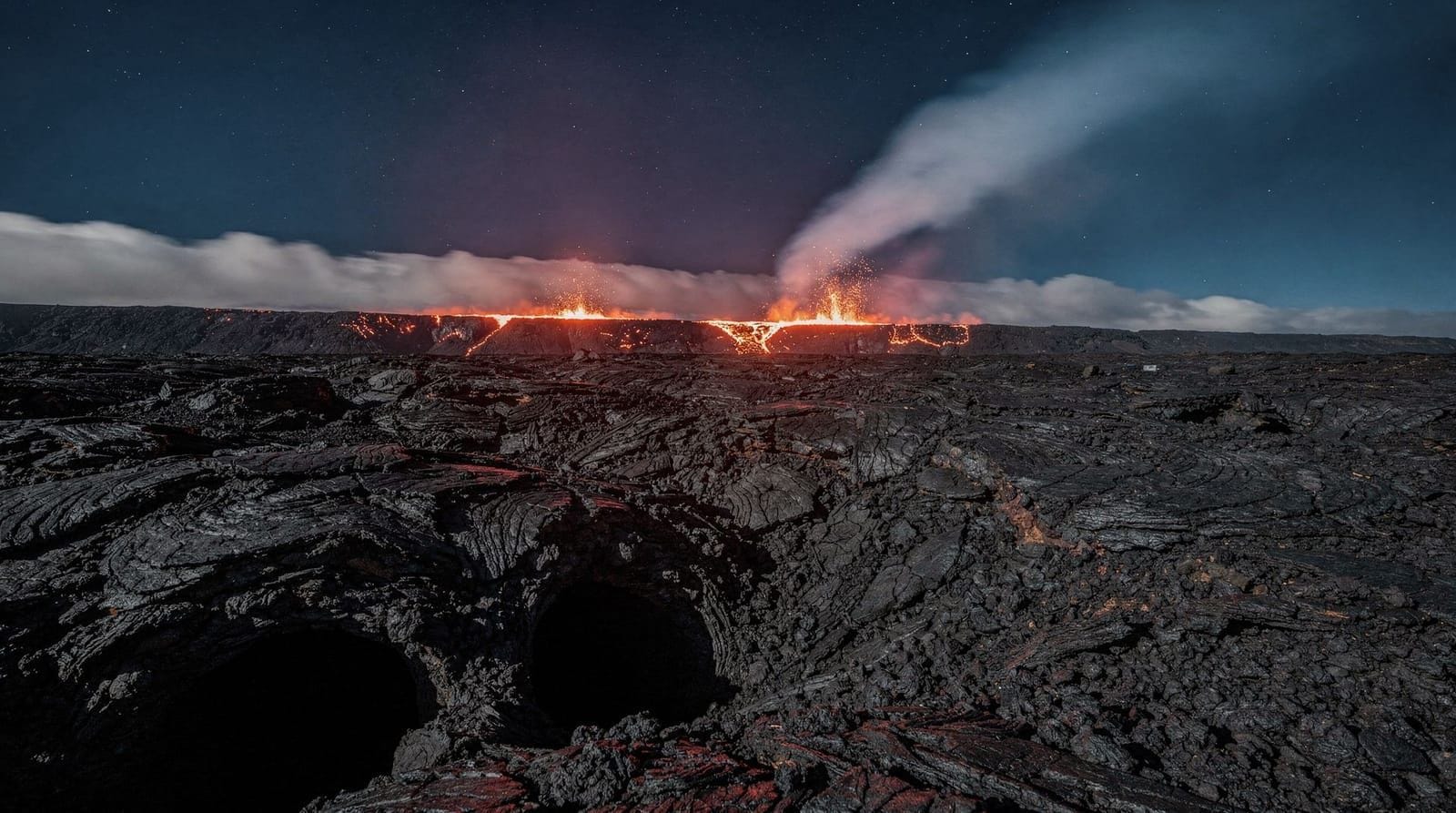
Yes, and it’s a logical pairing since both sit in the same corner of Iceland. The Reykjanes Peninsula has lava fields, geothermal areas, and recent volcanic activity near Fagradalsfjall worth a half-day on their own. Doing both in one day is feasible if the Blue Lagoon slot is either early or late, leaving the middle of the day free for the peninsula.
Does the Blue Lagoon get fully booked?
Yes, regularly — July, August, and the Christmas/New Year period sell out particular time slots weeks in advance, and popular early-morning and evening slots go first. If your dates are fixed, book as soon as your itinerary is confirmed rather than waiting until closer to the trip.