The Blue Lagoon debate — my verdict after two visits
| Where | Reykjanes Peninsula, ~40km from Reykjavík, 20 min from Keflavík |
| Cost | Around 90–200 EUR/person depending on tier |
| Time needed | 2–3 hours, plus 20 minutes for entry logistics |
| Booking | Required in advance — timed entry, sells out weeks ahead in summer |
| Best time | First slot of the morning, or winter for lower crowds |
The question everyone asks
“Is the Blue Lagoon worth it?” is the most common Iceland question I receive, and I want to give a direct answer because most existing coverage hedges in ways that are not useful.
My verdict: yes, once, if you book correctly and have realistic expectations. No, if you expect what the photographs suggest.
Let me explain what I mean.
What it actually is
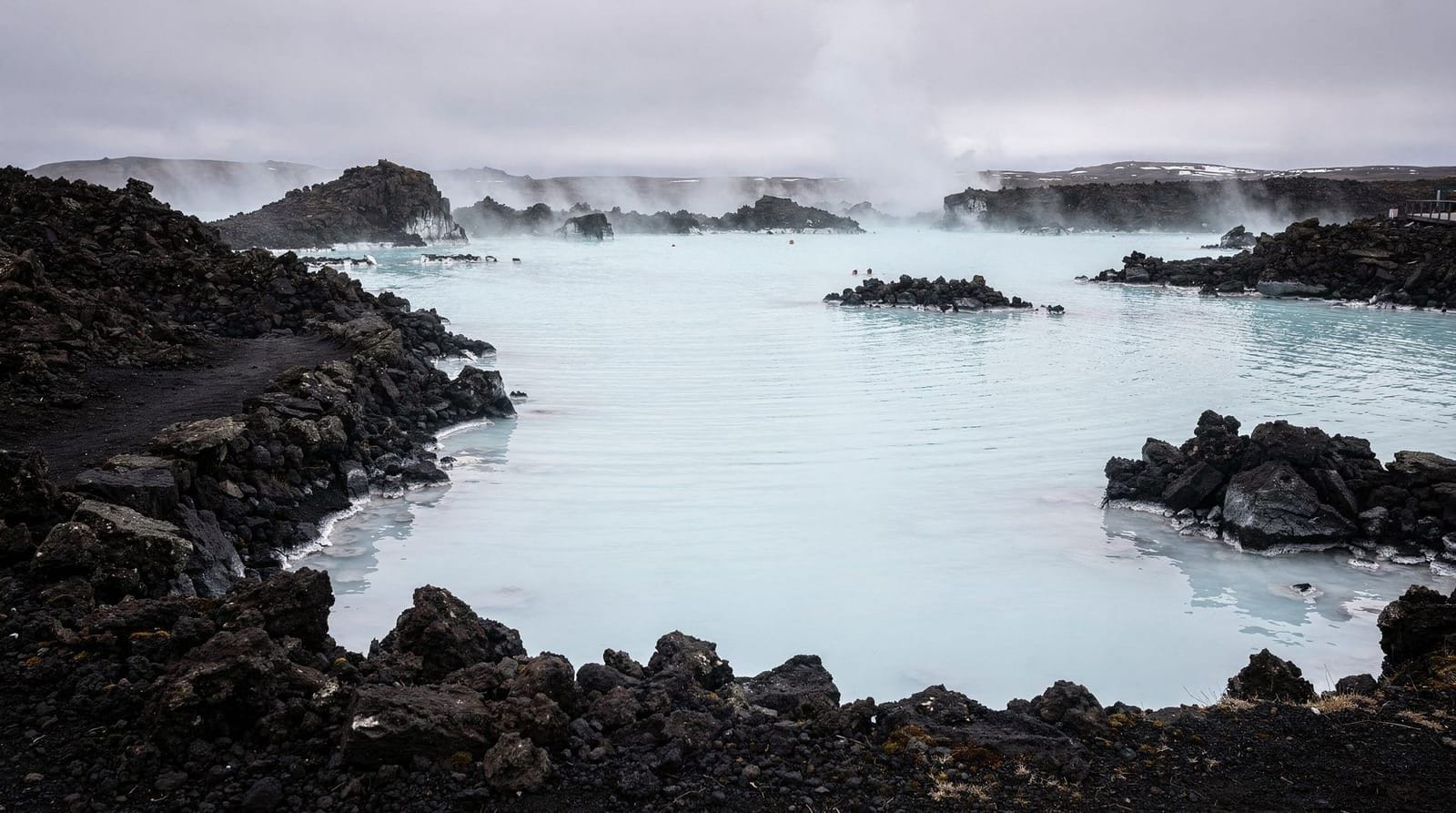
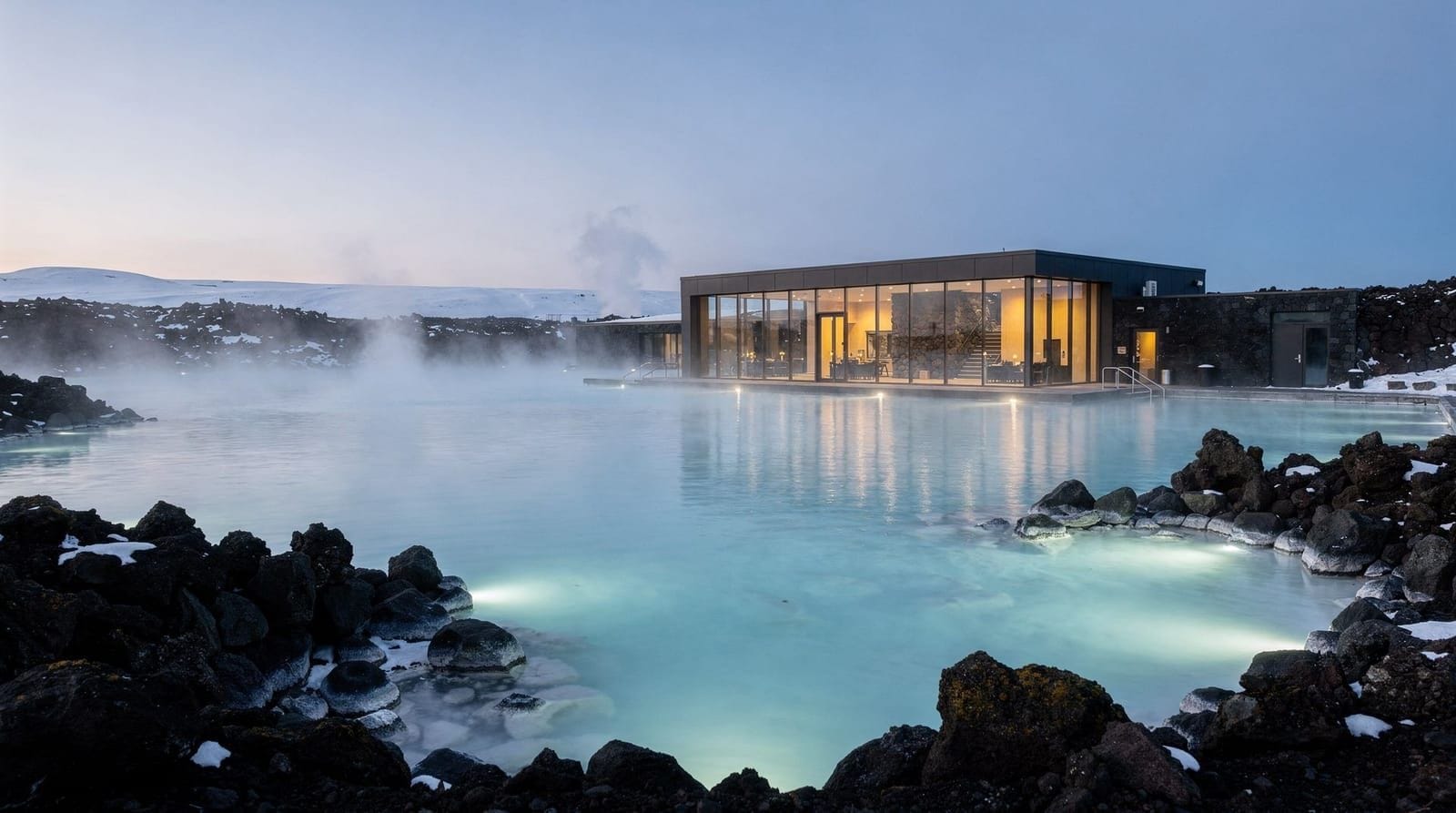
The Blue Lagoon is a geothermal spa on the Reykjanes Peninsula, 40 kilometres from Reykjavík and 20 minutes from Keflavík airport. The water — its famous milky blue colour comes from silica minerals, not algae or artificial dye — is geothermal runoff from the Svartsengi power plant, processed and heated to around 38-39°C. The facility is very large: roughly 5,000 square metres of outdoor bathing area, multiple indoor pools, saunas, a cave, a restaurant (the exclusive part requires a premium ticket), and extensive amenities.
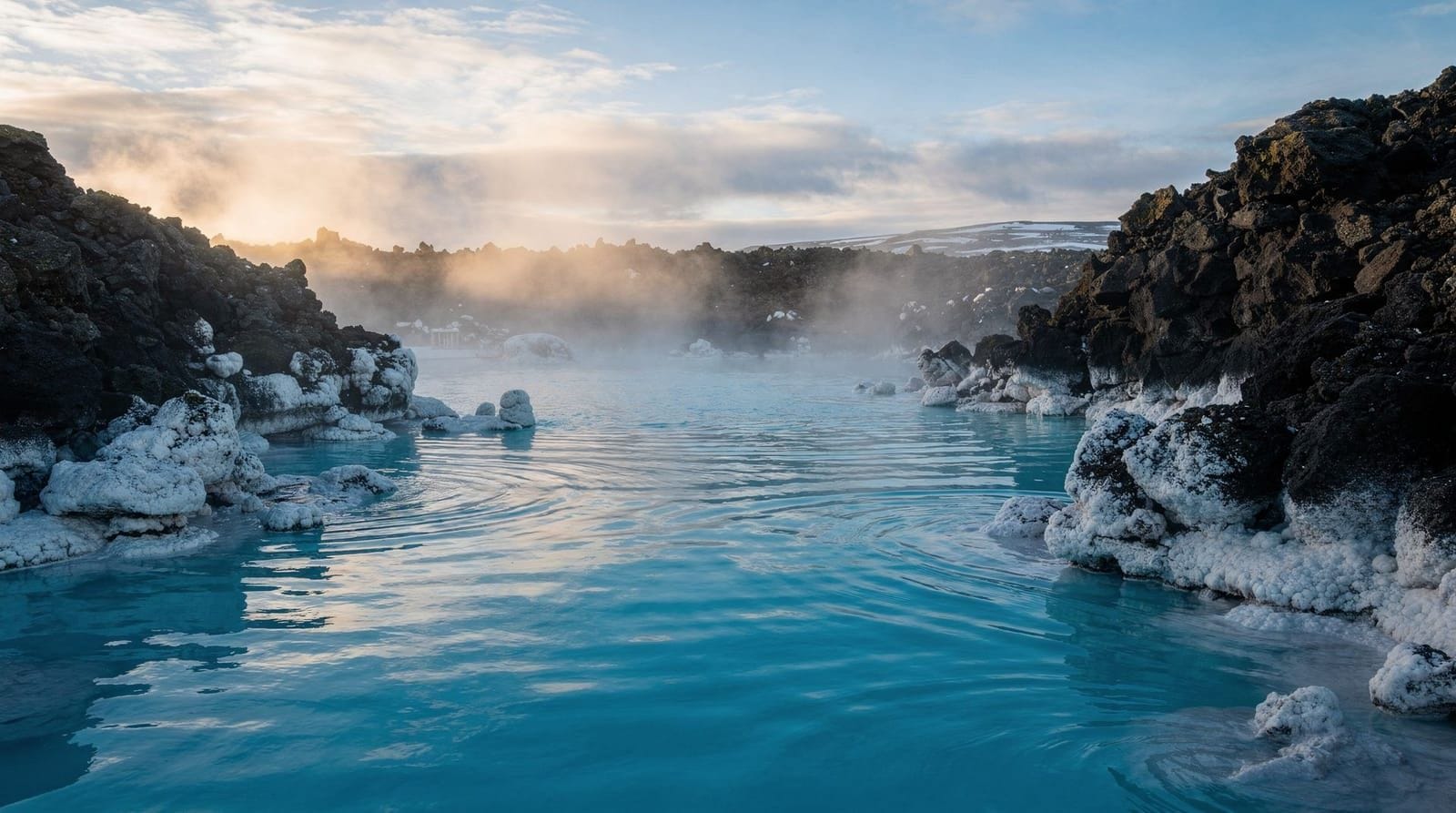
The milky blue colour is genuinely striking in person. The steam rising from the water on cold mornings is exactly as dramatic as the photographs. The silica mud (included in the Comfort tier) has a distinctive slippery texture that you either find pleasant or mildly alarming. The water is warm enough to bathe comfortably in sub-zero air temperatures.
This is the honest description. Now the complications.
What the photographs leave out
The Blue Lagoon at peak hours in July holds several thousand people simultaneously. The large pool area becomes crowded to a level where finding personal space requires strategy. The famous walk-through cave section, which the marketing shows as a private thermal experience, has a queue. The bar serving smoothies and drinks to bathers — you collect it yourself while in the water — has a wait.
In February when I last visited, the crowds were significantly lower. I spent two hours in the main pool, including 40 minutes in a corner section near the edge where the steam was heaviest and the other bathers were few. This was excellent. In July, that corner would be occupied.
The second thing: the water feels slightly unusual. The silica is real and the texture of the water is slightly thicker than regular water — hard to describe, pleasant once you are used to it, occasionally strange for the first few minutes. Some people love it. Some people find it mildly weird. The algae prevention measures mean the complex uses their own chemical treatment; you should shower well after.
The third thing: the hair situation. The silica water is hard on hair. The Blue Lagoon sells conditioner dispensers at the entrance specifically because many people’s hair tangles badly in the mineral-rich water. Apply conditioner before entering; this is not optional advice, it is their own recommendation.
The pricing reality
As of early 2024:
- Comfort tier: approximately 90-120 EUR per person. Includes entry, one drink, silica mud mask, towel.
- Signature tier: approximately 120-160 EUR per person. Adds a second drink and robe.
- Premium tier: approximately 160-200 EUR per person. Adds access to the premium lounge and a private changing area.
- Retreat (spa hotel, private lagoon): substantially higher; a different experience from the main lagoon.
These are the prices that made the Blue Lagoon controversial. I will be direct: by the standard of a European spa with similar amenities, the Comfort tier price is not unreasonable. By the standard of what was a free entry geothermal pool before it was commercialised in the early 1990s, the price is part of a commodification process that many Icelanders view with complicated feelings.
The booking requirement is strict. The Blue Lagoon operates timed entry slots and capacity limits. You cannot turn up without a reservation and expect to get in. Slots in July can sell out weeks or months in advance. Book at least 2-3 weeks ahead in summer; for a specific date in peak season, book as soon as you confirm your travel dates.
The standard Comfort admission includes the drink, towel, and silica mask — this is the tier that works for most visitors and the one I would recommend unless the premium lounge is important to you.
When it makes sense
There are specific situations where the Blue Lagoon is the right choice:
Arrival or departure stop: the location 20 minutes from Keflavík airport makes it a logical first or last activity. Many visitors drop bags at the lagoon’s own luggage storage and soak for 2-3 hours before catching a late flight. This use case is excellent and I fully endorse it. You do not need to plan around it; you book the departure-day slot, arrive from your accommodation, have your soak, then go to the airport. The road is Route 43 directly from the airport; straightforward.
Winter in northern lights season: the combination of geothermal steam, dark sky, and aurora borealis is real. There are dedicated northern lights slots in winter evenings. The light is difficult to photograph from inside the pool but the visual experience is striking. The background glow of the lagoon against a dark sky with northern lights above is genuinely memorable in a way that differs from the standard aurora experience.
Partner trip with no interest in hiking: if one person in your group finds Iceland’s outdoor activities unappealing but is interested in a spa experience, the Blue Lagoon delivers something genuinely distinctive. It is not a normal spa. The scale, the setting, and the water quality are specific to this location.
When to skip it
If you are budget-focused, the municipal pools in Reykjavík (Laugardalslaug, Vesturbæjarlaug) offer nearly identical water quality — geothermal, similar temperature — for 1,000-1,100 ISK. These are local spaces, less designed for tourists, and the experience of soaking alongside Reykjavík residents on a weekday evening is valuable in its own right. The municipal pools are the real Icelandic bathing culture; the Blue Lagoon is a commercialised version of it.
If you are interested in the geological and cultural side of Iceland’s hot springs, the Secret Lagoon at Flúðir (Golden Circle area), the Reykjadalur hot river (a free hiking destination), or the Mývatn Nature Baths in the north are all more authentic experiences at lower prices. The Mývatn Nature Baths in particular offer a similar silica-water experience in a less developed setting, with views over the volcanic lake.
The Secret Lagoon combined with the Golden Circle is a good alternative for travellers who want a geothermal pool experience without the Blue Lagoon pricing or crowds. The Secret Lagoon is a genuine historic pool, not a resort.
The direct comparison with Sky Lagoon
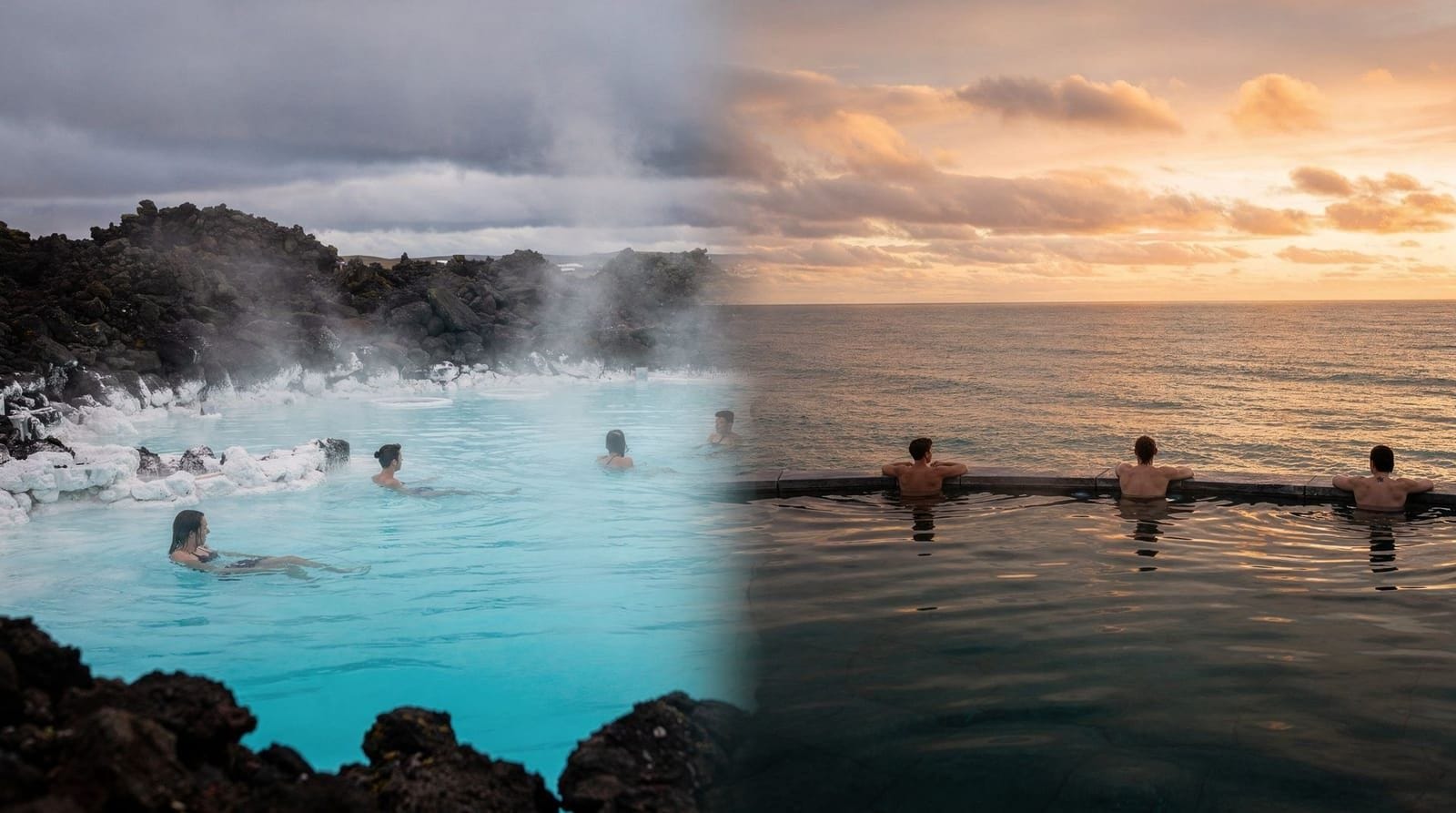
Sky Lagoon opened in 2021 and offers a competing premium geothermal experience in Reykjavík itself — a cliff-edge infinity pool with views over the Faxaflói bay. It is smaller, newer, more controlled in atmosphere, and priced similarly to the Blue Lagoon Comfort tier.
The Blue Lagoon vs Sky Lagoon comparison is detailed elsewhere. My summary: Sky Lagoon is a better design, a better location for Reykjavík-based visitors, and a more polished experience. The Blue Lagoon has the distinctive water colour, the larger scale, and the airport proximity. The Sky Lagoon’s seven-step ritual (sauna, cold plunge, steam, mist, and then the main pool) is a more intentionally designed experience; the Blue Lagoon allows more self-direction in a larger space.
Neither is meaningfully superior; choose based on what matters to you. If you are arriving late at Keflavík and want to decompress before driving into Reykjavík, the Blue Lagoon is physically closer to the airport. If you are basing yourself in Reykjavík and want a premium soak without the drive, Sky Lagoon is the better choice.
Comparing the geothermal pool options
| Blue Lagoon | Sky Lagoon | Secret Lagoon | Municipal pools | |
|---|---|---|---|---|
| Location | Reykjanes, 20min from KEF | Reykjavík city | Flúðir, Golden Circle | Reykjavík neighbourhoods |
| Cost | 90–200 EUR | Similar to Blue Lagoon Comfort | Lower, ~5,000 ISK | 1,000–1,100 ISK |
| Crowds | Heaviest in summer midday | Moderate, timed entry | Lower, more local feel | Locals-only atmosphere |
| Best for | Airport days, first-timers | Reykjavík-based premium soak | Authentic historic pool | Budget, real Icelandic life |
The practical booking protocol
First: book early. The Blue Lagoon website is the only booking source. Do not book through third-party aggregators unless you have verified the ticket type; some aggregators sell non-refundable tickets that the Blue Lagoon itself would allow you to rebook.
Second: choose the right time slot. The first slots of the morning (usually 8 or 9 a.m.) have the lowest crowd levels and the best light — steam and morning light in winter is the most atmospheric. Midday slots in summer are the most crowded. Late afternoon in winter can coincide with darkness, which changes the mood entirely.
Third: arrive slightly before your slot. The bag storage, changing rooms, and pre-entry shower take 15-20 minutes. Arriving exactly on time means you are stressed for the first 20 minutes you are in the water.
My honest recommendation
Go once, in the right conditions. Book the Comfort tier. Add the upgrade only if the premium lounge meaningfully improves your experience (and honestly, it only matters if you find the main pool too busy, which it will be in peak season regardless of tier). Go in February or March for lower crowds and potential northern lights. Do not make it the centrepiece of your Iceland trip; make it an add-on to an airport transfer or a rainy-day treat. At that calibration, it delivers.
The full Blue Lagoon guide has the booking details, current pricing, and the complete comparison of tiers. The guide is updated seasonally and reflects the current entry structure more reliably than any single visit account.
FAQ
Is the Blue Lagoon worth it if I’m on a tight budget?
Probably not as a priority. The water quality is genuinely good, but Reykjavík’s municipal pools offer similar geothermal bathing for around 1,000–1,100 ISK against 90+ EUR at the Blue Lagoon. Save the Blue Lagoon for when budget allows the premium, or substitute the Secret Lagoon for a cheaper, more historic alternative.
How far ahead should I book the Blue Lagoon?
At least 2–3 weeks ahead for a summer date, and as soon as your travel dates are confirmed if you want a specific slot in July. The Blue Lagoon operates strict timed entry with capacity limits, so turning up without a reservation does not work, regardless of how quiet the facility looks from outside.