Is the Blue Lagoon worth it? An honest assessment
Reykjavik: From Reykjavik Blue Lagoon admission with transfers
Is the Blue Lagoon worth visiting?
For most visitors, yes — with caveats. The setting is genuinely unique, the water feels unlike any other geothermal pool, and the facilities are world-class. The problems are price (from $90 per person for basic entry), peak summer crowds, and the manufactured resort atmosphere. Midday August is a bad time. Early morning or evening in shoulder season is a very different experience.
The Blue Lagoon is Iceland’s most photographed single attraction and also its most debated — genuinely stunning to some visitors, an overpriced tourist trap to others. This guide gives the honest version: what it actually is, when it’s worth the money, when it isn’t, and the real alternatives if it doesn’t suit you.
| Where | Reykjanes Peninsula, 45 min from Reykjavík, 20 min from Keflavík Airport |
| Cost | From around 12,490 ISK (~$90) Comfort package per person |
| Time needed | Allow 3 hours total (recommended 2–3 hours in the water) |
| Best time | Early morning (7–9am) or evening; avoid 11am–2pm in July/August |
| Booking | Book online in advance — walk-up often unavailable at peak times |
What the Blue Lagoon actually is
The Blue Lagoon is not a natural hot spring that Icelanders discovered and chose to share with the world. It is a purpose-built geothermal spa that was created in 1992 when silica-rich run-off water from the Svartsengi geothermal power plant started accumulating in the surrounding lava field. People noticed that the warm water was turning an extraordinary milky blue colour and that bathing in it seemed to benefit skin conditions. A facility was built. Then a larger facility. Then a world-famous resort.
The water is real geothermal water at around 37–40°C, rich in silica, algae, and minerals. The skin benefits (particularly for psoriasis and eczema sufferers) are real and documented. The colour is real — it comes from silica particles suspended in the water refracting light.
What the Blue Lagoon is not: an undiscovered natural wonder. It is a constructed commercial experience, and an expensive one.
The experience in detail
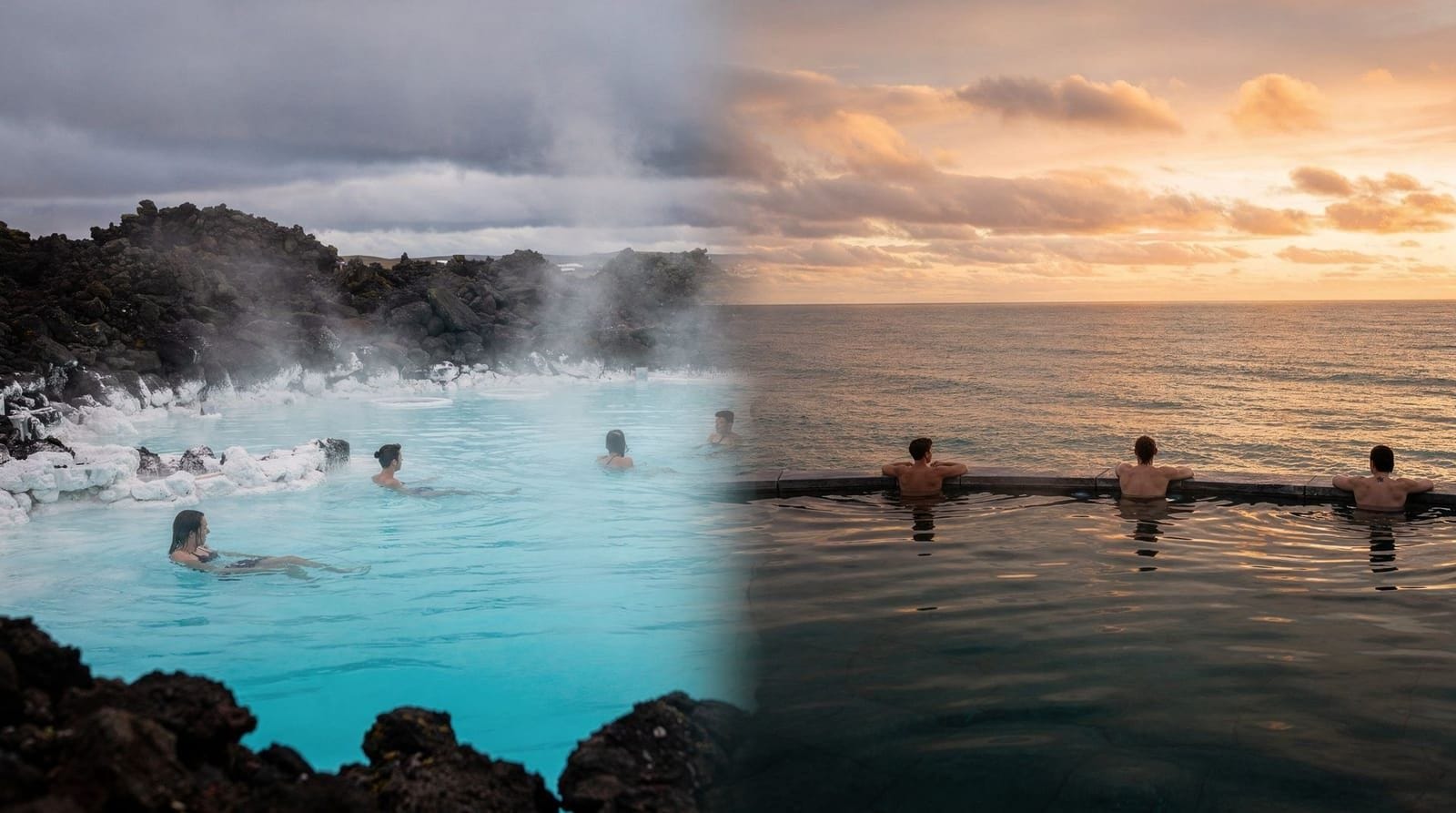
The water: The most honest thing to say is that the water is genuinely unusual. The milky blue colour is striking in photographs but even more striking in person. The silica makes the water feel slightly thick, almost silky. The temperature is comfortable at 37–40°C. The steam creates an otherworldly atmosphere, especially in cold or misty weather.
The setting: The Blue Lagoon sits in the middle of a black lava field on the Reykjanes Peninsula, 40 km from Reykjavik and 20 km from Keflavik Airport. The combination of the blue water against black lava and (sometimes) sky is genuinely photogenic. In winter, with snow on the lava and steam rising in the cold air, it is extraordinary.
The facilities: Top-tier. The changing rooms are spacious and clean. Towels, robes, and lockers are included at most package levels. The Lava Restaurant inside the facility serves good food at expected high prices. The in-water bar serves drinks you can consume while bathing. The silica mud mask included with most packages is free to use.
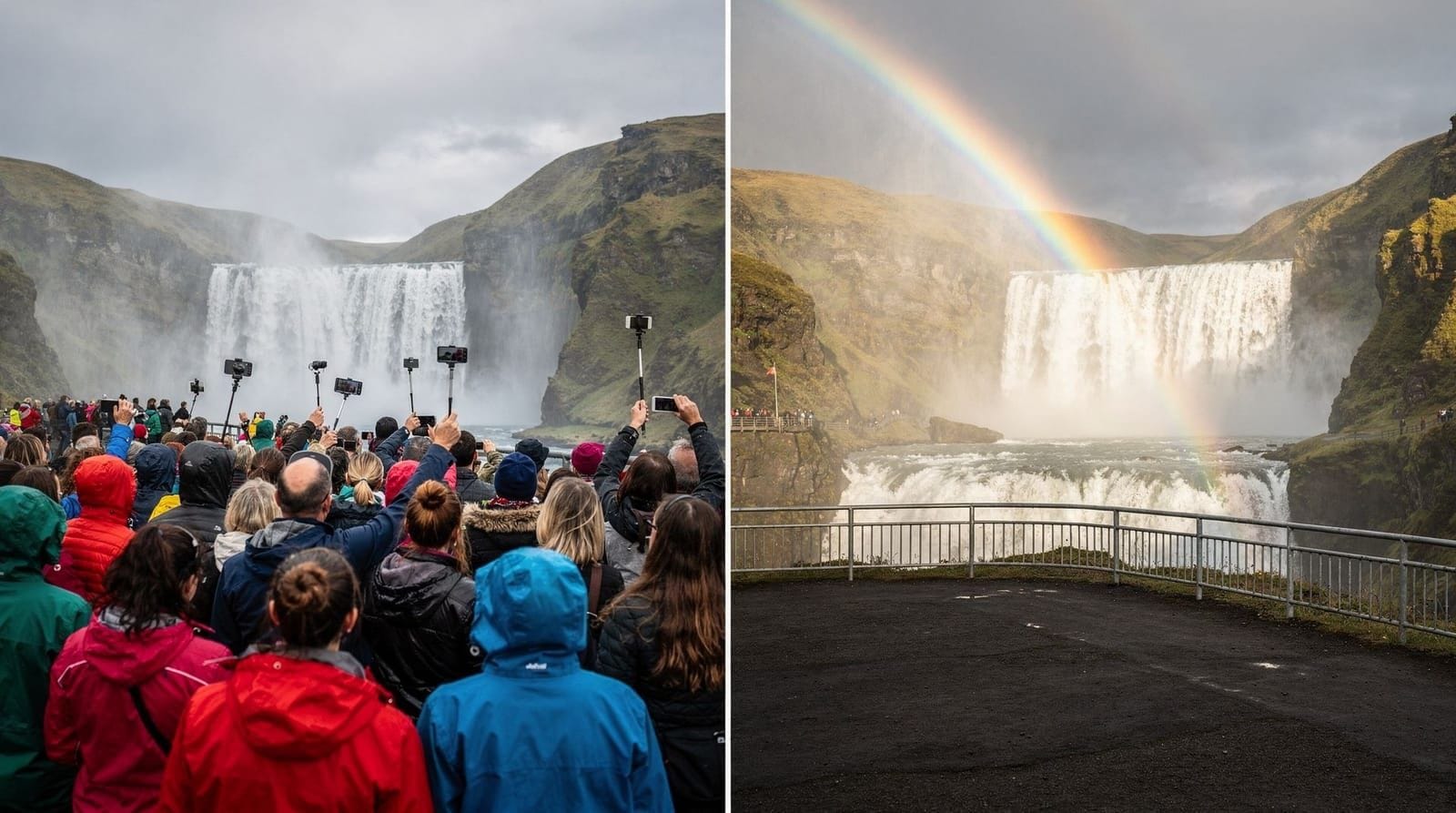
The crowds: This is where the honest assessment diverges from the marketing. Between 10:00 and 15:00 in July and August, the Blue Lagoon operates near or at capacity. The in-water bar has queues. The photographically desirable spots are consistently occupied. The changing rooms become difficult to navigate.
When the Blue Lagoon is genuinely excellent
Early morning (7:00–9:00 AM): The first entry slot of the day. The pool has the fewest people. The light is beautiful. The steam is thicker in the cool morning air. Bathing while it is still quiet and the light is low is the Blue Lagoon that the marketing photographs depict.
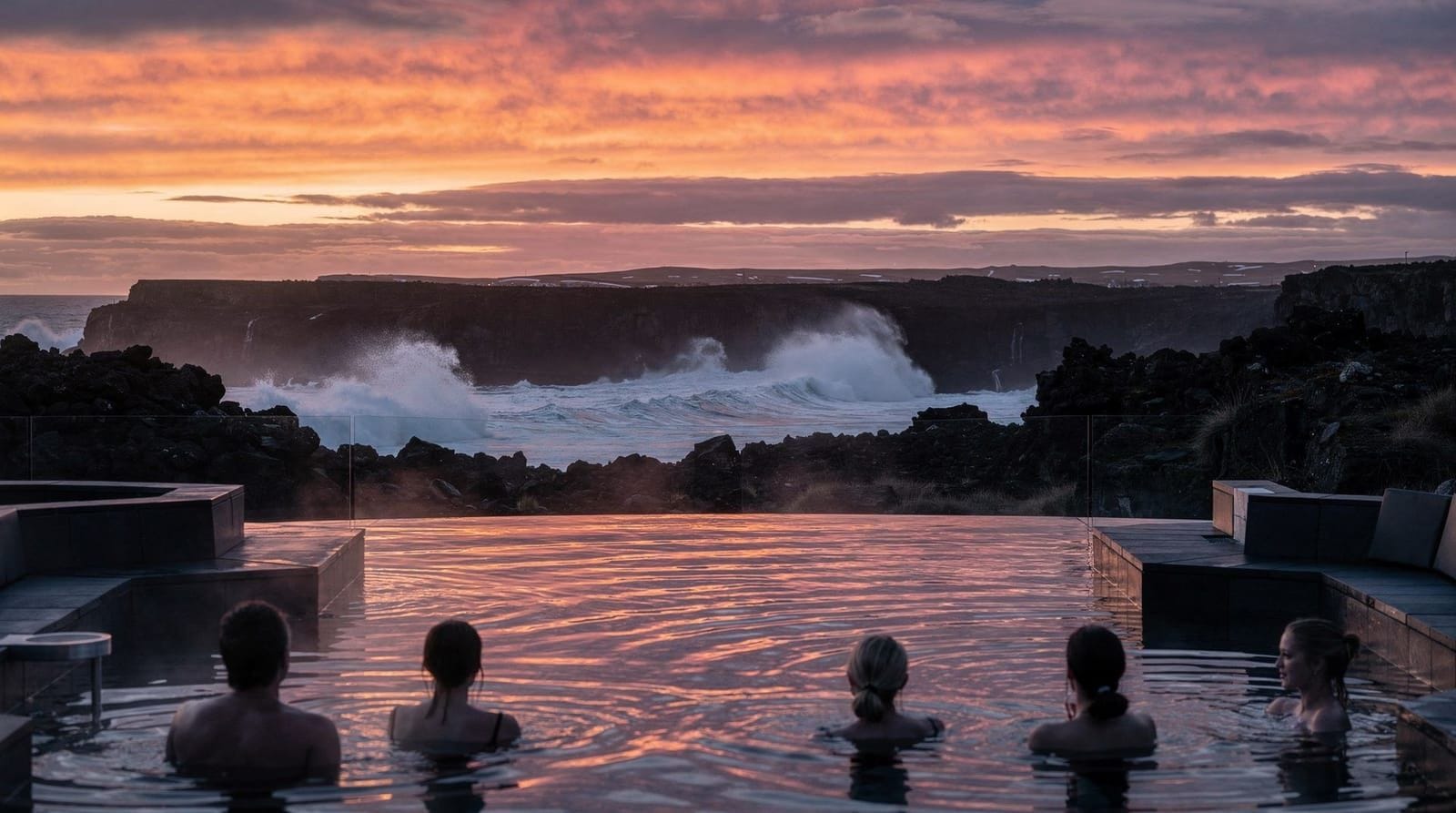
Evening (18:00–23:00): The later entry slots see far fewer visitors. In summer, the midnight sun creates extraordinary light. In winter, you may see the northern lights from the pool — one of Iceland’s truly magical experiences.
Winter (November–March): Far fewer visitors overall. Snow on the lava field. The temperature contrast between the cold air and warm water is intense. Northern lights potential. This is when the Blue Lagoon is most dramatically atmospheric.
Shoulder season (April–May and September–October): Fewer visitors than peak summer, more reasonable light conditions than deep winter, and potentially dramatic weather.
When the Blue Lagoon disappoints
Peak summer midday: Avoid 11:00–14:00 in July and August. This is the peak of the peak.
On a clear, hot summer day when you can see the power plant: The industrial infrastructure near the Blue Lagoon is less visible in mist, steam, and cloudy weather. On a bright clear day, the surroundings are less cinematic.
If you have driven 3 hours to get there: The Blue Lagoon is near Keflavik Airport. If you are staying in Reykjavik, it is a 45-minute drive. If you are on the Ring Road, it is a significant detour. It works best as an arrival-day or departure-day activity (airport + Blue Lagoon is an efficient combination).
If you expected a wild hot spring experience: Wild hot springs in Iceland (Reykjadalur hot river, some highland springs) are completely different — remote, free, and raw. The Blue Lagoon is a manicured resort. If that distinction matters to you, temper your expectations accordingly.
Price reality
Prices as of 2026 (book online in advance — walk-up is often unavailable at peak times):
- Comfort package: From approximately 12,490 ISK (~$90/€83) — towel, drink, silica mask, locker
- Premium package: From approximately 16,990 ISK (~$123/€113) — adds a second drink, algae mask, robe
- Retreat package: From approximately 28,990 ISK (~$210/€195) — spa access, products, multiple drinks
For two people, a Comfort package visit costs roughly $180 before transport. A Premium package runs $250. The Retreat package for two is $420+.
These are genuine costs. Iceland is expensive, and the Blue Lagoon is expensive even by Icelandic standards. Budget for it as a major expense, not a casual addition.
Blue Lagoon admission with transfers from ReykjavikThe volcanic disruption context
The Reykjanes Peninsula has been in an active volcanic cycle since late 2023. Eruptions near Grindavík (a town 3 km from the Blue Lagoon) caused the Blue Lagoon to close temporarily multiple times in 2023 and 2024. The facility has reopened after each closure.
Before visiting, check the current status at bluelagoon.com and safetravel.is. Eruptions on the Reykjanes Peninsula are expected to continue intermittently. Build flexibility into your itinerary if visiting the Blue Lagoon is a priority.
Sky Lagoon vs Blue Lagoon
Sky Lagoon is a newer geothermal spa 15 minutes from Reykjavik city centre (near Kópavogur). Opened in 2021.
What it does better than the Blue Lagoon:
- No crowds — capacity is tightly managed
- Dramatic oceanfront setting with views to the North Atlantic
- The 7-step Skjól ritual (cold plunge, sauna, steam room, body scrub, shower, lagoon) is a fuller wellness experience
- Closer to Reykjavik
- Slightly lower prices for comparable quality
What the Blue Lagoon does better:
- The water’s milky blue colour and silica content are unique — Sky Lagoon looks like a normal geothermal pool by comparison
- Bigger pool
- Internationally iconic — relevant if it matters to you
For first-time visitors who plan to do the Blue Lagoon and nothing else: do the Blue Lagoon. For visitors who want fewer crowds, a closer location, and a structured wellness experience: Sky Lagoon wins. See the full Blue Lagoon vs Sky Lagoon comparison.
The Secret Lagoon as a budget alternative
The Secret Lagoon at Flúðir (about 90 minutes from Reykjavik, on the Golden Circle route) is a naturally occurring hot spring with a small pool, changing rooms, and basic facilities.
Price: approximately 3,500 ISK (~$25) per person. About one-third of the Blue Lagoon’s Comfort price.
What you get: A genuine natural hot spring with visible geothermal vents bubbling in the grass, a beautiful rural setting, usually very few people, and the feeling of bathing somewhere natural rather than in a constructed resort.
What you do not get: The milky blue water, the scale, the facilities, or the visual drama of the Blue Lagoon.
For budget-conscious visitors or those who want something less touristic: the Secret Lagoon is excellent. See Secret Lagoon guide.
History and science of the Blue Lagoon
The Blue Lagoon’s origin story is unusual. The Svartsengi geothermal power plant, built in 1976, pumps geothermal seawater from 2,000 metres below the surface to generate electricity and heat. The waste water — still hot (70°C as it leaves the plant, cooling to 37–40°C in the lagoon) — was initially discharged into the surrounding lava field.
Within a few years, locals noticed that workers who bathed in the cooling run-off water seemed to have improved skin conditions. Clinical research in the 1980s confirmed benefits for psoriasis. The first bathing facility opened in 1987. The main tourist facility opened in 1992.
The science of the water:
- Temperature: 37–40°C
- Salinity: approximately 2.5% (between seawater and fresh water)
- Key active components: silica (the white mineral in the mud masks), sulfur, algae
- pH: approximately 7.5–8 (slightly alkaline)
- The blue colour: silica particles and algae scatter and absorb different wavelengths of light, creating the milky blue-white appearance
The skin benefits are specifically well-documented for psoriasis and eczema sufferers. Multiple clinical studies have shown significant symptom improvement for these conditions after regular Blue Lagoon bathing. For visitors with normal skin, the silica feels luxurious but the clinical benefit is cosmetic rather than therapeutic.
The Blue Lagoon’s relationship with the volcanic eruptions
The Svartsengi geothermal system that powers the Blue Lagoon sits in the middle of the most volcanically active zone of the Reykjanes Peninsula. The eruption cycles since 2021 have directly affected Blue Lagoon operations multiple times.
November 2023: The Blue Lagoon closed following the evacuation of Grindavík town (3 km away). Lava approached infrastructure.
December 2023 and January 2024: Further eruption events. The Blue Lagoon remained closed while the eruption cycle continued.
Reopening: The Blue Lagoon reopened after each closure and has implemented enhanced volcanic monitoring and evacuation procedures.
What this means for visitors: The Blue Lagoon can close with short or zero notice during eruption events. If this is a priority activity, check bluelagoon.com and safetravel.is before your visit. Have an alternative plan (Sky Lagoon near Reykjavik is unaffected by Reykjanes eruptions).
The verdict by visitor type
First-time visitors to Iceland on a standard itinerary: Go. The Blue Lagoon is genuinely iconic and the experience is unique. Book early morning or evening. Budget for it.
Returning visitors who went last time: Try the Sky Lagoon or a highland hot spring instead. You have done the Blue Lagoon.
Budget travellers: The Secret Lagoon is your option. The Blue Lagoon at $90+ per person is a significant luxury item.
Volcanic activity worriers: Have a backup plan. The facility has closed before and may again.
People who hate crowds: Book the earliest or latest slot, travel in winter, or choose the Sky Lagoon.
Photography prioritists: Go in winter or go at the very first morning slot in any season.
Alternative geothermal experiences compared
Iceland has dozens of geothermal bathing options. Here is a summary of how the Blue Lagoon compares to the main alternatives:
Sky Lagoon (Kópavogur, 7 km from Reykjavik): The most direct Blue Lagoon alternative. Oceanfront infinity pool overlooking the North Atlantic, 7-step Skjól ritual (sauna, cold plunge, steam room, exfoliation), no light pollution concerns. Capacity carefully managed — never overcrowded. Price: Pure pass with Skjól ritual approximately 9,990 ISK (~$72). See Sky Lagoon guide and Blue Lagoon vs Sky Lagoon comparison.
Secret Lagoon (Flúðir, 90 min from Reykjavik): Natural hot spring pool with visible geothermal activity, located in rural South Iceland near the Golden Circle. The pool temperature is around 38–40°C. Basic facilities (changing rooms, no spa services). Price: 3,500 ISK (~$25). Far fewer people, authentic feel, excellent value. See Secret Lagoon guide.
Mývatn Nature Baths (North Iceland): Similar concept to the Blue Lagoon — geothermal run-off water in a striking volcanic landscape — but with dramatically fewer visitors, better views of the Mývatn volcanic landscape, and lower prices. The water is rich in silica and minerals, similar to Blue Lagoon water. Price: approximately 6,500 ISK (~$47). See Mývatn Nature Baths guide.
Reykjadalur hot river (Hveragerði, 45 min from Reykjavik): Free. A 45-minute hike up a geothermal valley ends at a river warm enough to bathe in. No facilities. No admission. No infrastructure. Very different experience — raw, natural, no dress code. See Reykjadalur hot river guide.
Community pools (sundlaugar): Every Icelandic town has a community geothermal pool with hot pots. Entry is 700–1,500 ISK ($5–11). Westman Islands, Hofsós, Laugarvatn Fontana — all have community pools with outstanding settings. The Laugarvatn Fontana pool sits on the shore of a geothermal lake and has a direct sauna over geothermal vents rising through the lakebed.
Practical logistics for your Blue Lagoon visit
Getting there:
- By car: 45 minutes from Reykjavik, 20 minutes from Keflavik Airport. Parking at the Blue Lagoon is €5–10 per visit. Follow signs from Route 43.
- By bus from Reykjavik: The Reykjavik Excursions Flybus+ service adds a Blue Lagoon stop onto airport transfer routes. Convenient for departure day if flying out of Keflavik.
- By organised transfer: Several Reykjavik-based operators run daily transfers. Slightly more convenient than self-driving if you are not renting a car.
What to wear: Swimsuit. Flip-flops or waterproof sandals for changing rooms (these protect from the mineral-rich floor). Everything else is provided (towel, robe at most package levels).
How long to allow: The Blue Lagoon recommends 2–3 hours as a typical visit. Most people spend 1.5–2 hours in the water, plus changing and possibly eating. Allow 3 hours total from arrival to departure to avoid rushing.
Lockers: Provided. You receive a wristband with a built-in chip that controls your locker and tracks any purchases (drinks, food). Your credit card is registered at check-in and charged at the end.
Hair care: The silica-rich water tangles and dries hair significantly. The facility provides free conditioner at the showers. Apply conditioner before entering the water, leave it in, then rinse at the end. This is not optional unless you want very difficult post-visit hair.
Package comparison: which level to choose
Comfort (from ~12,490 ISK / $90):
- Entry to the lagoon
- 1 drink at the in-water bar
- Silica mud mask
- Towel
- Access to changing rooms
This is adequate for most visitors who want the lagoon experience without extras.
Premium (from ~16,990 ISK / $123):
- Everything in Comfort
- Second drink
- Algae mask (in addition to silica mask)
- Bathrobe
Retreat (from ~28,990 ISK / $210):
- Everything in Premium
- Access to the private Retreat Spa (quieter, smaller pool)
- Multiple beverages
- Skincare products to use in the spa
- Spa scrub
The Retreat Spa is genuinely calmer and less crowded than the main lagoon. For visitors who are sensitive to crowds or want a more spa-like experience, it can be worth the premium. For standard lagoon bathing, Comfort is sufficient.
Geothermal spa comparison at a glance
| Spa | Distance from Reykjavík | Price (adult) | Best for |
|---|---|---|---|
| Blue Lagoon | 45 min | ~$90–210 | Iconic milky-blue water, first-timers |
| Sky Lagoon | 15 min | ~$72 | No crowds, oceanfront ritual, closer to city |
| Secret Lagoon | 90 min | ~$25 | Budget travellers, natural feel |
| Mývatn Nature Baths | North Iceland | ~$47 | Similar concept, far fewer visitors |
| Reykjadalur hot river | 45 min + 45-min hike | Free | Raw, natural, no facilities |
Booking timeline and cancellation policy
Book the Blue Lagoon as early as your itinerary allows — for July and August, 4–8 weeks ahead is not excessive, since the most desirable early-morning and evening slots sell out first. The booking system assigns a specific entry window (usually a 1-hour arrival slot); arriving significantly late can mean being turned away or rebooked.
Cancellation policy: standard bookings can typically be changed or refunded up to 24 hours before the slot, though terms have shifted over the years — always check the current policy at booking time. If the facility closes due to volcanic activity on the Reykjanes Peninsula, affected bookings are normally refunded or rescheduled automatically; keep your confirmation email as proof either way.
Who should skip it entirely
Not every Iceland visitor needs the Blue Lagoon, and it is fine to skip it. Skip it if: you’re on a tight budget and would rather spend that $90–200 per person on a glacier hike or ice cave tour; you specifically want a wild, undeveloped hot spring experience (go to Reykjadalur instead); or you are visiting for a second or third time and already did it. None of these are wrong choices — the Blue Lagoon is one experience among many excellent ones in Iceland, not an unmissable rite of passage.
Combining the Blue Lagoon with a wider itinerary
Because it sits near Keflavík Airport rather than in Reykjavík itself, the Blue Lagoon works best logistically as an arrival-day or departure-day activity rather than a dedicated excursion from the city. Landing in the morning, checking your bags at the airport or arranging early hotel check-in, and heading straight to the Blue Lagoon before continuing into Reykjavík is a genuinely efficient way to fight jet lag and make use of otherwise dead time. The same logic applies in reverse on a departure day with a late flight.
Visitors doing a full Reykjanes Peninsula day — combining the Blue Lagoon with the Bridge Between Continents, Gunnuhver geothermal area, and Reykjanesviti lighthouse — get more value from the region than the spa alone, and the peninsula’s lava-field scenery is worth the extra few hours regardless of what the Blue Lagoon itself delivers on the day.
Frequently asked questions about the Blue Lagoon
Can I just show up at the Blue Lagoon without a booking?
Increasingly no. The Blue Lagoon uses timed entry and often sells out weeks ahead in peak summer. Walk-in availability exists occasionally in low season but is not reliable. Book online.
Does the water damage hair?
The silica in the Blue Lagoon water can dry out and tangle hair significantly. Hair conditioner is provided at the lagoon (free at the showers). Apply it before you enter and again after. People with coloured or chemically treated hair should check in advance whether the water might affect their colour.
Is there a minimum age?
Children under 2 are not permitted. Children between 2 and 15 must be accompanied by a parent or guardian. The environment (shallow water, steam, in-water bar) is suitable for older children but not designed around young children.
What should I bring?
Swimsuit (mandatory). The Blue Lagoon provides towels, lockers, and robes with most packages. Flip-flops or waterproof sandals for the changing rooms are sensible but not mandatory. Leave jewellery at your accommodation — the water can discolour some metals.
Is the Blue Lagoon near Keflavik Airport?
Yes — approximately 20 km from Keflavik Airport, a 20-minute drive. Many visitors combine their first or last day with a Blue Lagoon visit en route to/from the airport. This is efficient and popular.
What if the Blue Lagoon is closed due to volcanic activity?
Check bluelagoon.com and safetravel.is for current status before your visit. If it is closed, the Sky Lagoon near Reykjavik is the natural alternative. Some operators sell Golden Circle + Secret Lagoon combinations that reroute around any Reykjanes Peninsula closure.
Blue Lagoon and Reykjanes Peninsula tour from Reykjavik