Iceland tourist traps — what to skip and what to do instead
Reykjavik: From Reykjavik Blue Lagoon admission with transfers
What are Iceland's biggest tourist traps?
The Laugavegur shopping street souvenir shops, overpriced hotel restaurant meals, and helicopter tours sold as 'once in a lifetime' at routine markup. More specific: the Blue Lagoon at peak summer midday, guided Golden Circle tours in August, and airport exchange bureaux. Each has a better alternative.
The caveat
“Tourist trap” means different things. A tourist trap can be:
- A genuinely mediocre experience sold at premium prices
- A good experience destroyed by overcrowding
- An unnecessary spend when a free or much cheaper alternative exists
- Something marketed as “unmissable” when it is, in fact, missable
Iceland has all four types. This guide names them specifically.
| Biggest traps | Airport exchange desks, hotel-desk helicopter tours, peak-midday Blue Lagoon |
| Genuinely worth it | Húsavík whale watching, Sky Lagoon, small-group glacier hikes |
| Cost of avoiding traps | Can save 20,000–80,000+ ISK over a 10-day trip |
| Best single fix | Book everything online in advance, never at an airport kiosk |
1. Airport currency exchange bureaux
The trap: Changing money at Keflavik Airport’s exchange desks.
Why it’s a trap: Exchange rates at airports are consistently 10–15% worse than interbank rates. On a €1,000 exchange, you lose €100–150 compared to using a card with no foreign transaction fees.
The alternative: Use a Wise card, Revolut, Starling (UK), or Charles Schwab debit card (US). Your card’s interbank rate beats any physical exchange desk. Iceland is one of the most card-friendly countries on earth — you will almost certainly not need cash. See Iceland currency and money.
2. Hotel restaurant meals — every single night
The trap: Eating every dinner at your hotel or guesthouse restaurant because it is convenient.
Why it’s a trap: Hotel restaurants in Iceland, especially along the Ring Road, charge €30–50 for a main course that is occasionally good but frequently unremarkable. The wine markup is brutal.
The alternative: Cook in the self-catering kitchen that most guesthouses have, or buy from Bónus or Krónan supermarkets. A dinner from Bónus (smoked lamb, skyr, bread, cheese) costs under €10 per person and is often better quality for its purpose than a tired hotel pasta. When you do eat out, eat at lunch (middag) — the same restaurants typically offer smaller but more affordable midday menus. See cheap eats in Iceland.
3. Laugavegur souvenir shops
The trap: The souvenir shops along Reykjavik’s main shopping street selling “authentic” Icelandic woolens.
Why it’s a trap: The majority of items marketed as Icelandic sweaters (lopapeysa) in touristy shops on and around Laugavegur are not made in Iceland. Many are manufactured in China or elsewhere and imported. Prices are high; authenticity is absent.
The alternative: Buy lopapeysa directly from the Handknitting Association of Iceland (Handprjónasamband Íslands) at Skólavörðustígur 19 in Reykjavik. Everything there is hand-knitted in Iceland. Price: 25,000–40,000 ISK (~$180–290). Yes, it costs more — because it is actually what it claims to be. Or buy yarn and knit your own. Icelanders genuinely find this funny and charming.
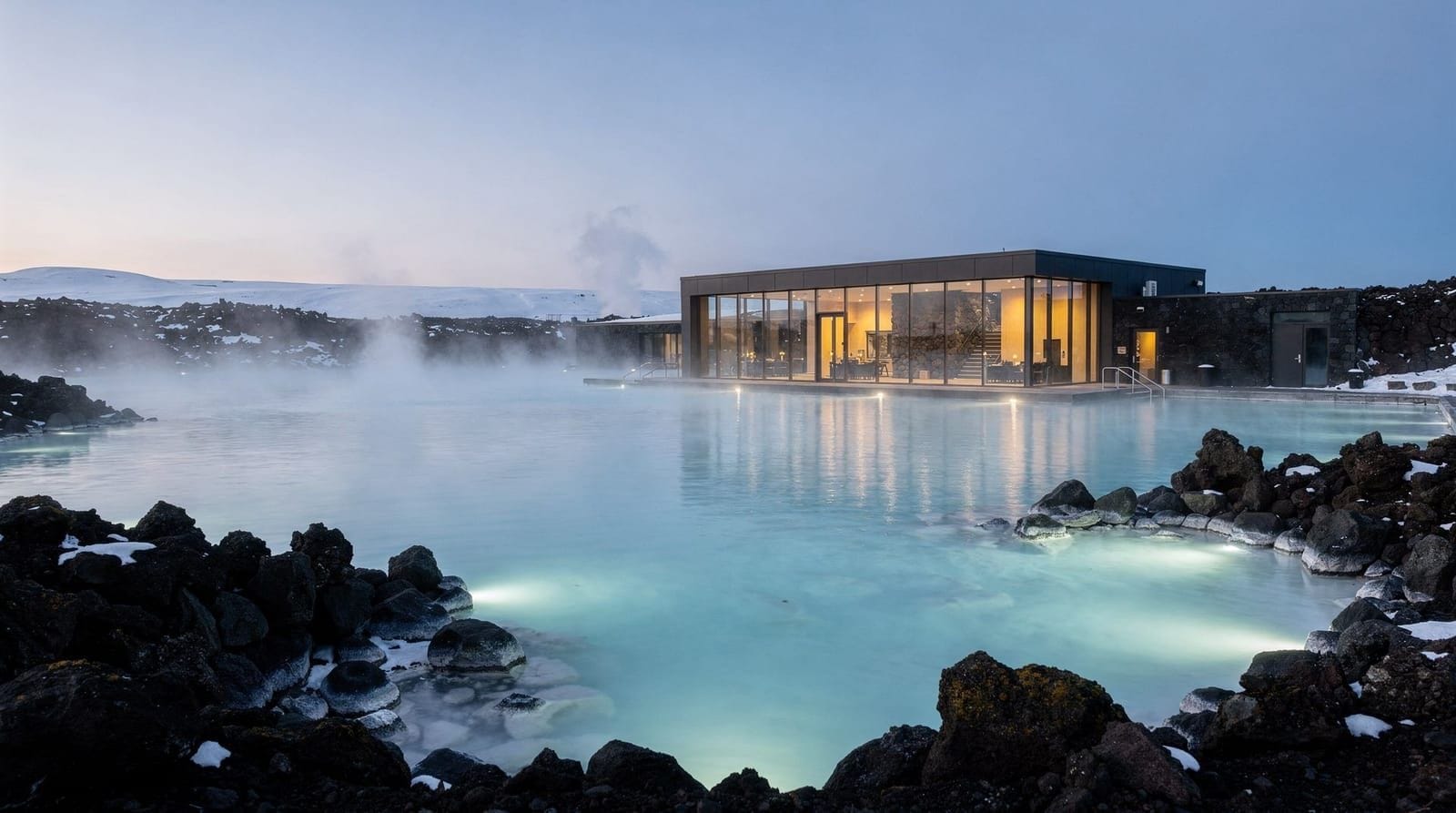
4. The Blue Lagoon on a summer midday
The trap: Booking the Blue Lagoon for 12:00–14:00 in July or August.
Why it’s a trap: At peak summer midday, the Blue Lagoon holds its maximum capacity of visitors. The locker rooms are shoulder-to-shoulder. The pool is packed. The bar queue is 20 minutes. The swim-up experience is marred by crowds.
The alternative: Book the first slot of the day (7:00 AM) or an evening slot. The Blue Lagoon is open until 22:00 or 23:00 depending on season. Early morning and evening are dramatically quieter. Or see is the Blue Lagoon worth it and Sky Lagoon for a thorough comparison.
Blue Lagoon admission with transfers from Reykjavik5. Guided Golden Circle tours in peak August
The trap: An August guided Golden Circle bus tour from Reykjavik.
Why it’s a trap: The Golden Circle is genuinely worth doing. But in peak August, a full-size coach tour means standing in a queue to see Geysir erupt, a queue at the Gullfoss viewpoint, and a very brief window at each stop. You arrive at Þingvellir in a convoy with five other coaches.
The alternative: Rent a car and drive the Golden Circle yourself, leaving Reykjavik at 7:00 AM rather than the standard coach departure of 9:00–10:00. You arrive at Þingvellir before the day tour coaches. You spend 90 minutes at Gullfoss instead of 20. You control your own pace. See Golden Circle self-drive guide. If you must take a guided tour, a small-group tour (max 8–12 people) gives a very different experience than a 50-seat coach. Costs more; worth it.
6. Glacier helicopter tours sold at hotel desks
The trap: The helicopter glacier tours sold at Reykjavik hotel concierge desks as “ultimate Iceland experiences.”
Why it’s a trap: Some of these tours are genuinely spectacular. The trap is two-fold. First, the hotel takes a referral commission, so the price is often 20–30% higher than booking directly with the helicopter company. Second, a 20-minute flight-and-land costs approximately €350–450 per person — for what amounts to a very brief look. The marketing language (“once in a lifetime,” “see Iceland from above”) is designed to make you feel you will regret not booking.
The alternative: If you want a glacier experience, a glacier hike on Sólheimajökull or a Vatnajökull ice cave tour costs one-quarter of the price and gives you hours of engagement rather than minutes. Book directly with the operator rather than through hotel desks. See glacier hiking in Iceland.
7. Restaurant “Icelandic lamb” at tourist-area prices
The trap: Paying €45 for “traditional Icelandic lamb” at a tourist-district restaurant in Reykjavik.
Why it’s a trap: Icelandic lamb is genuinely excellent. The problem is that the markup at tourist-facing restaurants is extreme. The lamb itself is not worth €45 per plate — it is worth €25 at an honest Reykjavik restaurant outside the main tourist drag.
The alternative: Walk two streets off Laugavegur. Restaurants on Skólavörðustígur, Vitastígur, and the streets around the Hlemmur bus terminal charge 30–40% less for equivalent quality. Reykjavik Food Hall (Hlemmur Mathöll) at the old Hlemmur bus terminal has multiple vendors including lamb dishes at reasonable prices alongside excellent coffee and beer. See best restaurants in Reykjavik for specific picks that avoid the tourist-drag markup.
8. “Northern lights guarantee” tours
The trap: Tour operators advertising “guaranteed northern lights sightings” for a premium price.
Why it’s a trap: No one can guarantee northern lights. The aurora depends on solar activity (unpredictable), cloud cover (changeable), and your location. “Guarantee” in this context means the operator will reschedule you if conditions are bad — not that you will see them.
What to check: Any responsible northern lights tour will state their rebooking policy. A good operator will rebook you free of charge if conditions are poor. A bad operator pockets the fee and points at a faint smear of sky and calls it the aurora.
The alternative: Book a northern lights tour with a clear rebooking policy and realistic descriptions. Check aurora forecasts yourself at en.vedur.is (look for “geomagnetic forecast”). If the Kp index is 3 or above and skies are clear, you have a real chance. See best time to see northern lights.
9. Buying bottled water
The trap: Buying bottled water in Reykjavik, at petrol stations, or at tourist sites.
Why it’s a trap: Iceland’s tap water is among the cleanest in the world — cold, glacially sourced, and excellent tasting. Bottled water in Iceland costs 250–400 ISK ($2–3) per bottle. A visitor buying two bottles per day for 10 days spends 5,000–8,000 ISK on water they could get free from every tap.
The alternative: Bring a reusable water bottle from home and fill it from any tap, including petrol station bathrooms, guesthouse kitchens, and public toilet taps. This saves money and reduces plastic waste. See free things to do in Iceland for other zero-cost wins in the same spirit.
10. “Iceland experiences” sold at Keflavik Airport on arrival
The trap: The tour and experience kiosks in Keflavik Airport arrivals trying to sell you Golden Circle tours, Blue Lagoon packages, and excursions as you walk out bleary-eyed from a transatlantic flight.
Why it’s a trap: Airport kiosk tours are invariably more expensive than the same tours booked online. You are tired, you lack information, and the selection is limited to whoever paid for the kiosk space. The pressure to book before you “miss out” is manufactured.
The alternative: Research and book tours before you travel. The main operators (Reykjavik Excursions, Gray Line, Iceland Rovers, and the operators directly) all sell online at better prices. If you want to book on arrival, wait until you are in Reykjavik and have had coffee — you will make better decisions.
Hidden charges to watch for
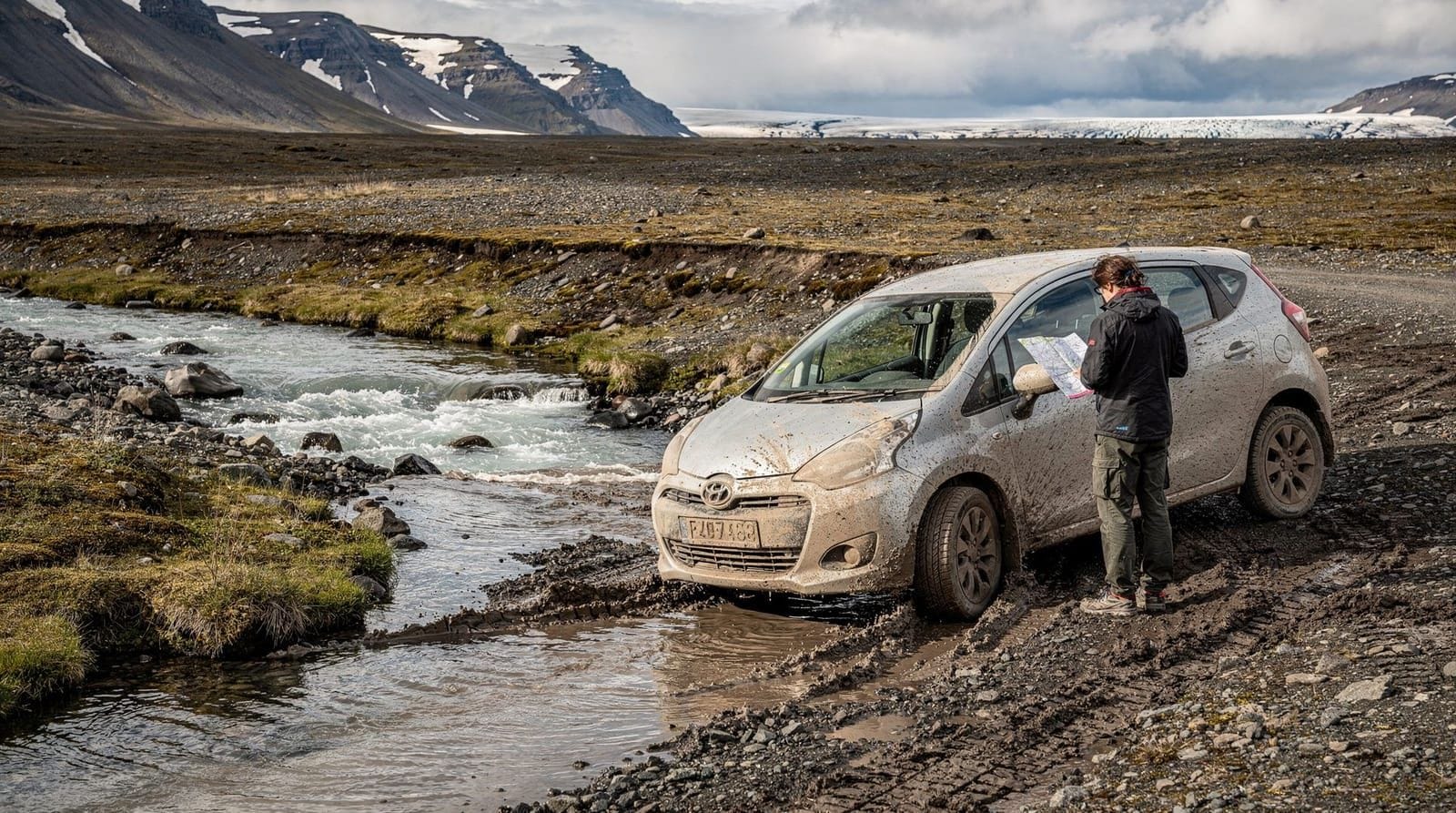
Car rental hidden costs
Iceland car rental is one of the most complaint-prone sectors in Icelandic tourism. Specific issues:
Insurance upselling at the desk: When you arrive to collect your rental car, staff will typically try to sell you additional coverage — gravel protection, sand and ash protection, Super CDW. These are not always unnecessary — gravel damage in Iceland is common — but the desk staff are incentivised to upsell. Know what your travel insurance and credit card already cover before you arrive at the desk.
The age surcharge: Drivers under 25 pay surcharges of $15–30/day at most Icelandic rental companies. This is industry-standard, not negotiable, and often not prominently displayed in online booking totals.
One-way fees: Renting in Reykjavik and returning in Akureyri (or vice versa) typically adds €150–300 in one-way fees. Check before booking a one-way itinerary.
Fuel policy: Most Icelandic rentals use a full-to-full policy (return with same level of fuel as received). Some use full-to-empty (you pay upfront for a full tank and return empty). Full-to-empty is slightly more convenient but almost always more expensive — you pay for fuel you do not use.
Waterfall and viewpoint fee creep
Several of Iceland’s most popular viewpoints have introduced paid parking in recent years: Gullfoss, Jökulsárlón, and the Seljalandsfoss area now charge for parking. Fees are typically 700–1,200 ISK ($5–9) per vehicle.
These are not traps exactly — the fees go to facility maintenance and crowd management — but they are not always clearly displayed until you are in the queue. Have ISK or a card ready.
Tour add-ons sold after booking confirmation
Some tour operators confirm your booking and then send follow-up emails offering “upgrades” or “add-ons” — a photo package, an extended tour, a restaurant dinner combined with the tour. Some are genuinely valuable; others are padding. Do not feel obligated to respond to these unless the add-on is something you specifically want.
11. Buying “Iceland-designed” gifts that are not from Iceland
The trap: Purchasing items labelled “Inspired by Iceland,” “Iceland design,” or “Iceland-style” at souvenir shops near major attractions.
Why it’s a trap: These items are often mass-produced elsewhere and imported. The Norðurljós (Northern Lights) candles, the puffin stuffed toys, the “Viking” helmets, the “Iceland” branded gear — most are manufactured in China or other low-cost production countries. You are paying for the Icelandic branding, not Icelandic craftsmanship.
The alternative: Products genuinely made in Iceland and worth buying:
- Lopapeysa sweaters from the Handknitting Association (Skólavörðustígur 19, Reykjavik)
- Icelandic skincare from Skyn Iceland or Angan (uses local botanical ingredients)
- Locally produced craft beer (bottles to take home)
- Icelandic sea salt from Saltverk (harvested in the Westfjords)
- 66°North outdoor clothing (designed and originally made in Iceland, now manufactured abroad but a genuine Icelandic brand)
- Books about Iceland from Mál og Menning bookshop
12. Paying for “professional” northern lights photography tours
The trap: Photography tours that promise professional northern lights photographs of you in the landscape, charged at €200–300 per person.
Why it’s a trap: The photographs will look good, but your phone or any camera on a tripod can produce very similar results in good aurora conditions. The “professional” add-on is primarily a premium on the tour itself, not a service with unique technical value for most travellers.
The alternative: A standard northern lights tour (€80–90) with your own camera on a small tripod delivers 90% of the same outcome. Long-exposure northern lights photography is not difficult with basic settings knowledge — most cameras have an “auto” or “scene mode” for this. If you genuinely want professional photography instruction, find a dedicated photography workshop run by an established Icelandic photographer.
What is genuinely worth paying for
Not everything expensive in Iceland is a trap. Some things are worth their price:
Small-group glacier hikes: A certified glacier guide on Sólheimajökull or Vatnajökull costs €80–100 per person. This is appropriate for what you get — specialised safety knowledge, equipment, and access to terrain you cannot enter alone. See glacier hiking in Iceland.
Húsavík whale watching: €80–100 per person for 3–4 hours. Legitimate value — the whale encounter rates are high, the boats are well-run, and seeing humpback whales at close range in an Icelandic fjord is a genuinely memorable experience. See whale watching in Húsavík.
Húsavík original whale watching tourSky Lagoon: Priced at approximately €60–80 for a full Skjól ritual experience, it delivers genuine wellness value in a well-designed facility. Less famous than the Blue Lagoon but more consistently good value. See Sky Lagoon guide.
Northern lights boat tours from Reykjavik: These use smaller vessels and navigate away from the harbour’s light pollution. Typically €80–90. When conditions are good, the experience of seeing northern lights reflected in the ocean from a boat is extraordinary. The rebooking guarantee (free reschedule in poor conditions) is standard with reputable operators.
The pattern behind Iceland’s tourist traps
Looking across all twelve traps above, a pattern emerges worth naming explicitly: almost every genuine trap in Iceland involves either (1) paying a middleman markup — a hotel desk, an airport kiosk, a tour add-on email — for something you could book directly at a lower price, or (2) paying full price for an experience during its most crowded window, when a small timing shift (earlier morning, shoulder season, a quieter alternative site) delivers most of the same value for less money and less crowding.
This means the single highest-leverage habit for avoiding Iceland’s tourist traps isn’t research into every specific trap — it’s a simple rule: book directly with the operator, book online rather than in person, and book off-peak whenever your schedule allows. Applying that one rule alone would have avoided roughly two-thirds of the traps listed above. For a broader look at what’s genuinely overhyped versus underrated across the whole trip (not just spending traps), see overrated vs underrated Iceland, and for the mistakes that aren’t about money at all, see common Iceland mistakes.
A useful mental test before any Iceland purchase over about 10,000 ISK: could I get 80% of this experience for a fraction of the price with a small timing or location change? If the honest answer is yes — as it is for the Blue Lagoon at midday, the hotel-desk helicopter tour, or the souvenir “Iceland” hoodie — that’s your signal it’s a trap. If the honest answer is no — as with Húsavík whale watching or a certified glacier hike — the price is doing real work and it’s worth paying.
Frequently asked questions about Iceland tourist traps
Is the Blue Lagoon a tourist trap?
It depends on when and how you go. The Blue Lagoon is a genuinely unique geothermal experience — the water, the setting, and the quality of facilities are real. The trap version is booking the peak summer midday slot and paying for upgrades you do not use. See the full is the Blue Lagoon worth it guide.
Are the Reykjavik walking tours worth it?
Free and paid walking tours of Reykjavik are generally good. The city is compact and walkable. Paid private walking tours with knowledgeable guides add value; large free tour groups with 30+ people less so. Check reviews specifically for the guide, not just the tour.
Is Geysir worth visiting?
Yes. Seeing Strokkur erupt every 5–10 minutes is genuinely impressive. The trap is spending a full day at Geysir — 45–60 minutes is enough. It is always combined with the Golden Circle loop. See Geysir Strokkur guide.
Are whale watching tours worth it from Reykjavik?
Sightings are not guaranteed from Reykjavik, which sees lower whale populations than Húsavík. For serious whale watching, the Húsavík boats have consistently higher sighting rates and more interesting species (humpbacks, blues). See whale watching in Iceland. From Reykjavik, minke whales and dolphins are the most common sightings.
Are airport shuttle buses a tourist trap?
No more than anywhere else. The Flybus and Airport Express buses are fair value at ~3,500 ISK for the Reykjavik transfer. Taxis and private transfers are legitimate options if you have heavy luggage or are arriving late — they just cost significantly more (~14,000–18,000 ISK).
What is the most overpriced single thing to buy in Iceland?
Petrol station hot dogs at tourist sites are marked up. Any food item at a popular waterfall car park. A weak espresso at a café inside a major attraction versus two streets away. The price differential at high-traffic tourist pinch points is real.
Should I buy the tourist “Iceland card” for Reykjavik?
The Reykjavik City Card gives free entry to multiple museums and free bus transport. For a 2-day Reykjavik city focus with time at several museums, it pays for itself. For travellers spending most of their time outside Reykjavik on a road trip, it likely does not.
Is it worth booking tours through a hotel concierge desk?
Rarely. Hotel desks typically take a referral commission, so the same tour is often 15–30% cheaper booked directly with the operator or through a comparison site. The one exception is genuinely last-minute availability when everything online is sold out — convenience has some value there.
Are Reykjavik’s souvenir shops all tourist traps?
No — some sell genuinely Icelandic products (specific yarn shops, the Handknitting Association, local design studios), but the ones directly on the busiest stretch of Laugavegur selling generic “Iceland” branded goods skew heavily toward imported mass production. Check labels and ask directly where an item was made if authenticity matters to you.