Common Iceland mistakes — what first-time visitors get wrong
What is the single biggest mistake first-time Iceland visitors make?
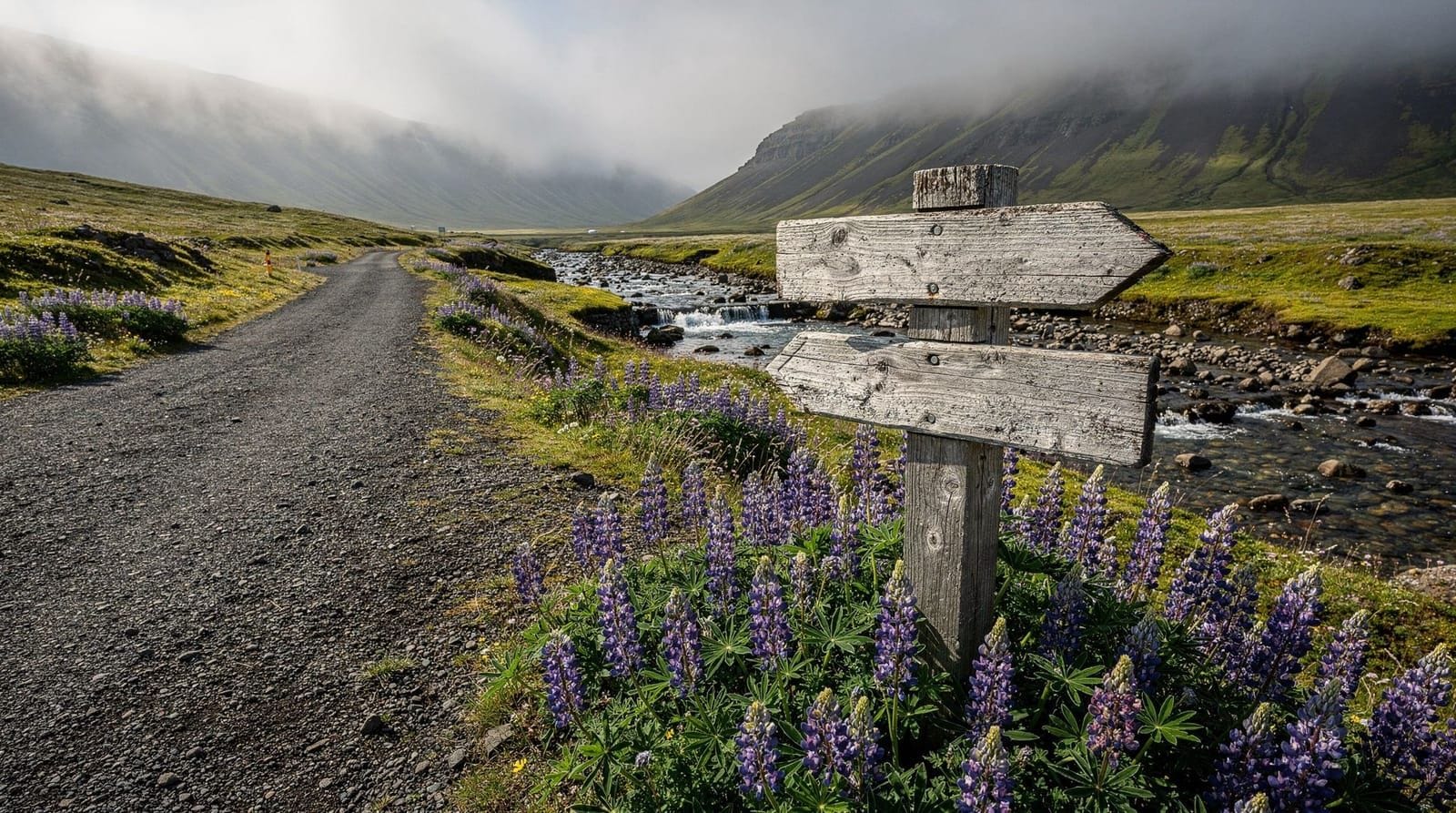
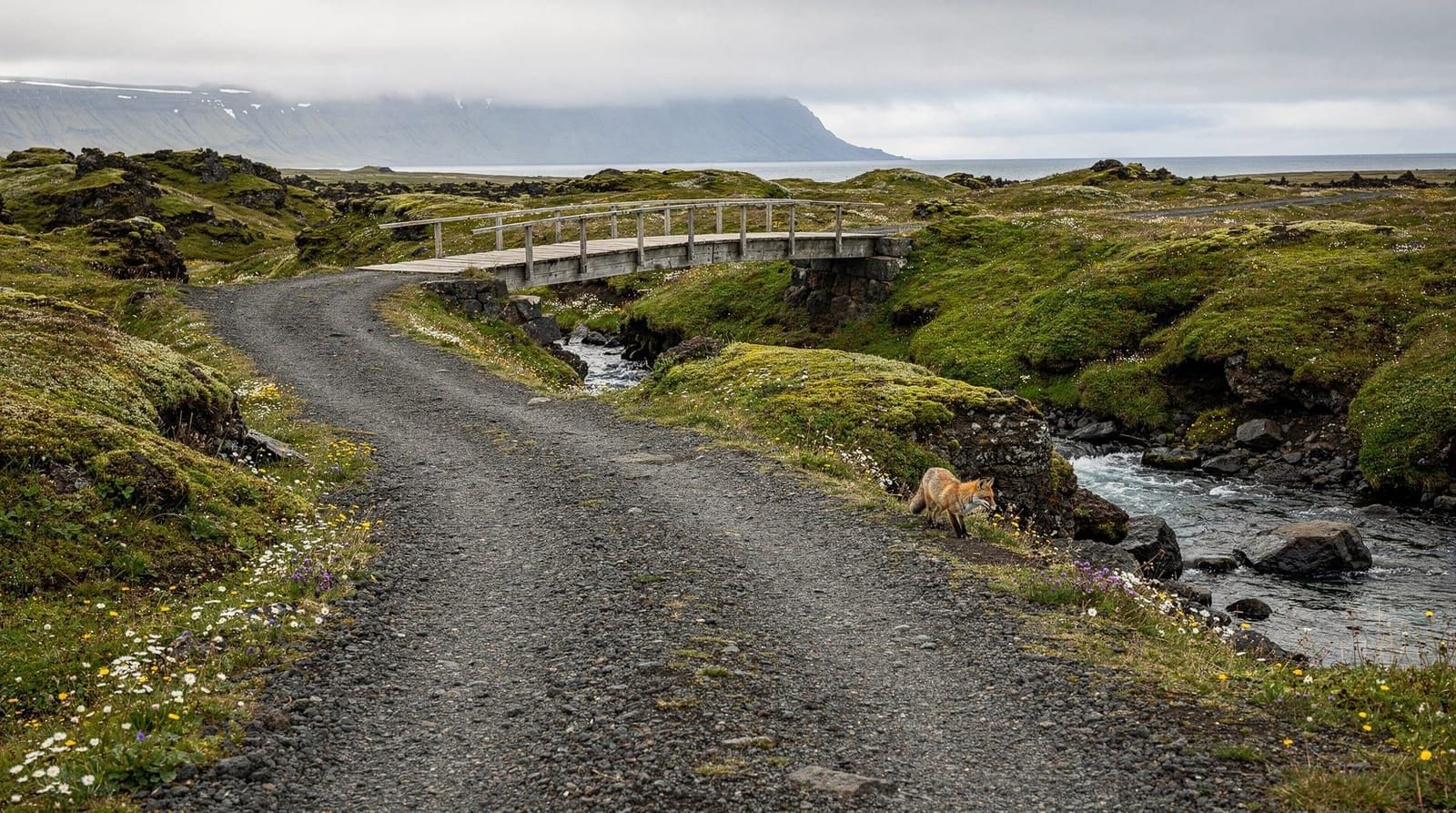
Underestimating driving times and distances. Iceland's roads look short on a map but take significantly longer than GPS predicts — gravel roads, single-lane bridges, animals on the road, and mandatory stops for beauty mean 100 km on the Ring Road can take 2.5–3 hours, not 1.5.
Why Iceland mistakes happen
Iceland is not technically difficult to travel. Roads are signposted, English is universal, card payments work everywhere, and the country is physically safe. The mistakes that ruin Iceland trips are almost always planning mistakes — expectations set by marketing rather than reality, itineraries built on Google Maps driving times rather than actual road conditions, and packing lists that assumed Icelandic summer means warm.
This guide addresses the 12 most common mistakes specifically.
| Biggest mistake | Underestimating driving times |
| Most expensive mistake | 2WD on an F-road (€5,000–15,000 in damage) |
| Easiest fix | Add 30–50% to Google Maps driving estimates |
| Cheapest insurance | Downloading the 112 Iceland app (free) |
| Best time to book Ring Road stays | 3–4 months ahead for July–August |
Mistake 1: Building an itinerary around Google Maps driving times
Google Maps estimates driving time on Icelandic roads without accounting for:
- Gravel roads (maximum safe speed: 60 km/h or less)
- Single-lane bridges (slow down, yield, repeat)
- Sheep on the road (unpredictable)
- Photo stops (you will stop for things you did not plan to stop for)
- Weather delays (conditions that are fine to drive through slowly but require stopping or turning back)
- Actual traffic in peak season
The rule: Add 30–50% to Google Maps estimated driving times for any route involving gravel roads or multiple stops. A 3-hour Google Maps estimate should be planned as 4.5 hours.
Specific trap: The Ring Road is 1,332 km. Google Maps says 13–14 hours of pure driving. Actual travel time with stops and realistic pacing: 6–8 days minimum. Attempting it in 4–5 days means racing through at 300 km/day and seeing nothing properly.
Mistake 2: Not checking the weather forecast
The Icelandic Met Office (en.vedur.is) provides accurate 24–48 hour forecasts. Most visitors check it once and assume it stays stable. Iceland’s weather changes within hours.
The practical consequence: People drive 2 hours to Jökulsárlón in thick fog that was not forecast, spend an hour there seeing nothing, and drive home. The same people who leave Reykjavik for Þingvellir in a red weather warning (dangerous wind and storm conditions) because they did not check.
The fix: Check en.vedur.is every morning. Check road.is for road conditions. If the forecast shows orange or red warnings for your planned route, have a plan B indoors. See Iceland weather explained.
Mistake 3: Packing cotton as a base layer
Cotton holds moisture against your skin. In Iceland’s frequently wet and windy conditions, wet cotton against your skin causes rapid heat loss. Hypothermia is a risk in Iceland even in summer at elevation.
The fix: Merino wool or synthetic base layers only. A merino wool long-sleeve top worn under a waterproof jacket keeps you warm even when wet. See the full what to pack for Iceland guide.
Mistake 4: Booking accommodation too late
Iceland’s accommodation along the Ring Road fills up months ahead for July and August. Guesthouses in popular spots (Vík, Skaftafell, Höfn, Mývatn area) start booking out in February for the following summer.
The consequence: People end up in Reykjavik guesthouses for their entire trip because Ring Road accommodation was full, or drive 2 hours extra per night because the only availability is in the wrong location.
The fix: Book Ring Road accommodation at least 3–4 months ahead for July–August travel. If you are flexible on season, September and May have much better availability. See best time to visit Iceland.
Mistake 5: Taking a 2WD car on F-roads
F-roads are clearly marked on maps with an “F” prefix (F208, F225, etc.). They are highland tracks requiring genuine 4x4 clearance — not just 4WD capability, but high ground clearance and ideally a reinforced underbody.
What happens: People in standard rental cars attempt F-roads, damage the car, get stuck in river crossings, and call for rescue. The rental company invoice arrives later: €5,000–15,000 in damages, none covered by insurance because the car was used against the rental terms.
The fix: If your rental car is a 2WD or a low-clearance 4WD, do not attempt F-roads. Þórsmörk (F249) has river crossings that have destroyed more than a few cars. Check road.is for F-road status and know your vehicle’s capability before you go. See F-roads in Iceland.
Mistake 6: Underestimating the cost
Iceland is one of the most expensive countries in the world for tourists. People accustomed to budget European travel (€40/day in Portugal or €60/day in Budapest) arrive expecting similar prices and spend three times their budget.
Realistic baseline for two people self-driving (7–10 days):
- Rental car (mid-size): $600–900 for the trip
- Petrol: $200–300 for Ring Road distances
- Accommodation: $150–250/night (guesthouse)
- Food (mix of self-catering and restaurant): $80–120/day
- Activities (2–3 paid activities): $400–600
- Total: $2,500–3,500 for two people for 7–10 days
Budget travellers camping and cooking every meal can do it for around $1,200–1,800 for two. But any camping + restaurant hybrid is $2,000+.
See how much does Iceland cost and Iceland on a budget.
Mistake 7: Ignoring safety tools
Not downloading the 112 Iceland app. Not registering a route on safetravel.is before a highland day trip. Not checking road.is before driving mountain passes in winter.
The consequence: Visitors get stuck, lost, or injured in remote areas where rescue takes significantly longer because no one knows where to look.
The fix: Download the 112 Iceland app. Register your route on safetravel.is before any trip into remote areas. Check road.is every morning. These take 5 minutes and are free. See safetravel emergency info.
Mistake 8: Attempting the Ring Road in fewer than 7 days
The Ring Road is 1,332 km with dozens of significant stops. Seven days is the realistic minimum for a self-drive Ring Road that allows any genuine engagement with each region.
What happens with 4–5 days: You drive 250–300 km/day, stop for 20 minutes at each site, arrive at accommodation after 9 PM, and leave by 8 AM. You “did” Iceland in the same way you “did” a museum by looking at the foyer.
The fix: Do the Ring Road in 10–14 days if possible. If you only have 7 days, do the ring in 7 but accept it is a fast trip. If you only have 5 days, do the Ring Road’s south coast section (Reykjavik to Höfn) rather than trying to complete the full circuit poorly. See Ring Road 7 days itinerary.
Mistake 9: Skipping the north because it is “too far”
Akureyri is 385 km from Reykjavik — about 5 hours of driving on the Ring Road without stops. This is not too far for a 7–10 day trip. Yet many visitors spend their entire trip between Reykjavik and the south coast, never seeing the north.
What they miss: Lake Mývatn (one of Iceland’s most geologically varied areas), Húsavík whale watching (Europe’s best), Goðafoss waterfall (often cited as more scenic than Gullfoss in good light), Dettifoss (Europe’s most powerful waterfall), and Akureyri (Iceland’s most charming town after Reykjavik).
The fix: Commit to at least 2–3 nights in the north. A domestic flight from Reykjavik to Akureyri (45 minutes) saves 4 hours of driving if time is tight. See North Iceland destination guide.
Mistake 10: Over-relying on guided tours
Guided tours are excellent for specific high-skill activities: glacier hikes (certified guides are safety-critical), ice caves (technical access), highland river crossings in super jeeps, and snorkeling Silfra (requires dry suits and briefing). For these, a guided tour is the right choice.
For general sightseeing — the Golden Circle, South Coast, Snæfellsnes, Ring Road driving — self-drive gives you far more flexibility, at a lower per-person cost for groups of two or more, with the ability to stop when you want and leave when you want.
The mistake: Booking a full guided itinerary where guides drive you between viewpoints, you spend 20 minutes at each, and you spend your evenings in tour hotels. Iceland rewards time and spontaneity; guided coach tours eliminate both.
Mistake 11: Not having travel insurance
See the full travel insurance for Iceland guide. The short version: mountain rescue in Iceland costs €5,000–50,000. Hospitalisation is expensive for non-residents. Adventure activities (glacier hiking, ice caving) may not be covered by basic policies.
Not having appropriate travel insurance before driving F-roads, hiking remote trails, or doing adventure activities is a meaningful financial risk.
Mistake 12: Booking the Blue Lagoon at midday in August
Not a life-altering mistake, but a common one. The Blue Lagoon at 12:00–14:00 in July–August is at peak capacity. The locker rooms are chaotic. The pool feels crowded.
The fix: Book the first slot of the day (7:00 AM) or an evening slot. Dramatically better experience. See the full is the Blue Lagoon worth it assessment.
Bonus: mistakes people make when booking from home
Booking the wrong season for specific activities
- Ice caves: Open November–March only. Booking an ice cave tour in July is not possible — there are no accessible ice caves in summer.
- Northern lights: Need darkness. No darkness in Iceland May–mid-August. Do not book “northern lights experience” packages for July.
- F-roads and highlands: Closed October–late June. A highland itinerary in May without 4x4 access is wishful thinking.
- Puffins: Mid-April to late August. A “puffin watching” trip in October has no puffins.
- Midnight sun: Only June–July. A trip in September does not get midnight sun.
These are booking mistakes people make because the marketing presents Iceland’s activities without clear seasonal context. Always check the season for specific activities before booking.
Booking accommodation and tours with different refund policies
The standard Iceland itinerary involves: a rental car, 6–8 nights of guesthouse accommodation, and 3–4 paid activities. These often have different cancellation policies:
- Rental cars: most have free cancellation up to 24–48 hours before
- Guesthouses: vary from free cancellation to non-refundable
- Activities: usually 24–48 hours for weather refund, 7 days for personal cancellation
If your trip is cancelled or changed, having non-refundable accommodation and paid-in-advance activities adds significant financial loss. Read cancellation policies before booking and consider travel insurance with trip cancellation coverage. See travel insurance for Iceland.
Not researching the driving experience required
Iceland roads require more driver attention than urban or motorway driving. Drivers who have primarily driven in city traffic may find:
- Gravel roads and their grip characteristics unfamiliar
- Single-lane bridge yielding rules confusing
- Rural speeds (80 km/h on gravel) feeling fast
- Navigation without a co-driver difficult
If you are not confident with unfamiliar driving conditions, consider:
- Renting for a shorter period and combining with public transport in Reykjavik
- Choosing a self-drive itinerary on paved roads only (South Coast, Golden Circle, Snæfellsnes are all paved)
- Going with an experienced driver friend
- Booking guided transport for at least the first day to acclimatise
Mistake 13: Ignoring the Westfjords and East Iceland
Most 10-day Iceland itineraries go: Reykjavik → Golden Circle → South Coast → Jökulsárlón → North Iceland → back to Reykjavik. The Westfjords and East Iceland are skipped because “there is not enough time.”
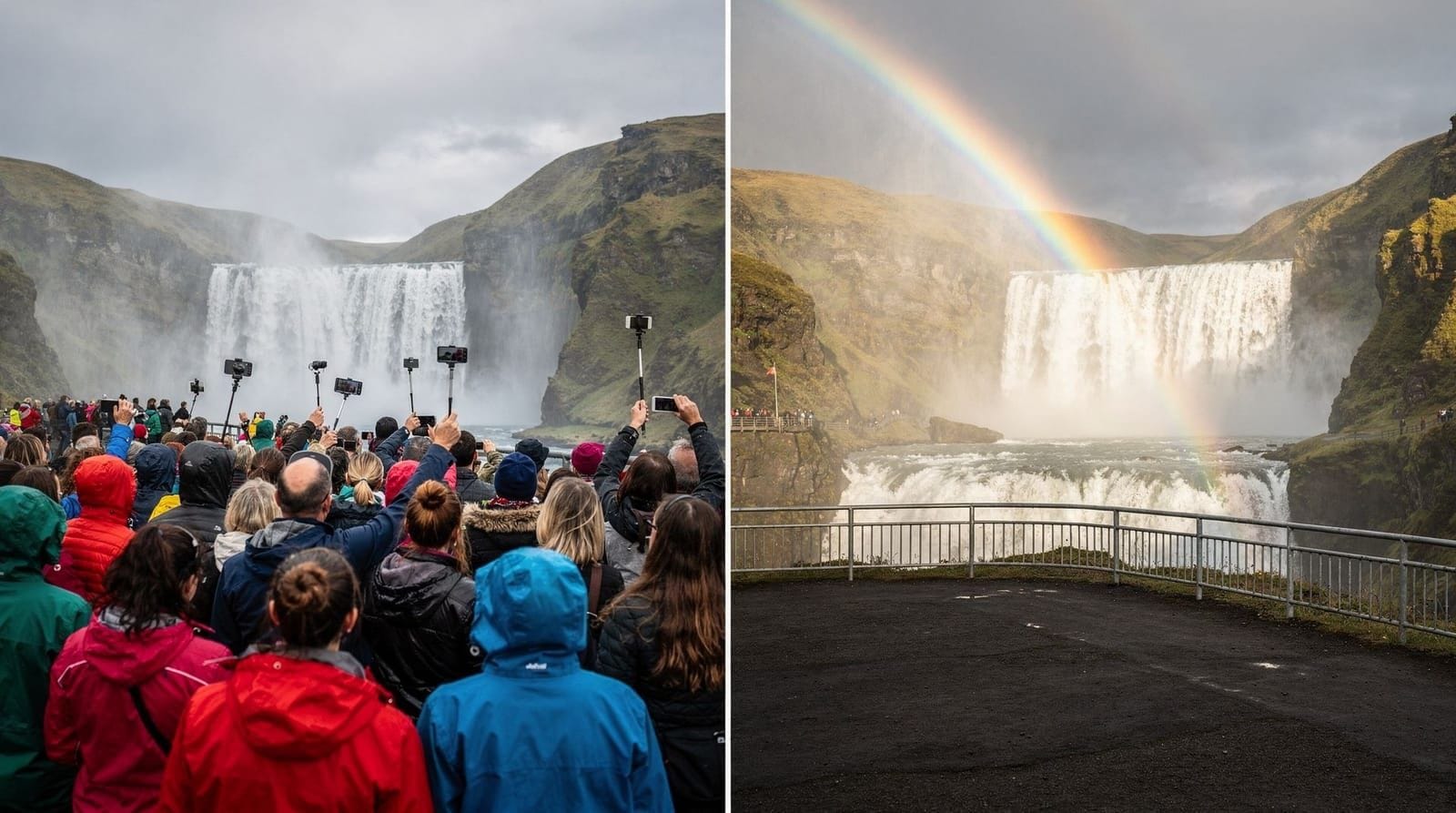
The problem: This creates a version of Iceland that is genuinely spectacular but also genuinely crowded. You see Iceland’s most-visited sites. You miss Iceland’s most remote and dramatic regions, which are arguably more representative of what Iceland actually is.
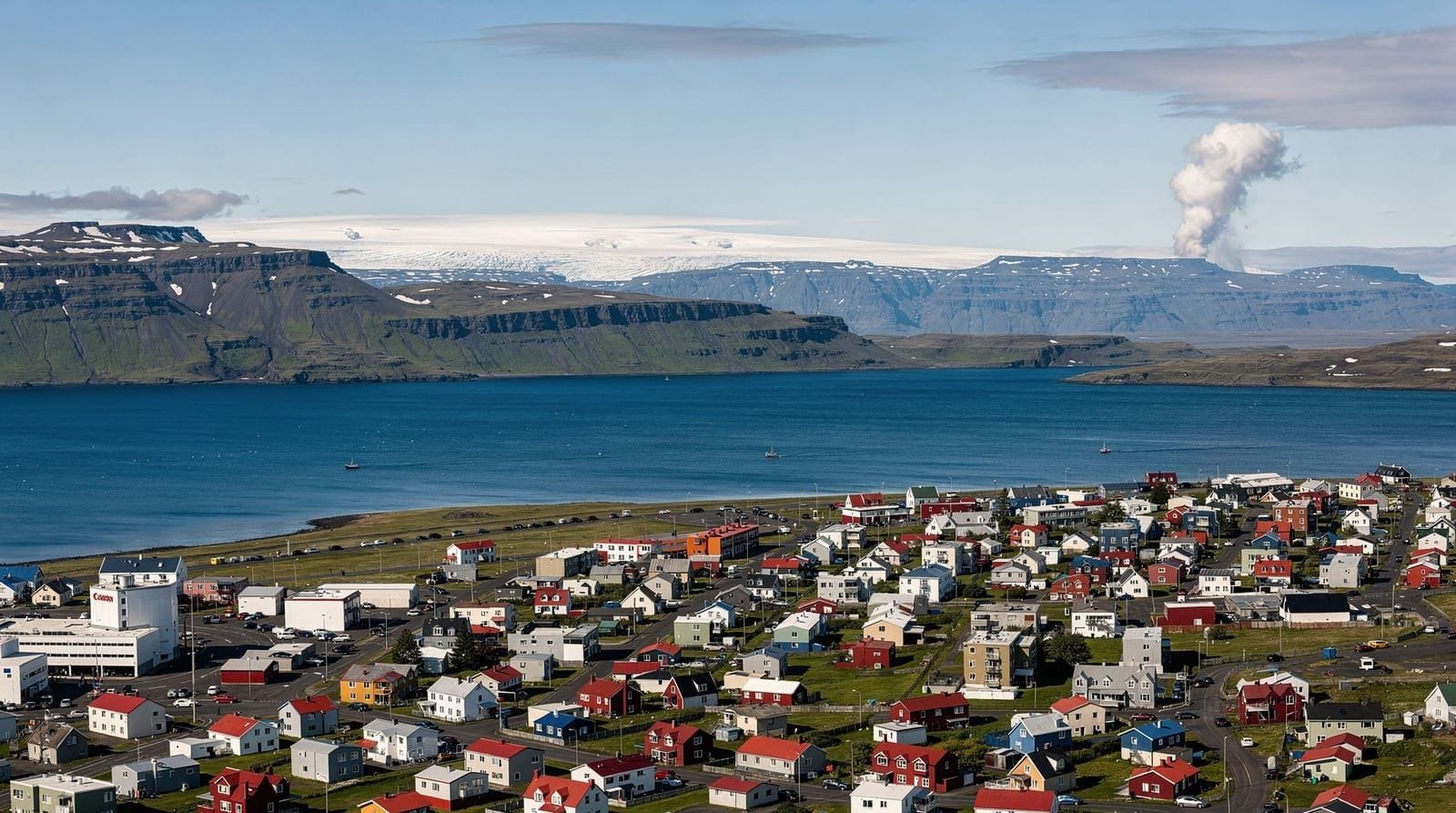
The fix: Even on a 10-day trip, it is possible to include either a 2-day Westfjords excursion (by domestic flight to Ísafjörður, or by driving from Reykjavik) or a slower traversal of East Iceland’s fjords. This requires dropping one element of the standard itinerary — often the second Reykjavik city day or the full-day Golden Circle. The trade-off is usually worth it.
Mistake 14: Not understanding driving on gravel roads
First-time visitors to Iceland from countries with entirely paved roads sometimes treat Icelandic gravel roads the same way they treat paved ones. This is a serious mistake.
Specific gravel road hazards:
- Speed: Maximum safe speed on Icelandic gravel (merked as “malbik endar” — “pavement ends”) is 50–60 km/h, not the 80 km/h national limit for rural roads. Exceeding this causes loose gravel to kick up and crack windscreens.
- Loose stones: Flying stones from other vehicles crack windscreens and dent bodywork. Keep distance from vehicles in front. If a vehicle approaches from the opposite direction, slow down.
- Skids: Gravel slides under braking. Brake earlier and more gently than you would on paved roads.
- Tyre blowouts: Gravel shards can puncture tyres, especially cheap tyres on rental cars. Drive to conditions.
- The cliff edge: Many scenic viewpoint access roads have unguarded drops on the side. Gravel roads at 60 km/h next to a 100m cliff require full attention.
Insurance: Most rental car insurances have a “gravel damage” exclusion as standard. Flying gravel that cracks your windscreen is often NOT covered by basic CDW insurance. A “gravel protection” add-on from the rental company costs extra but covers this common damage. Budget for it.
Mistake 15: Forgetting that Iceland runs on Icelandic time
Iceland does not observe daylight saving. It is UTC year-round. This matters in two practical ways:
-
If you are connecting via a country that does change clocks seasonally (UK, continental Europe, US), be aware that the time difference between Iceland and those countries changes twice a year. Autumn connections from the US are one hour different from summer connections.
-
Icelanders eat dinner late by Scandinavian standards but early by Mediterranean standards — restaurants in Reykjavik fill between 19:00 and 21:00. Many rural guesthouses serve dinner at 18:30 sharp and will not hold it. If you are driving and expect to arrive for dinner, call ahead.
Frequently asked questions about Iceland mistakes
Is it a mistake to visit Iceland in winter?
Not at all. Winter Iceland (November–March) is wonderful for northern lights, ice caves, and dramatic landscapes with low tourist numbers. The mistakes in winter are different: not checking road conditions daily, attempting highland roads in a 2WD, and underestimating the cold for extended outdoor time.
Is it safe to drink glacier meltwater from rivers?
Avoid it unless you are certain the water is not contaminated by geothermal activity (some geothermal rivers contain hydrogen sulphide and heavy metals) or glacial flour. Tap water throughout Iceland is safe and free from any source.
Is it a mistake to rent a campervan for your first Iceland trip?
Not necessarily, but campervans have limitations: grey-water facilities are not available everywhere, some sites do not allow overnight campervan parking, and driving a large vehicle on narrow Westfjord roads is challenging. For first-timers, a car + guesthouses often gives more flexibility and comfort.
Do I need a 4x4 for the Ring Road?
No. The Ring Road is paved throughout. A standard 2WD handles it in all seasons (with appropriate winter tyres in winter, which most rental companies provide). You only need a 4x4 for F-roads and some very remote tracks. See 2WD vs 4x4 in Iceland.
What is the biggest weather mistake tourists make?
Setting off on a multi-hour drive without checking road.is first. Road closures and orange/red weather warnings can shut routes with little notice. People drive into storm conditions that road.is clearly flagged as dangerous because they did not check.
Is it a mistake to try to see the northern lights in summer?
Yes. The northern lights require darkness. Iceland does not get properly dark from late May to mid-August. The aurora season runs September–March. Do not book a northern lights trip in July expecting to see them. See best time to see northern lights.
Mistake 16: Treating every recommendation as mandatory
A subtler mistake: trying to cram in every “must-see” from every blog post, which recreates Mistake 8 (too little time per stop) even on a generous itinerary. Iceland rewards picking fewer places and actually stopping — a long unhurried visit to Skógafoss beats a rushed five-minute stop plus four other waterfalls that all blur together afterward. Cross-reference against overrated vs underrated Iceland before finalising a route, and be honest about what you’ll actually enjoy versus what looks good on a checklist.