Self-driving F-roads — what you need to know before you go
F-roads are the only way into Iceland’s highland interior, and they are also where the most under-prepared self-drivers end up stranded, billed, or worse. Before you commit to a highland day, here’s the practical shape of it.
| Where | Highland interior — Kjölur (F35), Sprengisandur (F26), Askja (F88), Landmannalaugar (F208) |
| Season | Mid-June to early September only, weather dependent |
| Vehicle | 4x4 with 200mm+ clearance required by law; low-range for river fords |
| Signal | None on most routes — download offline maps first |
| Check before driving | road.is (conditions) and safetravel.is (register your plan) |
What an F-road actually is
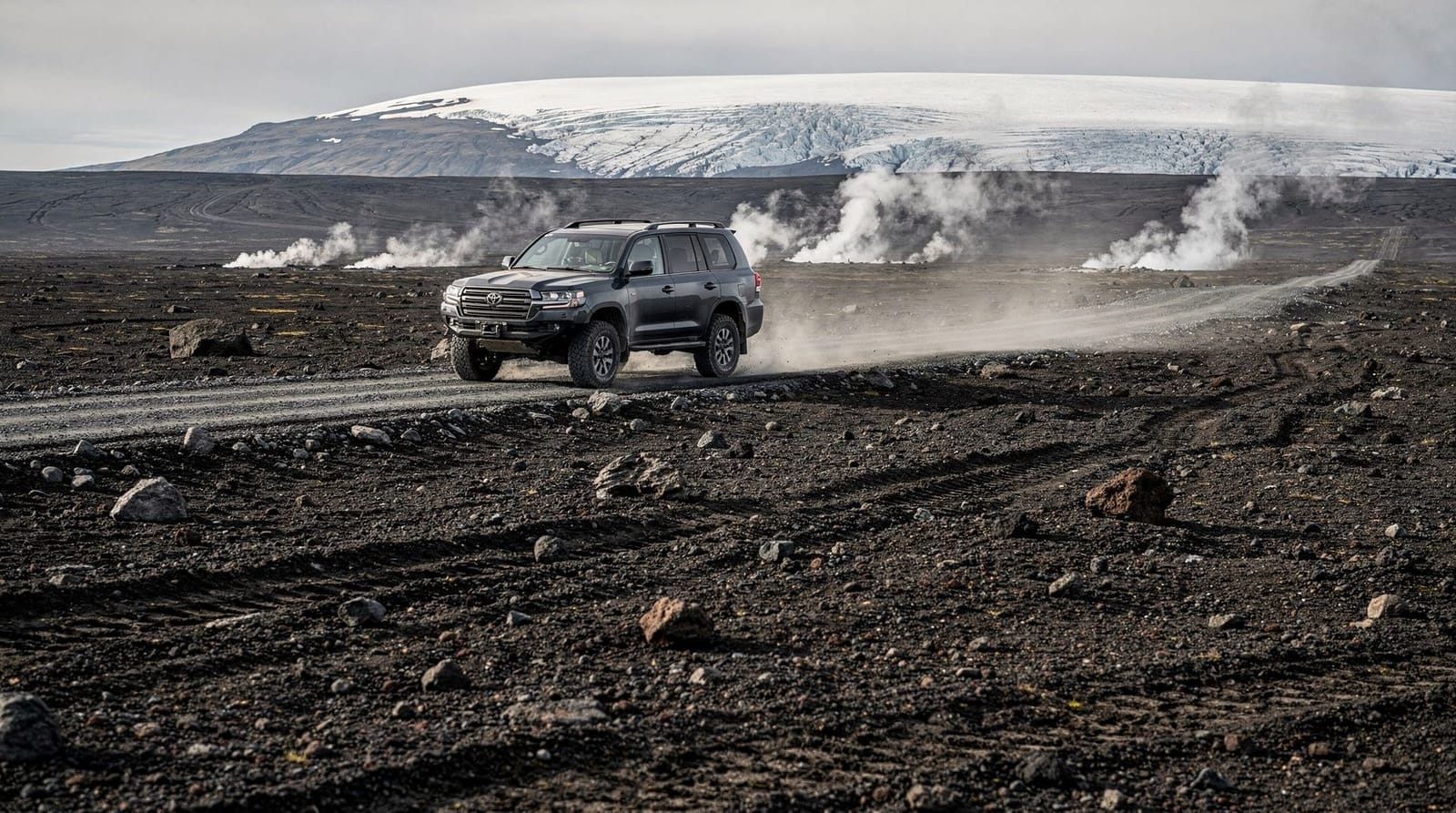
Iceland’s highland roads — designated F-roads — are mountain tracks that connect the interior. They are not unpaved versions of regular roads. They are off-road tracks crossing active river fords, loose volcanic gravel, and terrain where a wrong line can put your vehicle into a ditch from which recovery requires another vehicle and a long wait.
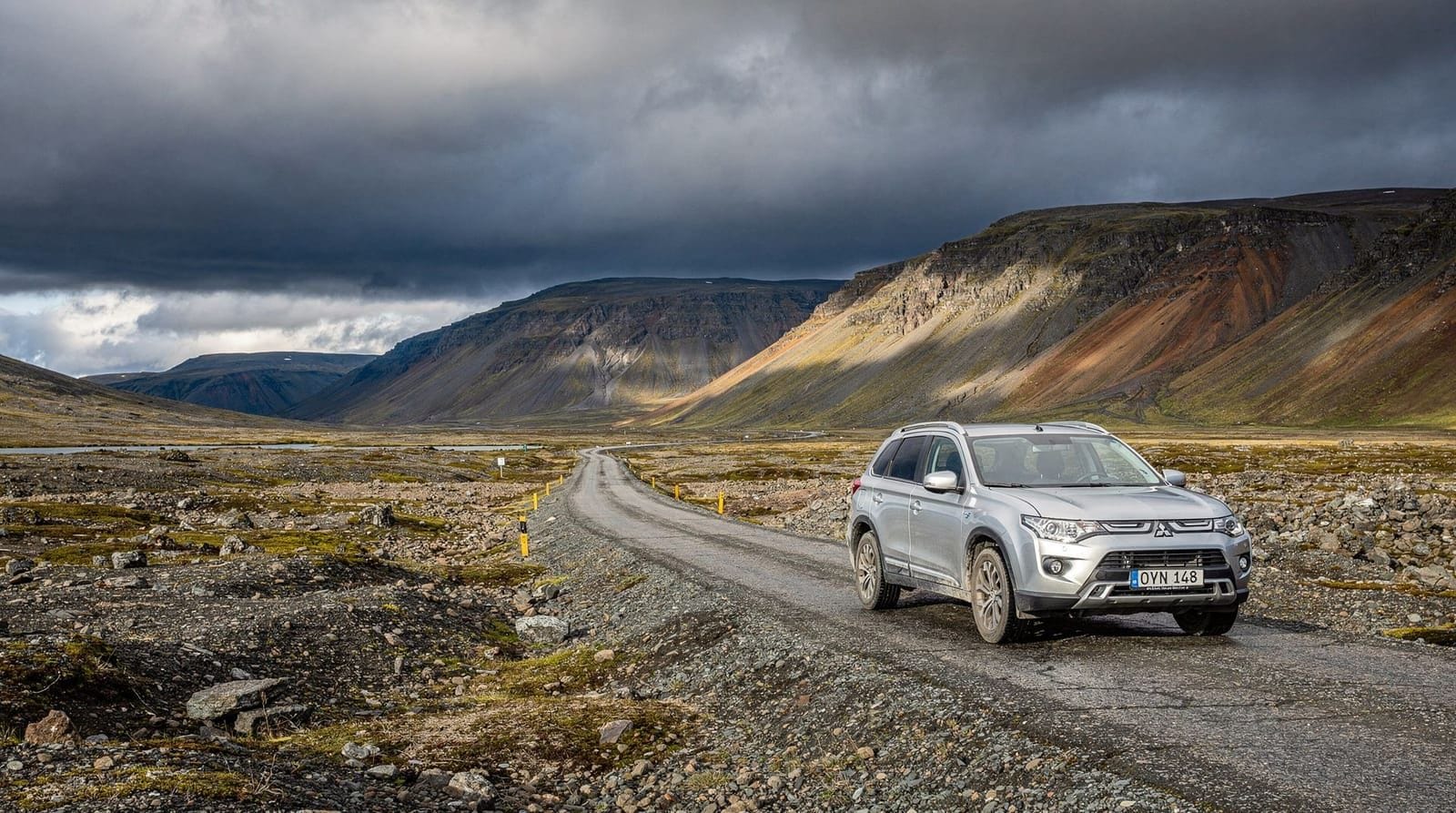
The F designation is applied by the Icelandic Road Administration (Vegagerðin) and comes with a legal requirement: only vehicles with 4x4 drivetrain and appropriate ground clearance may use these roads. This is not a suggestion. Driving a 2WD vehicle on an F-road is illegal, and if you require rescue, you can be billed for the operation. The Icelandic police do enforce this; in peak summer season there are occasional checkpoints at major F-road entries.
The F-roads are only open in summer, typically from mid-June to early September, depending on the route and the previous winter’s snowfall. Road.is publishes real-time status for all highland roads. Check it the morning of any planned F-road drive, not the day before — conditions change overnight.
Why people do it anyway
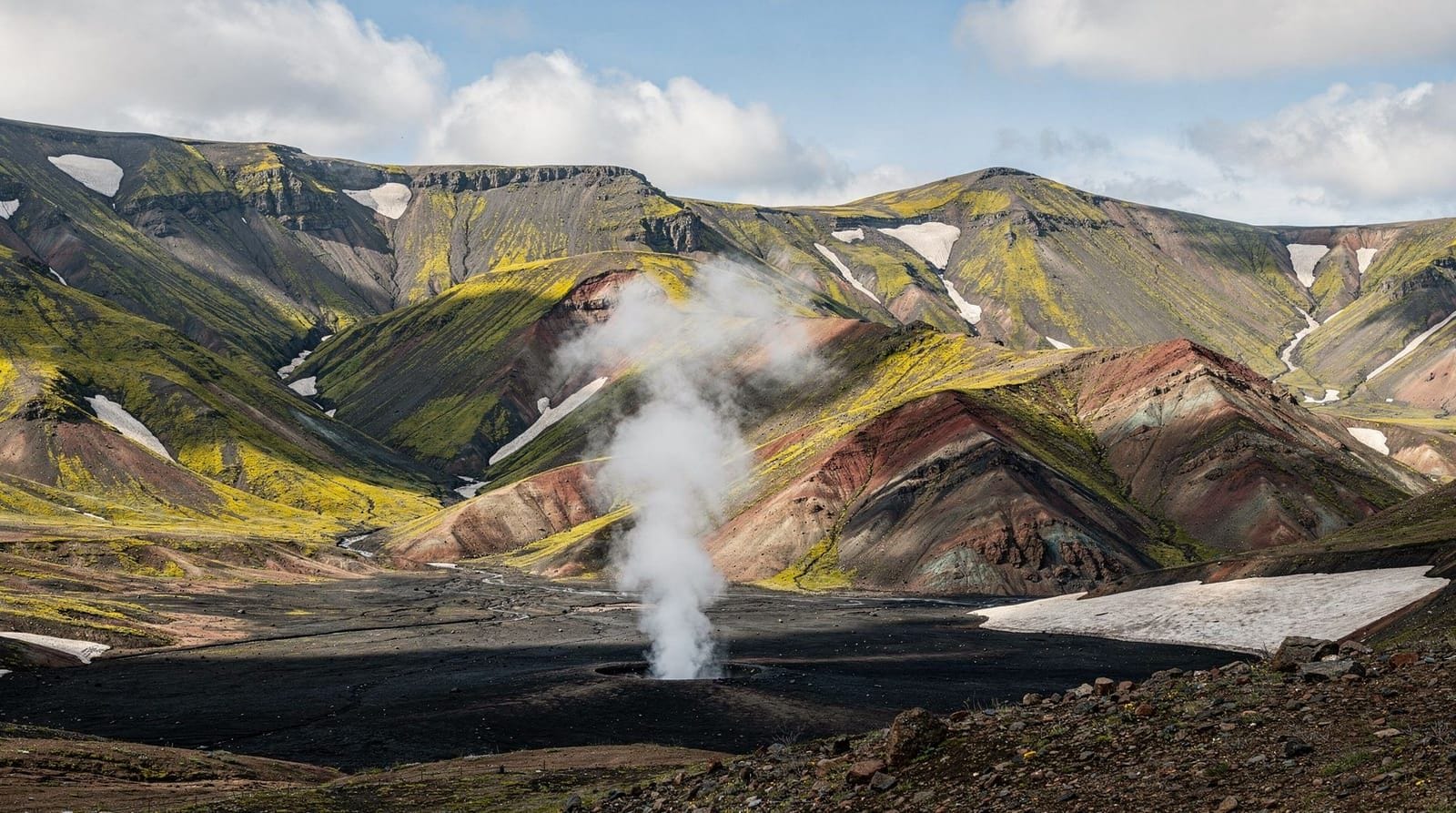
The highlands of Iceland are extraordinary. The Kjölur route, the Sprengisandur desert crossing, the approach to Askja volcano, the multicoloured rhyolite mountains around Landmannalaugar — these landscapes are not accessible in any other way. The highland interior is what Iceland looks like before anyone touched it. In summer, with a properly equipped vehicle and reasonable judgment, the main highland routes are manageable for a competent driver.
The F-roads exist because the landscapes they access are worth the effort and risk. I have done the Kjölur route twice and the F88 to Askja once, and both were among the most memorable driving days of my life in Iceland. The key is preparation, not avoidance.
The main F-road routes
F35 (Kjölur route): the most accessible F-road and the one I recommend for first-time highland drivers. It connects Route 1 near Gullfoss with the north through the highlands, passing the Kerlingarfjöll geothermal mountains and the Hveravellir geothermal area (hot pool, small hut, otherworldly landscape). The Kjölur has no major river crossings. Most rental 4x4s can handle it without difficulty. Total driving time one-way: about 4-5 hours including stops. Hveravellir is the logical overnight stop, or the hut at Kerlingarfjöll.
F26 (Sprengisandur route): the central highland track crossing the vast interior desert between the south and north. More remote than Kjölur, with a longer duration (one way is roughly 8 hours of driving without stops), fewer services, and more exposed sections. The Sprengisandur is genuinely desolate — sand desert at altitude, nothing in any direction for hours. Suitable for experienced F-road drivers with appropriate vehicles, ideally travelling in pairs for safety.
F88 and F894 (Askja and Dettifoss routes): the access roads to Askja volcano (Víti crater, Öskjuvatn lake) from the northeast. River crossings are significant and vary by season. The ford at the Lindaá river crossing is the main obstacle; check recent reports before attempting it. The drive from the ring road to Askja takes about 4 hours one way, mostly on rough gravel. The reward — standing at the caldera rim of Askja with the crater lake below — is exceptional.
F208 (Landmannalaugar): the access road to Landmannalaugar from the south. Multiple river crossings. The Þórská river ford early in the route is the most serious and has stranded vehicles with inadequate clearance. If in doubt, take the bus from Reykjavík — scheduled services run in summer specifically because the road turns away so many self-drivers.
Vehicle requirements: what actually matters
Rental companies in Iceland classify their vehicles carefully for F-road use. A “4x4” designation on a rental contract is not sufficient confirmation that the vehicle is suitable for all F-roads. What you need to verify:
Ground clearance: minimum 200mm for the basic F-roads (Kjölur); 200-250mm or more for routes with river crossings. Most small crossovers (Dacia Duster class) have adequate clearance for Kjölur; they may not for Askja. A Toyota Land Cruiser or equivalent SUV is the standard choice for serious highland routes.
High-range vs low-range 4x4: the serious river crossings require the ability to engage low-range 4x4 for traction control in deep water. Many modern SUVs have electronic 4x4 systems but not a manual low-range transfer case. Ask specifically whether the vehicle has low-range. Budget 4x4s often do not.
Insurance coverage: confirm in writing that your rental contract covers F-road driving. Many contracts exclude specific F-roads or cap coverage for river crossing damage (typically: if you enter a ford incorrectly and flood the engine, that’s on you regardless of insurance level). The car rental insurance guide and the 2WD vs 4x4 guide cover this in detail.
Snorkel: not required for most routes but present on serious highland vehicles. A snorkel raises the engine air intake above door level, which matters if you misjudge a deep ford.
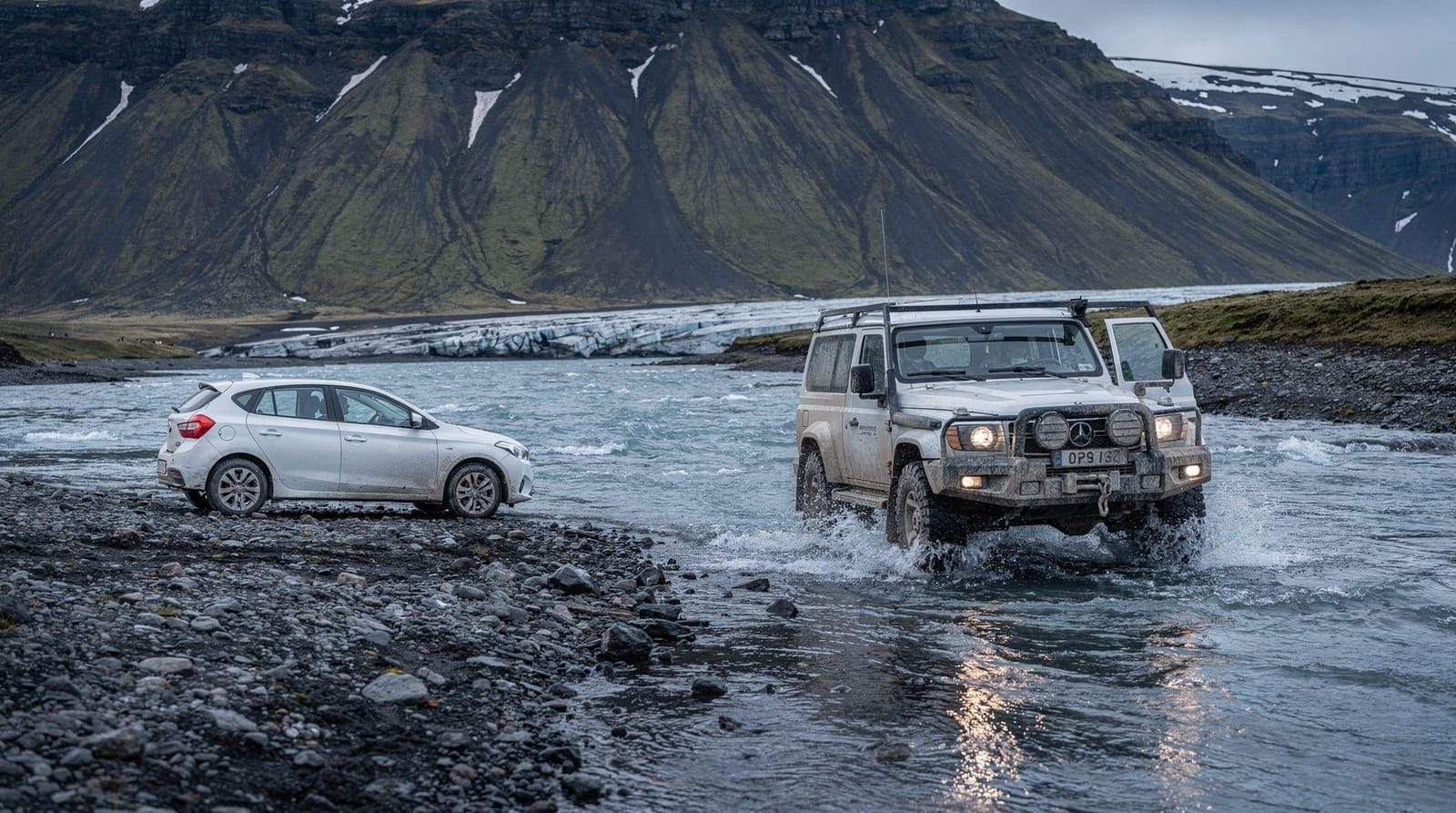
River crossings: the actual risk
River crossings are where F-road driving becomes genuinely dangerous. The glacial rivers of the highland interior are fed by snowmelt and vary significantly by time of day — they are highest in the afternoon when daytime temperatures have been melting ice upstream, lowest in the morning.
The protocol at a ford:
- Stop before entering.
- Walk the crossing if possible (only if safe to do so — fast water can knock an adult over).
- Look for the natural line: fords are usually widest at their shallowest point.
- Check what other vehicles are doing. In summer, you are unlikely to be the only person at a significant ford.
- If uncertain, wait for a larger vehicle to go first and observe the depth.
- Never enter a ford that has current strong enough to move rocks visibly.
The maximum safe depth for most highland 4x4s is around 50-60cm. River depth markers are present at the major fords; read them seriously. The morning timing is not just a rule — the same ford can be knee-deep at 8 a.m. and chest-deep by 4 p.m. after a warm day.
If your vehicle stalls mid-ford: do not restart. Engine flooding when water enters through the exhaust is recoverable; hydrolocking the engine by restarting with water in the cylinders is not. Get out, get clear, call for help.
For the Kerlingarfjöll highlands — one of the most spectacular geothermal areas accessible from Reykjavík — a private jeep day tour removes the vehicle requirement entirely and includes expert navigation of the highland roads.
What to carry for a highland day
Beyond the standard Iceland driving kit, the highlands require:
- Tow rope (in case of stuck; also useful for helping others)
- Spare wheel (mandatory for any serious F-road; punctures on volcanic gravel are common)
- Paper maps of the highland routes (mobile signal is absent on most F-roads; GPS apps may not show current road status)
- Extra food and water for 24 hours minimum
- First aid kit
- Emergency blanket
- Fully charged power bank
The mobile signal point deserves emphasis. On the Kjölur I had no signal for about 6 hours. On the Askja route I had no signal for the entire day. Offline navigation works; online maps, weather updates, and any emergency communication do not.
Navigation in the highlands
Standard GPS and mapping apps (Google Maps, Apple Maps) have limited coverage of F-roads and do not show current road conditions or ford difficulty. Download the free Vegagerðin app and use road.is as your real-time source. The Ferðafélag Íslands (Iceland Touring Association) sells detailed highland maps in Reykjavík bookshops; paper backup is not excessive given the limited connectivity.
Register your plans at Safetravel (safetravel.is) before entering the highlands; it takes two minutes and means someone knows where you are going and when to expect you back.
Fuel, food, and the human side of a highland day
There is no fuel inside the highland interior. Fill up completely at the last ring-road town before you turn off — Selfoss or Reykholt for Kjölur, Varmahlíð or Mývatn for the Sprengisandur ends, Mývatn or Egilsstaðir for Askja — and treat the tank as a safety margin, not a convenience. The fuel and gas stations guide maps the last-chance stations for each route. Carry more food and water than you expect to need; a flat tyre or a closed ford can turn a day trip into an overnight wait.
Mobile coverage is the other planning constant. Icelandic networks do not reach most F-roads, so buy or activate connectivity before you leave, not as you approach the highland turn-off — the eSIM and connectivity guide covers what actually works once you lose signal, and it isn’t much. Tell someone your route and expected return time regardless; Safetravel exists precisely because “just a day in the highlands” occasionally becomes a rescue callout.
When to take the tour instead
The F-roads guide covers when self-driving makes sense versus taking an organised super-jeep tour. My honest summary: if you are not confident about vehicle selection, river reading, or wilderness navigation, the super-jeep tours operate by the same companies that rescue unprepared self-drivers. They are not a compromise; they access terrain that self-drivers cannot legally or safely reach.
For Askja, I would recommend a guided tour for first-time visitors specifically because the river crossings on the F88 are genuine and the consequences of getting them wrong are serious. For Kerlingarfjöll via the Kjölur, a competent 4x4 driver in a properly equipped vehicle can do it independently without difficulty.
The highlands summer 4-day itinerary has a full route plan with accommodation and vehicle recommendations. If you are planning a multi-day highland trip, the combination of Kjölur, Kerlingarfjöll, and possibly Askja can be done over 3 days with nights at Hveravellir, Kerlingarfjöll huts, and the ring road.
The Iceland self-drive guide covers the full range of road types and what each requires. The highland section is the most detailed because the stakes are highest, and if you are uncertain at any point, the correct decision is always to turn back and reassess.
FAQ
Can I take a 2WD car on any F-road?
No. Every F-road legally requires a 4x4, and driving a 2WD vehicle on one is illegal in Iceland, not just inadvisable. If you need rescue, you can also be billed for the operation. Some travellers confuse a raised crossover with a true 4x4 — check the drivetrain, not just the ride height, before assuming a vehicle qualifies.
Do I need to book a highland hut or campsite in advance?
For overnight highland trips, yes — huts at Hveravellir, Kerlingarfjöll, and along the Laugavegur/Fimmvörðuháls routes fill up in summer, and wild camping outside designated sites is restricted in much of the highland interior. Day trips on Kjölur don’t require a booking, but always register your route with Safetravel before you leave the ring road.