Chasing the northern lights: five nights in Iceland, three sightings
Why we booked five nights for one phenomenon
There’s a particular kind of travel gamble involved in planning a trip around the northern lights. You are, fundamentally, betting on the sun to cooperate, on Iceland’s weather to clear, and on being in a dark enough place at the right hour. My friend Tomás — a semi-serious astrophotographer — had been trying to see the aurora for three years, twice in Norway and once in northern Finland, without success. We decided Iceland in early November would be the attempt that actually worked.
Five nights felt like a reasonable margin. The aurora forecast for Iceland in November runs between KP1 and KP5 on most nights, though actual visibility depends heavily on cloud cover. We checked forecasts obsessively for two weeks before the trip using the Veður app (Iceland Met Office), which gives accurate three-day cloud predictions, and the Space Weather Prediction Center’s KP index.
| When | Early November, 5 nights specifically for aurora |
| Result | 3 sightings — one spectacular, two faint |
| Cost | Around ISK 22,000/night (Reykjavik) plus one boat tour |
| Minimum stay recommended | 5 nights, 7 is safer |
| Best months | February–March, for clearer weather odds |
The forecast problem
Night one: overcast. The forecast said partly cloudy. It was not partly cloudy — it was a solid grey ceiling from Reykjavik to the Reykjanes Peninsula. We drove south on Route 41 toward Grindavík looking for breaks in the cloud. There were none. KP was 3. We went back to the apartment by 11 pm.
Night two: similar, but with stronger wind. The hotel staff at our guesthouse near Hveragerði — a couple who had lived in the area for decades — told us that November weather in Iceland runs in cycles, with clear windows appearing every three to four days. “You just have to be patient and stay up late,” the woman said. That is easy advice to give at 9 pm. Less easy to follow at 1 am when you’re cold.
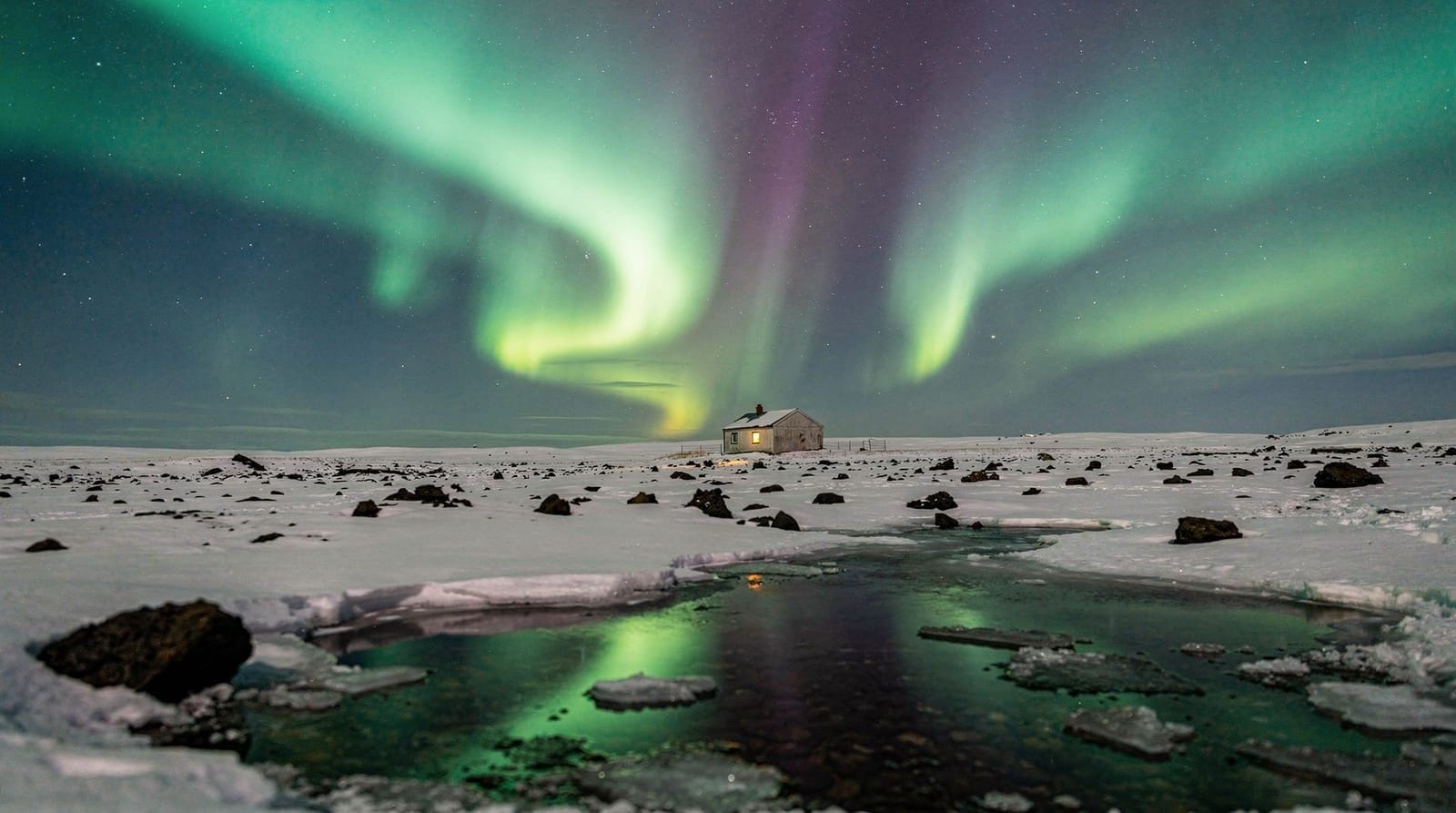
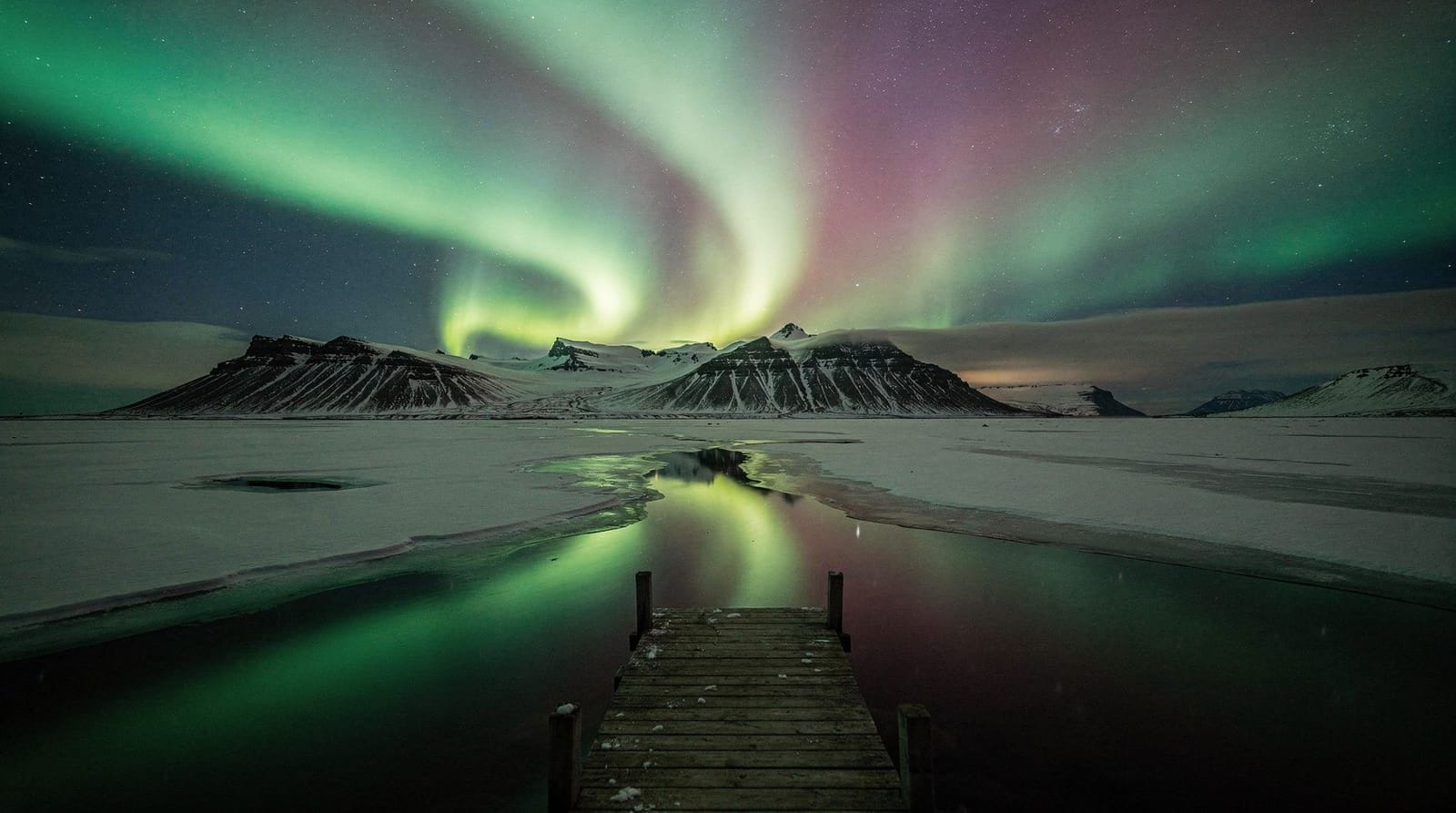
Night three: partly clear, KP 2. We drove about 40 minutes north of Reykjavik toward Þingvellir, parked near the lake, and waited with the cameras on tripods. Just before midnight, a faint greenish band appeared above the mountains to the north. It lasted about 25 minutes, didn’t move dramatically, and wasn’t especially bright. But it was undeniably the aurora borealis, and Tomás spent those 25 minutes very busy with his camera equipment.
The good night
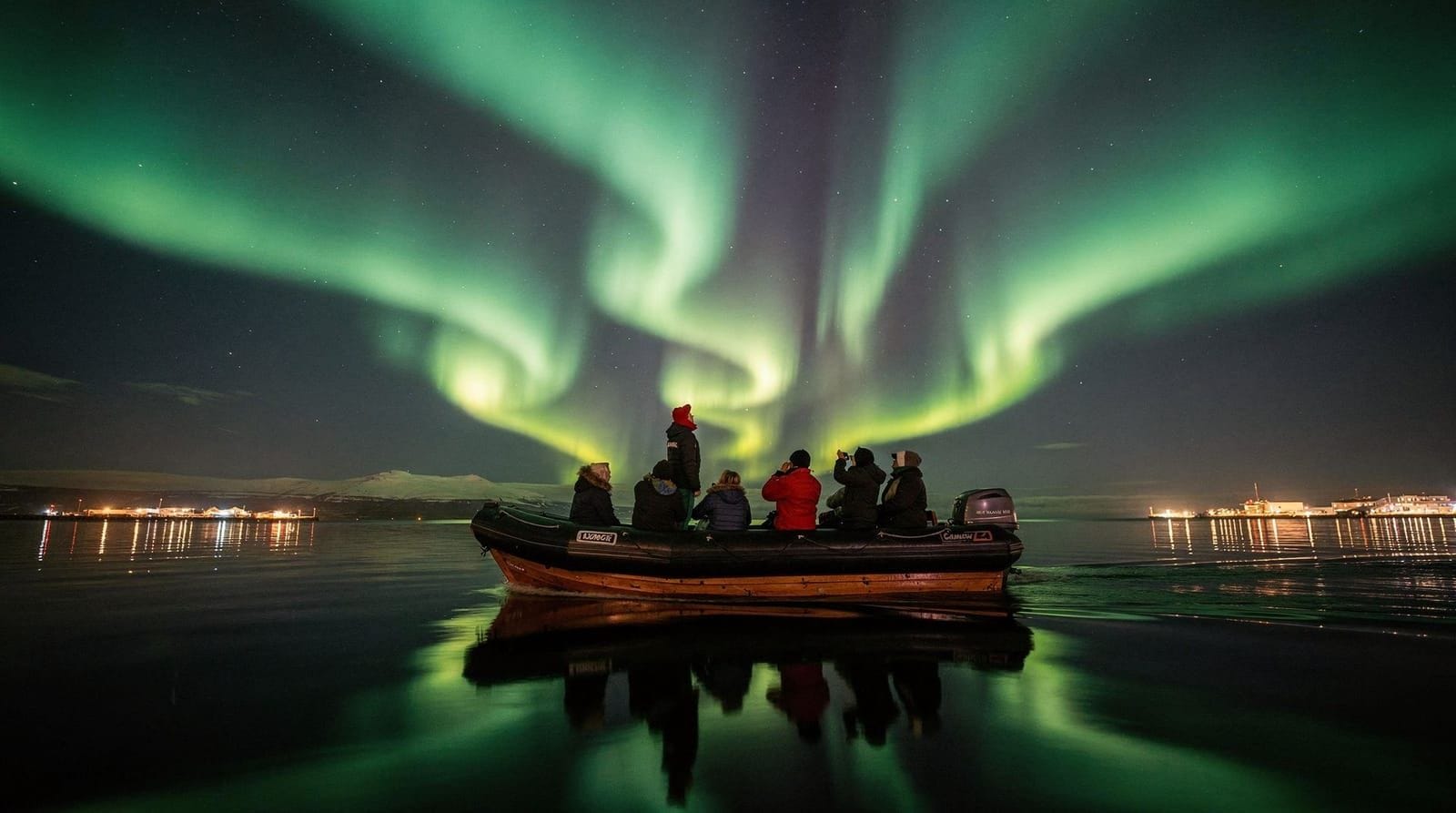
Night four was the one we’d hoped for from the start. KP index forecast at 4, cloud cover predicted to be minimal across most of Iceland except the southeast. We had booked a northern lights boat tour out of Reykjavik harbour — partly because Tomás wanted the water reflection shots, partly because boat tours track the gap between cloud banks rather than waiting on land.
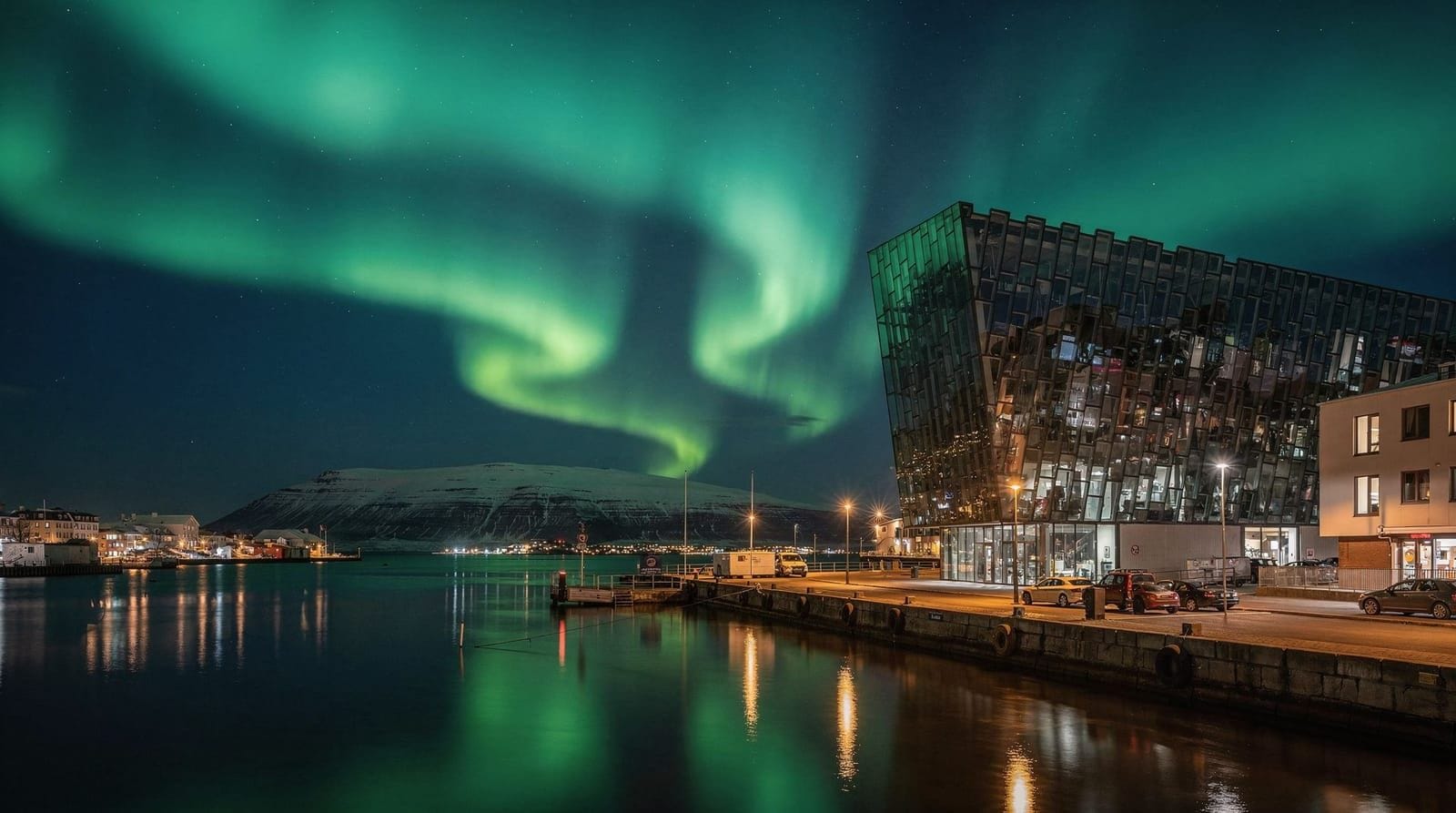
We departed from the Old Harbour around 9:30 pm. The boat was a two-deck vessel, maybe 60 people on board. Within 30 minutes of leaving the harbour, the aurora started. Not the pale band from night three — actual ribbons of green light that moved. At peak intensity, around 11 pm, the whole northern sky was active. Curtains of green and occasional violet folding over each other. The boat cut its engine and drifted. For about 45 minutes, nobody said much of anything.
Tomás got the photos he’d been chasing for three years. The reflections on the water were exactly what he’d imagined. I have no meaningful photography skills and took approximately 40 blurry shots, but I also just stood on the deck and watched it, which is a thing I recommend doing instead of looking at it through a screen.
The boat tour format works particularly well because guides can position the vessel in open water away from cloud cover. The Old Harbour departure gives good dark sky access within 20 minutes of Reykjavik’s centre.Night five: cloudy again. We took the loss gracefully.
What to know about aurora hunting logistics
The KP index is not the whole story. KP 3 under clear skies is more useful than KP 6 under cloud. Check the Icelandic Met Office (en.vedur.is) for cloud cover over specific regions. The north and east of Iceland often have clearer skies than the south and west when Atlantic fronts come through.
Get out of Reykjavik. Light pollution in the city centre genuinely reduces what you can see. Þingvellir National Park (45 minutes east) and the Reykjanes Peninsula (30–40 minutes south) both offer dark enough skies. If you stay in the city, Sky Lagoon and the harbour area have the best access to dark water and low horizon.
Guides have information you don’t. The tour bus guides and boat captains monitor aurora apps and cloud forecasts during the tour in real time and will drive toward clear skies. This is harder to replicate on your own unless you’re very familiar with the local topography.
Dress for real cold. November in Iceland averages 1–5°C, but standing still for an hour on a boat or in an open field makes it feel significantly colder. Thermal base layers, mid-layer insulation, a windproof outer shell, and gloves that allow you to operate a camera (or accept that you’ll remove them frequently) are all necessary.
The blue months (September–March) are your window. Summer’s midnight sun makes aurora viewing impossible — there’s simply not enough darkness. The best months for northern lights are February and March for the combination of darkness and clearer weather compared to November and December.
Month by month: when to actually book this trip
Having now compared notes with other aurora chasers since this trip, here’s how the season actually breaks down.
| Month | Darkness | Typical weather | Verdict |
|---|---|---|---|
| September | Moderate | Often clear, mild | Good early-season option, warmer than winter |
| October | Good | Increasingly unstable | Solid, fewer crowds than winter peak |
| November | Very good | Our trip — mixed, cloud-heavy | Workable but budget extra nights |
| December | Very good | Storms common, short days | Cheap flights, but weather risk is real |
| January | Very good | Cold, clear spells common | Strong choice if dressed for it |
| February–March | Very good | Best balance of dark + clear | Statistically the best months |
Accommodation notes
We stayed three nights in Reykjavik (a guesthouse off Laugavegur, around ISK 22,000 per night for a double room in November) and two nights in Hveragerði, which is about 45 minutes east of the capital and significantly cheaper. Being outside the city gave us faster access to dark sky locations without driving back through the capital after a late night.
One thing I hadn’t expected: Reykjavik in November is genuinely pleasant for daytime activity. The Christmas lights go up in early November, the coffee culture is strong (Reykjavik Roasters on Brautarholti was our daily stop), and the museums are quiet. The Laugardalslaug public swimming pool and hot tubs cost only ISK 1,050 (around €7 in 2019) and are a legitimate highlight regardless of aurora success.
For self-drivers wanting to hunt the aurora independently, the northern lights from Reykjavik guide maps out the best dark sky driving routes within an hour of the city. The self-drive aurora hunting guide covers navigation and forecast reading in more detail.
Some tour operators offer a “lifetime guarantee” — if you don’t see the lights, you can come back on any future trip for free. This is worth considering if you’re on a short visit and the weather is poor.What to do on the bad nights
The three overcast nights weren’t wasted. Iceland in November is legitimately interesting even without the aurora.
Þingvellir National Park is worth a daytime visit on its own terms — the rift valley and the historical context of the Althing parliament require good light to fully appreciate, and the park is nearly empty in November. We spent a morning walking the Almannagjá gorge and had the canyon to ourselves.
The Golden Circle in November runs without summer queues. We drove Geysir on a grey afternoon and had Strokkur erupting with maybe ten other observers. The Kerið Crater in autumn light — the red volcanic walls reflected in the blue crater lake — is one of Iceland’s most saturated colour contrasts, and in November the lighting is low enough to make photography genuinely interesting.
Reykjavik itself has good bad-weather options. The Reykjavik City Museum on Aðalstræti (ISK 1,800 entry) has an excavated Viking-age longhouse in the basement and genuinely interesting narrative about the settlement of Iceland. The Hallgrímskirkja church tower (ISK 1,100) gives a 360-degree view of the city and the surrounding mountains. Reykjavik’s public pool and hot tub culture is particularly good on a cold grey November morning.
One evening we booked a food walking tour — six stops across the city centre, traditional Icelandic dishes alongside more contemporary interpretations. It cost around ISK 12,500 each, took three hours, and gave us context for the cuisine (and for the strange historical moment when fermented shark became a national heritage food). We visited a craft beer bar at the end. This is not an aurora experience. It was still an excellent evening.
What we packed and would pack again
Beyond the thermal layers already mentioned, a few specific items earned their place in the bag. A headtorch with a red-light mode preserves night vision between camera checks and is far more useful than a phone flashlight. Hand warmers (the disposable chemical kind) went inside gloves during the coldest waiting periods and made a genuine difference to how long we could stay outside without needing to retreat to the car. A thermos of hot chocolate or coffee, refilled at the guesthouse each evening, turned the waiting time between forecast checks into something closer to enjoyable than endured. None of this guarantees a sighting, but it buys you the patience to wait for one.
The photographic reality
Night four’s aurora was the visual payoff we’d waited for, but Tomás came back with something specific to say about photographing it: the boat platform is unstable. Even anchored, the vessel moves on the water. Long-exposure aurora photography requires a stable platform. His best shots were from the upper deck with the camera braced against the railing on a mini tripod, 3–5 second exposures rather than the 10–15 seconds you’d use from shore.
The lesson: if you plan to photograph the aurora from a boat tour, bring a small tripod that fits on a railing. From land, a full-height tripod is better. The northern lights photography guide covers settings in detail — the critical variables are ISO (800–1600), aperture (f/2.8–f/4), and shutter speed (5–15 seconds depending on how active the aurora is).
Honest verdict
Three sightings in five nights in November is a reasonable result. One of those three was genuinely extraordinary. One was faint enough that you could debate whether it counted. The fifth night was a wasted drive.
If you are coming specifically for the aurora, I’d say five nights is the absolute minimum. Seven would be better. Travelling in February or March rather than November improves your statistical chances — weather windows are longer and clear spells more common. But November has the advantage of being cheaper (flights and accommodation both), and the landscape under early winter light has its own strange appeal.
The aurora cannot be guaranteed. Anyone who tells you otherwise is selling something. But with the right season, a bit of patience, and a willingness to stay up until 1 am on short notice, you will almost certainly see it.