Best hidden hot springs in Iceland beyond the Blue Lagoon
The problem with the Blue Lagoon
The Blue Lagoon is Iceland’s most visited paid attraction. In 2023, it processed around 1.2 million visitors. Entry for the basic Comfort package starts at around ISK 14,000 (€90) per person and requires advance booking, sometimes weeks ahead in high season. It is visually striking — the silica-rich milky-blue water against dark lava rock is genuinely beautiful — but the experience has become increasingly industrialised. You’re queuing with hundreds of people, paying €10 for a cocktail at the swim-up bar, and being nudged toward upgrades.
All of that is fine if the Blue Lagoon is specifically what you want. But Iceland has at least a dozen other geothermal bathing options that offer the actual experience — hot mineral water, volcanic landscapes, the specific feeling of floating warm in cold air — without the infrastructure markup. Here are the ones I’ve actually been to and would recommend.
| Cheapest alternative | Municipal pools, around ISK 800–1,200 |
| Best free option | Reykjadalur hot river (45-min hike required) |
| Closest to Blue Lagoon experience | Mývatn Nature Baths or Sky Lagoon |
| Booking | Advance booking recommended for named facilities in summer; municipal pools are walk-in |
| Bring | Swimsuit, towel, flip-flops, hair tie (long hair must be tied back at public pools) |
Reykjadalur hot river
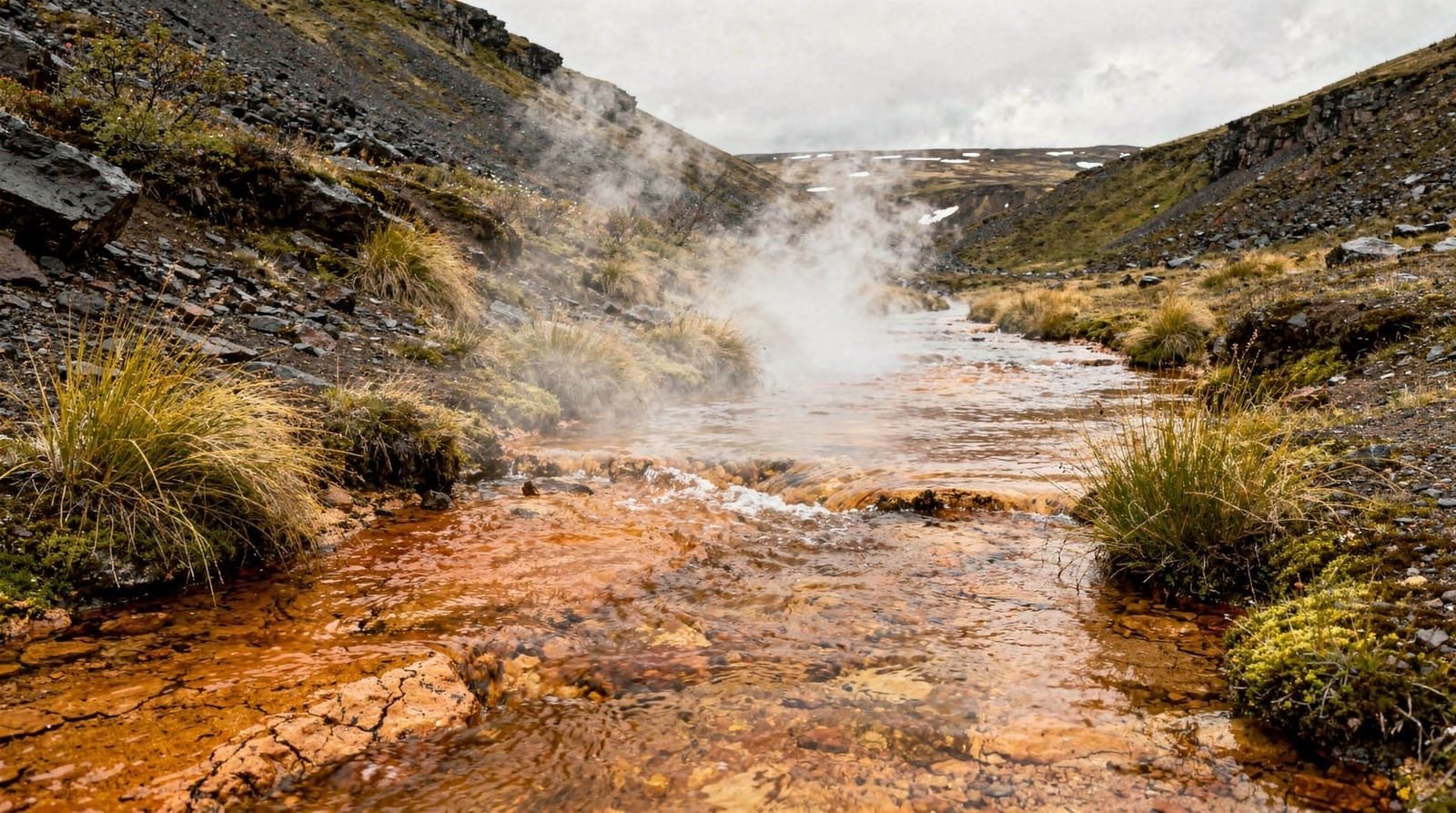
Reykjadalur translates as “Steam Valley,” and the hot spring river runs through a geothermal area about 45 minutes’ drive from Reykjavik. Access requires a 3-kilometre hike (about 45 minutes uphill each way) from the car park near Hveragerði. The trail passes fumaroles and steaming ground before reaching the river, where you change on the bank and wade in. The river is free. There are basic changing shelters.
The hike makes this inaccessible to people with mobility limitations, and the river can be crowded on weekends in July–August. October, when I did it, had perhaps 20 people on the whole trail. The water temperature varies by section — cooler downstream, hotter closer to the source. Around mid-stream is usually the sweet spot at 38–40°C.
If you’d rather not navigate the hike alone, a guided private tour from Reykjavik to Reykjadalur can help you find the right temperature section and includes pickup. Good option in winter when trail conditions can be icy.The Secret Lagoon, Flúðir
The Secret Lagoon in the village of Flúðir, about 90 minutes from Reykjavik, is probably the most well-known Blue Lagoon alternative. Entry costs ISK 3,500 (€22) — about a quarter of the Blue Lagoon’s basic rate. It takes walk-ins most of the time, though booking ahead for weekends is sensible.
The pool itself is natural and relatively undeveloped. There’s a small wooden changing cabin, lockers, and a geysir nearby that erupts every few minutes. The water is opaque and mineral-rich, around 38–40°C. Capacity is probably 60–80 people at most, and on a weekday morning in shoulder season I counted fewer than 20. No swim-up bar, no silica mask upselling.
The surrounding landscape is agricultural — flat farmland, not dramatic lava fields — which is fine. You’re not there for the view; you’re there for the water and the quiet. It works.
Mývatn Nature Baths
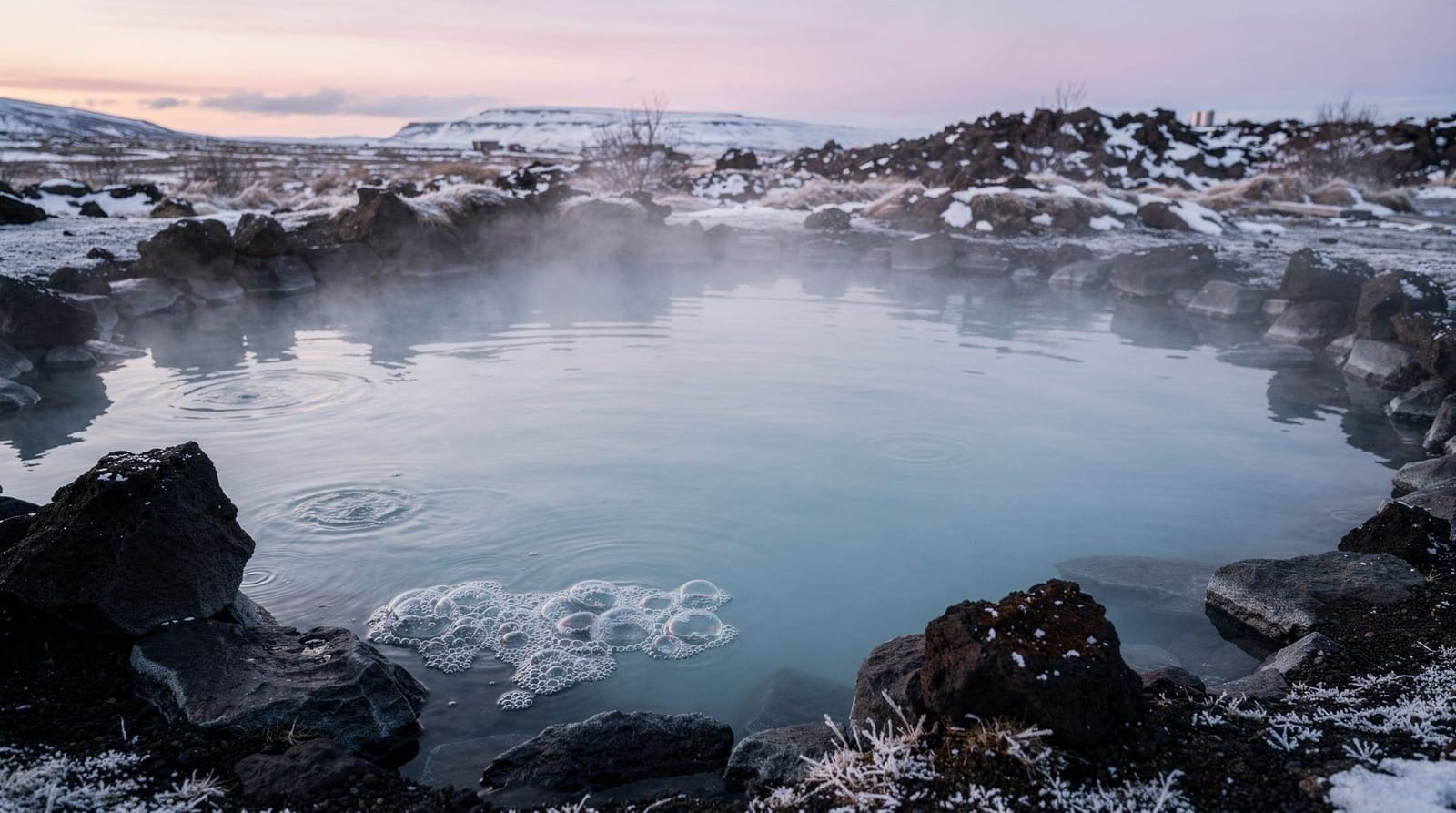
Mývatn Nature Baths in north Iceland is probably the best all-round public geothermal pool in the country. Entry is ISK 4,500 (€28) and booking in advance is worthwhile in summer. The water is silica-blue like the Blue Lagoon (same geothermal chemistry in a different part of the country) and the views are over the volcanic landscape around Lake Mývatn.
What makes it better than the Blue Lagoon for most people: it’s smaller, less crowded, no dress code, no swim-up prosecco bar, and the setting feels genuinely remote. In October, when I visited, the steam rising from the pools against the dark sky and the smell of sulphur in the cold air was exactly what Iceland should feel like.
The facilities are decent — changing rooms, a cafe, lockers — without being luxury. The pool is also naturally warm rather than heated by processing: the geothermal water flows in at around 36–40°C directly from underground.
Hvammsvík Hot Springs
Hvammsvík opened in 2022 on the north shore of Hvalfjörður fjord, about an hour from Reykjavik. It’s positioned as a premium experience — entry starts around ISK 9,900 (€62), putting it closer to the Blue Lagoon price range — but the setting is different: a rocky shoreline with 8 pools at different temperatures, plus cold ocean water available for contrast bathing.
I’ll be honest: it’s expensive, and it’s not as visually dramatic as the Blue Lagoon. But the pools are genuinely quiet compared to the Blue Lagoon, and the fjord setting is calming in a way the lava-field backdrop isn’t. If you’re willing to spend in the Blue Lagoon range and want somewhere that feels less like a theme park, Hvammsvík is worth it.
Forest Lagoon, Akureyri
The Forest Lagoon near Akureyri opened in 2022. Entry runs around ISK 5,900–7,900 (€37–50) depending on time slot. The design is Scandinavian minimalist — infinity pool overlooking a forest with views toward the fjord below Akureyri. In winter, you’re bathing in hot water while looking at snow-covered birch trees. In summer, the midnight sun.
The clientele skews local — fewer international tourists reach Akureyri than the south coast, and most who do are doing the ring road — which means quieter even in peak season. Worth building a stop into an Akureyri itinerary.
Seljavallalaug: the free and remote one
Seljavallalaug, in a valley near Seljalandsfoss, is a geothermal outdoor pool that dates from 1923. It is free, unmaintained, and requires a 15-minute walk up a valley to reach. The water is algae-green and lukewarm rather than milky-blue and hot. The changing cabin has no doors and barely has walls. It occasionally smells strongly of sulphur.
It is also set in one of the most beautiful locations of any swimming pool on earth, surrounded by mountains and a glacial stream. On a clear October day it was magnificent. On a rainy August day with 40 other people in it, I’d imagine it feels rather different.
Manage expectations: this is not a relaxing spa. The water temperature is inconsistent (around 25–35°C depending on conditions) and the maintenance level is what it is. But as a free outdoor swim in an extraordinary landscape, it’s worth the walk.
Sky Lagoon, Reykjavik
The Sky Lagoon opened in 2021 on Reykjavik’s western harbour and positions itself as the premium alternative to the Blue Lagoon with a genuinely accessible location — 15 minutes from the city centre. Entry starts around ISK 7,990 (€50) for the basic Sér package.
The infinity pool design, with an ocean horizon view, is legitimate. The Skjól ritual — steam room, cold plunge, sauna, scrub — is included in higher packages and is actually enjoyable. The crowd is younger and more urban than the Blue Lagoon. The food at the Gelmir Bar (fish & chips, around ISK 3,500) is decent.
It’s not a “hidden” option — it’s a designed facility — but if you’re based in Reykjavik and want the hot pool experience without the 45-minute drive to the Blue Lagoon, it delivers. The Blue Lagoon vs Sky Lagoon comparison has more detail on the two options side by side.
Helló, public swimming pools
The thing that doesn’t get mentioned enough in discussions of Icelandic geothermal bathing is the municipal swimming pool network. Iceland has approximately 150 public geothermal pools, one for almost every community. Entry costs ISK 800–1,200 (€5–8) everywhere. They are where Icelanders actually swim. They are not tourist attractions.
A few worth knowing:
Laugardalslaug in Reykjavik: The city’s largest pool complex, 15 minutes from the city centre by bus. 50-metre outdoor pool, hot tubs at various temperatures, steam room, waterslide. ISK 1,050 entry. Open from 6:30 am on weekdays. On a winter morning, before work, this pool has Reykjavik office workers, construction workers, elderly women doing lengths, and children in swimming lessons. No tourists.
Akureyri pool: Similar setup in north Iceland, with outdoor hot tubs overlooking the fjord. ISK 1,000. The pool in Akureyri is a local institution — if you’re passing through, an hour here gives you more contact with daily Icelandic life than any restaurant or museum.
Sundlaug Selfoss: In the south Iceland town of Selfoss, a 25-metre heated outdoor pool. ISK 900. Used by locals as a year-round amenity. Small and unpretentious. Perfect if you’re driving the Golden Circle area and want a hot soak without paying Blue Lagoon prices.
The etiquette at Icelandic public pools is specific and enforced: you shower naked before entering the pool area. This is non-negotiable and not optional. The changing room showers have clear signs about what to wash. This is about water hygiene in a geothermal pool that cannot be heavily chemically treated. Follow the instructions and nobody will notice you or care.
The wild springs worth knowing
Beyond managed facilities, Iceland has several natural hot springs accessible with varying degrees of effort:
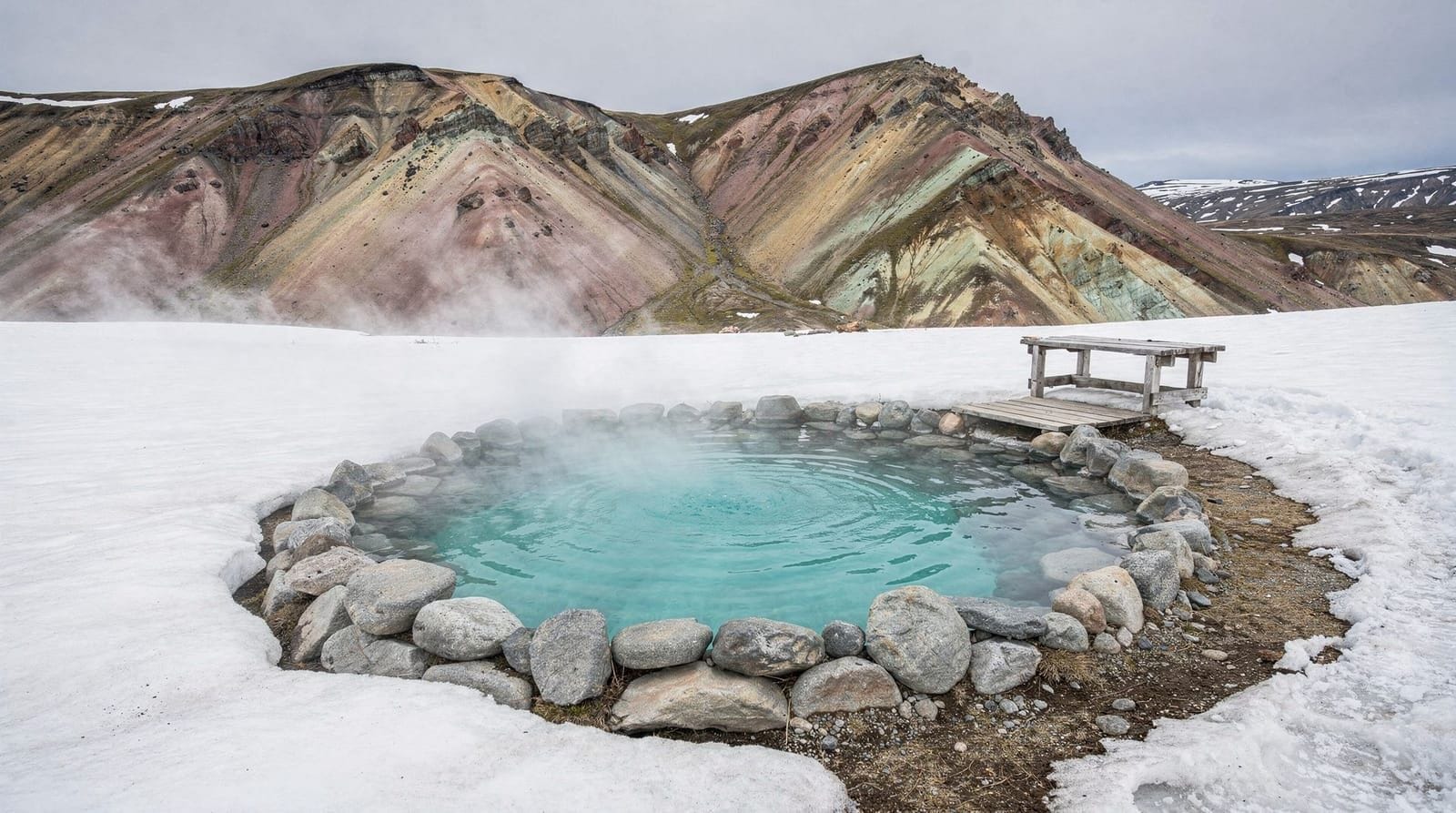
Landmannalaugar hot river: The hot spring stream beside the Landmannalaugar campsite in the highlands is free, accessible by highland bus in summer, and the starting point for the rhyolite mountain hike country. The water runs at around 40°C. The experience of soaking in an outdoor hot stream surrounded by multicoloured volcanic mountains with the smell of sulfur in the air is specific to this place.
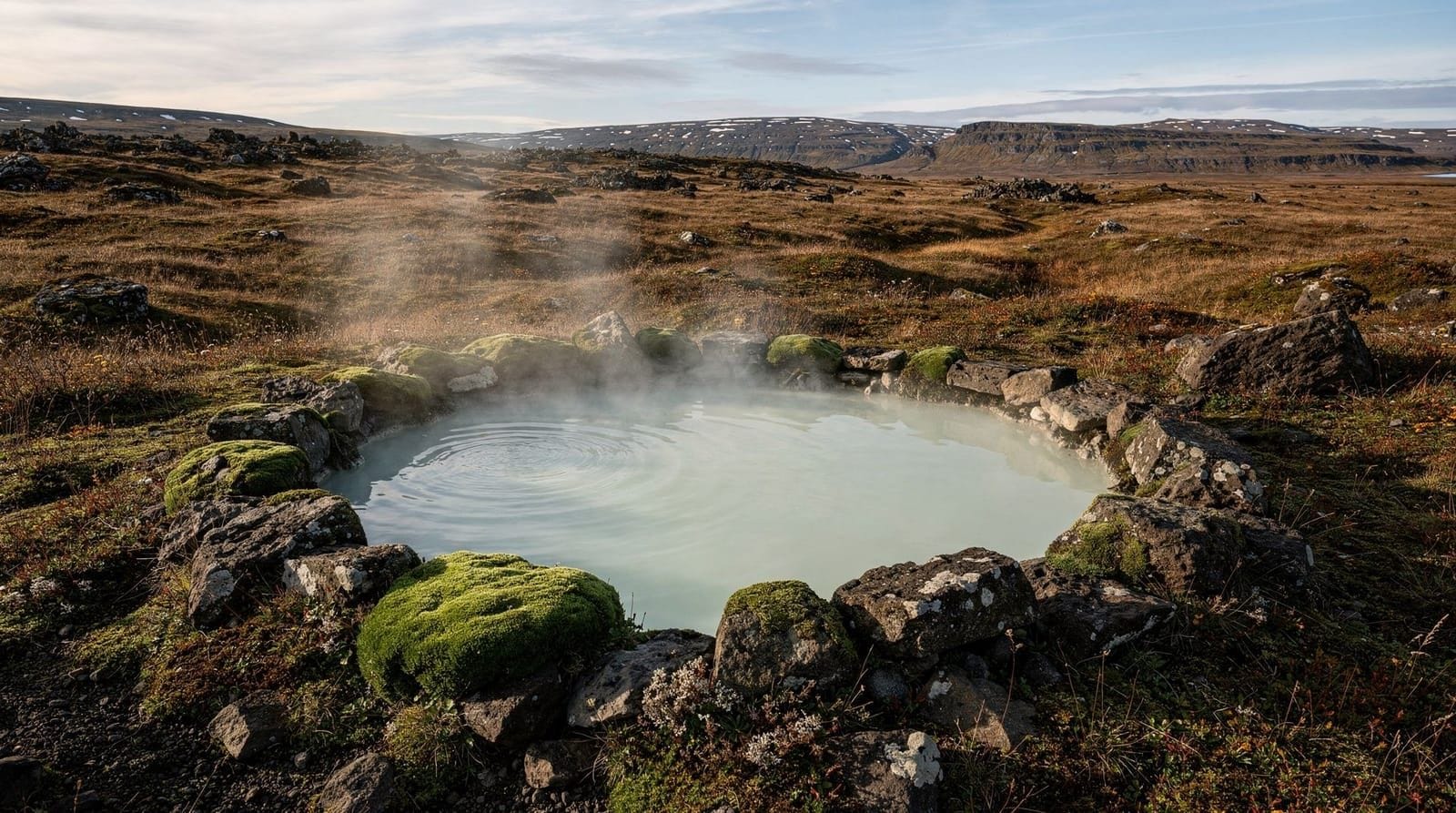
Guðrúnarlaug in Dalir: A small outdoor pool in west Iceland’s Dalir region, restored from a historical bathing site mentioned in the Laxdæla Saga. No entrance fee. Not widely visited. Warm water, a simple concrete tub, a changing cabin. The kind of place that exists entirely on the honour system and hasn’t been commercialised because not enough people know about it.
Hrunalaug: A small private hot spring near Flúðir (near the Secret Lagoon) that until recently was a genuine secret known only to locals. It has since appeared in enough Instagram posts that it’s now moderately visited. Entry involves a voluntary donation box and an understanding that you’re using a private landowner’s spring by permission.
When to visit each one
Crowds and comfort at these springs shift a lot by season — the same pool that’s empty in October can have a queue in July.
| Spring | Best season | Why |
|---|---|---|
| Reykjadalur | May–September | Trail is icy and can be genuinely risky in winter |
| Secret Lagoon | Year-round | Fully developed, handles winter well, quieter shoulder season |
| Mývatn Nature Baths | September–May | Aurora viewing from the water in winter; midges make summer evenings less pleasant |
| Hvammsvík | Year-round | Tide affects which of the 8 pools are usable; check tide tables before booking |
| Forest Lagoon | Winter | Snow on the birch trees is the whole point of the design |
| Seljavallalaug | June–September | Unmaintained changing area and cold hike make winter visits unwise |
| Sky Lagoon | Year-round | Busiest with cruise-ship day-trippers when ships are in port |
Comparing the paid alternatives directly
| Spring | Price (approx.) | Setting | Crowd level |
|---|---|---|---|
| Secret Lagoon | ISK 3,500 | Rural, undeveloped | Low–moderate |
| Mývatn Nature Baths | ISK 4,500 | Volcanic, remote | Moderate |
| Forest Lagoon | ISK 5,900–7,900 | Forest, fjord view | Low |
| Sky Lagoon | ISK 7,990+ | Urban harbour | High |
| Hvammsvík | ISK 9,900+ | Fjord shoreline, tidal | Low |
| Blue Lagoon (for reference) | ISK 14,000+ | Lava field, industrial scale | Very high |
The practical summary
For most travellers who want the geothermal pool experience in Iceland without the Blue Lagoon price or crowds:
- Best value: Secret Lagoon (ISK 3,500, walk-ins accepted, classic experience)
- Best setting: Reykjadalur (free, hike required, wild river atmosphere)
- Best overall pool: Mývatn Nature Baths (ISK 4,500, blue water, volcanic landscape)
- Best urban option: Sky Lagoon (ISK 7,990+, Reykjavik harbour, good design)
- Most Icelandic experience: Any municipal pool for ISK 800–1,200
The best geothermal pools guide has more options and current prices. The wild hot springs guide covers the free and remote options in more detail. Iceland’s public pool network also deserves a mention — nearly every town has a geothermal pool open to the public for ISK 800–1,200, and they are where Icelanders actually swim. Laugardalslaug in Reykjavik and the pool in Akureyri are the largest and most accessible.