The Eastfjords surprise — why this is the most underrated part of Iceland
| Where | Coastal Route 1 between Höfn and Egilsstaðir |
| Time needed | At least 3 nights, 2 full driving/stop days minimum |
| Getting there | Self-drive only realistically; part of the ring road |
| Cost | Guesthouse/farm stays around 16,000–22,000 ISK/night |
| Best time | September–October for colour and lighter crowds |
The reputation problem
The East Fjords have a reputation problem that is entirely the fault of ring road itineraries. Most one-week Iceland guides treat the eastern section of Route 1 as a transit corridor — necessary passage between the glacier lagoon area in the south and Mývatn in the north. The instruction is usually: drive through, stop for fuel in Egilsstaðir, and keep moving.
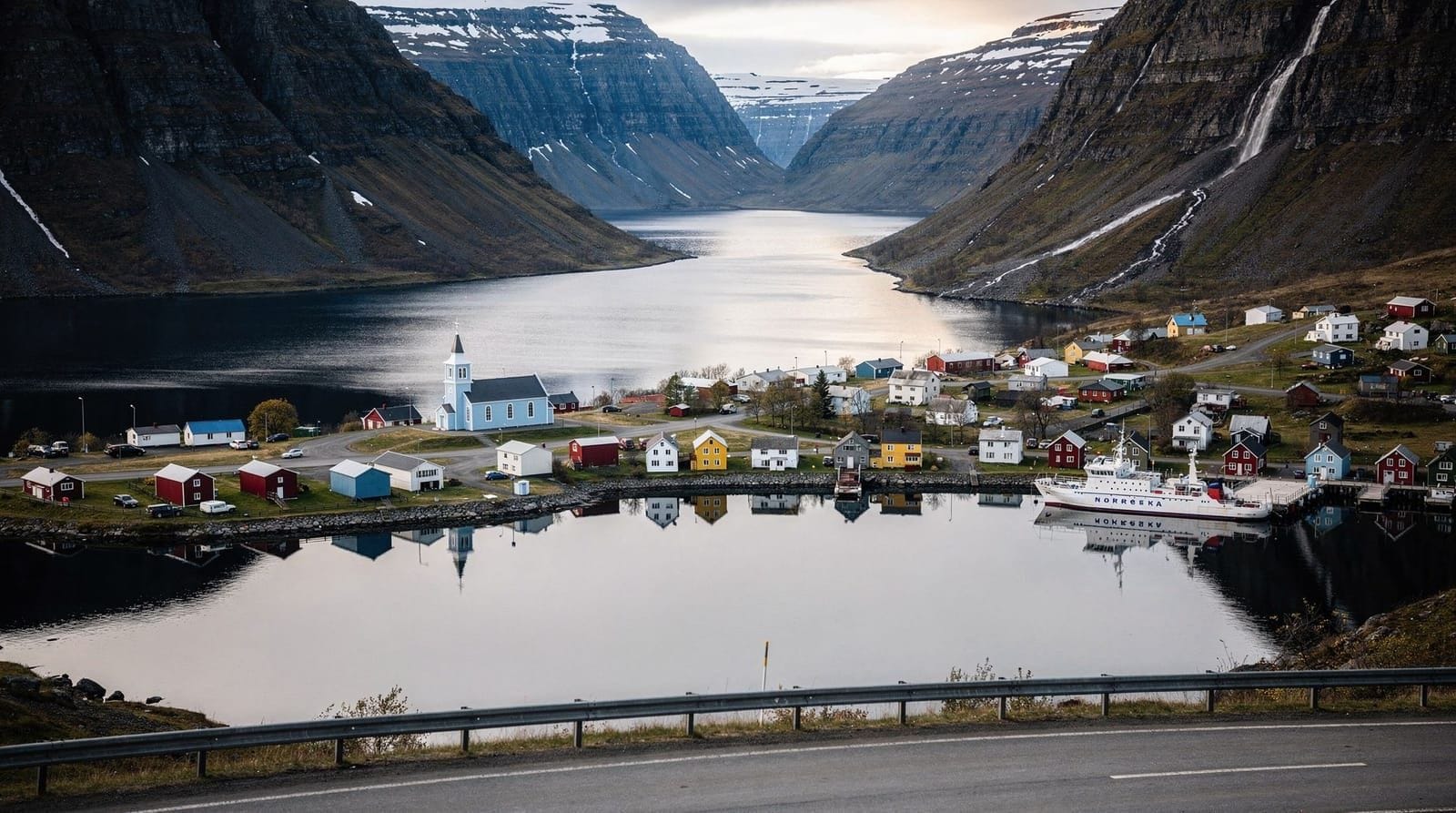
This is a mistake. The East Fjords — the jagged coastline between Höfn and Egilsstaðir — is the most geologically distinctive coastal landscape in Iceland, and the fishing villages that occupy the deep fjords between high mountains are some of the most atmospheric settlements in the country. It took me two trips before I stopped rushing through, and since then it has become the part of Iceland I recommend most strongly to people who have already done the standard circuit.
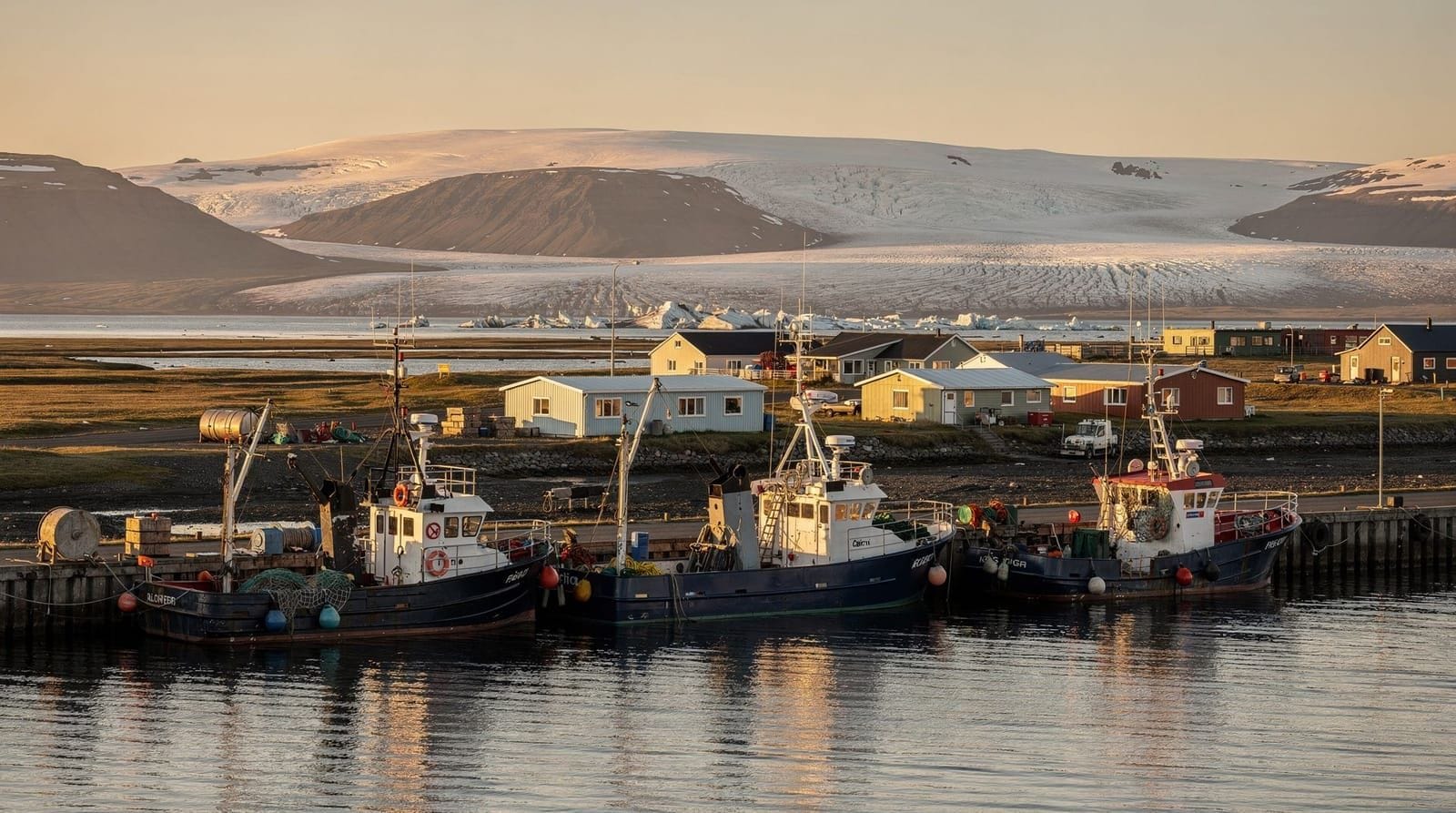
The East Fjords have no single famous landmark. There is no Kirkjufell, no Jökulsárlón. What they have instead is cumulative: kilometre after kilometre of coastal road that climbs and falls between fjords, with mountains dropping directly into the sea and small harbours at the fjord heads where fishing boats still go out in the morning.
The drive itself
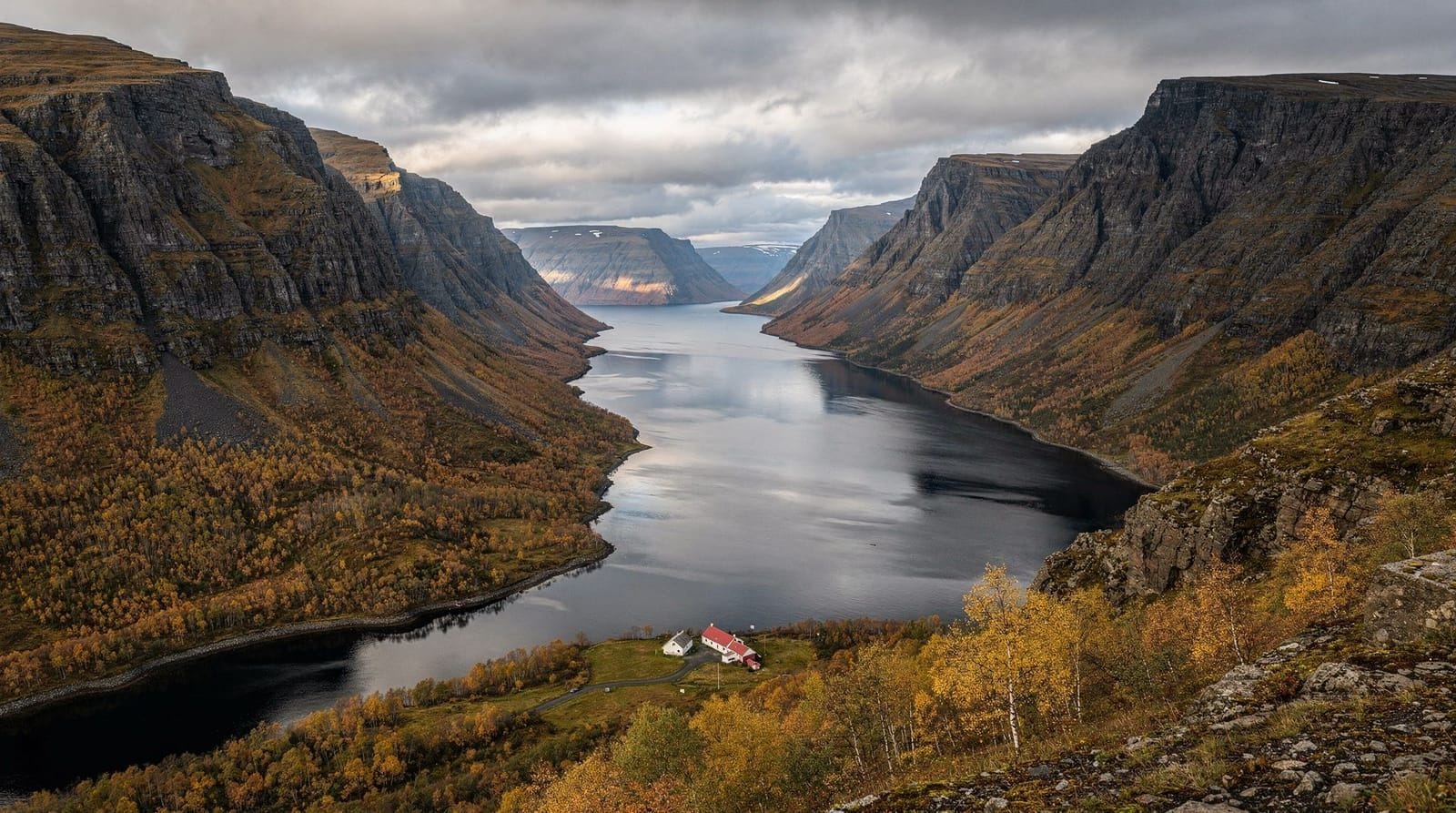
The section of Route 1 between Breiðdalsvík and Djúpivogur — roughly 70 kilometres — climbs repeatedly over high mountain passes between fjords. The pass above Breiðdalsvík on a clear October morning gave us a view of the coast below that took 20 minutes to properly absorb: the fjord a deep blue-green, the opposite walls of the valley in autumn colours (birch scrub goes gold, heather goes rust), the road below visible in its entire winding descent. No other people. No noise except the wind.
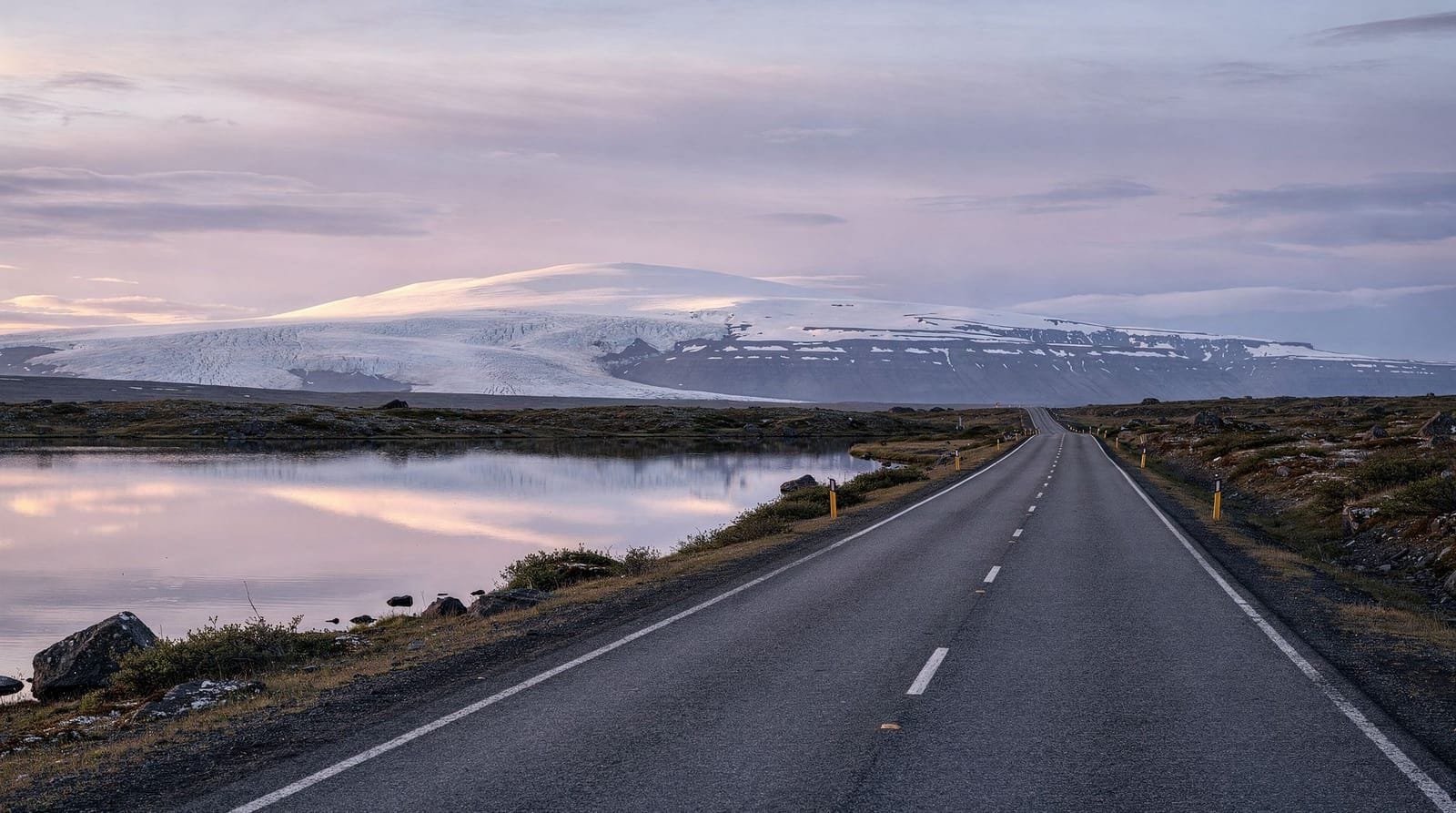
This drive is genuinely slow — the passes require attention on the curves and the scenery demands frequent stops. Budget at least 4 hours for the Höfn-to-Egilsstaðir section rather than the 2.5 hours that Google Maps suggests. The extra time is not wasted; it is the point.
The small villages along the fjords — Djúpivogur, Breiðdalsvík, Fáskrúðsfjörður, Reyðarfjörður — are worth a brief stop each. Djúpivogur has a small harbour with a peculiar egg sculpture installation (Eggin í Gleðivík, 34 large stone eggs representing local bird species), a petrol station, and a restaurant that serves local lamb at reasonable prices. Fáskrúðsfjörður was historically a summer base for French fishing fleet and has preserved French-language signage on some buildings as a cultural heritage marker.
Seyðisfjörður: the place everyone should know about
Seyðisfjörður is 27 kilometres east of Egilsstaðir on a steep mountain road that descends to a fjord-head village of 700 people, 19th-century painted wooden buildings, the Eimskip ferry terminal (connecting to Denmark, Faroe Islands, Norway), and a cultural density wildly disproportionate to its size.
The Skaftfell Center for Visual Art, in a yellow wooden building on the main street, shows serious contemporary art exhibitions. The Technical Museum has a working audio-visual collection from the early telecommunications era. The town has several good cafes, a remarkable fish restaurant called Nord Austur (the local fish soup, made with east Iceland char and cod, is worth the drive on its own), and in the evenings in summer, live music spills out from the community hall.
The ferry connection has historically attracted artists and writers who wanted somewhere remote but not inaccessible. The result is a town that feels like it belongs to the arts district of a larger European city while being surrounded by thousand-metre peaks and looking out on a silent fjord. The main street has a rainbow-painted road leading to the church, used originally for LGBTQ+ pride and now a permanent feature of the town’s identity.
The road to Seyðisfjörður is steep enough to be closed in winter storms; in October we crossed it in light snow that made the descent memorable. Check road.is before heading over in shoulder season.
A puffin and Gufufoss waterfall tour from Seyðisfjörður port combines the fjord’s birdlife with the dramatic local waterfall — this is the kind of small-scale, local-operator experience that the East Fjords specialise in.
Stöðvarfjörður and the mineral collection
About 60 kilometres south of Egilsstaðir, the tiny village of Stöðvarfjörður (population roughly 200) has a private mineral collection in a house on the main road that is among the most idiosyncratic museums I have encountered anywhere. Petra’s Stones — the collection of Ljósvetninga Petra Sveinsdóttir, who spent her life gathering local minerals and fossils — fills the house, the garden, every available surface. Entry costs around 1,500 ISK.
The collection is not particularly curated in the museological sense. It is an accumulation — room after room of zeolites, calcite crystals, chalcedony, calcified driftwood, volcanic specimens from the fjord hills above. Petra died in 2012; the collection continues as she left it. It takes about 45 minutes and I have brought everyone who has visited the East Fjords with me. Everyone has found it extraordinary, including people who have zero interest in rocks under normal circumstances. Something about the scale and the personal obsession it represents transcends the category.
The Studlagil Canyon detour
Studlagil Canyon, accessible from the Jökuldalur valley about 60 kilometres northwest of Egilsstaðir, contains the largest basalt column formation in Iceland. The Jökulsá á Dal river runs through a canyon where perfect hexagonal basalt columns rise from the water to perhaps 30 metres. In 2020, a hydroelectric dam upstream reduced the river flow and exposed the columns that had previously been partially submerged; the photographs that resulted went internationally viral and Studlagil became suddenly famous.
The access road is rough but drivable in a regular 4x4. The canyon itself requires a 5-kilometre walk from the road end, crossing several streams. The light in the late afternoon, when the low autumn sun hits the basalt at an angle, is extraordinary. The canyon is narrow and the reflections of the columns in the river create a doubling effect that makes photographs look artificial even when they are straight.
The Vök Baths, a floating geothermal pool on Lake Urriðavatn near Egilsstaðir, combine well with a Studlagil day — soak in the afternoon after the canyon walk.
The day tour combining Studlagil Canyon with a visit to the Vök Baths is the best organised way to see both in a single day without navigational uncertainty on the rough access road.
Accommodation and food in the East Fjords
The East Fjords do not have a hotel concentration. Accommodation is spread across small guesthouses in each village and at farms between the fjords. In October we stayed at a farmhouse between Breiðdalsvík and Stöðvarfjörður — a working sheep farm with two guest rooms, full breakfast included, 22,000 ISK per room. The farmer was raising lambs born two weeks earlier; we met them at breakfast.
The food pattern in the East Fjords is: fish and lamb, simply prepared, at prices 20-30% lower than Reykjavík. The fish is often caught the same day by the village’s own boats. In Djúpivogur the small hotel restaurant served grilled plaice with potatoes and butter for around 3,500 ISK — a meal that in Reykjavík would cost twice as much and taste half as good.
The east Iceland region guide covers accommodation recommendations by area.
What the Eastfjords taught me about Iceland
The East Fjords do not have a single, Instagram-codified highlight. There is no equivalent of Kirkjufell or Jökulsárlón — no one image that defines the region. What they have instead is the cumulative experience of driving through a landscape of genuine wildness, stopping in places where tourism is real but not dominant, and encountering an Iceland that has not been arranged for visitors.
The fishing villages along the coast are working communities, not scenery. The local restaurants serve fish caught that morning and charged at prices lower than Reykjavík. The cafes have handwritten menus and coffee made in a regular machine. The guesthouses are run by families who have farmed or fished the area for generations.
I stayed three nights in the East Fjords on my second visit and wished I had booked four. The ring road 10-day itinerary gives the east proper time and is the version of the ring road I now recommend to anyone who has a day to spend beyond the minimum.
If you are planning a ring road trip and tempted to rush this section: do not. The surprise is genuine. The East Fjords reward the traveller who arrives without expectations and leaves wondering why everyone was talking about the Golden Circle.
Practical notes for the East Fjords
Fuel stations in the East Fjords are less frequent than on the ring road proper. Egilsstaðir has the most options (Olis, N1, Orkan); Höfn at the western end of the east coast is well-served. Between them, fill up when you can rather than when you need to.
Mobile signal is patchy in the deep fjords. The road between fjords often drops signal entirely on the pass sections. Download offline maps for the east Iceland road network before leaving Egilsstaðir; Google Maps offline coverage of the region is good.
Timing: October was, for us, nearly perfect. The autumn colours on the hillsides, the low angle of the light, the reduced tourist traffic — all aligned. June and July are also good but busier, with Seyðisfjörður in particular filling up when the ferry from Europe arrives mid-week. September is my second recommendation: summer conditions still, fewer visitors than July, and some of the autumn colour beginning on the higher slopes.
East Fjords by season
| Season | Conditions | Notes |
|---|---|---|
| June–July | Warm, long daylight, busiest | Seyðisfjörður crowded around ferry arrivals |
| August | Similar to July, slightly quieter | Good all-round choice |
| September | Fewer visitors, early colour | My second recommendation |
| October | Peak autumn colour, quiet | Best light, some roads weather-dependent |
| November–April | Passes can close, short daylight | Seyðisfjörður road closes in storms; check road.is |
The ring road 10-day itinerary allocates two full days to the East Fjords. If you can only spare one, prioritise Seyðisfjörður and Stöðvarfjörður over the main Route 1 drive and you will have the best of the region in a compressed form.
FAQ
Is the East Fjords drive suitable for a rental car without 4x4?
Yes for the main Route 1 coastal section, which is paved and manageable in a standard rental. The Studlagil Canyon access road is rougher and better suited to a 4x4, though a careful driver can manage it in dry conditions in a regular crossover.
How many days should I add to a ring road trip for the East Fjords?
At least two full days beyond a single transit day — one for the Route 1 coastal drive and villages, one for Seyðisfjörður and Studlagil Canyon. The ring road 10-day itinerary builds this in; shorter itineraries will need to compress it.
Is the East Fjords worth it if I’ve already seen the south coast and north Iceland?
Yes, more than most travellers expect — the appeal here is entirely different from the famous single-landmark stops elsewhere. There’s no equivalent of Skógafoss or Kirkjufell; instead you get a cumulative sense of a working, remote coastline that most ring road itineraries skip entirely, which is exactly why it rewards travellers who have already done the well-known circuit.