Iceland vs Norway vs Greenland: which Nordic destination is right for you?
Reykjavik: Small group Golden Circle day trip
Iceland, Norway, or Greenland — which should I visit?
Iceland is the most accessible and affordable of the three, with the best self-driving infrastructure. Norway offers the most variety of landscapes and a well-developed tourist network. Greenland is the most remote, most expensive, and most extreme — suited to adventure travelers with a specific expedition mindset. Most first-time Nordic visitors start with Iceland.
Three very different destinations
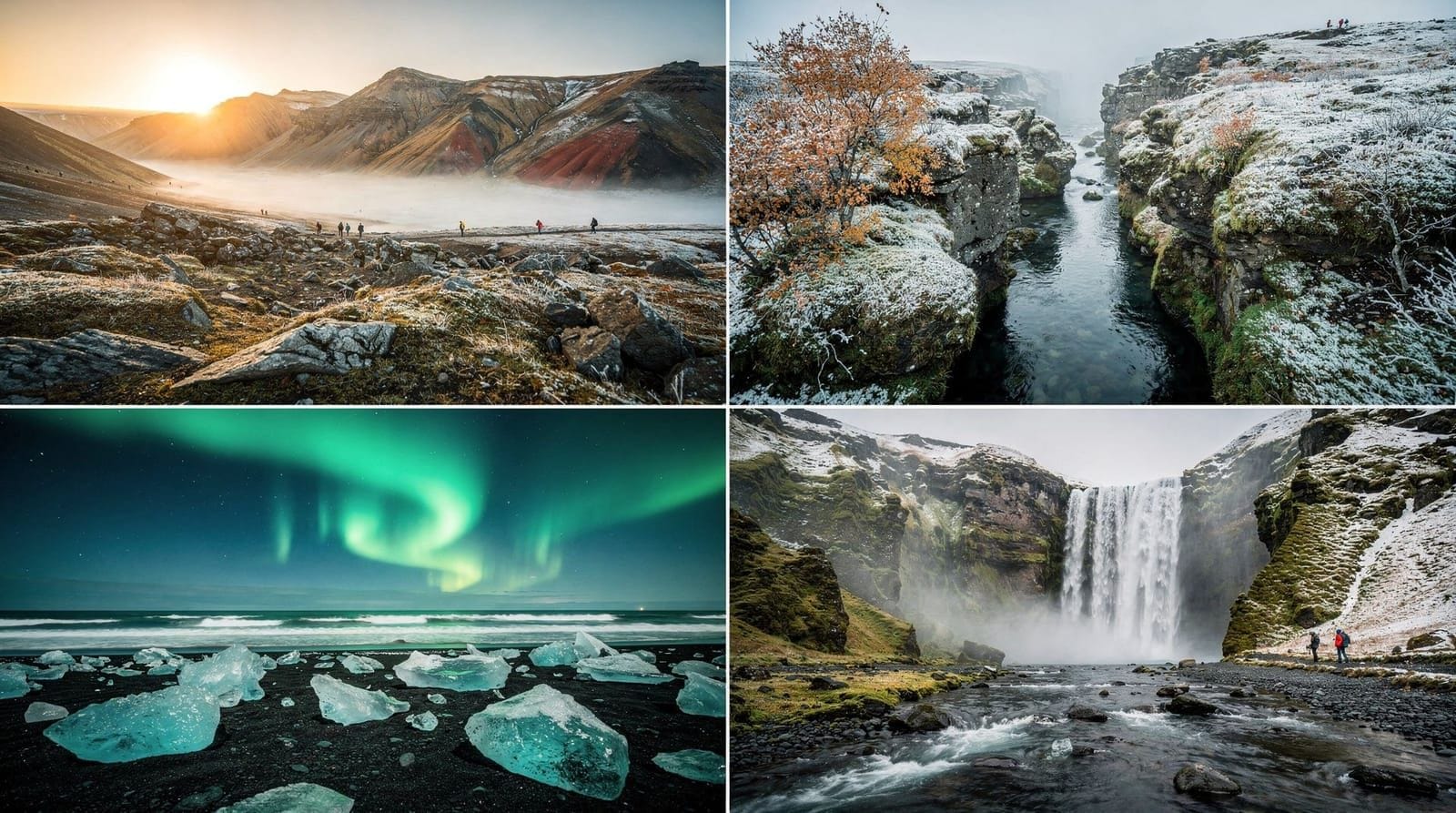
Iceland, Norway, and Greenland are all associated with dramatic northern landscapes — volcanoes, glaciers, fjords, northern lights, and midnight sun. But the traveler experience at each is starkly different. Budget, accessibility, infrastructure, and the type of experience you want determine which makes sense for your trip.
| Easiest first Nordic trip | Iceland |
| Best fjord variety | Norway |
| Most remote / expedition-style | Greenland |
| Cheapest of the three | Iceland (still not cheap) |
| Self-drive friendly | Iceland and Norway; not Greenland |
Iceland
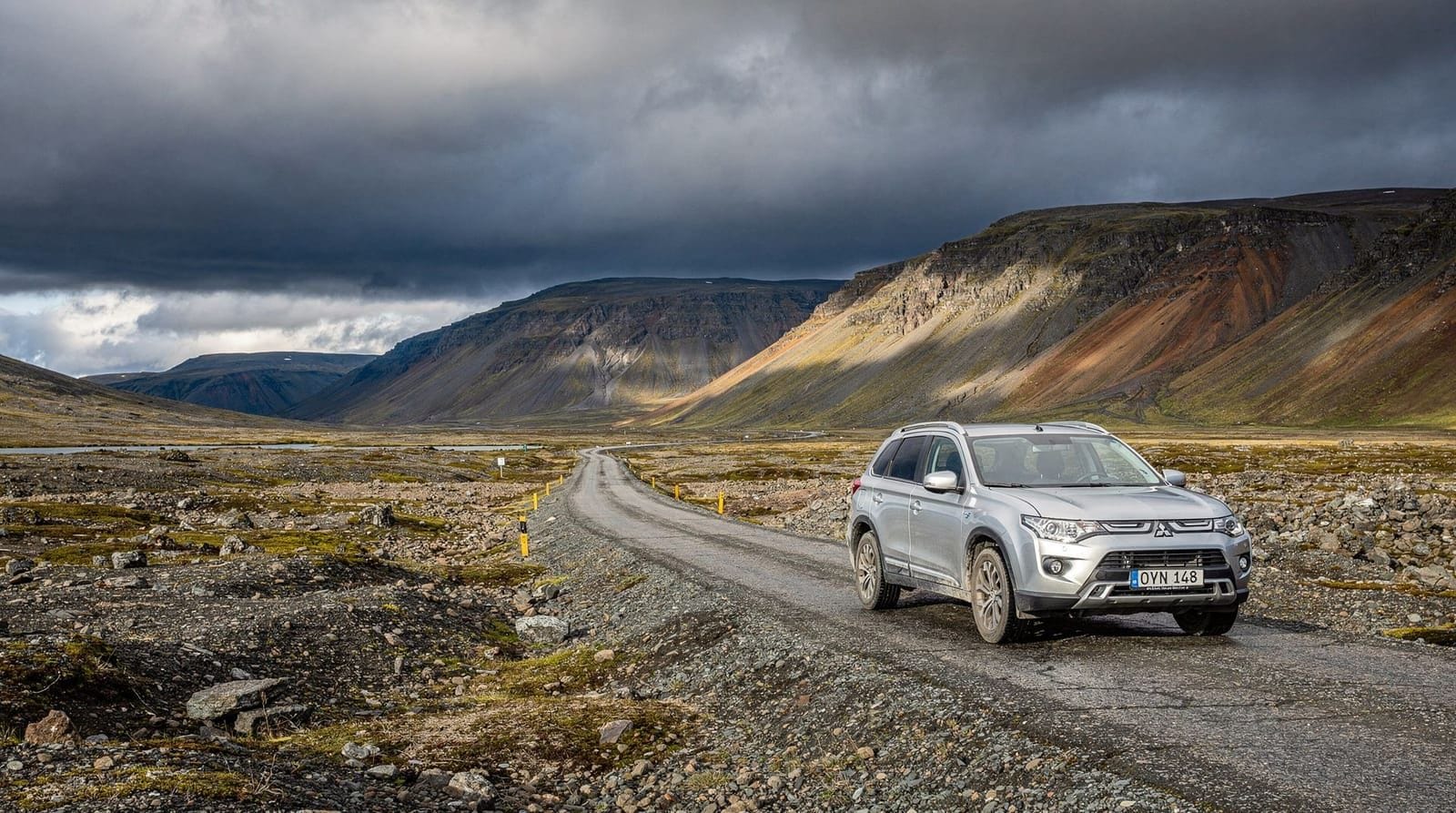
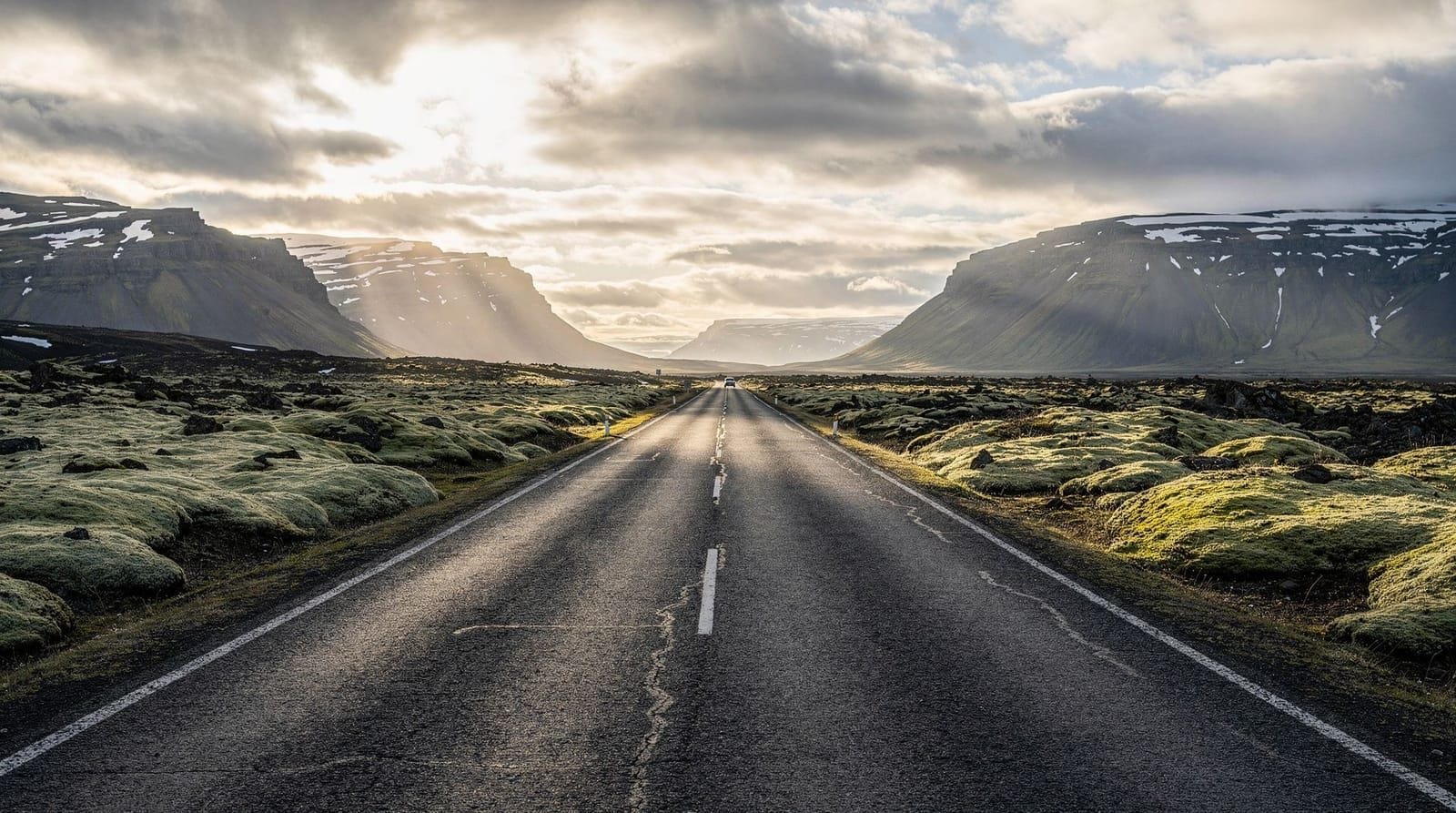
Iceland is a North Atlantic island 2,500 km from mainland Europe. Its appeal is concentrated and accessible: volcanic landscape, geothermal activity, glaciers, waterfalls, and wildlife packed into a country roughly the size of Kentucky. The Ring Road (Route 1) encircles the island in 1,322 km of paved road.
Accessibility: Daily direct flights from London, Amsterdam, Copenhagen, and New York with Icelandair and others. Keflavik Airport is one of Europe’s most convenient entry points. Driving from the airport to central Reykjavik takes 45 minutes.
Infrastructure: One of the strongest tourist infrastructures of any small-country destination. Car rental companies, English-speaking staff everywhere, well-signed roads, campsite network along the Ring Road, and a culture of independent travel.
Cost: Expensive by European standards but the most affordable of the three destinations. A 10-day self-drive trip costs approximately ISK 350,000–650,000 per person (€2,400–4,400) including flights, accommodation, car, and food at budget-to-mid level.
What you get: Geological drama at close range. You can stand on the edge of an active lava field, walk behind a 60 m waterfall, snorkel in a tectonic fissure, and sleep under the northern lights, all within a 7-day driving loop.
What you don’t get: True wilderness remoteness. The Ring Road has tour buses; Geysir and Gullfoss have hundreds of visitors daily in summer. The highlands and Westfjords offer more solitude, but Iceland is not an off-grid experience for most visitors. See our full Iceland travel guide and Ring Road guide for planning specifics.
Small-group Golden Circle day tripNorway
Norway is a Nordic country on the Scandinavian Peninsula, sharing a border with Sweden and Finland. It is approximately 6x the land area of Iceland and the most geographically diverse of the three destinations — the fjords of the west, the Lofoten archipelago in the north, the Svalbard archipelago in the Arctic Ocean, and the gentle hills of the southern coast are all part of Norway.
Accessibility: Major airports at Oslo (Gardermoen), Bergen, Tromsø, and Stavanger with direct connections from across Europe. Norway is also reachable overland from Sweden. More entry points and more airline competition mean more flexible and often cheaper flight options than Iceland.
Infrastructure: Extremely well-developed. Norway has an excellent road network (including many undersea tunnels between islands), frequent public transport, and a culture of friluftsliv (outdoor life) that has produced world-class hiking, cycling, and skiing infrastructure.
Cost: Comparable to or slightly cheaper than Iceland for accommodation and car rental, but food and alcohol are significantly more expensive in Norway’s licensed restaurants. A 10-day Norway trip at mid-range: approximately €2,500–5,000 per person.
What you get: Greater landscape variety. The Norwegian fjords (Sognefjord at 204 km long and 1,300 m deep, Hardangerfjord, Geirangerfjord) are larger and more scenically complex than any Icelandic fjord. The Lofoten Islands offer fishing village culture, sharp peaks, and clear Arctic water. Svalbard offers genuine high-Arctic expedition travel.
Northern lights in Norway: The best region is Tromsø and the North Cape area above 69°N — similar latitude to Svalbard. Accessible by direct flights to Tromsø from Oslo, London, and several European cities.
What you don’t get: Iceland’s geological freshness. Norwegian landscapes are older, more worn. The volcanic drama of active fissures, recent lava fields, and geothermal pools is Iceland-specific. Norway has geothermal features only at Svalbard in any significant quantity.
Greenland
Greenland is an autonomous Danish territory, the world’s largest island, and roughly 80% covered by ice sheet. The population is approximately 57,000, concentrated in small coastal towns (the largest, Nuuk, has 20,000 people). There are no roads between settlements — travel between towns requires helicopter, boat, or small aircraft.
Accessibility: Main entry point is Copenhagen. Flights run to Nuuk (Godthab) and Kangerlussuaq from Copenhagen, and seasonal direct flights from Reykjavik to several Greenlandic towns. Air Greenland and Air Iceland Connect operate the routes.
Infrastructure: Minimal. There is no rental car network as we understand it. You do not self-drive Greenland. Travel options are: guided expedition tours, booked local guides, or independent hiking in areas with basic hut networks. Towns have guest houses and a few hotels; remote travel requires fully self-sufficient expedition equipment.
Cost: Significantly more expensive than Iceland or Norway. Flights Greenland: €500–1,500 return from Copenhagen. A guided 7-day Greenlandic fjord tour: €3,000–7,000 per person. Accommodation in towns is limited and priced for small-market supply.
What you get: Genuine remoteness. Icefjord at Ilulissat (UNESCO World Heritage, one of the world’s most active calving glaciers), dog sledding in winter, kayaking among icebergs, and vast ice sheet landscapes with near-zero human presence. If your travel goal is maximum solitude and genuine wilderness, Greenland delivers what Iceland and Norway cannot.
Northern lights in Greenland: Excellent — Greenland is above 64°N across its entire populated coast, and well above 70°N in most areas. However, cloud cover is significant. Kangerlussuaq, in a dryer inland valley, has some of the clearest skies for aurora in the world.
What you don’t get: Convenience. Greenland requires careful logistics planning, a significant budget, and a tolerance for itineraries that depend on weather and charter aviation.
Direct comparison
| Category | Iceland | Norway | Greenland |
|---|---|---|---|
| Self-driving | Excellent | Excellent | Not applicable |
| 10-day trip cost | €2,400–4,400 | €2,500–5,000 | €4,000–10,000+ |
| Northern lights | Sep–Apr | Sep–Mar (Tromsø) | Year-round |
| Midnight sun | May–Jul | May–Jul (Tromsø) | May–Jul |
| Geological drama | Very high | Low–Moderate | Moderate (glacial) |
| Fjords | Small to medium | World-class | World-class |
| Crowds at highlights | High in summer | High in summer | Low to minimal |
| Wildlife | Whales, puffins, seals | Same + reindeer | Same + polar bears |
| First-time visit ease | Very easy | Very easy | Difficult |
Which destination for which traveler
Choose Iceland if:
- This is your first Nordic destination
- You want to self-drive a spectacular landscape
- You have 7–14 days and want maximum variety within that time
- Geology (volcanoes, geysers, glaciers) is a primary interest
- Budget matters — Iceland is the most cost-controlled option at the low end — see Iceland on a budget for specific tactics
Choose Norway if:
- You want the classic fjord experience
- You have more time (Norway rewards 2–3 weeks) or want to make multiple trips to different regions
- You are interested in Lofoten Islands culture and fishing village landscapes
- Hiking infrastructure is important (Norway’s Trolltunga, Preikestolen, Besseggen trails are world-class)
- You want a wider range of cultural experiences alongside landscapes
Choose Greenland if:
- You have done Iceland and/or Norway and want something more remote
- Expedition-style travel appeals to you
- You have a larger budget and significant trip planning capacity
- Iceberg landscapes and genuine wilderness are the primary goal
- You want to experience high-Arctic culture (Inuit Greenlandic communities)
Getting there: practical transport comparison
Iceland transport
Flights: Keflavik Airport is served by Icelandair, Play, Wizz Air, and multiple European and North American carriers. From London Gatwick: 3 hours. From New York JFK: 6.5 hours. From Amsterdam: 2.5 hours. Low-cost options (Play, Wizz) have made Reykjavik genuinely accessible — flights from €80–150 return from UK/Ireland in shoulder season.
Within Iceland: All self-driving, domestic flights to Akureyri and Ísafjörður (Eagle Air and Air Iceland Connect), and scheduled buses (Strætó). No rail network. See renting a car in Iceland and domestic flights in Iceland for the specific options.
Norway transport
Flights: Oslo Gardermoen is served by all major European carriers and some transatlantic routes. Bergen, Tromsø, and Stavanger have direct connections from London and several European cities. From London: 2–2.5 hours to Oslo.
Within Norway: Norway has a well-developed internal network — Hurtigruten coastal ferry (Bergen to Kirkenes, 11 days), NSB rail network connecting major cities, and an extensive domestic flight network (Norwegian, SAS) connecting 50+ airports. Getting around Norway without a car is far more practical than Iceland.
Cost of internal transport: Norway’s domestic flights are reasonably priced (Oslo–Tromsø often €60–120 return). The Hurtigruten is more of a cruise experience (€200–600/person for selected segments). Rail between Bergen and Oslo runs €40–80 in advance.
Greenland transport
International flights: Copenhagen–Nuuk (Air Greenland, 4.5 hours). Copenhagen–Kangerlussuaq (Air Greenland, 5 hours). Reykjavik–Nuuk (Air Greenland, 3 hours seasonal). Return flights Copenhagen–Greenland typically €700–1,500.
Within Greenland: Air Greenland operates a domestic network connecting coastal towns (no roads between them). Helicopter routes connect smaller settlements. Ferries run in summer between south Greenlandic ports. Everything requires advance booking; flight seats are limited and sell out months ahead in summer.
Boat-based exploration: Charter boats and expedition kayaking tours are available in the fjord areas around Ilulissat, Nuuk, and Sisimiut. These are the most rewarding (and expensive) ways to experience Greenland’s iceberg-filled fjords.
The food and cultural experience
Iceland
Reykjavik has a genuinely excellent dining scene for its size — Dill (Michelin starred, New Nordic cuisine), Grillmarkáðurinn, and dozens of quality mid-range restaurants. Outside Reykjavik, options drop sharply to guesthouse dining (perfectly adequate) and petrol station food.
Icelandic food culture: lamb (the most eaten meat), seafood (Arctic char, cod, haddock, skyr dairy), traditional preparations like hangikjöt (smoked lamb) and dried fish (harðfiskur). The quality of lamb and fish in Iceland is genuinely superior to most markets. See our Icelandic food guide.
Alcohol: Available at restaurants and at Vínbúðin state liquor stores. Supermarkets cannot sell alcohol above 2.25% ABV. This surprises visitors expecting to buy wine at the supermarket. Budget ISK 3,000–5,000 for a bottle of wine at a restaurant; ISK 1,800–2,800 at the state store.
Norway
Norwegian food culture is strong in fresh seafood — Bergen’s fish market (Fisketorget) sells smoked salmon, crab, and fresh shrimp directly from boats. Traditional dishes: rakfisk (fermented trout), pinnekjøtt (dried lamb ribs), and Brunost (brown cheese that divides opinion sharply). Restaurant prices in Norway are higher than Iceland — a main course in Bergen runs NOK 280–450 (€24–38).
Norway’s craft beer scene is excellent — breweries in Bergen (7 Fjell), Oslo (Nøgne Ø), and Tromsø.
Greenland
Greenlandic cuisine is centred on country food — locally hunted seal, reindeer (caribou), musk ox, and Arctic char. In Nuuk, restaurants like Hereford Beefstouw and Ulo at Hótel Hans Egede serve international and Greenlandic fusion menus. In smaller towns, food options are limited to town canteens and supermarkets (Pisiffik or Pilersuisoq cooperatives).
Greenlandic food is an experience — eating muktuk (raw narwhal or beluga skin) or country-smoked seal is genuinely indigenous cuisine. Not appropriate for all visitors but memorable for those who approach it with genuine curiosity.
Ecological considerations
All three destinations are grappling with overtourism in different ways:
Iceland: 2.3 million visitors per year against a population of 380,000 — a 6:1 visitor-to-resident ratio. This strains infrastructure particularly at Golden Circle and South Coast sites. Iceland has responded with parking fees, capacity limits at popular sites, and strengthened enforcement against wild camping. The sustainable travel guide covers responsible visiting practices, and is Iceland overtourism real gives an honest, ground-level view of how much this actually affects a typical visit.
Norway: Trolltunga and Preikestolen have seen dangerous overcrowding and required safety barriers. The government has introduced timed entry at several sites. The Lofoten Islands are discussing visitor taxes to manage impact. Norway’s broader road and rail network spreads visitor pressure more evenly than Iceland’s single-loop Ring Road, which concentrates almost all traffic onto one road for most of a trip.
Greenland: The opposite problem — tourism is actively encouraged to support the small-population economy but infrastructure cannot scale quickly. The main risk is environmental damage from inexperienced expedition travelers in sensitive ecosystems.
Safety comparison
All three destinations have excellent safety records for tourists:
Iceland: Low crime, excellent emergency services, 112 Iceland app, ICE-SAR rescue organisation. The risks are environmental, not social — driving accidents, exposure in remote areas, and volcanic hazards. Iceland’s emergency response infrastructure is world-class.
Norway: Similarly low crime. Emergency number 112. The main risks for tourists are hiking accidents (exposed trails, rapid weather changes) and water-related incidents (kayaking, fjord swimming). Norwegian emergency services are highly capable.
Greenland: The lowest risk from crime (tiny population, extremely low crime rate). The highest risk from environment — polar bear encounters on east and north Greenland (nowhere near main tourist areas), glacial calving zones, and the genuine remoteness of expedition travel. Emergency services in most Greenlandic towns are limited; evacuation by aircraft for serious medical emergencies can take hours.
Visa requirements
Iceland: Schengen Area — no visa required for EU/EEA citizens. US, Canadian, UK, Australian citizens can stay up to 90 days without visa. ETIAS (European Travel Information and Authorisation System) will eventually apply for non-EU visitors; check current status at etias.eu.
Norway: Also Schengen — same rules as Iceland.
Greenland: Part of the Kingdom of Denmark but outside the EU and Schengen. EU and Schengen citizens do not need a visa. UK, US, Canadian, Australian citizens do not need a visa for stays under 90 days. Actual entry requirements: present a return ticket and sufficient funds for your stay.
Multi-destination trip planning
Iceland + Norway combination:
A logical 3-week trip combining both:
- Days 1–10: Iceland Ring Road (self-drive)
- Day 11: Fly Reykjavik–Bergen via Copenhagen (Icelandair or SAS)
- Days 12–21: Norway (Bergen, fjords, Lofoten Islands, Tromsø)
This requires a positioning flight from Iceland to Norway (Copenhagen is the standard hub). Alternatively, Icelandair’s transatlantic connections via Reykjavik allow a US–Iceland–Norway–home routing.
Iceland + Greenland combination:
- Days 1–7: Reykjavik and South/West Iceland
- Days 8–14: Greenland (Ilulissat or Nuuk)
Air Iceland Connect operates Reykjavik–Ilulissat and Reykjavik–Nuuk seasonally. This is the most logical entry point for a combined trip. Ilulissat (UNESCO World Heritage Icefjord) is the most rewarding single-destination Greenland visit for the time and cost involved.
Photography comparison
Iceland for photography: Iceland consistently ranks as a top-3 photography destination globally. The concentration of volcanic, glacial, geothermal, and coastal landscapes within driving distance creates a density of opportunity unmatched by the other two destinations. Midnight sun photography in June–July and aurora photography in September–March are world-class. The Iceland photography guide covers the main locations.
Norway for photography: Norwegian fjord photography is world-famous. The classic shots (Trolltunga, Preikestolen, Geirangerfjord from the viewpoint) are iconic and highly reproducible. The Lofoten Islands offer the combination of dramatic peaks, traditional red fishing boathouses (rorbuer), and Arctic light that has made them a photography pilgrimage destination.
Greenland for photography: Icebergs at Ilulissat — the scale of tabular icebergs and the blue light that comes from ancient glacial ice — is unlike anything in Iceland or Norway. Arctic wildlife (musk ox, polar bears on east coast, narwhal) offers expedition wildlife photography. The challenges are access (everything requires helicopters or boats) and unpredictable cloud cover that can ground photography plans for days.
Practical summary: Iceland is the easiest to photograph independently. Norway is excellent but requires more travel logistics to reach the best locations. Greenland is the hardest but offers the most distinctive images.
Deciding with a short trip vs a long one
Trip length changes the calculation more than almost any other factor:
| Trip length | Best choice | Why |
|---|---|---|
| 3–5 days | Iceland | Reykjavík, Golden Circle, and South Coast fit comfortably; the others need longer to justify the flights |
| 7–10 days | Iceland (full Ring Road) or Norway (one region) | Enough time for a complete Iceland loop or a focused Norwegian region (fjords or Lofoten) |
| 2–3 weeks | Norway (multi-region) or Iceland + Greenland combo | Long enough to see Norway’s full variety, or to combine Iceland’s accessibility with a Greenland add-on |
| Repeat/expedition trip | Greenland | Only really justifies the cost and logistics once the “easier” Nordic options have been done |
If you only have one Nordic trip in you for the foreseeable future and want to be sure you don’t regret the choice, Iceland’s combination of accessibility, self-drive ease, and landscape density makes it the safest single recommendation — it rarely disappoints first-time visitors, even if Norway or Greenland might technically offer a “bigger” experience for the right traveller.
Worth naming honestly: none of the three is objectively “the best” Nordic destination in the abstract. Each optimises for something different — Iceland for density and ease, Norway for variety and depth, Greenland for genuine remoteness — and the right answer depends entirely on how much time, budget, and appetite for logistics you’re bringing to the decision. Travellers who pick based on their actual constraints rather than which destination photographs best on social media tend to report the most satisfying trips.
Frequently asked questions about Iceland vs Norway vs Greenland
Can I combine Iceland and Greenland in one trip?
Yes. Air Iceland Connect flies seasonally between Reykjavik and several Greenlandic airports. A 10-day trip combining Reykjavik-area Iceland (4 days) and Ilulissat-area Greenland (5 days) is logistically feasible. Budget €4,000–7,000 per person.
Which has the best northern lights?
All three have excellent aurora potential in the right conditions. Norway (Tromsø) has the best aurora tourism infrastructure — guided tours, aurora alert apps, and a long track record. Iceland has more flexibility for self-drive aurora hunting. Greenland has the clearest skies but the least access infrastructure.
Is Iceland or Norway safer to drive in winter?
Norway has a more developed winter road maintenance network on its main highways. Iceland’s Ring Road is maintained year-round but more subject to sudden closures in storms. Both require winter driving experience and appropriate preparation. Neither is risky for experienced winter drivers.
Is Greenland really 80% ice?
Yes. The Greenland Ice Sheet is approximately 1.7 million km² and averages 2,135 m thick. The ice-free coast is a narrow strip, mostly in the west and south. All Greenlandic towns are on this ice-free coastal strip.
Which destination is best for puffins?
Iceland, by a wide margin. Iceland has the largest Atlantic puffin population in the world (approximately 60% of the global Atlantic puffin population nests in Iceland). Peak season is May–August. Norway has puffin colonies (particularly Røst in Lofoten) but smaller. Greenland has puffins on its west coast. Our puffin watching guide covers Iceland’s best spots.
Can a beginner self-drive in Iceland the way they might in Norway?
Yes — both countries have well-signed, paved main routes suitable for confident but inexperienced self-drivers in summer. Iceland’s Ring Road and Norway’s main fjord roads are comparably approachable; winter self-driving in either requires genuine experience and caution in both.
Is one of the three noticeably better for a honeymoon or special-occasion trip?
Iceland and Norway both work very well — Iceland for a compact, dramatic self-drive honeymoon with geothermal spas built in, Norway for a slower, more scenic fjord-and-hiking trip with excellent boutique accommodation options. Greenland suits a special-occasion trip only if both travellers genuinely want an expedition-style experience over comfort.