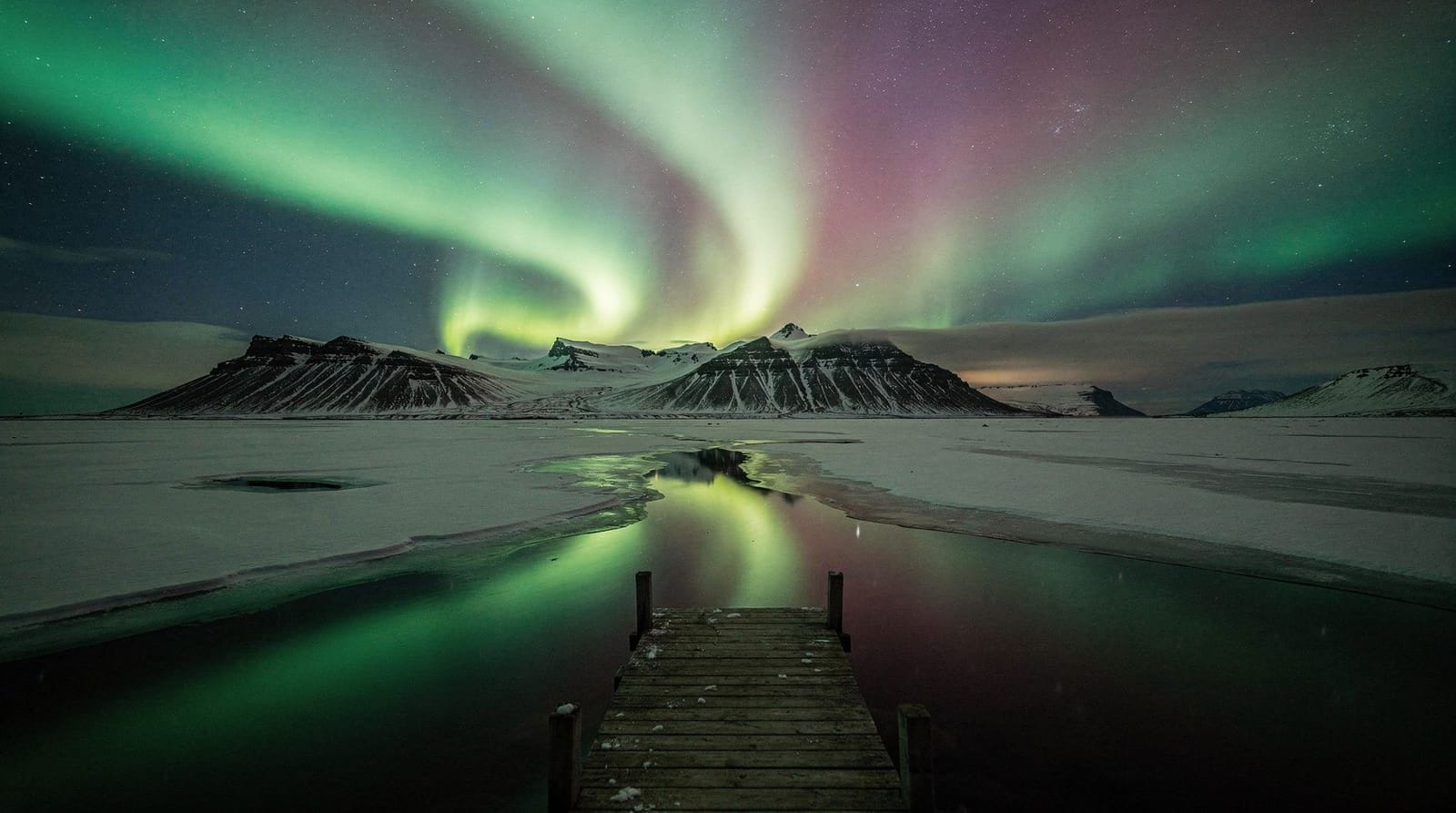
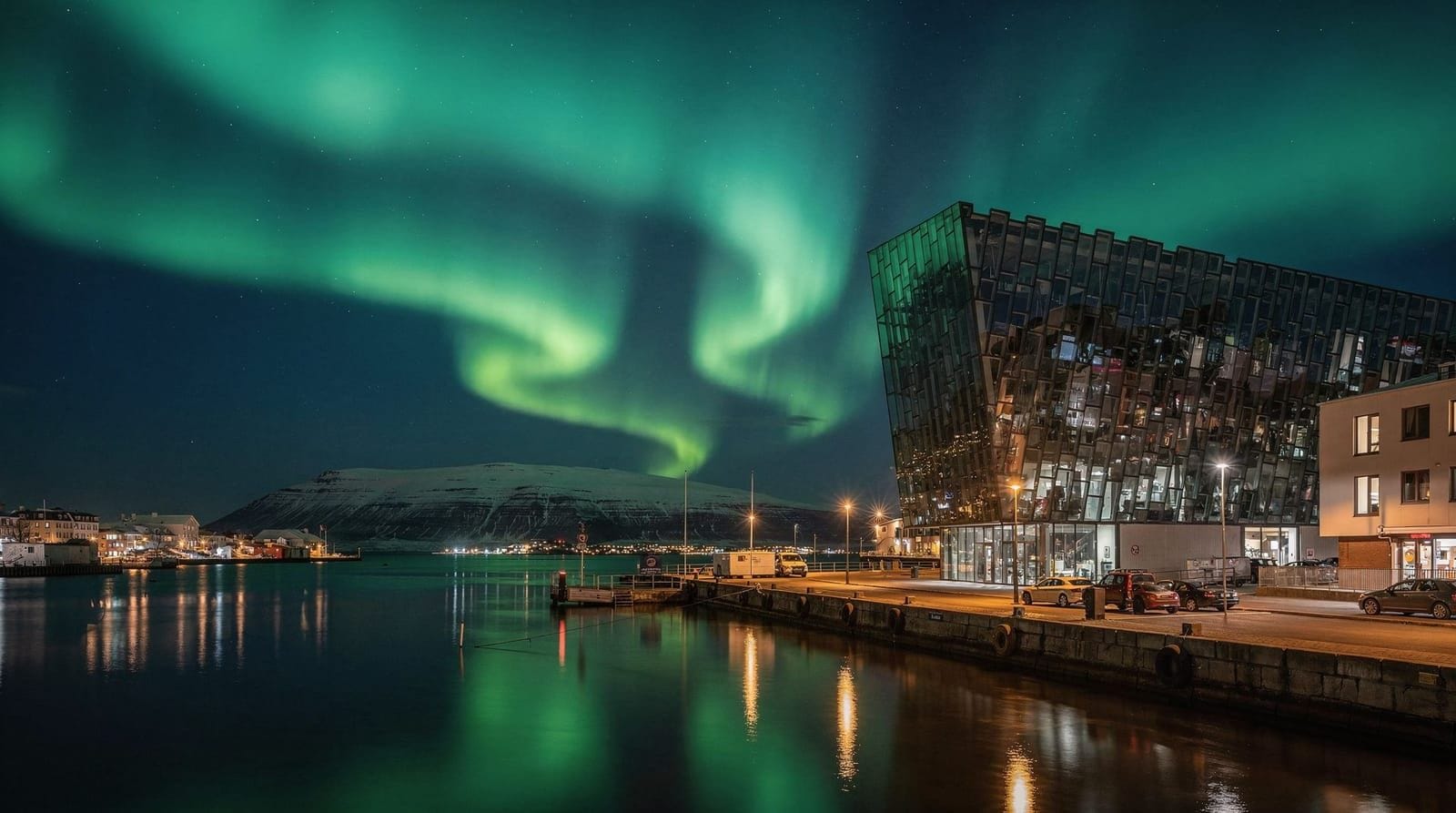
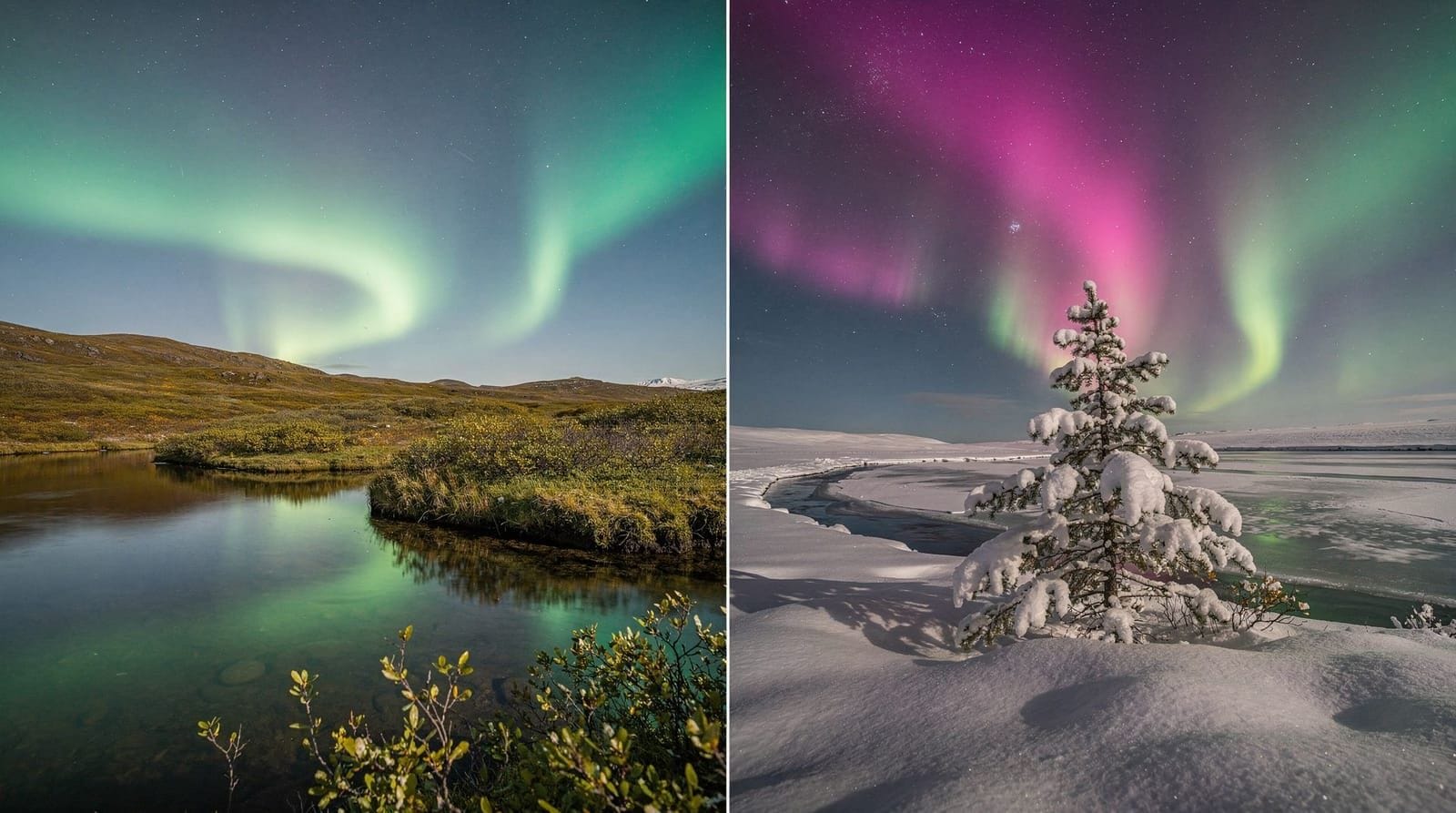
Best hotels for seeing the northern lights in Iceland
Reykjavik: Small group Northern Lights tour
Which hotels give the best chance of seeing the northern lights in Iceland?
Any accommodation away from city light pollution and under a clear sky gives good aurora chances. Hotels that offer aurora wake-up calls, south- or north-facing panoramic windows, outdoor hot tubs, and dark surroundings are the most practical. Good areas include the South Coast (Vík, Kirkjubæjarklaustur), Snæfellsnes, North Iceland near Mývatn, and any rural location at least 20 km from a town.
| What matters most | Dark surroundings + a real aurora alarm, not marketing language |
| Budget | Farm stays and hostels, around ISK 6,000–30,000/night |
| Dedicated aurora hotels | Hótel Rangá, Ion Adventure Hotel, from around ISK 50,000/night |
| Best areas | South Coast, Snæfellsnes, Mývatn, Westfjords |
| Booking | Rural properties 3–6 months ahead for Dec–Jan; Reykjavík hotels 4–8 weeks |
What actually makes a hotel good for aurora viewing
The marketing language around “northern lights hotels” is worth decoding. A hotel calling itself an “aurora hotel” often means little more than its location is in a dark area — which is genuinely useful — plus it offers an aurora alarm service, which may or may not function reliably. The following factors genuinely matter:
Dark surroundings: no floodlit carpark or adjacent town within 5 km. Look at the satellite view of the accommodation on a map — if you can see a cluster of lights, estimate the sky glow.
Aurora alarm service: some properties have staff who check the sky before going to bed and again at 23:00–01:00. A knock on the door (or a reception desk phone call) is the only practical way to be notified if you are asleep. Confirm this service is available at booking.
Outdoor hot tub or terrace: standing outside in Iceland in January for an hour is cold. An outdoor hot tub — a common feature at Icelandic guesthouses — lets you watch the sky comfortably while warm.
Large north-facing windows: some properties market panoramic windows specifically for aurora viewing from indoors. This only works during very active displays (Kp 5+) — faint auroras are not visible through glass from a heated room. Do not rate a property highly purely on this basis.
Areas of Iceland for aurora-focused accommodation
South Coast: Vík to Kirkjubæjarklaustur
The South Iceland corridor between Vík and Kirkjubæjarklaustur (about 60 km) has a cluster of farm guesthouses, hotels, and cabins that sit in almost total darkness on clear nights. The landscape is flat and open — the sky view is essentially a full hemisphere.
Hótel Vík is the main full-service hotel in the area. Smaller guesthouses including Icelandic Farm Holidays properties are scattered along the road. Several offer outdoor hot tubs and aurora alarm services.
Snæfellsnes Peninsula
The Snæfellsnes Peninsula west of Reykjavík is 1.5–2 hours from the capital and has very limited light pollution. Arnarstapi and Hellnar on the southern coast are small settlements with minimal sky glow. Guesthouses here often have outstanding views of Kirkjufell to the north.
Freezer Hostel in Hellnar and Hótel Búðir (upmarket, expensive) are among the options. The area is particularly good in March, when road conditions are easier and the equinox increases aurora frequency.
North Iceland: Mývatn area
The Lake Mývatn area in North Iceland has several accommodation options close to both the geothermal landscape and genuinely dark skies. Hótel Laxá is a comfortable mid-range option near the lake. The area is popular in winter for the combination of aurora, geothermal activity, and Mývatn Nature Baths.
Getting here from Reykjavík requires a 4–5 hour drive or a 45-minute domestic flight to Akureyri followed by a 1-hour drive.
Westfjords
The Westfjords have Iceland’s lowest population density and almost zero light pollution. Ísafjörður is the regional hub and has a small selection of guesthouses. This area is practical if you are already planning to visit the Westfjords — it is a significant detour from Reykjavík specifically for aurora hunting.
Near Reykjavík: hotel-based vs. tour-based approaches
For travellers who want to stay in or near Reykjavík, the strategy is different: stay at a centrally located hotel and use the aurora tour network to get to dark locations. Tour buses pick up from most Reykjavík accommodations. The northern lights from Reykjavík guide covers this approach in detail.
Some guesthouses in the Selfoss area (50–70 km from Reykjavík) offer a middle ground: dark enough for independent viewing, close enough for day trips to the capital and Golden Circle.
Reykjavík small-group northern lights tour — a practical alternative if your hotel isn’t in a genuinely dark locationRed flags in aurora hotel marketing
“Aurora guaranteed”: No accommodation can guarantee aurora. Weather and solar activity are outside anyone’s control. Some properties mean “we will rebook you if you don’t see it” — clarify what the guarantee actually covers.
“Best aurora location in Iceland”: Iceland’s aurora oval covers the entire country. Location within Iceland matters far less than local cloud cover on any given night. A property in the “perfect location” under solid overcast is worse than a mediocre guesthouse under clear skies.
High rates for glass-ceiling cabins: These are a genuinely wonderful experience when conditions cooperate, but they represent significant money for an experience that requires specific weather. If you are committed to this format, book a flexible cancellation option and have a contingency.
Practical booking tips
- Check whether the property has an aurora alarm service — send an email before booking if the website is unclear.
- Confirm the outdoor hot tub exists and is operational in the season you are visiting (some close in winter due to maintenance).
- Look at the satellite map view for light pollution around the property.
- Book with free cancellation where possible and check conditions 48 hours before arrival — if the week’s forecast is solidly overcast, consider rescheduling.
- A 3–4 night stay is recommended over a single night for any dedicated aurora trip. Statistical probability of at least one clear aurora night improves significantly with more nights.
Budget options with dark-sky access
Iceland’s camping and guesthouse infrastructure in rural areas often provides better aurora viewing than expensive hotels. Hostels in Vík, at Skaftafell, and in the Mývatn area offer dormitory beds from 6,000–9,000 ISK per person (€42–€63) in dark-sky locations. The aurora alarm service is less common at hostels, but staff at small properties are often willing to alert guests if they notice activity.
For the budget-conscious approach to Iceland travel including accommodation, see Iceland on a budget.
Iceland’s aurora-dedicated accommodation landscape
A small number of properties in Iceland have specifically designed or marketed their facilities around the aurora experience. Understanding what distinguishes these properties from those that simply mention aurora in their marketing helps allocate budget appropriately.
Hótel Rangá (South Iceland, near Selfoss): This is the most frequently cited dedicated aurora hotel in Iceland and one of the few that has made aurora infrastructure a genuine operational priority. The hotel sits in the Rangá river valley, 30 km from the nearest town, with essentially zero surrounding light pollution. Features specifically for aurora viewing include: a trained aurora team that monitors conditions nightly, an outdoor hot tub area positioned for north-sky views, themed suites with large windows, and a private astronomy observatory (with a telescope for guided sessions). Prices are 60,000–100,000 ISK per room per night (€420–€700), reflecting both the facilities and the remote South Iceland location. The on-site restaurant is good enough that you need not leave the property for dinner.
Ion Adventure Hotel (near Þingvellir, 45 min from Reykjavík): Built with a design-forward aesthetic and positioned in the Þingvellir National Park area, Ion has a north-facing glass-panelled restaurant and lounge area that allows aurora viewing from inside. Outdoor access is immediate from the building. The location near Reykjavik makes it a practical base if you want to be 45 minutes from the capital but in genuine darkness. Prices are typically 50,000–80,000 ISK per room (€350–€560).
Glass cabin properties: Multiple operators have opened geodesic dome or glass-ceiling cabin complexes in rural Iceland, following the template pioneered in Finnish Lapland. Locations include the South Coast, Snæfellsnes, and areas near Akureyri. These properties are visually striking and work exceptionally well when conditions cooperate. Prices of 60,000–100,000 ISK per cabin per night (€420–€700) are at the top of Iceland’s accommodation range. The caveat: a glass ceiling under solid overcast produces the same aurora viewing experience as a regular hotel room ceiling, regardless of the price paid.
For most aurora-focused travellers, the quality of the aurora alarm service and the darkness of the surroundings at a standard rural guesthouse provides 90% of the benefit at 20–30% of the cost. The premium aurora hotels are worth the expenditure for a special occasion trip or for travellers who want the entire experience designed around the aurora, not just the viewing opportunity.
What the aurora alarm service actually entails
“Aurora alarm” is a marketing term used by Icelandic guesthouses and hotels that ranges from genuine attentive service to essentially nothing. Understanding what you are actually getting — and how to verify it — helps you choose properties where the service is real.
At the best properties, the aurora alarm works like this: a staff member checks the sky and the vedur.is forecast before retiring for the night (typically 23:00–01:00). If conditions look good, they either knock on bedroom doors, call room phones, or send a text message. Some properties have invested in alert boards or buzzers. The staff member often goes outside every 30–60 minutes on a clear night to check progress and will wake guests when activity increases.
At less committed properties, the “aurora alarm” means the front desk staff will tell you when they check in if they happen to see something. No one actively monitors the sky after midnight. The alarm is passive rather than active.
Questions to ask before booking to distinguish between these:
- “What time do staff check the sky for aurora activity?”
- “Will someone wake guests if aurora appears after midnight?”
- “How do you notify guests — door knock, phone call, or text?”
- “Has the alarm been triggered in the past month?”
Properties that answer these questions specifically and confidently are running a genuine service. Properties that give vague answers (“we try our best”) are not.
The aurora alarm matters most for light sleepers who can quickly dress and go outside — and least for deep sleepers who will struggle to wake and function effectively after midnight. If you sleep heavily, an alarm is less useful than a property with clear skies visible through north-facing bedroom windows, allowing a quick visual check without fully waking.
Farm stays vs boutique hotels for aurora viewing
The choice between a farm stay and a boutique hotel in Iceland carries real practical differences for aurora viewing — beyond just price and atmosphere.
Farm stays: Iceland’s Icelandic Farm Holidays network lists properties across the country where accommodation is on working or former farms. These properties are often in positions of total darkness — surrounded by farmland with no adjacent town. Prices are typically 15,000–30,000 ISK per room per night (€105–€210), lower than boutique hotels. Aurora alarm services are almost universal at serious farm properties — farmers are accustomed to unusual hours and often have a natural interest in monitoring weather. The outdoor space is typically private: you are not sharing a terrace with 50 other guests. Hot tubs are common.
The trade-off: fewer facilities. Meals may be breakfast only, and the nearest restaurant is often 20–40 km away. Driving to and from dinner adds complexity on an aurora-watching evening — you want to be at the property when conditions shift, not stuck at a restaurant 40 minutes away.
Boutique hotels: Properties like Hótel Búðir on Snæfellsnes, Hótel Rangá on the South Coast, or Ion Adventure Hotel near Þingvellir offer higher service levels, on-site restaurants, and professional hospitality. They also cost 50,000–120,000 ISK per night (€350–€840). The advantage: you can have dinner at the hotel, then simply step outside. No logistics, no driving.
Hótel Rangá, specifically, has become well-known among aurora hunters. It sits in a dark river valley 30 km from Selfoss, has a professional aurora alarm, and organises staff to guide guests outside during active displays. The on-site restaurant means dinner and aurora viewing integrate naturally. It is expensive (typically 60,000–80,000 ISK per room), but it solves the logistics problem completely.
The hybrid approach: Stay at a mid-range guesthouse in a dark location (15,000–25,000 ISK per night) and join a local aurora tour or use self-drive for active nights. This preserves flexibility — you can chase clear skies if your property’s immediate area is clouded over — while keeping accommodation costs reasonable.
What to bring for aurora nights at any hotel
Regardless of which property you choose, a few items make the actual waiting-and-watching experience meaningfully better:
Warm layers beyond what you’d pack for daytime sightseeing: standing still outside at night in winter is colder than moving around during the day. A proper down or synthetic insulated jacket, plus a hat and gloves, matters more for aurora watching than for daytime activities.
A tripod and a camera capable of manual settings: even a basic tripod dramatically improves aurora photos over handheld attempts; see northern lights photography for specific camera settings.
A thermos of hot drink: many hotels with dedicated aurora facilities provide this, but bringing your own for independent viewing away from the property extends how long you’re willing to stay outside.
A fully charged phone with offline maps and the Kp/cloud apps installed before arriving: cell signal in dark-sky rural areas is often patchy, and downloading apps in the moment rarely works well.
Red-light torch or phone screen filter: a standard white torch or phone screen destroys your night vision for 10–20 minutes, which is a meaningful chunk of a short viewing window. Many aurora-watching guests switch their phone to a dimmed red-tinted display or carry a small red-filtered torch specifically to preserve dark adaptation while still being able to check settings or walk safely outside.
Booking strategy for peak aurora season
The dynamics of aurora accommodation booking in Iceland are distinctly different from standard tourism booking windows. Understanding them can save significant money and prevent disappointing availability situations.
Book rural accommodation far earlier than you think necessary. Popular farm guesthouses and South Coast hotels have limited capacity — often 6–15 rooms. In December and January, demand from aurora hunters and winter travellers exceeds supply at good dark-sky properties. Booking windows for the most popular properties open 6–12 months ahead, and quality properties at reasonable prices sell out 3–4 months before the stay date.
Reykjavík hotels book separately and later. Reykjavík has substantial hotel capacity — thousands of rooms across all categories. These do not require the same lead time, particularly in the shoulder months. For December, book 8–10 weeks ahead. For October and March, 4–6 weeks is typically adequate.
Flexible cancellation is worth the premium. Most rural guesthouses offer both flexible (cancel up to 48 hours ahead) and non-refundable rates, with non-refundable typically 15–20% cheaper. For aurora trips, the flexible rate is nearly always worth the difference. Iceland’s weather can render an otherwise well-chosen date useless if a week-long storm arrives. The ability to reschedule without financial penalty is a material benefit.
Check for minimum stay requirements. Some aurora-focused properties impose minimum stay requirements of 2–3 nights during peak season. This is reasonable from their perspective — guests who stay only one night and see nothing are less satisfied than those who have multiple chances. It aligns with the statistical recommendation to stay at least 3–4 nights for a reasonable aurora probability.
Off-season pricing in October and March. The price difference between October/March and the December/January peak can be 25–40% on accommodation. If your schedule permits either equinox month, you access better value with comparable or better aurora odds. The best time to see northern lights guide explains the seasonal probability data in detail.
Frequently asked questions about northern lights accommodation
How early should I book a northern lights-focused hotel in Iceland?
Peak aurora season (November–February) coincides with peak holiday travel. Book at least 2–3 months ahead for December and January stays. October and March have more availability but popular rural guesthouses still fill up.
Is there an official dark-sky reserve in Iceland?
Iceland does not have formally designated dark-sky reserves in the way Scotland or Norway does. However, Þingvellir National Park and the Westfjords are de facto dark-sky areas by virtue of their remoteness. The entire highland interior is virtually light-pollution-free in summer — but inaccessible in winter when aurora viewing is possible.
Do northern lights hotels in Iceland have restaurants?
Many rural guesthouses in Iceland are on farms or in small settlements with limited dining options. Some include dinner in the room rate. If you are staying in a remote area, clarify meal options at booking — driving 40 minutes to a restaurant for dinner, then 40 minutes back in the dark, is possible but adds complexity to an aurora-watching evening.
Is the Sky Lagoon a good accommodation base?
Sky Lagoon is a day-use geothermal facility near Reykjavík — it has no accommodation. However, staying at nearby hotels in the Kópavogur area puts you 15 minutes from the lagoon and within range of Grótta lighthouse for independent aurora viewing.
Do glass-roof or dome cabins really improve the experience?
They improve comfort, not visibility. A glass ceiling lets you watch from bed without dressing for the cold, which genuinely matters for light sleepers or families with young children who don’t want to bundle up at 1am. But the glass itself does nothing to change whether the sky is clear or the Kp index is favourable — it’s a comfort upgrade layered on top of the same underlying conditions every other property depends on, not a device that improves your odds of seeing anything.
Should I choose accommodation based purely on aurora potential?
Not exclusively. A property chosen purely for dark skies but with an inconvenient location relative to the rest of your itinerary adds driving time that can outweigh the benefit — most areas of rural Iceland are dark enough for a genuine aurora chance on a clear night. It’s more efficient to pick accommodation for your itinerary’s geography first (South Coast, Snæfellsnes, Mývatn, wherever your route already takes you) and treat a real aurora alarm service and reasonable darkness as a bonus filter within that region, rather than a reason to detour. See northern lights September vs March for how the calendar interacts with this decision.
Top experiences
Best-rated activities across GetYourGuide and Viator.

Private 2-Day Glacier Lagoon, Ice Cave and Northern Lights
- Viator

Reykjavik Private Northern Lights Tour with Pro Photographer
- Viator

Private Aurora Hunt in Iceland with Professional Photos
- Viator

Northern Lights Classic MiniBus Tour from Akureyri
- Viator

Northern Lights Jeep Tour - Icelandic Guide | Photos | Cocoa
- Viator
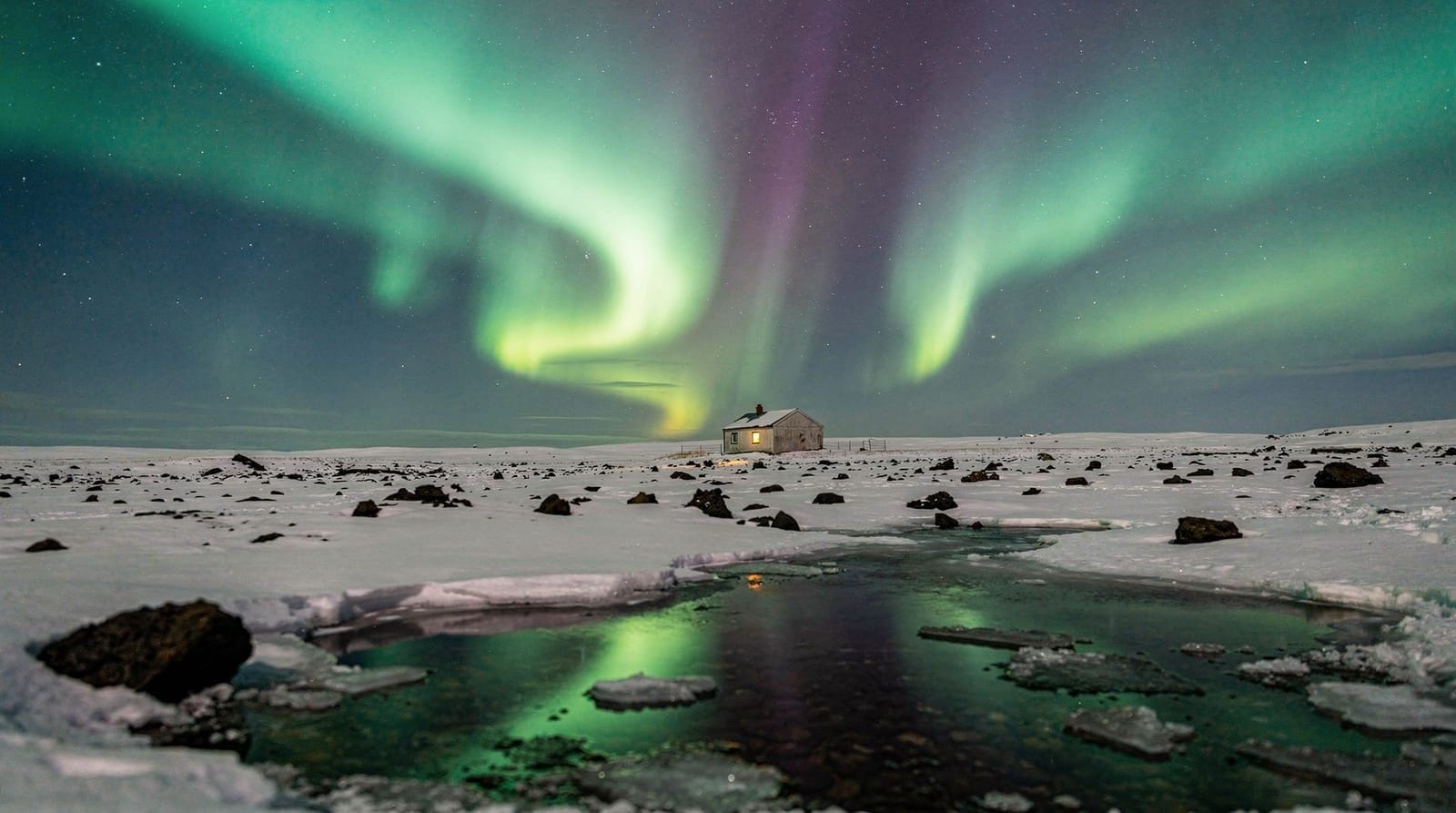
Akureyri: From Akureyri Northern Lights tour
- GetYourGuide