Iceland packing fails — what I brought that I didn't need and what I didn't bring that I should have
Three trips, three packing disasters
My first Iceland trip I overpacked. My second I underpacked in exactly the ways you would expect after overcorrecting. By my third trip I had something approaching a calibrated list. Here is the collected failure. The theme that runs through all of it is the same: Iceland’s weather requirements are specific in ways that generic “cold weather travel” packing advice does not capture.
| Trips covered | Three, across summer, autumn and winter |
| Biggest expense trap | 66°North / Cintamani prices in Reykjavik |
| Cheapest fix | Microspikes and a headtorch, around 6,500 ISK combined |
| Buy before you go | Merino base layers, waterproof gloves |
| Buy in Iceland if needed | Emergency layers at Ellingsen or Decathlon Reykjavik |
What I brought that I didn’t need
A full rain suit. Iceland’s weather is wet, but the kind of wet matters. What you need is a waterproof jacket with a hood that actually seals around your face, and waterproof trousers for any genuine hiking. A full marine rain suit — the heavy oilskin type — is excessive, heavy, and warm in a bad way if you are moving. I wore mine once, for five minutes, at Dettifoss in wind-driven spray. My regular waterproof jacket would have done the same job.
Binoculars rated for whale watching. I bought 12x50 marine binoculars specifically for the whale watching boat trip in Húsavík. The whales were close enough that I never used them. On a clear day looking for northern lights, I might have used them once. For most Iceland activities, 8x32 travel binoculars are adequate and weigh 60% less. If you are primarily going for wildlife — particularly seabirds at Látrabjarg or puffins at close range — binoculars are genuinely useful. But buy them for the right specification and the right use case.
Two pairs of hiking boots. I brought a heavy technical boot and a lighter trail runner, reasoning that I’d use the heavy boot for glacier work. The glacier tour provided crampons that fitted over whatever footwear you arrived in, and the guide actually preferred us to have stiffer-soled shoes but not insulated mountaineering boots (which cause crampon fit issues). The lighter trail runners were fine for everything non-glacial. The heavy boots took up half a bag.
A sleeping bag rated to -15°C. For a trip staying in guesthouses and hotels, this is absurd. I bought it after reading “Iceland can be cold.” Guesthouses are heated aggressively — you will often be too warm. Even mountain huts supply duvets. Bring a thin sleeping bag liner if you want hygiene flexibility in huts; otherwise, your body weight in down is dead weight.
Three fleeces. You need one, maybe one and a half. The layering system — base layer, mid layer, outer shell — is sound, but fleece is mid-layer. One medium-weight fleece and one thin base layer cover the temperature range from summer to autumn. Bring two if you are nervous. Three is performing preparedness.
An actual physical guidebook. I brought a 450-page Iceland guidebook and used it twice. The information in it was partially outdated (opening hours, prices) and the size made it impractical in the car. The guides and destination pages on this site are more current and accessible from a phone. Buy the book if you want it for reference at home; leave it there.
What I didn’t bring and deeply regretted
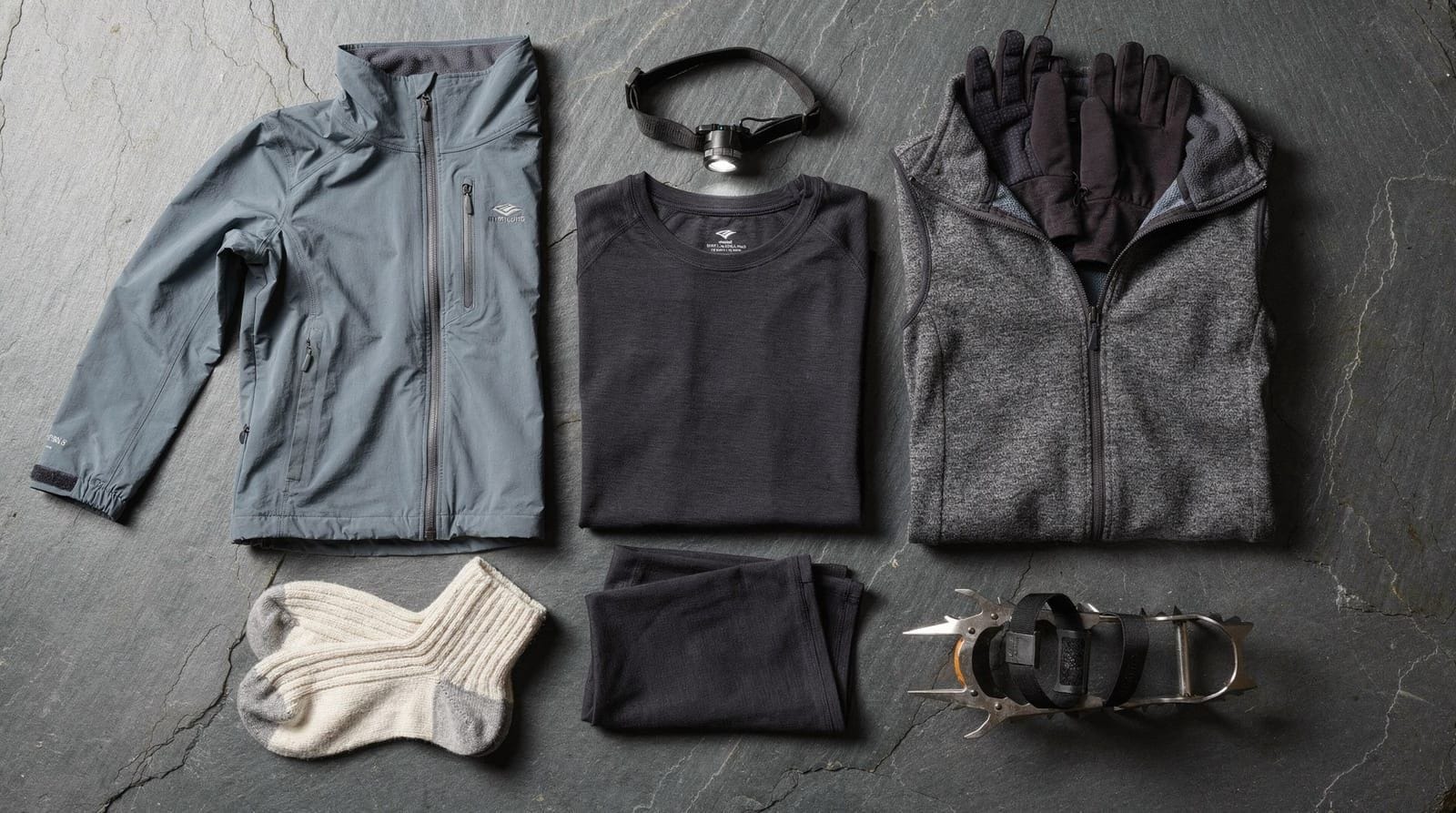
Microspikes for winter pavement. My second trip was in January. The pavements in Reykjavík were ice. The car park at every attraction was ice. The paths around geothermal areas were ice covered by a deceptive skim of snow. I had serious hiking boots with good lugs that were completely useless on polished urban ice. Microspikes — the lightweight strap-on versions — weigh almost nothing and fold flat. In Reykjavík in winter, you will use them. I bought a pair at the Ellingsen outdoor shop in Reykjavík for around 6,500 ISK after slipping twice in the first day.
Waterproof gloves. I brought warm gloves. Warm is not the same as waterproof. Standing at Seljalandsfoss — which you walk behind, getting soaked from above and the side — my gloves absorbed water and were colder wet than not wearing them. Waterproof shell gloves with a warm liner, or a single pair of waterproof-insulated gloves, is the correct system. The same issue at Reynisfjara when the wave spray came in sideways. Wet gloves in 5°C wind are worse than bare hands.
A headtorch. Winter travel in Iceland means darkness from 4 p.m. onwards. The car park at Reynisfjara black sand beach has no lights. The path to several accommodation places in rural areas is unlit. I used my phone torch constantly and it was inadequate and draining the battery I needed for navigation. A compact headtorch — the lightweight 80-lumen type — weighs 90 grams and the battery lasts 10+ hours. It is the smallest weight-to-usefulness ratio item on the list.
Merino wool base layers. I brought cotton. Cotton does not dry. Merino wool dries quickly, insulates when wet, and does not smell for days at a time (which matters on multi-day trips). Buy merino before you go; the outdoor shops in Reykjavík (66°North, Cintamani) sell excellent Icelandic-made versions for prices that will make your eyes water — 15,000-25,000 ISK for a base layer is standard. The same quality from Icebreaker or Smartwool in your home country costs 60-90 EUR and should be bought before departure.
A car phone mount with a proper arm. Navigation in Iceland requires using your phone as a GPS unit on roads with no signs. Holding the phone, propping it against the dashboard, or using a suction-cup mount that falls off when you open the window are all inadequate. A rigid arm mount that clips into the air vent costs about 15 EUR before you leave and is worth three times that. On the ring road I changed this recommendation to: bring a quality mount rated for vibration — gravel roads loosen the cheap ones within 50 kilometres.
Gaiters. For any hiking on wet terrain, waterfall approach trails, or early-season routes with snowmelt, lightweight gaiters keep the boot uppers dry in a way that waterproofing alone does not. The wet moss sections of many Icelandic trails saturate boot uppers within the first kilometre. I learned this on the Fimmvörðuháls approach, where the guide sold me a pair of emergency plastic gaiters from the hiking hut shop for 3,500 ISK.
The Reykjavík outdoor shop trap
66°North and Cintamani are genuinely excellent shops selling genuinely excellent Icelandic outdoor clothing. They are also extremely expensive. If you need a base layer in an emergency, you can buy one. If you are planning to equip yourself from scratch in Reykjavík, your trip budget will not recover.
The Ellingsen outdoor shop near the city centre is slightly more affordable and carries international brands alongside Icelandic ones. Decathlon in Reykjavík has opened a branch that sells functional outdoor gear at European Decathlon prices — useful for mid-quality items without the 66°North premium.
The what to pack for Iceland guide has the complete layering system and a gear checklist by season. The summary version: the extremities (hands, feet, head) matter more than the core. Waterproof and windproof beats warm alone. Weight matters less than you think on a driving holiday and more than you think on a hike.
The specific winter list
For a January or February trip — which is when northern lights hunting is optimal and the landscape is at its most elemental — the packing changes significantly from the summer version. Based on my January failures:
- Balaclava (not optional)
- Microspikes (non-negotiable)
- Insulated waterproof trousers (not just waterproof shell; the wind at Reynisfjara in January is brutal)
- Hand warmers (chemical, disposable; emergency use when your gloves fail)
- Down jacket as mid-layer under the waterproof shell rather than fleece
Iceland in winter is cold in a specific way: it is rarely deeply cold by northern Scandinavian standards (Reykjavík averages around -1°C in January), but the wind and the damp make the felt temperature much lower. The Iceland weather explained guide covers the wind chill mechanics clearly.
The item that surprised me with how useful it was
A waterproof stuff sack, about 10 litres. Iceland’s landscape is wet from spray, rain, and sudden mist. Camera gear, spare clothing, a book, your passport — everything in the day bag gets damp without a waterproof layer between the pack’s outer shell and the contents. I used this as a liner for my day bag on every outdoor day. Cost: about 8 EUR.
A close second: a 2-litre Nalgene. Water from streams and rivers in Iceland is among the best in the world. Tap water is excellent. I refilled constantly and never bought a plastic bottle. In a country where the average price of a 500ml bottle of water in a petrol station is around 350 ISK, this adds up over two weeks.
Buy at home or buy in Reykjavik?
Across three trips I’ve settled on a rough rule: buy technical layers before you leave, and treat Reykjavik shops as an emergency backup, not a shopping destination.
| Item | Buy at home | Buy in Reykjavik |
|---|---|---|
| Merino base layer | 60–90 EUR (Icebreaker/Smartwool) | 15,000–25,000 ISK (~100–170 EUR) at 66°North |
| Microspikes | 20–30 EUR online | ~6,500 ISK at Ellingsen, same quality |
| Waterproof gloves | 25–40 EUR, easy to compare online | Similar price, limited stock in small sizes |
| Rain shell | Wide choice, sales possible | Excellent quality, premium pricing |
| Emergency mid-layer fleece | N/A | Decathlon Reykjavik, closer to home-market prices |
The exception that flips this rule is anything you decide you need only after arriving — a balaclava when the forecast turns, microspikes after your first ice-related near-fall. For those, Ellingsen and Decathlon are genuinely useful, and cheaper than the outdoor-brand flagship stores.
A shorter version of this list, by trip length
If three trips of trial and error is more detail than you need, here is the compressed version.
A 4–5 day Reykjavik-and-Golden-Circle trip: waterproof jacket, one fleece, merino base layer, sturdy trainers or light hiking shoes, gloves, hat. No microspikes unless it’s winter.
A 7–10 day ring road trip in shoulder season: everything above, plus a headtorch, a waterproof stuff sack for the day bag, a 2-litre water bottle, and gaiters if any hiking is planned.
A winter trip focused on the north-facing route or south coast in the dark months: add microspikes, a balaclava, insulated waterproof trousers, and hand warmers. Drop the sleeping bag — you will not need it outside camping trips, and even then a liner is usually enough.
The what to pack for Iceland guide has the fully detailed seasonal checklist; treat this post as the corrections from three rounds of getting it slightly wrong.
On the Iceland weather variable
The honest message from three trips is that Iceland’s weather varies enough that any single packing list needs flexibility built in. I have had a July day in Reykjavík that was 18°C and sunny — the city in shorts and sunglasses. I have had an August afternoon at Jökulsárlón where the horizontal sleet meant every exposed skin surface was hurting. The packing list has to accommodate both.
What matters is the system: waterproof shell, insulating mid-layer, moisture-wicking base layer, waterproof extremities. What doesn’t matter much: the specific weight rating of your down jacket, the exact brand of waterproof trousers, whether your boot is Italian leather or Korean synthetic.
Arrive with the system. Everything else is adjustable.