Volcano helicopter tours in Iceland — costs, operators, and honest expectations
Reykjavik: Fire and ice helicopter 2 landings
Can you fly over an active volcano in Iceland by helicopter?
Yes — helicopter tours from Reykjavík fly over the Fagradalsfjall volcanic field on the Reykjanes Peninsula, where eruptions have been occurring periodically since 2021. Longer tours overfly Snæfellsjökull, volcanic craters, and can land on glacier summits. Prices start around 50,000 ISK (€330) for 30-minute tours and rise to 200,000+ ISK (€1,300+) for full-day private flights.
Helicopter tours are Iceland’s most expensive adventure product, and also one of the few ways to reach glacier summits and active volcanic terrain in the same afternoon. This guide sets honest expectations on cost, what you’ll actually see over Fagradalsfjall depending on eruption status, and how to choose between a shared flight and a private charter.
| Cost | around 50,000 ISK ( |
| From | Reykjavík Domestic Airport (BIRK), under 10 min to Fagradalsfjall |
| Best for | aerial views + glacier summit landings, not a guaranteed active eruption |
| Weather | frequent cause of rescheduling — confirm the refund policy first |
| Booking | 2–4 weeks ahead in summer; a few days ahead off-season |
Why helicopter tours make sense in Iceland
Iceland’s most dramatic landscapes are spread across an island the size of Ireland, and much of the most spectacular terrain — glacier summits, volcanic caldera interiors, remote highland formations — is not accessible by road or practical by foot within a normal visit. Helicopter tours address this constraint directly.
The Fagradalsfjall volcanic field on the Reykjanes Peninsula — where eruptions have occurred repeatedly since March 2021 — brought Iceland’s volcanic activity closer to Reykjavík than at any time in centuries. A helicopter flight from the capital takes under 10 minutes to reach the eruption zone. When volcanic activity is ongoing, this creates one of the genuinely extraordinary aerial experiences available anywhere: observation of active lava at close range in complete safety.
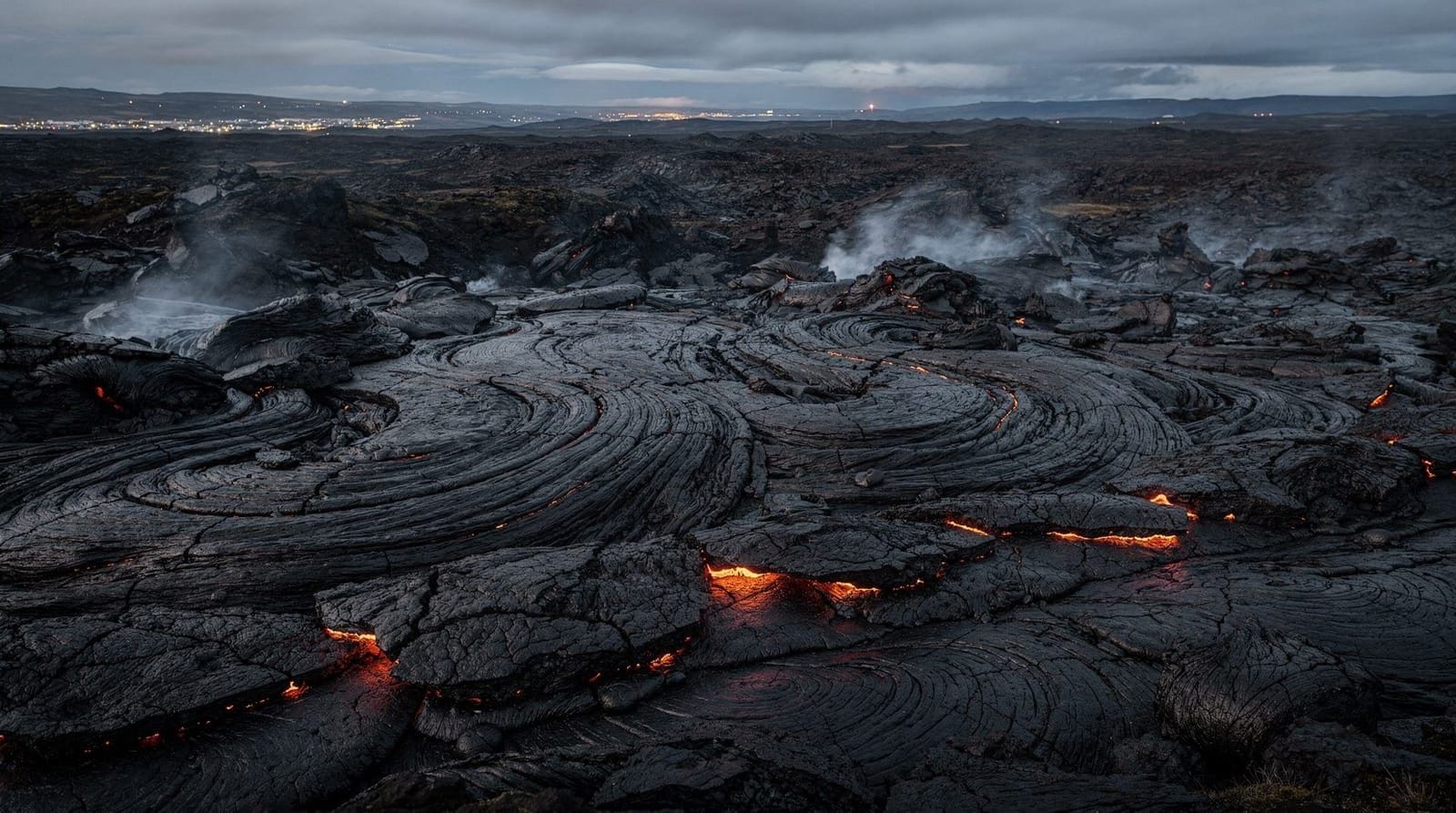
Even during dormant periods, the Reykjanes landscape — black fresh lava, steam, surreal topography — is remarkable from the air.
What Iceland helicopter tours cover
Volcano tours (Reykjanes/Fagradalsfjall): The most popular category. Flights from Reykjavík’s Domestic Airport (or from Reykjanes Peninsula directly) overfly the Geldingadalir and Meradalir eruption zones. When active, the view is of flowing lava, glowing vents, and gas plumes. Between eruption phases, the same area shows fresh black lava fields, fumaroles, and the geological novelty of terrain that didn’t exist 5 years ago.
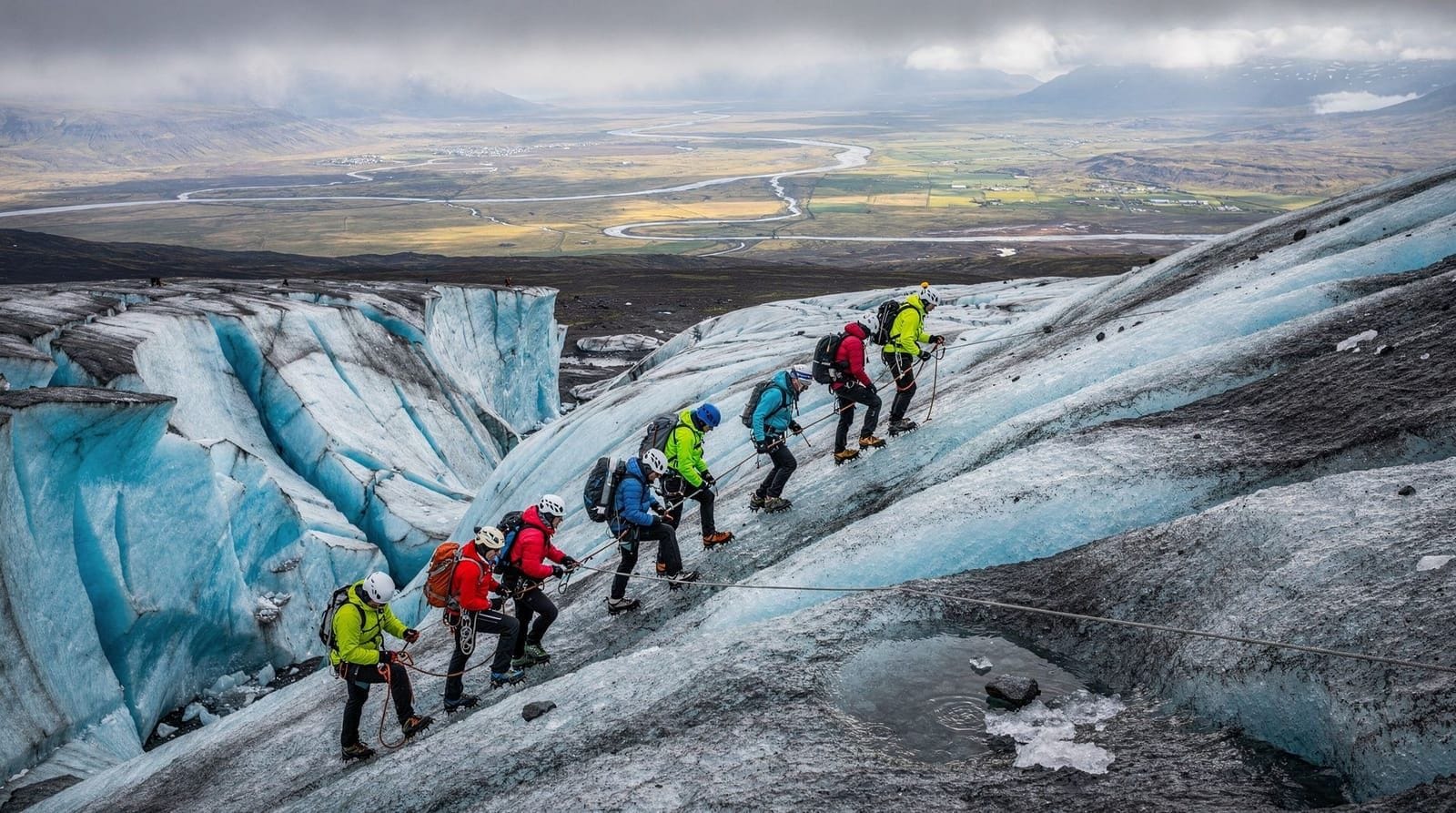
Glacier and summit tours: Longer tours from Reykjavík fly over Snæfellsjökull glacier (the Jules Verne volcano-turned-glacier), Langjökull, or for full-day tours, Vatnajökull. Some tours land on glacier summits, allowing passengers to step out briefly at 1,200–1,400 metres elevation on a living glacier.
Fire and ice combinations: Two-landing tours that include both a volcanic terrain landing (lava fields) and a glacier summit landing — contrasting landscapes in one flight. These are among the most popular premium helicopter experiences in Iceland.
Golden Circle or south coast aerial: Some operators run helicopter routes over the Golden Circle or south coast, giving aerial perspective on Þingvellir, Geysir, Gullfoss, and the glacier landscape.
Fire and ice helicopter tour — 2 landings from Reykjavík
Operators and product types
Most Iceland helicopter tour operators are based at Reykjavík Domestic Airport (Reykjavíkurflugvöllur). The main operators include Íslandsflug, Norlandair, Myflug (based in north Iceland), and several smaller charter operators.
Scheduled small-group tours: Most helicopter tours run with 4–6 passengers in a single helicopter. These are more affordable per person (€295–€530 range) but you share the experience with strangers.
Private charter: A helicopter for just your group. The price is for the helicopter regardless of headcount — typically 200,000–500,000 ISK (€1,300–€3,300) per flight hour depending on aircraft size. For groups of 4–6, per-person cost can approach scheduled tour pricing while giving complete flexibility.
Combination products: Some operators combine helicopter with other activities — fly to a glacier and then snowmobile on the surface, or fly to a remote hot spring and spend time there before flying back.
The volcano situation — honest expectations
Fagradalsfjall’s eruption history since 2021 has been episodic: periods of active lava flow alternating with dormant phases. The 2021, 2022, and 2023 eruptions each lasted weeks to months before pausing.
When an eruption is active, helicopter tours to the volcano are genuinely extraordinary. When dormant, the same flights overfly recent lava fields that are still fresh and dramatic in geological terms.
What operators cannot promise: That an eruption will be active on your specific flight date. Volcanic activity is genuinely unpredictable — operators and guides follow seismic data closely, but eruption timing is not forecastable more than hours in advance. Marketing language like “fly over active volcanoes” is accurate in the general sense (active volcanic region) but misleading if you interpret it as guaranteed flowing lava.
What you can expect regardless of eruption status: Dramatic geological landscape that didn’t exist before 2021. Fresh black lava covering the Reykjanes Peninsula. Steaming fumaroles. The visual evidence of Iceland’s ongoing geological youth.
New volcanic area helicopter tour from Reykjavík
Glacier summit landing tours
For those who want more than an aerial tour, the summit landing tours (typically over Snæfellsjökull or Langjökull) include 10–20 minutes on a glacier summit at elevation. This is a specific type of experience:
- You land on the glacier surface, typically at 1,100–1,400 metres
- Step out into a world of white, with 360-degree views
- Temperature at summit is typically 5–15°C colder than Reykjavík
- Return to helicopter and continue flight
The summit landing is not the same as glacier hiking — it’s a brief stand on the surface followed by re-boarding. But for those who want to have been on a glacier summit without a full hike, it’s an accessible alternative.
Panoramic helicopter tour with summit landing from Reykjavík
When to book
Summer (June–August): Best visibility windows, midnight sun for late-day flights with extraordinary golden-hour light, and most reliable weather for completing tours. Book 2–4 weeks ahead for specific dates.
Winter: Lower prices, possible aurora from the air, dramatic low-light landscapes. Weather cancellations are more frequent. Northern lights helicopter tours are available from some operators — the concept is excellent (seeing aurora from an aerial perspective) though execution depends entirely on forecast conditions.
Same-day booking: Not possible in practice. Helicopter capacity is limited and weather windows don’t allow for walk-up booking. At minimum, book 2–3 days ahead; for peak summer, weeks ahead.
What you see over the Fagradalsfjall eruption zone
The Fagradalsfjall volcanic field on the Reykjanes Peninsula is one of the most accessible active volcanic systems in the world. Since the eruption started in March 2021 — the first eruption on the Reykjanes Peninsula in 800 years — the area has become a fixture in Iceland adventure tourism. Helicopter tours over this area cover specific visual features:
Fresh lava fields: The 2021–2024 eruptions added roughly 60 square kilometres of new land to the peninsula. From the air, the contrast between the black fresh lava and the older moss-covered older lava fields is stark. The new lava is smooth and shiny where pahoehoe type; broken and rough where aa type.
Crater morphology: The eruption vents themselves are visible as cinder cones — small volcanic cones built from ejected lava fragments. The 2021 vent (Geldingadalir area) is different in form from the 2022 Meradalir craters, which were larger and more explosive. Guides identify each and explain the eruption history.
Gas emissions: Even when not actively erupting, the volcanic field emits sulphur dioxide (SO2) and other gases through fumaroles and cooling lava cracks. At lower altitudes in calm weather, the sulphur smell reaches the helicopter. This is generally not a health concern at the heights most tours fly, but it’s a sensory reminder of the geological activity below.
Lava tube channels: Where lava flows were sustained, underground tubes formed that allowed lava to travel further from the vent before cooling. From the air, the raised ridges of these tube systems are visible running downslope from the craters. Some collapsed tube sections create irregular depressions in the surface.
Multi-stop helicopter tours
Some operators offer tours with multiple landing zones — these are the highest-value helicopter experiences available in Iceland and represent a different category from the standard single-area flyovers.
Glacier + volcano (fire and ice): One landing on a glacier summit, one landing at or near the volcanic field. The contrast — standing on 1,000-year-old ice, then standing on 3-year-old fresh lava — is the concept. Approximately 2 hours total flight time.
Remote hot spring access: Helicopter transfer to a remote natural hot spring accessible only by air or foot (multiday trek). Spend time at the spring, return by helicopter. Operators in the north (near Akureyri and in the highlands) run this product. Costs are high but the access is genuine — you’re in a hot spring with no road access.
Holuhraun lava field (northeast Iceland): The 2014–2015 Holuhraun eruption produced Iceland’s largest lava flow in 230 years, covering 85 square kilometres. Remote helicopter access to view this field, plus the Askja caldera system nearby, is available through specialist operators but requires a flight to north Iceland first.
Helicopter tour timing — when views are best
Iceland’s light quality and weather conditions significantly affect the helicopter experience:
Summer solstice period (June 15 – July 15): Midnight sun creates extraordinary low-angle golden light available at any hour. Late evening tours (22:00 departure) fly in the most photogenic light of the day. Views over volcanic terrain and glaciers in golden-hour light from a helicopter are genuinely exceptional.
Autumn (September–October): Clear high-pressure days can produce excellent visibility — sometimes 200+ km range. The Mýrdalsjökull–Eyjafjallajökull volcanic system is visible from helicopter at altitude on clear autumn days.
Winter (November–March): Snow on volcanic terrain creates dramatic contrast. Northern lights from the air are a specific niche product — requires night flights and correct aurora forecast. Not reliable, but when conditions align, extraordinary.
Summer weather risk: Iceland’s summer can be overcast and rainy. Visibility drops to unusable levels in cloud. Operators cancel or modify routes based on forecast — the early-morning departure policy at many operators reflects the typical daily weather pattern (better conditions early, cloud building mid-day).
Budget reality
Helicopter tours are Iceland’s premium adventure product. Costs are high relative to ground-based activities, and justifiably so: aviation fuel costs, maintenance, pilot certification, and regulatory compliance all increase operating costs well above ground-based tour operations.
For context: a 30-minute volcano flyover (€295–€395) costs roughly the same as a full day’s glacier hiking tour or 3x a standard whale-watching trip. The calculus is individual — if aerial perspective on Iceland’s geology is specifically what you want, the price is fair for what’s delivered. If you’re seeking active lava viewing, timing risk (eruption dormancy) is real.
Volcanic craters flyover helicopter from Reykjavík
Geothermal helicopter tours — a different category
Some Iceland helicopter tours focus on geothermal landscapes rather than active volcanoes — these are distinct from the volcano flyover products and serve a different interest:
Sky Lagoon / Blue Lagoon aerial context: Starting or ending a geothermal spa day with a helicopter arrival is a luxury option some operators offer. Flying over the Reykjanes Peninsula’s geothermal landscape toward the Blue Lagoon gives aerial context for the white silica pools and steam fields visible below.
Geothermal valley aerial views: The Námafjall geothermal area near Lake Mývatn in north Iceland is one of the most visually striking geothermal landscapes anywhere — ochre fumarole fields, boiling mud pots, sulphur-yellow ground. Helicopter access from Akureyri gives aerial perspective on a landscape that’s impressive even on foot.
Reykjavik geothermal circuit: Short helicopter tours from the capital fly over the hot spring areas south-east of the city — Hveragerði’s town-centre geothermal features, Reykjadalur valley’s hot river, and the Krýsuvík geothermal area on the Reykjanes Peninsula. These 30-40 minute tours provide geological context for the capital region.
Helicopter safety and booking practicalities
Iceland’s helicopter tour market is regulated by the Icelandic Civil Aviation Administration (ICETRA) under the same framework as commercial aviation. Operators must hold air operator certificates and pilots must hold commercial pilot licences with appropriate helicopter ratings. The regulatory framework is competent.
What to check when booking:
- Operator ICETRA certification (should be visible on their website or provided on request)
- Aircraft type — EC130 (Airbus H130) is a well-regarded, stable aircraft common in Iceland tours; older R44 Robinsons are more common on budget tours and have a different safety profile
- Weather cancellation policy (must be full refund for weather cancellations — if it’s not, don’t book)
- Departure location — Reykjavík Domestic Airport (BIRK) is the most convenient; some operators depart from Reykjanes Peninsula locations closer to the volcanic areas
Day-of experience: Arrive 15–20 minutes before departure for a safety briefing (doors operation, communication headsets, what to do if the pilot indicates an emergency). The briefing is standard and takes about 10 minutes. Headsets with noise cancellation are essential — helicopter cabin noise without them is significant. Operators provide these.
Seat assignment and window views: Most operators assign seats based on weight distribution rather than preference, though some allow requests for a window seat if you ask at check-in. On smaller aircraft, every seat effectively has a window; on larger 7–12 passenger helicopters, middle seats have a more restricted view — worth asking about seating if photography is your priority.
Motion sensitivity: Helicopter flight is generally smoother than fixed-wing turbulence at low altitude, but banking turns for sightseeing can affect those prone to motion sickness. If you’re sensitive, sit near the front, take standard motion-sickness precautions beforehand, and mention it to the pilot, who can moderate manoeuvring.
Clothing: No specific requirement beyond dressing for the season. If the tour includes an outdoor landing, bring warm outer layers — rotor wash and altitude make conditions cold even in summer. Safety vest provided if required by the flight plan.
Frequently asked questions about Iceland volcano helicopter tours
Do I need any special certification to go on a helicopter tour?
No. Helicopter tours are passive experiences — passengers sit in the aircraft while the licensed pilot flies. No training, certification, or physical fitness requirements.
What happens if my tour is cancelled due to weather?
Reputable operators offer full refunds or rebooking for weather-related cancellations. Weather is the most common cause of helicopter tour cancellation in Iceland. Always confirm the cancellation policy before booking.
Can I see the Fagradalsfjall volcano on foot rather than by helicopter?
Yes — a 4–6 hour hike from the Grindavík/Suðurstrandarvegur area reaches the eruption zone on foot. This is free and provides a ground-level perspective on fresh lava. Helicopter vs. foot is a different experience, not a better/worse comparison. See Fagradalsfjall eruption guide.
Is there a weight limit for helicopter passengers?
Most commercial helicopters used for Iceland tours have per-passenger weight limits (typically 100–130 kg) and total payload limits. Operators will ask for passenger weights when booking; provide accurate information as it affects fuel and weight distribution calculations.
Are children allowed on helicopter tours?
Yes, typically from infant age with appropriate safety harness. Some tours specify minimum ages for specific aircraft types. Helicopter noise requires hearing protection — operators provide this. Check with the specific operator for any age restrictions.
How many passengers per helicopter?
Most Iceland helicopter tours use 4–6 passenger aircraft (commonly Robinson R66 or EC130). Some larger operators use 7–12 passenger helicopters. Smaller aircraft are more manoeuvrable at lower altitudes; larger aircraft provide more stability in turbulence.
Helicopter tours vs. other ways to see Iceland’s volcanoes
Helicopter tours are one of several ways to get close to Iceland’s volcanic activity, and comparing them honestly helps set the right expectations before you book:
| Approach | Cost | Best for | Trade-off |
|---|---|---|---|
| Helicopter flyover | High (€330+) | Guaranteed access, aerial scale, glacier landings | No control over eruption timing |
| Hiking to Fagradalsfjall | Free (time only) | Ground-level perspective, budget travellers | 4–6 hours round trip, weather-dependent |
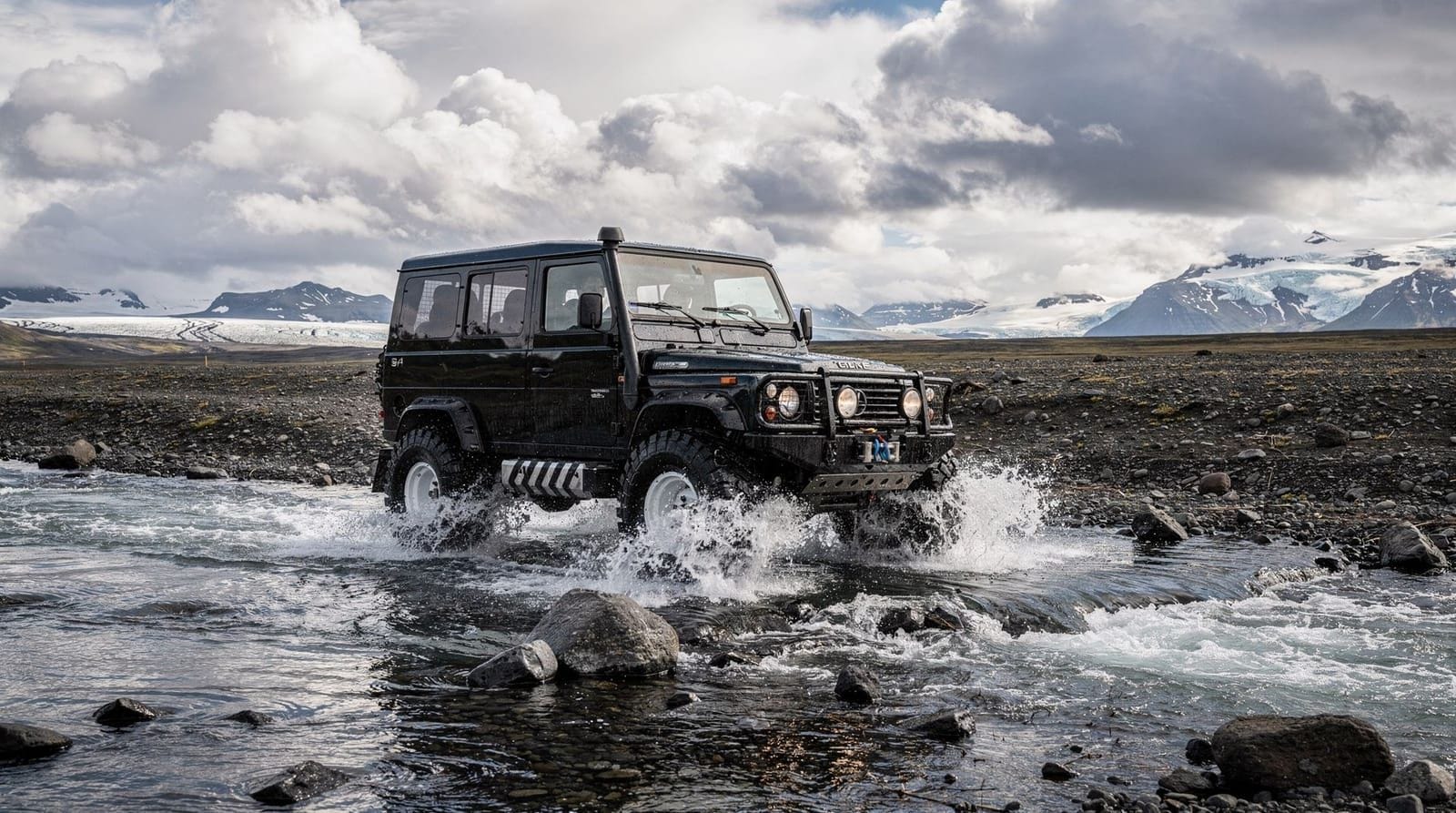
| Super jeep tour | Moderate | Highland volcanic terrain access without hiking | Ground-level only, no aerial perspective |
| Guided volcano walk (small group) | Moderate | In-depth geology explanation on foot | Slower pace than a flight |
None of these replace the others — a hike or super jeep tour gets you standing on the lava field itself, which a flyover cannot replicate, while only the helicopter delivers the aerial scale and a glacier summit landing in the same outing.
Combining a helicopter tour with the rest of your trip
Most visitors book a volcano or fire-and-ice helicopter flight as a single premium activity within a longer Reykjavík-based stay, rather than building an entire day around it. It pairs naturally with a Golden Circle day (fly in the morning, drive the circuit in the afternoon) or with a rest day in the city after several days of glacier hiking elsewhere in the south. Because weather cancellations are common, avoid scheduling a helicopter tour on your last full day if there’s no flexibility to reschedule — build in at least one buffer day if the flight matters to you.
Top experiences
Bookable activities with verified prices and instant confirmation on GetYourGuide.
Top experiences
Best-rated activities across GetYourGuide and Viator.

Ice Cave by Katla Volcano Super Jeep Tour from Vik
- Viator

Sólheimajökull Glacier Hike – Adventure in a Small Group
- Viator

Ice Cave Tour from Vík
- Viator

Blue Ice Discovery – Guided Glacier Hike from Skaftafell
- Viator

Glacier Hike from Skaftafell - Extra Small Group
- Viator

East Glacial River – Grade 4 Rafting with Drysuits, North Iceland
- Viator