Iceland with a baby — practical logistics for travelling with an infant
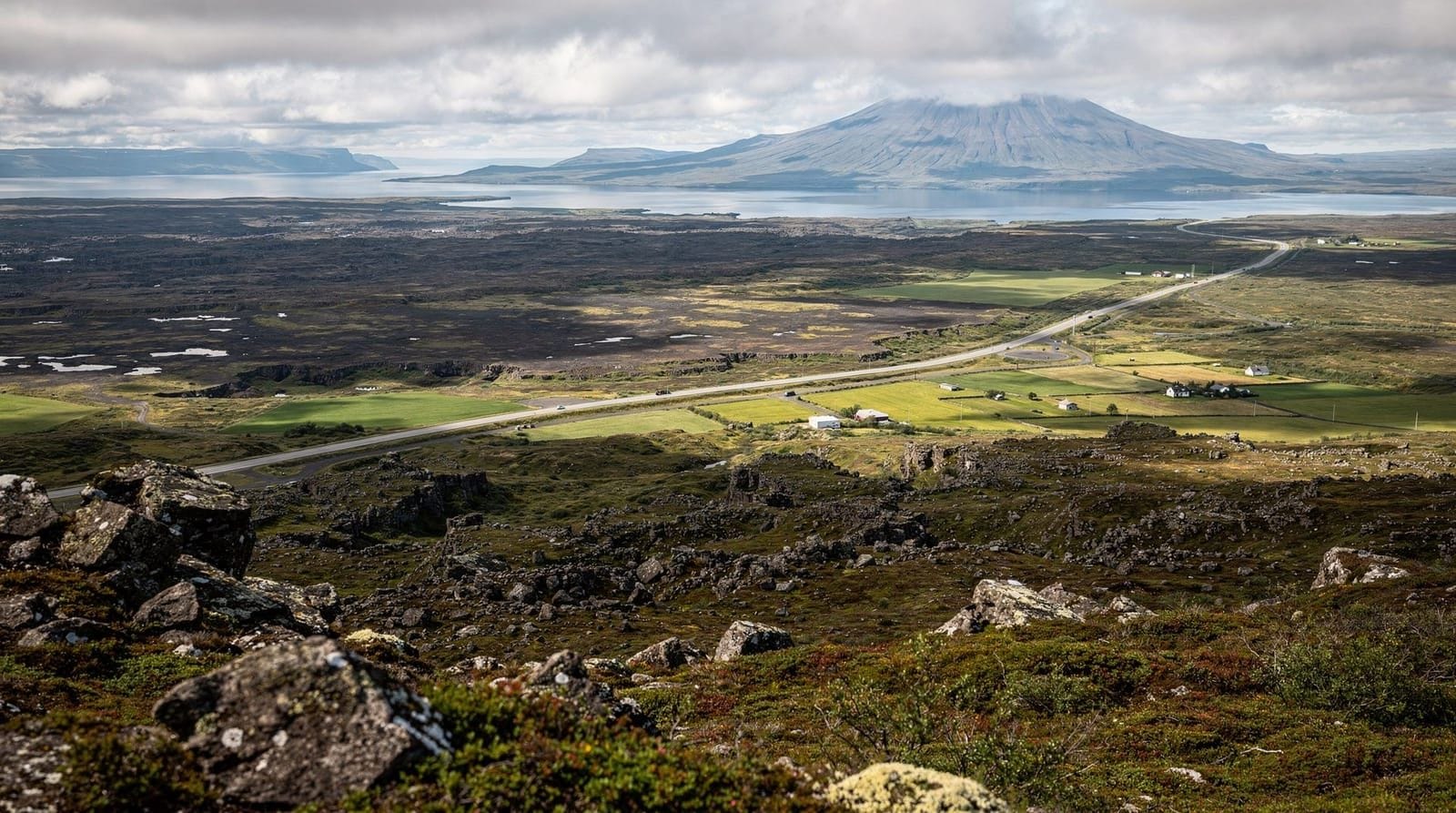
Reykjavik: From Reykjavik Golden Circle full day guided trip
Is Iceland practical to visit with a baby under 12 months?
Iceland is doable with a baby, but requires more preparation than most European destinations. Key challenges: midnight sun disrupting infant sleep, cold weather requiring significant gear, limited baby supply availability outside Reykjavík, and most major activities (glacier hikes, ice caves, horse riding) having minimum age restrictions. Focus on Reykjavík and the south coast for maximum accessibility.
Travelling to Iceland with a baby is a project — but a manageable one. The combination of midnight sun, cold weather, limited rural supplies, and most activity providers’ minimum age restrictions (typically 8 years) means Iceland is not a passive travel destination for parents of infants. You will carry more gear, plan more carefully, and accept that some things that look straightforward in travel guides are not straightforward at 03:00 when a 4-month-old cannot understand why it is still daylight outside.
With the right preparation, Iceland with an infant can be genuinely rewarding. The country is clean, safe, and has excellent healthcare infrastructure. Icelanders are broadly comfortable with small children in public. The south coast, Reykjavík, and the Golden Circle offer accessible experiences that work at infant pace. This guide covers everything specific to travelling with a baby under 18 months.
| Where it’s easiest | Reykjavik, Golden Circle, South Coast (paved/flat access) |
| Minimum age for most activities | 8 years (glacier hikes, ice caves) |
| Cost added vs adult-only trip | Mostly car seat + baby supply top-up, EUR 30–65 |
| Best base | Reykjavik for the first days, before driving further |
| Key gear | Blackout blind, pram rain cover, footmuff, merino layers |
Before you travel: what to sort in advance
Travel insurance. Confirm that your policy covers emergency medical treatment for infants, including hospitalisation and medical evacuation. Landspítali University Hospital in Reykjavík has a paediatric unit; smaller towns have health centres (heilsugæsla) but limited paediatric capability.
Airline logistics. Iceland Air, Easyjet, and most operators flying to Keflavík allow lap infants (under 2) for a nominal fee or free, depending on the airline. A bassinet (skycot) can be requested in advance for longer flights — availability is limited, ask at booking. Bring your own car seat if you intend to rent a car; while rental companies provide car seats, availability is not guaranteed for the youngest infant seat sizes.
Accommodation confirmations. Phone or email your accommodation to confirm a cot is available before arrival. Do not rely on online booking descriptions alone. Farm guesthouses and rural accommodation in Iceland may have limited baby equipment — confirm specifically.
Baby supplies stock-up. Buy enough nappies, formula, and baby food for the first 4–5 days in Reykjavík before driving the Ring Road. Outside Reykjavík, assume the next large supermarket is 150 km away.
What to pack that Iceland specifically requires
Beyond the standard baby travel kit:
Blackout sleep solution: A portable blackout blind or clips for dark fabric over existing curtains. Essential from late May to mid-July. The PortaBlinds UK type or similar clip-on blackout sheets pack in a pram bag.
Pram rain cover: Iceland weather is genuinely unpredictable. Rain can begin in minutes. A fitted rain cover for your pram is not optional — the spitting horizontal rain of the south coast in particular catches parents completely unprepared.
Insulated pram footmuff: Even in July, wind at glacier viewpoints or along the south coast can drop the effective temperature to 3–5°C. A footmuff rated for -5°C keeps sleeping babies comfortable.
Merino base layers for baby: Merino wool next to skin is warm, soft, and naturally odour-resistant — important when washing facilities are limited on rural legs of a Ring Road trip.
White noise device: Portable white noise machines (LectroFan travel, for example) help infants sleep when the light cannot be fully controlled. Small, runs on battery.
Water sterilising tablets or travel steriliser: available from home; harder to find in Iceland outside Reykjavík pharmacies.
Managing the midnight sun
The midnight sun creates a genuine sleep problem for infants. A baby on a 7pm–7am sleep schedule will simply not understand why it is 10 degrees Celsius and bright at 21:30. The practical responses:
Strict routine: maintain feeding and nap times regardless of light. The body clock response to routine timing is stronger than the light response in infants, provided the sleep environment is dark.
Full darkness on waking: if your baby wakes at 04:30 in full light, do not engage as though it is morning. Treat it as a night waking — minimal interaction, stay calm, re-settle if possible.
Accept some disruption: babies visiting Iceland in summer typically sleep less well than at home. Build flexibility into your itinerary — do not plan 09:00 departures if your baby was awake until 02:00.
The midnight sun also has advantages: you can safely push a pram at 21:00 with clear visibility, outdoor evening activities are possible, and parents who are night owls find the light helps energy levels.
What works with a baby in Iceland
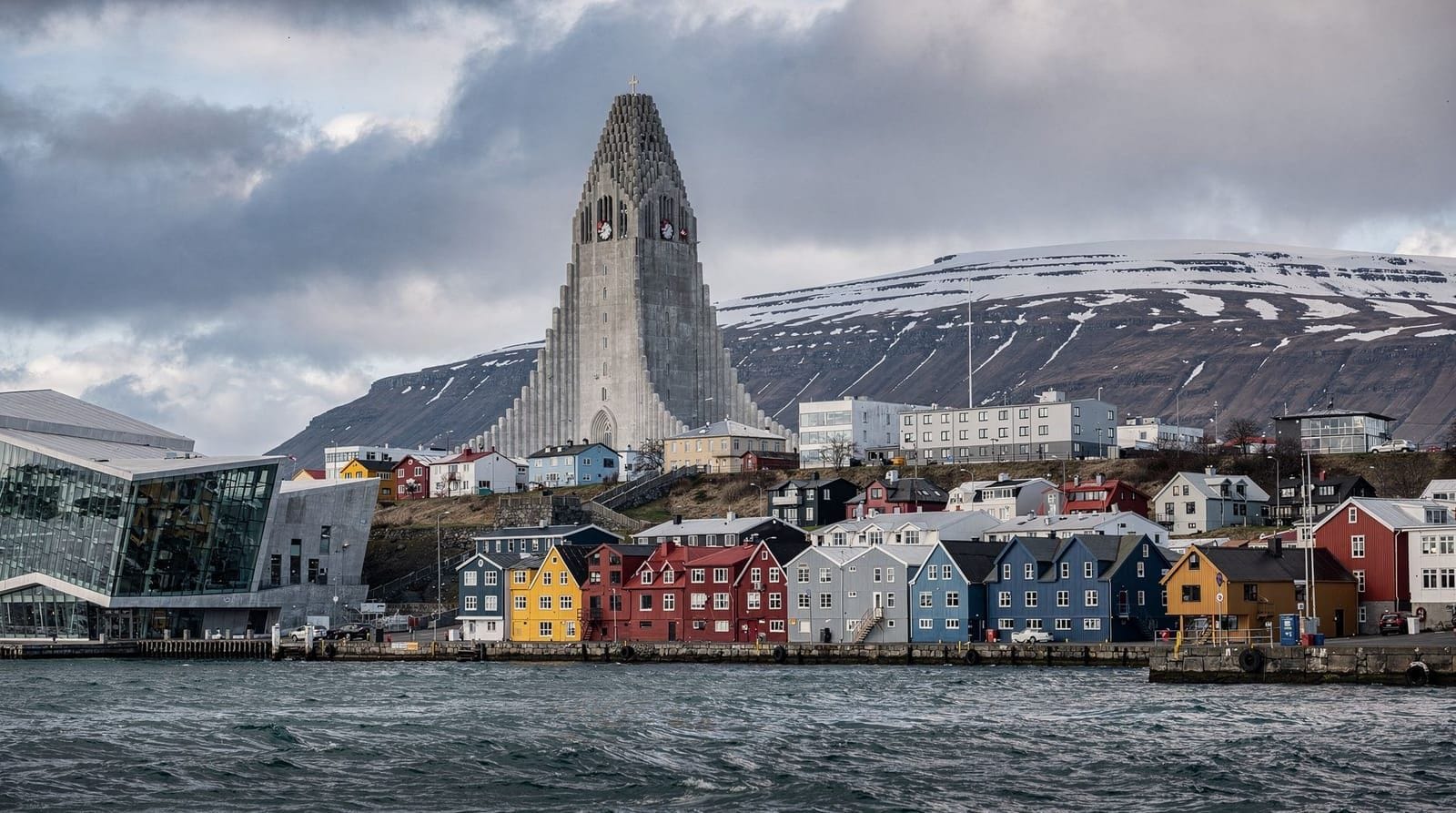
Reykjavík city time. The old harbour area, the Hallgrímskirkja area, the Laugardalslaug outdoor swimming pool — all are pushchair friendly and manage well with an infant. The swimming pool at Laugardalslaug has a baby pool (37–38°C) — excellent on a cool day.
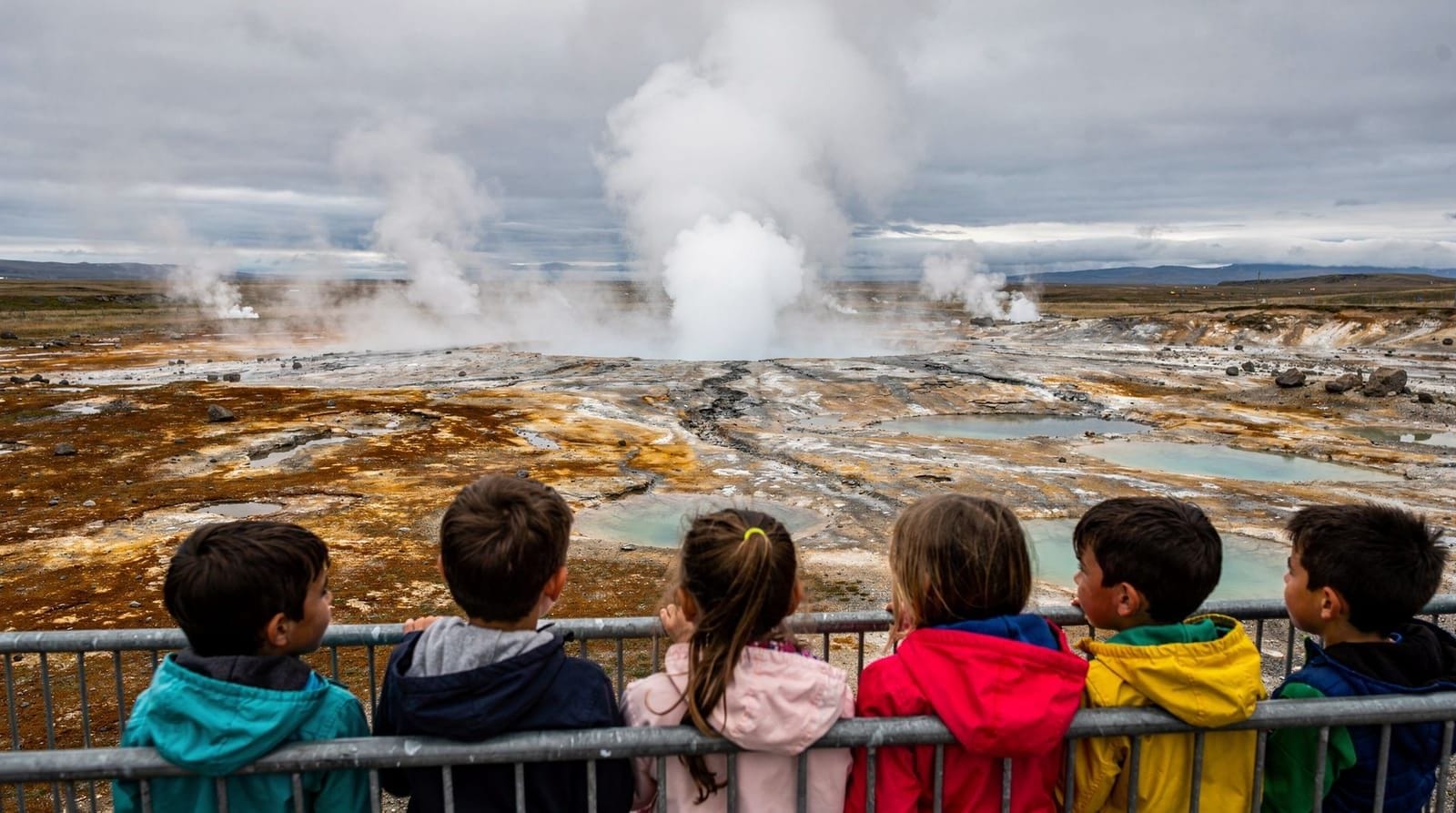
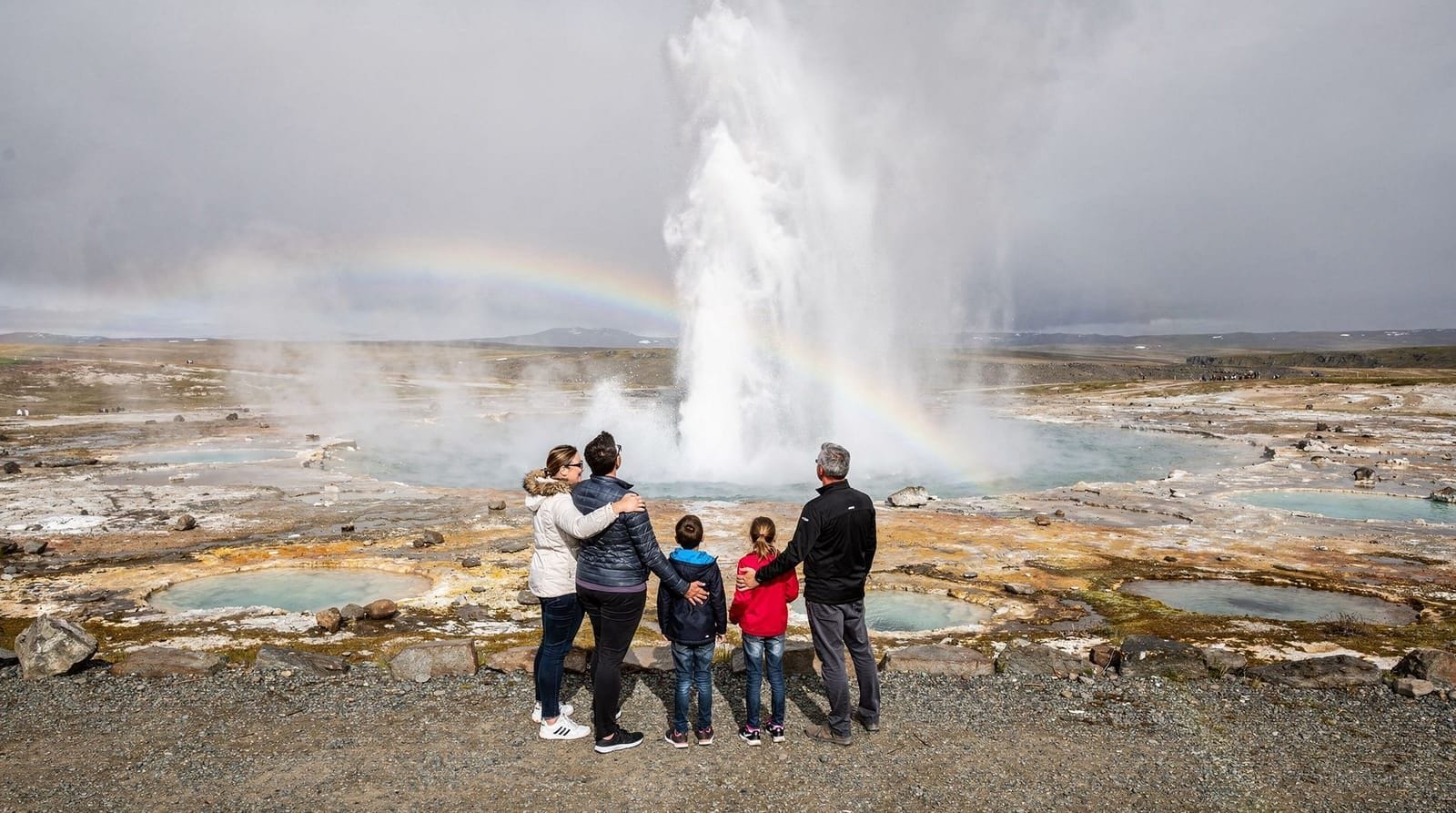
Golden Circle by car. Driving the Golden Circle with a baby in a car seat is exactly as convenient as doing so elsewhere — the geyser viewing area is flat, Gullfoss has paved viewing paths at the lower level, and Þingvellir is entirely flat around the main visitor area. The day involves car naps between stops, which work with many infants. If you would rather not drive with a baby in the car, a guided coach tour covers the same ground with someone else doing the navigation.
Golden Circle full-day guided trip from ReykjavikJökulsárlón glacier lagoon. The lagoon is visible and impressive from the Ring Road pullout. The flat walking surface alongside the lagoon is pram-accessible (gravel, manageable). Icebergs drift within 20 m of the shore. This is probably the most accessible major Iceland landmark for parents with prams.
Seljalandsfoss. The main viewing platform is pram-accessible. The behind-the-falls path is not pram-friendly (uneven stone path) but one parent can walk behind while the other stays at the platform. Acceptable logistics.
Indoor swimming pools. Iceland’s geothermal outdoor pools (sundlaugar) are warm, well-maintained, and very popular with local families. Most town pools have a baby pool or shallow area. Entry costs ISK 900–1,200 per adult; babies free or ISK 200. Excellent for cold or rainy days.
What to skip or delay until older
Glacier hikes: minimum age 8 on all reputable operators.
Ice caves: most operators require age 8; some do 6+. Not appropriate for infants.
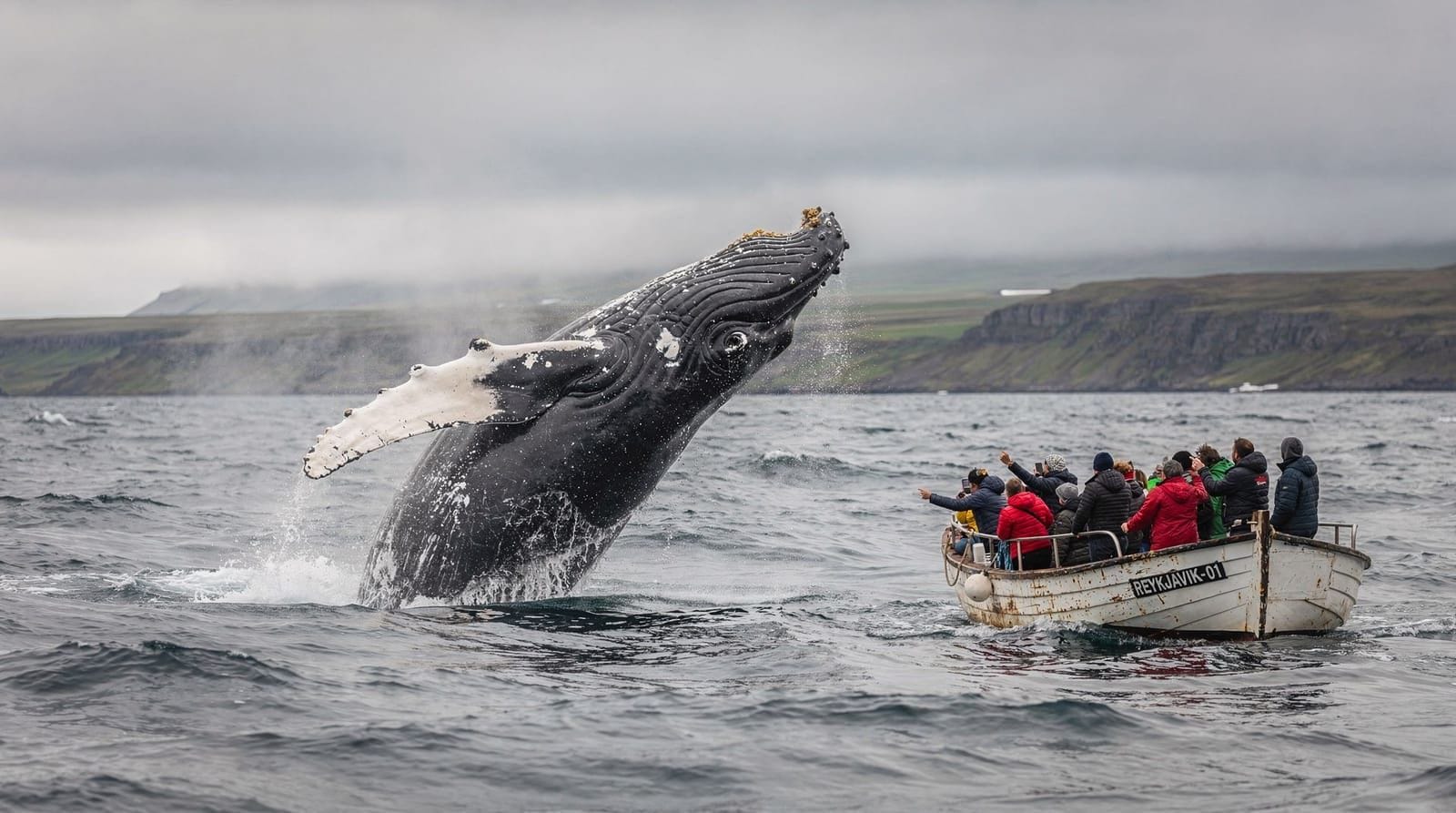
RIB whale watching: very rough, minimum age 12, explicitly not appropriate for babies.
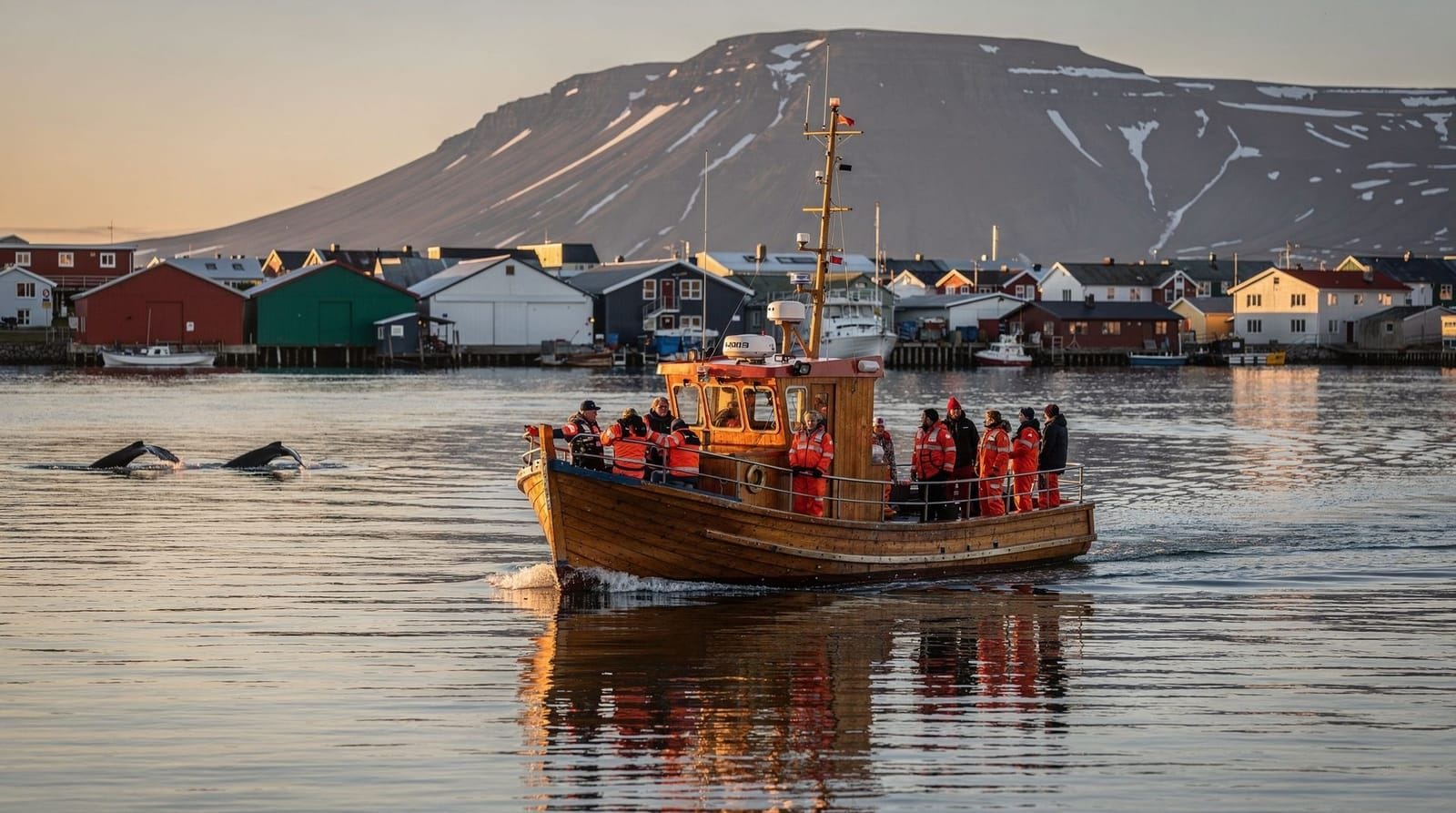
Traditional whale watching: technically possible with an infant in terms of access; practically very difficult with a baby who needs feeding, changing, and movement during a 3-hour boat trip in cold sea air. Possible from about 12 months with a very settled baby; better deferred to age 3+. If you do attempt it, choose a large traditional boat over a RIB speedboat — indoor seating and a heated cabin make a real difference with an infant on board.
Reykjavik 3-hour whale watching on a large, sheltered boatBlue Lagoon: minimum age 2 years, strictly enforced.
Horse riding: minimum age 4+ for any mounted activity.
F-road highland trips: rough road surfaces, extremely remote location if baby becomes ill or injured, no medical facilities for 150+ km. Not suitable for infants.
Healthcare in Iceland with a baby
Iceland has excellent healthcare infrastructure but rural areas have limited resources. Key information:
Emergency: 112 (ambulance, fire, police). Also dial 1770 for a non-emergency doctor’s telephone consultation in Reykjavík.
Reykjavík emergency clinic (Heilsugæsla höfuðborgarsvæðisins): Suðurlandsbraut 34; open until 20:00 on weekdays and 08:00–16:00 on weekends. Minor issues, prescriptions.
Landspítali University Hospital emergency department: 24 hours, paediatric capability.
Pharmacies (Apótek): carry Calpol equivalents (Panadon Barn) and basic infant medication. Open standard retail hours; one Reykjavík pharmacy open late each day.
If your baby takes prescription medication, bring sufficient supply for the trip plus 5 days extra — specific medications may not be available in Iceland.
Pram logistics
Pram type: a travel-system pram or umbrella stroller with a carry cot attachment works best. Full-size prams are cumbersome in rental cars. Compact folding strollers (Babyzen YOYO, Bugaboo Ant) fit in overhead lockers and are ideal for Iceland.
Terrain: Reykjavík streets are generally pram-friendly. South coast and Golden Circle viewpoints have gravel or grass surfaces — all-terrain wheels are useful but not essential. Waterfall paths are uneven and require lifting in places.
Airlines: most airlines allow one pram gate-checked for free. Check your specific airline’s policy. Iceland Air allows one pram free of charge in the hold.
Self-drive vs guided tours with a baby: which is actually easier
This is the biggest logistics decision for parents, and the honest answer depends on how settled your baby’s routine is on the road.
| Self-drive (rental car) | Guided day tours | |
|---|---|---|
| Feeding stops | Whenever you want, wherever you park | Fixed stop times, sometimes rushed |
| Nap flexibility | Full — drive during nap windows | None — the tour runs on its own schedule |
| Gear | Full pram, all baby kit, no restrictions | Compact stroller or carrier only |
| Stress level | Higher (navigation, weather, driving) | Lower (someone else drives) |
| Cost | Car rental + fuel, roughly fixed per day | Per-person, adds up for family of 3+ |
| Best for | Babies with a flexible or car-nap-friendly routine | Parents who’d rather not drive Iceland roads with an infant |
For more on this decision in general (not baby-specific), see self-drive vs guided tour and, if you do rent, renting a car in Iceland for car-seat and insurance specifics.
Frequently asked questions about Iceland with a baby
Is it worth travelling to Iceland with a baby under 6 months?
The country is medically safe and practically manageable. The experience is primarily one for the parents — a 4-month-old will not remember Iceland. From about 9–12 months, babies respond more to the environment. Most families find it is worth the logistics from about 12–18 months when the baby can interact with the landscape and activities more actively.
Can we breastfeed or prepare formula in accommodation?
All accommodation in Iceland has access to clean tap water suitable for formula preparation. Most guesthouses and apartments have a kettle or microwave for warming feeds. Breastfeeding in public is accepted without issue.
What temperature should I dress my baby for in Iceland in summer?
Layer for 8–14°C outdoor temperatures in summer, with wind. A cotton onesie, merino base layer, fleece layer, and windproof outer cover handles most Reykjavík and south coast conditions in July. Add a hat and mittens at glacier viewpoints and on boat trips.
Are there changing facilities in Iceland tourist spots?
Most petrol stations, restaurants, and larger visitor centres have changing facilities. Remote roadside stops (layby viewpoints) do not. Keep a portable changing mat and nappies in your day bag for roadside changes.
Do Icelandic supermarkets sell organic baby food pouches?
Yes. Bónus and Krónan carry Hipp and Ella’s Kitchen equivalent organic pouches. Selection is more limited than in the UK or mainland Europe, but sufficient for most infant eating stages. Bring enough for Days 1–2 before you can get to a large supermarket.
Do I need travel insurance specifically for a baby in Iceland?
Yes — confirm your policy explicitly covers infant emergency treatment, hospitalisation, and medical evacuation, since general family travel insurance sometimes has age-based exclusions or lower infant coverage limits buried in the small print. See travel insurance for Iceland for what to check before booking.
Is it easier to base in Reykjavik the whole trip rather than drive the Ring Road with a baby?
For a first trip with a baby under 12 months, yes, in most cases. Basing in Reykjavik with day trips to the Golden Circle and South Coast avoids repeated pack-and-unpack cycles, keeps you close to paediatric healthcare, and still covers Iceland’s best-known sights. Save the full Ring Road for when your child is older and travels more predictably.
Itinerary suggestions for different baby ages
With a baby 3–6 months old
Focus entirely on Reykjavík and short drives. At this age, a baby’s needs are feeding, sleep, and warmth — Iceland’s scenery is backdrop rather than stimulus. A 5-day Reykjavík base with day trips to the Golden Circle and south coast is enough. Keep driving segments under 90 minutes.
Recommended rhythm: one activity per day, returned to accommodation by 16:00 for afternoon rest. Evening walks along the Old Harbour when the baby is alert. The Reykjavík swimming pool Laugardalslaug has a baby pool and is excellent for a warm indoor activity on cold days.
With a baby 6–12 months old
The baby is more interactive and can handle slightly more stimulation. The Golden Circle, south coast (Seljalandsfoss, Skógarfoss), and the Jökulsárlón glacier lagoon are all accessible. The glacier lagoon is the single most rewarding stop for a baby at this age — the visual contrast of blue icebergs against the dark sky triggers sustained attention.
Keep overnights consistent: aim for 2-night minimum stays rather than moving every day. Pack and unpack is exhausting with a baby.
With a baby 12–18 months old
This age is the most mobile (crawling or walking) and the most curious. Iceland’s terrain makes independent toddler movement challenging — the ground surfaces at most attractions are uneven, gritty, or wet. A framed carrier (baby-wearing) is significantly more practical than a pram for most Iceland trailheads.
Activities that engage this age: the Geysir eruptions (repeated visual stimulus), puffin watching if the timing is May–August, horse riding in a parent’s lap, and the geothermal bubbling displays at Haukadalur.
The pram practicality question
Iceland’s most-visited attractions range from good (pram-friendly) to impossible (pram-unfriendly). Knowing which is which saves significant frustration:
Pram-friendly:
- Reykjavík Old Harbour and city centre
- Þingvellir National Park main visitor area
- Jökulsárlón glacier lagoon shoreline
- Geysir viewing area
- Most petrol stations and town centres
Difficult with pram (carry the baby):
- Any hiking trail beyond 500 m from the trailhead
- Seljalandsfoss behind-the-falls path
- Glymur waterfall approach
- Reynisfjara beach (soft volcanic sand, drainage through pram wheels)
Essentially impossible with pram:
- Any F-road destination
- Glacier hike surfaces
- The Skógar waterfall canyon upper section
A front-mounted or back-mounted baby carrier gives you access to all of these. For a baby under 6 months, a structured front carrier (Ergobaby, BabyBjörn) handles flat terrain. For 6 months+, a framed backpack carrier (Osprey Poco, Deuter Kid Comfort) allows proper weight distribution for longer walks.
When Icelandair’s family-friendly policy helps
Icelandair (the main carrier on transatlantic routes to Iceland) has a generally family-friendly policy:
- Lap infants: free on Icelandair (infant fee only, varies by route)
- Bassinets: available in economy bulkhead rows; request at booking
- Pram: accepted as checked luggage free of charge
- Car seat: accepted as checked luggage free of charge
- Children’s meals: available if ordered 24 hours before departure
- Priority boarding: families with children typically invited to board before general boarding begins
For European feeder flights to Iceland, check your specific carrier — policies vary significantly. Ryanair and EasyJet charge for prams in the hold.
Real costs of an Iceland trip with a baby
A realistic cost breakdown for a 7-day Iceland trip for 2 adults and 1 baby (not including flights):
- Rental car (medium SUV): ISK 80,000–120,000 (EUR 520–780)
- Accommodation (mid-range guesthouses): ISK 20,000–28,000 per night x 7 = ISK 140,000–196,000 (EUR 910–1,270)
- Food (self-catering lunches + 1 restaurant dinner per 2 days): ISK 30,000–50,000 (EUR 195–325)
- Activities (Golden Circle, whale watching, 2 paid activities): ISK 20,000–40,000 (EUR 130–260)
- Baby supplies top-up (nappies, formula): ISK 5,000–10,000 (EUR 32–65)
Total (excluding flights): EUR 1,800–2,700 for 7 days. This is significantly less than a childless trip to Iceland (fewer paid activities) but accommodation and car costs are essentially unchanged.
What to do if your baby becomes unwell in Iceland
Iceland’s healthcare system is excellent and free at point of use for EU/EEA citizens with a European Health Insurance Card (EHIC). For UK citizens post-Brexit, an EHIC is no longer automatically valid — check the current UK GHIC (Global Health Insurance Card) coverage for Iceland specifically, as Iceland is in the EEA.
Practical contacts:
- Emergency: 112
- Non-emergency medical advice (Reykjavík): 1700
- Nearest hospital to south coast: Heilbrigðisstofnun Suðurlands in Selfoss (55 minutes from Vík)
- Reykjavík paediatric emergency: Landspítali University Hospital
Most common baby illnesses in Iceland are respiratory (cold, cough) from climate change or airborne ash/volcanic particulates near active areas. Keep a supply of baby Paracetamol (Panadon Barn, available at any Icelandic pharmacy) in your bag.
Travelling Iceland with a baby by bus (no car)
Visiting Iceland without renting a car is possible with a baby, primarily using the Strætó public bus network and organised day tours. The limitations are significant but the advantages (no driving stress, easier for a solo parent) may justify the constraints.
What Strætó covers: Reykjavík city routes extensively; Reykjavík to the Golden Circle (via bus 52 and tours); Reykjavík to Hveragerði (bus 51); Keflavík airport (bus 55). The Ring Road is not covered comprehensively by scheduled public buses.
Day tours with coach transport: several Golden Circle, south coast, and whale watching day tours depart from Reykjavík BSÍ terminal with coach transport. These are manageable with a baby in a front carrier or compact stroller. Operators generally accommodate infant passengers; confirm the policy when booking.
Practical constraints: a pram is inconvenient on scheduled buses and day tour coaches. A compact folding stroller (Babyzen YOYO) or front carrier is more practical. Food and nappy changing at coach tour stops is limited — plan for restroom stops at the scheduled attractions (Geysir, Gullfoss, etc. all have facilities).
A car-free 5-day Reykjavík-based itinerary with a baby:
- Day 1: Reykjavík Old Harbour walk, Perlan museum, Laugardalslaug baby pool
- Day 2: Golden Circle day tour by coach (6–7 hours)
- Day 3: South coast day tour by coach (10 hours — long for a baby; consider a shorter tour)
- Day 4: Whale watching + Whales of Iceland museum, city exploration
- Day 5: Return to airport via express bus
This is a legitimate and manageable itinerary for a family with a baby who prefers not to drive in Iceland.
Time zone adjustment for babies
Iceland sits on GMT year-round (no daylight saving changes), which matters for jet lag planning depending on where you’re flying from. From the US East Coast, Iceland is 4–5 hours ahead; from the UK, Iceland is usually the same time or 1 hour behind depending on the UK’s clock changes; from mainland Europe, Iceland is 1–2 hours behind.
For babies, the practical adjustment period is usually 2–4 days regardless of the exact time difference — the midnight sun (in summer) or the very short winter days complicate this further by removing the light cues babies’ circadian rhythms normally use to settle. Two things help: keep feeding times anchored to a clock rather than to daylight, and don’t schedule anything demanding for day one or two of the trip. A short first day (arrival, food shop, settle into accommodation) pays off across the whole trip.
If you are also managing your own jet lag, resist the urge to “push through” on caffeine and a full day of sightseeing on arrival day — a tired parent handling a jet-lagged baby in an unfamiliar country is a genuinely difficult combination, and Iceland’s attractions will still be there on day two.
Photography and social media reality
The Instagram images of Iceland — particularly of babies and toddlers at dramatic landscape locations — present a somewhat sanitised version of what those shoots involve. The reality of photograph-worthy locations with a baby:
Jökulsárlón: achievable. The shoreline is flat gravel. A baby in a carrier and one parent doing photography works. Wind is usually present; dress the baby warmly.
Seljalandsfoss: achievable but the behind-the-falls path is impractical with a pram or front carrier on slippery uneven rock. One parent goes behind the falls; the other stays at the main viewing area with the baby.
Glacier backdrop: achievable at Sólheimajökull car park area where the glacier is visible from flat ground. The actual glacier surface requires crampons; not possible with a baby.
Remote highland locations (Landmannalaugar, Kerlingarfjöll): technically reachable on highland buses with a baby but practically very demanding — long journeys on rough roads, no changing facilities, remote location if baby becomes unwell. Not recommended for babies under 12 months.
The most achievable dramatic Iceland baby photography comes from the easily accessible locations: the south coast waterfalls, Þingvellir, the Reykjavik skyline at the Old Harbour.
What other parents report: common Iceland baby travel experiences
Based on travel community reports, the most frequently mentioned positive experiences for parents with babies in Iceland:
- The outdoor geothermal swimming pools (sundlaugar) — the warm water and relaxed atmosphere is consistently enjoyed
- Farm stays — the animals, space, and quiet are relaxing after city accommodation
- Early morning Reykjavík walks along the harbour with a sleeping baby in a carrier
- The low ambient stress of Icelandic culture toward families in public spaces
The most frequently mentioned challenges:
- The midnight sun and disrupted baby sleep (universal, manageable with blackout curtains)
- Cold and wind on exposed viewpoints making outdoor time short
- Limited changing facilities at remote stops
- Cost (nearly always mentioned)
The consensus from parent travel communities is that Iceland with a baby is genuinely memorable but most of the memorable experiences are shared with partners and co-travellers rather than with the baby, who will not form lasting memories of the trip. The parents return changed; the baby returns unchanged but hopefully healthy and with a passport stamp.
Top experiences
Bookable activities with verified prices and instant confirmation on GetYourGuide.